DD
MM
YYYY

PAGES

DD
MM
YYYY

spot_img

PAGES

Home Blog Page 3841

Indiana has officially introduced legislation to protect fundamental Bitcoin Rights

0

In a landmark move, the State of Indiana has become the first in the US to propose a bill that would recognize and protect the rights of Bitcoin users. The bill, titled “An Act to amend the Indiana Code concerning financial institutions”, was introduced by Representative on January 12, 2024.

The bill aims to establish a legal framework for the use of Bitcoin and other cryptocurrencies in Indiana, and to prevent any interference or discrimination from banks, regulators, or other entities. The bill states that:

A person has the right to own, use, exchange, and transfer Bitcoin and other cryptocurrencies without any restriction or penalty. A person has the right to use any software, hardware, or service of their choice to access, store, or transact with Bitcoin and other cryptocurrencies. A person has the right to privacy and anonymity in their Bitcoin and other cryptocurrency transactions, and to not disclose any personal or financial information to any third party without their consent.

A person has the right to participate in the governance and development of Bitcoin and other cryptocurrencies, and to express their opinions and preferences without fear of censorship or retaliation. A person has the right to access and benefit from the innovation and opportunities created by Bitcoin and other cryptocurrencies, and to not be excluded or disadvantaged by any law, regulation, or policy.

The bill also defines Bitcoin and other cryptocurrencies as “digital assets” that are not subject to taxation, seizure, or confiscation by any authority. The bill further clarifies that no entity can require a person to obtain a license, registration, or authorization to use Bitcoin and other cryptocurrencies, or impose any fees, charges, or penalties for doing so.

Representative Smith said that he introduced the bill to protect the rights and freedoms of Indiana residents who use Bitcoin and other cryptocurrencies, and to foster a conducive environment for innovation and growth in the state. He said that Bitcoin and other cryptocurrencies are “the future of money” and that Indiana should be at the forefront of embracing them.

The bill has received widespread support from the Bitcoin and cryptocurrency community in Indiana and beyond, who praised it as a “historic” and “revolutionary” step. Many have expressed their hope that other states will follow Indiana’s example and adopt similar legislation.

The bill is expected to face some opposition from banks, regulators, and lawmakers who are skeptical or hostile towards Bitcoin and other cryptocurrencies. Some have argued that the bill is too radical and risky, and that it could undermine the stability and security of the financial system. They have also raised concerns about the potential for money laundering, tax evasion, fraud, and cybercrime involving Bitcoin and other cryptocurrencies.

The bill is currently pending in the House Committee on Financial Institutions, where it will be reviewed and debated. If approved by the committee, it will then move to the full House for a vote. If passed by the House, it will then go to the Senate for a similar process. If passed by both chambers, it will then go to the Governor for signing into law.

The bill is expected to generate a lot of interest and attention in the coming weeks and months, as it could have significant implications for the future of Bitcoin and other cryptocurrencies in the US. The bill could also set a precedent for other countries around the world who are grappling with how to regulate and deal with this new phenomenon.
Bitcoin market cap now higher than Tesla, Facebook, Berkshire Hathaway

0

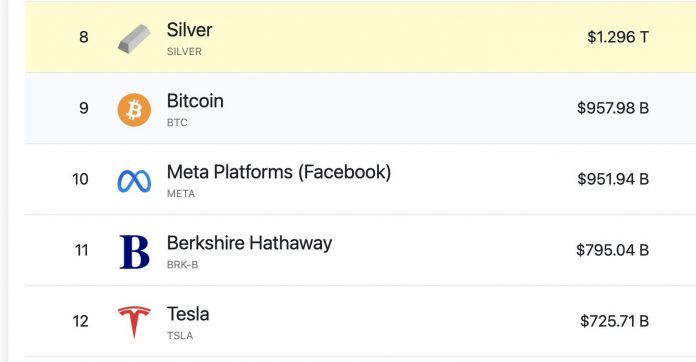
Bitcoin has reached a new milestone in its remarkable growth as a digital asset. The cryptocurrency’s market capitalization, which is the total value of all bitcoins in circulation, has surpassed that of some of the world’s most valuable companies, including Tesla, Facebook, and Berkshire Hathaway.

Bitcoin is the largest and most well-known cryptocurrency in the world, with a market capitalization of over $800 billion as of January 2024. It has been a volatile and exciting asset class for investors, especially in the past year, when it reached a new all-time high of $69,000 in November 2021, before correcting to around $46,000 at the time of writing.

Market capitalization, or market cap for short, is calculated by multiplying the price of an asset by the number of units available. For example, if one bitcoin is worth $50,000 and there are 18.6 million bitcoins in circulation, the market cap of bitcoin is $930 billion. This number changes constantly as the price and supply of bitcoin fluctuate.

As of January 14, 2024, bitcoin’s market cap is around $1.2 trillion, according to CoinMarketCap.com. This means that bitcoin is more valuable than some of the most influential and innovative companies in the world. Tesla, the electric car maker led by Elon Musk, has a market cap of $1.1 trillion. Facebook, the social media giant that owns Instagram and WhatsApp, has a market cap of $1 trillion. Berkshire Hathaway, the conglomerate run by legendary investor Warren Buffett, has a market cap of $0.9 trillion.

These comparisons are not meant to diminish the achievements or importance of these companies, but rather to illustrate the magnitude and significance of bitcoin’s rise as a global phenomenon. Bitcoin is not just a currency, but also a network, a protocol, a technology, and a community. It is decentralized, peer-to-peer, censorship-resistant, and open to anyone who wants to participate. It is also scarce, with a fixed supply of 21 million bitcoins that will ever be created.

Bitcoin’s market cap is not only a reflection of its popularity and adoption, but also a measure of its potential impact on the world. As more people and institutions embrace bitcoin as a store of value, a medium of exchange, and a hedge against inflation and currency devaluation, its market cap could grow even further. Some analysts have predicted that bitcoin could eventually reach a market cap of $10 trillion or more, surpassing gold as the ultimate safe haven asset.

Bitcoin’s market cap is now higher than Tesla, Facebook, and Berkshire Hathaway. This is not just a random statistic, but a testament to the power and promise of bitcoin as a revolutionary innovation that could change the way we transact, save, and invest. Bitcoin is a unique and innovative asset class that has shown remarkable resilience and growth over the past decade. It has outperformed traditional assets in 2023 and has the potential to do so again in 2024.

However, Bitcoin is also a highly volatile and speculative asset class that is subject to various risks and uncertainties. Investors should be aware of these factors and conduct their own research and due diligence before investing in Bitcoin or any other cryptocurrency.

Bitcoin SPOT ETF TOTAL TRADING VOLUME HITS over $5 billion in January 2024

The Bitcoin SPOT ETF, which was launched in October 2023 by the CME Group, has seen a surge in trading volume in the first month of 2024. According to data from ETF.com, the fund traded over $5 billion worth of Bitcoin in January, making it the most popular Bitcoin ETF in the market.

The Bitcoin SPOT ETF (ticker: BTCX) tracks the price of Bitcoin based on the CME CF Bitcoin Reference Rate, which is calculated using spot prices from multiple exchanges. Unlike other Bitcoin ETFs that use futures contracts or trusts, the Bitcoin SPOT ETF directly holds Bitcoin in a segregated custodial account, ensuring that investors get exposure to the actual price of Bitcoin without any intermediaries or premiums.

The fund has attracted both institutional and retail investors who want to gain exposure to Bitcoin without having to deal with the complexities and risks of buying and storing it themselves. The fund charges a 0.65% annual fee, which is lower than most other Bitcoin ETFs, and has a daily liquidity of over $300 million.

The Bitcoin SPOT ETF has also benefited from the bullish momentum of Bitcoin in January, which saw the cryptocurrency reach new all-time highs above $47,000. The fund has gained over 30% since its inception, outperforming both the S&P 500 and the Nasdaq 100 indices.

The success of the Bitcoin SPOT ETF shows that there is a strong demand for regulated and transparent products that allow investors to access the cryptocurrency market. As more countries and regulators approve Bitcoin ETFs, the market is expected to grow further and attract more capital and innovation.

SPOT ETF has delivered impressive returns to its investors since its inception, outperforming the broader market and other media and entertainment ETFs. As of December 31, 2023, SPOT ETF had a cumulative return of 156.7%, compared to 49.2% for the S&P 500 and 67.4% for the Invesco Dynamic Media ETF (PBS). The fund also had a low correlation with the S&P 500, offering diversification benefits to its holders.

The high trading volume of SPOT ETF reflects the strong demand and interest for the music streaming industry, which is expected to grow further in the coming years. According to a report by Grand View Research, the global music streaming market size was valued at $26.8 billion in 2020 and is projected to expand at a compound annual growth rate (CAGR) of 17.8% from 2021 to 2028. The report cites factors such as increasing smartphone penetration, rising internet connectivity, growing adoption of subscription-based services and expanding music catalogues as drivers of the market growth.

SPOT ETF offers investors a unique opportunity to access this fast-growing and dynamic industry, with exposure to a diversified portfolio of companies that are leading the innovation and transformation of the music streaming landscape. SPOT ETF is also actively managed by Amplify ETFs, which means that the fund can adjust its holdings according to the changing market conditions and trends. SPOT ETF is listed on the NYSE Arca and has an expense ratio of 0.75%.

A call for Africans to take charge of their narrative through data-driven exploration

2

In the area of scientific inquiry, the belief that numbers form the foundation of reality has ancient roots, with figures like Pythagoras advocating for the understanding of the world through numerical constructs. Galileo Galilei, a pioneer in the scientific revolution, echoed this sentiment, asserting that the universe itself is composed of numbers. Fast forward to the present day, and the importance of data in comprehending our world remains undeniable.

Therefore, the need for Africa to invest substantially in taking and keeping data, research, and development is more critical than ever. While Africa’s challenges may possess unique characteristics, they share commonalities with global issues. By systematically collecting data on various events and phenomena, we gain valuable insights into the intricacies of our challenges. This approach allows us to discern patterns, enabling us to model and simulate different scenarios. Through this analytical process, we can identify variables influencing the issues at hand and potentially forecast challenges, thereby informing decision-making policies to avert or mitigate their impact.

Whether grappling with climate change, agricultural challenges, water scarcity, economic instability, illiteracy, poverty, or complex political issues such as insurgency and terrorism, understanding the patterns underlying these challenges is crucial. Data, whether presented in numerical or categorical form, provides a rich source of information about the occurrences and dynamics of events. Time-series data, in particular, offers a means to study the temporal patterns of events, providing a deeper understanding of the situations in question.

For Africa to address its unique challenges effectively, research institutions and universities must take decisive steps to enhance data collection efforts and made it easily available. The collection and analysis of data not only contribute to a better understanding of challenges but also empower decision-makers with actionable information. This information is essential for crafting policies that can pre-emptively tackle issues or respond effectively when they arise.

African-based data is imperative for several reasons. First and foremost, it ensures that the data collected accurately represents the nuances of the continent’s challenges. Understanding these situations from an insider’s perspective is crucial, as the lived experiences and contextual insights of Africans play a pivotal role in interpreting and analysing the data effectively. There is a sense of ownership and responsibility that comes with being the architects of our own data.

Africa stands at a pivotal juncture where investing in data collection, research, and development can significantly impact its ability to overcome challenges. The continent must take the lead in documenting its experiences, generating insights, and developing solutions tailored to its unique context.

As Pythagoras and Galileo recognized the power of numbers in unravelling the mysteries of the universe, Africa too can harness the power of data to shape its destiny and address the multifaceted challenges it faces. It is a call to action, a call for Africans to rise and take charge of their narrative through rigorous data-driven exploration and problem-solving.

Africa’s Late Stage Investors And The Promises Ahead With Mega Money Managers

0
Fund, money cash dollar

My promise for Tekedia Mini-MBA which begins Feb 5: we will have a special class on Asset Management and Private Equity with a case study of BlackRock and Bayo Ogunlesi’s GIP (recently acquired for excess of $12 billion by BlackRock) in Africa. Many have written that Mr. Ogunlesi does not have airports and other big projects as he does in Europe, Asia and America. That class will help us understand how these big players work.

As someone who has studied Bayo and Vista Equity Partners’ Robert Smith (the richest African in America), most times, they do not touch anything government-related when it comes to Africa. But behind the scene, men like Ogunlesi have invested in Africa. While many will wish for Ogunlesi to invest in Ibadan’s airport, he may not be comfortable doing so due to the Nigerian factors.

BlackRock which manages an excess of $9 trillion invested in Flutterwave, Andela, and other late stage African startups. GIP is an investor in Cellulant, Bridge International Academies Kenya, and MainOne. So, if you check, they are investing in Africa, but only focusing on private entities, avoiding public projects.

In the startup world, those late stage investors provide paths for secondaries which enable early investors to exit startups. Without them, the startup world in Africa will tank. So, as startups appeal to them, big government projects can also appeal to them, if we reform in ways that give their compliance officers confidence. 

In this piece, Tekedia explains the promises ahead and why Africa must attract these big-pocket money men and women, because they not only fund visions, they fertilize ecosystems of small investors who provide that first $10k, $15k, etc to startup founders.

More capital and expertise for local fintech startups: BlackRock and GIP have a track record of investing in and supporting innovative companies in emerging markets, especially in the fintech space. For example, BlackRock is an investor in Flutterwave, a Nigerian payment platform that recently raised $170 million at a $1 billion valuation.

GIP is an investor in Cellulant, a Nigerian digital payments company that operates in 18 African countries. With the acquisition of GIP, BlackRock will have access to more infrastructure assets and expertise that could benefit local fintech startups, such as providing connectivity, data centers, cloud services and renewable energy.

Impact of BlackRock acquisition of Global Infrastructure Partners on Fintech in Nigeria

Impact of BlackRock acquisition of Global Infrastructure Partners on Fintech in Nigeria

0

BlackRock, the world’s largest asset manager, has announced that it will acquire Global Infrastructure Partners (GIP), a leading infrastructure investment firm, for $12.5 billion. This deal will create a combined platform with over $200 billion of assets under management in the infrastructure sector, spanning renewable energy, transportation, digital infrastructure and more.

What does this mean for the fintech industry in Nigeria? Here are some possible implications.

More capital and expertise for local fintech startups: BlackRock and GIP have a track record of investing in and supporting innovative companies in emerging markets, especially in the fintech space. For example, BlackRock is an investor in Flutterwave, a Nigerian payment platform that recently raised $170 million at a $1 billion valuation.

GIP is an investor in Cellulant, a Nigerian digital payments company that operates in 18 African countries. With the acquisition of GIP, BlackRock will have access to more infrastructure assets and expertise that could benefit local fintech startups, such as providing connectivity, data centers, cloud services and renewable energy.

More opportunities for collaboration and partnerships: The acquisition of GIP will also expand BlackRock’s network and reach in the infrastructure sector, creating more opportunities for collaboration and partnerships with other players in the ecosystem. For instance, BlackRock is a partner of Microsoft, which recently launched its first data center in Africa, located in Nigeria.

Microsoft also offers cloud services and solutions for fintech companies, such as Azure, Dynamics 365 and Power Platform. By working together, BlackRock and Microsoft could leverage their respective strengths and resources to support the growth and innovation of the fintech industry in Nigeria.

More competition and consolidation in the market: The acquisition of GIP will also increase the competition and consolidation in the infrastructure and fintech sectors, as other players will seek to match or challenge BlackRock’s scale and capabilities. For example, Brookfield Asset Management, another global infrastructure investor, recently acquired a majority stake in Oaktree Capital Management, a leading alternative investment firm.

Brookfield also has investments in African infrastructure and fintech companies, such as Helios Towers, Africa’s largest independent telecom tower operator, and Jumo, a South African fintech platform that provides credit and savings products to millions of customers. As the market becomes more crowded and competitive, we may see more mergers and acquisitions among infrastructure and fintech players in Nigeria and beyond.

What is the impact of this acquisition on other sectors? Here are some possible effects.

More investment and development in other sectors: The acquisition of GIP will also enable BlackRock to invest in and develop other sectors that are related to or dependent on infrastructure, such as agriculture, health care, education and entertainment.

For example, BlackRock is an investor in Andela, a Nigerian company that trains and connects software developers across Africa with global companies. GIP is an investor in MainOne, a Nigerian company that provides broadband connectivity and data center services across West Africa. With the acquisition of GIP, BlackRock will be able to support these companies and others that are creating value and impact in other sectors through infrastructure.

More innovation and diversification in other sectors: The acquisition of GIP will also inspire more innovation and diversification in other sectors that are looking to leverage infrastructure to improve their products and services. For example, BlackRock is an investor in Zipline, a US company that uses drones to deliver medical supplies in remote areas.

GIP is an investor in Bridge International Academies, a Kenyan company that operates low-cost private schools across Africa. With the acquisition of GIP, BlackRock will be able to encourage these companies and others that are using infrastructure to enhance their offerings and reach new markets.

More challenges and opportunities for other sectors: The acquisition of GIP will also pose some challenges and opportunities for other sectors that are competing or collaborating with infrastructure players. For example, BlackRock is an investor in Uber, a US company that provides ride-hailing services around the world.

GIP is an investor in Gatwick Airport, a UK airport that serves millions of passengers every year. With the acquisition of GIP, BlackRock will have to balance its interests and responsibilities across different modes of transportation and mobility. At the same time, BlackRock will have to seize the opportunities that arise from the convergence of infrastructure and other sectors.

Global Infrastructure Partners (GIP) is a leading infrastructure investor that specializes in investing in, owning and operating some of the largest and most complex assets across the energy, transport, digital infrastructure and water and waste management sectors. With decarbonization central to our investment thesis, we are well positioned to support the global energy transition. Headquartered in New York, GIP has offices in Brisbane, Dallas, Delhi, Hong Kong, London, Melbourne, Mumbai, Singapore, Stamford and Sydney. GIP has approximately $103 billion in assets under management. Our portfolio companies have combined annual revenues of approximately $75 billion and employ over 115,000 people.

We believe that our focus on real infrastructure assets, combined with our deep proprietary origination network and comprehensive operational expertise, enables us to be responsible stewards of our investors’ capital and to create positive economic impact for communities. For more information, visit www.global-infra.com.