DD
MM
YYYY

PAGES

DD
MM
YYYY

spot_img

PAGES

Home Blog Page 3847

The Key To Staying Consistent

0

Staying consistent is the key to winning it big in life but truth be told, it is the harder thing to do. It’s easier to get the task started but harder to be consistent at the task.

I know for a fact that taking the first step or starting a task is always not easy but once you have handled procrastination you have handled that. Procrastination or the “I will do it tomorrow” syndrome is one of the primary reasons why taking that bold step and starting a task is always very difficult. But as for staying consistent once you have tackled procrastination to get the task started, you will also handle procrastination coupled with other things which may appear as a stumbling block.

What keeps you going after that “initial gra gra” or the early enthusiasm or motivation has faded is the discipline to stay consistent. To stay disciplined and charge yourself that even if you are motivated or not you will have to show up and do it because you have undertaken to do it.

For instance, going to work every day for some people can be tiring, People go to work without motivations, what keeps them going is that they know if they do not go to work they won’t get paid and they will go broke, so the money they are anticipating at the end of the month is the motivation that help keep them consistent with showing up at the job. 

That is not the discipline I’m talking about, once there is a motivation behind the consistency then it will easily fade out once that motivation is taken away. Discipline is showing up if there is a motivation or not.

Well, it is absolutely normal to not always feel motivated or have the enthusiasm to engage in the task, that is where the discipline to stay consistent comes in. It is also very normal to lose the motivation to keep engaging in the task once you have kick-started it, this is where the discipline is to force yourself to keep at it even if you are not motivated or feel like doing it or not.

What is that task you have undertaken to be doing but you are dwindling on it, what is that task that you know for sure that if you keep doing, it will change your life positively but you are currently struggling at it due to the lack of the motivation; is it that weight loss journey, is it taking another degree, is it learning a skill, is it your spiritual growth etc (you can insert anything there), I want to let you know that it is absolutely normal to have lost the motivation but you can discipline yourself to stay at it, keep doing it until you achieve the desired result and you will be happy with yourself when that is done.

As a bonus, here are three simple but effective ways you can keep yourself consistent at whatever you have chosen to be doing;

  1. Try setting specific and not vague or ambitious goals
  2. create a routine, and
  3. find accountability partner(s).

Nigeria’s Exports to the UK Hit £3.3bn in One Year

0

Nigeria’s exports into the UK from June 2022 to June 2023 are worth £3.3 billion, according to new data revealed by the British Deputy High Commissioner, Jonny Baxter.

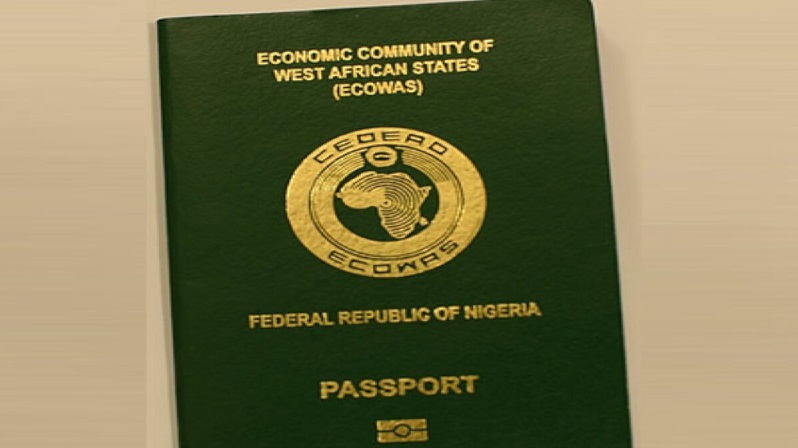
Baxter, who was speaking about the bilateral relationship between Nigeria and the UK, also disclosed that 132,000 Nigerians were issued “all sorts of UK visas” which include visit, work, and study visas in the first half of 2023.

He said Nigeria’s current export valuation is up £1.4billion higher than the previous year’s record.

“The overall trade figures, which includes imports and exports is £7.6 billion and of that, £4.3 billion are made up of UK products that are imported into Nigeria, and that figure has gone up a £1 billion, if you compare with the figure of the year before,” Baxter said.

“The rest of the £3.3 billion are Nigerian exports into the UK, and this has gone up by £ 1.4 billion so the increase in Nigeria export into the UK has been much more fast.”

According to Baxter, this positive trend in Nigeria’s exports to the UK is a result of the introduction of the Developing Countries Trading Scheme (DCTS), which has bolstered trade relations between the two nations.

He said the UK is committed to fostering favorable trade conditions, and the DCTS, launched in June this year, plays a crucial role.

“It covers around 65 developing countries, including Nigeria, and offers reduced or tariff-free access to the UK market for Nigerian goods and services. This tariff reduction makes Nigerian products more affordable in the UK market, boosting their popularity,” he said.

Nigeria’s exports to the UK have encountered barriers, limiting the number of goods allowed into the UK from Nigeria. Baxter said efforts are ongoing to address trade barriers and challenges between the two countries.

As part of the efforts, the High Commissioner said the UK would host an African Investment Summit in April 2024, providing Nigerian companies with a platform to engage with British investors, seek investment opportunities, and contracts, and explore import and export possibilities.

The summit would also feature a special side event focused on Nigeria’s creative industry, recognizing its growing significance in Nigeria’s economy, according to him.

“Nigeria is such a classic place where the creatives are so important and they have produced a lot of money and wealth and indeed, I think it is an increasing area for Nigeria’s economy, and it is brilliant that the African Investment Summit would have this side event,” he said.

Moves like this are not only expected to bolster trade between Nigeria and the UK but also the number of Nigerians securing UK visas yearly.

“We welcome and value the many Nigerians that we have coming to the UK to study or settle, as long as they are coming through legal routes, and it is important that the country’s rules are followed and respected,” Baxter said.

The United Kingdom issued some 132,000 visas to Nigerians in H1 2023

11

Wow – Nigerians are really going to the United Kingdom: “In the first half of the year, we granted approximately 132,000 visas, and those are all sorts of visas, which include visit, work and study visas. “In the previous full year before that, we issued about 324,000. The UK, in that year, issued about three million visas, and of those three million visas, 324,000 were issued to Nigerians, which is about 10 per cent.”

This is not a topic I am not qualified to write on since I am not writing from Nigeria at the moment. That said, I will drop this Harvard Business Review piece  as my response.  Yes, how can you ask people NOT to leave when you made the same call? So, no comment on this one, even though I recognize this as a security threat to the nation’s economy as we could get to a state where Nigeria will not have trained professionals to manage the economy!


The United Kingdom issued some 132,000 visas to Nigerians in the first half of the year, Jonny Baxter, British Deputy High Commissioner in Lagos, told the News Agency of Nigeria (NAN).

He revealed the number in an interview with the News Agency of Nigeria (NAN) in Lagos on Thursday.

Mr Baxter, however, could not readily give the total number of applications received from Nigerians during the period.

“In the first half of the year, we granted approximately 132,000 visas, and those are all sorts of visas, which include visit, work and study visas.

“In the previous full year before that, we issued about 324,000. The UK, in that year, issued about three million visas, and of those three million visas, 324,000 were issued to Nigerians, which is about 10 per cent.

“ If you think about Nigeria’s population, relative to the world, that’s actually a higher proportion of Nigerians taking up those visas and coming to the UK, which I view is a good thing.

“The UK has a huge number of Nigerian students in the country, and in terms of foreign students in the UK, Nigeria is second only to India.

“We welcome and value the many Nigerians that we have coming to the UK to study or settle, as long as they are coming through legal routes, and it is important that the country’s rules are followed and respected,” he said.

Mr Baxter reiterated that change in the rules of students bringing dependents was a necessity based on an international challenge.

“ In 2019, Nigerian students going to the UK brought in 1,500 dependents. By 2022/2023, that number had risen to 52,000 dependents; that’s a massive increase.

“It is not surprising that a country, Britain in this case, that is facing that kind of change to the numbers of people coming in the country, wants to look at the policy and would want to change and amend their policy.

“This is definitely not a case of saying that we don’t want students to come; we definitely want students still to come, and the new policy would come in January 2024.”

He explained that the UK government reviews its visa fees regularly, noting that increments are taken when it becomes a necessity.

“What the British government has decided to do is they review fees all the time, and they’ve decided that because of the cost of processing visas, those costs that people applying for visas need to pay should go up as well.

“The other thing that I think is probably not often recognised is that, for some of those people who are going to the UK and are in some limited circumstances, those people will access services when they are in the UK, and those services cost money.

“So, part of the money out of the fees in the visa process will be to pay for those services that, in certain circumstances, some people may need to access when they’re there. So, for me, that’s an entirely justifiable thing.

He advised the public to always apply for a visa well ahead of their scheduled travels, noting that there are processes and time frames in granting visas.

(NAN)

Digital Identification Technology: Key for Combating Business ID Fraud and Driver of Financial Inclusion

0

One of the reasons African businesses, including small and medium enterprises (SMEs), do not perform optimally to achieve the purpose for which they are set up is the menace of business identity fraud. This problem has been rampant in the last few years, especially with increasing use of technology in the running of businesses in many parts of the world, notably developed economies.

Business identity fraud occurs in many forms, including assumption of the identities of business owners, officials or employees to fraudulently receive payments or loans, leaving the victims with either loss of legitimate payments or responsibility to repay loans they did not obtain. This is usually done through hacking of mails or organizations’ systems for the purpose of obtaining relevant and sensitive information that would aid in the commission of the crime.

The challenge is exacerbated by the poor and low-level deployment of technology in running businesses in Africa, which results in the absence of the needed security controls to detect and prevent fraudulent activities. This makes them easy targets for criminal attacks.

Admittedly, business identity fraud is a global phenomenon, and is not limited to Africa.  There is paucity of data on how much is lost globally to business identity fraud. But in the United States alone, about $43 billion is estimated to have been lost in 2022, a figure that is even a drop from the $52 billion recorded the previous year. That is one of the societies with presumably the most sophisticated technology available for preventing business identity fraud.

Apart from low application of technology, African businesses face the problem of lack of digital identity in a global business community that is digitally driven – a handicap that denies them access to adequate financing and equally exposes them to the activities of fraudsters. They face the twin problem of remaining invisible in a world business community where only the legally and digitally well-known thrive, and dealing with more sophisticated and technologically savvy criminals.

However, with the prominent role expected to be played by the Global Legal Entity Identifier Foundation (GLEIF) in Africa’s economy in the coming years, there appears to be hope for a new lease of life for organizations and SMEs on the continent. Established by Finance Ministers and Governors of Central Banks in the world’s 20 leading economies, GLEIF is an organization that manages a network of partners, with responsibility to provide open, trusted and reliable data for legal identification of businesses throughout the world.

The Legal Entity Identifier (LEI) is the organization’s major financial inclusion product that creates legal, digital and unique identity for businesses and organizations. The product allows business owners access to the true identities of their counterparts anywhere in the world, thus putting them in good stead to know and have relevant information on not just the personalities they are going to be dealing with, but the ownership structures of the organizations they want to do business with across all industries and sectors.

This helps to build trust among business counterparts, even in different parts of the world, and eliminates fear of business identity fraud. This is especially so because business counterparts, as well as clients and customers, would have access to one another’s digital identity portal. Since inception, GLEIF has used EIL to promote financial inclusion in developing economies in different parts of the world.

The growing interest being shown in Africa’s economy by GLEIF is quite significant and, in the estimation of organizations and SME operators on the continent, a welcome development. It is coming at a time the major economies of the world are seeking greater participation in the continent’s economy, which is not unconnected with the coming into being of the African Continental Free Trade Area (AfCTA). This is a market that is expected to be the largest in the world, when fully operational.

As an organization whose products are technology driven, GLEIF is hoping to use LEI to promote financial inclusion on the continent by spurring the growth and expansion of the ICT, Financial Technology (FinTech) and Regulatory Technology (RegTech) industry, as well as the SME sector.

Perhaps nothing underscores GLEIF’s interest in promoting financial inclusion in Africa than the fact that two of the non-executive directors recently appointed to the board of the company are Africans with vast knowledge and experience in the FinTech industry. Dr. Folarin Alayande, a Nigerian, is the Vice President for Public Sector, Eastern Europe, Middle East and Africa, at MasterCard. Angela Kyermaten-Jimoh, a Ghanaian, is Lead in Strategic Partnerships and Multinational Corporations, at Microsoft.

The presence of these two Africans in the highest decision making organ of GLEIF is expected to reflect in policies and projects that engender greater participation of African businesses in the global community of technology-driven economies. A major aspect of this participation is adoption of digital identity technology, which would act as a safeguard against business identity fraud of which African businesses have been perennial victims.

By fully embracing digital identification technology, African SMEs are going to be free of the threat posed by business identity fraudsters. This would position them for easier access to credit facilities and, very importantly, give them security in terms of protection of their finances, systems and processes, thus giving them the wherewithal to be the engine room of economic growth and prosperity on the continent.

Small businesses, the world over, are known to be the biggest employers of labor. The situation is not going to be different with African SMEs when they acquire digital identity that gives them security against business identity fraud. It would be possible for them to thrive well enough to create employment at the lowest level, and thus contribute significantly to the eradication of poverty on the continent.

Tekedia Mini-MBA Welcomes Learners from China

0

Let me welcome our Learners from the People’s Republic of China to Tekedia Mini-MBA edition 12 which begins on Sept 11. Thank you for choosing Tekedia Institute for your business education and the grand understanding of Africa’s business universe. We remain the #best choice for more than 41 countries who seek to understand the best way to master Africa’s entrepreneurial capitalism and business climate.

For others who want to join, connect with Jack L.A.  to help with payment processing since most Chinese cards do not work on Stripe and Paypal. Through Jack, you can enroll with AliPay and other local options.

Tekedia Mini-MBA serves more than 41 countries, from Singapore to Canada, Nigeria to India, and beyond. Our courses are natively created with all the full-awareness of Africa’s business terrains and global market realities. I shared that philosophy when I wrote in Harvard Business Review, “The Best Global Leaders are Local Leaders”.

As I welcome our Learners from the People’s Republic of China, I ask you to pick your seat here as our early discount window closes . The wealth of a people is the knowledge of a people; go for KNOWLEDGE and thrive on that career or business venture.