DD
MM
YYYY

PAGES

DD
MM
YYYY

spot_img

PAGES

Home Blog Page 3848

Scorpion Casino Token, Litecoin and Solana: Exploring the Best Crypto Presale and Top Innovations for 2023

0

As the crypto market continues to evolve, innovation has become the lifeblood of new and exciting projects aiming to disrupt the status quo. As investors seek the next 1000x crypto in 2023, three remarkable tokens have caught the attention of investors and enthusiasts alike.

Meet Litecoin (LTC), Solana (SOL), and Scorpion Casino Token (SCORP) – each bringing unique features to the table and pushing the boundaries of what’s possible in the world of cryptocurrencies. Let’s explore how innovation sets them apart and why it matters so much in the crypto space.

Litecoin: Digital Silver With Solid Innovation

Litecoin, often referred to as the “digital silver,” has been a mainstay in the crypto world since its inception in 2011. What sets Litecoin apart is its commitment to faster transaction times and efficient mining, ensuring a seamless experience for its users. Its reliable and secure ecosystem has garnered attention from investors seeking an alternative to the renowned Bitcoin. Litecoin has remained committed to its proof-of-work consensus mechanism to secure the network, and while it shares this trait with Bitcoin, Litecoin’s faster block generation time and lower transaction fees make it more appealing for frequent transactions. Litecoin has also made significant strides in introducing the Ordinals protocol, allowing users to inscribe data onto the blockchain. This move has boosted activity and attracted developers from the decentralized finance (DeFi) ecosystem, expanding its use cases and potential.

Solana: Scaling New Heights with Unique Architecture

Solana has rapidly gained attention for its impressive ability to handle high-performance applications with lightning-fast transaction speeds. Its unique architecture, featuring a combination of Proof-of-History and Proof-of-Stake mechanisms, has allowed for unparalleled scalability and efficiency. The key innovation here lies in Solana’s ability to eliminate the limitations of traditional blockchain, enabling developers to build complex applications without compromising on speed or security. Its support for NFTs, thanks to low gas fees and rapid transaction speeds, has also positioned it as a strong contender for future success in the NFT space.

Top Crypto News: Introducing Scorpion Casino Token

Scorpion Casino Token is a fascinating new token making waves in the online gambling world. This unique token is not just another cryptocurrency, as it represents the backbone of the Scorpion ecosystem, a groundbreaking social online gambling platform.

One of the most innovative features of SCORP is its deflationary model, whereby tokens are periodically removed from circulation with every transaction and profit generated by the Scorpion Casino platform. This mechanism creates scarcity over time, incentivizing long-term holders and potentially increasing the token’s value.

Scorpion Casino also represents a mission to break barriers in the gambling industry. By leveraging cryptocurrencies and online gambling, Scorpion Casino Token empowers individuals to get involved without the traditional barriers, opening up unprecedented opportunities for wider participation.

Innovation is the driving force behind the rapid evolution of the crypto space. Projects like Litecoin, Solana, and Scorpion Casino Token exemplify how groundbreaking ideas can lead to transformative changes. The competition among cryptocurrencies pushes developers and teams to continually improve their offerings, resulting in better scalability, efficiency, and utility for users.

For more about Scorpion Casino Token (SCORP):


Presale: https://presale.scorpion.casino/

Twitter: https://twitter.com/ScorpionCasino

Telegram: https://t.me/scorpioncasino_official
The Best Altcoin to Buy 2023: XRP, Cardano & Signuptoken.com Eye Explosive $1 Million Inflows Amidst Bitcoin Exodus 

0

As the once unshakable dominance of Bitcoin faces challenges, a rising wave of excitement is sweeping through the world of altcoins. Investors are now turning their attention towards promising alternatives like XRP and Cardano, seeking not just returns but a glimpse of the future. Amidst this exhilarating altcoin season, an intriguing newcomer, Signuptoken.com (SIGN), has captured the imagination of early investors, promising a thrilling ride toward significant gains. Let’s delve into understanding the best altcoin to buy in 2023, unveiling the possibilities that await those who dare to venture beyond the realm of Bitcoin.

Bitcoin Trend Prediction: Navigating The Future Of The Cryptocurrency King

Bitcoin, once hailed as the king of crypto, is experiencing turbulent times. This shift is prompting investors to explore altcoins for diversification and potential profits. With the altcoin season of 2023 on the horizon, the spotlight is on XRP and Cardano, both poised to attract explosive inflows of up to $1 million.

XRP’s Allure & Cosmic Potential: A Journey of Stellar Possibilities

Despite facing regulatory hurdles, XRP has managed to maintain a strong reputation in the crypto arena. Its focus on facilitating fast and cost-effective cross-border transactions has earned it a loyal user base and strategic partnerships with major financial institutions. Recent developments indicating a potential resolution to its ongoing legal battle with the U.S. Securities and Exchange Commission (SEC) have sparked optimism among investors. If this hurdle is cleared, XRP could witness an influx of up to $1 million in investments, propelling its adoption and potential value appreciation to new heights.

Cardano’s Ascent To The Blockchain Galaxy

Cardano’s emergence as the “Ethereum killer” is gaining momentum thanks to its unique approach to blockchain technology. Unlike some other cryptocurrencies, Cardano follows a meticulous, science-based approach, aiming to build a more sustainable and scalable ecosystem. Its adoption of a proof-of-stake consensus mechanism has positioned it as a frontrunner for environmentally friendly blockchain solutions. The upcoming Alonzo hard fork, expected to enable smart contracts on the Cardano network, has investors buzzing with excitement. This technological advancement is projected to attract a myriad of innovative projects to the platform, potentially catapulting Cardano’s adoption and value to new heights.

Signuptoken.com: Your Cosmic Ticket Altcoin To Buy In 2023

Amidst the excitement of the altcoin season, Signuptoken.com (SIGN) stands out as an intriguing newcomer. This cryptocurrency platform offers a fee-free signup process, eliminating the financial risk typically associated with crypto presales. The introduction of its “Millionaire Club” is an ingenious concept, allowing users to join the community without any financial commitment. This unique approach fosters a sense of inclusivity, encouraging investors to refer others to the club and creating a powerful network effect.

Sign Up Token’s standout feature is its innovative referral system, offering a substantial 10% bonus to users who successfully bring new participants on board. This approach not only cultivates a vibrant and supportive community but also creates a sense of camaraderie among members, united by the common goal of seeing the project succeed. Moreover, Sign Up Token’s tokenomics incentivize HODLing, with rewards for token holders as the project gains traction. With a promising roadmap, community incentives, and a focus on continuous development, SIGN has caught the attention of many crypto enthusiasts seeking growth and potential value in the altcoin market.

As investors diversify their portfolios beyond Bitcoin, XRP and Cardano, emerge as strong contenders for explosive inflows. The potential resolution of XRP’s legal issues could open the floodgates for fresh investments, boosting its adoption and value. On the other hand, Cardano’s commitment to sustainability and its upcoming Alonzo hard fork signal significant growth potential, attracting innovative projects and expanding its user base. As the altcoin season 2023 gains momentum, these cryptocurrencies are drawing increasing attention from investors worldwide.

Sign Up Token’s presale presents a compelling opportunity for those seeking significant returns and a chance to be part of an exclusive community. Joining the Millionaire Club in its early stages provides access to exclusive incentives and the potential for passive income.

Take action now and invest in the Sign Up Token presale in its early stages to ride the wave of potential returns and be part of the exciting altcoin revolution!

Sign up for Signuptoken.com:

 Website: https://www.signuptoken.com

 Twitter: https://twitter.com/_SignUpToken_

 Telegram: https://t.me/SignUpToken

The Symbiosis of Availability and Self-Worth

0

In the grand tapestry of existence, an invisible thread binds us—a thread woven through moments of vulnerability, empathy, and connection. It is within these instances that the essence of our purpose becomes remarkably clear: to stand as a pillar of support for one another in times of need. This profound sentiment strikes a chord that resonates with the depths of our souls.

Imagine the intricacies of creation, where the design of our being defies solitude. We were crafted not as isolated entities, but as interconnected souls meant to intertwine. This very truth underscores the idea that our connectedness is far from coincidental; rather, it’s a purposeful design that holds a divine intention.

Think back to those instances when you’ve sought refuge in the warmth of a friend’s presence, or when you’ve been the harbinger of solace for another troubled soul. These moments aren’t random; they’re the heartbeats of our shared human experience. Each of us carries a unique gift—a contribution to our collective journey that shines brightest when extended selflessly, without anticipation of reciprocation.

In the midst of this noble pursuit of compassion, however, lies a crucial equilibrium. It’s imperative not to lose ourselves in the act of perpetual availability. As we embrace the noble virtue of extending ourselves to others, we must also heed the wisdom of moderation. There exists an art in not becoming an open spigot, allowing our worth to flow unceasingly. Our value isn’t determined by the quantity of our selflessness, but by the lasting impressions we leave.

In a world where time is both a currency and a luxury, safeguarding our intrinsic worth becomes paramount. While humanity’s nature is often a source of beauty, it can also manifest as opportunism. Others might inadvertently exploit the generosity we offer, interpreting it as a lack of understanding the value of time.

Yet, in those vulnerable moments when our kindness is taken for granted, an opportunity for growth emerges. It’s during these times that we can recalibrate, withdrawing temporarily to communicate that our rarity births innovation. This scarcity is the wellspring from which our creative offerings flow—an opportunity to showcase our unique value to the world.

Let us ardently embrace the profound significance of being available and accessible. The threads of our lives are woven inextricably, and our purpose finds its true meaning in the support we extend to others. As we tread the noble path of compassion, let us also remember the significance of self-preservation.

Striking this equilibrium allows us to enrich our lives while uplifting the human experience as a whole. Together, we compose a narrative woven with threads of empathy, strength, and self-discovery—a narrative that embodies the very essence of our humanity.

Today’s Blockchain Trending Update, Bitcoin ETF Deadlines Approach for SEC Decisions

0

The Securities and Exchange Commission (SEC) announced today that it has filed a complaint against Impact Theory, LLC, a California-based company that claims to be a media and entertainment platform, for conducting an unregistered offering of digital tokens in the form of non-fungible tokens (NFTs).

According to the SEC’s complaint, Impact Theory raised over $16 million from more than 9,000 investors in a series of sales of NFTs that purportedly represented digital artwork and access to exclusive content and events. The SEC alleges that the NFTs were securities because they were investment contracts, and that Impact Theory did not register the offering with the SEC or qualify for an exemption from registration.

The SEC further alleges that Impact Theory made false and misleading statements to investors about the value and scarcity of the NFTs, the potential returns on their investment, and the risks involved. The SEC also claims that Impact Theory failed to disclose material information about its financial condition, operations, and use of proceeds.

The SEC’s complaint, filed in the U.S. District Court for the Central District of California, charges Impact Theory with violating the registration provisions of the Securities Act of 1933 and seeks permanent injunctions, disgorgement plus prejudgment interest, and civil penalties. The SEC’s investigation was conducted by staff in the Los Angeles Regional Office and the Cyber Unit. The litigation will be led by Amy Longo and supervised by Melissa Hodgman.

A group of US lawmakers have expressed their opposition to the Federal Reserve’s recent letter on stablecoin regulation. The letter, which was sent to the President’s Working Group on Financial Markets (PWG) on August 25, 2023, outlined the Fed’s views on the potential risks and benefits of stablecoins, as well as the need for a comprehensive regulatory framework.

The lawmakers, who are part of the House Financial Services Committee and the House Committee on Agriculture, argued that the Fed’s letter was premature and overreaching. They claimed that the letter did not adequately consider the innovation and competition that stablecoins could bring to the financial system, and that it could stifle the development of the nascent industry.

The lawmakers also criticized the Fed’s proposal to require stablecoin issuers to obtain a banking charter and comply with existing banking regulations. They said that this would create an unfair advantage for the Fed and its own digital currency project, the FedNow Service, which is expected to launch in 2024. They urged the PWG to consult with Congress and the industry stakeholders before making any final decisions on stablecoin regulation.

A major security breach has occurred on the Balancer decentralized exchange platform, resulting in losses of more than $2.1 million worth of cryptocurrency. The attack involved exploiting a vulnerability in the Balancer smart contracts that allowed the hacker to drain funds from several liquidity pools on the platform. The hacker used a complex combination of flash loans, arbitrage and deflationary tokens to manipulate the pool balances and withdraw the funds.

Balancer Labs, the company behind the platform, has confirmed the incident and stated that it is working with security experts and law enforcement to investigate the attack and recover the stolen funds. Balancer Labs has also announced that it will reimburse the affected pool creators and token holders for their losses. The company has advised users to avoid providing liquidity to pools that contain deflationary tokens until the issue is resolved.

The attack has raised questions about the security and reliability of Balancer and other decentralized exchange platforms that rely on smart contracts to facilitate transactions. Some experts have suggested that Balancer should have audited its code more thoroughly and implemented safeguards to prevent such attacks. Others have argued that Balancer is still an experimental project and that users should be aware of the risks involved in using such platforms.

Bitcoin ETF Deadlines Approach for SEC Decisions

The U.S. Securities and Exchange Commission (SEC) is facing several deadlines to approve or reject Bitcoin exchange-traded funds (ETFs) in the coming weeks. These decisions could have a significant impact on the cryptocurrency market, as investors are eagerly awaiting the launch of the first Bitcoin ETF in the U.S.

A Bitcoin ETF is a type of investment product that tracks the price of Bitcoin and allows investors to buy and sell shares of the fund on a regulated stock exchange. This would provide a convenient and accessible way for retail and institutional investors to gain exposure to Bitcoin without having to deal with the technical and security challenges of holding the digital asset directly.

The SEC has been reluctant to approve Bitcoin ETFs in the past, citing concerns over market manipulation, fraud, custody, liquidity, and investor protection. However, the agency has recently signaled a more open-minded approach to the emerging asset class, as it has appointed a new chairman, Gary Gensler, who has a background in cryptocurrency and blockchain education.

The SEC is currently reviewing several Bitcoin ETF applications from different sponsors, such as VanEck, Valkyrie, WisdomTree, Kryptoin, and SkyBridge. Some of these proposals are based on the spot price of Bitcoin, while others are based on Bitcoin futures contracts. The SEC has the authority to extend its review period for up to 240 days, but it must make a final decision by then.

According to the SEC’s website, the agency has set several deadlines for its Bitcoin ETF decisions in August and September. The first one is on August 10, when it will either approve or reject the VanEck Bitcoin Trust, which is based on the spot price of Bitcoin. The second one is on August 25, when it will either approve or reject the Valkyrie Bitcoin Trust, which is also based on the spot price of Bitcoin. The third one is on September 2, when it will either approve or reject the WisdomTree Bitcoin Trust, which is based on Bitcoin futures contracts.

The SEC could also postpone its decisions to a later date, as it has done several times before. However, some analysts believe that the agency is running out of time and excuses to delay its verdicts, especially as other countries such as Canada and Brazil have already launched their own Bitcoin ETFs.

The outcome of these decisions could have a major influence on the price and adoption of Bitcoin, as well as the broader cryptocurrency industry. A positive outcome could boost the demand and legitimacy of Bitcoin, as well as attract more institutional investors and mainstream media attention. A negative outcome could dampen the sentiment and innovation in the space, as well as trigger regulatory uncertainty and legal challenges.

Regardless of the outcome, investors should be prepared for high volatility and potential market disruptions in the coming weeks, as the SEC’s decisions could trigger significant price movements and trading activity in both directions. Investors should also do their own research and due diligence before investing in any Bitcoin ETF or related product, as they involve various risks and challenges that may not be suitable for everyone.

The Controversies’ Surrounding Tether USDT

0

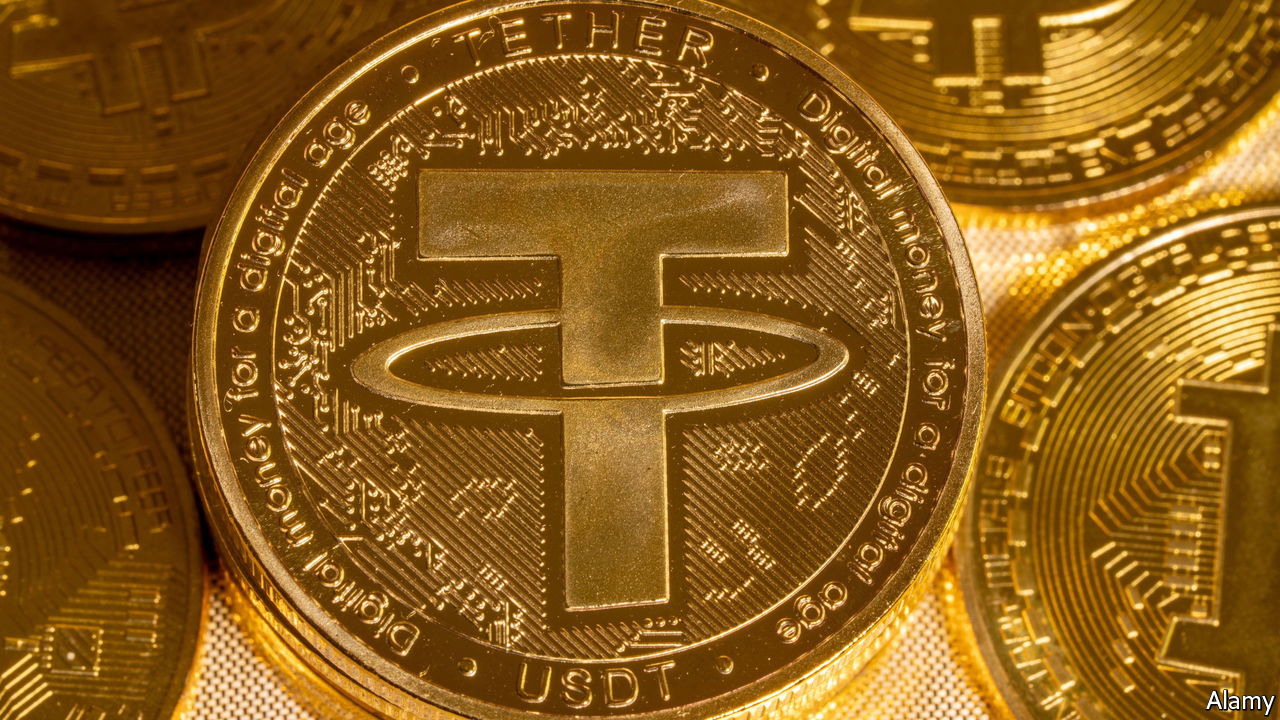
Tether USDT is one of the most popular and controversial stablecoins in the cryptocurrency market. It claims to be backed by US dollars at a 1:1 ratio, meaning that for every USDT in circulation, there is a corresponding US dollar in reserve. However, this claim has been challenged by many critics and regulators, who doubt the veracity and transparency of Tether’s reserves and audits.

Tether USDT is a stablecoin, which is a type of cryptocurrency that aims to maintain a stable value relative to another asset, such as a fiat currency or a commodity. Stablecoins are designed to reduce the volatility and unpredictability of crypto prices, which can deter some users and investors from adopting them.

Tether USDT was launched in 2014 by Tether Limited, a company based in Hong Kong and registered in the British Virgin Islands. Tether Limited is affiliated with Bitfinex, one of the largest and oldest crypto exchanges in the world. Tether USDT is issued on various blockchain platforms, such as Bitcoin (via Omni Layer), Ethereum, Tron, EOS, Algorand, Solana, and others.

According to Tether’s website, each USDT is backed by a reserve of traditional currency held in Tether’s bank accounts. Tether claims that its reserves are regularly audited by independent third parties, and that it publishes monthly reports on its website showing its assets and liabilities. Tether also states that it follows strict anti-money laundering (AML) and know-your-customer (KYC) policies, and that it complies with all relevant laws and regulations.

However, these claims have been met with skepticism and scrutiny by many observers, who question the validity and reliability of Tether’s backing and reporting. Some of the main issues raised by Tether’s critics are:

Lack of transparency: Tether has not provided a full audit of its reserves by a reputable accounting firm, nor has it disclosed the identity and location of its banking partners. The monthly reports published by Tether are not verified by any external auditor, and only show aggregate numbers without any breakdown or detail.

Moreover, Tether has changed its reserve policy several times over the years, from claiming to hold 100% USD reserves, to admitting to holding other assets such as loans and securities, to stating that its reserves include “cash equivalents” and “other receivables”.

Legal troubles: Tether has faced multiple lawsuits and investigations from various authorities around the world, including the US Department of Justice (DOJ), the New York Attorney General (NYAG), the Commodity Futures Trading Commission (CFTC), and others. Some of these cases are still ongoing or unresolved, while others have resulted in settlements or fines for Tether.

For example, in February 2021, Tether agreed to pay $18.5 million to settle a case with the NYAG, which accused Tether of misleading investors and customers about its reserves and liquidity. As part of the settlement, Tether also agreed to provide quarterly reports on its reserves to the NYAG for two years.

Market manipulation: Tether has been accused of inflating the supply and demand of USDT to manipulate the price of Bitcoin and other cryptocurrencies. Some studies have suggested that there is a positive correlation between USDT issuance and Bitcoin price movements, implying that Tether prints new USDT tokens without sufficient backing and uses them to buy Bitcoin on exchanges, creating artificial demand and driving up the price.

Some critics have also alleged that Tether is involved in wash trading, spoofing, pump-and-dump schemes, and other fraudulent activities to manipulate the crypto market. Wash trading is a form of market manipulation where a trader buys and sells the same asset repeatedly to create artificial volume and price movements. This can be used to attract more buyers or sellers, or to influence the price of other assets that are correlated with the manipulated one.

Spoofing is a similar tactic where a trader places large orders that they do not intend to execute, to create a false impression of supply or demand. Pump-and-dump schemes are where a group of traders coordinate to inflate the price of an asset by buying it in large quantities, then sell it at a profit before the price crashes. Tether has been accused of using these methods to manipulate the price of Bitcoin and other cryptocurrencies.

For example, a 2018 study by John M. Griffin and Amin Shams found that Tether was used to buy Bitcoin at times of low demand, creating artificial support for the price. The study claimed that Tether accounted for more than half of Bitcoin’s price increase in 2017.

Another 2019 study by Wang Chun Wei found that Tether issuances were positively correlated with Bitcoin returns, and negatively correlated with Bitcoin volatility. The study suggested that Tether was used to stabilize and drive up the price of Bitcoin. However, these studies have been challenged by other researchers and industry experts, who argue that they suffer from methodological flaws, data limitations, and confounding factors. For example, a 2019 paper by Richard K. Lyons and Ganesh Viswanath-Natraj argued that Tether was not used for market manipulation, but rather for arbitrage and liquidity provision across different crypto exchanges.

The paper claimed that Tether flows were driven by demand from traders who wanted to move funds quickly and cheaply between exchanges, rather than by supply from Tether issuers who wanted to manipulate prices. Another 2020 paper by Sean Foley, Jonathan R. Karlsen, and T?lis J. Putni?š also found no evidence of Tether-driven price manipulation and suggested that the correlation between Tether and Bitcoin was due to common factors such as investor sentiment, market conditions, and regulatory events.

The debate over Tether’s role in the crypto market is still ongoing, and there is no definitive answer to whether Tether is involved in wash trading, spoofing, pump-and-dump schemes, or other forms of market manipulation. However, the controversy has raised some important questions and concerns for the crypto industry and investors. For instance, how reliable and transparent is Tether’s claim that it is fully backed by US dollars?

How vulnerable is the crypto market to potential shocks or disruptions from Tether or other stablecoins? How can regulators and law enforcement agencies monitor and prevent market manipulation in the crypto space? These are some of the issues that need to be addressed as the crypto industry matures and grows.