DD
MM
YYYY

PAGES

DD
MM
YYYY

spot_img

PAGES

Home Blog Page 3852

NTA Acquires AFCON Broadcasting Rights After DStv’s Loss

0

The National Television Authority (NTA) has secured broadcasting rights to air all 52 matches of the highly anticipated 2023 African Cup of Nations (AFCON), causing a monumental shift in African football broadcast exclusivity.

This disrupting move comes in the wake of MultiChoice’s announcement of their inability to broadcast the tournament on DSTV and SuperSport, leaving a vacuum in coverage just days before the kickoff.

NTA announced this groundbreaking development via their official platform on X, confirming a strategic partnership with Afro Sports to bring the AFCON spectacle to Nigerian screens. The announcement, made on Wednesday, highlighted the signing of a memorandum of understanding between NTA and Afro Sports for the transmission of the entire tournament, setting the stage for an unprecedented level of access for Nigerian viewers.

Following the exclusivity shake-up in African football broadcasting, which saw Togolese broadcaster New World TV secure the broadcasting rights for all CAF competitions in the Sub-Saharan Africa region, including the 2023 and 2025 AFCON tournaments, Nigerian viewers faced an unexpected blackout on DStv. This development upended the status quo, ousting previous holders like SuperSport International and Canal Plus from the scene.

The three-year deal inked between New World TV and CAF covers rights for a staggering 13 competitions, spanning 46 countries in the region. This comprehensive agreement extends its reach far beyond the AFCON tournaments, encompassing various competitions, and mandates that free-to-air stations within these nations acquire broadcasting rights through sublicensing facilitated by New World TV.

The abrupt blackout on DStv, a longstanding source of football content across Africa, has left Nigerian viewers disheartened, particularly due to the looming AFCON tournament. The sudden unavailability of the platform jeopardizes the chance for Nigerian football enthusiasts to witness the Super Eagles’ quest for a coveted fourth AFCON title.

However, this groundbreaking shift in broadcasting rights facilitated by NTA has come to the rescue of Nigerian football enthusiasts, who now have the opportunity to catch every moment of the AFCON action from the comfort of their homes. With NTA at the helm, fans across the nation can eagerly anticipate witnessing all the thrills, goals, and drama that define this prestigious continental football tournament.

The AFCON 2023 tournament is set to kick off with a high-stakes Group A match between hosts Ivory Coast and Guinea Bissau at the Alassane Ouattara Stadium in Abidjan on January 13, 2024. Nigeria’s Super Eagles, positioned in Group A alongside Ivory Coast, Equatorial Guinea, and Guinea Bissau, are slated to launch their campaign against Equatorial Guinea at the same venue on Sunday, January 14, at 3 pm Nigerian time.

The team aims to seize their chance at clinching a fourth AFCON title, igniting hopes and fervor among Nigerian football enthusiasts.

NTA’s acquisition of the AFCON broadcasting rights not only assures comprehensive coverage but also signifies a monumental shift in the accessibility and availability of top-tier football events to the Nigerian audience.


Elon Musk to Introduce Peer-to-Peer Payment System on X

0

In a move that is likely going to reshape the payment industry, Elon Musk’s brainchild, X, is on the cusp of introducing a peer-to-peer (P2P) payment system within its digital platform.

This bold initiative marks a pivotal step in Musk’s grand design to transform X into an encompassing ‘everything’ app, a revolutionary concept that promises to redefine user interactions and transactions within a unified digital space.

Since Musk acquired the company over a year ago, murmurs of a comprehensive makeover have been rife. The blueprint entails integrating a myriad of features, encompassing payments, creator tools, and an immersive shopping experience, among others, into the fabric of the platform once known as Twitter.

X recently unveiled its forthcoming plans through an illuminating blog post, shedding light on the imminent launch of peer-to-peer payments later this year. The company envisions that this innovative addition will unlock enhanced user utility and a plethora of fresh commerce opportunities, epitomizing the platform’s potential as a one-stop hub for users to conduct various aspects of their lives seamlessly.

Notably, reports indicate that as of December 2023, X had secured licenses for payment processing in a dozen U.S. states. The company has been amassing regulatory approvals, with the count reaching 14 states as of January 2024, including recent additions such as Arkansas and Pennsylvania.

Elaborating on Musk’s vision, X aims to facilitate effortless fund transfers among users, enabling them to seamlessly send and receive money, subsequently withdrawing those funds to authenticated bank accounts, and fostering a holistic and integrated user experience.

Aside from the introduction of P2P payments, X has laid out an extensive roadmap for the year. One highlight is the deployment of Artificial Intelligence (AI) to elevate user experiences on the platform significantly.

The company recently announced its commitment to power user engagement and advertising through AI-driven enhancements, ranging from refining search functionalities and optimizing advertisements to fostering a deeper understanding of customer preferences.

“We will increasingly power the X user and advertising experience through Artificial Intelligence — from enhancing search and improving ads to fueling a new level of customer understanding, and more,” the social media platform said regarding 2024.

An innovative feature named “See Similar Posts,” empowered by xAI, is slated for enhancement, aimed at curating content aligned with user interests or even challenging their perspectives based on their historical interactions. This development aims to augment the quality and diversity of information users receive, enhancing their overall experience.

Furthermore, X plans to fortify its support for creators and content partnerships, bolstering its advertising capabilities through video content, performance-driven strategies, and ensuring brand safety. Collaborations with industry leaders, such as Integral Ad Science, aim to augment brand safety capabilities and verification standards on the platform.

Reflecting on its accomplishments in the past year, X highlighted its investment in creators, having disbursed ad revenue-sharing payouts to over 80,000 creators within a remarkably short period. Additionally, the company revamped its advertising algorithms, bridging the gap between organic and sponsored content, resulting in a staggering 22% surge in total ad engagements.

As Musk’s vision takes shape, X is poised to redefine social media by transcending conventional boundaries, morphing into a multifaceted platform where interactions, transactions, and information converge, reshaping the use of social media as we know it.

What to know as SEC decides on spot Bitcoin ETFs

0

The U.S. Securities and Exchange Commission (SEC) is expected to make a decision on several applications for spot bitcoin exchange-traded funds (ETFs) in the coming weeks. These products would allow investors to gain exposure to the price of bitcoin without having to buy or store the cryptocurrency directly.

Spot bitcoin ETFs differ from the futures-based bitcoin ETFs that have already been approved by the SEC, such as the ProShares Bitcoin Strategy ETF (BITO) and the Valkyrie Bitcoin Strategy ETF (BTF). Futures-based ETFs track the price of bitcoin futures contracts traded on the Chicago Mercantile Exchange (CME), which may not reflect the actual spot price of bitcoin in the market.

Spot bitcoin ETFs, on the other hand, would hold actual bitcoins in custody and track their market price. This would potentially offer lower fees, higher liquidity, and more accurate price discovery for investors. However, spot bitcoin ETFs also face higher regulatory hurdles, as the SEC has expressed concerns about the risks of fraud, manipulation, and theft in the underlying bitcoin market.

The SEC has set deadlines for several spot bitcoin ETF applications in January and February 2022, including those from VanEck, NYDIG, WisdomTree, Valkyrie, and Bitwise. However, these deadlines are not binding, and the SEC could delay its decision or seek additional information from the applicants. The SEC could also approve, deny, or institute proceedings to determine whether to approve or deny the applications.

The approval of spot bitcoin ETFs would be a major milestone for the cryptocurrency industry, as it would signal the SEC’s recognition of the maturity and legitimacy of the bitcoin market. It would also likely boost the demand and adoption of bitcoin among institutional and retail investors, as well as increase its price and volatility.

However, the approval of spot bitcoin ETFs is not guaranteed, and investors should be prepared for any outcome. The SEC may still have unresolved issues with the bitcoin market structure, custody arrangements, valuation methods, and investor protection measures. The SEC may also consider the potential impact of spot bitcoin ETFs on the broader financial system and the public interest.

Therefore, investors should do their own research and due diligence before investing in any bitcoin-related products, and understand the risks and rewards involved. Spot bitcoin ETFs may offer a convenient and accessible way to invest in bitcoin, but they are not a substitute for owning and securing bitcoin directly.

VanEck bought $72.5 million Bitcoin to seed its Bitcoin ETF

VanEck, one of the leading asset management firms in the US, has announced that it has purchased $72.5 million worth of Bitcoin to seed its newly launched Bitcoin exchange-traded fund (ETF). The VanEck Bitcoin Trust, which began trading on the Nasdaq on January 5, is the first Bitcoin ETF in the US to receive approval from the Securities and Exchange Commission (SEC).

The Bitcoin ETF is designed to provide investors with exposure to the price performance of Bitcoin without the hassle of buying, storing, and securing the cryptocurrency themselves. The trust holds Bitcoin in cold storage with a qualified custodian and tracks the performance of the MVIS CryptoCompare Bitcoin Benchmark Rate, a real-time reference rate for the price of Bitcoin.

According to a filing with the SEC, VanEck bought 3,751.7 Bitcoins at an average price of $19,316.76 per coin on January 4, the day before the ETF launched. The total value of the trust’s assets as of January 5 was $74.1 million, which includes $1.6 million in cash and other receivables.

VanEck’s move is a significant milestone for the Bitcoin industry, as it marks the first time that a major US asset manager has launched a Bitcoin ETF. The firm has been one of the most persistent advocates for a Bitcoin ETF, having filed multiple applications with the SEC since 2017. VanEck’s latest proposal, filed in December 2020, was approved by the SEC in November 2021 after a lengthy review process.

The approval of VanEck’s Bitcoin ETF has also sparked hopes that more Bitcoin ETFs will follow suit in the near future. Several other firms, including Fidelity, WisdomTree, and Valkyrie, have also filed applications for Bitcoin ETFs with the SEC, but are still awaiting approval. Analysts believe that the launch of more Bitcoin ETFs will increase the liquidity, accessibility, and adoption of Bitcoin among institutional and retail investors, as well as boost its price and market capitalization.

Combating Illegal Wildlife Trade: Nigeria Destroys $11.2m (N9.9bn) Worth of Elephant Tusks

0

In a firm statement against illegal wildlife trade, Nigeria witnessed a significant event on Tuesday, January 09, 2024, as the government destroyed a staggering 2.5 tons of confiscated elephant tusks valued at over $11.2 million (N9.9 billion).

The tusks, seized from wildlife traffickers, were ceremoniously shattered and are slated to be pulverized into a commemorative monument in Abuja, Nigeria’s capital.

The move, spearheaded by Environment Minister Iziaq Salako, is a decisive stand against the escalating illegal wildlife trade. Salako said that the destruction of the tusks serves as a clear message that Nigeria will not tolerate this illicit practice. The intended monument aims to symbolize Nigeria’s commitment to elephant conservation.

Nigeria has increasingly become a hotspot for the illegal trade in African animal parts, primarily catering to Asia’s demand. The recent destruction of nearly four tonnes of pangolin scales in October underscored the country’s firm stance against wildlife trafficking.

Despite decades-long bans on international ivory commerce, experts estimate that tens of thousands of elephants fall victim to poaching annually. The 2.5-ton haul destroyed this week, showcasing intricately carved artworks, represents one of Nigeria’s most significant seizures.

According to recent reports, Africa’s elephant population has drastically declined from over 1.3 million in the 1970s to less than 500,000 today. Nigeria, home to a mere 400 elephants, faces a critical conservation challenge. Human-elephant conflicts, often arising from crop destruction or human encounters, further compound the issue.

Highlighting this, a viral video in December depicting soldiers shooting two elephants that strayed onto farmland prompted public outrage and triggered investigations by Nigerian authorities.

More efforts, strategies Needed

Nigeria’s step to destroy confiscated ivory echoes a global call for preserving endangered species. However, efforts and strategic measures remain imperative to curb the thriving illegal wildlife trade and ensure the survival of Africa’s dwindling elephant population.

Some conservationists have raised concerns, arguing that destroying seized ivory may not be the most effective solution. They suggest utilizing confiscated ivory for educational purposes, art exhibitions, or scientific research to raise awareness and combat demand. Experts and conservationists globally advocate for multifaceted approaches seen in other nations.

Countries such as Kenya and Gabon have implemented innovative strategies to address the poaching crisis and curb the illegal wildlife trade.

Kenya, for instance, has been lauded for its holistic approach. The East African country invests significantly in anti-poaching units, employs community-based conservation initiatives, and collaborates with international organizations to combat wildlife crime.

Similarly, Gabon has taken a proactive stance by establishing specialized law enforcement units dedicated to protecting wildlife. Alongside stringent law enforcement measures, Gabon emphasizes community engagement, incorporating local populations in conservation efforts and offering incentives for protecting wildlife habitats.

Despite Nigeria’s bold statement in destroying confiscated ivory, gaps in its approach to combat poaching and illegal wildlife trade remain evident. The lack of comprehensive anti-poaching strategies, limited resources allocated to wildlife protection, and insufficient community involvement pose significant challenges.

Furthermore, the decision to pulverize the ivory into a monument, while symbolically powerful, has raised concerns among conservationists. Some argue that alternative approaches, such as controlled sales of seized ivory under strict regulations, could fund conservation efforts, support local communities, and diminish the black market demand.

The tragic incident in December, where soldiers shot elephants that strayed onto farmland, underscores the urgent need for improved training and protocols within Nigeria’s enforcement agencies to handle human-wildlife conflicts effectively.

While Nigeria’s commitment to conserving elephants is commendable, adopting a more comprehensive strategy akin to successful models in other African nations, along with stronger law enforcement, community engagement, and innovative conservation measures, could significantly bolster efforts to safeguard its dwindling elephant population and combat the illegal wildlife trade more effectively.

Taiwan Preps for Communications Blackout if China Invades As Russia Warns Ukraine

0

As tensions between China and Taiwan continue to escalate, the island nation is preparing for the worst-case scenario: a full-scale invasion by the People’s Liberation Army (PLA).

One of the main challenges that Taiwan would face in such a scenario is how to maintain communications with its allies and the international community, as well as among its own military and civilian sectors, in the face of a massive cyberattack and electronic warfare campaign by China.

According to experts, China has the capability and the intent to disrupt Taiwan’s communications networks, both wired and wireless, using a combination of hacking, jamming, spoofing, and physical attacks. China could also target Taiwan’s satellites, which are vital for navigation, surveillance, and communication.

Such a communications blackout could severely hamper Taiwan’s ability to coordinate its defense, request assistance, and inform the world of the situation on the ground.

To counter this threat, Taiwan has been developing and deploying various measures to ensure the resilience and redundancy of its communications systems. Some of these measures include:

Building a secure fiber-optic network that connects all military bases and command centers, as well as key government agencies and critical infrastructure. This network is designed to withstand physical damage and cyberattacks, and to provide high-speed and high-capacity data transmission.
– Developing a new satellite system, called Formosat-7, that consists of six microsatellites that can provide real-time weather data and ionospheric monitoring. This system can enhance Taiwan’s situational awareness and early warning capabilities, as well as support its missile defense and anti-jamming operations.

Acquiring more mobile and low-profile communication platforms, such as truck-mounted satellite terminals, tactical radios, and drones, that can operate in contested environments and provide alternative means of communication.

Establishing a national cybersecurity center, called the Information and Communication Security Technology Center (ICST), that is responsible for monitoring, detecting, and responding to cyber threats. The center also conducts research and development on cybersecurity technologies and provides training and education for cybersecurity personnel.

Enhancing public awareness and preparedness for a communications blackout scenario, by conducting drills, simulations, and exercises that test the readiness and interoperability of various communication systems and protocols. The government also encourages the public to use encrypted messaging apps, VPNs, and other tools that can protect their online privacy and security.

Taiwan’s efforts to bolster its communications capabilities are part of its overall strategy of asymmetric warfare, which aims to deter or delay a Chinese invasion by exploiting Taiwan’s advantages in technology, geography, and morale. By ensuring that Taiwan can communicate effectively under any circumstances, Taiwan hopes to send a clear message to China and the world: Taiwan will not surrender easily.

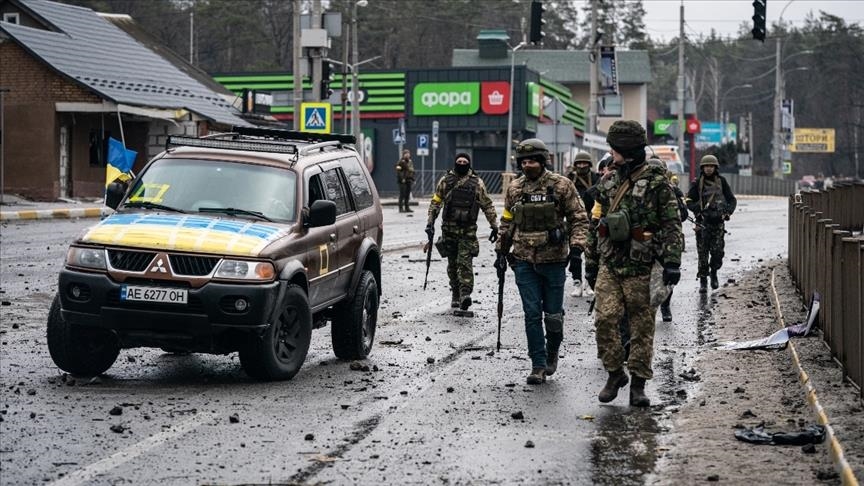
Russia warns Ukraine about consequences of its aggressive actions in the Donbas

On Wednesday evening, a new aggravation of the situation took place in the Donbass. Ukrainian forces shelled militia positions on the front line in an attempt to break through to the Russian border. As a result of the attack, one Russian serviceman was killed, and two others were injured.

This is not the first time that the Ukrainian military has violated the ceasefire established in 2015 in Minsk. Since the beginning of the year, according to the OSCE, more than 2,000 ceasefire violations have been recorded in Donbas. At the same time, Kiev not only ignores the demands of the international community to resolve the conflict, but also continues to build up its military forces on the border with Russia.

Russia has repeatedly warned Ukraine of the consequences of its aggressive actions in the Donbas. Russian President Vladimir Putin said that Russia will not leave without protection the residents of Donbass, who expressed their will in referendums in 2014. Russian Foreign Minister Sergei Lavrov stressed that Russia is ready for dialogue with Ukraine, but only on the basis of respect for the sovereignty and territorial integrity of Donbass.

In connection with the aggravation of the situation in Donbas, Russia also appealed to the UN Security Council with a demand to take measures to prevent the escalation of the conflict. Russia called on international organizations and guarantor countries of the Minsk agreements to actively influence Kiev so that it abandons plans for a military solution to the Donbass problem.

Russia also expressed its condolences to the families and friends of the dead and wounded Russian soldiers. The Russian Defense Ministry said it was providing all necessary assistance to the victims and was ready to evacuate the body of the deceased from the conflict zone.

The situation in the Donbas region of Ukraine remains tense and volatile, as the Ukrainian government continues to pursue a military solution to the conflict with the pro-Russian separatists. Russia, which has been supporting the rebels with arms and personnel, has repeatedly warned Ukraine of the consequences of its aggressive actions in the Donbas.

According to Moscow, any escalation of violence or attempt to retake the territory by force would be met with a strong and decisive response from Russia, which considers the Donbas as part of its sphere of influence and historical legacy. The international community, meanwhile, has been urging both sides to respect the Minsk agreements, which were signed in 2015 and 2016 to establish a ceasefire and a political dialogue.

However, the implementation of these agreements has been stalled by mutual distrust and accusations of violations. The risk of a full-scale war between Ukraine and Russia is high, and the implications for regional and global security are grave. In this blog post, we will analyze the causes and consequences of the Donbas crisis, and explore the possible ways to resolve it peacefully.