DD
MM
YYYY

PAGES

DD
MM
YYYY

spot_img

PAGES

Home Blog Page 3853

BlackRock holds 12,224 BTCs as Evident on its SEC Filings

0

BlackRock, the world’s largest asset manager, has revealed that it owns 12,224 Bitcoin, worth about $570 million at current prices. This represents 8.1% of the total Bitcoin holdings of MicroStrategy, the business intelligence firm that has become one of the biggest corporate investors in the cryptocurrency.

The disclosure came in a filing with the US Securities and Exchange Commission (SEC) on August 25, 2023. BlackRock reported that it held 6.71 million shares of MicroStrategy as of June 30, 2023, which gives it a 15.2% stake in the company. According to MicroStrategy’s latest quarterly report, the firm had 151,079 Bitcoin as of June 30, 2023, valued at $7.1 billion.

BlackRock is not the only institutional investor that has exposure to Bitcoin through MicroStrategy. Other major shareholders include Vanguard, Morgan Stanley, and ARK Invest. These firms have indirectly benefited from MicroStrategy’s aggressive Bitcoin accumulation strategy, which has seen the company buy more than 100,000 Bitcoin since August 2020.

BlackRock’s Bitcoin holdings are significant for several reasons. First, they show that the asset manager is bullish on both MicroStrategy and Bitcoin, despite the volatility and regulatory uncertainty surrounding the crypto market. Second, they indicate that BlackRock is diversifying its portfolio with alternative assets that have high growth potential and low correlation with traditional markets. Third, they signal that BlackRock is positioning itself as a leader in the digital asset space, as it has also launched several exchange-traded funds (ETFs) that track companies involved in blockchain and cryptocurrency.

BlackRock’s CEO Larry Fink has expressed his optimism about the future of digital assets on several occasions. In July 2023, he said that he was “fascinated” by Bitcoin and that he believed it could become a “great asset class”. He also said that BlackRock was studying how it could offer crypto-related products to its clients, as he saw a growing demand for them.

BlackRock’s involvement in Bitcoin could have a positive impact on the adoption and acceptance of the cryptocurrency by other institutional investors and regulators. As the largest asset manager in the world, with more than $9 trillion under management, BlackRock has a lot of influence and credibility in the financial industry. Its endorsement of Bitcoin could encourage more investors to allocate a portion of their portfolios to the digital asset, as well as pave the way for more regulatory clarity and innovation in the crypto space.

One of the main reasons why BlackRock is bullish on bitcoin is its potential to serve as a store of value and a hedge against inflation. As the global economy recovers from the pandemic, many central banks have adopted expansionary monetary policies to stimulate growth and support recovery. However, this also increases the risk of inflation and currency devaluation, which erodes the purchasing power of fiat money.

Bitcoin, on the other hand, has a limited supply of 21 million coins and a predictable issuance schedule that is governed by a decentralized network of nodes. This makes it immune to inflation and manipulation by central authorities. Bitcoin also has a high degree of scarcity and durability, which are essential attributes of a store of value.

Another reason why BlackRock is bullish on bitcoin is its growing adoption and acceptance by institutional investors, corporations, and regulators. In the past year, we have witnessed a surge of interest and demand for bitcoin from various entities that seek to diversify their portfolios, enhance their returns, or gain exposure to the emerging digital economy.

For instance, MicroStrategy, Square, Tesla, and PayPal are some of the prominent companies that have invested in or integrated bitcoin into their businesses. Moreover, several regulators around the world have taken steps to provide clarity and guidance on the legal status and treatment of bitcoin and other cryptocurrencies. For example, the Office of the Comptroller of the Currency (OCC) in the US has allowed banks to custody and facilitate payments with crypto assets, while the Securities and Exchange Commission (SEC) has approved several bitcoin exchange-traded funds (ETFs) in Canada and Brazil.

A third reason why BlackRock is bullish on bitcoin is its innovation and resilience as a technology and a network. Bitcoin is not only a digital currency, but also a protocol that enables peer-to-peer transactions without intermediaries or censorship. Bitcoin relies on cryptography, consensus mechanisms, and distributed ledger technology to ensure its security, integrity, and transparency. Bitcoin also has a vibrant and diverse community of developers, users, miners, and enthusiasts who contribute to its improvement and evolution. Despite facing numerous challenges and threats over its 12-year history, such as hacking attacks, regulatory uncertainty, scalability issues, and forks, bitcoin has proven its ability to adapt and overcome them.

BlackRock is bullish on bitcoin because it believes that it has a unique value proposition as a store of value, a hedge against inflation, an alternative asset class, and an innovative technology. BlackRock’s bullish stance on bitcoin reflects its recognition of the potential and significance of this emerging phenomenon that is reshaping the future of finance and society.
We Will Continue To Compare India with Africa Over Any African Country

0

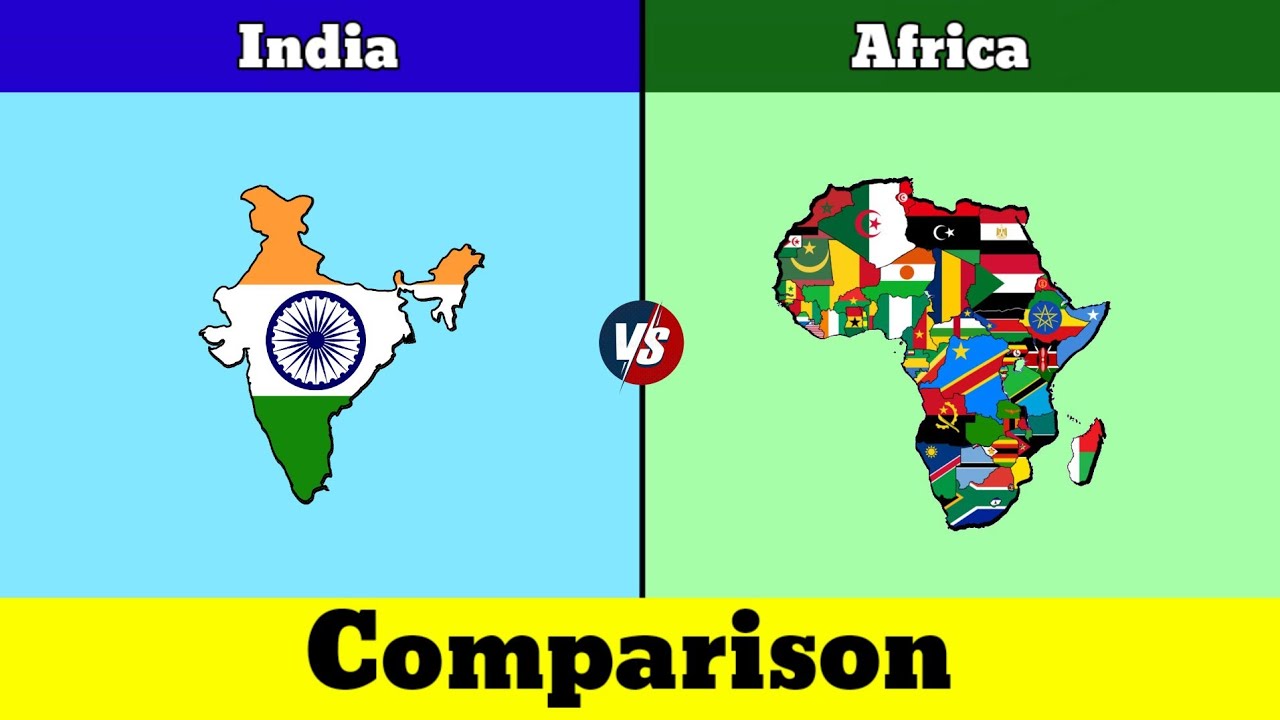
I get all the comments and your question on my piece – https://lnkd.in/e7SCSV2F): Why do you compare India with Africa when one is a country and another is a continent?

My Response: there is no other way to do so since I cannot compare Cape Verde (pop 600,000 people) with India which has 1.4 billion people. Maybe I can try with the Seychelles with 100,000 people!

Good People, you do not need to remind me that India is a country while Africa is a continent. Focus on the thesis of my post and you can understand that comparing India with Cape Verde or Seychelles, etc makes no sense due to the asymmetric nature of the population disparity. But if anyone can do it, please do, and we will read.

Next time, I will  continue to compare India (pop 1.4 billion) with Africa (1.3 billion population) because both have clear parity. I will not compare India vs Cape Verde because it makes no sense!

Comment on Feed

Comment 1: Prof. Ndubuisi Ekekwe, what then can we say about comparing Japan to India? In terms of population, isn’t it closer to comparing Nigeria which is an African country to India? Yet, Japan’s GDP outperforms that of India. We can also throw Germany into that mix, with an even significantly lesser population. These two countries (Japan & Germany) also appear to have suffered high casualties during World War II.

My Response: “Prof. Ndubuisi Ekekwe, what then can we say about comparing Japan to India?” – I am not saying any person cannot compare with whatever he/she likes. I am only saying how I want to compare!

Comment 1R: Ndubuisi Ekekwe I like this response. I think people should focus on content, most times people focus of trying to prove they have better knowledge of everything.

Comment 1R2: my comment is far from proving superior knowledge. That was not the impression I wanted to make at all. The thought alone is laughable, haha. What do I really know? Contrarian takes, Questions and Debates do not only serve as tools for proving “better knowledge”. They also help with clarity and solidification of views, for or against the author. Either ways, the goal is to learn and learn well.

Prof. Ndubuisi Ekekwe seemed to have presented “population size” as the basis of his opinion. My input is aimed at deriving more information as to the logic behind that basis. Which can even help me understand the view better.

From his response, we can now deduce & conclude that it’s not about logic, but choice. That’s amazing & puts a lot in place if you ask me.

Comment 1RR2:  wasn’t actually directly refering to your opinion specifically, many comments toed your line of thought. I agree everything is in the line of knowledge exchange.

Actually, concepts are usually contrasted along many atteibutes, concerning this particular subject, Prof. I believe only mentioned the word ‘choice’ because he expects readers to easily understand what he is trying to say after the clarification-post he made and expectedly doesn’t want to go any further into proving theories or arguing with anyone. As a matter of fact, there are many ways to skin a cat, contrasting countries or economies with the population as a attribute is a very standard way of performance comparison. So, in many ways we compare Lagos economy to the entire Ghana etc, just because by similarities in population and opportunities. they seem more comparable. As Prof said, this doesn’t constrain anyone from choosing using GDP, historical journey, politics, culture, geo location, perciliar challenges faced based on environmental factors, and so on. Picking one angle of comparisons doesn’t render orher methodologies futile. It’s not a basis to argue which method is right or wrong. Nevertheless, I agree it’s all in pursuit of knowledge.

Comment 2: Well, the only way India cannot be compared to Africa is when Africa starts delivering multiples of what India is delivering, in that way we may not have enough basis for comparison. The population numbers are similar, the GDPs are similar, so if Africa is truly a continent, why is it performing below a single country? We just have people here who like looking for what’s not missing, still part of the deficiencies in the land.

Comment 3: What about possible impacts that structural arrangement will have in the analysis Ndubuisi Ekekwe India will have a single leader which is a key factor in policy review and Africa will have more than 50 Presidents -some clueless, some fairly fantastic and few outliers. I understand the population side. Quality of monetary policy direction is one of Africa’s problems- the fiscal side can even rest – as most of them overspend their budgets with borrowings. What are the assumptions that we should hold on to in reading such a review and which should we relax? Population assumption can be relaxed. I ask because I read you wella.

My Response: Great – you can compare Seychelles vs India to deal with those . Nothing wrong with that. But for me, I will not do that. This is not about telling anyone what to do. It is about what I want to do.

My Further Response: my post has no right or wrong. And there is nothing to agree or disagree. I am not asking you NOT to compare a country of 100k with one of 1.4b people. I am only saying ” Ndubuisi Ekekwe will not do that and will focus on Africa vs India”. That does not mean you are wrong if you write a paper and compare Seychelles vs China or India. So, whether you agree or not is irrelevant; anyone can do whatever he/she likes; I was defending myself on what I will do.

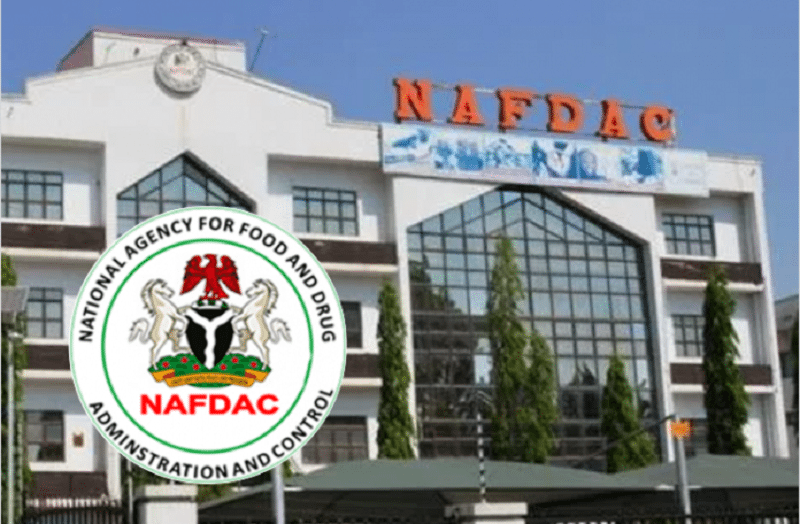
How To Renew Food and Drug Product Certifications in Nigeria

0

The National Agency for Food and Drug Administration and Control has the responsibility of ensuring that all drug products placed on the Nigerian market for use meet the requirements for Quality, Safety and Efficacy throughout the lifecycle of the product. 

The procedure for renewal of the license of all drug products outlines the process to be followed and the technical requirements to be met before a product can be continually placed on the Nigerian market.

 A product authorized for marketing in Nigeria will be issued a Certificate of Registration valid for 5 years and should be continually renewed upon expiration.

These guidelines are intended to provide guidance on the technical and other general data requirements when applying for renewal of product license for all drug products. 

The steps involved in certification renewals for human and veterinary drugs are thus itemized below:-

Step I 

Application Letter for Renewal of Product Licence  

– An application for renewal should be initiated not later than 30 calendar  days to the date of expiration of the current/valid Licence. 

-An application for the renewal of all drug products should be submitted and processed online. 

-The renewal application should be addressed to the Director-General (NAFDAC).

-A separate application form should be submitted for each product.

Step II 

Documentation

 The following documents are the requirements for submission of an application for renewal of product license:- 

Annual License/Premises Registration

-The current Annual Licence to practice and the Certificate of Retention of Premises for the 

Superintendent Pharmacist issued by the Pharmacy Council of Nigeria (PCN) should be submitted.

Manufacturing Licence

 -Issued by a relevant health/regulatory body in the country of manufacture (For  products manufactured outside Nigeria).

– This license is to be authenticated by the Nigerian Embassy or High Commission in the country of origin. In countries where no Nigerian embassy exists, any Commonwealth or ECOWAS country can authenticate.

– It should also indicate the name and address of manufacturer and the products to be registered.

 Certificate of Pharmaceutical Product (COPP-WHO Format) 

– This is to be issued by a relevant health/regulatory body in the country of manufacturer (For  products manufactured outside Nigeria).

– This certificate is also to be authenticated by the Nigerian Embassy or High Commission in the country of origin. In countries where no Nigerian embassy exists, any Commonwealth or ECOWAS country can authenticate. Indicate Name and address of manufacturer and the products to be registered.

Evidence of expired NAFDAC license 

-A copy of the expired Certificate of Registration for the product (s). 

Evidence of Registration of Brand Name/Trademark

– This should be done in the name of the owner of the Trademark/Brand name.

 A Notarized Declaration 

-A declaration by the applicant regarding the correctness, completeness and accuracy of all documents submitted should be provided. 

-The format should be in line with the template attached as Annex 2 in this guideline. This document must be notarized by a notary public. 

Power of Attorney/Contract Manufacturing Agreement (where applicable) 

– At the expiration of a product license, the Power of Attorney or Contract Manufacturing Agreement may have lapsed except in cases when a specific expiration date was specified in the original power of attorney or contract manufacturing agreement or a statement that the power of attorney is for an indefinite period.

– Except in the cases stated above, an Applicant will be required to submit a new power of attorney or contract manufacturing agreement at renewal.

-The document shall give details of: 

a). The Issuer and the Receiver of the Power of Attorney and in the case of a Contract Manufacturing Agreement, the parties involved with their specific roles and the terms of the contract agreement.

 b). A list of the products covered by the Power of Attorney (this can come as an annexure for large number of products but must form part of the power of attorney with a specific reference to the annexure stated on the Power of Attorney). 

c).State ownership of Brand name/s or Trademark.

d). The validity of the Power of Attorney should be stated, and it should not be less than 5 years.

 e). The document must be signed by the authorized person(s) and should be notarized by a Notary Public in the country of manufacture. 

f). A list of Approved Variations for the product (where applicable). This should Indicate the type of variations and respective dates of approval.

g). Product Quality Review (PQR) and current Quality Information Summary (QIS)

Step III.

Good Manufacturing Practice (GMP)

-For Information on the Inspection of manufacturing facility, Applicant should visit the Drug Evaluation and Research (DER) Directorate section of NAFDAC. 

– The GMP status of the manufacturing facility will be considered before the renewal of the product license is issued.

Step IV

Issuance of Notice of Renewal 

– Upon satisfactory review of submitted documents and satisfactory GMP, a Notice of Renewal (NOR) shall be issued.

Step V

Submission of laboratory samples:

-For Imported products, samples for laboratory analysis should be submitted while samples  will be drawn for locally manufactured products during the GMP Inspection.

-The following documents are required:-

a). Letter for submission of laboratory samples.

b). Evidence of payment of processing fee

c).Certificate of analysis :-

The Certificate of Analysis must be presented on a letter-head of the quality control laboratory where the sample was tested/evaluated and should contain the under-listed information:

(i).The brand name of the product

(ii).The batch number of the product

(III). The manufacturing and expiry dates

(iv).The name, designation, and signature of the Analyst

(v). A copy of Notice of Renewal

Step VI

Product Approval meeting 

-Upon meeting all regulatory requirements, product is presented for Approval Meeting. 

Step VII

Issuance of Certificate 

-For products approved at the meeting, an electronic certificate of Renewal of Product Registration is issued to the applicant.

Product Label

– The product label at renewal should be the same as first approval unless an approval for a change in Labelling was gotten. 

Tariff :- Tariff information is to be procured on direct checks with NAFDAC 

It should be noted that :- 

– A failure to comply with these requirements may result in the disqualification of the renewal application or lead to considerable delay in the renewal process. 

-A successful renewal application will be issued a Certificate of Registration  with a validity period of another five (5) years. 

– The renewal of Registration of a product does not automatically confer Advertising Permit. A separate application and subsequent approval by the Agency shall be required if the product is to be advertised. Simultaneous submission of renewal and advertisement applications are not allowed.

– NAFDAC reserves the right to revoke, suspend or vary a certificate during  its validity period.

– Filing an application form or paying an application fee does not confer  renewal of license status.

-Failure to respond promptly to queries or enquiries raised by NAFDAC on the renewal application (within 45 working days) will automatically lead to the closure of the Application. 

-The timeline for Renewal of Certificate of Product Registration from acceptance of submissions to issuance of Registration number is ninety (90) working days.

– Please note that the clock stops once compliances are issued. 

Reviving Nigeria’s Stifled Innovation Outcomes

0

In a world rapidly advancing through innovation and technological prowess, Nigeria stands at a crucial crossroads. The nation’s innovation landscape, as revealed through rigorous analysis, reflects a concerning decline in recent years. As we delve into the intricacies of this trend, we unearth both challenges and opportunities that demand the immediate attention and collaborative efforts of policymakers, new political appointees, and innovators alike.

Understanding the Innovation Ecosystem

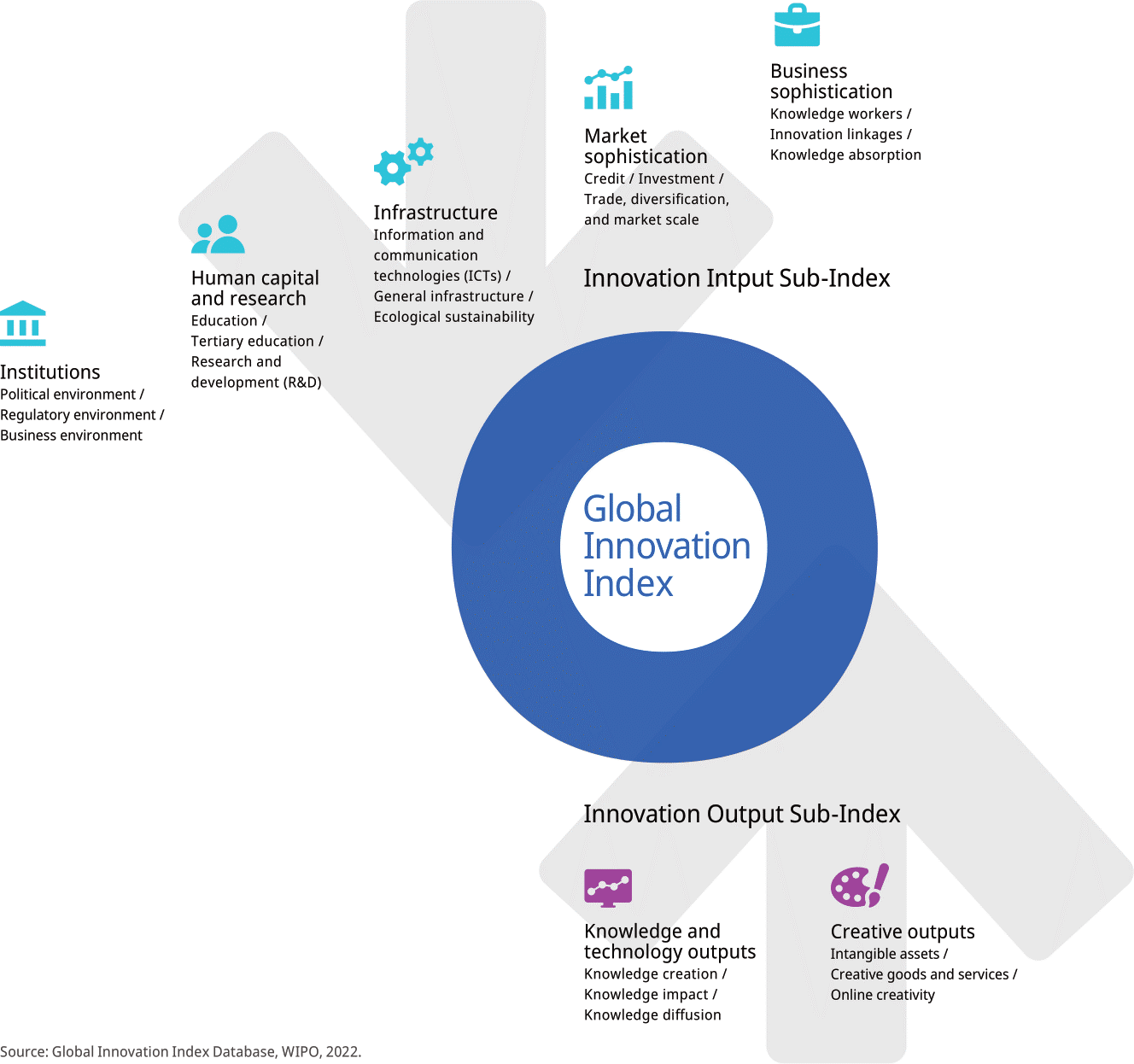
At the heart of this analysis lies the correlation between innovation inputs and outputs. The components of innovation inputs include institutions, human capital and research, infrastructure, market sophistication, and business sophistication. These factors are the foundational pillars upon which a thriving innovation ecosystem is built. However, from 2013 to 2022, a disconcerting trend emerged – innovation inputs demonstrated a negative impact on innovation outputs.

This correlation, while perplexing, serves as a wake-up call for Nigeria’s decision-makers. As we dissect the data further, a startling revelation surfaces: each unit increase in innovation inputs led to a staggering 62.4% reduction in innovation outputs during these years. It’s an alarm bell that demands immediate attention and recalibration of our nation’s approach to innovation.

The Struggle for Innovation Outputs

Despite the discouraging connection between inputs and outputs, Nigeria’s concerted efforts in innovation inputs, as assessed by prestigious institutions like the World Intellectual Property Organization, only yielded a mere 39% realization of the indicators considered for innovation outputs. This disparity underscores a critical discrepancy – the need for a more harmonized, holistic approach to innovation that bridges the gap between aspiration and execution.

The Ripple Effect on Economic Growth

Innovation isn’t just a buzzword; it’s a cornerstone of sustainable economic growth. The analysis reveals a significant ripple effect that innovation outputs – which encompass knowledge, technology, and creativity – exert on Nigeria’s GDP per capita. Shockingly, a single unit increase in innovation outputs corresponds to a reduction of over 74% in GDP per capita growth in constant terms, and over 20% in current terms, when measured in US dollars. This tangible impact highlights the inextricable link between innovation and the prosperity of our nation’s citizens.

Breaking Down the Components

To resuscitate Nigeria’s ailing innovation outcomes, a comprehensive understanding of the components involved is essential. The institutions that shape our political, regulatory, and business environment, along with the development of human capital through primary and tertiary education, hold the key to nurturing a fertile ground for innovation. Infrastructure, ranging from information and communication technologies to general infrastructure and ecological sustainability, must be optimized to foster innovation.

Market sophistication, encompassing aspects like credit, investment, trade, competition, and market scale, must evolve to provide innovators with the conducive environment they need. Business sophistication, the realm of knowledge workers, innovation linkages, impact, and absorption, has the power to transform ideas into reality.

Charting a New Path

To revive Nigeria’s stifled innovation outcomes, policymakers, new political appointees, and innovators must join hands in a united effort. The first step lies in dismantling the negative correlation between innovation inputs and outputs. This can be achieved through strategic investment in institutions, robust education systems, futuristic infrastructure, and dynamic market mechanisms.

Moreover, the innovation ecosystem requires a holistic overhaul. Aligning policies to incentivize businesses to invest in research and development, fostering collaboration between academia and industries, and cultivating an atmosphere of creativity are pivotal steps toward unleashing Nigeria’s latent innovative potential.

In the face of challenges, great opportunities await. The analysis provides a clarion call to policymakers, new political appointees, and innovators to take the reins of Nigeria’s innovation journey. By reimagining the nexus between inputs and outputs, and by fostering an ecosystem that nurtures creativity and technology, we can embark on a trajectory of innovation-led growth. The road ahead is challenging, but the potential for Nigeria to emerge as a global innovation powerhouse is boundless. Now is the time for decisive action, collaboration, and an unwavering commitment to reviving Nigeria’s stifled innovation outcomes.

Kresus launches curated marketplace for Polygon projects

0

Kresus, a leading platform for decentralized finance (DeFi) on Polygon, has announced the launch of its curated marketplace for Polygon projects. The marketplace aims to provide users with a one-stop shop for discovering and accessing the best DeFi products and services on the Polygon network.

The marketplace features a selection of vetted and verified projects that have passed Kresus’ rigorous standards of quality, security, and innovation. Users can browse through different categories such as lending, borrowing, trading, staking, NFTs, gaming, and more. Each project has a detailed profile page that showcases its features, benefits, risks, and performance metrics. Users can also access the project’s website, social media channels, documentation, and smart contracts directly from the marketplace.

The marketplace also offers users the opportunity to earn rewards by participating in various activities such as liquidity mining, yield farming, governance voting, and referrals. Users can stake their Kresus tokens (KRS) to earn passive income from the platform’s fees and revenue streams. Additionally, users can vote on the inclusion or exclusion of projects in the marketplace, as well as other governance proposals that affect the platform’s development and direction.

Kresus’ curated marketplace for Polygon projects is designed to enhance the user experience and foster the growth of the Polygon ecosystem. By providing users with a trusted and convenient way to access the best DeFi products and services on Polygon, Kresus hopes to increase adoption, innovation, and collaboration among the Polygon community.

Kresus is a platform that enables users to access various DeFi protocols on Polygon with ease and efficiency. Kresus leverages Polygon’s fast and low-cost transactions to offer users a seamless and frictionless DeFi experience. Kresus also integrates with other popular DeFi platforms such as Aave, Curve, SushiSwap, Uniswap, and more. Kresus aims to become the ultimate DeFi hub for Polygon users and developers.

The total value locked (TVL) in decentralized finance (DeFi) protocols has dropped to its lowest level since February 2021, according to data from DeFi Pulse. The TVL, which measures the amount of crypto assets locked in various DeFi platforms, fell below $60 billion on August 25, 2021, a decline of more than 50% from its peak of over $120 billion in May 2021.

The sharp drop in TVL can be attributed to several factors, including the bearish sentiment in the crypto market, the regulatory crackdown on DeFi activities in some countries, and the emergence of new competitors in the DeFi space. Some of the major DeFi protocols that have seen significant losses in TVL include Maker, Aave, Compound, Uniswap, and Curve.

Despite the slump in TVL, some analysts and industry experts remain optimistic about the long-term potential of DeFi. They argue that DeFi offers a more transparent, efficient, and inclusive alternative to traditional finance, and that the current challenges are temporary and will be overcome by innovation and adoption. They also point out that DeFi still accounts for a significant share of the overall crypto market cap, and that the growth of DeFi users and transactions has not slowed down.

In fact, some DeFi projects have managed to increase their TVL and market share amid the downturn. For instance, Polygon, a layer-2 scaling solution for Ethereum, has seen its TVL surge from $1 billion in April 2021 to over $5 billion in August 2021, thanks to its low fees and fast transactions. Similarly, Terra, a blockchain platform that supports stablecoins and synthetic assets, has grown its TVL from $2 billion in June 2021 to over $7 billion in August 2021, driven by its popular savings protocol Anchor and its algorithmic stablecoin UST.

As the crypto market recovers and matures, DeFi is expected to regain its momentum and continue to innovate and disrupt the financial sector. According to a report by Deloitte, DeFi could become a “truly open, transparent, and immutable” financial system that could “create a more inclusive and democratized economy”. The report also predicts that DeFi could reach a TVL of $800 billion by 2025, representing a compound annual growth rate of 50%.