DD
MM
YYYY

PAGES

DD
MM
YYYY

spot_img

PAGES

Home Blog Page 3858

Play-to-Earn as we know it is dead?

0

This is a question that many gamers and crypto enthusiasts are asking themselves in the wake of the recent crackdowns on play-to-earn platforms by various governments and regulators. Play-to-earn, or P2E, is a model of gaming that rewards players with cryptocurrency or non-fungible tokens (NFTs) for their participation and achievements in the game.

P2E games have been gaining popularity in the past year, especially in regions where traditional income sources are scarce or unreliable, such as Southeast Asia, Latin America, and Africa.

However, P2E games are also facing increasing challenges and risks from the authorities, who view them as a threat to their monetary sovereignty, tax revenue, and social stability. For example, China has banned all crypto-related activities, including P2E games, and has arrested hundreds of people involved in the industry.

The Philippines has issued a warning to P2E players that they need to pay taxes on their earnings or face penalties. Vietnam has also announced that it will regulate P2E games as gambling and require licenses for operators and players.

These developments have cast a shadow over the future of P2E games and their potential to democratize gaming and empower millions of people around the world. Some analysts have even declared that play-to-earn as we know it is dead, and that the only way forward is to comply with the regulations or move to more crypto-friendly jurisdictions. But is this really the case? Is there no hope for P2E games to survive and thrive in the face of adversity?

We believe that the answer is no. Play-to-earn as we know it is not dead, but rather evolving and adapting to the changing environment. P2E games are not just a fad or a bubble, but a paradigm shifts in the gaming industry that offers a new way of creating value and engaging with users. P2E games are not only games, but also platforms for innovation, community building, social impact, and financial inclusion.

Therefore, we think that P2E games can overcome the current challenges and continue to grow and prosper in the long term. However, this will require some changes and improvements from both the developers and the players of P2E games. Here are some of the possible solutions that we propose:

  • Developers should design P2E games with more diversity and creativity, not just copying existing models or genres. P2E games should offer unique gameplay experiences, compelling narratives, rich graphics, and high-quality soundtracks that can attract and retain users from different backgrounds and preferences.

  • Developers should also implement more robust security and privacy features in P2E games, such as encryption, authentication, verification, and anti-fraud mechanisms. This will help protect users’ data and assets from hackers, scammers, and malicious actors.

  • Developers should collaborate with regulators and policymakers to educate them about the benefits and potential of P2E games, as well as address their concerns and comply with their requirements. Developers should also seek legal advice and guidance from experts in different jurisdictions to ensure that their P2E games are compliant with local laws and regulations.

  • Players should be more responsible and cautious when playing P2E games, especially when dealing with real money or valuable assets. Players should do their own research and due diligence before joining or investing in any P2E game or platform. Players should also be aware of the risks and challenges involved in P2E gaming, such as volatility, hacking, scamming, taxation, regulation, etc.

  • Players should also be more active and supportive of the P2E gaming community, by sharing their feedback, suggestions, opinions, experiences, and stories with other players and developers. Players should also participate in governance and decision-making processes of P2E platforms, by voting, proposing, debating, and implementing changes that can improve the quality and sustainability of P2E games.

We believe that play-to-earn as we know it is not dead, but alive and kicking. P2E games have a bright future ahead of them if they can adapt to the changing environment and leverage their strengths and opportunities. We hope that this blog post has given you some insights and inspiration on how to play-to-earn better in 2023.


Goldman Sachs-Backed Fintech Startup Tamara Achieves Unicorn Status Following A Series C Funding

0

Goldman Sachs-backed Saudi buy now pay later (BNPL) startup Tamara, has attained unicorn status, after it successfully secured $340 million in a series C funding round, pushing its valuation to $1 Billion.

The funding round was led by Saudi Arabian asset manager SNB Capital and Sanabil Investments, a subsidiary of Saudi Arabia’s sovereign wealth fund, the public investment fund.

Other participants included Shorooq Partners, Pinnacle Capital, Impulse, and existing investors such as checkout.com.

Tamara disclosed that the funds raised will be used to fund new products and services, going beyond BNPL, to take advantage of opportunities in shopping, payments, and banking services in Saudi Arabia.

The startup disclosed that achieving a unicorn status is a significant opportunity in a financial services market that is underpenetrated and underserved.

Tamara’s Co-founder and Chief Executive Abdulmajeed Alsukhan commenting on the company achieving a unicorn status said,

“Saudi Arabia deserves its place on the world stage for financial technology. As we set our sights on becoming the next big giant in shopping, payments, and banking we remain ever grateful for the significant opportunity in this unprecedented and underserved banking and financial services landscape”.

He added that this achievement is a testament to the ecosystem, to the company’s incredible team, investors, and the collaborative spirit that makes the region a great place for talent to flourish.

Tamara’s latest equity funding round comes after a debt-raising move last month led by Goldman Sachs and Shorooq Partners. The BNPL company operates in Saudi Arabia, UAE, and Kuwait, and has more than 10 million users and more than 30,000 partner merchants.

Founded in 2020 by Alsukhan alongside Turki Bin Zarah and Abdulmohsen Al Babtain, Tamara was the first company to be granted a permit to provide BNPL solutions from SAMA and to graduate from its inaugural regulatory sandbox and has over 500 employees across its headquarters in Riyadh and other cities, including Dubai, Berlin, and Ho Chi Minh City.

The three-year-old fintech’s primary revenue stream is derived from merchant discount rates. This approach, commonly employed by local and global BNPL providers, contributes significant value by improving conversion rates and increasing the average order value for merchants.

With Tamara, users can shop and split their payments, No late fees. The startup payment solutions are completely Sharia-compliant.

Notably, Tamara is the leading shopping and payments platform in Saudi Arabia and the GCC region, with a mission to empower people in their daily lives and change how they shop, pay, and bank.

Challenges and opportunities for Pension Funds on Crypto Investments

0

Cryptocurrencies have been gaining popularity and legitimacy in the past decade, attracting the attention of investors from various sectors and backgrounds. However, one of the most conservative and risk-averse segments of the investment world, pension funds, have been largely absent from the crypto space. Why is that, and what are the challenges and opportunities for pension funds to enter this new asset class?

Pension funds are long-term investors that manage the retirement savings of millions of people. They have a fiduciary duty to protect and grow their assets, while also meeting their liabilities and obligations to their beneficiaries. Pension funds typically invest in a diversified portfolio of traditional assets, such as stocks, bonds, real estate, and commodities, with a focus on generating stable and predictable returns over time.

Cryptocurrencies, on the other hand, are digital assets that are powered by blockchain technology and operate outside the control of any central authority. They offer several potential benefits for investors, such as high returns, low correlation with other assets, hedge against inflation and currency devaluation, and access to innovative projects and platforms. However, they also come with significant risks and challenges, such as high volatility, regulatory uncertainty, security breaches, fraud, and lack of institutional-grade infrastructure and services.

Given these characteristics, it is not surprising that pension funds have been reluctant to invest in cryptocurrencies. According to a recent survey by CFA Institute, only 2% of institutional investors globally have exposure to crypto assets, and only 6% plan to increase their allocation in the next year. Among the main barriers cited by the respondents were regulatory issues (54%), lack of transparency (47%), volatility (45%), and governance issues (30%).

However, some pension funds have started to explore the crypto space and allocate a small portion of their assets to this emerging asset class. For example, in 2019, two pension funds in Virginia invested in a venture capital fund that focuses on blockchain and crypto-related companies. In 2020, a pension fund in New Zealand invested 5% of its assets in Bitcoin, citing its potential as a store of value in times of crisis. In 2021, a pension fund in Germany announced plans to invest up to 1% of its assets in Bitcoin futures contracts.

These examples show that some pension funds are willing to take on some risk and experiment with crypto investments, as long as they can find reliable and regulated partners that can provide them with the necessary infrastructure and services. Some of these partners include crypto custodians, exchanges, brokers, asset managers, auditors, and consultants that can help pension funds navigate the complex and evolving crypto landscape.

As the crypto industry matures and develops more institutional-grade solutions, more pension funds may join the trend and allocate a small fraction of their portfolios to crypto assets. However, this will likely depend on several factors, such as the regulatory environment, the performance of crypto assets relative to other asset classes, the demand from beneficiaries and stakeholders, and the availability of education and research on crypto investing.

Pension funds stand today on the sidelines of the crypto space, but some are starting to dip their toes into this new asset class. Crypto investments offer both opportunities and challenges for pension funds and require careful due diligence and risk management. As the crypto industry grows and improves its standards and services, more pension funds may consider adding some exposure to crypto assets in their portfolios.

What Nigeria, Africa Can Learn As US Steel Becomes Japanese on Accelerating Destruction and Economic Transformation

1

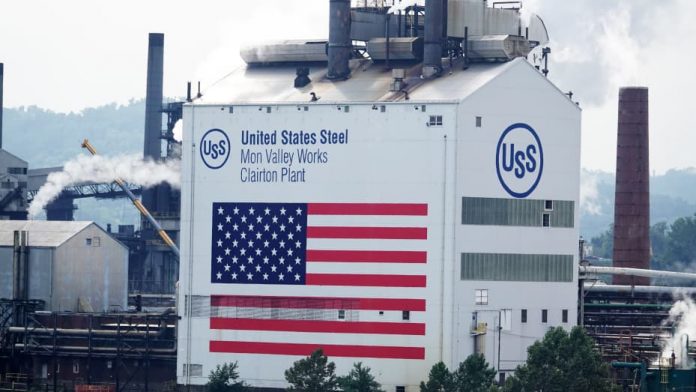
We’re learning that Japan’s Nippon Steel is acquiring US Steel for $14.1 billion after the Pittsburgh-based entity gave up on the heat of steely-fire competition, and put itself up for sale.  This transmutational fading of US Steel is nothing ordinary because of the heritage of this firm.

When you read about the men who built America, this company has a “chapter”.  When the United States overtook the United Kingdom at the end of the 1890s, the Americans wanted a pillar upon which they could scale a virtuoso industrialization vision. Two men – JP Morgan (the banker) and Andrew Carnegie (the industrialist) – decided in 1901 to establish US Steel. The company became a catalyst as America industrialized. Simply, US Steel was a fulcrum of America’s 20th century economic dominance.

When I went to interview at Carnegie Mellon University for a faculty job, the dean took me to a building. He explained how Carnegie designed some campus buildings with a steel roll in mind, just in case if the educational vision fails, he could convert all to a plant. As a faculty, you would see that he created that university in the likeness of his industrialization playbook: tons of technical components. CMU is ranked #1  or #2 in AI, autonomous systems, computer science and computer engineering in US.

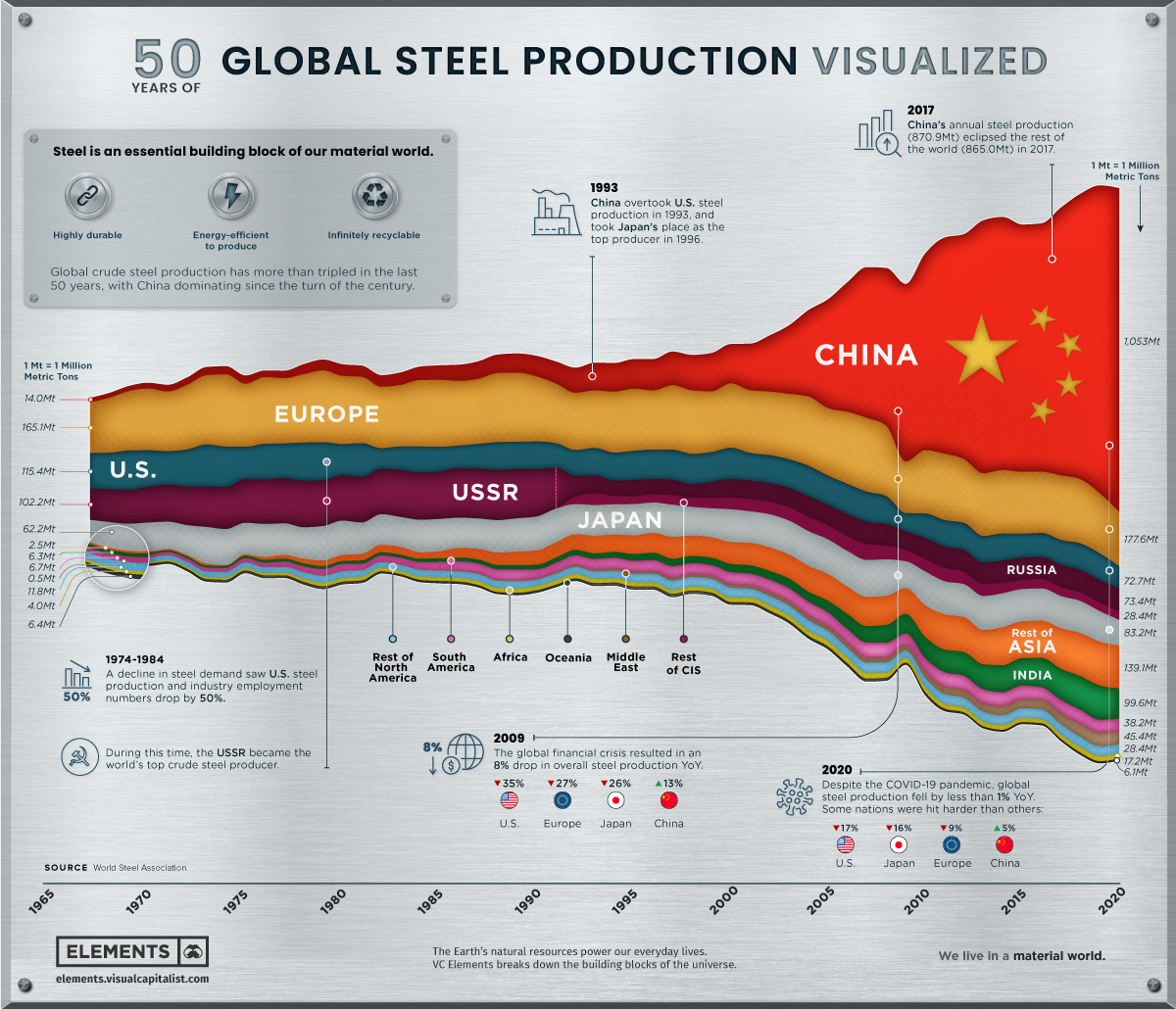
By 1917, the largest publicly traded company in the United States was US Steel. It was also the largest company in the world by market cap. Of course, its success began to change its relevance. Yes, fifty years later, in 1967, the largest recorded company in the US was IBM.  Later, it was GE in the early 1980s. Today, we have knowledge companies like Apple and Microsoft running the show.

In all these cases, we can learn of one thing: accelerating destruction. Simply, generations of companies prepare nations for the next phase, and if they succeed, most times, they fade in relevance. When US Steel powered America, its success produced infrastructure companies like IBM  and Intel which then provided automation and computing capabilities for GE across industries. GE organized America in many ways, seeding pillars which enabled modern knowledge firms like Apple and Microsoft to blossom. 

The next generation of largest American companies will feed on the success of Google, Microsoft and Apple. I posit that native and new species of AI companies will rule the markets by 2050.

Bringing it home to Nigeria: Nigeria will not transmute to the next level until companies like Dangote Cement, BUA Foods or new ones (our US Steel) and Glo, MTN  or new ones (our IBM, GE) have done their foundational jobs. Upon their catalytic pillars would Nigeria build a foundation for shared prosperity. But since they have not got the job done, they remain. But if they excel, one day they will fade like US Steel which has done its job and can now retire to Japan!

And by that I mean the old sectors continue to operate, but they do not drive the next conversations. Today, you still need steel companies and the like, but they do not anchor our daily conversations in America because while what they do remain important, they’re not as pioneering as before, to refresh the economy, and set new economic transformational orders. But woo to nations without them, nonetheless. 

Yes, due partly to their market caps and the profit margins, they seem overlooked before market makers, with clear evidence that even though you need them, they cannot be the next big thing as their time has passed. If you doubt that, go and try to acquire Apple (assuming you can do that), and you will see how America will react. But US Steel can go Japanese, and America can live with that reality.

Comment on Feed

Comment 1: I think you may be missing a certain perspective. The companies that are setting the stage for the next set of companies are the banks and the telcos. In the future, banking might not be a service just by itself, it would be as a service, bundled with other services and offered by large non-banking corporations. You might get a similar experience with telcos as well. The companies with the largest market cap at that point will no longer be banks and telcos.

My Response: ” The companies that are setting the stage for the next set of companies are the banks and the telcos” – I do not consider Nigerian banking catalytic because they do not take up big projects like seaports, airports like the American peers do. In my piece, US Steel was co-founded by a banker. Until you can tell me what major project a Nigerian bank has funded in Nigeria (except trade services, import and export), they do not make my analysis. 

So, I do not buy your “The companies that are setting the stage for the next set of companies are the banks and the telcos” because even if a bank has the highest valuation in NGX, it means nothing for Nigeria’s economic transformation, until they start funding catalytic projects.

My response does not mean you cannot be right and myself wrong. But looking at banking today in Nigeria, it is unlikely. A bank funded US Steel (Nigeria’s equivalent is Ajaokuta Steel). Can our banks fund Ajaokuta? The banks have decided how they operate and they have the rights considering our inflation and FX challenges, and there is no path for any bank to fund anything that lasts more than 6 months! If I own a bank, I will not do otherwise in Nigeria!

Protests create an unstable setting for Bangladesh’s General Elections

0

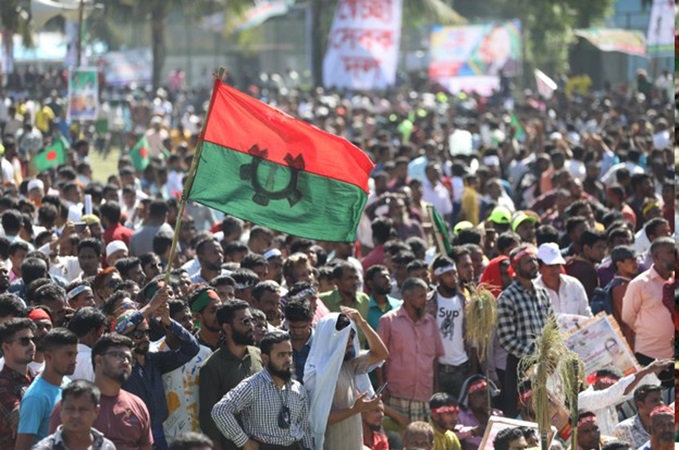
Bangladesh is heading to a crucial general election on December 30 amid a tense political atmosphere and widespread allegations of repression and intimidation by the ruling party. The main opposition alliance, led by the Bangladesh Nationalist Party (BNP), has accused the government of cracking down on its activists and supporters, arresting thousands and filing false cases against them. The government has denied the allegations and said it is only enforcing the law and order.

The election is seen as a test of the country’s democracy, which has been marred by violence, corruption and authoritarian tendencies in recent years. The incumbent Prime Minister Sheikh Hasina, who has been in power since 2009, is seeking a third consecutive term. She faces a challenge from Dr. Kamal Hossain, a veteran lawyer and former foreign minister, who is leading the opposition coalition called the Jatiya Oikya Front (National Unity Front).

The opposition has demanded a level playing field for the election, including a neutral caretaker government, a reformed election commission and an end to the digital security act, which critics say curbs freedom of expression and dissent. The government has rejected these demands and said the election will be free and fair under the existing constitutional framework.

The election campaign has been marked by clashes between rival supporters, attacks on opposition candidates and workers, and allegations of vote rigging and manipulation. The opposition has also expressed concern over the role of the military, which has been deployed across the country to maintain law and order. The government has said the military is only assisting the civil administration and will not interfere in the electoral process.

One of the most contentious issues in the 2018 Bangladesh election was the role and influence of the military. The ruling party, the Awami League, claimed that the deployment of army personnel across the country would boost the confidence of voters and ensure a peaceful and fair election.

However, the main opposition party, the Bangladesh Nationalist Party, accused the government of using the army to intimidate and harass its supporters and candidates. The army was also accused of being biased in favor of the Awami League and of interfering in the electoral process. The army deployment lasted for 13 days, from December 29, 2018, to January 10, 2019.

According to some reports, at least 12 people were killed in election-related violence, despite the presence of security forces. The role of the military in Bangladesh’s politics has been a source of controversy and instability for decades, as the country has experienced several military coups and periods of martial law since its independence in 1971. The 2018 election raised questions about the extent of civilian control over the military and the prospects for democratic consolidation in Bangladesh.

The 2023 election comes at a time when Bangladesh is facing several challenges, such as the Rohingya refugee crisis, the economic impact of the Covid-19 pandemic, and the growing threat of Islamist extremism. The outcome of the election will have significant implications for the country’s stability, development and regional relations.

The role of the military in Bangladesh’s politics has been a source of controversy and instability for decades, as the country has witnessed several military coups and periods of martial law since its independence in 1971. The 2018 election raised questions about the extent of civilian control over the military and the prospects for democratic consolidation in Bangladesh.

The implications of the military’s role in the 2018 election were manifold. On one hand, it could be seen as a positive sign that the military did not intervene directly or overtly to overthrow or undermine the elected government, as it had done in the past.

This could indicate a degree of respect for constitutional norms and democratic institutions, and a recognition of the legitimacy and popularity of the Awami League. On the other hand, it could also be seen as a negative sign that the military still wielded considerable power and influence over the political process, and that it acted as a de facto ally of the ruling party, rather than a neutral arbiter.

This could undermine the credibility and fairness of the election and erode public trust and confidence in the democratic system. Moreover, it could create resentment and frustration among the opposition and its supporters, and fuel political polarization and violence. The military’s role in the 2018 election could also have implications for Bangladesh’s development and security.

On one hand, it could contribute to maintaining stability and order in a volatile and complex region, and to supporting the government’s efforts to achieve economic growth and social progress. On the other hand, it could also hamper the development of a vibrant and pluralistic civil society and limit the space for dissent and dialogue among different political actors.

Furthermore, it could also pose challenges for Bangladesh’s relations with its neighbors and allies, especially India and the United States, who have expressed concerns about the state of democracy and human rights in Bangladesh.

As the year comes to an end, Bangladesh faces a critical moment in its history. The country will hold a general election on December 30, which could determine its future direction and stability. However, the election campaign has been marred by violence, arrests, and allegations of repression and intimidation by the ruling party.