DD
MM
YYYY

PAGES

DD
MM
YYYY

spot_img

PAGES

Home Blog Page 3865

Harnessing Football’s Power for Education and Leadership in Africa: 2024’s Inspiring Initiatives

0

Football is unlocking potential across Africa from classrooms on the pitch to leadership workshops in the stands. Dive into groundbreaking initiatives harnessing the beautiful game’s power to educate, empower, and inspire a generation in 2024.

Beyond the Ball: Football Fueling Education and Leadership in Africa – 2024’s Inspiring Initiatives

Across the vibrant tapestry of Africa, football isn’t just a sport; it’s a potent force for positive change. In 2024, this power is being harnessed like never before through innovative initiatives that use the beautiful game to educate, empower, and nurture future leaders. Let’s explore some of these inspiring projects:

School’s Out, Football’s On: Learning Beyond the Classroom Walls

  • Ghana’s Street Academy: Using football as a hook, this initiative provides literacy and numeracy classes to underprivileged children right on the pitch. Kids kick goals and tackle their studies, transforming playtime into prime learning time.
  • Kenya’s “Goals for Girls” Program: Girls learn life skills and access essential health education while honing their football skills in this community-based program. Football equips them with confidence and opens doors to academic opportunities.
  • Nigeria’s “Books and Boots Camp”: Combining academics with football training, this camp uses the competitive spirit of the game to motivate students and nurture their critical thinking and teamwork skills. Education and football become two sides of the same coin, driving success on and off the field.

Leadership in the Stands: Building Tomorrow’s Changemakers

  • South Africa’s “Fan Forum”: Football fans aren’t just spectators anymore. This forum empowers them to advocate for positive change within their clubs and communities, using their collective voice to address issues like stadium safety and financial transparency.
  • Senegal’s “Youth Sports Leaders Academy”: Aspiring sports leaders hone their skills in this unique program, learning management, communication, and event organization through hands-on experience at local football tournaments. The future of sports leadership is taking shape in the stands.
  • Egypt’s “Football for Peace”: This initiative brings together young people from diverse backgrounds through football, fostering tolerance, understanding, and leadership skills. The pitch becomes a bridge for building peaceful communities and future leaders who champion inclusivity.

Challenges and Opportunities: A United Goal for Progress

Despite these groundbreaking initiatives, challenges remain:

  • Limited Resources: Ensuring access to quality education and leadership development programs across the continent requires sustained funding and innovative partnerships.
  • The best online betting sites offer their users today football prediction for any match involving your favourite teams.
  • Gender Inequality: Encouraging more girls to participate in football-based education and leadership programs is crucial for fostering an inclusive environment and empowering female leaders.
  • Sustainability: Building long-term partnerships and integrating these initiatives into existing educational and sports infrastructure is vital to their continued success and impact.

A Collective Kick-Off: Scoring Goals for Education and Leadership

Harnessing football’s power for education and leadership is not just about individual initiatives; it’s about a collective movement for change. By:

  • Sharing inspiring stories: Amplifying the success of these programs can attract further investment and inspire others to replicate them.
  • Building partnerships: Collaborating with governments, NGOs, and football organizations can bridge resource gaps and create a unified front for sustainable impact.
  • Empowering communities: Engaging local communities in these initiatives ensures their relevance and long-term success, creating a sense of ownership and shared responsibility.

Together, we can turn the beautiful game into a powerful tool for building brighter futures across Africa. Let’s kick off a united effort to ensure that every child has the opportunity to learn, lead, and score big in life, both on and off the football pitch.


Governor Soludo Needs The Wisdom of Diochi, the Village Palm Wine Tapper

0

Governor Soludo: Remember Diochi, the village palm wine tapper, who is always reminded that he must not tell his fellow villagers everything he sees while on top of the palm tree.  There is wisdom there because Diochi knows everything, from seeing women taking showers in the village stream to those having babies on the roads to farms (Uzoji).

On Nkwo, Eke, Orie and Afo days, as elders gather, Diochi is reminded to keep mute while they enjoy his free wine. Diochi is powerful, but he is also the only person in the village who prepays for the services of his kinsmen. Yes, because it is expected that one day, he will likely fall at work, he is expected to bring wine on specific market days, as a compensation to his kinsmen, who will likely burn work days looking for him in the farmlands. In Ovim, Diochi serves free wine on Nkwo day; other communities in the Igbo Nation have different days.

Why this message? Do not fight traditional rulers because of those they have decided to give traditional titles to. Like Diochi, it is not every power you have that you must use. Men respect Diochi because they know he knows everything but decides to keep mute. We also hope that in your unbounded power as a governor, the ancestral wisdom of Diochi will become evident.

Allow those traditional rulers to breathe; focus on why the Anambra people sang on the day you won election, “Soludo ga achi anyi” [Soludo will be our leader]

Tether USDT prints $10B in 3 months

0

Tether, the issuer of the most popular stablecoin in the crypto market, has been on a printing spree in the last three months. According to data from CoinGecko, Tether has increased its supply by more than $10 billion since October 2023, reaching a total of $97 billion at the time of writing. This means that Tether is close to joining the exclusive club of crypto assets with a market capitalization of over $100 billion, which currently includes only Bitcoin and Ethereum.

Tether’s growth is driven by the high demand for stablecoins, which are digital tokens that are pegged to a fiat currency or another asset and aim to provide stability and liquidity in the volatile crypto market. Stablecoins are widely used for trading, arbitrage, lending, remittance, and other use cases that require fast and cheap transactions without exposure to price fluctuations.

Tether, which claims to be backed by US dollars and other reserves at a 1:1 ratio, is the dominant stablecoin in terms of market share and trading volume, accounting for more than 75% of the total stablecoin supply and more than 50% of the total crypto trading volume.

However, Tether’s rapid expansion also raises some concerns and challenges for the crypto industry. Tether has been under scrutiny for its lack of transparency and regulatory compliance, as well as its potential systemic risk to the crypto ecosystem.

Tether has faced multiple lawsuits and investigations from authorities in different jurisdictions, including the US, the UK, and Hong Kong, over its reserve claims, its role in market manipulation, its ties to Bitfinex exchange, and its compliance with anti-money laundering and counter-terrorism financing regulations. Tether has also been criticized for its centralized governance and issuance process, which could expose it to hacking, censorship, or seizure by hostile actors.

In the past three months, Tether has issued more than $10 billion worth of USDT, bringing its total market cap to over $40 billion. This is a staggering amount of money that could have significant implications for the crypto ecosystem and the global financial system.

One implication is that Tether could be inflating the prices of other cryptocurrencies, especially Bitcoin. Since USDT is widely used as a medium of exchange and a store of value in the crypto space, it creates artificial demand for Bitcoin and other coins. Some analysts have estimated that up to 70% of Bitcoin’s price is driven by Tether issuance. If Tether is not fully backed by US dollars, it could mean that the crypto market is overvalued and vulnerable to a crash.

Another implication is that Tether could pose a systemic risk to the financial system. If Tether is not fully backed by US dollars, it could face a run on its reserves, where users lose confidence and try to redeem their USDT for real dollars. This could trigger a liquidity crisis and a contagion effect, where other stablecoins and crypto exchanges that rely on Tether face solvency issues. Moreover, if Tether is involved in illicit activities such as money laundering or tax evasion, it could attract regulatory scrutiny and legal action from authorities around the world.

Tether’s lack of transparency and accountability raises serious questions about its legitimacy and sustainability. As the largest and most influential stablecoin in the crypto market, Tether has a responsibility to prove its claims and comply with regulations. Otherwise, it could jeopardize the future of the crypto industry and the financial system.

As Tether approaches the $100 billion milestone, it will face more pressure and competition from both regulators and rivals. Regulators may impose stricter rules and oversight on Tether and other stablecoins, as they seek to protect consumers and financial stability from the potential risks posed by these unregulated entities.

Rivals may challenge Tether’s dominance by offering more transparent, decentralized, and innovative alternatives, such as algorithmic stablecoins, collateralized stablecoins, or central bank digital currencies. Tether will have to prove its resilience and reliability in order to maintain its leading position and reputation in the crypto market.

Public Testnets are a threat to the development of dapps

0

Public testnets are unreliable because they are often subject to network congestion, low participation, and frequent resets. Network congestion occurs when too many transactions or smart contracts are executed on the testnet, causing delays and failures.

Low participation means that there are not enough nodes or validators to support the testnet, resulting in poor performance and consensus issues. Frequent resets mean that the testnet data and state are periodically wiped out, forcing developers to start from scratch and lose their progress.

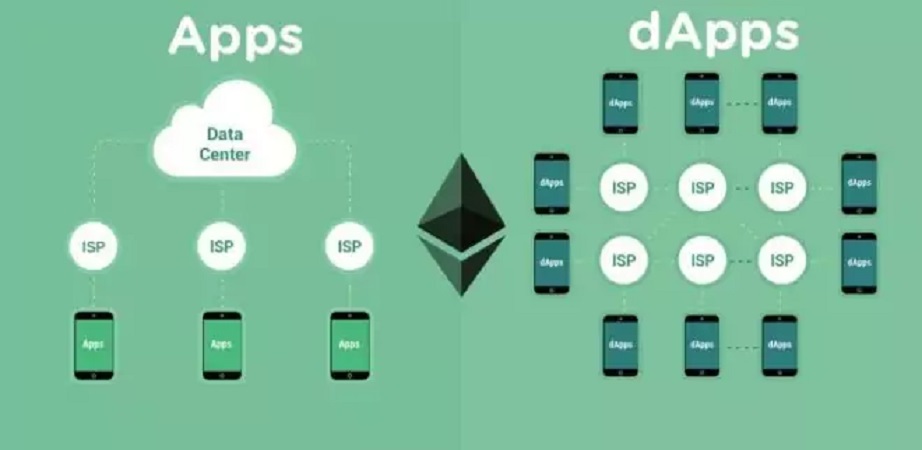
We will argue that public testnets are a threat to the development of decentralized applications (dapps) on blockchain platforms. I will explain why public testnets are unreliable, insecure, and inefficient, and how they can hinder the innovation and adoption of dapps.

Public testnets are insecure because they are vulnerable to attacks, bugs, and malicious behavior. Attacks can be launched by external adversaries or internal participants who want to disrupt the testnet or exploit its weaknesses.

Bugs can be introduced by the testnet software or the dapp code, causing errors and vulnerabilities. Malicious behavior can be performed by participants who want to cheat, spam, or sabotage the testnet or the dapps running on it.

Public testnets are inefficient because they waste time, money, and resources. Time is wasted because developers have to deal with the unreliability and insecurity of the testnet, instead of focusing on developing and testing their dapps.

Money is wasted because developers have to pay fees or incentives to use the testnet or to access its services. Resources are wasted because the testnet consumes a lot of energy and computing power, without producing any real value or utility.

One of the main drawbacks of public testnets is that they are not always stable or reliable. Public testnets are shared by many developers and users, which means that they can be subject to network congestion, spam attacks, forks, or unexpected changes in the protocol or the consensus rules. These factors can cause delays, errors, or failures in the deployment and testing of the dapps, which can waste time and resources for the developers.

Another drawback of public testnets is that they do not always reflect the real conditions of the mainnet. Public testnets have different parameters and incentives than the mainnet, which means that they can have different levels of security, scalability, performance, or user behavior. For example, public testnets may have lower gas fees, faster block times, or less network activity than the mainnet.

These differences can affect how the dapps behave and interact with other components of the blockchain ecosystem, such as smart contracts, oracles, or decentralized exchanges. Therefore, testing on public testnets may not provide accurate or realistic results for the dapps.

Therefore, instead of relying on public testnets, developers should use alternative methods to develop and test their dapps, such as private testnets, simulators, emulators, or formal verification tools. These methods can offer more control, flexibility, and reliability for the developers, as well as more accurate and realistic results for the dapps.

Private testnets are isolated networks that run on a local or remote server and use a copy of the blockchain protocol and data. Private testnets allow developers to create and modify their own network parameters and rules, such as gas fees, block times, or consensus algorithms. Private testnets also allow developers to deploy and test their dapps without interference from other users or transactions. Private testnets can be useful for testing basic functionality, performance, or security of the dapps.

Simulators are software tools that mimic the behavior and environment of a blockchain network without actually running it. Simulators allow developers to create and execute transactions and smart contracts without consuming any real resources or generating any real data. Simulators can be useful for testing complex logic, scenarios, or edge cases of the dapps.

Emulators are software tools that run a virtual machine that executes the bytecode of a smart contract. Emulators allow developers to debug and analyze the code and state of a smart contract without deploying it on a blockchain network. Emulators can be useful for testing correctness, efficiency, or optimization of the smart contract code.

Formal verification tools are software tools that use mathematical logic and proofs to verify that a smart contract meets certain specifications and properties. Formal verification tools allow developers to check whether a smart contract behaves as intended and does not have any bugs, vulnerabilities, or errors. Formal verification tools can be useful for testing security, safety, or compliance of the smart contract code.

In conclusion, public testnets are not always the best option for developing and testing dapps. Developers should consider using alternative methods that can offer more advantages and benefits for their development process and their final product. By using private testnets, simulators, emulators, or formal verification tools, developers can improve the quality and reliability of their dapps.

Therefore, public testnets are a threat to the development of dapps because they create a hostile and unproductive environment for developers and users. They discourage innovation and adoption of dapps by imposing unnecessary barriers and risks. They also undermine the credibility and reputation of blockchain platforms by exposing their flaws and limitations.

Instead of relying on public testnets, developers should use alternative methods to develop and test their dapps, such as private testnets, simulators, emulators, or formal verification tools. These methods can provide more reliable, secure, and efficient ways to validate the functionality and performance of dapps, without compromising their quality or integrity.

ERC-3643 is looking for ways to bring compliance to RWA tokenization as VSF plans introduce a Bitcoin Spot ETF

0

ERC-3643 is a new proposal for a standard interface for real-world asset (RWA) tokens on the Ethereum blockchain. RWA tokens are digital representations of physical or legal assets, such as real estate, art, or securities, that can be used for various purposes, such as collateral, lending, or trading.

We will explore the main features and benefits of the ERC-3643 standard, as well as some of the use cases and examples of RWA tokens that are already being developed or deployed on the Ethereum network. We will also discuss some of the challenges and limitations of the ERC-3643 standard, as well as some of the future directions and improvements that are being considered by the community.

RWA tokens have the potential to unlock new sources of liquidity and value for both asset owners and investors, but they also face significant challenges in terms of compliance, regulation, and trust.

One of the main goals of ERC-3643 is to establish a common framework for RWA token issuers, validators, and regulators to ensure that the tokenization process is transparent, secure, and compliant with the relevant laws and standards.

ERC-3643 defines a set of functions and events that RWA token contracts must implement to provide information about the underlying asset, its ownership, its valuation, its legal status, and its risk profile. ERC-3643 also specifies how RWA token contracts can interact with external entities, such as auditors, oracles, and escrow agents, to verify and update the asset data.

By adopting ERC-3643, RWA token issuers can benefit from increased interoperability and compatibility with other Ethereum protocols and applications, such as decentralized exchanges, lending platforms, and stablecoins. RWA token investors can benefit from enhanced transparency and confidence in the quality and legitimacy of the asset-backed tokens they purchase or trade. RWA token regulators can benefit from improved oversight and enforcement capabilities to ensure that the tokenization process complies with the applicable rules and regulations.

ERC-3643 is currently in draft stage and open for feedback and suggestions from the Ethereum community. The proposal was initiated by a group of RWA token experts and enthusiasts, who are looking for ways to bring compliance to RWA tokenization and foster innovation and adoption in this emerging field.

However, RWA tokens face several challenges in terms of compliance, governance, and risk management, as they have to adhere to the regulations and laws of different jurisdictions and ensure the validity and security of the underlying assets.

The ERC-3643 proposal aims to address these challenges by defining a common set of functions and events that RWA token contracts should implement, as well as a standard metadata format that describes the essential information and characteristics of each RWA token.

The proposal also specifies the roles and responsibilities of different actors involved in the RWA tokenization process, such as issuers, validators, custodians, and auditors. By following the ERC-3643 standard, RWA token developers can ensure interoperability, transparency, and accountability for their tokens, while also reducing the complexity and cost of compliance.

VSF to introduce a Bitcoin Spot ETF in Hong Kong amid ETFs trading above $4B in USA

Venture Smart Financial Holdings, a leading investment firm in Hong Kong, has announced its plans to launch a Bitcoin exchange-traded fund (ETF) in the city. This is a significant development for the cryptocurrency industry, as it will provide investors with a convenient and regulated way to access the Bitcoin market.

A Bitcoin ETF is a type of fund that tracks the price of Bitcoin and trades on a stock exchange. It allows investors to buy and sell shares of the fund without having to deal with the technical and security challenges of holding Bitcoin directly. A Bitcoin ETF also offers more transparency, liquidity and regulatory oversight than other types of crypto products.

Venture Smart Financial Holdings is aiming to raise $100 million for its Bitcoin ETF, which will be the first of its kind in Hong Kong. The firm has already obtained approval from the Securities and Futures Commission (SFC), the city’s financial regulator, to offer the fund to professional investors. The firm hopes to expand its offering to retail investors in the future, subject to further approval from the SFC.

Bitcoin Spot ETFs have traded over $14 BILLION in the US – Bloomberg

The launch of the first Bitcoin spot exchange-traded funds (ETFs) in the US has been a huge success, attracting massive trading volumes and inflows in their first week of trading. According to Bloomberg, the four Bitcoin spot ETFs that debuted last week have collectively traded over $14 billion worth of shares, surpassing the initial volumes of any other ETF category in history.

The Bitcoin spot ETFs allow investors to gain exposure to the actual price of Bitcoin, rather than the futures contracts that track its expected future value. This means that the spot ETFs have lower fees and tracking errors than the futures-based ones, making them more appealing to both retail and institutional investors.

The first Bitcoin spot ETF to launch was the ProShares Bitcoin Strategy ETF (BITO), which started trading on October 19 and quickly became the most traded ETF in the US, with over $1 billion worth of shares exchanged on its first day.

BITO was followed by the Valkyrie Bitcoin Strategy ETF (BTF), the VanEck Bitcoin Strategy ETF (XBTF), and the Invesco Bitcoin Strategy ETF (BITC), which all launched last week and also saw strong demand from investors.

According to Bloomberg, the four Bitcoin spot ETFs have collectively amassed over $2.3 billion in assets under management (AUM) as of October 25, with BITO leading the pack with $1.7 billion AUM. The spot ETFs have also outperformed the futures-based ones, such as the Amplify Transformational Data Sharing ETF (BLOK) and the Bitwise Crypto Industry Innovators ETF (BITQ), which have seen lower trading volumes and inflows.

The success of the Bitcoin spot ETFs reflects the growing popularity and acceptance of Bitcoin as an asset class, as well as the increasing demand for regulated and convenient ways to access the cryptocurrency market. The spot ETFs also provide a more direct exposure to Bitcoin than other products, such as trusts or funds, which often trade at a premium or discount to the underlying asset.

The launch of the Bitcoin spot ETFs is a major milestone for the crypto industry, as it opens up new opportunities for investors, traders, and market participants. The spot ETFs could also pave the way for more crypto-related products and services in the future, such as Ethereum spot ETFs or crypto lending platforms. The Bitcoin spot ETFs are also expected to have a positive impact on the price and liquidity of Bitcoin, as they increase its adoption and awareness among mainstream investors.

The launch of the Bitcoin ETF is expected to boost the adoption and awareness of Bitcoin in Hong Kong and beyond. It will also provide more opportunities for institutional and individual investors to diversify their portfolios and gain exposure to the digital asset class. Venture Smart Financial Holdings believes that Bitcoin has a bright future as a store of value, a hedge against inflation and a catalyst for innovation.