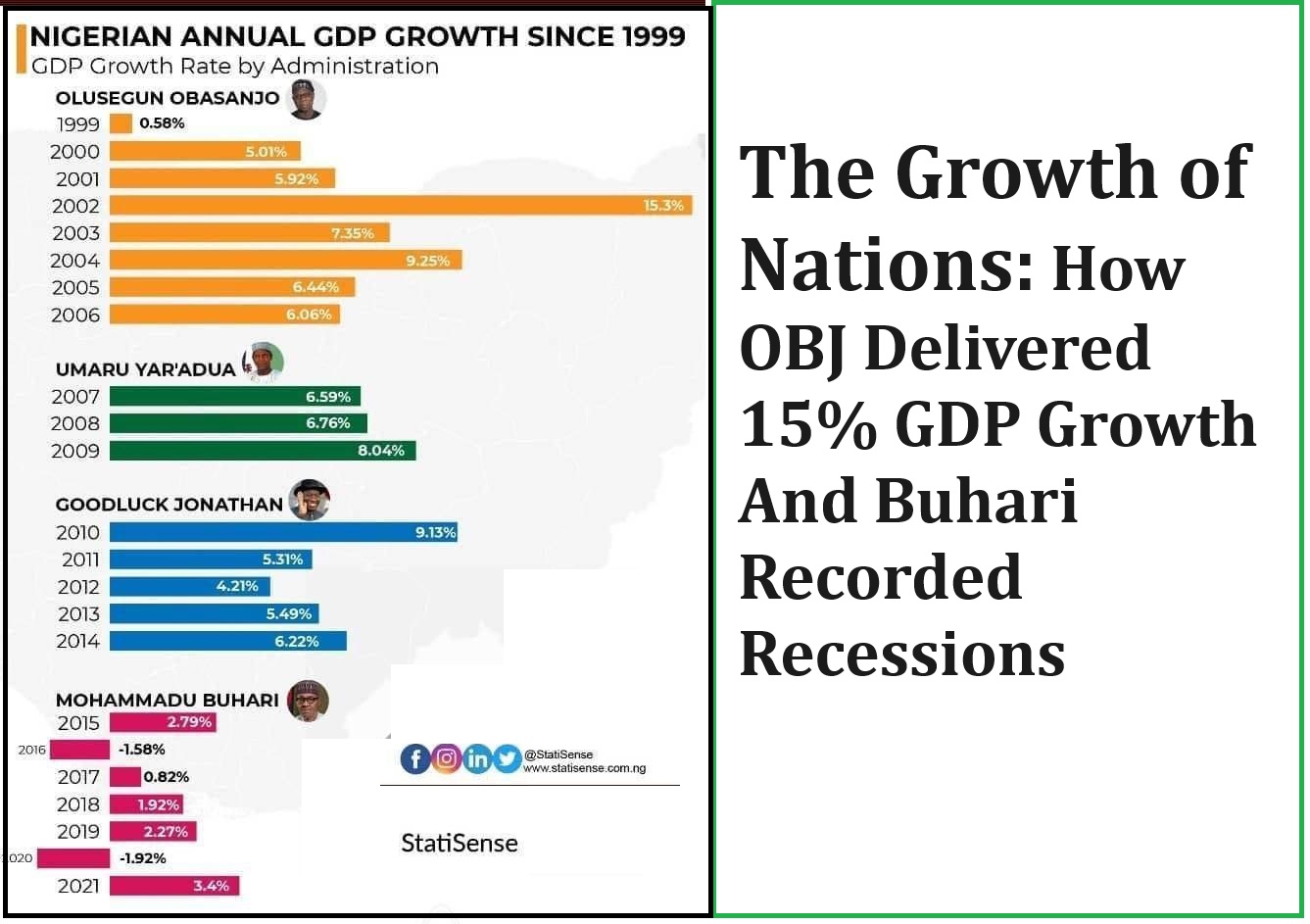
What did Obasanjo do in 2002 for that 15.3% GDP growth rate spike? The telcos began operating at scale. Yes, a new industry was added in the Nigerian economy – and we grew. (That was the voice telephony era).
About ten years later, Jonathan got an extended version of it, when our phones became internet nodes as the mobile internet era began. Another was expected to follow a decade later. Unfortunately, as I write, Nigeria is still struggling to unlock that era. I have called it the application utility era where our devices now become bank branches, logistics hubs, etc at scale.
Lagos, which has the potential to become more important than Nigeria from 2030 is there, but other areas are yet to join. The Lagos budget of N2.3 trillion, about N2 trillion larger than the budget of Kano, is expected to widen, to the extent that by 2030, the per capita on Lagos’ budget will be multiples of Nigeria’s budget. Simply, everyone will move to Lagos because it will be like Vatican City in Italy without a special visa. I posit that Nigeria will be structurally dismantled, economically, because Lagos will exert more influence than Abuja.
As we search for growth vistas, understand that OBJ miracle has nothing to do with oil price. Across all indicators, Obasanjo was a great operator while Buhari was the worst, since 1999. And Jonathan was better than Buhari; he stabilized the exchange rate, inflation rate, etc, NOT because oil prices were high, but because he was better than the man who took over from him. Under him, Nigeria recorded its highest per capita on record.
Buhari engineered at least one preventable recession: the frozen government after delays on appointing ministers when he took over. The second one which happened during the pandemic was already brooding as a result of the land border closure.
Good People, if you look at the numbers, and focus on the national budgets, under Buhari, in absolute Naira and USD dollars, Buhari’s government spent more money than Jonathan’s, on yearly average, and what oil money did not provide to the administration, they borrowed. Because Naira is Naira, whether from oil sale or debt, the issue here is efficiency on its management and deployment. Follow me:
- Nigeria 2013 budget: N4.99 trillion
- Nigeria 2014 budget: N4.69 trillion
- Nigeria 2015 budget: N4.5 trillion
- Nigeria 2016 budget: N6.06 trillion
- Budget 2019: N8.92 trillion
- Budget 2022: N16.39 trillion
(convert with the exchange rate then, Buhari had more US dollars to spend)
As this new government begins 2024 to execute its budget, it must find an anchor to drive growth. OBJ used core telecoms but the impact is largely marginal now. The new government has real estate, agriculture, light manufacturing and amazingly education as areas to unlock growth. Nigeria must evolve out of the current finance-first mindset to industry*-first mindset which OBJ used to pioneer most of the economic anchors we enjoy today.
*includes services, manufacturing, etc