
DD
MM
YYYY

PAGES

DD
MM
YYYY

spot_img

PAGES

Home Blog Page 3870

Process as a Path to Sustainable Value Creation and Capturing for Startups in Nigeria

0

In recent years, the entrepreneurial landscape in Nigeria has witnessed an exciting surge in activity. As the allure of entrepreneurship grows stronger, a multitude of aspiring individuals are drawn to the promise of success and innovation. Yet, amidst the eagerness to enter the market and capitalize on burgeoning industries, it is crucial to recognize that not all who venture into entrepreneurship are equipped to navigate the complexities of value creation and capturing.

 The key differentiator lies in the systematic and scientific processes employed to refine ideas and explore genuine opportunities that will drive sustained success.

Beyond the Buzz: A Journey of Thoughtful Creation

Entrepreneurial success is no longer a mere aspiration but a tangible goal that requires meticulous planning, dedication, and an unrelenting commitment to refining ideas. In Nigeria’s startup ecosystem, an influx of innovative ideas floods the market daily. However, the distinction between a fleeting notion and a groundbreaking concept lies in the systematic processes that transform raw ideas into viable solutions.

The process begins with critical analysis. Entrepreneurs need to question the viability, scalability, and sustainability of their ideas. Comprehensive market research and thorough gap analysis reveal untapped opportunities and guide founders towards creating solutions that address real pain points.

Crafting the Path to Sustained Value Creation

Creating value is the lifeblood of any successful startup. In Nigeria’s dynamic market, a robust value proposition is essential to attract and retain customers. But how can entrepreneurs ensure that their offerings resonate and stand the test of time? The answer lies in understanding the power of process-driven innovation.

The journey of value creation demands an iterative approach. Starting with a minimum viable product (MVP), entrepreneurs can gather invaluable feedback from early adopters. This feedback loop drives continuous improvement, ensuring that the solution remains relevant and effective as market dynamics evolve.

Capturing Value: The Dance of Strategy and Execution

Capturing value is as much an art as it is a science. Entrepreneurs must navigate pricing strategies, revenue models, and monetization channels that align with their offerings and resonate with their target audience. The process of capturing value requires a fine balance between strategic thinking and flawless execution.

For startups in Nigeria, a unique challenge arises from the diverse economic landscape. Tailoring pricing models to local purchasing power while maintaining profitability is a delicate balancing act. By systematically analyzing customer behaviors and preferences, startups can adapt their strategies to optimize value extraction.

Orchestrating Success Through Systematic Processes

The Nigerian startup ecosystem holds immense potential, but success is not an entitlement; it’s an outcome of meticulous planning and strategic execution. Entrepreneurs must embrace systematic processes that refine their ideas, drive value creation, and enable effective value capturing.

The journey begins with recognizing the value of patience and discipline. Entrepreneurs must avoid rushing into the market without the necessary groundwork. By investing time in market research, thorough validation, and strategic planning, startups can refine their offerings and ensure long-term viability.
In a world where innovation is celebrated, the true heroes are those who transform ideas into reality through a commitment to systematic processes. By embracing the power of refinement, Nigerian startups can not only survive but thrive in the competitive landscape.

The allure of entrepreneurship is only half the battle. Success lies in the hands of those who harness the power of systematic and scientific processes to refine their ideas, create sustainable value, and effectively capture that value. 

Nigeria’s startup ecosystem has the potential to reshape industries and drive economic growth, but only those who approach it with dedication, discipline, and a focus on process-driven innovation will rise to the top.
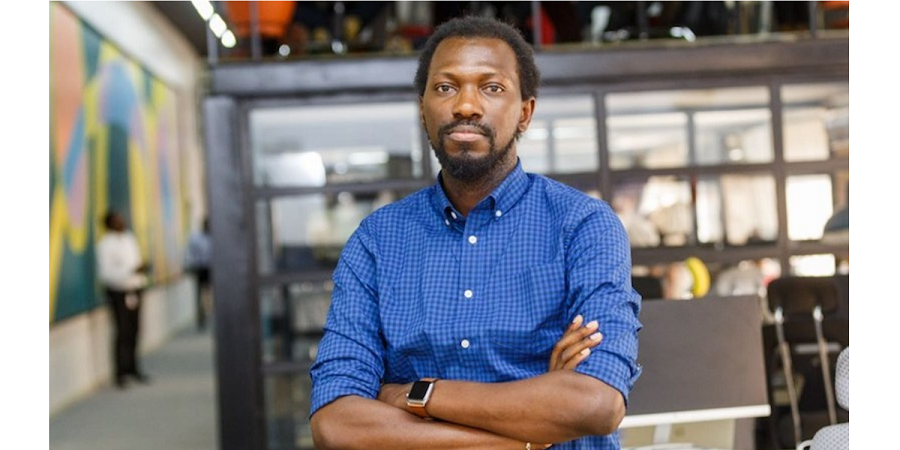
Flutterwave CEO Olugbenga (GB) Agboola Says Flutterwave is Pushing Towards IPO

0
CEO of Flutterwave

Flutterwave co-founder and CEO, Olugbenga Agboola, has emphasized the company’s determination to proceed with its scheduled Initial Public Offering (IPO), despite challenges. He points to the necessity of aligning with global client expectations and compliance standards.

During an interview with Bloomberg, Agboola reiterated that while current market conditions might be unstable and potentially affect the listing process, the company remains resolute in its commitment to bolstering interactions with international clients and upholding global compliance protocols. Agboola believes that the IPO serves as a means to achieve these objectives.

“There’s some kind of customers we’ll attract when we are public. The large global clients who need you to have the same level of compliance and level of global view that they have,” he said.

“The markets aren’t great right now,” and this could slow any listing, Agboola added, without giving the specific date for the IPO.

Flutterwave has been in recent times, accused of financial impropriety and infighting over stock shares, which stand against the company’s chances at IPO.

But Agboola dismissed accusations of internal conflicts related to former employees’ stock entitlements. He affirmed that concerns regarding staff mistreatment and intimidation were instances that occurred in a “very, very isolated” manner, and consequently, would not impact the intended share offering.

Flutterwave is gradually becoming a household name in the African fintech space despite setbacks in its operation. For instance, the Kenyan authorities recently suspended the operation of Flutterwave, alleging that it has been operating illegally in the country – without a financial services license from the central bank.

However, the suspension was lifted and Flutterwave has gained access to more African countries – Egypt and Rwanda.

Agboola expressed confidence that the unicorn, whose valuation stood at $3bn following its 2022 $250 million funding round, has the market and the instruments to reach IPO potential.

Agboola expressed a strong belief in the company’s capacity to extend its presence and enhance its growth. He mentioned that there exists potential for venturing into fresh markets and considering acquisitions when feasible.

“The goal is to make merchants across Africa, consumers across Africa use us more and know that we are the most reliable platform to use,” he said. “Africa is huge, the potential is huge,”

Since its founding in 2016, Flutterwave has gained the backing of notable global investors such as Tiger Global, Y-Combinator, Visa Ventures, Mastercard, and Avenir Growth Capital. This is believed to have propelled amazing growth – notable in the increase of its customer base and profits.

Just a few months back, the company introduced a novel payment solution named “Tuition.” This product empowers African users to effortlessly settle diverse fees for educational institutions, both within Africa and abroad, utilizing their local currencies.

According to a Bloomberg report, while refraining from disclosing the exact yearly growth in total revenue, Flutterwave highlighted that its payment processing operations via its payments app, SendApp, saw a remarkable 23-fold increase in the initial half of this year in comparison to the corresponding period in 2022.

In addition, the report indicated that payments made through point-of-sale devices experienced a more than fivefold surge, and the revenue generated by its small and medium business divisions leaped nearly fourfold.

So far, Flutterwave has a presence in about 30 African countries.

Conventional Banks Will Lose All Their Customers To NeoBanks

0

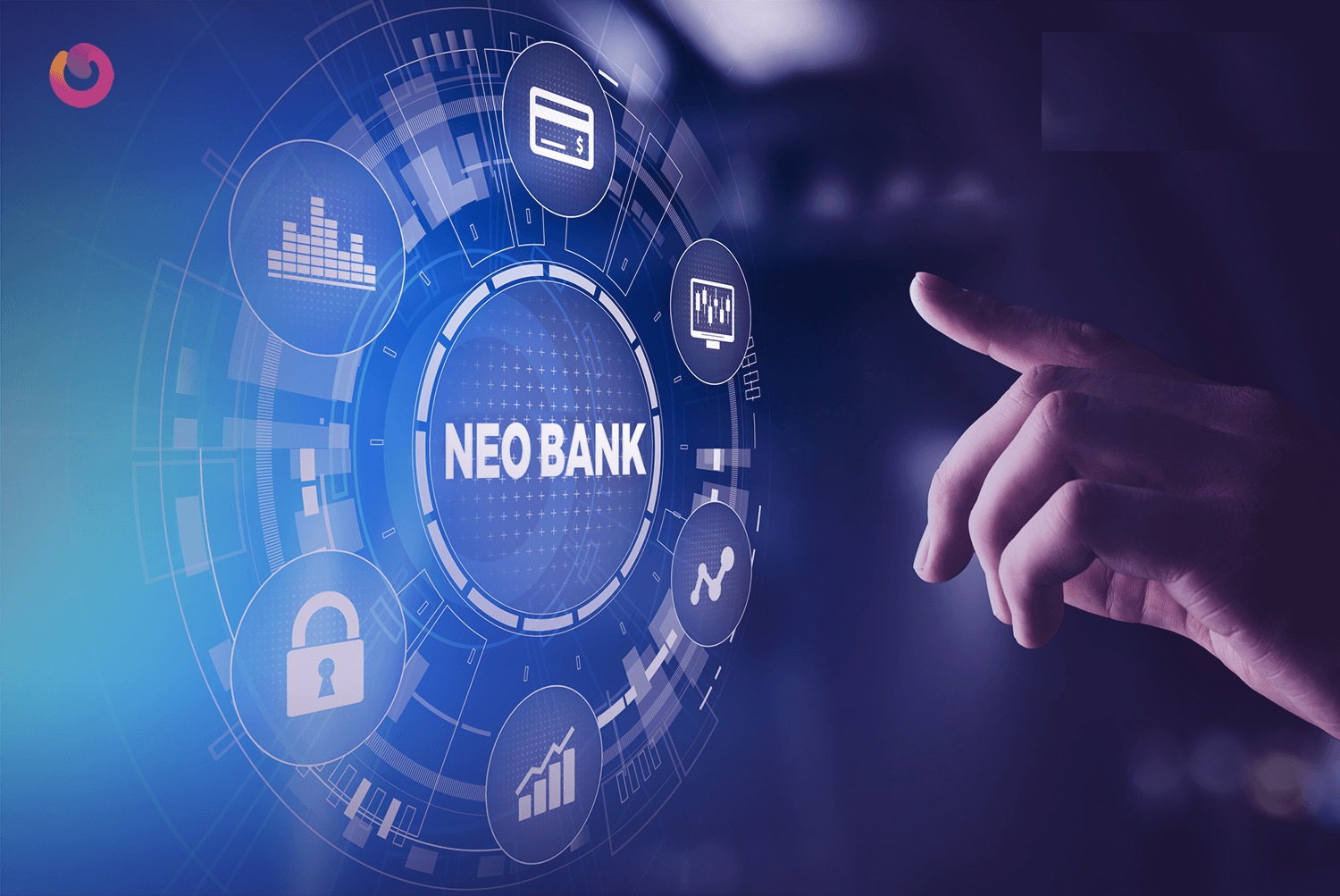
I was alarmed over how neobanks in less than a decade of existing in Nigeria are sweeping through Nigeria’s banking space and snatching up old-time customers from conventional banks. 

If you go to local and city markets and ask, there is a high chance that the market vendors are using either Opay, Kuda, Palmpay or Moniepoint. If you intend to make a transfer to an Uber rider, cab driver or delivery bike rider, chances are that the driver or rider is using either Opay, palmpay, kuda or Moniepoint. 

I enquired from some of the users who excitedly turned themselves into unpaid ambassadors of the neobanks and I found out that why most of the conventional bank customers are migrating to neobanks in droves are majorly two reasons; first which is immediate receiving of credit alerts once the sender initiates and concludes the transfer transaction. 

They say that if a buyer pays through a transfer, they receive the credit alert instantly unlike conventional banks where the sender will be debited and the receiver will not be credited for hours and this has caused a lot of problems for them. Secondly, most of those neobanks do not charge arbitrarily. Most of them do not even charge the sender the sending charges and the receiver the receiving charge that conventional banks charge. 

The issue of a receiver not getting credited immediately after a sender or buyer transfers money was a big problem that needed to be fixed. It stalled commercial and economic activities. Some cab riders, Uber drivers and even market vendors have gotten into fights with their passengers over this issue. Some people have been embarrassed and left stranded over this problem. So once everyone heard that there is a bank that the users get credited to immediately the sender transfers the money the flood gate was flipped open. 

As for the second problem of incessant charges. Neobanks fixed that as well. Users testify that they do not get the end-of-the-month charges, card maintenance charges, VAT charges, transfer charges and whatever other charges conventional banks use to rip their customers off. 

To add sugar to already sweet tea, some of these neobanks as well have features of letting their customers who are out of cash to borrow money using the app and pay back the money gradually. You can borrow without providing collateral, or a guarantor or without going through the unnecessary stress that conventional banks subject customers who want to borrow. 

More so, opening an account with a neobank is very easy. It is as easy as opening a social media account. I opened an Opay account the other day and I was amazed at how fast and easy it was. That same day I was able to carry out transactions inside that app immediately after I finished creating the account. Unlike conventional banks where it takes a lot of form filling and requesting of documents upon documents just to open an account and after you open, you will have to wait for some weeks before you are able to withdraw money out of the account. 

The “killer feature” of a neobank like Opay is the feature of your mobile phone number becoming your bank account number once you sign up. That was the most attractive feature for me. Now I don’t have to cram numerous ten digits of bank account numbers since my mobile phone number is my bank account number.

Finally, I have never seen or heard that the mobile apps of these neobanks experienced a glitch. Unlike conventional banks where the app and the Ussd will stop working for a whole day. In fact the reason that forced me to abandon my conventional bank accounts and go for a neobank is that the conventional banks are always getting me stranded. Two of my bank apps stopped opening for the whole day and I was stranded. I was complaining about it and someone suggested I go for a neobank. I heeded that suggestion and they have not failed and I have never looked back ever since.

For someone like me who prides himself as an old school to migrate from using conventional banks to neobanks it is a pointer that the neobanks are really doing things right, fixing problems that conventional banks are not fixing.

I know it is not a wild dream for me to imagine a scenario where in the coming years, conventional banks will lose all their customers to neobanks. I can bet on it that if conventional banks do not sit up and introduce most of these killer features that are already in use by neobanks and especially fix their mobile and internet banking they will lose all their customers.

The world has gone digital and customers want things quicker, easier and without stress. It’s no longer the case where customers will have to queue up in banking halls just to carry out a transaction. Some conventional banks are adjusting themselves to become challenger banks. 

Meta Rolls Out AI Model SeamlessM4T, That Can Translate And Transcribe Over 100 Languages

0

Giant tech company Meta has rolled out an AI model, known as “SeamlessM4T”, which is capable of translating and transcribing over 100 languages across text and speech.

In Meta’s quest to develop an advanced AI tool, the tech company said that SeamlessM4T represents a significant breakthrough in the field of AI-powered speech-to-speech and speech-to-text.

Meta claims that the AI tool has remarkable abilities as it performs the entire translation task in one go, unlike other large translation models that divide translation across different systems.

Speaking on the rollout of SeamlessM4T, Meta wrote via a blog post,

“The world we live in has never been more interconnected, giving people access to more multilingual content than ever before. This also makes the ability to communicate and understand information in any language increasingly important. Today, we’re introducing SeamlessM4T, the first all-in-one multimodal and multilingual Al translation model that allows people to communicate effortlessly through speech and text across different languages.

“SeamlessM4T supports:

•Speech recognition for nearly 100 languages

•Speech-to-text translation for nearly 100 input and output languages

•Speech-to-speech translation, supporting nearly 100 input languages and 36 (including English) output languages

•Text-to-text translation for nearly 100 languages

•Text-to-speech translation, supporting nearly 100 input languages and 35 (including English) output languages

“In keeping with our approach to open science, we’re publicly releasing SeamlessM4T under a research license to allow researchers and developers to build on this work. We’re also releasing the metadata of SeamlessAlign, the biggest open multimodal translation dataset to date; totaling 270,000 hours of mined speech and text alignments.

“Building a universal language translator, like the fictional Babel Fish in The Hitchhiker’s Guide to the Galaxy, is challenging because existing speech-to-speech and speech-to-text systems only cover a small fraction of the world’s languages. But we believe the work we’re announcing today is a significant step forward in this journey.

“Compared to approaches using separate models, SeamlessM4T’s single system approach reduces errors and delays, increasing the efficiency and quality of the translation process. This enables people who speak different languages to communicate with each other more effectively”.

According to Meta, SeamlessM4T builds on advancements the company and others have made over the years in the quest to create a universal translator.

Last year, it released No Language Left Behind (NLLB), a text-to-text machine translation model that supports 200 languages and has since been integrated into Wikipedia as one of the translation providers.

Earlier this year, the company revealed the Massively Multilingual Speech, which provides speech recognition, language identification, and speech synthesis technology across more than 1,100 languages.

Notably, SeamlessM4T draws on findings from all of these projects to enable a multilingual and multimodal translation experience stemming from a single model, built across a wide range of spoken data sources with state-of-the-art results.

The tech giant argues that SeamlessM4T doesn’t produce an excessive amount of toxic text in its translations, a common error with various translation and generative Al text models.

However, in specific, languages like Bengali and Kyrgyz, the model generates more toxic translations related to socioeconomic status and culture. Generally, SeamlessM4T tends to exhibit more toxicity in translations dealing with sexual orientation and religion.

Meta disclosed that this is only the latest step in the company’s ongoing effort to build Al-powered technology that helps connect people across languages.

The tech giant further hinted that in the future, it wants to explore how this foundational model can enable new communication capabilities – ultimately bringing Meta closer to a world where everyone can be understood.

Military Coup: African Union Suspends Niger Republic

0
The African Union logo is seen outside the AU headquarters building in Addis Ababa, Ethiopia, November 8, 2021. REUTERS/Tiksa Negeri

Niger Republic has been suspended by the African Union (AU), following the military coup executed by members of the presidential guard on July 26.

Announcing the suspension, the AU urged its members to watch their dealings with Niger and to avoid any action that might legitimize the junta.

The junta had overthrown the democratically elected President, Mohamed Bazoum, citing poor leadership and corruption that has exposed millions of Niger people to severe economic hardship.

Diplomatic efforts by the Economic Community of West African States (ECOWAS) to restore constitutional order in the uranium-rich West African country have failed. The regional bloc issued a seven-day ultimatum to the junta on July 30, to reinstate Bazoum unconditionally or face military action.

Defiant, the junta led by Gen. Abdourahamane Tchiani has proposed a three-year transition to civilian rule, but it was rejected by the ECOWAS leaders. The bloc announced last week that D-Day has been set for its military action, having activated a standby force.

The AU Peace and Security Council said in a communiqué on Tuesday that it had noted the decision to activate an ECOWAS standby force and asked the AU Commission to assess the economic, social, and security implications of deploying such a force.

The resolutions in Tuesday’s statement were adopted at a council meeting held on Aug. 14, it said.

The leaders of the AU additionally called upon the coup leaders to promptly release the duly elected President Mohamed Bazoum, who has been in detention since the coup, and to return to their military barracks.

The coup has raised concerns among Western allies and democratic nations in Africa. They are apprehensive that it might create an opportunity for Islamist factions operating in the Sahel region to extend their influence and provide Russia with a chance to enhance its presence in the area.

The Russian mercenary group – Wagner, is reportedly involved in the junta’s preparation to ward off any external attack. The group is active in Mali – another West African country under military rule.

The AU also said that it “strongly reject any external interference by any party or country in the affairs of the continent, including private military companies.”

The statement is expected to be a deterrent to France, which has been gearing up to defend its interest in Niger through military action. Niger is France’s top uranium supplier with a total supply of 17.9% between 2015 and 2020. The uranium export, which helps France to generate electricity, has been suspended by the junta.