DD
MM
YYYY

PAGES

DD
MM
YYYY

spot_img

PAGES

Home Blog Page 3872

Ledger CEO says Recent Cyber Breach Was an Unfortunate Incident

0

Ledger CEO Pascal Gauthier has issued a statement regarding the recent cyberattack that compromised the personal data of more than 270,000 customers. In a blog post published on the company’s website, Gauthier apologized for the breach and explained the steps that Ledger is taking to prevent such incidents in the future.

According to Gauthier, the attack was an “unfortunate incident” that exposed the vulnerability of Ledger’s e-commerce infrastructure. He said that the attackers exploited a third-party API key that was used to send order confirmations and shipping notifications to customers. The attackers were able to access the database that contained the names, email addresses, phone numbers and postal addresses of Ledger customers who purchased hardware wallets between June 2018 and July 2020.

The cyberattack was carried out by a hacker group called Raidforums, who claimed to have obtained the data from a third-party e-commerce service provider that Ledger used to process orders. The hacker group initially leaked a sample of the data in December 2020, and then released the full database on a public forum in January 2021. The data was also sold on the dark web for an undisclosed amount of money.

The consequences of the data breach are severe for both Ledger and its customers. Ledger has faced a backlash from its users, who have expressed their anger and frustration on social media and online forums. Some users have reported receiving phishing emails and text messages from scammers pretending to be Ledger, asking them to update their firmware or enter their recovery phrases. Others have reported being harassed or threatened by phone calls or physical mail from unknown individuals who have access to their personal information.

Ledger has apologized for the incident and taken some measures to mitigate the damage. The company has launched an internal investigation and hired a security firm to audit its systems. It has also notified the relevant authorities and cooperated with law enforcement agencies. Ledger has offered a free one-year subscription to a digital identity protection service for its affected customers. It has also advised its users to change their passwords, enable two-factor authentication, and beware of phishing attempts.

However, these actions may not be enough to restore the confidence and loyalty of Ledger’s customers, who have entrusted the company with their most valuable assets: their cryptocurrencies. Ledger’s hardware wallets are designed to protect users’ private keys from hackers, but the data breach has exposed them to other forms of attacks that could compromise their funds or identities. Moreover, Ledger’s competitors, such as Trezor and KeepKey, may seize this opportunity to attract new customers or lure away existing ones.

The cyberattack on Ledger is a wake-up call for the cryptocurrency industry, which has been plagued by numerous security incidents in the past. It shows that hardware wallets are not immune to hacking, and that users need to be vigilant about their personal data and online security.

It also shows that hardware wallet providers need to invest more in their cybersecurity infrastructure and customer service and adopt best practices to prevent future breaches. The future of cryptocurrency depends on the trust and satisfaction of its users, and that trust can only be earned by providing them with reliable and secure products and services.

Gauthier assured that no financial information, payment details or cryptocurrency funds were affected by the breach. He also said that Ledger has notified the relevant authorities and is working with law enforcement agencies to track down the perpetrators.

He added that Ledger has taken measures to enhance its security systems, such as revoking the compromised API key, encrypting customer data, auditing its code and infrastructure, and hiring external experts to conduct penetration tests.

Gauthier acknowledged that the breach has damaged the trust and reputation of Ledger, which prides itself on providing secure solutions for storing and managing digital assets. He said that Ledger is committed to restoring that trust and protecting its customers from phishing attempts and other malicious activities.

He urged customers to follow the best practices for securing their devices and accounts, such as using a strong password, enabling two-factor authentication, verifying the authenticity of emails and websites, and updating their firmware.

Gauthier concluded his statement by expressing his gratitude to the Ledger community for their support and understanding. He said that Ledger will continue to work hard to deliver high-quality products and services that meet the expectations of its customers. He also invited customers to contact Ledger’s customer support team if they have any questions or concerns regarding the breach or their security.
Recent FOMC Meeting and Implications On Asset Prices in The Crypto Markets for 2024

0

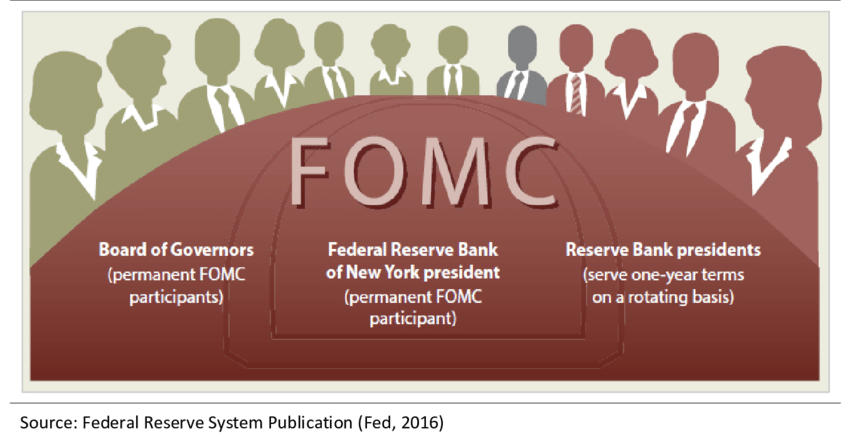
The Federal Open Market Committee (FOMC) is the monetary policy-making body of the US Federal Reserve. It meets eight times a year to review economic conditions and decide on the appropriate level of the federal funds rate, which is the interest rate that banks charge each other for overnight loans. The FOMC also sets the target range for the Fed’s balance sheet, which is the amount of assets that the Fed holds, such as Treasury securities and mortgage-backed securities.

The FOMC’s decisions have significant implications for the global financial markets, especially the cryptocurrency markets, which are highly sensitive to changes in interest rates and liquidity conditions. In this blog post, we will analyze the main takeaways from the recent FOMC meeting held on December 13-14, 2023, and discuss their potential impact on the crypto markets for 2024.

The main highlights of the FOMC meeting were:

The FOMC raised the federal funds rate by 25 basis points, from 0.25% to 0.5%, marking the first-rate hike since June 2019. The FOMC also indicated that it expects to raise rates three more times in 2022, and three times in 2023, bringing the federal funds rate to 1.75% by the end of 2023.

The FOMC announced that it will accelerate the tapering of its asset purchases, reducing them by $30 billion per month starting in January 2022, instead of $15 billion per month as previously planned. This means that the Fed will end its asset purchases by March 2022, instead of June 2022.

The FOMC revised its economic projections for 2022 and 2023, reflecting a more optimistic outlook for growth and inflation. The FOMC expects the US economy to grow by 4% in 2022 and 3.5% in 2023, up from 3.8% and 2.5% respectively in September. The FOMC also expects inflation to moderate from 5.3% in 2021 to 2.6% in 2022 and 2.2% in 2023, down from 4.2% and 3.0% respectively in September.

The FOMC’s actions and projections signal a more hawkish stance than expected, reflecting the Fed’s confidence in the strength of the economic recovery and its determination to contain inflationary pressures. The FOMC’s message was well received by the stock market, which rallied after the meeting, as investors interpreted the Fed’s moves as a sign of credibility and stability.

However, the crypto market reacted negatively to the FOMC’s announcement, as higher interest rates and lower liquidity tend to reduce the attractiveness of riskier assets such as cryptocurrencies. The crypto market also faced headwinds from regulatory uncertainty, as several countries announced or implemented stricter rules or bans on crypto activities.

As a result, the total market capitalization of cryptocurrencies dropped by about 15% in the week following the FOMC meeting, from $2.4 trillion on December 14 to $2 trillion on December 18, according to CoinMarketCap. Bitcoin, the largest and most influential cryptocurrency, fell by about 13%, from $48,000 to $42,000.

What does this mean for the crypto market outlook for 2024? We believe that there are several factors that will shape the future of crypto in the next two years:

The pace and magnitude of the Fed’s monetary policy normalization will be a key driver of crypto market sentiment and volatility. If the Fed raises rates faster or higher than expected, or if it signals a shift to a more restrictive policy stance, this could trigger a sell-off in crypto assets, as investors seek safer and higher-yielding alternatives.

Conversely, if the Fed maintains a gradual and cautious approach, or if it revises its policy outlook due to unexpected shocks or slowdowns in the economy or inflation, this could support crypto prices, as investors perceive crypto as a hedge against monetary uncertainty or inflation.

The evolution of regulation and innovation will be another crucial factor for crypto adoption and growth. On one hand, regulation can pose challenges and risks for crypto investors and users, as it can limit their access or choice of crypto services or products or impose higher costs or taxes on their transactions or holdings. On the other hand, regulation can also provide clarity and legitimacy for crypto actors and activities, as it can establish clear rules and standards for compliance and security or create new opportunities and incentives for innovation and collaboration.

The development of technology and infrastructure will be a third important factor for crypto performance and potential. Technology can enable new features and functions for crypto assets and platforms, such as scalability, and interoperability.

Significant shifts in the Blockchain Ecosystem

The blockchain ecosystem is constantly evolving and undergoing significant shifts that affect the development and adoption of decentralized applications (DApps). In this blog post, we will explore some of the recent trends and challenges in the blockchain space and how they impact the design and implementation of DA solutions.

One of the major trends in the blockchain ecosystem is the emergence and growth of layer-2 solutions, which aim to improve the scalability, performance, and user experience of DApps by moving some of the computation and storage off the main chain. Layer-2 solutions can be classified into two categories: state channels and rollups.

State channels allow users to open a channel between themselves and perform transactions off-chain, only settling on the main chain when the channel is closed. Rollups, on the other hand, aggregate multiple transactions into a single batch and submit it to the main chain, reducing the gas cost and increasing the throughput.

Layer-2 solutions offer several benefits for DA solutions, such as faster confirmation times, lower fees, and enhanced privacy. However, they also introduce new challenges and trade-offs, such as increased complexity, security risks, and interoperability issues. For instance, state channels require users to lock up funds in a smart contract and trust that the other party will not cheat or go offline.

Rollups rely on a centralized operator or a set of validators to process transactions off-chain and submit proofs to the main chain, which may introduce a single point of failure or corruption. Moreover, layer-2 solutions may not be compatible with each other or with existing DApps on the main chain, limiting the composability and network effects of DA solutions.

Another significant shift in the blockchain ecosystem is the rise of cross-chain interoperability, which enables different blockchains to communicate and exchange value with each other. Cross-chain interoperability can be achieved through various mechanisms, such as bridges, sidechains, pegged zones, and polkadot. Bridges are smart contracts that connect two blockchains and allow users to transfer tokens or data between them.

Sidechains are independent blockchains that are linked to a main chain and inherit some of its security and functionality. Pegged zones are special zones within a blockchain that can host tokens or assets from other blockchains. Polkadot is a network of heterogeneous blockchains that can interoperate through a shared relay chain.

Cross-chain interoperability opens up new possibilities and opportunities for DA solutions, such as accessing a larger pool of users, assets, and services across different blockchains, enhancing the diversity and innovation of DApps, and creating cross-chain composability and synergy. However, cross-chain interoperability also poses new challenges and risks for DA solutions, such as increased complexity, latency, and security vulnerabilities.

For example, bridges may require users to trust a third party or a multisig scheme to custody their assets on another chain. Sidechains may have lower security guarantees than the main chain or may not be compatible with other sidechains. Pegged zones may have different governance models or consensus mechanisms than the original chain. Polkadot may face scalability issues or governance conflicts among its parachains.

In conclusion, DA solutions are influenced by significant shifts in the blockchain ecosystem, such as layer-2 solutions and cross-chain interoperability. These shifts offer new benefits and opportunities for DA solutions but also introduce new challenges and trade-offs. Therefore, DA solution developers need to carefully evaluate their needs and goals and choose the best platform and architecture for their DApps.

What was achieved in COP28 and what needs to happen

0

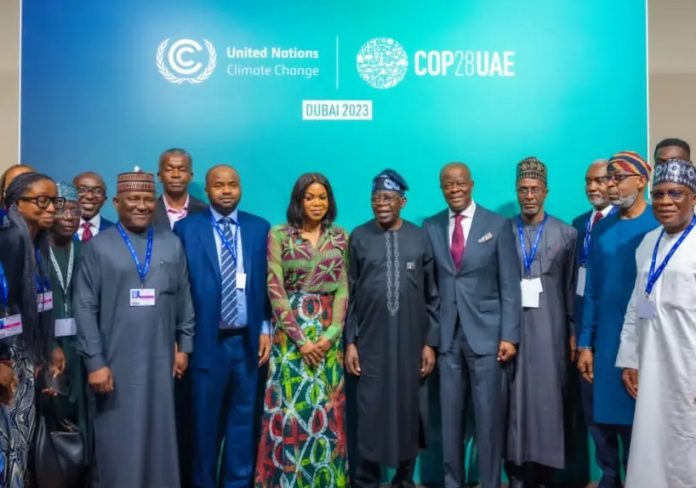
The 28th Conference of the Parties (COP28) to the United Nations Framework Convention on Climate Change (UNFCCC) took place in Glasgow, Scotland, from 31 October to 12 November 2023. It was a crucial summit that aimed to accelerate global action on climate change and to finalize the implementation of the Paris Agreement, which was adopted in 2015.

The main outcomes of COP28 were:

The Glasgow Climate Pact, which updated the Paris Agreement with new commitments and rules on mitigation, adaptation, finance, transparency, and global stocktake. The pact also included a new goal of limiting global warming to 1.5°C above pre-industrial levels, and a request for countries to submit more ambitious nationally determined contributions (NDCs) by the end of 2024.

The Glasgow Climate Finance Package, which mobilized $100 billion per year from developed countries to support developing countries in their climate actions. The package also included a new mechanism for loss and damage, which recognized the need to address the impacts of climate change that are beyond adaptation.

The Glasgow Energy Transition Initiative, which launched a global coalition of governments, businesses, and civil society to accelerate the shift from fossil fuels to clean energy sources. The initiative also announced a series of pledges and partnerships on renewable energy, energy efficiency, and clean transport.

The Glasgow Forests and Land Use Alliance, which brought together more than 100 countries and organizations to protect and restore forests and other natural ecosystems. The alliance committed to halting and reversing deforestation by 2030, and to enhancing carbon sinks and biodiversity.

The Glasgow Adaptation Action Coalition, which enhanced cooperation and support for adaptation and resilience. The coalition launched a global adaptation goal, a global adaptation network, and a global adaptation summit.

These outcomes represent significant progress in the global response to climate change, but they are not enough to avoid the worst impacts of the crisis. According to the latest report by the Intergovernmental Panel on Climate Change (IPCC), the world is already experiencing unprecedented changes in temperature, precipitation, sea level, ice cover, and extreme events. These changes are affecting human health, food security, water availability, ecosystems, and livelihoods.

To limit global warming to 1.5°C, the world needs to reduce its greenhouse gas emissions by 45% by 2030 and reach net zero by 2050. This requires urgent and transformative actions from all sectors and actors. Some of the key actions that need to happen now are:

Strengthening the implementation and ambition of NDCs. Countries need to translate their NDCs into concrete policies and measures that can deliver rapid and deep emission reductions. They also need to update their NDCs every five years with higher targets and more robust plans.

Scaling up climate finance and technology transfer. Developed countries need to fulfill their commitment of providing $100 billion per year by 2020 and increase their support beyond that level. Developing countries need to access and utilize climate finance effectively and efficiently. Both groups need to enhance cooperation on technology development and diffusion.

Enhancing adaptation and resilience. All countries need to integrate adaptation into their development plans and policies and invest in building adaptive capacity and reducing vulnerability. They also need to support the most vulnerable countries and communities in coping with loss and damage.

Engaging non-state actors and stakeholders. Governments need to work with businesses, investors, cities, regions, civil society, indigenous peoples, youth, women, and other groups that are taking action on climate change. They need to create enabling environments for their participation and contribution, and foster partnerships and coalitions for collective impact.

COP28 was a historic moment for the world to come together and act on climate change. But it was not the end of the journey. It was only the beginning of a new phase of enhanced cooperation and action. The success of COP28 depends on how well we follow up on our commitments and promises. We have no time to waste. We have no planet B. We have only one chance to get it right.

The Adobe’s $1Billion to Figma for a Reverse Termination fee – And Lessons for African Startups

1

What an amazing world where a regulator’s dis-approval for one company to buy another will activate a clause which will make the buyer pay the seller $1 billion as a termination fee. Yes, Adobe will have to fork out $1 billion and wire the funds to Figma because the UK and EU regulators would not allow the Adobe-Figma deal to go ahead:

Adobe (ADBE.O) on Monday shelved its $20 billion deal for cloud-based designer platform Figma, pointing to “no clear path” for antitrust approvals in Europe and the UK for what would have been among the biggest buyouts of a software startup…Adobe will pay a termination fee of $1 billion to San Francisco-based Figma, whose web-based collaborative platform for designs and brainstorming is used by Uber, Coinbase, Zoom Video Communications and many other firms.”

That last part is the focus of this post: the power of contracts and making sure people do not waste people’s time. You see, Figma has done the agreement in such a way that if Adobe is unable to get the regulators to approve the deal, it will cost Adobe $1 billion. With that, the “smaller” company will not be distracted without compensation if the deal fails. For Adobe, it must have modeled that it could overcome all hurdles before agreeing to such. Of course, deals fail, and they do happen all the time. In America, there is always a termination fee within a clearly defined timeline.

In 2023, I know two major Nigerian startups which did not survive, after publicly announced deals did not materialize. The reputational hit which comes when the buyer pulls out could be damaging especially when that pull-out is not because of any regulatory scrutiny. But left and right, it comes down to the positioning of the seller. If you are on a fire yard sale, no one will promise you anything. But when your positioning is strong, you can put a clause to be paid $1 million if the company decides not to move ahead, provided during due diligence, no demons were discovered.

In Nigeria and Africa, we should learn from these clauses and see how we make sure people do not come on the pretense to acquire companies, just to steal trade secrets, and then walk away free. I have seen such in the startup world, and I continue to tell founders to be careful before they open their books. Yes, define all boundaries and add a small penalty such that if after all the terms are met, and the buyer decides not to execute, the company will be mandated to compensate.

Make it self-evident so that you do not need a court to interpret the terms because it would be lively-activated:  if we meet conditions A, B, andC, and within 30 days, we have not received Agreement #3 signed, you would be required to pay $1m as termination fee, and that fee should be wired to reach our bank account (….) by Jan 4, 2024. Yes, something like that; ask your lawyers! I can always provide the bank account…lol

Figma and Adobe have abandoned their proposed merger. The companies “no longer see a path toward regulatory approval of our proposed acquisition,” Figma’s co-founder and CEO Dylan Field posted on Monday. The blockbuster $20 billion deal faced significant regulatory hurdles in Europe and the United Kingdom in particular, where the Competition and Markets Authority (CMA) provisionally determined the deal “would harm the product design software market” if it were to move forward. The deal’s collapse means that Adobe must now fork out $1 billion to Figma for a reverse termination fee (RTF), The Verge reports.

An RTF is a fee payable by the buyer to the seller in the event of non-consummation, often due to failure to receive antitrust clearance within a certain time frame or failure to secure financing for the transaction.

Fifteen months into the regulatory review process, Figma and Adobe no longer see a path toward regulatory approval of our proposed acquisition.

Figma and Adobe have reached a joint decision to end our pending acquisition. It’s not the outcome we had hoped for, but despite thousands of hours spent with regulators around the world detailing differences between our businesses, our products, and the markets we serve, we no longer see a path toward regulatory approval of the deal.

We entered into this agreement 15 months ago with the goal of accelerating what both Adobe and Figma could do for our respective communities. While we leave that future behind and continue on as an independent company, we are excited to find ways to partner for our users.

Amid the uncertainty of a pending acquisition, I am deeply proud of how the Figma team delivered for our community and feel we have only continued to accelerate our pace over the past 15 months. Our team built and shipped new products to make it easier to ideate, design and build software, including our first native AI features, Dev Mode, Variables, and Advanced Prototyping. We also opened new hubs in the UK and Asia, hosted an epic Config IRL in San Francisco, acquired AI startup Diagram, and added more than 500 new Figmates.

Figma’s founding vision was to “eliminate the gap between imagination and reality.” The shift from a physical economy to a digital economy and huge advances in AI have combined to make this aspiration feel even more urgent and within reach today than it did 11 years ago.

This will be our focus moving forward. We want to make it easy for anyone to design and build digital products on a single multiplayer canvas—from start to finish, idea to production. I’m so excited for what the future holds and beyond grateful to our community for supporting us. Figma’s best, most innovative days are still ahead. See you all in 2024!

Comment on Feed

Comment 1: A new twist. What happens in seller-induced headwinds for-profit situations?

My Response: Most times, for a termination fee to be included, it cannot be the seller which initiates. Typically, you are sleeping and the buyer wakes you up, and you want to return back to sleep, and he tells you to stay awake with a promise of money if the deal cannot get through. You awake and distracted, you’re sure Head or Tail, you get something!

Key Predictions for Generative AI In 2024

0

Generative AI is one of the most exciting and promising fields of artificial intelligence, as it enables machines to create novel and realistic content, such as images, text, music, and more. Generative AI has already shown impressive results in various domains, such as deepfakes, style transfer, text summarization, and image captioning. But what can we expect from generative AI in the next few years?

What are some examples of generative AI?

Generative AI is a branch of artificial intelligence that focuses on creating novel and realistic content, such as images, text, music, and more. Generative AI uses various techniques and models, such as generative adversarial networks (GANs), variational autoencoders (VAEs), and transformers, to learn from data and generate new data that resembles the original data. Here are some examples of generative AI applications in different domains:

  • Image generation: Generative AI can create realistic images of faces, animals, landscapes, and more. For example, NVIDIA’s StyleGAN can generate high-quality images of human faces that do not exist in reality. Another example is Google’s DeepDream, which can generate surreal images based on the user’s input image.

  • Text generation: Generative AI can create natural and coherent text for various purposes, such as summarization, translation, captioning, and storytelling. For example, OpenAI’s GPT-3 can generate text on any topic given a few words or sentences as input. Another example is Microsoft’s Turing-NLG, which can generate summaries of long documents or articles.

  • Music generation: Generative AI can create original and expressive music compositions and performances. For example, Google’s Magenta can generate music based on the user’s input melody or genre. Another example is AIVA, which can generate music for movies, games, and commercials.

  • Speech synthesis: Generative AI can create realistic and natural speech from text or other inputs. For example, Google’s WaveNet can generate speech that sounds like a human voice. Another example is Microsoft’s Neural Text-to-Speech, which can generate speech in different languages and accents.

Here are five key predictions for generative AI in 2024

Generative AI will become more accessible and democratized. As generative AI models become more powerful and efficient, they will also become more accessible and affordable for developers, researchers, and hobbyists.

Cloud platforms, such as Microsoft Azure, will offer easy-to-use tools and APIs for generative AI applications, such as image generation, text generation, and speech synthesis. Moreover, open-source frameworks and libraries, such as TensorFlow and PyTorch, will provide more support and resources for generative AI development and experimentation.

Generative AI will enable more personalized and interactive experiences. Generative AI will not only create content, but also adapt it to the preferences and needs of the users.

For example, generative AI will be able to generate personalized music playlists, news articles, and product recommendations based on the user’s profile, mood, and context. Furthermore, generative AI will enable more interactive and engaging experiences, such as conversational agents, chatbots, and virtual assistants that can generate natural and coherent responses.

Generative AI will enhance creativity and innovation. Generative AI will not only mimic human creativity, but also augment it and inspire it. For example, generative AI will be able to generate novel ideas, concepts, and designs that can spark human imagination and innovation.

Moreover, generative AI will be able to collaborate with humans in creative tasks, such as writing, composing, and designing. Generative AI will also be able to provide feedback and suggestions to improve human-generated content.

Generative AI will face more ethical and social challenges. As generative AI becomes more realistic and widespread, it will also pose more ethical and social risks and challenges. For example, generative AI will be able to generate fake or misleading content that can harm individuals or groups of people, such as deepfakes, fake news, and propaganda.

Moreover, generative AI will raise questions about the ownership, authorship, and responsibility of the generated content. Furthermore, generative AI will challenge the notions of authenticity, originality, and creativity in human culture.

Generative AI will require more regulation and governance. As generative AI impacts various domains and sectors of society, it will also require more regulation and governance to ensure its safe and responsible use. For example, generative AI will need to comply with laws and standards that protect the privacy, security, and rights of the users and the creators of the generated content.

Moreover, generative AI will need to follow ethical principles and guidelines that ensure its fairness, transparency, accountability, and social good.