DD
MM
YYYY

PAGES

DD
MM
YYYY

spot_img

PAGES

Home Blog Page 3879

How To Get Sexual Blackmailers Off Your Back

0

I have written a series of articles (all is available and accessible here on Tekedia) on how sexual blackmail and sextortion is a crime not just in Nigeria but in other jurisdictions around the world, it is punishable with at least 5 years jail term. For the umpteenth time, I will be writing on sexual blackmail and sextortion again because I recently learnt that it is the most lucrative internet fraud in Nigeria at the moment.

For the past two weeks, I have had three briefs from victims of sexual blackmail. According to them, how they became a victim of having their private pictures and videos in the hands of the blackmailers is that some folks pose as beautiful and horny ladies on social media, they spam strangers and anybody that accepts or responds to the spam message becomes a potential victim.

The beautiful lady who is obviously a fake persona will either request they exchange nudes or that they should engage in online sex. Once you agree to that and send your private pictures or videos over to them they will start using them to blackmail you; threatening to release them online if you do not meet their demands which are usually money requests. 

The other incident is an angry ex-lover who wants to get back at his ex-girlfriend for dumping him. They regularly exchanged nudes while they were dating, When the relationship went sour the ex-boyfriend decided to leverage on the sex tapes and nudes of the lady to blackmail and extort money from her. 

The other incident is that these criminals hack into people’s devices and if they see any compromising private pictures or videos, they will download them and start using them to blackmail and extort money from you. 

If you ever find yourself in any of these situations or something similar to it, one thing you should know about blackmailers is that once you have paid them or succumbed to their demands once they will never let you go again, you will automatically become their cash cow. They will keep demanding payouts from you until you give up or decide to call their bluff. 

Therefore, the recommended best way to get not just sexual blackmailers but every other kind of blackmailer off your back is to call their bluff and ignore them, while you are doing that also report to law enforcement agencies: it is a crime so it falls under the purview of the Nigeria police force, in fact, I just filed a petition at the Interpol division of the Nigerian police force this morning on behalf of a client who is currently a victim of sexual blackmail. 

Most importantly, you as an internet user or a lover should exercise some level of discretion, Not every private picture or video you should send across and if you must share those private files with your online lovers, make sure that your face cropped your face off, blurred your face or just ensure that your face  is not showing on them. 

Blackmailers are criminals who threaten to reveal embarrassing or damaging information about someone in order to extort money or something else of value. Blackmail is a crime under federal and state law. It is a felony that can carry over a year in prison and high fines. Blackmailers often have information that is damaging to the victim. They may threaten to reveal this information to family members or associates, rather than to the general public. Blackmailers may also threaten to tell a harmful secret about someone in order to try to force them to do something.

Blackmail is a crime based on information, while extortion is a crime based on force. Blackmailers may want the victim to believe they are in the clear, but they will start harassing the victim again as soon as they are comfortable. This can make the victim break down and think there is no way out other than giving the suspect what they want.


South Korea Requires Crypto Exchanges Operating in the Country to Hold $2.3M Reserves

0

A new regulation will take effect in South Korea next month that will require cryptocurrency exchanges to hold at least 3 billion won ($2.3 million) in bank accounts as a measure to protect consumers from possible losses or fraud. This is part of the government’s efforts to tighten oversight and transparency of the crypto industry, which has been growing rapidly in the country.

The Financial Services Commission (FSC), the main regulator of the financial sector, announced the rule on August 24, saying that it aims to prevent exchanges from using customer funds for their own operations or investments. The FSC also said that the rule will help ensure that exchanges have enough liquidity to refund customers in case of bankruptcy or hacking incidents.

According to the FSC, there are currently 63 crypto exchanges operating in South Korea, but only four of them have obtained a license to offer real-name accounts that are linked to customers’ bank accounts. The rest of the exchanges use anonymous or virtual accounts that are more vulnerable to money laundering and fraud.

A major regulatory change is looming for the cryptocurrency industry in South Korea. The Financial Services Commission (FSC), the country’s top financial watchdog, has set a deadline of September 24 for all crypto exchanges operating in the country to register with the authorities and comply with the new rules. This deadline is part of the revised Act on Reporting and Use of Certain Financial Transaction Information, which was passed in March 2020 and came into effect in March 2021. The act aims to prevent money laundering, tax evasion, and other illicit activities involving cryptocurrencies, and to protect investors from fraud and scams.

According to the act, crypto exchanges must obtain an Information Security Management System (ISMS) certification from the Korea Internet and Security Agency (KISA), and partner with a bank that can provide real-name accounts for their customers. The ISMS certification is a standard that evaluates the security level of an organization’s information systems and management practices. The real-name account system is a measure that requires crypto users to verify their identity with a bank before they can deposit or withdraw funds from an exchange.

These requirements are intended to enhance the transparency and accountability of the crypto industry, and to align it with the global standards set by the Financial Action Task Force (FATF), an intergovernmental body that combats money laundering and terrorist financing.

However, meeting these requirements has proven to be a challenge for many crypto exchanges in South Korea, especially for smaller and mid-sized ones. As of August 27, only four exchanges have obtained both the ISMS certification and the bank partnership: Upbit, Bithumb, Coinone, and Korbit. These are the four largest exchanges in the country, accounting for more than 90% of the market share. The rest of the exchanges, which number around 60, are either still waiting for the ISMS certification, or have failed to secure a bank partnership. Some banks have been reluctant to work with crypto exchanges due to the high risks and costs involved, as well as the uncertainty over the future of the industry.

The FSC has made it clear that there will be no extension or grace period for the deadline, and that any exchange that fails to register by September 24 will face legal consequences. This means that unregistered exchanges will have to cease their operations or face criminal charges and hefty fines. Moreover, their customers will not be able to withdraw their funds or access their accounts after the deadline. The FSC has urged crypto users to check whether their exchange is registered or not, and to move their assets to a registered exchange or a personal wallet before September 24.

The deadline is expected to have a significant impact on the crypto industry and market in South Korea, which is one of the most active and vibrant in the world. According to a report by Chainalysis, a blockchain analysis firm, South Korea ranked third in the world in terms of crypto adoption in 2020, behind only Vietnam and India.

The report also estimated that South Koreans traded about $7 billion worth of cryptocurrencies in 2020, up from $600 million in 2019. The country has also been a leader in innovation and development in the crypto space, with various projects and initiatives involving blockchain technology, decentralized applications, non-fungible tokens (NFTs), and more.

The deadline may result in a consolidation of the industry, as only a few exchanges will survive and dominate the market. It may also lead to a loss of diversity and competition in the industry, as well as a reduction of choices and convenience for consumers. On the other hand, it may also improve the credibility and stability of the industry, as well as its compliance with international norms and regulations. It may also foster a more mature and responsible attitude among crypto users and investors, who will have to pay more attention to their security and risk management.

The deadline is a critical moment for the crypto industry in South Korea, as it will determine its fate and direction for the foreseeable future. It will also test the resilience and adaptability of the industry, as well as its potential for growth and innovation. The deadline is not only a challenge, but also an opportunity for the industry to prove itself as a legitimate and valuable part of the financial system.

The new regulation is expected to have a significant impact on the crypto market in South Korea, which is one of the largest and most active in the world. According to data from CoinMarketCap, South Korea accounted for about 4% of the global crypto trading volume as of August 28, ranking fourth after the US, China and Japan. Some industry experts and analysts have welcomed the move as a positive step to enhance consumer protection and trust in the crypto sector, while others have expressed concerns that it may stifle innovation and competition among smaller players.

Grayscale Wins SEC in latest rift on Bitcoin ETF

0

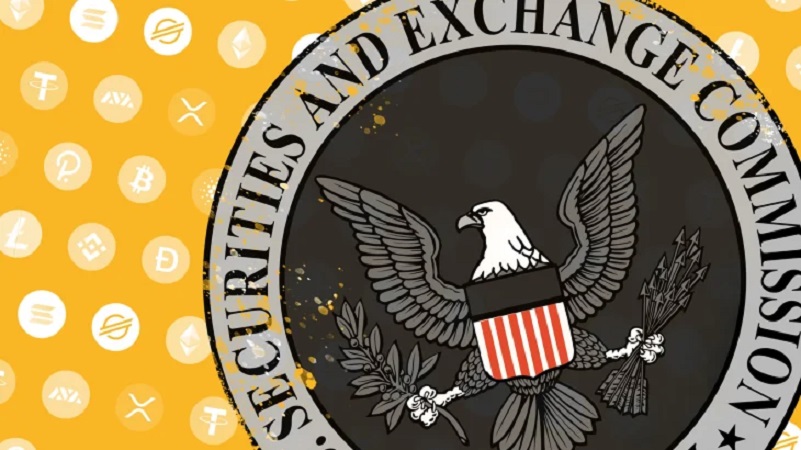
In a landmark decision, the US Court of Appeals for the District of Columbia Circuit has ruled that the Securities and Exchange Commission (SEC) acted arbitrarily and capriciously in denying the application of Grayscale Investments to launch a Bitcoin exchange-traded fund (ETF).

The ruling, issued on August 29, 2023, overturns the SEC’s order from March 2023, which rejected Grayscale’s proposal on the grounds that the Bitcoin market was too volatile, manipulative, and prone to fraud. The SEC also argued that Grayscale failed to demonstrate that its ETF would comply with the federal securities laws and protect investors.

However, the court found that the SEC’s analysis was flawed and unsupported by evidence. The court noted that the SEC did not adequately consider the benefits of a Bitcoin ETF, such as providing investors with exposure to a new asset class, enhancing liquidity and price discovery, and reducing counterparty risk. The court also pointed out that the SEC did not address how its concerns about the Bitcoin market could be mitigated by Grayscale’s proposed safeguards, such as using multiple custodians, tracking the net asset value of the ETF, and adhering to strict reporting and auditing standards.

The court concluded that the SEC’s decision was arbitrary and capricious, and violated the Administrative Procedure Act, which requires federal agencies to provide a reasoned explanation for their actions. The court remanded the case to the SEC and instructed it to reconsider Grayscale’s application in light of the court’s opinion.

The ruling is a major victory for Grayscale and the Bitcoin industry, as it might pave the way for the first Spot Bitcoin ETF in the US. A Bitcoin ETF would allow investors to buy and sell shares of a fund that tracks the price of Bitcoin, without having to deal with the technical challenges of buying, storing, and securing the cryptocurrency. A Bitcoin ETF would also increase the legitimacy and mainstream adoption of Bitcoin, as it would attract more institutional and retail investors to the market.

Grayscale is not the only company that has been seeking to launch a Bitcoin ETF in the US. Several other firms, such as VanEck, WisdomTree, Blackrock and Valkyrie, have also filed applications with the SEC, but have faced similar rejections or delays. The court’s ruling could have positive implications for these other applicants, as it sets a precedent for challenging the SEC’s authority and reasoning on this matter.

The SEC has not yet commented on the ruling or indicated whether it will appeal to the Supreme Court. However, some experts believe that the SEC may be more inclined to approve a Bitcoin ETF under its new chair, Gary Gensler, who has expressed a more nuanced and favorable view of cryptocurrencies than his predecessor, Jay Clayton. Gensler, who took office in April 2021, has also signaled that he wants to update and modernize the SEC’s regulatory framework for digital assets.

The court’s ruling is expected to have a significant impact on the Bitcoin market, as it could boost the demand and price of the cryptocurrency. According to some analysts, a Bitcoin ETF could attract billions of dollars in inflows from investors who are looking for an easy and regulated way to access the digital asset. At the time of writing, Bitcoin is trading at around $26,155 USD per coin, up about 2.7% since the ruling was announced.

However, not everyone is happy with the SEC’s decision. Some of Grayscale’s competitors, such as VanEck, Valkyrie, and WisdomTree, have also filed for Bitcoin ETFs, but have not received any response from the SEC. They argue that Grayscale’s product is not a true ETF, but rather a conversion of its existing trust, and that it does not meet the standards of diversification, liquidity, and valuation that are required for an ETF.

Moreover, some crypto enthusiasts believe that a Bitcoin ETF is unnecessary and even harmful for the industry, as it would centralize the ownership and custody of Bitcoin and expose it to more regulatory scrutiny and manipulation. They prefer to buy and hold Bitcoin directly, or through decentralized platforms that offer more autonomy and innovation.

The debate over Bitcoin ETFs is likely to continue, as more players enter the market, and more countries adopt different approaches. For example, Canada and Brazil have already approved several Bitcoin ETFs, while China has banned all crypto-related activities. The US market, however, remains the most influential and sought-after one, and Grayscale’s win could have significant implications for the future of Bitcoin and crypto.

Notable Provisions Of The Food and Drugs Registration Act Of Nigeria

0

The Food and Drug Registration Act was passed into law to create a framework for the manufacture and certification of food and Drugs in Nigeria.

This article will be outlining the notable provisions of this act which center around topics that include :-

– The prohibition of the manufacture of unregistered processed food and drugs

– Applications for food and drug registrations

– Disclosure of information supplied by an applicant

– Suspension/Cancellation of certificate of registration

– Clinical Trials

– Offences

– Jurisdiction

– The food and drug registrations committee

Prohibition of The Manufacture Of Unregistered Processed Foods and Drugs

(1) No processed food, drug, drug product, cosmetic, medical device or water shall be manufactured, imported, exported, advertised, sold or distributed in Nigeria unless it has been registered in accordance with the provisions of this Act or regulations made under it.

(2) Notwithstanding the provisions of subsection (1) of this section, the National Agency for Food and Drug Administration and Control (in this Act referred to as “the Agency”) may grant a permit for the importation or manufacture of a sample of drug, drug product, cosmetic or medical device for the purpose of registration or clinical trial, and the importation or manufacture shall be in accordance with the conditions specified in the permit.

Application For Registration

The act provides that :- 

(1) Application for the registration of a processed food, drug, drug product, cosmetic or medical device shall be made in writing to the Agency in such form as the Agency may, from time to time, prescribe and shall-

(a) contain the particulars and description of the processed food, drug, drug product, cosmetic or medical device in respect of which the application is made;

(b) be accompanied by such fee as the Agency may, from time to time, prescribe.

(2) The Agency, in considering an application-

(a) may ask the applicant to supply such other information as it may require to enable it to reach a decision on the application;

(b) shall satisfy itself that there is need to have the processed food, drug, drug product, cosmetic or medical device registered in Nigeria.

(3) Where the Agency is satisfied that there is need to register the processed food, drug, drug product, cosmetic or medical device it shall do so and issue to the applicant a certificate of registration, subject to such conditions as it may deem necessary

(4) The registration of a processed food drug, drug product, cosmetic or medical device under this Act shall, unless cancelled earlier, be valid for a period of five years and may be renewed.

(5) The Agency shall, from time to time, publish a notice in the Gazette notifying the registration of a processed food, drug, drug product, cosmetic or medical device under this Act.

Disclosure of information supplied by applicant 

The act provides that no person shall disclose an information supplied to the Agency in pursuance of section 2 of this Act except-

(a) with the written consent of the person who supplied the information; or

(b) in accordance with the directive of the Agency; or

(c) for the purpose of a proceeding under this Act.

Suspension or cancellation of certificate of registration

(1) The agency may suspend or cancel the registration of a processed food, drug, drug product, cosmetic or medical device if-

(a) the grounds on which the processed food, drug, drug product, cosmetic or medical device was registered were later found to be false or incomplete; or

(b) the circumstances under which the processed food, drug, drug product, cosmetic or medical device was registered no longer exist; or

(c) any of the conditions under which the processed food, drug, drug product, cosmetic or medical device was registered has been contravened; or

(d) the standard of quality, safety or efficacy as prescribed in the documentation for registration is not being complied with; or

(e) the premises in which the processed food, drug, drug product, cosmetic or medical device or part thereof is manufactured, assembled or stored by or on behalf of the holder of the certificate of registration are unsuitable for the manufacturing, assembling or storage of the processed food, drug, drug product, cosmetic or medical device.

(2) Where the registration of a processed food, drug, drug product, cosmetic or medical device is suspended or cancelled, the Agency shall order the withdrawal from circulation of that processed food, drug, drug product, cosmetic or medical device and shall accordingly cause the suspension, cancellation or withdrawal to be published in the Gazette.

Clinical trials

(1) No person shall, in the course of his business-

(a) import or supply a drug, drug product, cosmetic or medical device; or

(b) procure the importation or supply of a drug, drug product, cosmetic or medical device; or

(c) procure the manufacture or assembly of a drug, drug product, cosmetic or medical device,

for the purpose of a clinical test, unless he is a holder of a valid clinical trial, certificate and the trial is to be carried out in accordance with the terms of the certificate and the provisions of any regulation in force.

(2) Application for a clinical trial, certificate shall be made to the Agency in such from and manner as the Agency may prescribe by regulations.

Offences

(1) A person who contravenes a provision of this Act or a regulation made under it is guilty of an offence and liable on conviction-

(a) in the case of an individual, to a fine not exceeding N50,000 or to imprisonment for a term not exceeding two years or to both such fine and imprisonment; and

(b) in the case of a body corporate, to a fine not exceeding N100,000.

Offences by Bodies Corporate

The act provides that where an offence under this Act is committed by a body corporate or firm or other association of individuals :-

(a) every director, manager, secretary or other similar officer of the body corporate; or

(b) every partner or officer of the firm; or

(c) every trustee of the body concerned; or

(d) every person concerned in the management of the affairs of the association; or

(e) every person who was purporting to act in a capacity referred to in paragraphs (a) to (d) of this section,

is severally guilty of that offence and liable to be proceeded against and punished for that offence in the same manner as if he had himself committed the offence unless he proves that the act or omission constituting the offence took place without his knowledge, consent or connivance.

Forfeiture after conviction

(1) A person convicted of an offence under this Act or regulations made under it shall forfeit to the Federal Government-

(a) any asset or property constituting, or derived from any proceeds the person obtained, directly or indirectly, as a result of the offence;

(b) any of the person’s property or instrumentalities used in any manner to commit or to facilitate the commission of the offence.

(2) In this section, “proceeds” means any property derived or obtained, directly or indirectly, through the commission of the offence.

Jurisdiction

(1) The Tribunal established under the Special Tribunal (Miscellaneous Offences) Decree 1984, as amended, (in this Act referred to as “the Tribunal”) shall have jurisdiction to try offenders under this Act.

(2) The Tribunal shall have power, notwithstanding anything to the contrary in any other enactment, to impose the penalties provided for in this Act.

(3) Any part-heard proceeding, relating to a matter for which the Tribunal has jurisdiction, which is pending before any court on the date of the making of this Act shall be continued and completed as if this Act had not been made.

(4) All new proceedings shall be brought before the Tribunal in accordance with the provisions of the adopted Special Tribunal (Miscellaneous Offences) Decree 1984.

(5) A person who has been tried and convicted or acquitted for an offence charged under any other enactment shall not be tried a second time for the same offence, notwithstanding that he could be proceeded against in accordance with the provisions of this Act.

Forfeited Drugs

Any processed food, drug, drug product, cosmetic, medical device or water seized by the Agency shall be forfeited to the Federal Government and shall be dealt with in such manner as the Minister may, from time to time, determine.

The Food and Drug Registration Committee 

Under this act :-

(1) There is hereby established a committee to be known as the Food and Drug Registration Committee (in this Act referred to as “the Committee”) which shall consist of a chairman and such number of other persons as the Agency may deem necessary, who possess the knowledge and experience relevant to this Act.

(2) The Committee shall-

(a) evaluate the formation, method of preparation, packaging, labelling, safety, efficacy and usefulness of food, food products, drugs, drug products, cosmetics or medical devices for which application are made; and

(b) advise the Agency as appropriate in respect of those applications and the cancellation, withdrawal or suspension of any registration made in pursuance of the provisions of this Act.

(3) The Agency shall, on the appointment of the chairman and members of the Committee, specify their tenure of office.

(4) Subject to this section, the Committee shall determine its quorum and otherwise regulate its own procedure.

Regulations

 The Governing Council of the National Agency For Food and Drug Control (NAFDAC) may, with the approval of the Minister, make regulations for the purpose of giving effect to the provisions of this Act.

Facts and Developments about the Evergrande Debt Crisis

0

Evergrande is one of the largest and most indebted real estate developers in China and the world. The company has been struggling to repay its debts, which exceed $300 billion, amid a regulatory crackdown on the property sector by the Chinese government. The crisis has raised concerns about the stability of China’s economy and the potential spillover effects on global markets.

Evergrande was founded in 1996 by Xu Jiayin, who became one of China’s richest men by expanding the company rapidly across hundreds of cities. Evergrande diversified into various sectors, such as electric vehicles, football, and bottled water, but its core business remained property development.

Evergrande’s troubles began in 2020, when the Chinese government imposed new rules to curb excessive borrowing and speculation in the property sector, known as the “three red lines”. Evergrande failed to meet these thresholds and was forced to deleverage by selling assets and cutting prices.

Evergrande’s liquidity crisis worsened in 2021, as it faced a series of debt deadlines and lawsuits from creditors, suppliers, and homebuyers. The company warned that it could default on its debts and that it faced “tremendous” pressure to raise cash. It also suspended trading of some of its bonds and sought to renegotiate terms with bondholders.

In September 2021, Evergrande missed interest payments on two offshore bonds, triggering a grace period of 30 days. The company also failed to pay interest on a domestic bond but reached an agreement with the bondholders to avoid default. The missed payments prompted ratings agencies Fitch and Moody’s to downgrade Evergrande’s credit rating and declare it in default.

In October 2021, Evergrande made a surprise payment of $83 million for an offshore bond that was due on September 23, staving off default for the time being. The company also resumed some of its construction projects that had been halted due to lack of funds. However, Evergrande still faced several other debt deadlines and uncertainties over its restructuring plan.

In November 2021, Evergrande proposed a restructuring plan that would involve swapping its debts for equity or new bonds. The plan would require approval from creditors, regulators, and courts. Evergrande said that the plan complied with international norms and best practices and that it aimed to protect the interests of all stakeholders.

In December 2021, Evergrande missed another interest payment on an offshore bond, triggering another grace period of 30 days. The company also reported a 29% drop in revenue for the first nine months of 2021 and said that it expected a significant decline in net profit for the full year. The company’s shares plunged to their lowest level since 2014.

The Evergrande debt crisis has raised fears of a systemic risk for China’s property sector, which accounts for about 30% of China’s GDP and supports millions of jobs. Some analysts have compared Evergrande to Lehman Brothers, the US investment bank whose collapse in 2008 triggered a global financial crisis. However, others have argued that China has enough tools and resources to contain the fallout and prevent a contagion.

The impact of the Evergrande debt crisis on global markets has been mixed so far. Some investors have sold off risky assets and sought safe havens, such as US Treasuries and gold, amid worries about China’s economic slowdown and financial stability. Others have seen opportunities to buy undervalued stocks or bonds in China or other emerging markets.

Evergrande’s default has significant implications for China’s economy and financial system, as well as for global markets. Evergrande accounts for about 4% of China’s GDP and employs about 200,000 people directly and indirectly. Its collapse could trigger a domino effect on other property developers, banks, shadow lenders, local governments, and other sectors that depend on real estate. It could also cause social instability and erode consumer confidence. Moreover, Evergrande’s default could spook foreign investors who hold about $20 billion of its offshore bonds, leading to capital outflows and contagion risks for emerging markets.

The Chinese government has adopted a cautious approach to deal with Evergrande’s crisis, balancing between maintaining financial stability and avoiding moral hazard. The government has not provided direct bailouts or guarantees to Evergrande or its creditors, but it has facilitated negotiations among different parties to reach orderly resolutions. The government has also instructed local authorities to ensure the delivery of unfinished homes to protect the interests of homebuyers. Furthermore, the government has tightened supervision and regulation of the property sector to prevent similar risks from arising in the future.

The government’s stance reflects its broader policy goals of deleveraging the economy, curbing speculation, and promoting social equality. The government views the property sector as a source of systemic risk and social discontent, as well as a drag on economic transformation. The government wants to reduce the reliance on real estate for growth and wealth creation, and instead foster innovation and consumption as new drivers of development. The government also wants to address the widening gap between rich and poor and ensure that housing is affordable and accessible for all.

Evergrande faces an uncertain future as it tries to restructure its debt and resume its operations amid legal challenges and regulatory pressures. It is unlikely that Evergrande will survive as a whole, but it may be able to salvage some of its core businesses or assets through asset sales or mergers. It may also be able to repay some of its creditors or investors through cash or equity swaps. However, the recovery rate for Evergrande’s stakeholders is expected to be low, given the complexity and scale of its liabilities.

China’s property market is also undergoing a structural adjustment as the government implements stricter rules and tighter credit conditions. The market is likely to see slower growth, lower prices, and higher defaults in the near term, as demand and supply adjust to the new reality. However, the market may also become more stable, sustainable, and balanced in the long term, as the government promotes affordable housing, rental housing, and rural revitalization.

The market may also see more consolidation, innovation, and diversification, as the government encourages healthy competition, green development, and mixed-ownership reform. The outcome of the Evergrande debt crisis will depend on how the company manages its restructuring process and how the Chinese government intervenes to maintain social stability and economic growth. The crisis could also have implications for China’s regulatory environment, property market, and financial system in the long term.