DD
MM
YYYY

PAGES

DD
MM
YYYY

spot_img

PAGES

Home Blog Page 3880

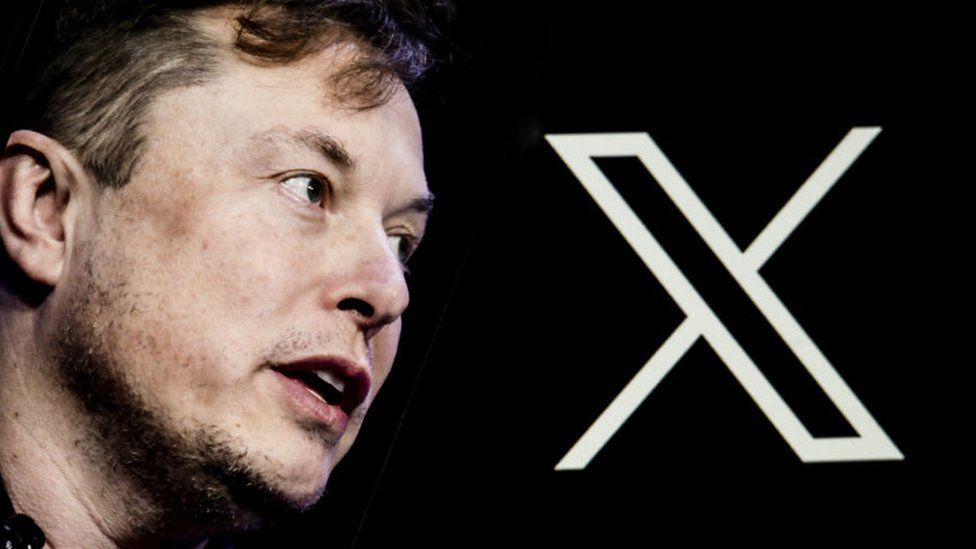
X (Twitter) Begins the Roll Out of Audio and Video Call Feature for Android Users

1

Social networking platform X (formerly Twitter) has begun the rollout of audio and video call features directly on the app to its Android users.

One of the engineers working on the project disclosed this information on his X handle while stating that the feature would be for premium users. However, he noted that it would be free for everyone to receive calls.

Users can enable or disable this feature through privacy settings, to give them the ability to control who can call them.

The launch of the audio and Video call feature to X doesn’t come as a surprise, as the company’s CEO Linda Yaccarino in August 2023, had disclosed that the features will be coming to the platform in the latest step in X becoming the “everything app”.

“Soon you’ll be able to make video chat calls without having to give your phone number to anyone on the platform,” Yaccarino told CNBC’s Sara Eisen, after listing other features that X offers or plans to, like long-form videos and creator subscriptions, as well as payments.

The launch of the audio and video call feature on X will see it rival popular messaging platforms such as WhatsApp, and other social media apps that have rolled out the feature.

According to Musk, users would not need phone numbers to make calls on X. He said the features would work on different operating systems, including iOS, Android, Mac, and PC, meaning that users would also be able to make calls not only on their phones but also on computers.

The significant changes on X are part of Elon Musk’s plan to turn the app into an everything platform. Musk’s description of where Twitter is heading was even simpler. His goal is to transform the social network.

Since he took over Twitter last October, he has introduced lots of changes to the platform including making the blue check mark a subscription-only feature, introducing community notes, monetization of content, and the recent change of the company’s name to X, among several other changes.

Musk has shown a personal affinity with the letter X. He’s compared his ambitions for X (formerly Twitter), with the vision he had for another entity called X.com, a financial services company he founded in 1999 that ultimately became PayPal Holdings Inc.

As the platform begins the rollout of audio-video calls on X, which doesn’t require phone numbers, it is clear that Elon Musk continues to prove that innovation knows no bounds.

Can Western Airstrikes stop the Houthis?

0

The ongoing conflict in Yemen has been described as the world’s worst humanitarian crisis, with millions of people facing starvation, disease and displacement. The Houthis, a rebel group aligned with Iran, have been fighting against the internationally recognized government of Yemen, backed by a Saudi-led coalition of Arab states and supported by Western powers.

The coalition has been conducting airstrikes against the Houthis since 2015, hoping to restore the government and end the war. But can these airstrikes really stop the Houthis, or are they only making things worse?

The coalition claims that its airstrikes are aimed at military targets and that it takes precautions to avoid civilian casualties. However, human rights groups and the United Nations have documented numerous cases of indiscriminate bombing, hitting schools, hospitals, markets and residential areas.

According to the UN, more than 18,000 civilians have been killed or injured by coalition airstrikes since 2015, accounting for more than half of all civilian deaths in the war. The airstrikes have also destroyed vital infrastructure and exacerbated the humanitarian crisis, leaving millions of people without access to food, water, health care and education.

The Houthis, on the other hand, have shown remarkable resilience and adaptability in the face of the coalition’s air superiority. They have developed their own arsenal of ballistic missiles, drones and naval mines, which they use to launch attacks on coalition forces and targets inside Saudi Arabia and the United Arab Emirates.

They have also consolidated their control over most of northern Yemen, including the capital Sanaa, and have gained support from some local tribes and factions. The Houthis claim that they are fighting against foreign aggression and interference, and that they represent the interests of the Zaidi Shia minority in Yemen.

The coalition’s airstrikes have failed to achieve their stated objectives of restoring the government and ending the war. Instead, they have contributed to a stalemate that has prolonged the suffering of the Yemeni people and created opportunities for other actors to exploit the chaos.

These include Al-Qaeda in the Arabian Peninsula (AQAP), Islamic State (IS) and separatist movements in southern Yemen. The airstrikes have also increased regional tensions and instability, as Iran and Saudi Arabia vie for influence and dominance in the Middle East.

The only way to stop the Houthis and end the war is through a political solution that addresses the root causes of the conflict and respects the rights and aspirations of all Yemenis. This requires a ceasefire, a lifting of the blockade, a resumption of peace talks and a comprehensive agreement that includes power-sharing, security arrangements, humanitarian assistance and reconstruction.

The international community, especially Western powers, should play a constructive role in facilitating this process, rather than fueling the war with arms sales and military support. The people of Yemen deserve peace, justice and dignity.

Understanding the role of Iran in regional escalation

Iran is a key player in the Middle East, with significant influence and interests in countries such as Iraq, Syria, Lebanon, Yemen and Bahrain. Iran’s involvement in these countries has often been seen as a source of tension and conflict, especially by its regional rivals Saudi Arabia and Israel, as well as by the United States and its allies.

We will examine the main factors that motivate Iran’s foreign policy and its role in regional escalation. We will also discuss the challenges and opportunities for dialogue and de-escalation with Iran, and the implications for regional and global security.

Iran’s foreign policy is driven by a combination of ideological, strategic and pragmatic considerations. Some of the main objectives of Iran’s foreign policy are:

To preserve the Islamic Republic and its political system, which is based on the concept of velayat-e faqih (guardianship of the jurist), whereby the Supreme Leader has ultimate authority over all aspects of state and society.

To defend Iran’s sovereignty and territorial integrity, especially against external threats and interventions, such as the US-led sanctions, the assassination of Iranian nuclear scientists and military commanders, and the Israeli attacks on Iranian targets in Syria.

To expand Iran’s influence and leverage in the region, by supporting allied groups and governments that share its ideological or strategic interests, such as Hezbollah in Lebanon, the Assad regime in Syria, the Houthis in Yemen, and various Shia militias in Iraq.

To counter the influence and ambitions of its regional rivals, particularly Saudi Arabia and Israel, which Iran perceives as hostile and threatening to its security and interests.

To promote Iran’s economic development and integration with the world, by seeking to overcome the US-led sanctions that have crippled its economy, and by pursuing diplomatic engagement with regional and international actors.

Iran’s role in regional escalation

Iran’s foreign policy objectives have often led to confrontation and escalation with its regional adversaries, as well as with the US and its allies. Some of the main examples of Iran’s role in regional escalation are:

The proxy wars in Syria and Yemen, where Iran has provided military, financial and political support to the Assad regime and the Houthis, respectively, against the opposition forces backed by Saudi Arabia and its allies. These conflicts have resulted in massive humanitarian crises, widespread instability and violence, and increased sectarian polarization.

The tensions in the Persian Gulf, where Iran has repeatedly harassed and attacked commercial vessels and oil facilities belonging to Saudi Arabia and its allies, as well as US military assets. These actions have raised the risk of a direct military confrontation between Iran and the US or its allies, which could have catastrophic consequences for regional and global security.

The nuclear standoff with the US, where Iran has gradually reduced its compliance with the 2015 Joint Comprehensive Plan of Action (JCPOA), also known as the Iran nuclear deal, after the US withdrew from it in 2018 and reimposed sanctions on Iran. The JCPOA was designed to limit Iran’s nuclear activities in exchange for sanctions relief.

However, since the US withdrawal, Iran has increased its uranium enrichment levels and stockpiles, as well as its research and development of advanced centrifuges. These moves have raised concerns about Iran’s nuclear capabilities and intentions and have increased the pressure on the remaining parties to the JCPOA (China, France, Germany, Russia, UK) to salvage it.

The prospects for dialogue and de-escalation with Iran

Despite the high level of tension and hostility between Iran and its adversaries, there have been some attempts to initiate dialogue and de-escalation with Iran. Some of these attempts are:

The indirect talks between Iran and the US in Vienna since April 2021, aimed at restoring mutual compliance with the JCPOA. These talks have faced several challenges and obstacles, such as domestic opposition from hardliners on both sides, regional incidents that have undermined trust, and political transitions that have changed the negotiating teams. However, both sides have expressed their willingness to continue the talks until a mutually acceptable outcome is reached.

The regional initiatives by countries such as Iraq, Oman, Qatar and Kuwait to mediate between Iran and Saudi Arabia. These initiatives have resulted in some positive developments, such as a series of secret meetings between Iranian and Saudi officials since April 2021 in Baghdad.

These meetings have reportedly discussed issues such as Yemen, Iraq, Lebanon and Syria. However, these talks have not yet produced any concrete results or agreements.

The international efforts by countries such as France, Germany, UK, Russia and China to support dialogue and de-escalation with Iran. These efforts have included diplomatic outreach to Iranian officials,

JP Morgan’s Jamie Dimon And His Crypto Viewpoints

0
JP Morgan Chase puts contents through its CEO account, it goes viral. But the same content via JPMC account, no one cares (WSJ)

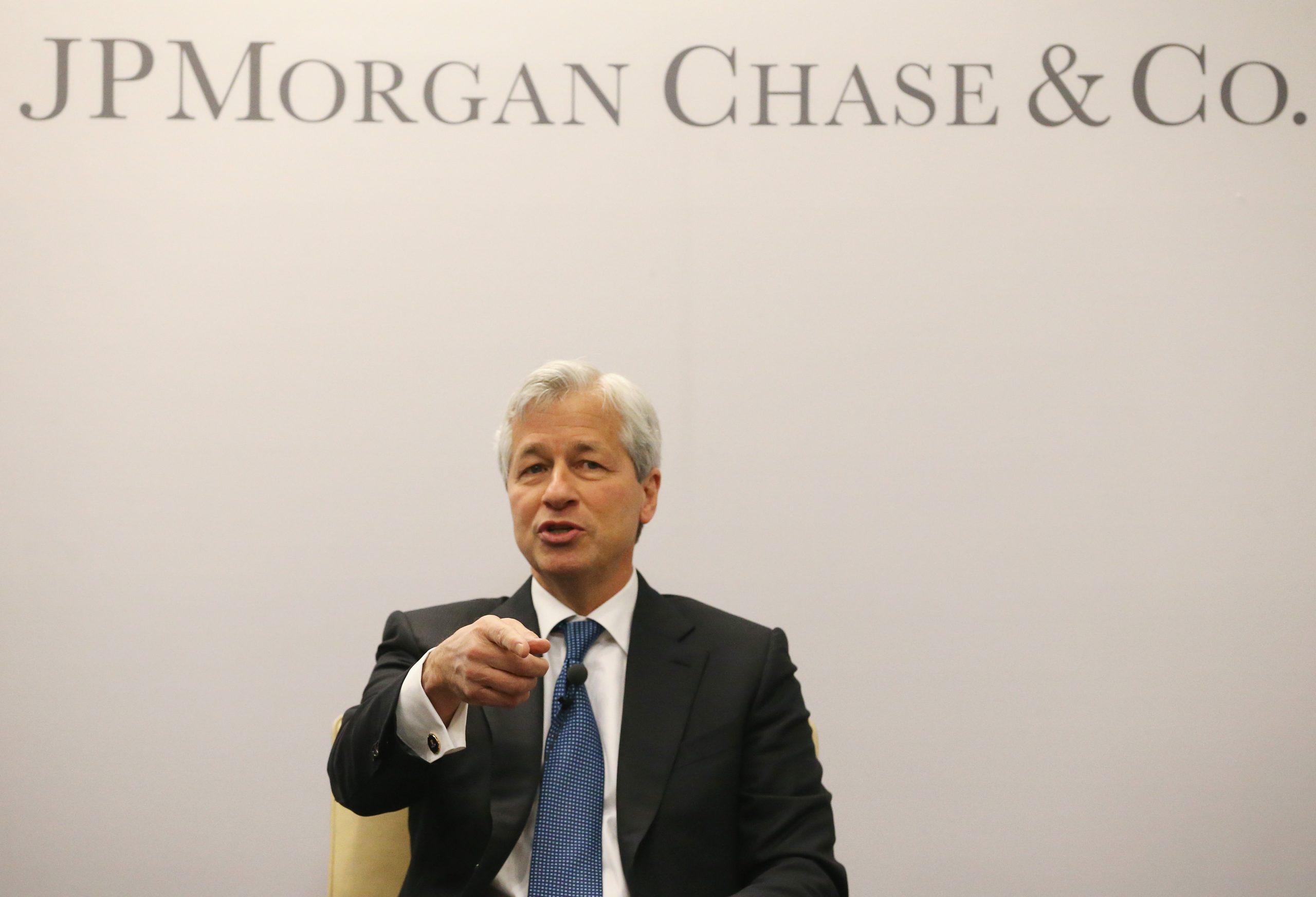
If you are looking for a compelling antagonist in the crypto space, you might be disappointed by Jamie Dimon. The CEO of JPMorgan Chase has been one of the most vocal and consistent critics of cryptocurrencies, dismissing them as a fraud, a scam, and a bubble. He has also warned his employees not to trade them, and his bank has been accused of manipulating the market by spreading negative news.

Jamie Dimon trying to psychic on crypto?

Jamie Dimon, the CEO of JPMorgan Chase, has been known for his outspoken views on cryptocurrencies. He famously called Bitcoin a “fraud” in 2017, and later said he regretted that remark. He has also expressed skepticism about the long-term viability of crypto assets, saying they are not backed by anything and have no intrinsic value.

However, in a recent interview with CNBC, Dimon seemed to have a change of heart. He said he was “not going to talk about Bitcoin anymore” and that he was “open-minded” about the potential of blockchain technology. He also revealed that some of his clients were interested in investing in crypto, and that JPMorgan was ready to offer them the services they need.

Does this mean that Dimon has become a crypto believer? Not quite. He still maintained that crypto was not his “cup of tea” and that he personally would not invest in it. He also warned that crypto could face more regulation and scrutiny from governments and central banks in the future.

So, what is behind Dimon’s apparent shift in tone? Is he trying to psychic on crypto, as some observers have suggested? Psychic on crypto is a term coined by Michael Saylor, the CEO of MicroStrategy, who has been one of the most vocal and influential advocates of Bitcoin. It refers to the ability to foresee the future of crypto and act accordingly, even if it goes against one’s own beliefs or preferences.

Saylor himself claimed to have psychic on crypto when he decided to invest billions of dollars of his company’s treasury in Bitcoin, despite being a skeptic for years. He said he realized that Bitcoin was a superior store of value than cash or gold, and that it was inevitable that more institutions and individuals would adopt it.

Perhaps Dimon is following Saylor’s example and trying to psychic on crypto as well. He may not like or understand crypto, but he recognizes that it is a force that cannot be ignored or dismissed. He may also see an opportunity to profit from it by serving his clients who want exposure to it. He may also want to avoid being left behind by his competitors who are more open to crypto, such as Goldman Sachs or Morgan Stanley.

Whatever his motives are, Dimon’s latest comments show that he is no longer hostile or dismissive of crypto. He may not be a fan, but he is not a foe either. He is trying to psychic on crypto, and that is a sign of respect and recognition for the crypto industry.

But despite his apparent hostility, Dimon is not a very interesting or effective villain. He is not a visionary who sees the flaws in the crypto system and tries to expose them. He is not a mastermind who plots to destroy the crypto industry and its supporters. He is not even a hypocrite who secretly invests in crypto while publicly bashing it.

He is just a boring banker who does not understand or care about the potential of crypto. He is stuck in his old-fashioned worldview, where centralized institutions are the only legitimate and trustworthy actors in the financial system. He is blind to the innovation and disruption that crypto brings to the world. He is deaf to the voices of millions of people who use crypto as a way to escape oppression, censorship, and corruption, He is not a villain. He is a relic.

BlackRock now largest institutional holder of Bitcoin with 25,067 BTC

Meanwhile, BlackRock, the world’s largest asset manager, has revealed that it holds more than 25,000 bitcoins in its spot Bitcoin ETF, which was launched in October 2023. The ETF, which trades under the ticker BTCX on the Toronto Stock Exchange, allows investors to gain exposure to the price of bitcoin without having to buy or store the cryptocurrency themselves.

According to the latest disclosure, BlackRock’s ETF had 25,067 bitcoins as of January 18, 2024, worth over $1.06 billion at the current market price of $42,400 per bitcoin. This makes BlackRock one of the largest institutional holders of bitcoin in the world, surpassing the likes of MicroStrategy, Tesla and Square.

The spot Bitcoin ETF is different from the futures-based Bitcoin ETFs that have been approved by the US Securities and Exchange Commission (SEC) in late 2021. While the futures-based ETFs track the price of bitcoin through contracts traded on regulated exchanges, the spot ETF directly holds the underlying asset in a custodial arrangement.

This means that the spot ETF does not incur the costs and risks associated with rolling over futures contracts, which can erode the returns for investors. Moreover, the spot ETF may more closely reflect the actual supply and demand dynamics of the bitcoin market, as it increases the demand for physical bitcoins rather than synthetic ones.

BlackRock’s spot Bitcoin ETF is not the first of its kind in Canada, as several other asset managers have launched similar products since February 2021, when the Canadian regulators became the first in North America to approve such an innovation. However, BlackRock’s ETF has quickly become the most popular and successful among its peers, as it has attracted more assets and trading volume than any other Canadian spot Bitcoin ETF.

As of January 18, 2024, BlackRock’s ETF had a market capitalization of $1.12 billion and an average daily trading volume of $18.7 million, according to data from Bloomberg. In comparison, the second-largest spot Bitcoin ETF in Canada, managed by Purpose Investments, had a market capitalization of $546 million and an average daily trading volume of $7.9 million.

The success of BlackRock’s spot Bitcoin ETF may be attributed to several factors, such as its brand recognition, its low management fee of 0.75%, and its partnership with Coinbase Custody, one of the most trusted and regulated custodians in the crypto space.

Additionally, BlackRock may have benefited from its timing, as it launched its ETF amid a renewed interest and optimism in the bitcoin market, following the approval of the first US Bitcoin futures ETFs and the adoption of bitcoin as legal tender by El Salvador.

Since its inception on October 15, 2021, BlackRock’s spot Bitcoin ETF has delivered a return of 26%, outperforming both the futures-based Bitcoin ETFs in the US and the spot Bitcoin ETFs in Canada.

BlackRock’s spot Bitcoin ETF is a significant milestone for the mainstream adoption and acceptance of bitcoin as an asset class. It demonstrates that a reputable and regulated institution like BlackRock is confident and comfortable in holding and offering exposure to bitcoin to its clients.

It also shows that there is a strong and growing demand for bitcoin among investors who seek to diversify their portfolios with an alternative and uncorrelated asset that has proven to be resilient and appreciating over time. As more investors and institutions embrace bitcoin, we may see more innovation and competition in the crypto ETF space, both in Canada and in other jurisdictions.

The Waning Power of OPEC+ As US Hits 13.3m bpd Oil Production Capacity

1

Nigeria produces about 1.2 million barrels of oil per day. The United States does about 13.3 million barrels per day. But while Nigeria is an “oil producing country”, not many people in the real sense think of the United States as first an oil producing country. Why? The diversified US economy with New York anchoring banking, Silicon Valley technology, and so much, obscures the fact that non-OPEC+ countries (which the US belongs to) produce more oil in the world today than OPEC+ countries (which Nigeria is a member).

I have written here many times that the long term trajectory for oil price will be “low price” because it will be an era of quantity (adjusted by disintermediation from renewable energy), and whenever that happens, price struggles. Yes, as the US produces more oil, some OPEC+ members may decide to pull out (hello Angola which exited OPEC+) to enable them to produce unconstrained, and as that happens, prices will fall. That would be a vicious circle where more production will lead to lower global prices.

The Republic of Angola’s abrupt departure from the Organization of the Petroleum Exporting Countries (OPEC) marks a decisive turn in the group’s unity, raising concerns and signaling a growing rift within the coalition of oil-producing nations.

The move announced following a cabinet meeting on Thursday, lays bare a deepening conflict between Angola and OPEC, exposing underlying tensions over output limits that failed to accommodate Angola’s diminishing oil production capacities.

Good People, Nigeria has a few more years to fundamentally redesign the architecture of its economy because we can suddenly wake up to see that this oil will be there with few interested in buying it from us. Indeed, the real “producers” of oil are not making noise!

The U.S. now pumps more oil than any country in history, aided by new policies and technology. Federal and state tax breaks, along with relaxed regulation, paved the way for output of 13.3 million barrels per day in December, according to the Energy Information Administration. At the same time, new efficiencies including horizontal drilling techniques require fewer rigs. The output gains undercut the power of Saudi-led OPEC+, which now accounts for only 48% of global market share. 

Meta Platforms Nears $1 Trillion Market Cap as Shares Surged 200% in 2023

0

In a stunning turnaround, Meta, the parent company of Facebook and Instagram, is on the cusp of achieving a market capitalization of $1 trillion.

The company’s shares have experienced a phenomenal 200% surge in 2023, propelling its market cap to an impressive $966.60 billion, tantalizingly close to the coveted trillion-dollar milestone.

Meta, if successful in reaching the $1 trillion mark, will join the elite league of technology giants, including Microsoft, Apple, Alphabet, Amazon, and Nvidia, all currently valued at $1 trillion or more. Microsoft, leading the pack with a market cap of $2.93 trillion, signifies the significant achievement that awaits Meta should it cross this threshold.

This is not the first time Meta has flirted with the trillion-dollar valuation. In June 2021, the tech behemoth breached the milestone, reaching an all-time high closing valuation of $1.08 trillion on September 7 of the same year, according to Dow Jones Market Data.

However, Meta faced a tumultuous period as demand for tech products and services waned following the easing of Covid-related restrictions. The company suffered a severe setback in February 2022 when it reported a historic one-day wipeout in US corporate history after revealing a contraction in Facebook’s daily active user base, marking the first decline ever.

Responding to the challenges, Meta undertook significant cost-cutting measures, including laying off 11,000 employees in November 2022, marking the company’s first major round of layoffs. The strategic move aimed to navigate a landscape of reduced demand and uncertainty, with promises from Meta’s leadership that 2023 would be a “year of efficiency.”

The efforts seem to have paid off, as Meta reported robust earnings in the third quarter of 2023, surpassing analysts’ expectations. The stellar performance translated into a remarkable 200% increase in Meta’s stock value, making it the second-best performing company on the S&P 500, only trailing behind chipmaker Nvidia.

As of Thursday, Meta’s shares closed 2.1% higher at $376.13 apiece, inching closer to the $389.13 threshold that would catapult the company’s market cap into trillion-dollar territory, as per MarketWatch calculations.

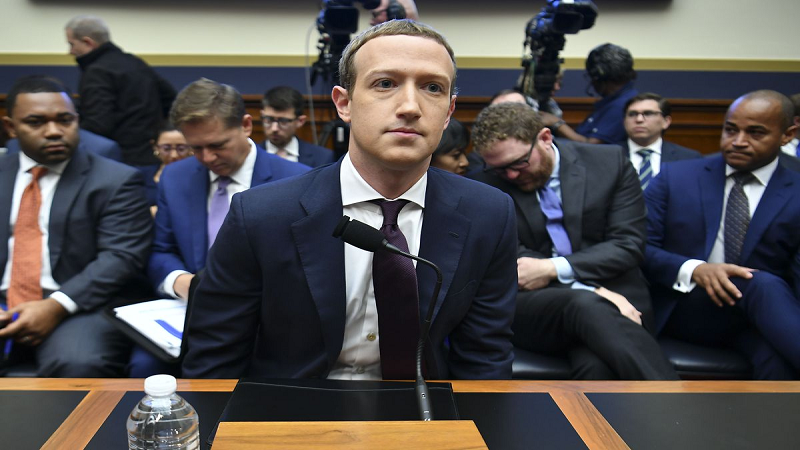
This resurgence in Meta’s stock has not only benefited the company but also significantly boosted the wealth of its co-founder and CEO, Mark Zuckerberg. Holding a 13% stake in Meta, Zuckerberg’s net worth has skyrocketed from $48 billion at the beginning of 2023 to an impressive $136 billion, making him the world’s 6th-richest person, according to the Bloomberg Billionaires Index.

In 2023, the year of efficiency

Reflecting on the pivotal “year of efficiency,” Zuckerberg highlighted Meta’s strategic shift toward key areas driving growth for the social media giant. The emphasis on relevant content recommended by AI systems, particularly in the rapidly growing short-form video formats like Reels, has been a focal point.

“Facebook and Instagram are shifting from being organized solely around people and accounts you follow to increasingly showing more relevant content recommended by our AI systems,” he said.

Zuckerberg’s plans extend to improving monetization efficiency in Reels, with a broader investment in AI across the company’s advertising business. The last quarter saw advertisers experiencing over 20% more conversions compared to the previous year, coupled with a declining cost per acquisition, resulting in higher returns on ad spend.

Excitement also surrounds the monetization prospects of business messaging, with plans to bring messaging online as the next pillar of Meta’s business. Initiatives like click-to-message ads, operating at a $10 billion run rate, and the onboarding of businesses to the WhatsApp Business Platform for direct communication with customers, are indicative of Meta’s diversified approach to revenue streams.

These strategic shifts have led to unprecedented revenue growth, surpassing analysts’ predictions and solidifying Meta’s resurgence as a powerhouse in the tech industry.