
DD
MM
YYYY

PAGES

DD
MM
YYYY

spot_img

PAGES

Home Blog Page 3882

Balancing act: understanding and optimizing the Times interest earned ratio in finance

0

The Times interest earned ratio measures a company’s ability to pay off its interest expenses with earnings before interest and taxes. An essential financial metric helps investors determine the risk of investing in a particular company. The ratio indicates whether a company has enough cash flow to cover its interest payments, which are crucial in maintaining its financial stability. A high Times interest earned ratio is preferred, showing that the company can meet its obligations and is less likely to default on its debts. This article will discuss different methods to optimize the Times interest earned ratio and how it can benefit financial health.

Increase earnings

One way to optimize the Times interest earned ratio is by increasing earnings, which can be achieved through various strategies such as increasing sales, reducing costs, and improving operational efficiency.

A company can focus on expanding its customer base and introducing new products or services to increase sales. It will help generate more revenue, which can then be used to cover interest expenses. Another approach is implementing cost-cutting measures, such as reducing unnecessary costs and negotiating better supplier deals. It will increase profits and improve the company’s ability to cover interest payments.

Improving operational efficiency can also significantly impact a company’s earnings. A company can improve its productivity and reduce costs by streamlining processes, eliminating inefficiencies, and investing in technology, leading to higher profits and a better Times interest earned ratio.

Reduce interest expenses

Another method to optimize the Times interest earned ratio is by reducing interest expenses. It can be achieved through debt refinancing, negotiating lower interest rates with lenders, and strategically managing debt.

Debt refinancing involves replacing existing debts with new ones with a lower interest rate. It can help reduce the company’s overall interest expenses and improve its Times interest earned ratio. Negotiating lower interest rates with lenders is also an effective strategy, especially for companies with a good credit rating. Reviewing debt agreements and negotiating better terms whenever possible regularly is essential.

Strategic debt management involves analyzing the company’s debt structure and prioritizing debts based on interest rates and maturity dates. A company can reduce its overall interest expenses and improve its Times interest earned ratio by strategically managing debt.

Increase cash flow

Increasing cash flow is another effective way to optimize the Times interest earned ratio. It can be achieved through various methods, such as improving customer payment terms, controlling inventory levels, and managing accounts receivable and accounts payable effectively.

By offering discounts for early payments, a company can encourage customers to pay their invoices sooner, thus improving cash flow. Implementing efficient inventory management practices can help reduce storage and carrying costs, ultimately leading to higher cash flow. Managing accounts receivable and accounts payable efficiently can also improve cash flow by ensuring timely collections and payment of outstanding debts.

Monitoring and managing working capital closely is also essential, as it directly impacts a company’s cash flow. A company can improve its ability to cover interest expenses and its Times interest earned ratio by optimizing operating capital.

Diversify sources of financing

Relying on a single source of financing can be risky for a company, especially when paying off interest expenses. One way to optimize the Times interest earned ratio is by diversifying sources of financing.

By seeking funding from various sources, such as banks and private investors, and issuing bonds, a company can spread its debt obligations and reduce the risk associated with a single lender. It is also essential to maintain a good credit rating to have access to different financing options and negotiate better terms.

It is crucial to carefully consider the cost of financing from different sources and choose the most favorable option for the company’s financial health. Diversifying funding sources reduces the risk and provides flexibility in managing debt and improving the Times interest earned ratio.

Analyze and manage risk

Managing risk is crucial for optimizing the Times interest earned ratio. A thorough risk analysis can help identify potential threats that could impact a company’s ability to make interest payments. A company can safeguard its financial health and improve its Times interest earned ratio by identifying and mitigating risks.

One way to analyze risk is by regularly conducting a SWOT (Strengths, Weaknesses, Opportunities, Threats) analysis. It will help identify internal and external factors impacting the company’s performance and ability to cover interest expenses. Based on the research, appropriate risk management strategies can be implemented to minimize potential threats.

It is also essential to have a contingency plan to handle unexpected events affecting the company’s cash flow and ability to make interest payments. Insurance coverage and a healthy cash reserve can help mitigate risks and improve the Times interest earned ratio.

Improve profitability

Improving profitability is crucial for optimizing the Times interest earned ratio. It can be achieved through various strategies, such as increasing sales, reducing costs, and improving operational efficiency.

By increasing sales, a company can generate higher profits that can be used to cover interest expenses. Reducing costs and improving operational efficiency also directly impact a company’s profitability. A company can improve its productivity and reduce costs by eliminating unnecessary expenses, streamlining processes, and investing in technology.

It is also essential to regularly review pricing strategies to ensure they are aligned with market trends and cover all costs, including interest expenses. Periodically monitoring and analyzing financial statements is crucial to track profitability and identify areas for improvement.

Nigerian Researchers Develop JINLAT for Islamic Exorcism Culture Preservation

0

In the pursuit of global well-being outlined in the United Nations’ Sustainable Development Goals, one critical aspect often overlooked is the intersection of non-biomedical approaches and cultural remedies. A groundbreaking initiative, JIN-LAB Taxonomies (JINLAT), spearheaded by a trio of Nigerian researchers—Ajetunmobi Umar Olansile, Imam Muhyideen, and Akinlabi Abdulkabeer—is aiming to address this gap by focusing on the preservation of Nigeria’s Islamic exorcism culture.

It will be recalled that Umar Olansile Ajetunmobi has been in support of our series on mental health from an Islamic spiritual perspective.

In a world fixated on biomedical solutions, JINLAT emerges as a pioneer, combining theory-proven evidence and practical realities to create a unique platform. The project’s components—non-biomedical perspective, visual experiences, cultural signification, and mental health manifestations—uncover a holistic understanding of Islamic exorcism. Ajetunmobi Umar Olansile, the project lead and a mental health communication researcher at the University of Kansas, stresses that JINLAT is not only the first of its kind in Africa but possibly globally.

“As far as we are aware, ‘Jin-Lab Taxonomies’ is the first of its kind in Africa if not in the world. The project details four components of the taxonomies: non-biomedical perspective; visual experiences; cultural signification, and mental health manifestations. We combined both theory-proven evidence and practice-based realities to implement this project. In fact, for people’s easier understanding and engagement, we avoid academic jargon in all the textual content we put on the website and the app.

We thought of this project because our experiences, exposure and scholarship have shown that many Muslims and non-Muslims live with different experiences of Jinn possession, sorcery, black magic, witchcraft and even evil eyes.

Although some people may not believe these phenomena exist until they find themselves dancing in the nests of attacks, ours is to document the necessary information about the phenomena in a comprehensive platform that can be explored on the go—it’s you either go to the website or use the mobile application that will be downloadable on Google Play store. Users may combine the two too. For now, we are starting from Nigeria as a take-off case study. However, we need sponsors to fund this problem-solving and human-centred project.”

The project’s significance lies in its ability to document and preserve cultural knowledge while offering alternative therapeutic insights. By sidestepping academic jargon, the team ensures accessibility, acknowledging that many individuals, both Muslim and non-Muslim, grapple with phenomena such as Jinn possession, sorcery, black magic, witchcraft, and the evil eye.

The JINLAT initiative unfolds as a comprehensive solution, featuring a simplified website and a user-friendly mobile application. The team envisions a platform where individuals can access information on the go, catering to diverse experiences of Jinn-related challenges. As the project takes its initial steps in Nigeria, the team actively seeks sponsorship to propel this innovative, human-centered approach forward.

Beyond its immediate impact, JINLAT is poised to fill a critical gap in addressing mental health issues from a non-biomedical perspective. The project not only advocates for alternative therapeutic avenues but also challenges the over-centralization of Western conceptions of mental health found in the UN’s SDG 3.4. By doing so, it promises to amplify voices, foster developmental prospects in mental health linguistics, and spark meaningful discourse in mental health communication.

Our analyst notes that the success of JINLAT hinges on collaboration, support, and further discussions. As it strives to unravel the potent yet invisible aspects of Nigeria’s Islamic exorcism culture, the project beckons stakeholders to join hands in shaping a future where cultural preservation and mental health coalesce for the greater well-being of individuals globally.

Adebayo Ogunlesi’s Net Worth Soars to $2.3 Billion Amid BlackRock’s GIP $12.5 Billion Acquisition

0

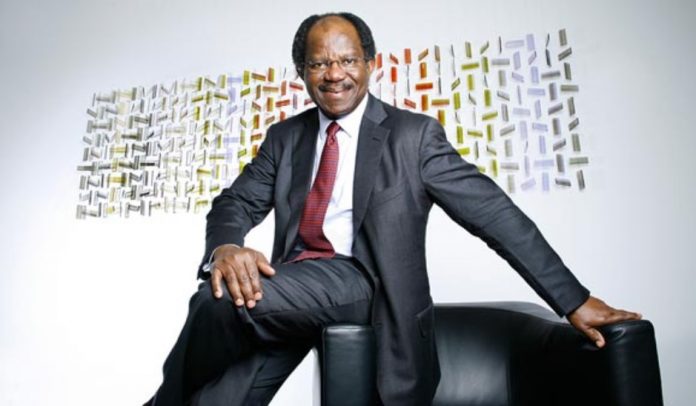
Adebayo Ogunlesi, the seasoned 70-year-old Chairman and CEO of Global Infrastructure Partners (GIP) is poised to enter the billionaire league as his net worth experiences a remarkable surge, reaching an estimated $2.3 billion.

This financial upswing is intricately tied to the recent groundbreaking acquisition of GIP by BlackRock Inc., the world’s largest asset manager, in a historic deal valued at an astounding $12.5 billion.

Ogunlesi, holding a significant 17.5% stake in GIP, has swiftly become a prominent figure among Nigerian dollar-denominated billionaires, as per the Bloomberg Billionaires Index. His wealth, now estimated at around $2.3 billion, firmly establishes him as one of the influential figures in the global financial landscape.

The acquisition, expected to conclude in the third quarter of 2024, involves a payment structure of $3 billion in cash and approximately 12 million shares, valued at roughly $9.5 billion based on closing prices as of January 11. This strategic move by BlackRock, managing assets totaling an astounding $10 trillion as of FY 2023, not only signifies a monumental financial deal but also cements its position as a powerhouse in the global financial market.

This acquisition marks a significant transformation for BlackRock, shifting its focus from traditional index-based investing to emerging as a major player in illiquid funds supporting intricate and substantial projects. BlackRock’s holdings in illiquid alternatives have experienced an impressive surge of 65% in the three years leading up to September 2023.

Adebayo Ogunlesi’s journey to financial eminence is characterized by academic brilliance and strategic leadership. Holding an undergraduate degree with first-class honors from Oxford University, a law degree, and an MBA from Harvard, his illustrious career includes a clerkship on the Supreme Court under Thurgood Marshall and pivotal roles such as heading Credit Suisse’s investment banking division and serving as the lead independent director at Goldman Sachs Group Inc.

His foray into the financial sector commenced after a brief stint at the prestigious law firm Cravath, Swaine & Moore. Perfectly timing his move with Wall Street’s mergers boom in the 1980s, he continued his ascent, particularly when Credit Suisse took over, overseeing the investment banking division in 2002.

In pursuit of change due to job dissatisfaction, Ogunlesi, alongside colleague Matt Harris, conceptualized the idea of managing infrastructure investments. This vision materialized with the founding of GIP in 2006, evolving into a diversified portfolio encompassing airports, gas pipelines, wind farms, and more.

Ogunlesi’s influence extends beyond the financial realm, with connections that include fireside chats with billionaire Henry Kravis and active participation in White House meetings. Currently chairing Joe Biden’s National Infrastructure Advisory Council, he continues to impact national infrastructure policies.

With the impending sale of GIP, Ogunlesi is set to resign as the lead independent director at Goldman Sachs, marking the conclusion of a significant chapter in his illustrious career. Recognized not only for his financial acumen but also for his golfing prowess and philanthropic initiatives, Ogunlesi’s journey stands as a testament to resilience and strategic vision in navigating the intricate world of global finance.

GIP’s extensive $100 billion in assets combine with BlackRock’s existing infrastructure assets of approximately $50 billion to form a formidable unit, rivaling industry giants like Macquarie Asset Management and Brookfield Asset Management.

BlackRock’s involvement in substantial infrastructure investments worldwide, including pipelines in the Middle East, a carbon-capture project in Texas, and a fiber network venture with AT&T Inc., further solidifies its dominant position in this space, promising a new era of influence and innovation in the realm of global infrastructure investment.

The American Tech Race and Nigeria and Africa’s Moment

1

The Internet unlocked $trillions in America, catalyzing wealth creation at scale. That Microsoft is near $3 trillion is because of the internet, and most especially its ability to unlock value in the application utility phase. Windows remains the operating system of enterprises, and the web has souped its ability to capture value, as the web distorted piracy at scale, with subscriptions, software validation and authentication.

The promise of African knowledge companies in this decade is to unlock the value which remains latent in the application utility phase. We have the mobile internet but our applications remain limited. Yes, from real estate to agriculture, from education to retail, and indeed all sectors, the power of the web must work in Africa, village to city, one at a time.

Microsoft has overtaken Apple as the world’s most valuable company, according to the latest market data. The tech giant reached a market capitalization of $2.8 trillion on Friday, surpassing Apple’s $2.7 trillion valuation. This is the first time since 2010 that Microsoft has claimed the top spot in the global ranking of public companies.

Microsoft’s impressive performance is driven by its strong growth in cloud computing, gaming, and hardware segments. The company reported a 21% increase in revenue and a 47% increase in net income for the quarter ending September 30, 2023. Microsoft also announced a $60 billion share buyback program and raised its quarterly dividend by 11%.

For everything you think has happened, our transition remains at infancy. Yes, these “big” startups have done really nothing, and that means more builders are still needed. I tell Tekedia Capital founders, do not worry about competition that much in Africa, worry about your inability to execute your playbook! Why? Most startups which have failed did not fail because someone solved the problems which they wanted to fix, but because they gave up, while trying!

Be inspired that someone can build a company worth $2.89 trillion and could overtake another company in that range. If you put that in context, understanding that ALL companies in the Nigerian stock exchange are not worth up to $60 billion, you can appreciate the power of knowledge and executed missions of firms.

Apple over Microsoft, Microsoft over Apple – that is the American tech race on market caps. By this time in ten years, another company will likely lead the show.

#Build because Nigeria, Africa still need their moments!

By 2030, I expect 80% of richest Nigerians to have made money from technology. Nigeria is having its finest cambrian moment on the formation of enduring companies. The last time we were this bold, on entrepreneurial capitalism, was in the early 1990s when some of Nigeria’s current leading banks were established.

The 1990s gave us the new generation banks. The 2000s brought voice telephony. The 2010s ushered mobile internet. The 2020s would deliver the era of application utility across industry sectors and market territories.

Criminal responsibility of a child (minor) under the Nigerian laws

0

Criminal responsibility has been defined in section 1 of the Criminal Code Act as the liability for punishment for an offense. It simply means the culpability of an individual. 

Under Nigerian law, a child or a minor could or could not be criminally liable for a crime he committed depending on the circumstances or facts of the case.

According to the constitution of the Federal Republic of Nigeria, a minor is a person who is below the age of eighteen (18). An adult under the Nigerian constitution is a person who has attained the age of 18, ie the age of majority. This is the provisions of section 29 of the constitution and to its effect, any person who is below the age of 18 is still deemed to be a minor. At the age of 18, you become an adult in Nigeria and can therefore begin to enjoy every right and liberty that accrues to an adult citizen, on the same vein, you will be held liable for your own offense; you can be issued with a driver’s license, you can vote during the election, you can be allowed to own a landed property in your own name and you sue and be sued in your own capacity etc. 

However, the Criminal Code Act for the sake of being criminally culpable for offenses took another view of who a minor is in Nigeria. While acknowledging the fact that a person who is below the age of 18 is not yet an adult as provided in section 29 of the constitution, such a person who is below the age of 18 can still be held to be criminally liable for any offense he commits. 

According to section 30 of the criminal code act, a person will be criminally culpable, once such a person is twelve (12) years and above. A person who is twelve years and above will be presumed to have grown enough to form the mental capacity to distinguish what is right from what is wrong. A person who is below the age of twelve but above the age of seven may be held criminally liable for the offense he or she committed but the prosecutor will need to prove to the court that at the time of the offender committing such offense he or she knows what they are doing. A child who is below the age of seven will not be held criminally liable for any criminal offenses because it is presumed in law that the child who is below the age of seven has not developed the mental capacity to distinguish right from wrong. 

Also, according to the provisions of section 30 of the criminal code act, a boy child under the age of twelve years is presumed to be incapable of having carnal knowledge, this is to say that a boy child under the age of twelve cannot be held liable for sexual related offenses. 

In the case of NPF v OMOTOSHO (2018) LPELR – 4577 8 (CA) the court while adopting the fact that a child may not be held culpable for offenses held that “in both civil and criminal law, the legal capacity/criminal responsibility of a minor is diminished and can never equate to that of an adult by virtue of the mental capacity and level of maturity” but in the case of YUSUF MUSA AND THE STATE in 2022 the Supreme Court upheld the judgment of both the Jigawa state high court and the judgment of the court of appeal which held that the accused, an eleven years old minor who struck a machete on a person multiples times thereby killing the deceased is guilty of culpable homicide despite the fact that he is less than twelve years old.

immaturity or being a minor is actually a strong and valid defense in criminal jurisprudence all over the world and it has gotten a lot of folks off the hook who used being a minor as a defense in a plethora of cases. Other valid defenses under the criminal jurisprudence aside from immaturity include; mistake, Bona fide claim of right, Intoxication or being drunk, Insanity or mental incapacitation and Provocation.