DD
MM
YYYY

PAGES

DD
MM
YYYY

spot_img

PAGES

Home Blog Page 3886

The Dramatic Change of Arik Air

1

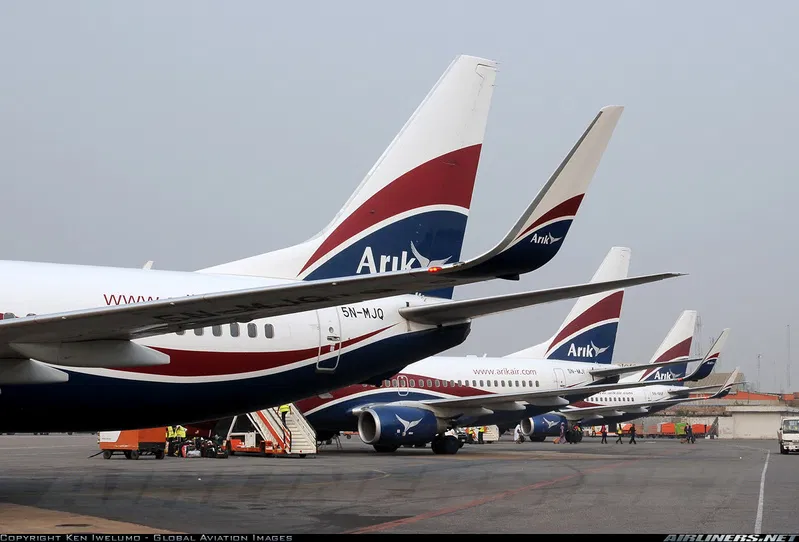
Arik Air is one of the renowned airlines operating in Nigeria. They are a household name in the Nigerian Airline Industry but they have also built a bad reputation over the years through their bad services. They were at a time arguably the worst airline in Nigeria. Little wonder they ground themselves to a halt and ran into debts until it was taken over by Asset Management Corporation of Nigeria (AMCON) and its operations and staff were totally overhauled.

If you are a regular flier you must have noticed how terrible Arik air service was. They never keep to schedule, they delay their flights for hours, they cancel their flights some minutes before departure, they treat customers with no respect, and they have the worst customer support staff. They kept doing this and rendering bad services until people started boycotting the airline and they got themselves multiple lawsuits from aggrieved customers which many are still pending in court. 

I was one of their regular fliers and I experienced a shitload of their terrible customer service until I decided that I have had enough of them and their shitty services. I even made the decision that if Arik Air is the only airline flying in my direction I will cancel or reschedule the trip because I know that once I waste my time and money and get to the airport they will either cancel the flight or delay it for hours without any concrete explanation.

To my utmost disbelief, I recently started seeing and hearing that Arik Air service has changed for good, that they now try to keep up with time and that they no longer cancel flights. When I heard it at first I just felt that it is just a cheap PR sponsored by them just to resuscitate their dying airline because almost every flier I know has boycotted them. Last week, I had no option but to fly to Arik since I was behind schedule and I was desperate to fly out that day to Lagos. So I flew with them from Abuja to Lagos and I was amazed that they stuck to their time. The Arik I know before never sticks to time. In fact I waited about 45 mins before departure before I left my house and went to the airport because I was thinking it’s better I’m still at home when I receive their delay or cancellation message but it didn’t happen, they stuck to the schedule and departed at the fixed time and landed at the fixed time. When we landed in Lagos I was tempted to ask my fellow passengers to join me in giving them a round of applause for a job well done. 

I really hope that Arik Air keeps up with this change because they were really bad, to say the least. To be fair, not just Arik Air, most (if not all) airlines in operation in Nigeria also render terribly bad services. The few Airlines that I have ever used in Nigeria and they didn’t fail are Valuejet, Green Africa and Ibom Air. These are the only airlines I can beat my best any day and say that they stick to time without fail and if they ever fail it must have been caused by factors beyond their control. The other airlines in Nigeria which I’m sure I have used every one of them all provide shitty service. From cancellation to rescheduling of flights to rude customer support staff. 

Arik Air is still on my watch list to see if they have really changed for good or if it was just camouflage.

This is not a free PR for Arik Air but a commendation for them and a charge to them to keep up with the good services they have decided to be rendering from now.


The Lesson from Chick-fil-A for Nigeria’s Fast Food Chains: Give Franchise Licenses To Those Who Love Feeding People!

0

Chick-fil-A, a fast food chain which makes chicken right, is blowing financial metrics.  The US-based fast food chain  is a revelation. It has a cheap fee to open a chain but it has a premium royalty. About 60,000 people apply for an outlet operating license but only 80 are selected yearly! This company which has the highest customer satisfaction in the fast food business, in the U.S, has built a Perception Demand. How did it do it? Focus on those who can make customers to become fans.

“Eat mor chikin”? Consumers are doing just that: Chick-fil-A earns the most per restaurant out of all of America’s top fast food chains, per a new report from QSR, which covers the industry. Its 2,837 restaurants nationwide average nearly $7 million dollars each and more than $18 billion altogether. Coming in second is another chicken-focused chain, Raising Cane’s, with over $5 million in sales per restaurant; Shake Shack, Whataburger and McDonald’s round out the top five.

Yes, you just need to have $10,000 and if they pick you because you really like the business of serving customers, your outlet can generate $6.7 million in average yearly sales. And you do not need to be a person of means (with a big net worth); you just have to be the right person to run a restaurant and feed people!

The top five average-unit volume quick-serves in America last year (among the top 50 highest grossing by sales):
1. Chick-fil-A: $6.7M
2. Raising Cane’s: $5.4M
3. Shake Shack: $3.8M
4. Whataburger: $3.7M
5. McDonald’s: $3.6M

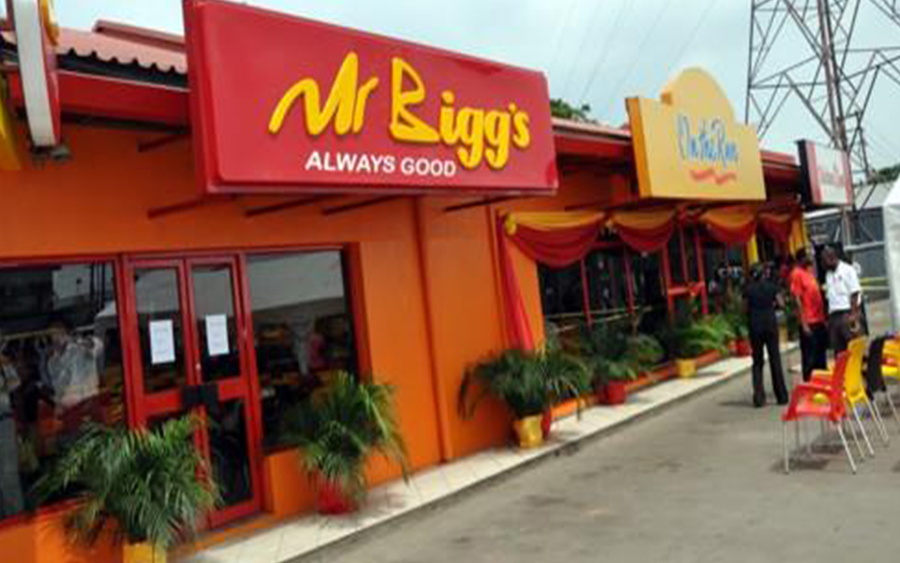
Let’s move to Nigeria, focusing on Jevinik, a casual dining restaurant. It does not run a franchise model. Franchising is always challenging in Nigeria. But Mr. Biggs does, and I will say that it has run into challenges. 

On that, there is a small lesson from the American brand: Give franchise licenses to those who love feeding people, over those with truckloads of cash who see this as pure business, for adding digits in their bank accounts. Possibly, if you recruit such feeding-loving  people, banks can step in and provide them funds, with a quasi-guarantee as Chick-fil-A does to its chains.

The Concept of Voting Under The Companies and Allied Matters (CAMA) Act 2020 Nigeria

0

The Companies and Allied Matters Act 2020 makes provisions for poll voting as the practice by which a company through its board of directors reaches decisions in the form of resolutions.

This article will be focused on the topics of :-

– The right to demand a poll

– The right of attendance at a general meeting

– Objections to the qualification to vote

– The representation of corporations at company meetings

What is the procedure for voting under CAMA 2020?

-At any general meeting, a resolution put to the vote shall be decided on a show of hands, unless a poll is (before or on the declaration of the result of the show of hands) demanded by –

(a) the chairman, where he is a shareholder or a proxy ;

(b) at least three members present in person or by proxy ;

(c) a member or members present in person or by proxy and representing at least one tenth of the total voting rights of all the members having the right to vote at the meeting ; or 

(d) any member or members holding shares in the company conferring a right to vote at the meeting being shares on which an aggregate sum has been paid up equal to at least one-tenth of the total sum paid up on all the shares conferring that right. 

-Unless a poll is so demanded, a declaration by the chairman that a resolution has on a show of hands been carried unanimously or by a particular majority, or lost, and an entry to that effect in the book containing the minutes of the proceedings of the company, is a conclusive evidence of the fact, without proof of the number or proportion of the votes recorded in favour of, or against, the resolution.

What are the provisions of the act on the right under the act to demand a poll? 

The act provides that any provision contained in a company’s articles is void if it would have the effect of –

(a) excluding the right to demand a poll at a general meeting on any question other than the election of the chairman of the meeting or the adjournment of the meeting ; or

(b) making ineffective a demand for a poll on any such question which is made by any of the persons mentioned in section 248 of this Act.

The act provides further that the instrument appointing a proxy to vote at a meeting of a company is also deemed also to confer authority to demand or join in demanding a poll, and for the purposes of subsection (1) of S.249 of the act, a demand by a person as proxy for a member is the same as a demand by the member.

The act also states that notwithstanding section 248 of this Act and subsections (1) and (2) of this section, there shall be no right to demand a poll on the election of members of the audit committee under section 404 of this Act.

What are the provisions of the act on voting on a poll? 

The act provides that :- 

– On a poll taken at a meeting of a company, or a meeting of any class of members of a company, a member entitled to more than one vote, if he votes, need not use all his votes or cast all the votes he uses in the same way.

-Except as provided in subsection (4) of the relevant section of CAMA, if a poll is duly demanded, it shall be taken in such manner as the chairman directs, and the result of the poll is deemed to be the resolution of the meeting at which the poll was demanded.

-In the case of an equality of votes, whether on a show of hands or on a poll, the chairman of the meeting at which the show of hands takes place or at which the poll is demanded, shall be entitled to a second or casting vote. 

-A poll demanded on the election of a chairman or on a question of adjournment is taken immediately, and on any other question is taken at such time as the chairman of the meeting directs, and any business other than that upon which a poll has been demanded may be proceeded with pending the taking of the poll.

Who has the right of attendance at a general meeting?

– Subject to the relevant provision of this Act, every member has a right to attend any general meeting of the company in accordance with the provisions of section 107.

-In the case of joint holders, the vote of the senior joint holder who tenders a vote, whether in person or by proxy, shall be accepted to the exclusion of the votes of the other joint holders, and for this purpose seniority is determined by the order in which the names stand in the register of members.

-A member of unsound mind, or in respect of whom an order has been made by any court having jurisdiction in lunacy, may vote, whether on a show of hands or on a poll, by his committee, receiver, curator bonis, or other person in the nature of a committee, receiver or curator bonis appointed by that court, and any such committee, receiver, curator bonis or other person may vote by proxy.

What does the act say on objections as to the qualification to vote?

The act provides that no objection shall be raised to the qualification of any voter except at the meeting or adjourned meeting at which the vote objected to is given or tendered, and every vote not disallowed at such meeting is valid for all purposes and any such objection made in due time shall be referred to the chairman of the meeting, whose decision is final and conclusive.

What does the act say regarding proxies in the matter of voting?

The act provides that any member of a company entitled to attend and vote at a meeting of the company is entitled to appoint another person (whether a member or not) as his proxy to attend and vote instead of him, and a proxy appointed to attend and vote instead of a member has the same right as the member to speak at the meeting, and unless the articles provide, this section shall not apply in the case of a company not having a share capital.

What are the provisions of the act on corporation representations at meetings of companies?

The act provides that a corporation, whether a company within the meaning of this Act or not, may if it is-

(a) a member of another corporation, being a company within the meaning of this Act, by resolution of its directors or other governing body, authorize such person as it deems fit to act as its representative at any meeting of the company or at any meeting of any class of members of the company ; or

(b) a creditor (including a holder of debentures) of another corporation, being a company within the meaning of this Act, by resolution of its directors or other governing body, authorize such person as it deems fit to act as its representative at any meeting of any creditors of the company held in pursuance of this Act or of any rule made thereunder or in pursuance of the provisions contained in any debenture or trust deed, as the case may be.

-A person authorized as provided in subsection (1) of the relevant provision of CAMA, is entitled to exercise the same powers on behalf of the corporation which he represents as that corporation might exercise if it were an individual shareholder, creditor or holder of debentures of that other company.

What are the provisions of the act on quorums?

The act provides that:-

-Except in the case of a company with one member or provided in the articles, no business shall be transacted at any general meeting unless a quorum of members is present at the time when the meeting proceeds to business and throughout the meeting.

-Except in the case of a company with one member or provided in the articles, the quorum for the meeting of a company is one third of the total number of members of the company or 25 members (whichever is less) present in person or by proxy, but where the number of members is not a multiple of three, then the number nearest to one third, but where the number of members is six or less, the quorum is two members and for the purpose of determining a quorum, all members or their proxies shall be counted.

-Where a member withdraw from the meeting for what appears to the chairman to be insufficient reasons and for the purpose of reducing the quorum, and the quorum is no longer present, the meeting may continue with the number present, and their decision bind all the shareholders but where there is only one member, he may seek direction of the Court to take a decision.

-Where there is a quorum at the beginning, but no quorum later due to some shareholders leaving for what appears to the chairman to be sufficient reasons, the meeting shall be adjourned to the same place, and time, in a week’s time, and if there is no quorum still at the adjourned meeting, the members present are then the quorum and their decision shall bind all shareholders and where only one member is present, he may seek direction of the Court to take a decision.

Lenovo Posts Disappointing Report Amid Slump in PC Sales, Further Invests US$1 Billion in AI

0

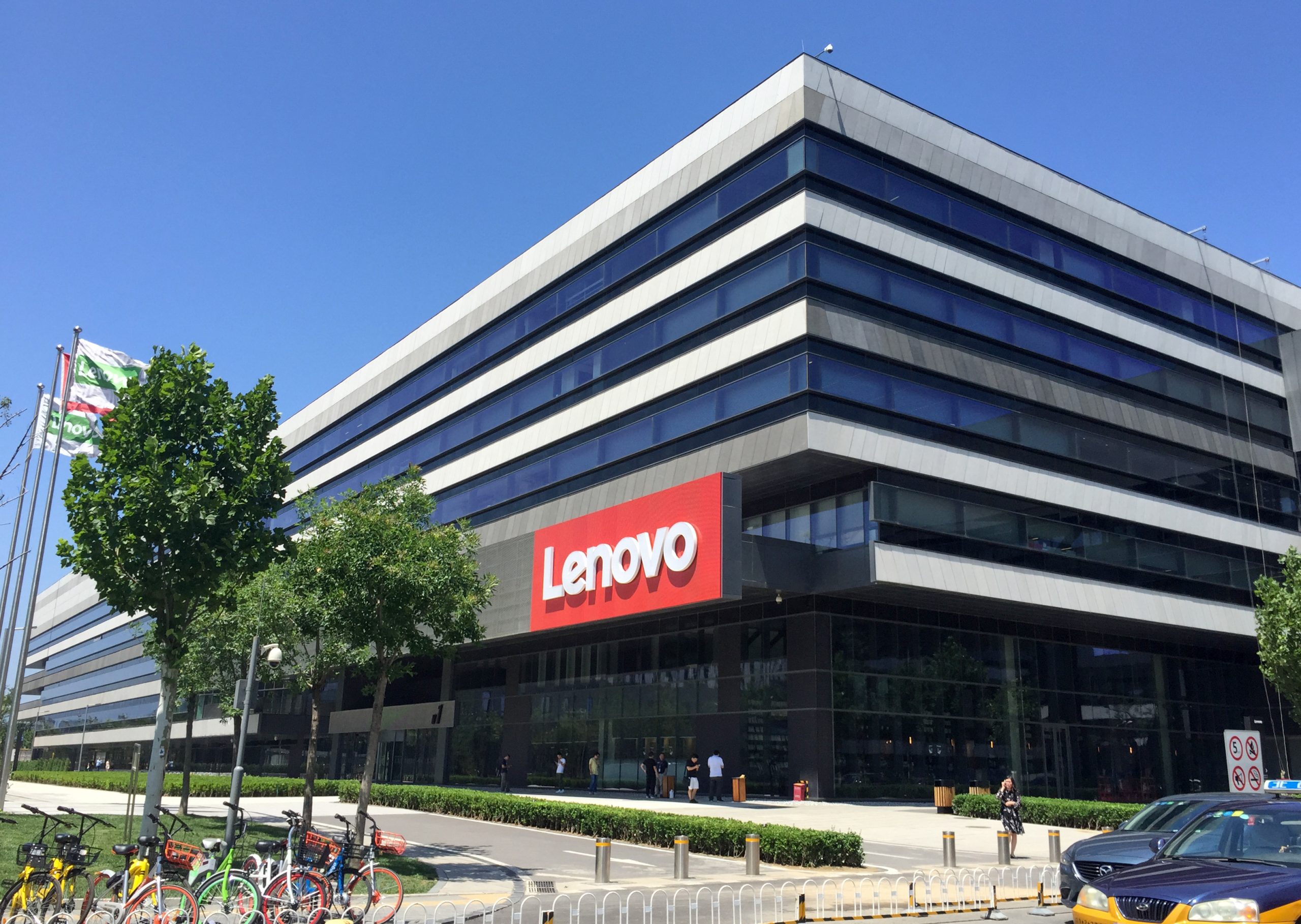
Chinese multinational technology company Lenovo has posted a disappointing first-quarter report, amid a slump in PC sales.

Lenovo reported revenue of US$12.9 billion, falling short of the US$13.84 billion average predicted by analysts’ estimates compiled by financial analytic company, Refinitiv.

Revenue slumped 24% to $12.90 billion, as sales of its main products Smartphones, PCs, and other devices, fell by 28%. The world’s largest PC maker’s net income stood at $177 million, which is a 6% difference from analysts’ estimate of $235 million.

Notably, the decline in Lenovo’s PC shipments by 18.4% is not unique to the company. Globally, the PC shipment market is in rough waters, which has been negatively affected by macroeconomic challenges, weak demand from both consumers and businesses, as well as a shift in IT budgets away from device purchases.

Also, fears of a recession, higher interest rates, and global inflation have all contributed to a precipitous drop in PC sales.

Lenovo’s pre-tax income plummeted by 67%, and basic earnings per share decreased from US$4.39 to US$1.48. This decline comes on the heels of a 14% drop in annual profit for the year ending in March 2023, marking Lenovo’s first annual decline since 2019.

The company’s poor PC sales were partially offset by non-PC businesses. Revenue from the non-PC businesses accounted for 41% of Group revenue, with the service-led business achieving strong growth and sustained profitability further demonstrating the effectiveness of Lenovo’s intelligent transformation strategy.

It is worth noting that Lenovo pc sales in China were the most badly hit, compared to other regions, after it reported a 29% quarterly revenue decrease compared to this time last year.

Commenting on the unimpressive first quarter reports, Lenovo Chairman and CEO Yuanqing Yang said,

“Last quarter, the macro environment presented challenges, and our hardware business remained in a phase of adjustment, but we persisted in executing our strategy. Our service-led business achieved strong growth and sustained profitability.

“Our non-PC revenue mix of the group revenue further increased year on year demonstrating the effectiveness of our diversified growth engines and I remain cautiously optimistic about our business recovery over the next several quarters. As we continue to drive innovation and intelligent transformation, I am confident in the long-term position to deliver sustainable profitability and growth in the future.”

However, despite Lenovo’s unimpressive first-quarter reports (Q1), the company maintained its position as the top laptop brand, owning 23.2% of the market share, which saw it surpass its rival, HP.

The company further said that its PC business is well-positioned for an on-year recovery later this year. It also plans to make further investments to tap opportunities in Non-PC areas, including fast-growing accessories and work-collaboration solutions.

With that, Lenovo disclosed that over the next three years, it is committing US$1 billion in investment for AI that will focus on providing AI devices, AI-ready, and AI-optimized computing infrastructure, and embedded AI-generated content into the intelligent solutions of vertical industries to help customers improve their productivity.

The company revealed that it is seeing greater opportunities in AI-related applications and will leverage its expertise in smart devices to provide more intelligent experiences.

Looking ahead, Lenovo is leading the transformative shift in personal computing where to meet the needs of new generative AI workloads, the PC will also need to transform itself into an AI PC.

Lenovo sees the future of AI PCs as a disruptive, hybrid blend of client, edge, and cloud technologies, ushering in enhanced functionality, speed, creativity, and immersive realistic experiences.

Fuel Subsidy Removal Palliatives: 15 Strategies for Governors on Effective Utilization of Nigeria’s N5 Billion Support

0

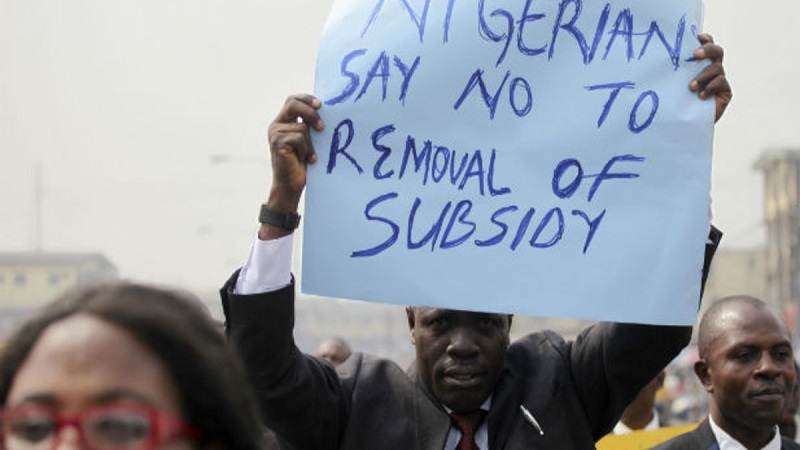
The removal of fuel subsidies by the administration of President Bola Ahmed Tinubu has undoubtedly raised concerns about the potential impact on the Nigerian populace. To mitigate the adverse effects of this decision, President Tinubu has allocated 5 billion naira to each state. This funding, intended for the provision of palliatives, carries with it the responsibility of prudent management and transparent utilization.

In a nation grappling with past instances of misuse of public funds, it is crucial for state governors to adopt effective strategies that ensure the rightful usage of these funds. This piece outlines 15 strategies that state governors can employ to guarantee the accountable and equitable utilization of the allocated money.

Transparent Allocation: State governors should publicly announce the allocation process, detailing the criteria and methodology used to distribute funds among local governments and communities.

Regular Updates: Governors must provide consistent updates on how the funds are being used, ensuring transparency and accountability to the citizens.

Independent Oversight: Establish an independent oversight committee comprised of representatives from civil society organizations, academia, and the private sector to monitor the utilization of funds.

Detailed Budgeting: Create a comprehensive budget outlining specific projects, programs, and initiatives that will be funded by the allocated money.

Public Participation: Involve the public in decision-making by seeking their input on the allocation and usage of funds through town hall meetings and online platforms.

Project Documentation: Governors should keep detailed records of projects and expenditures, making this information accessible to the public for scrutiny.

Anti-Corruption Measures: Implement strong anti-corruption measures, such as conducting regular audits and investigations to deter any attempts at embezzlement.

Collaboration with Stakeholders: Collaborate with relevant stakeholders, including NGOs, community leaders, and experts, to ensure funds are directed to projects that genuinely benefit the public.

Impact Assessment: Regularly evaluate the impact of projects funded by the allocated money to assess their effectiveness in addressing the intended goals.

Media Engagement: Maintain an open line of communication with the media to ensure accurate reporting and to build public trust in the utilization of funds.

Whistleblower Protection: Establish mechanisms to protect whistleblowers who report misuse of funds, encouraging individuals to come forward with information.

Prioritize Basic Needs: Focus on projects that address essential needs like healthcare, education, clean water, and sanitation to directly benefit the most vulnerable citizens.

Technology Integration: Use technology to enhance transparency, such as creating a dedicated website to provide real-time updates on fund utilization.

Cross-Verification: Collaborate with financial institutions and auditors to cross-verify transactions, ensuring that funds are used for their intended purposes.

Peer Review: Encourage peer review among state governors, where they share best practices and lessons learned to improve fund utilization strategies collectively.

Read the full statement on the NEC meeting

In a bid to create a forum for dialogue towards resolving issues surrounding the petrol subsidy removal across the States, the National Economic Council (NEC) has constituted an Ad-hoc Committee to engage with the leadership of labour unions.

The committee comprises the Nigerian Governors Forum Chairman, AbdulRahman AbdulRazaq; Governor of Anambra State,Chukwuma Soludo; Chairman of Progressives Governors Forum, Hope Uzodinma of Imo State; PDP Governors Forum Chairman, Bala Mohammed of Bauchi State, and Abia State Governor, Alex Otti.

Vice President said the committee will liaise with the leadership of labour unions in the country to find a way forward on the emerging issues in the interest of the nation.

Council also received progress reports on the ongoing nationwide distribution of rice, grains, fertilizer, other items to States and N5 billion financial support, provided by the Federal Government and commended the Central Bank of Nigeria (CBN) and the National Emergency Management Agency (NEMA) for their interventions.

Council then noted various interventions by State governments and urged them to upscale the distribution of palliatives towards alleviating the suffering of citizens especially the vulnerable groups.

NEC also mourned the death of some military personnel in Niger State and observed a minute silence in honour of the deceased, while commiserating with their families.

*Below are other highlights of the meeting:

Excess Crude Account from 19th July to 14th August, 2023, $473,754.57

Stabilisation Account from 18th July to 14th August, N30,346,557,405.12

Natural Resources Account from 18th July to 14th August 2023, N115,175,616,159.65

PRESENTATION OF PRELIMINARY ASSESSMENT OF IMPACT OF FLOOD DISASTER ACROSS THE STATES IN NIGERIA BY GOVERNOR OF KOGI STATE

The Governor at the 128th NEC Meeting held on 20th October, 2022, the Chairman of the Nigeria Governors Forum and Executive Governor of Sokoto State, Rt. Hon. Aminu Waziri Tambuwal, drew attention of Council to the devastating effect of the 2022 flooding which affected about 31 States of the Federation that had resulted in the loss of over 600 lives, displacement of millions of people, destruction of hundreds of thousands of houses and submersion of thousands of hectares of farmlands and appealed for urgent intervention from the Federal Government to address the impact of the menace on the people and infrastructure.

Consequently, the Council resolved to set up a 5-man Ad-hoc Committee on flooding comprising Governors of Jigawa, Kogi, Anambra, Bayelsa, Lagos and Yobe State. The following were also co opted into the Committee:

Honourable Minister of Finance, Budget and National Planning

Honourable Minister of Water Resources

Honourable Minister of Agriculture and Rural Development

Honourable Minister of Humanitarian Affairs and Disaster Management

Governor of Central Bank of Nigeria

Director General, National Emergency Management Agency (NEMA)

The Terms of Reference of the Committee was to “Review the current flooding situation in the country and design a template for compensation of victims”.

The Committee had its inaugural meeting on Thursday 10th November 2022 at the Nigeria Governors’ Forum (NGF) Secretariat. Highlight of the Meeting were as follows:

The Committee acknowledged the urgency of the assignment and hence the need to expedite action in order to table a draft report at the next NEC Meeting

A sub-committee was constituted to propose modalities to address the imminent food crisis due to the flooding and possible source of funding for palliatives to victims. The Sub-committee was to be Chaired by the Executive Governor of Kebbi State and the following as Members: Ministries of Agriculture, Humanitarian, Finance, NEMA and CBN.

NEC Secretariat to develop and forward a Template with accompanying letter to all the affected States to collect data on Preliminary Assessment of the impact of the flood in the affected Communities, harmonize the data and produce a report of their findings to the Committee.

LIMITATIONS

The exercise would have been more successful and effective if all the affected States had responded as and when due and according to provisions made in the template. Some of the limitations include the following:

Delay or Non-submission of filled template by some States. Only 16 out of the total number of affected States forwarded their submissions to NEC Secretariat to date as expected. About 15 others were yet to do so. The submission from defaulting States are awaited to update the database.

Some of the States that submitted did not fully comply with requisitions of the template thereby making some of their submissions difficult to process by the automated system. There is the need for compliance with laid down processes to allow for higher degree of uniformity especially considering the huge volume of data involved.

Only a few States reached out to the Council Secretariat’s Technical Team for possible guidance and assistance in the exercise. States are encouraged to take advantage of the Secretariat’s personnel to address important concerns where necessary.

Only a few States indicated financial implication for the damages caused thereby making it difficult to propose a required amount of intervention.

Some submissions were not done according to the template which makes it difficult to ascertain the financial implications of such states.

RECOMMENDATIONS

The plight of victims of the unfortunate flood disaster across affected States of the Federation could be alleviated if the much needed intervention from the Federal Government materialized without further delay.

There is therefore the need to expedite release of funds to affected States as recommended by designated Committees constituted by the Federal Government to that effect. This would go a long way in addressing the needs of the victims as well as offset debt incurred by some States to assist their citizens.

COUNCIL RESOLUTIONS

NEC Secretariat and officials of the Office of the Vice President to visit the affected states for on-the-spot assessment of the situation on ground. The exercise will authenticate the date submitted by the state to determine needed intervention.

That Federal Government’s immediate intervention to be expeditiously carried out by NEMA, Ecological Fund Office and other relevant agencies. States to assure maximum cooperation.

NEC resolves that all hands should be on deck to assure appropriate submission and data presentation. The quality of data collected should be enhanced to meet international standards. That the challenges of flooding deserve concerted and collective effort.

There is a need to strengthen NEMA as a structure and sustainable adaptation measures for the citizens. In mobilizing resources to stem the tide of flooding, there is a need to look beyond NEMA.

NEC Secretariat to come up with recommendations on the roadmap towards addressing the flood situation.

PRESENTATION ON EXPLORING A NEC AGENDA FOR MACROECONOMICS STABILITY & SHARED PROSPERITY BY DG NESG

The Presentation was to inform the council on achieving low Inflation and stimulation Growth and Macroeconomic Objectives.

MACROECONOMIC STABILITY OBJECTIVES:

• High and stable economy

• Low Inflation Growth Price level

• unemployment Account

• Favourable Current low balance and stable exchange rate account balance

CURRENT MACROECONOMIC LANDSCAPE

• Investment inflows have dwindled since 2019, likewise the country’s investment/GDP ratio; Crude Oil exports and refined petroleum products imports dominate Nigeria’s trade structure.

• Nigeria’s Naira position against major trading currencies deteriorated

• Weak FX supply and heightened demand for imports remains core drivers of exchange rate instability; market volatility persists despite recent FX alignment, driven by pressure on FX demand that widens the gap between official and parallel market rates due to inadequate supply

and speculative tendencies; external reserves remain under pressure as external reserves fell by 8.3 percent from 37.1 billion in January 2023 to 33.9 billion in July 2023.

KEY CONSIDERATION FOR IMPROVING THE OUTCOMES OF FUEL SUBSIDY REMOVAL

• Inflationary impact: Fuel subsidy removal will increase inflation. So, there is a need for robust social programmes.

• Efficiency in government spending: There has been a lack of clarity on how the government spends subsidy savings. This issue must be addressed.

• Investment in the downstream and midstream segments of the industry: Achieving this will reduce huge dependence on petrol imports and strike out the need to pay subsidies on fuel.

RECOMMENDATIONS:

The NEC must insist on pushing a national legislative reform agenda for national competitiveness. It is essential that Nigeria resolves the legislative binding constraints to our national competitiveness, the nesg through nassber, our partnership with national assembly and nigerian bar association has identified over 115 legislations that hinder growth, in the last few years,10 legislations have been passed (including the CAMA 2020 and the PIA 2021.

COUNCIL RESOLUTIONS:

• Council commended NESG for its presentation especially on pragmatic roadmaps for tackling current economic challenges.

• It was noted that the recommendations contained in the NESG’s roadmap needs to be reviewed to align with existing economic agenda at the national and sub-national levels for pragmatic purposes.

Olusola Abiola

Director Information

Office of the Vice President

17th August 2023