DD
MM
YYYY

PAGES

DD
MM
YYYY

spot_img

PAGES

Home Blog Page 3886

Nigerian Senate Passes N27.5tn 2024 Budget with N1.2tn Increase

0

On Saturday, the Nigerian Senate bulldozed its way through a storm of controversies to pass the 2024 budget, boasting an eye-watering increase of about N1.2 trillion. The approval, a hefty bump from the N27.5 trillion initially proposed by President Bola Tinubu in November, now stands at an imposing N28.7 trillion.

Raising eyebrows and fueling the already fervent discourse on fiscal responsibility, the upper legislative chamber took a bold step by pegging the benchmark of oil prices at $77.96 per barrel of crude oil. This move is seen as an effort to align with the current volatile market values of the coveted commodity on the international stage.

However, what has gripped the nation’s attention is the slew of allocations and adjustments that accompanied the budget passage. The federal lawmakers nodded approvingly to an oil production rate of 1.78 million barrels per day and held steadfast to an exchange rate of N800 to a US dollar. GDP growth rate found its place in the budget at a promising 3.88%, while the budget deficit was greenlit at a staggering N9.18 trillion.

In a theatrical denouement, Senate President Godswill Akpabio, amidst an air of tension and dissent, declared the budget’s passage after a majority of lawmakers supported it through a voice vote. This contentious approval followed a thorough consideration of a report presented by the Chairman of the Senate Committee on Appropriations, Adeola Olamilekan.

Olamilekan, presenting the report, recommended a financial rollercoaster ride. A whopping N1.7 trillion was greenlighted for Statutory Transfers, while Debt Service came with a jaw-dropping price tag of N8.2 trillion. The drama didn’t end there – recurrent (non-debt) expenditure weighed in at N8.7 trillion, and capital expenditure made its grand entrance at a princely sum of N9.9 trillion.

The reason behind this budgetary crescendo

According to Olamilekan, the joint National Assembly Committee on Appropriation identified a critical need for additional funding in areas not listed in the initial Appropriation Bill presented by President Tinubu. The inadequacy in budgetary allocations for certain Ministeries, Departments, and Agencies (MDAs) was exposed, leading to this staggering increase.

But the Senate’s financial theatrics didn’t stop at the national budget. In an audacious move, the National Assembly decided to swell its 2024 budget from N197 billion to an astounding N344 billion. This eye-watering 75% increase from the initial proposal and a 51% surge from the 2023 budget allocation have left tongues wagging and pens scribbling.

What ignited the most fervent debates was the detailed breakdown of the National Assembly’s bounty. A staggering N78.624 billion was earmarked for the House of Representatives, while the Senate bagged a cool N49.145 billion. However, the extravagant allocations didn’t stop at lawmakers’ pockets.

In a brazen display of indulgence, the National Assembly set aside N4 billion for the construction of a new National Assembly Recreational Centre and a further N6 billion to build car parks. These revelations have reignited discussions about the bloated cost of governance in Nigeria.

The allocations rolled out like a red carpet for opulence – N4.5 billion was approved for the completion of the National Institute for Legislative and Democratic Studies (NILDS) building. Furthermore, N2.7 billion was greenlit for the furnishing of committee meeting rooms and other offices within the Senate building.

The National Assembly spared no expense, allocating N3 billion each for infrastructure upgrades and the establishment of a modern printing press. Another N3 billion was earmarked for purchasing books in the National Assembly library. Specific allocations included N2.5 billion to the Pension Board, N1.230 billion for retired clerks and permanent secretaries and a cool N1 billion for constitution review.

To add a layer of irony to the entire spectacle, the Senate Appropriations Committee secured a cozy N200 million, while the Public Accounts Committee claimed its share with N130 million. The House was not left behind, garnering N150 million for their Public Accounts Committee.

The Socio-economic Rights & Accountability Projects (SERAP) has decided that enough is enough, boldly declaring their intent to sue the National Assembly for what they term an “outrageous and unlawful increase” in allocations for lawmakers. SERAP has framed the move as an assertion of the people’s voice against the backdrop of millions of Nigerians grappling with extreme poverty.

“We’re suing the National Assembly over the outrageous and unlawful increase in the allocations for lawmakers from N197 billion to N344 billion, to satisfy their lavish lifestyles while millions of Nigerians live in extreme poverty,” the organization announced.

The Senate’s budgetary maneuvers have become a catalyst for a broader discussion about the role of the National Assembly and the urgent need for financial prudence in the country.
Traders are Abandoning US Dollar for Oil Transactions

0

Oil is one of the most important commodities in the world economy, and its price and trade have a significant impact on global markets. Traditionally, oil has been priced and traded in US dollars, the dominant reserve currency and the medium of exchange for most international transactions.

However, in recent years, some oil producers and consumers have started to shift away from the US dollar and use other currencies or assets for their oil deals. What are the reasons behind this trend, and what are the implications for the US and the global economy?

One of the main reasons why some oil traders are abandoning the US dollar is the desire to reduce their exposure to US sanctions and geopolitical risks. The US has imposed sanctions on several major oil producers, such as Iran, Venezuela, and Russia, as well as some of their trading partners, such as China and Turkey.

These sanctions limit the access of these countries to the US financial system and restrict their ability to sell their oil in US dollars. By using alternative currencies or assets, such as the euro, the yuan, or gold, these countries can bypass the US sanctions and maintain their oil trade with their allies and customers.

Another reason why some oil traders are abandoning the US dollar is the diversification of their portfolios and risk management. The US dollar has been losing its value and purchasing power over time due to inflation, debt, and monetary expansion.

Moreover, the US dollar faces increasing competition from other reserve currencies, such as the euro and the yuan, as well as emerging digital currencies, such as Bitcoin and stablecoins. By using different currencies or assets for their oil transactions, oil traders can hedge against the fluctuations of the US dollar and benefit from the appreciation of other currencies or assets.

A third reason why some oil traders are abandoning the US dollar is the alignment of their interests and preferences with their trading partners. Some oil producers and consumers have strong economic and political ties with each other, and they prefer to use their own or regional currencies or assets for their oil trade.

For example, China is the largest importer of oil in the world, and it has been promoting the use of its currency, the yuan, for its oil imports from countries like Russia, Iran, and Saudi Arabia. Similarly, some European countries have been using the euro for their oil imports from countries like Iran and Iraq. By using their own or regional currencies or assets, these countries can strengthen their economic integration and cooperation, as well as reduce their dependence on the US dollar.

The trend of abandoning the US dollar for oil transactions has significant implications for the US and the global economy. On one hand, it could reduce the demand for the US dollar and weaken its status as the dominant reserve currency and medium of exchange. This could increase the cost of borrowing and financing for the US government and businesses, as well as reduce their influence and leverage over other countries.

On the other hand, it could also create more opportunities for innovation and competition in the global financial system and foster more diversity and stability in the international monetary order. This could benefit both oil producers and consumers by lowering transaction costs, increasing efficiency, and enhancing resilience.

Automated trading and Algo gets FBS MT4

If you are looking for a reliable and flexible platform to automate your trading strategies, you might want to check out the FBS MT4 trading platform. FBS is a global broker that offers various trading instruments, including forex, metals, stocks, indices, and cryptocurrencies. FBS also supports automated trading and algorithmic trading, which can help you save time and optimize your performance.

Automated trading is a method of executing orders using pre-programmed trading instructions based on various criteria, such as time, price, volume, indicators, etc. Automated trading can eliminate human emotions and errors, as well as take advantage of market opportunities 24/7. Algorithmic trading is a subset of automated trading that involves using complex mathematical models and algorithms to generate and execute orders.

FBS MT4 is one of the most popular and widely used platforms for automated and algorithmic trading. It has a user-friendly interface, advanced charting tools, technical analysis indicators, and a built-in programming language called MQL4. MQL4 allows you to create your own custom indicators, scripts, and expert advisors (EAs), which are automated trading systems that can run on the FBS MT4 platform.

FBS MT4 also offers access to a large online community of traders and developers who share their ideas, experiences, and codes. You can find thousands of free and paid EAs, indicators, and scripts on the MQL4 website or the MetaTrader Market. You can also test and optimize your EAs using the Strategy Tester tool, which simulates historical market data and provides detailed statistics and reports.

If you want to start automated or algorithmic trading with FBS MT4, you need to follow these steps:

  1. Open an account with FBS and download the FBS MT4 platform from their website.
  2. Choose an EA or create your own using MQL4 or other tools.
  3. Install the EA on the FBS MT4 platform and adjust the settings according to your preferences and risk tolerance.
  4. Enable automated trading on the FBS MT4 platform and monitor your EA’s performance.

Automated and algorithmic trading can be a powerful way to enhance your trading experience and results. However, you should also be aware of the risks and challenges involved, such as technical issues, market volatility, broker slippage, etc. Therefore, you should always test your EAs before using them on a live account and use proper risk management techniques.

FBS MT4 is a great platform for automated and algorithmic trading that offers many features and benefits for traders of all levels. If you want to learn more about FBS MT4 or open an account with FBS, you can visit their website or contact their customer support team.

FBS MT4 is compatible with Windows, Mac, iOS, and Android devices, so you can access your account anytime and anywhere. You can also benefit from the FBS customer support team, which is available 24/7 to assist you with any issues or questions.

To start trading with FBS MT4, you just need to open an account with FBS and download the platform for free. You can also try out the platform with a demo account before you invest real money. FBS MT4 is a trading platform that combines simplicity and functionality to suit traders of all levels.

Conflict between Israel and Gaza has been raging for decades, but in recent years it has reached a new level of intensity

0

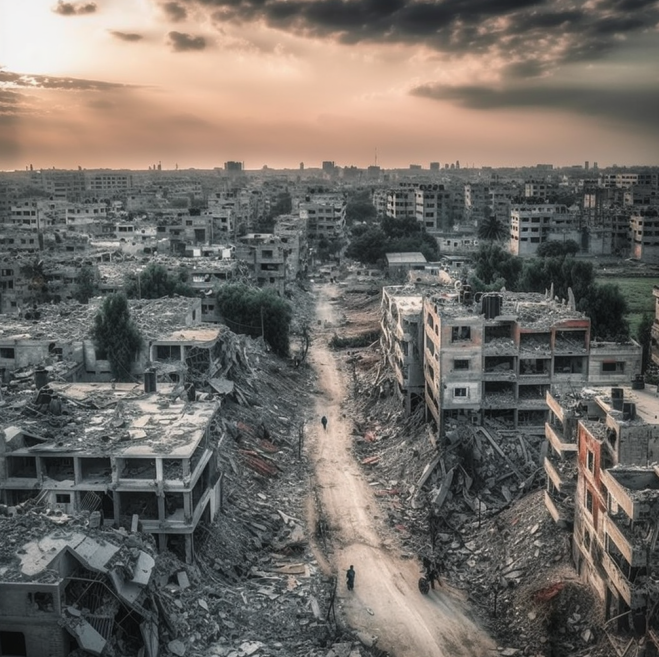
The conflict between Israel and Gaza has escalated in recent days, with both sides launching airstrikes and rockets at each other. The violence has claimed the lives of dozens of people, mostly civilians, and injured hundreds more. As the sun sets over the Israel-Gaza border, plumes of smoke rise from the sites of the attacks, creating a grim and eerie scene.

The conflict between Israel and Gaza has been raging for decades, but in recent years it has reached a new level of intensity and violence. The latest escalation, triggered by the eviction of Palestinian families from East Jerusalem and the storming of the Al-Aqsa Mosque by Israeli forces, has resulted in hundreds of casualties, thousands of injuries, and widespread destruction of infrastructure and homes.

The human cost of this ongoing crisis is immense and heartbreaking. According to the United Nations, more than 250 people have been killed in Gaza, including at least 66 children and 39 women. More than 1,900 people have been wounded, and over 72,000 have been displaced from their homes. The humanitarian situation is dire, as Gaza faces shortages of water, electricity, food, and medical supplies. The health system is overwhelmed by the influx of patients and the damage caused by Israeli airstrikes.

The conflict between Israel and Gaza has a long and complicated history that dates back to the early 20th century, when the Zionist movement began to establish a Jewish homeland in Palestine, then under British rule. The Arab population of Palestine, who had lived there for centuries, opposed the influx of Jewish immigrants and the creation of a Jewish state.

The tension and violence between the two sides escalated after the end of World War II, when the United Nations proposed a partition plan that divided Palestine into two states, one Jewish and one Arab. The plan was accepted by the Jewish leaders, but rejected by the Arab leaders, who launched a war against the newly declared state of Israel in 1948.

The war resulted in the displacement of hundreds of thousands of Palestinians, who fled or were expelled from their homes and became refugees in neighboring countries or in the Gaza Strip and the West Bank, two territories that were occupied by Egypt and Jordan respectively.

In 1967, another war broke out between Israel and its Arab neighbors, and Israel captured Gaza and the West Bank, along with other territories. Since then, Israel has maintained a military and civilian presence in these areas, despite international condemnation and resistance from the Palestinian population.

The Palestinians have sought to establish their own state in Gaza and the West Bank, with East Jerusalem as their capital. They have pursued this goal through various means, including armed struggle, diplomacy, and popular protests.

Several attempts have been made to reach a peaceful settlement between Israel and the Palestinians, such as the Oslo Accords in 1993 and the Camp David Summit in 2000, but none have succeeded in resolving the core issues of the conflict, such as borders, security, settlements, refugees, and Jerusalem.

In 2005, Israel withdrew its settlers and soldiers from Gaza, but retained control over its borders, airspace, and waters. In 2006, Hamas, an Islamist militant group that rejects Israel’s right to exist and is considered a terrorist organization by many countries, won the Palestinian legislative elections and took over Gaza after a violent clash with Fatah, the secular nationalist party that controls the West Bank.

Since then, Gaza has been under a blockade imposed by Israel and Egypt, which has severely restricted the movement of people and goods in and out of the territory. Hamas has also launched thousands of rockets at Israel, which has responded with airstrikes and ground incursions.

The latest escalation of violence was sparked by the eviction of Palestinian families from East Jerusalem’s Sheikh Jarrah neighborhood by Israeli settlers, who claim ownership of the land based on a 19th century Ottoman document. The evictions were seen by many Palestinians as part of Israel’s ongoing attempt to change the demographic and cultural character of East Jerusalem, which they claim as their capital.

The situation worsened when Israeli forces stormed the Al-Aqsa Mosque compound during Ramadan prayers, injuring hundreds of worshippers and provoking outrage across the Muslim world. Hamas then fired rockets at Jerusalem and other Israeli cities, triggering a massive Israeli retaliation that targeted Gaza’s infrastructure and civilian population.

On the other side of the border, Israel has also suffered losses and damages. According to the Israeli authorities, 12 people have been killed by rockets fired from Gaza, including two children and a soldier. Hundreds have been injured, and millions have been forced to seek shelter from the barrage of rockets that have targeted Israeli cities and towns. The psychological trauma and fear among the civilians are palpable, as they live under constant threat of attack.

The complexity of this conflict is undeniable, as it involves historical, religious, political, and territorial disputes that have defied resolution for generations. The root causes of the violence are deep and entrenched, and the prospects for peace are dim and distant.

The international community has repeatedly called for a ceasefire and a diplomatic solution, but the parties involved have shown little willingness or trust to engage in meaningful dialogue or compromise.

What Is A Category-King Company? And How Do You Build One?

0

A category-king is a “company that dominates a market category and captures most of the value in that space. Category-kings are not just market leaders; they are market makers. They create new categories of products or services that solve problems that customers didn’t know they had, or they redefine existing categories by offering superior solutions that customers can’t resist.”

In this piece, Tekedia explains how you can build a category king company in 2024?

-Identify a problem that is urgent, pervasive, and valuable.

-Define the category and its boundaries.

-Position your solution as the category king.

-Educate the market and evangelize the category.

-Scale your operations and defend your position. This means “protecting your competitive advantage and market share by innovating faster than your competitors, monitoring their moves and countering their threats, building strategic partnerships and alliances, acquiring or merging with complementary or competing companies, and complying with relevant laws and regulations.”

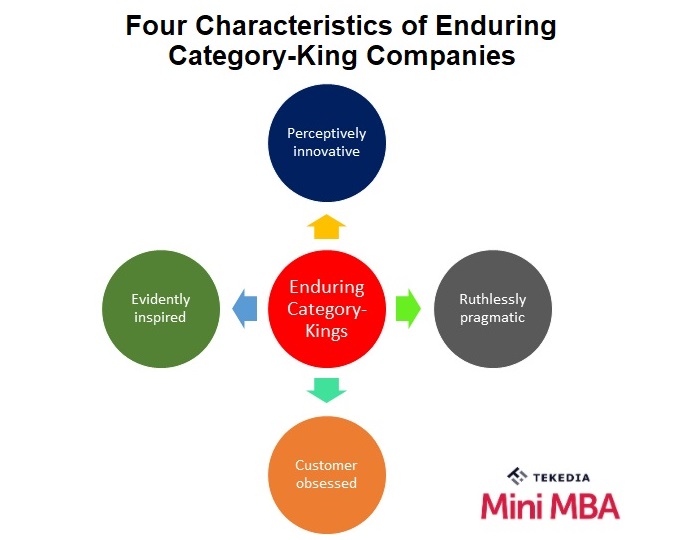
Finally, our video presents 4 traits you see in category-king companies. Create your firm to have those and win in 2024. In Tekedia Mini-MBA, our focus is educating on the mechanics of building category-king companies; consider it. Happy New Year again.

How can you build a category-king company in 2024?

How can you build a category-king company in 2024?

0

A category-king is a company that dominates a market category and captures most of the value in that space. Category-kings are not just market leaders, they are market makers. They create new categories of products or services that solve problems that customers didn’t know they had, or they redefine existing categories by offering superior solutions that customers can’t resist.

Category kings are rare and valuable. According to research by Play Bigger, a consulting firm that specializes in category design, category kings account for 76% of the market capitalization in any given category, while the rest of the competitors fight for the remaining 24%. Category kings also enjoy higher growth rates, lower customer acquisition costs, and stronger brand loyalty than their rivals.

So how can you build a category king company in 2024? Here are some steps to follow:

Identify a problem that is urgent, pervasive, and valuable. The first step to creating a new category is to find a problem that is worth solving for a large and underserved market. The problem should be urgent, meaning that customers are actively looking for a solution and are willing to pay for it.

The problem should be pervasive, meaning that it affects a significant number of people or businesses across different segments and geographies. The problem should be valuable, meaning that it has a clear and measurable impact on the customer’s outcomes, such as revenue, cost, time, or quality.

Define the category and its boundaries. The next step is to define the category that your solution belongs to and its boundaries. A category is a group of products or services that share a common purpose, function, or benefit for the customer.

A category boundary is the set of criteria that distinguish your category from other categories. For example, if you are creating a new category of online education platforms, you need to define what makes your platform different from other online education platforms, as well as from other types of education providers, such as universities, MOOCs, or corporate training programs.

Position your solution as the category king. The third step is to position your solution as the category king, the best and only choice for customers who want to solve the problem that you identified. To do this, you need to craft a compelling category vision, a story that explains why your category exists, what it does for customers, and why it matters for the world.

You also need to create a unique value proposition, a statement that summarizes how your solution delivers superior value to customers compared to other alternatives in the market. Finally, you need to design a distinctive brand identity, a set of elements that communicate your category vision and value proposition to customers and stakeholders, such as your name, logo, slogan, colors, fonts, images, etc.

Educate the market and evangelize the category. The fourth step is to educate the market and evangelize the category. This means creating awareness and demand for your category and your solution among potential customers, partners, investors, media, analysts, influencers, and regulators.

You need to use various channels and tactics to reach and engage your target audiences, such as content marketing, social media marketing, email marketing, webinars, podcasts, blogs, white papers, case studies, testimonials, reviews, referrals, etc. You also need to leverage thought leadership and public relations to establish yourself as an authority and a trusted source of information on your category and its benefits.

Scale your operations and defend your position. The fifth step is to scale your operations and defend your position as the category king. This means growing your customer base and revenue by expanding into new segments and geographies, launching new features and products, improving your customer service and support, optimizing your pricing and packaging strategies etc.

It also means protecting your competitive advantage and market share by innovating faster than your competitors, monitoring their moves and countering their threats, building strategic partnerships and alliances, acquiring or merging with complementary or competing companies, and complying with relevant laws and regulations.