DD
MM
YYYY

PAGES

DD
MM
YYYY

spot_img

PAGES

Home Blog Page 3895

Network Yourself into a Productive System Because only Humans, NOT work, Recommend People.

0

How many productive people have you connected with in the last 8 months of this year? Understand that to rise to the next level, you must deepen your capacity to connect with people closer to decision centers. Politicians keep recycling the usuals because those are the ones who are always around them. Yes, only the visible get rewarded most of the time. In the corporate world, it is the same thing: you need to be visible for someone to mention and recommend you in your absence!

In other words, your job performance cannot recommend you because jobs/performance do not talk. Only humans recommend people, and that means people need to know you, even as you do a great job.

Check carefully, from MTN to Zenith Bank to Dangote Cement, and beyond, most of the senior jobs are not advertised in any newspaper in Nigeria. But weekly and monthly, those positions are being filled. How? A networked system where the visible are tabulated, and seasonally checked, to see if they are open for opportunities, exist.

“Please who can run this new business for us”, the Chairman asked. Names will begin to fly. “Let’s call our recruitment consultant to check if s/he is available”, he responded.

Good People, #network yourself into a #productive system because only humans, NOT work, recommend people.

ARK Invest and 21Shares jointly Apply for Ethereum and Bitcoin Futures ETFs

0

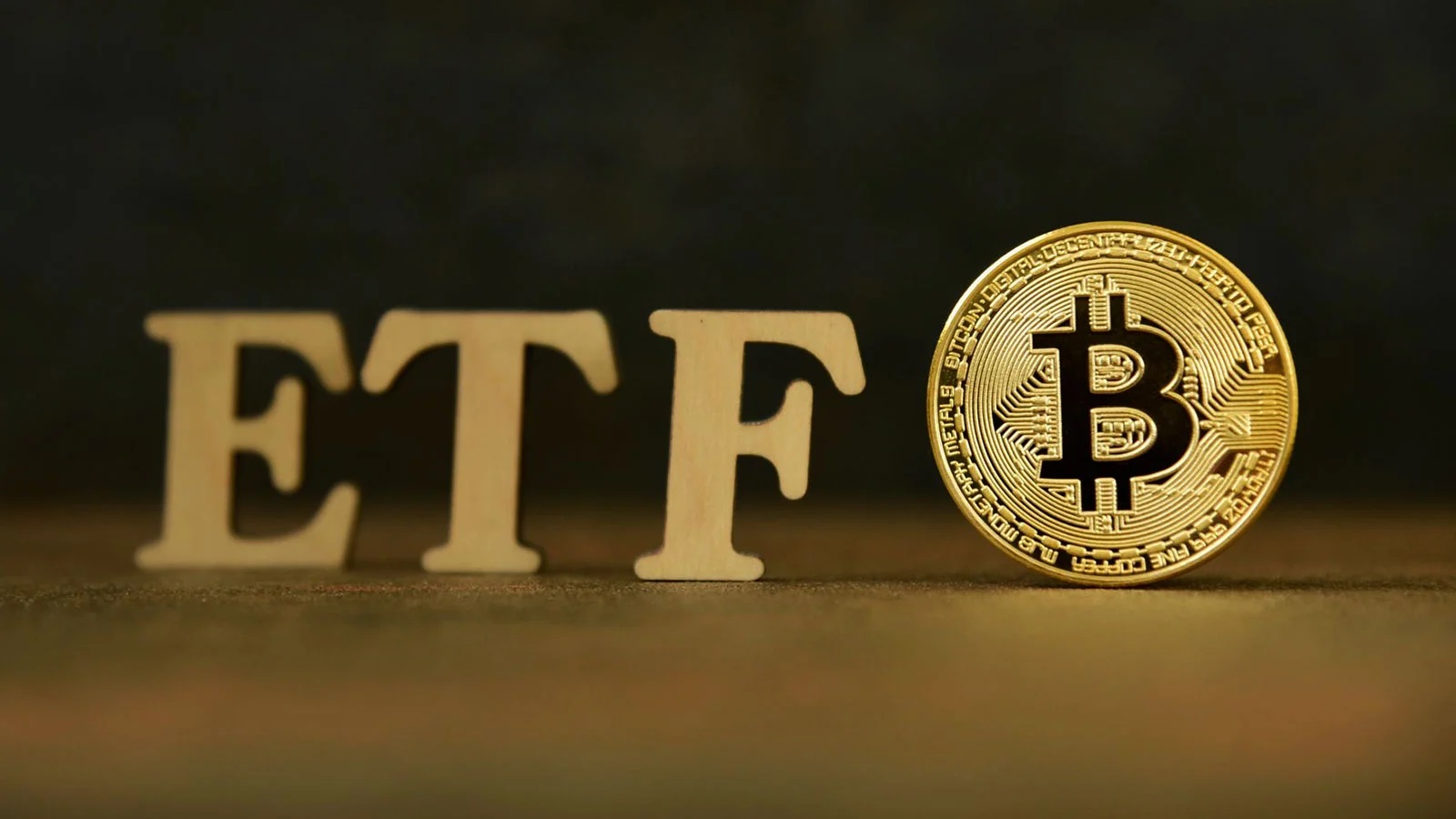
In a major development for the crypto industry, two leading investment firms have filed applications with the U.S. Securities and Exchange Commission (SEC) to launch exchange-traded funds (ETFs) that would track the performance of Ethereum and Bitcoin futures contracts.

ARK Invest, founded by Cathie Wood, and 21Shares, a Swiss-based crypto asset manager, have partnered to create the ARK 21Shares Ethereum Trust and the ARK 21Shares Bitcoin Trust, according to their filings on August 25.

The proposed ETFs would offer investors exposure to the price movements of ETH and BTC futures contracts traded on regulated exchanges, without the need to hold or store the underlying cryptocurrencies. The ETFs would also seek to minimize the tracking error between the market price of their shares and the net asset value (NAV) of their portfolios.

The filings come as the SEC is reviewing several applications for Bitcoin ETFs, which have been pending for years. The regulator has repeatedly delayed or rejected such proposals, citing concerns over market manipulation, custody, liquidity, and investor protection. However, some analysts believe that the SEC may be more receptive to futures-based ETFs than those that directly hold cryptocurrencies, as futures are regulated by the Commodity Futures Trading Commission (CFTC) and trade on established platforms such as the Chicago Mercantile Exchange (CME).

The ARK Invest and 21Shares filings also indicate that they have secured the services of several reputable firms to support their ETFs. The Bank of New York Mellon would act as the administrator, transfer agent, and custodian of the trusts, while Coinbase Custody Trust Company would serve as the sub-custodian. Cboe BZX Exchange would be the listing exchange for the ETFs, while Jane Street Capital would be the authorized participant and market maker.

The partnership aims to address some of the regulatory hurdles that have prevented the SEC from approving a crypto ETF so far. By using futures contracts instead of holding physical cryptocurrencies, the ETFs would avoid the issues of custody, market manipulation, and liquidity that have been raised by the SEC in the past. Moreover, by collaborating with Cboe, a well-established exchange that has experience in listing Bitcoin futures products, the ETFs would benefit from a robust market infrastructure and surveillance.

Both ARK Invest and 21Shares have a track record of innovation and expertise in the crypto space. ARK Invest is known for its actively managed ETFs that focus on disruptive technologies, such as artificial intelligence, biotechnology, and blockchain. The firm has been an early and vocal supporter of Bitcoin, and holds a significant stake in Coinbase, the largest U.S. crypto exchange. 21Shares, formerly known as Amun, is a pioneer in issuing crypto ETPs (exchange-traded products) in Europe, with over $1.5 billion in assets under management across 14 products.

If approved by the SEC, the ARK 21Shares Ethereum Trust and the ARK 21Shares Bitcoin Trust would be among the first crypto ETFs to launch in the U.S., potentially opening up a new avenue for institutional and retail investors to access the burgeoning crypto market. The ETFs would also compete with similar products that are already available in other jurisdictions, such as Canada, Europe, and Asia. The success of these ETFs would depend on several factors, such as their fees, liquidity, tracking accuracy, and regulatory compliance.

The ARK Invest and 21Shares applications come at a time when the demand for crypto exposure is growing among investors, both retail and institutional. A crypto ETF would provide a convenient and cost-effective way for investors to access the crypto market without having to deal with the technicalities and risks of buying and storing cryptocurrencies directly. A crypto ETF would also boost the legitimacy and adoption of cryptocurrencies as a new asset class.

The SEC has yet to approve any crypto ETF in the US, despite receiving dozens of applications from various issuers. The regulator has repeatedly delayed its decisions on several proposals, citing concerns over investor protection and market integrity. However, there are signs that the SEC may be warming up to the idea of a crypto ETF, especially after its new chairman, Gary Gensler, indicated that he would be more open to a futures-based product than a spot-based one.

The joint venture between ARK Invest and 21Shares is a strategic move that leverages the expertise and reputation of both firms in the crypto space. ARK Invest is known for its bullish outlook on disruptive technologies, including cryptocurrencies, and has been one of the largest institutional investors in Coinbase, Grayscale Bitcoin Trust, and other crypto-related companies. 21Shares is a pioneer in issuing crypto ETPs in Europe, with over $1.5 billion in assets under management across 14 products.

Financial Service Company Affirm, Reports Strong Fiscal Fourth-Quarter 2023 Results

0

Affirm, a payment network that allows users to shop online or in-store and pay overtime with flexible payments and low APR, reported strong fiscal fourth quarter 2023 results, exceeding its outlook across all key metrics.

The company delivered a strong quarter after it reported a revenue growth of 22% year-over-year to $446 million, surpassing analysts’ expectations of $406 million.

It reported a gross merchandise volume of $5.5 billion, an increase of 25% year over year, and higher than the $5.3 billion expected by analysts.

Affirm posted a net loss of $206 million, or 69 cents a share, compared to a net loss of $186.4 million, or 65 cents a share, in the year-ago quarter.

The company reported an operating income loss of $244 million, compared to $277 million in FQ4’222 operating Income loss as a percentage of revenue, or operating margin, was 55% in the period, compared to 76% during FQ4’22.

Buy now, pay later payment services such as Affirm, soared during the pandemic alongside a boost in online shopping. However, the company has been contending with a worsening economic environment, as well as rapidly rising interest rates.

Affirm’s finance Chief Michael Linford said in a statement,

“Despite significant changes in interest rates and consumer demand, we still delivered good credit results, unit economics, and GMV growth. We also demonstrated that the business can continue to expand profitably even in a high-interest rate environment.”

The primary drivers of the improvement in Operating Income Loss were a reduction in sales and Marketing and General and Administrative expenses, in part due to the restructuring that was announced in mid-February this year.

Affirm’s Active merchant count grew 8% year-over-year to 254,000 merchants, and merchants with $1,000 in trailing twelve-month GMV grew 16% year-over-year to 96,000. The company continued to see good traction onboarding long-tail merchants through certain platform partnerships, with its Stripe partnership being a notable highlight.

The active consumer count grew 18% year-over-year to 165 million. Transactions per active consumer grew 30% year-over-year, or 29%, to 3.9 compared to 30 during FQ4’22.

Affirm Marketplace, which is a subsidiary under the company’s Direct-to-consumer (D2C) businesses, generated approximately $5 billion in Gross Merchandise Volume (GMV), in FY’23 and accounted for more than 95% of total D2C GMV during the period.

Overall, Affirm’s D2C business accounted for approximately 25% of its GMV in FY’23, with about 2 million of its consumers using one of its D2C products.

Speaking on the overall performance of Affirm Fiscal Fourth-Quarter 2023 Results, the company’s CEO and Founder Max Levchin said,

“FY”23 was quite a test, and I am very proud of how the team delivered for our shareholders, capital partners, merchants, and consumers. Macroeconomic headwinds persist and more challenges are certain to come, but I think we have proven that Affirm has the talent and the grit to take them on”.

Responsive to whatever the short term brings, CEO Levchin revealed that the company will remain focused on the long-term goals of the business which include;

  • Offer responsible access to credit for consumers, while maintaining excellent credit quality.
  • Deliver best-in-class value for merchants and platform partners.
  • Grow the Affirm network in both reach and frequency and do it profitably.
  • Continue to invent and scale new products.

Affirm has disclosed that the company is now focused on serving consumers wherever they transact. Its goal is accelerating transaction frequency while profitably expanding merchant and consumer reach.

The company disclosed that it expects to achieve a full-year profitability, on an Adjusted Operating Income basis, in FY’24.

How to Participate in Crypto Liquidity Mining

0

Liquidity mining is a popular and profitable way to earn passive income with your crypto assets. In this blog post, we will explain what liquidity mining is, how it works, and what are the benefits and risks of this investment strategy. We will also show you how to participate in liquidity mining on some of the leading decentralized exchanges (DEXs) in the crypto space.

Liquidity mining is a process of providing your crypto assets to a liquidity pool on a DEX or an automated market maker (AMM). A liquidity pool is a collection of funds that are used to facilitate trades between different crypto pairs on a DEX. For example, if you want to swap ETH for DAI on Uniswap, you need to use a liquidity pool that contains both ETH and DAI.

By providing liquidity to a pool, you are helping the DEX to offer better prices and faster execution for traders. In return, you will receive a share of the trading fees that are generated by the pool. The more liquidity you provide, the more fees you will earn.

In addition to trading fees, some DEXs or AMMs also reward liquidity providers with their own native tokens. These tokens can have various functions, such as governance rights, staking rewards, or access to exclusive features. For example, Uniswap distributes UNI tokens to liquidity providers, which can be used to vote on protocol changes or claim a portion of the protocol’s revenue.

Liquidity mining is similar to yield farming, which is a broader term for earning passive income with your crypto assets by lending them out, staking them, or using them in various DeFi protocols. However, liquidity mining is more specific to providing liquidity to DEXs or AMMs.

To participate in liquidity mining, you need to follow these steps:

Choose a DEX or an AMM that offers liquidity mining opportunities. Some of the most popular ones are Uniswap, SushiSwap, Curve, Balancer, and PancakeSwap.

Select a liquidity pool that matches your crypto assets and risk appetite. Each pool has different characteristics, such as the pair of tokens it supports, the fee structure, the reward rate, and the volatility. You can use tools like Zapper or DeFi Pulse to compare different pools and find the best ones for you.

Deposit your crypto assets into the pool. You will need to provide an equal value of both tokens in the pair. For example, if you want to join the ETH/DAI pool on Uniswap, you will need to deposit both ETH and DAI in a 50/50 ratio. You can use services like 1inch or Matcha to swap your tokens before depositing them into the pool.

Receive liquidity provider (LP) tokens that represent your share of the pool. These tokens are ERC-20 tokens that can be transferred, traded, or staked on other platforms. They also entitle you to claim your share of the trading fees and reward tokens from the pool.

Monitor your liquidity mining performance and withdraw your funds when you want to exit. You can use tools like Zerion or Yieldwatch to track your earnings and losses from liquidity mining. To withdraw your funds from the pool, you need to burn your LP tokens and receive back your original tokens plus or minus any fees or rewards.

Liquidity mining has several benefits for crypto investors, such as:

Earning passive income from trading fees and reward tokens.

Supporting the growth and development of DeFi protocols and communities.

Diversifying your portfolio with exposure to different crypto pairs and platforms.

Accessing new opportunities and features with reward tokens.

Liquidity mining also involves some risks that you should be aware of, such as:

Impermanent loss: This is a loss that occurs when the price ratio of the tokens in the pool changes compared to when you deposited them. For example, if you provide ETH and DAI to a pool and ETH price goes up relative to DAI, you will end up with less ETH and more DAI when you withdraw your funds from the pool. This means that you would have been better off holding ETH instead of providing liquidity. Impermanent loss can be mitigated by choosing pools with low volatility or stablecoins.

Smart contract risk: This is a risk that arises from potential bugs or exploits in the smart contracts that power the DEXs or AMMs. For example, if a hacker finds a vulnerability in the code and drains the funds from the pool, you could lose all or part of your deposited assets. Smart contract risk can be reduced by choosing reputable and audited platforms or using insurance services like Nexus Mutual or Cover Protocol.

Regulatory risk: This is a risk that stems from the uncertain legal status of DeFi protocols and tokens in different jurisdictions. For example, if a government bans or restricts the use of certain tokens or platforms, you could face legal consequences or lose access to your funds. Regulatory risk can be avoided by following the laws and regulations of your country and using VPNs or decentralized networks like Tor to protect your privacy.

Liquidity mining is a rewarding but risky way to earn passive income with your crypto assets. By providing liquidity to DEXs or AMMs, you can earn trading fees and reward tokens, while supporting the DeFi ecosystem. However, you also need to consider the potential losses from price movements, smart contract failures, or regulatory actions. Therefore, you should do your own research, assess your risk tolerance, and use the appropriate tools and services to participate in liquidity mining safely and effectively.

Highlights of Recent Crypto Events in the Week

0

Shopify, the leading e-commerce platform, has announced that it will enable its merchants to accept payments in USDC, a stablecoin pegged to the US dollar, through a partnership with Solana, a high-performance blockchain network. This integration will allow Shopify users to benefit from fast, low-cost and secure transactions, as well as access to the growing ecosystem of decentralized applications built on Solana. USDC is one of the most widely used and trusted stablecoins in the crypto space, with over $30 billion in circulation.

By accepting USDC, Shopify merchants can tap into a global customer base that prefers to pay with digital assets, while avoiding the volatility and complexity of other cryptocurrencies. Solana is a scalable and interoperable blockchain that can process thousands of transactions per second with minimal fees. It also supports smart contracts and various protocols for DeFi, NFTs, gaming and more. By integrating with Solana, Shopify aims to provide its users with a seamless and innovative e-commerce experience that leverages the power of blockchain technology.

The Central African Republic (CAR) is exploring the possibility of tokenizing its natural resources, such as diamonds, gold, and timber, on a blockchain platform. The initiative aims to create a transparent and traceable system for managing the country’s valuable assets, as well as to attract foreign investment and generate revenue for the government and the local communities.

According to a report by CoinDesk, the CAR has partnered with a Swiss-based company called Kryptoez, which specializes in tokenizing real-world assets using smart contracts and decentralized applications. Kryptoez will help the CAR to create digital tokens that represent the ownership and provenance of its natural resources, and to issue them on a public blockchain network that can be accessed by anyone.

The tokens will be backed by physical assets that are stored in secure vaults or warehouses and will be audited by independent third parties. The token holders will be able to trade or redeem their tokens for the underlying assets at any time or use them as collateral for loans or other financial services. The tokens will also have social and environmental benefits, as they will enable the CAR to monitor and regulate the extraction and distribution of its natural resources, and to ensure that they are not used for illicit purposes or conflict financing.

The CAR hopes that by tokenizing its natural resources, it will be able to increase its economic growth and development, as well as to improve its governance and security. The country has been plagued by political instability and violence for decades and ranks among the poorest and least developed nations in the world. By leveraging blockchain technology, the CAR aims to create a more transparent and accountable system for managing its natural wealth, and to empower its people with more opportunities and choices.

DBS, the largest bank in Singapore, has announced its plans to create a metaverse platform that aims to reduce food waste and promote sustainability. The metaverse, which is a virtual reality environment where users can interact with each other and digital content, will allow DBS customers to learn about the environmental impact of their food choices, donate surplus food to charities, and earn rewards for adopting green habits.

DBS hopes that by leveraging the immersive and engaging nature of the metaverse, it can raise awareness and inspire action among its users to combat food waste, which is a major contributor to greenhouse gas emissions and climate change. The bank also intends to collaborate with other stakeholders, such as food suppliers, retailers, and NGOs, to create a circular economy for food within the metaverse. The project is part of DBS’s broader vision to become a leading digital bank that supports social and environmental causes.

Unstoppable Domains, a company that provides blockchain-based domain names, has announced the launch of a new decentralized messaging protocol called XMTP. XMTP stands for eXtensible Messaging and Presence Protocol, and it is designed to enable peer-to-peer communication across different platforms and applications.

XMTP allows users to send and receive messages, files, and other data using their blockchain domains, without relying on any centralized servers or intermediaries. XMTP also supports end-to-end encryption, identity verification, and cross-chain interoperability. With XMTP, users can enjoy more privacy, security, and freedom in their online communication.

The U.S. Treasury Department is proposing new regulations for reporting taxes for cryptocurrency exchanges and traders. The rules, which would take effect in 2026 for the 2025 tax year, are aimed at ensuring crypto investors pay their fair share of taxes when digital assets are sold and simplifying tax liability for people who want to report their transactions correctly. The new regulations would treat crypto exchanges, like Coinbase, as brokers who process stock and mutual funds, The Wall Street Journal writes. DeFi Education Fund, a crypto industry advocate, says the IRS proposal is “confusing, self-refuting, and misguided.” (LinkedIn News)