DD
MM
YYYY

PAGES

DD
MM
YYYY

spot_img

PAGES

Home Blog Page 39

The Most Convenient Way to Discover Speakers for Conferences and Podcasts: How Digital Platforms Are Replacing Social Media in the Speaker Hunt

0

For years, the process of finding a speaker for a conference, corporate event, or podcast followed a familiar, often frustrating, script. An organizer would tap their personal network, scroll endlessly through LinkedIn, send a flurry of emails, and make countless phone calls, hoping to stumble upon the perfect voice. It was a time-consuming game of digital roulette, reliant more on serendipity than strategy. But everything is changing. Digital platforms for searching speakers https://speak-up.pro/en that work as a marketplace make the process much easier and faster. 

But a quiet revolution is underway, reshaping the very foundations of public speaking and expert sourcing. The future is not in the noisy, unfiltered streams of conventional social media, but in purpose-built digital platforms designed for one thing: creating meaningful, professional connections between those who have stages and those who can command them.

This shift marks a move from searching to discovering. It’s the difference between sifting through a bustling, chaotic bazaar and walking into a meticulously organized library of expertise. The tools of this new era are not just convenient; they are fundamentally changing how we define and access thought leadership.

The End of the Endless Scroll: Why Social Media Falls Short

LinkedIn, Twitter, and other social networks have long been the default tools for organizer outreach. They provide a vast pool of potential candidates, but that is precisely their weakness. The sheer volume is overwhelming, and the architecture is built for broadcasting, not for curated discovery.

The challenges are manifold:

  • The Noise-to-Signal Ratio is Abysmal: An expert’s LinkedIn profile is a marketing tool, often buried under a cascade of posts, comments, and updates from their entire network. Finding a speaker requires wading through irrelevant content to assess a person’s true suitability.
  • Discovery is Accidental, Not Intentional: Organizers typically find people they already know, or who are already prominent. The hidden gems—the emerging experts with groundbreaking ideas but smaller followings—remain hidden.
  • A Lack of Critical Information: Social profiles rarely list speaking fees, specific talk topics, past engagement videos, or verifiable testimonials from other event organizers. This necessitates a lengthy back-and-forth to uncover basic logistical details.
  • It’s Incredibly Time-Consuming: The process is manual, inefficient, and drains resources. What should be a strategic task becomes a chore of cold outreach and guesswork.

The Platform Advantage: Precision, Efficiency, and Trust

Digital speaker platforms have emerged as the antidote to this inefficiency. They are not merely databases; they are intelligent marketplaces built on the principles of transparency, specificity, and mutual respect. Their advantages are transforming the workflow for both organizers and speakers.

  1. The Gift of Time (and Sanity)
    The most immediate benefit is the massive reduction in time spent on sourcing. Instead of dedicating weeks to the hunt, organizers can generate a qualified shortlist in hours, or even minutes. Advanced filters allow for drilling down by expertise, industry, location, fee range, speaking style, and past client reviews. This turns a subjective, sprawling task into a targeted, data-informed process.
  2. A Universe of Expertise at Your Fingertips
    These platforms aggregate thousands of speakers, creating a centralized, searchable repository of global talent. This democratizes access, allowing a niche podcast or a regional conference to book the same caliber of expert as a major international event. The focus shifts from “who you know” to “what you need to know.”
  3. Informed Decision-Making Through Rich Profiles
    A platform profile is a speaker’s professional storefront. It goes far beyond a LinkedIn bio, featuring:
  • Curated Talk Titles and Descriptions: Specific, ready-to-present topics.
  • Professional Video Reels: Critical for assessing presence, style, and audience engagement.
  • Unambiguous Fees and Conditions: Clear pricing structures and logistical requirements.
  • Verified Ratings and Reviews: Candid feedback from other organizers provides an invaluable layer of trust and reduces perceived risk.
  1. A Two-Way Street of Accountability
    The review system benefits both parties. Organizers can make confident choices based on peer validation, while speakers are motivated to maintain a high standard of professionalism. Simultaneously, speakers can often review organizers, fostering a culture of mutual respect and ensuring that event hosts also honor their commitments.

The New Workflow: How These Platforms Function in Practice

The true genius of these platforms lies in their dual-functionality, serving the distinct needs of both organizers and speakers with elegant efficiency.

For the Organizer: From Passive Search to Active Request

  1. The Targeted Search: An organizer begins by using the platform’s sophisticated filters. Need a female AI ethicist based in Europe, with a fee under $10,000, who is fluent in English and has experience with virtual summits? The platform delivers a curated list, complete with all the necessary information to make a comparison.
  2. The Public Request: This is the game-changer. If the perfect speaker isn’t immediately found through search, or if an organizer wants to see who is available and interested, they can post a detailed request. This “Call for Speakers” outlines the event’s theme, audience, date, budget, and specific requirements. This flips the model from hunting to being found. Qualified speakers who match the criteria can then proactively apply, often introducing organizers to exceptional talent they would never have discovered on their own.
  3. Seamless Contact and Booking: Once the right match is identified, the platform facilitates the connection through secure messaging systems. Many platforms also offer tools for contract management, payment processing, and scheduling, creating a seamless, end-to-end experience that keeps all communication and documents in one place.

For the Speaker: A Stage for Their Expertise

For speakers, these platforms offer liberation from relentless self-promotion on social media.

  1. Creating a Focused Profile: Speakers can build a detailed profile that highlights exactly what matters to an organizer: their niche expertise, their speaking experience (from keynotes to workshops), and their specific conditions (in-person, virtual, travel preferences, fees). This acts as a 24/7 pitch, targeted at the right audience: professional event organizers.
  2. Being Discovered by the Right Opportunities: Instead of relying on their network, speakers become visible to a global market of organizers actively looking for their skills. They can be found through search algorithms and can proactively apply for events that align perfectly with their brand and interests via the public request feature.
  3. Building a Verifiable Reputation: Each successful engagement, followed by a positive review, builds a speaker’s credibility on the platform. This digital track record becomes a powerful asset, making it easier to secure future, higher-profile, and better-paid speaking opportunities.

The migration from social media to specialized digital platforms for speaker discovery is more than a trend; it is a maturation of the industry. It reflects a desire for quality, efficiency, and meaningful connection over brute-force networking.

The future of public speaking is not about who has the loudest voice on social media, but about who has the most relevant message for a specific audience. It’s a future where technology handles the logistics of discovery, freeing both organizers and speakers to focus on what truly matters: crafting powerful, impactful moments of shared learning and inspiration. In this new landscape, the right voice for your stage is no longer a hidden figure in a crowded feed, but a readily discoverable partner, waiting for the right opportunity to be heard.


SoftBank and Nvidia to Invest $1bn in Skild AI, Maker of Foundation Models for Robots

0

Japan’s SoftBank Group and Nvidia are in advanced talks to invest in Skild AI in a funding round worth more than $1 billion, a move that could value the maker of foundation models for robots at about $14 billion, according to sources and a term sheet reviewed by Reuters.

If the deal closes on schedule before Christmas, it would nearly triple the company’s valuation from the $4.7 billion it reached in a $500 million Series B round earlier this year, which drew in Nvidia, LG’s venture capital arm, and Samsung, among others, according to PitchBook data.

Founded in 2023 by former Meta AI researchers, Skild AI has emerged as one of the fastest-growing players in the bid to solve one of robotics’ hardest challenges: building general software that can serve as the decision-making core for machines of multiple shapes and uses. Instead of manufacturing hardware, Skild develops foundation models trained on vast datasets so robots can perceive their environment and make decisions with human-like fluidity. The ambition is to overcome a major constraint that has kept general-purpose robots from operating widely in both homes and industrial settings.

The company is backed by Amazon.com and Lightspeed Venture Partners, adding to the momentum around firms building the “brains” for the next generation of robots. Skild AI raised $300 million at a $1.5 billion valuation in its Series A round last year, with investments from Jeff Bezos, SoftBank, and Khosla Ventures.

The latest talks highlight the surge of investor interest in humanoid and general-purpose robotic systems as advances in artificial intelligence make these machines more capable of handling intricate tasks once considered far beyond reach. Heavyweights such as Nvidia, Samsung, AMD, and a rising group of specialized robotics software firms are locked in a race to supply the computational engines and learning systems that will underpin the category.

Even so, experts say the world is still several years away from seeing general-purpose robots deployed at scale. The technical constraints remain steep, including real-time decision-making, fine-grained manipulation, long-duration safety, and the cost of integrating such models into commercially viable machines. The industry is advancing quickly, but not at the pace implied by some of the recent enthusiasm.

SoftBank and Skild AI did not immediately respond to Reuters when asked for comment, while Nvidia declined to comment on the matter. A source familiar with the negotiations said some details could still change because the talks are fluid, though the goal is to complete the deal before Christmas. Another person close to the discussions said SoftBank was particularly impressed by Skild’s technology during pilot projects, which reinforced the company’s belief that software-driven robotics could define the next chapter of automation.

Robotics has become a centerpiece of SoftBank CEO Masayoshi Son’s strategic plans. In October, SoftBank acquired the robotics business of Swiss engineering group ABB in a $5.4 billion deal, adding to the portfolio that Son wants to build as part of a long-term robotics and automation push. The investment discussion around Skild AI fits that larger objective of gaining pole position in what Son expects to be the next major technology wave.

The funding effort comes at a moment when the U.S. government is also accelerating its attention on robotics. Commerce Secretary Howard Lutnick is holding meetings with industry CEOs to speed up development, and the Trump administration is weighing an executive order on robotics next year, according to Politico last week.

Policymakers see robotics as a strategic industry tied to productivity, supply-chain resilience, and national competitiveness, especially as manufacturing transitions toward more automated production architectures.

Skild AI introduced its first general-purpose AI model in July, presenting it as a system that can handle a wide variety of environments and tasks ranging from warehouse logistics to household chores. The company argues that robots powered by such models could become far more versatile, reducing the need for custom engineering approaches that have slowed adoption in many industries.

Investor excitement around Skild mirrors the broader surge in robotics funding this year as companies, governments, and chipmakers position themselves ahead of what they believe will be a transformative decade. Several countries are racing to establish dominance in humanoid robotics, and China recently warned that speculative activity in its own robotics sector had reached levels that risk creating a bubble, with more than 150 companies vying to launch humanoid robots.

The competitive backdrop underscores why companies like SoftBank and Nvidia are moving quickly. Nvidia’s role is especially notable because the company has become the central supplier of the chips and compute infrastructure that power modern AI systems. Its interest in Skild fits its broader campaign to lock in the software and developer ecosystems that will rely on Nvidia hardware as humanoid systems evolve. For SoftBank, Skild represents an opportunity to strengthen its robotics strategy with software that can scale across multiple robot manufacturers and use cases.

If the round closes at the expected valuation, Skild AI would enter 2026 as one of the most valuable robotics software companies in the world, with backing from some of the most influential names in technology and venture capital. The challenge, as always, will be delivering on the promise of general-purpose robotics.

Chowdeck Surpasses 2 Million Users Signalling Strong Market Dominance

0

Nigerian food delivery company Chowdeck has reached a major milestone, surpassing 2 million userson its platform, just one year after hitting 1 million users.

The achievement underscores the company’s rapid ascent in the region’s on-demand delivery space, fueled by technology and scalability.

Commenting on the milestone, Femi Aluko, co-founder of Chowdeck, expressed gratitude and pride in the company’s growth, noting that this momentum reinforces the founding belief that on-demand delivery can indeed work in Africa.

In his words,

“It feels like just yesterday that we started with three riders and two restaurant partners. We now have more than 20k riders across 14 cities in Nigeria and Ghana. It’s been such an incredible journey, and the speed of our growth is a testament to the core belief that led us to start Chowdeck: on-demand delivery can work in Africa.

“We are incredibly proud of the technology we’ve built and the logistics network we have established. But most importantly, we are proud of our ecosystem: our customers, our riders, and our vendor partners. I am really grateful to our team, customers, riders, and partners for coming on this journey with us. Thank you so much for coming on this journey with us.”

This milestone follows Chowdeck’s recent impressive performance during its Big Black Friday Campaign, where vendors processed ?1.4 billion in sales. The campaign recorded more than 183,000 delivered orders, over 5,000 orders per hour for five hours straight, and 2.5 million app visits.

The company said the campaign was built on a simple but powerful idea, to showcase what becomes possible when technology, logistics, and community operate in harmony. The outcome proved that vision.

In October, Chowdeck also fulfilled more than 1 million orders in a single month, marking its strongest month yet. Beyond impressive numbers, the company closed the month with a positive gross margin of 26%, demonstrating that high growth and sustainable business fundamentals can coexist.

In the same month, it announced a $9 million Series A funding, led by Novastar Ventures with participation from Y Combinator, Palm Drive, AAIC Investment, Rebel Fund, GFR Fund, Kaleo, Hoaq, and others. The company noted that the new investment will drive expansion into additional African cities, improve platform speed, and deepen the company’s overall impact across its ecosystem.

The Nigerian food delivery landscape has always held enormous promise, but many platforms have struggled to sustain long-term operations. Over recent years, several well-known players have exited or shut down. Despite these challenges, Chowdeck has emerged as one of the country’s fastest-growing and most resilient players, offering a model of what it takes to thrive in the market. The company believes the on-demand delivery sector in Africa is at an inflection point and it is positioning itself to lead the next phase of innovation.

Since its launch in October 2021, Chowdeck has evolved into a leading technology solutions provider for food and hospitality businesses across Africa. With more than 20,000 riders in 11 cities and a technology-driven logistics network that delivers orders in an average of 30 minutes, the platform offers users a seamless way to order meals, groceries, and essentials.

A key differentiator remains the company’s technology-first approach, utilizing smart algorithms to efficiently connect restaurants, riders, and customers in real time. This system, combined with strong partnerships—including major brands like KFC and Burger King, as well as numerous local vendors, offers customers a diverse menu of African, Asian, and healthy meal options.

With continuous expansion, record-breaking sales, and a rapidly growing customer base, Chowdeck is positioning itself as a dominant force in West Africa’s evolving food delivery industry.

How to unwind in a hyperconnected world

0

In today’s world, where we’re constantly plugged in, it’s easy to think that truly unwinding means putting our devices down completely. But the truth is, you don’t have to go offline entirely to find peace and relaxation.

The challenge is learning how to switch off from the constant buzz of notifications, emails and social media while still using your devices in ways that support your wellbeing. It’s also about balancing screentime with other hobbies.

Low-effort, high-reward hobbies

You don’t need to take up something elaborate or time-consuming to get a sense of relaxation. For example, colouring in an adult colouring book can be a surprisingly therapeutic way to disconnect. It requires just enough concentration to pull you away from your phone but not so much that it feels like another task. Or you could try knitting or simple jigsaw puzzles.

The beauty of these hobbies lies in their simplicity. You can fit them into any part of your day and do them at your own pace.

Playing for fun

Remember the days when you played games just for the fun of it? In a world where everything seems to come with a goal or outcome, it’s refreshing to bring back play for play’s sake.

You don’t need to commit to competitive gaming. Sometimes, simple activities like a casual game can be an ideal way to let your mind switch off. It’s light-hearted, fun and offers a break from your regular digital routine. Online bingo is easy to play, requires minimal brainpower and doesn’t drag you into any high-stress scenarios.

The key to unwinding here is the lack of pressure. Play simply for enjoyment, without worrying about winning or impressing anyone.

Evening rituals

Establishing a relaxing evening ritual is one of the best ways to gradually transition from the fast pace of your day to a peaceful night’s sleep. The aim is to create a routine that signals to your body that it’s time to unwind, without digital distractions.

Set a time to switch off your devices. Instead of scrolling through your phone, choose a book, listen to calming music or meditate for a few minutes.

Balancing online and offline hobbies

Finding the balance between online and offline hobbies is essential to staying mentally healthy in a hyperconnected world. It’s easy to get caught up in the vast world of digital entertainment, but it’s also important to make space for offline activities that can recharge you in different ways.

Incorporate something tactile into your routine, like gardening, cooking or painting. These offline activities pull your attention away from screens and offer a much-needed sensory experience that helps you reconnect with the present.

If you enjoy your online hobbies but feel the need to take a step back, try limiting screen time or setting specific boundaries around how long you’ll engage in digital activities.

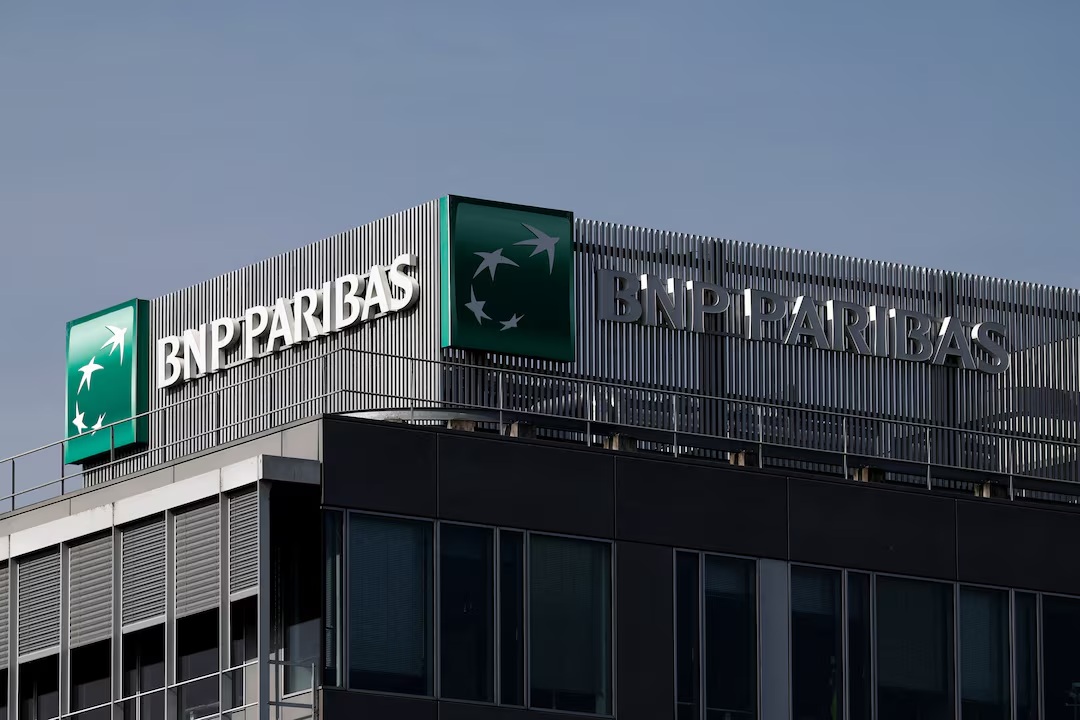
BNP Paribas Moves to Lift Stake in Ageas to 22.5% in €3bn Deal, Tightening Grip on Belgium’s Insurance Market

0

BNP Paribas is preparing a major reshuffle of its insurance footprint in Belgium, announcing a €3 billion two-part transaction that will lift its stake in Ageas — the country’s largest insurer — to 22.5% from 14.9%.

The move, confirmed by both companies on Monday, positions Europe’s biggest bank by assets as the dominant anchor shareholder in one of Belgium’s most influential financial firms.

At the center of the deal is a swap that effectively consolidates Ageas’ control over its core insurance engine while giving BNP Paribas a firmer hold on the parent company. BNP Paribas will sell its 25% stake in AG Insurance to Ageas for €1.9 billion. To simultaneously deepen its influence at the group level, the French bank — acting through its insurance arm, BNP Paribas Cardif — will invest €1.1 billion into Ageas at an agreed price of €60 per share.

Ageas’ stock closed at €56.9 on Friday, giving BNP a slight premium but also securing its position with enough heft to shape the company’s future.

For Ageas, this is a transformative moment. AG Insurance is the beating heart of its Belgian operations, and full control of the unit gives it maximum autonomy to push ahead with long-term strategic plans, particularly in life insurance, pensions, and corporate risk. The transaction also allows Ageas to reorganize capital allocation across the group, which it signaled by raising its 2027 free cash flow target from €2.3 billion to €2.6 billion and lifting its shareholder distribution goal from €2 billion to €2.2 billion.

BNP Paribas, meanwhile, is betting on the long runway of bancassurance growth in Belgium — a segment that combines banking and insurance products under a single distribution umbrella and has been a profitable pillar for the group for years through BNP Paribas Fortis.

“We see significant potential in the growth prospects of BNP Paribas Fortis’ bancassurance business through the partnership with AG Insurance,” CEO Jean-Laurent Bonnafé said, casting the deal as a pivot toward influence rather than direct operational ownership.

The pivot includes a renewed exclusive bancassurance agreement between BNP Paribas Fortis and AG Insurance, locking in future distribution and revenue streams. On top of that, AG Insurance and BNP Paribas Asset Management will form a new investment partnership, extending the collaboration deeper into the group’s asset-gathering machinery. Ageas also confirmed the bank will gain the right to nominate one director to its board.

A Strategic Reset Years in the Making

This transaction caps years of repositioning by BNP Paribas in Belgium. The bank has steadily strengthened its influence in Ageas, becoming the largest shareholder last year after acquiring a 9% stake from China’s Fosun Group — a divestment that reflected Beijing’s tightening capital controls and Fosun’s global retrenchment.

For Ageas, the journey back to full control of AG Insurance is equally significant as the company has spent more than a decade rebuilding its global footprint after the collapse of its predecessor, Fortis Group, during the 2008 financial crisis — an event that eventually led to the breakup of the Fortis banking and insurance businesses. Ageas emerged from that restructuring carrying strong Belgian roots but with a need to stretch beyond its home market.

Monday’s deals show Ageas refocusing and strengthening at home, even as it continues running major businesses in Asia and Europe.

Financial Impact and Long-Term Implications

BNP Paribas expects the transaction to deliver a net capital gain after tax of €820 million in 2026, along with €40 million in additional recurring net income annually. Though modest in the context of a banking giant that posts several billion euros in yearly profit, the move deepens the bank’s long-term insurance profitability and secures a strategic position in one of Europe’s most robust insurance markets.

Ageas’ new cash flow targets signal confidence that greater control of AG Insurance will drive stronger returns across the group. The Belgian firm has traditionally been conservative in its forward guidance, so the upward revisions underscore how central AG Insurance is to its earnings engine.

However, the deal still needs regulatory approval and is expected to close in the second quarter of 2026. If completed, it will formalize a new era in the long-running relationship between Belgium’s dominant bank and its dominant insurer — a partnership reshaped to give both sides more focus, more flexibility, and a firmer footing in a shifting European financial industry.

BNP Paribas will sit deeper inside Ageas’ shareholding structure, Ageas will fully command its core insurance subsidiary, and both will tighten their alliance in bancassurance and asset management — a structure that could influence Belgian financial services for years.