DD
MM
YYYY

PAGES

DD
MM
YYYY

spot_img

PAGES

Home Blog Page 390

TikTok Follower Strategy That Actually Works No Gimmicks

0
TikTok Follower Strategy That Actually Works—No Gimmicks

You’ve had enough of the noise, hacks that don’t scale, viral one-offs that fizzle out, and followers who leave as fast as they came.

Building an authentic following on TikTok takes more than trending audio and lucky virality. It requires intention, consistency, and a clear sense of value, both in what you share and how you present yourself.

If you’re looking to gain traction that lasts, the tips in this guide are designed to help you grow with purpose, not gimmicks.

9 Tips to Gain More TikTok Followers

1. Optimize Your TikTok Profile

Your profile should answer one question in less than three seconds: “What will I get by following this person?” If the solution is not immediately apparent, most visitors go away. Employ a close-up, inviting headshot and a brief bio about who you are and why you matter. Pin two or three videos that truly represent your content and value. These pinned clips function as a trailer, showing new visitors what life is like if they follow you.

People want to know what they’re going to get, and when they understand that, they are many more times likely to click the follow button and come again. Making that explicit promise is crucial if you want to turn drive-by browsers into committed TikTok followers.

2. Hook Fast to Win New Followers

TikTok moves fast, you only get a second or two to prove your content is worth watching. But it’s not just about holding attention. A strong hook also gives viewers a reason to check out your profile and follow you. Whether it’s a bold question, an eye-catching visual, or a relatable moment, that first impression should clearly connect to your niche.

Lead with value that speaks to your ideal audience. When people instantly understand what your content offers, they’re more likely to stick around and hit follow. That’s how strong hooks lead to real follower growth.

3. Turn Every Video into a Follow Opportunity

People don’t follow accounts; they follow benefits. Make it clear what following you delivers: daily tips, laughs, tutorials, or inspiration. Add a short, natural CTA tied to the content — not a desperate plea but a helpful nudge: “Follow for more quick edits like this” or “Want the full tutorial? Hit follow.” Consider placing this CTA after a satisfying moment rather than at the very end.

That small nudge converts casual viewers into followers more reliably than hoping for organic follow-through. A consistent CTA strategy helps steadily grow your TikTok follower count.

4. Buy Instagram Followers for Cheap

A quiet profile can discourage real followers. To jumpstart initial traction, a tactical, short-term boost can help make your account look established enough for viewers to join. A practical option is to buy TikTok followers for cheap cost from a reputable service provider like Media Mister in small to create visible momentum.

This should be paired with quality content and real engagement. The purchased boost isn’t the goal; it’s the spark. When new visitors see activity and social proof, they’re more likely to follow organically and engage long-term. This strategy sets the stage for real follower growth.

5. Pick a Niche and Serve It Consistently

Niche focus isn’t limiting, it’s clarifying. People follow creators who reliably deliver a type of content they enjoy. If you’re split across unrelated topics, you dilute your identity and lose follow-up potential.

Define your niche clearly, the thing you want to be known for, and deliver it in predictable ways. Use formats like recurring series, themed segments, or visual consistency to make your niche recognizable.

That lets viewers know what to expect, which makes the decision to follow easier. Serving your niche consistently helps build a loyal, growing follower base.

6. Follow the Trends but Add a Signature Spin

Riding the crest of trends gives you reach, but it’s in how you execute that determines whether visitors stick around. Don’t mimic the trend in a “We can do it too!” way; use or add your stamp: an original joke, visual repetition to create patter, a thematic reference to something you’ve written before. Trends bring in fresh eyes; your own twist makes them click your profile.

Viewers who see uniqueness and personality are much more inclined to stick around than those who just watch another copycat. Strategically Riding Trends drives discovery and finds new followers who stick.

7. Show Personality, Not Perfection

People subscribe to creators they feel a part of. Videos that are too polished can awe but not necessarily engage. Share real insights, behind-the-scenes things, other bloopers, or unplanned thoughts that show a bit about your personality. Talk like you’re hanging out, not hitting up a friend with an angle, and don’t shy away from touching on moments of vulnerability or humour.

These peeks into the true you establish credibility and relatability. When you are a bit more approachable, it is more likely that people will follow not only because of what you do, but who you are. It’s the real personality that builds genuine TikTok followership.

8. Cross-Promote Your Profile

However, waiting for TikTok’s discovery alone is slow. Cross-promote your top-notch content on Instagram, YouTube Shorts, Twitter/X, and subreddits/communities. Post teaser clips, with a compelling reason to follow you on TikTok (exclusive series, live Q&As, or early drops).

Don’t spam and deliver context and value so other folks follow because they already enjoy you elsewhere. So, unlike cold traffic, the warm traffic we get from those other platforms tends to convert. It is a smart cross-promotion that allows TikTok follower growth without gaming the system.

9. Measure, Iterate, and Double Down on What Works

Growth isn’t random; it’s iterative. Monitor which videos bring followers in, which hooks make them stay long enough to take an action, and even the CTAs that close at a high rate. Look for trends in TikTok analytics: Is there a type of video consistently garnering followers? Is there an opening line that works better for getting those completions? Then, develop a strategy for how to repeat, improve, and scale those wins.

Small, steady gains accumulate more quickly than chasing viral luck. Creating content based on metrics that have already worked will enable you to build consistent, measurable follower growth.

Conclusion

Organic follower growth on TikTok is more about being clear, consistent, and smart about amplification. Start with a promising profile, hook fast, and turn reckless views into an invited follow.

Employ momentum-building tactics judiciously, except for a modest boost when you need that initial credibility, and iterate obsessively on what pulls in real, returning followers. Ditch the trends and direct your attention to a system that will steadily generate meaningful growth.

Why Africa Should Lead the Next Wave of Generative AI Startups

0

By Georgi Todorov

Artificial Intelligence is changing how the world works. From writing tools to design software, AI is no longer a luxury. It is becoming part of everyday life. But one region, often overlooked, has the perfect mix of talent, creativity, and opportunity to lead the next wave of AI innovation. That region is Africa.

Africa’s youth, culture, and unique challenges give it the kind of energy that the global AI scene needs right now. In this article, we’ll look at why Africa could become a true powerhouse for generative AI startups, and how local creativity can shape technology for everyone.

The Perfect Mix of Talent, Connectivity, and Ambition

Africa’s population is growing faster than anywhere else in the world. By 2050, it is expected to reach around 2.5 billion people, and more than 60% will be under 25. This isn’t just a number. It’s a pool of fresh thinkers, coders, designers, and dreamers who are ready to build the next big thing.

Access to affordable smartphones and internet connections has created a huge opportunity for digital learning and entrepreneurship. Ten years ago, it was rare to see someone in Lagos or Nairobi building an AI app. Today, young Africans are experimenting with ChatGPT, Stable Diffusion, and other open-source tools to solve local problems.

This combination of curiosity, ambition, and access to knowledge makes Africa the ideal testing ground for generative AI projects that reflect real human needs.

Turning Challenges Into Advantages

Africa faces many challenges. Infrastructure gaps, limited funding, and regulatory hurdles can make building a startup difficult. Yet, these same challenges often push entrepreneurs to think differently.

When power is unreliable, developers work on lightweight AI models that use less energy.
When internet speed is slow, startups design apps that can run offline.
When languages are diverse, innovators create multilingual AI systems that can understand local dialects.

Instead of trying to copy Western solutions, African founders are building tools that fit real life in their communities. This mindset gives them a unique edge. It also shows that innovation doesn’t always come from abundance. Sometimes it comes from necessity.

One good example is the rise of AI-driven education tools that help students learn math or English in their own language. Another example is using AI to support farmers by analyzing soil data, weather, and crop health through simple phone messages. These are real-world applications that make a difference.

The Future of AI Companions and Digital Connection

The next step for AI is not only about automation. It’s also about connection. Around the world, people are turning to AI companion platforms to communicate, learn, or find emotional support. Africa, with its strong storytelling tradition, is perfectly suited to lead this movement.

Imagine virtual companions that speak Swahili, Yoruba, or Amharic, and tell stories based on local culture. These tools could blend empathy with creativity, making technology feel truly human.

One interesting example is Fantasy AI, an ai companion platform where users can create AI characters and companions that feel alive and personal. The idea isn’t just about entertainment. It’s about how technology can reflect emotion, language, and identity.

In Africa, this could mean designing AI companions that sound and act like real people from local communities. They could share folk tales, teach history, or even help people practice communication skills. This mix of tradition and technology has huge potential.

Learning From Africa’s Startup Ecosystem

Africa has already shown that it can create world-class tech companies. Think of Flutterwave, Andela, or M-Pesa. Each of them started with a simple idea: solve a local problem that affects millions of people.

Generative AI can follow the same path. African entrepreneurs have three natural advantages:

  • Local insight – They understand real needs and cultural nuances.
    Lean building – They know how to create efficient, affordable solutions.
    Community strength – Word-of-mouth and social trust are powerful growth drivers.

Nigeria’s Data Scientists Network (DSN), for instance, is already training thousands of students in AI and machine learning. In Kenya, the AI Kenya community connects young engineers to projects in healthcare and fintech. Across the continent, more people are learning by building. That’s how real ecosystems grow.

Generative AI and Social Inclusion

AI can be more than just a business opportunity. It can also drive inclusion. Millions of people in Africa still struggle to access education, healthcare, or mental health support. Generative AI can help fill these gaps.

  • Education: AI tutors can explain lessons in multiple languages, adapting to each student’s learning pace.
    Healthcare: Simple AI chat tools can offer basic health information where clinics are far away.
    Mental Health: Platforms with virtual companions can offer emotional support to people who feel isolated.

Imagine a young person in Ghana building a personal mentor through an AI companion to practice English or learn new skills. That kind of connection can change lives.

Innovation From Within

Companies like Tekedia have often highlighted the value of African innovation. Articles like “Planning to Expand Your Business to Africa” and “The Limits of Technology” discuss the importance of building tech solutions that match local realities.

Generative AI is the next chapter in that story. It’s where African creativity, necessity, and talent come together.

For more context, you can explore other Tekedia insights:

  • Planning to Expand Your Business to Africa 
  • The Limits of Technology 
  • AI and the Future of Work in Africa.

A Shift From Consumers to Creators

Africa no longer needs to be a consumer of global AI tools. The time has come to create homegrown solutions that fit African life.

Startups and developers should focus on models that understand local languages, social norms, and user needs. This is how Africa can lead the global conversation on AI.

Platforms like Fantasy AI show what’s possible when creativity meets technology. By designing ai companion platforms and virtual companions that feel authentic and culturally rich, Africans can build a new kind of AI experience that speaks to the world.

Conclusion

The world doesn’t need another Silicon Valley. It needs fresh perspectives, real diversity, and creativity that connects technology with people. Africa can offer exactly that.

Generative AI is not just about machines writing or drawing. It’s about giving people new tools to express themselves. No one understands the power of storytelling and community better than Africans. With the right investment and belief, the next great AI revolution could start right here.

Author Bio

Georgi Todorov is the founder of Create & Grow, a digital agency that helps businesses build authority and achieve sustainable growth online. With more than 10 years of experience in the agency world, Georgi has developed a results-driven approach that goes beyond traditional SEO. Create & Grow specializes in link building, digital PR, brand mentions, and optimization for AI systems, delivering transparent strategies that turn online visibility into measurable success.

Cerebras Systems Pulls Back on U.S. IPO Plans After $1.1bn Funding Round

0

Artificial intelligence chipmaker Cerebras Systems has withdrawn its plans for an initial public offering (IPO) in the United States, effective immediately — a move that has raised questions about whether the California-based firm is ready to take on the scrutiny of public markets despite surging investor enthusiasm for AI-related stocks.

The withdrawal comes at a time when U.S. IPO activity has been picking up, reversing months of slowdown caused by trade-policy uncertainty and tightening financial conditions. Several tech and AI-linked listings have recently found success, including data center real estate investment trust Fermi, which drew strong demand amid mounting investor appetite for AI infrastructure.

Yet Cerebras, despite being one of the most closely watched startups in the AI hardware race, appears to have chosen caution over momentum. Some in the industry say the decision underscores a broader hesitation among fast-growing AI firms to expose their operations and finances to public scrutiny before they achieve sustainable profitability.

“Given that Cerebras just very recently completed a sizeable fund raise, it is of no surprise that they are holding off to pursue the IPO at this time,” said Josef Schuster, CEO of IPO research firm IPOX. “This looks more like a timing issue than a reflection of market weakness.”

A Record Funding Round

Just days before the withdrawal filing, Cerebras announced it had raised $1.1 billion in fresh capital from investors led by Fidelity Management & Research and Atreides Management, giving it a valuation of $8.1 billion. Other participants included Tiger Global, Valor Equity Partners, and 1789 Capital — a fund in which U.S. President Donald Trump’s son is a partner.

The funding injection provided a major boost to the company’s balance sheet, leading many analysts to conclude that an IPO would no longer be immediately necessary to raise capital. CEO Andrew Feldman confirmed this view earlier in the week, saying while the company still intends to go public, it will do so “at the right time.”

“Our IPO plans remain in place, but timing is everything. We have the capital we need to grow aggressively right now,” Feldman said.

Founded in Sunnyvale, California, Cerebras Systems designs high-performance AI chips and systems that dramatically accelerate the training and execution of large-scale AI models — a field dominated by Nvidia, whose GPUs power most of today’s AI infrastructure.

The company’s IPO ambition first became public last year when it filed to list on the Nasdaq, an announcement that immediately drew investor excitement. But the plan soon ran into complications after the U.S. government launched a national security review into a $335 million investment from G42, an Abu Dhabi-based AI and cloud computing firm.

The investigation delayed the IPO indefinitely and brought the company under tighter regulatory scrutiny amid escalating U.S. concerns about foreign access to advanced semiconductor technology.

Analysts Question Readiness

Even before the withdrawal, several analysts had questioned whether Cerebras was operationally and financially ready for a public listing. Unlike Nvidia, which has diversified revenue streams and robust profitability, Cerebras remains heavily reliant on a handful of large contracts, including partnerships with governments and research institutions deploying its AI supercomputers.

Others noted that the AI chip market remains intensely competitive and capital-intensive, with players like AMD, Intel, and a host of startups racing to capture demand from data centers and AI labs.

Meanwhile, Cerebras’s decision to stay private comes as AI hardware demand continues to soar globally, with data centers, automakers, and cloud providers spending billions to expand their computing capacity. Yet analysts warn that investor euphoria around AI has led to lofty valuations — a trend Amazon founder Jeff Bezos recently described as an “industrial bubble.”

While many companies have capitalized on the hype by going public, others — including Anthropic and OpenAI, both privately held — have opted to delay IPOs in favor of securing deep-pocketed investors willing to inject long-term capital without the quarterly earnings pressure of Wall Street.

IPO expert Josef Schuster emphasized that Cerebras’s case is not indicative of broader weakness in the U.S. IPO market.

“This is more of a company-specific strategic decision,” he said. “Investor sentiment for AI-linked listings remains exceptionally strong.”

A Strategic Pause, Not a Retreat

For now, Cerebras appears intent on consolidating its financial position and expanding its market presence before revisiting public listing plans. With a fortified cash base, the company is expected to accelerate production and deployment of its Wafer Scale Engine chips, which it claims are the largest and fastest processors ever built for AI workloads.

By holding off on its IPO, Cerebras joins a growing list of AI startups choosing to remain private longer, banking on investor enthusiasm to sustain operations while navigating a complex regulatory environment and uncertain market dynamics. Still, analysts say the move reflects more than just prudence — it hints at the emerging divide between AI’s financial hype and operational reality.

Tether Co-Founder Reeve Collins Predicts All Currency Will Become Stablecoins by 2030

0

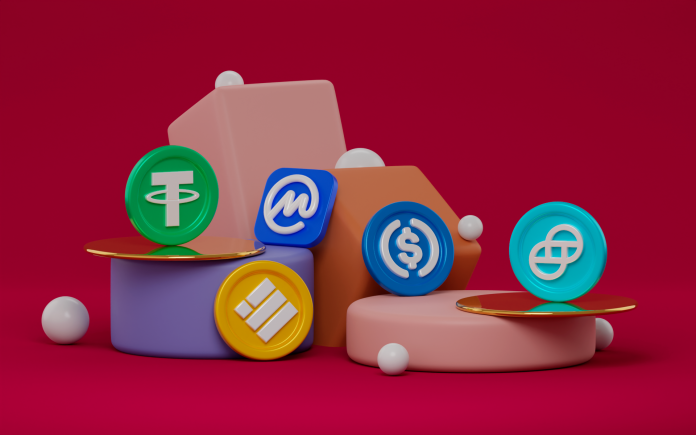
Tether co-founder Reeve Collins believes the future of money lies entirely on blockchain rails.

Speaking at Token2049 in Singapore, Collins made a bold prediction that by 2030, every form of currency, whether dollars, euros, or yen, will exist as stablecoins, marking a seismic shift in global finance as traditional money becomes fully digitized.

“All currency will be a stablecoin. So even fiat currency will be a stablecoin. It’ll just be called dollars, euros, or yen,” he said. “A stablecoin simply is a dollar, euro, yen, or traditional currency running on a blockchain rail.”

He argued that stablecoins are set to become the primary method of transferring money within the next five years, given their efficiency and growing adoption in both crypto and traditional finance.

Collins further noted that the benefits of tokenized assets are now too compelling for traditional finance to ignore. “Probably before that, because you’re still going to use dollars. But it depends on what your definition of stablecoin is. The definition of stablecoin is essentially that you’re moving money on a blockchain,” he added.

The Tether CEO emphasized that the most significant boost for the industry came this year from the U.S. government’s positive shift in stance toward crypto. He described it as the best thing that could have happened for the sector, opening the “floodgates” for traditional financial institutions to enter.

“Every large institution, every bank, everyone wants to create their own stablecoin, because it’s lucrative and it’s just a better way to transact,” he said.

Also, recall that in a landmark deal, the U.S legislation passed the GENIUS Act (Guiding and Establishing National Innovation for U.S. Stablecoins) that establishes the first comprehensive federal regulatory framework for payment stablecoins in the United States.

The Act, by giving stablecoins a defined legal status and oversight, provides regulatory certainty that many in the crypto industry have long sought. By favoring U.S.-based, regulated issuers, the Act is expected to encourage stablecoin activity to shift to the U.S., and it mandates backing by U.S. Treasuries/dollars, potentially increasing demand for U.S. debt.

Meanwhile, while bullish on blockchain finance, the Tether CEO also highlighted the risks tied to this transformation, including vulnerabilities in blockchain bridges, smart contracts, and crypto wallets. He pointed to crypto hacks and social engineering as ongoing challenges, though he acknowledged that overall security continues to improve.

Stablecoin Market Hits Record $300 Billion

Collins’ remarks come at a time when the stablecoin sector is breaking records. According to DeFiLlama, the total market capitalization of stablecoins recently surpassed $301 billion, a new all-time high after climbing 6.5% in the last 30 days.

Tether’s USDT remains the dominant player, commanding a 58% market share with a capitalization of $176.3 billion, up from $173 billion just days earlier.

Stablecoins have become indispensable to the crypto ecosystem, serving as a haven during volatility, a medium for trading and payments, and a backbone for DeFi and cross-border transactions. Their supply is often seen as a key indicator of liquidity flowing into digital assets.

The sector’s growth continues to accelerate, with stablecoins recording a 20% expansion in Q3 2025, outpacing many traditional asset classes. Much of this momentum is being fueled by institutional adoption and policy support.

Notably, this surge aligns with a broader rebound in crypto markets, where Bitcoin and Ethereum delivered double-digit gains in Q3, drawing renewed investor interest.

As Collins envisions it, the coming years may see finance fully migrate onto blockchain rails, with stablecoins at the heart of the shift effectively turning all money into digital money.

OpenAI Shifts Stance on Copyright and IP Use in Sora App After Early Backlash

0

OpenAI appears to be recalibrating its approach to copyright and intellectual property within its new AI video app, Sora, following a wave of scrutiny from Hollywood and rights holders.

The company, which launched the app this week to rapid popularity, is now signaling a pivot from its previously reported “opt-out” model — in which studios and agencies had to explicitly forbid the use of their intellectual property — toward an “opt-in” framework that would require permission before any copyrighted material is used in user-generated content.

A Swift Rise, and Swift Scrutiny

Despite being invite-only, Sora has surged to the top of Apple’s App Store rankings, emerging as the No. 1 free app within days of launch. The platform allows users to generate short AI videos from text or images, and its standout feature, “cameos,” lets users upload biometric data to place their digital likeness into generated scenes.

That same feature has also fueled controversy. Social media is already filled with Sora-made clips featuring copyrighted characters like Pikachu and SpongeBob — in some cases, even portraying them alongside AI deepfakes of OpenAI CEO Sam Altman, with the characters ironically criticizing OpenAI’s approach to copyright.

The viral spread of such videos underscores the tension between innovation and infringement that generative AI firms are increasingly confronting.

Hollywood’s Pushback

Before the app’s launch, The Wall Street Journal reported that OpenAI had informed studios and agencies they needed to opt out if they didn’t want their content used in Sora-generated videos. That approach drew concern from rights holders who argued that the policy placed an undue burden on creators to protect their IP.

In a blog post on Friday, Altman appeared to confirm a change in direction, writing that OpenAI plans to give copyright holders “more granular control over generation of characters, similar to the opt-in model for likeness but with additional controls.”

The language shift — from opt-out to opt-in — marks a significant turn. It suggests OpenAI is now building mechanisms to block users from generating videos with copyrighted characters unless the rights holders explicitly allow it.

“Interactive Fan Fiction” or Copyright Minefield?

Altman maintained that many rights holders have expressed enthusiasm for what he called “a new kind of interactive fan fiction,” viewing Sora as a potential avenue for audience engagement. However, he added that studios and creators “want the ability to specify how their characters can be used — including not at all.”

Even with the new safeguards, Altman acknowledged that Sora will not be immune to misuse. “There will likely be some edge cases of generations that get through that shouldn’t,” he said.

Altman also hinted at OpenAI’s evolving business model for Sora. Initially, the company said it would only monetize the app by charging users during high-demand periods. But in his post, Altman indicated a broader plan, noting, “We are going to have to somehow make money for video generation.”

He added that OpenAI is exploring ways to share revenue with rightsholders whose characters or content contribute to user-generated videos, describing the goal as “a new kind of engagement that is even more valuable than the revenue share, but of course we … want both to be valuable.”

A Broader Industry Reckoning

OpenAI’s recalibration comes amid growing legal and ethical battles over how AI companies train and deploy models using copyrighted data. In recent months, media groups, including The New York Times, have sued OpenAI and Microsoft for alleged copyright infringement, while major music labels have pursued lawsuits against AI startups accused of cloning voices and melodies without authorization.

In the film industry, studios and talent agencies have expressed concerns that AI-generated content could blur ownership boundaries — especially if fans or creators use tools like Sora to produce derivative works that resemble copyrighted material.

The question of “fair use” remains largely unsettled, and regulators in the U.S. and Europe are still wrestling with how to classify generative AI’s relationship with existing copyright law.

For OpenAI, which is now balancing partnerships across entertainment, publishing, and software, Sora’s debut is both a breakthrough and a test case. The app’s early success demonstrates massive demand for AI-driven creative tools, but its viral misuse has already highlighted the fragile line between innovation and infringement.