DD
MM
YYYY

PAGES

DD
MM
YYYY

spot_img

PAGES

Home Blog Page 3904

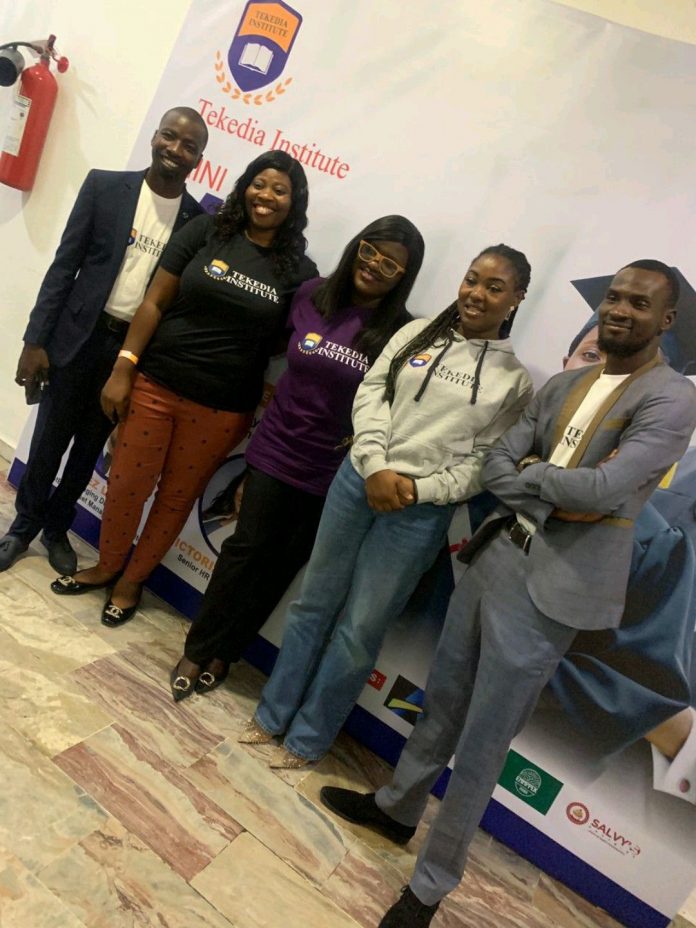
Tekedia Mini-MBA Graduation Events Planned….

0

As we conclude this edition of Tekedia Mini-MBA, I want to wish all our co-learners great graduation ceremonies. I heard that Local Organizing Committees have been selected for Edition 12 events. Big salutes to all the volunteers as you work to deliver great experiences for all.

Tekedia graduation events across cities are learners-organized and the Institute does not play any technical role. We’re so proud that we can bring hundreds of learners together for 3 months and over time, they bond, to do great things together. Many are starting new companies. Many will tap into networks for new jobs. And many more will have contacts which can help them in the future.

(Typically, many brands sponsor these events. Eyitayo Adeleke, mMBA is available if you want to learn more. The Chairperson is Dahunsi Temidayo Esther (cannot find the profile to tag).

I want to wish everyone safe travels; We LOVE you all. Thank you for making this community service super-amazing for all of us at Tekedia Institute.

Please remember Thursday’s Tekedia Live; I will be speaking on “The Call to Business Execution”. Yes, we have mastered the physics of business. Now is the time to go into the business labs, and make the experiments happen. This is the #best school.

Ndubuisi Ekekwe

Lead Faculty, Tekedia Institute

Has Modernity Could Fail The World As Challenges Rise?

0

This is a question that many people are asking themselves in the wake of the global challenges that we face today. Climate change, pandemics, social unrest, inequality, terrorism, cyberattacks, and more. These are the problems that modernity has brought us, or at least failed to solve.

Modernity is the term that describes the historical period from the 17th century to the present, characterized by the rise of science, reason, democracy, individualism, and progress. Modernity promised us a better world, where we would be free from ignorance, superstition, oppression, and suffering. Modernity gave us many achievements, such as technology, medicine, education, human rights, and culture.

But modernity also had its dark side. Modernity created new forms of violence, exploitation, alienation, and destruction. Modernity disrupted the natural balance of the earth, the social fabric of communities, and the spiritual dimension of life. Modernity made us more connected, but also more isolated. More informed, but also more confused. More powerful, but also more vulnerable.

One of the most obvious manifestations of modern violence is war. Modernity brought about new technologies, ideologies, and political systems that enabled and justified large-scale conflicts that spanned continents and claimed millions of lives. The World Wars, the Cold War, the Vietnam War, the Iraq War, and many others are examples of how modernity fueled and facilitated warfare. These wars not only caused immense suffering and death, but also had lasting impacts on the environment, the economy, the culture, and the psychology of the people involved.

Another form of violence that modernity created is colonialism. Colonialism is the practice of establishing political and economic domination over other peoples and territories, often through force and coercion. Colonialism was driven by the desire for resources, markets, power, and prestige, as well as by the belief in the superiority of one’s own civilization and culture.

Colonialism resulted in the exploitation, oppression, displacement, and genocide of many indigenous peoples around the world. It also disrupted and destroyed their ways of life, their languages, their religions, their identities, and their histories.

A third form of violence that modernity generated is capitalism. Capitalism is an economic system based on private ownership of the means of production and exchange, and on the pursuit of profit. Capitalism emerged in conjunction with modernity and became the dominant mode of organizing society.

Capitalism created unprecedented levels of wealth and productivity, but also unprecedented levels of inequality and poverty. Capitalism also created new forms of exploitation, such as slavery, wage labor, child labor, sweatshops, and human trafficking. Capitalism also alienated workers from their products, their labor, their creativity, and their humanity.

A fourth form of violence that modernity spawned is environmental degradation. Environmental degradation is the deterioration of the natural environment due to human activities. Modernity increased the demand for natural resources and energy, and also increased the production of waste and pollution.

Modernity also altered the climate and the ecosystems of the planet, leading to biodiversity loss, deforestation, desertification, soil erosion, water scarcity, air pollution, ocean acidification, and global warming. These environmental changes have threatened the survival and well-being of many species, including humans.

These are just some of the ways that modernity created new forms of violence, exploitation, alienation, and destruction. These forms are not isolated or independent from each other; they are interconnected and interdependent. They also have cumulative and synergistic effects that amplify their impacts.

Modernity is not a monolithic or homogeneous phenomenon; it has multiple dimensions and expressions that vary across time and space. Modernity also has positive aspects that should not be overlooked or dismissed. However, it is important to recognize and critically examine its negative aspects as well, in order to understand its origins, its consequences, and its alternatives.

So, has modernity failed us? The answer is not simple. Modernity has given us many benefits, but also many costs. Modernity has solved some problems, but also created new ones. Modernity has not fulfilled all its promises, but also not all its threats. Modernity is not a monolithic entity, but a complex and dynamic process that is still unfolding.

Therefore, instead of asking whether modernity has failed us, we should ask ourselves how we can shape modernity to serve us better. How can we preserve the positive aspects of modernity, while mitigating the negative ones? How can we balance the needs of the present and the future? How can we integrate the rational and the emotional? How can we foster a sense of belonging and meaning in a diverse and changing world?

These are the questions that we need to ask ourselves as we face the challenges and opportunities of modernity. These are the questions that will determine our fate as a species and as a planet. These are the questions that will define who we are and what we want to be.

Mainstream Media Being Neutral Towards X is Extremely Unlikely

0

Twitter now X has become one of the most influential social media platforms in the world, with over 300 million active users and billions of tweets every month. It is also a source of news, information, opinions, and entertainment for many people, especially those who are interested in politics, culture, sports, and celebrities.

However, not everyone is happy with Twitter’/X’s role and impact on society. Some critics accuse Twitter of being biased, censoring, or amplifying certain voices and agendas, while others defend Twitter’s right to moderate its own platform and protect its users from harassment, misinformation, and hate speech. X has recently filed a suit with Attorney Ken Paxton of Texas district against Media Matters for an open investigation into allegation of fraud activity on ads content and algorithms.

One of the most contentious issues surrounding Twitter is its relationship with the mainstream media. The mainstream media, or MSM, refers to the traditional and established sources of news and information, such as newspapers, magazines, radio, television, and online outlets.

The MSM is often seen as having more credibility, authority, and professionalism than social media platforms like Twitter. However, the MSM is also subject to criticism and scrutiny for its own biases, errors, omissions, and agendas. Some people accuse the MSM of being too liberal or too conservative, too elitist or too populist, too corporate or too ideological.

The question is: can the MSM be neutral towards Twitter? Can it report on Twitter’s activities and controversies without taking sides or influencing public opinion? Can it acknowledge Twitter’s strengths and weaknesses without being either too supportive or too hostile? Can it balance its own interests and values with those of Twitter and its users? The answer is: extremely unlikely.

There are several reasons why the MSM cannot be neutral towards Twitter. First of all, the MSM and Twitter have different goals and incentives. The MSM’s primary goal is to inform the public and provide accurate and reliable news and information. The MSM’s secondary goal is to attract and retain audiences and advertisers.

The MSM’s incentive is to produce high-quality journalism that meets ethical standards and public expectations. Twitter’s primary goal is to connect people and enable them to share their thoughts and feelings. Twitter’s secondary goal is to grow its user base and revenue. Twitter’s incentive is to create a platform that fosters engagement, expression, and diversity.

These goals and incentives are not necessarily incompatible, but they can also clash or conflict. For example, the MSM may criticize Twitter for allowing misinformation or hate speech to spread on its platform, while Twitter may defend its policies as respecting free speech and user autonomy.

The MSM may praise Twitter for breaking news or exposing scandals, while Twitter may claim credit for empowering its users and amplifying their voices. The MSM may use Twitter as a source of news or information, while Twitter may use the MSM as a source of validation or legitimacy.

Secondly, the MSM and Twitter have different audiences and communities. The MSM’s audience is generally more diverse, broad, and mainstream than Twitter’s audience. The MSM’s audience includes people of different ages, genders, races, classes, education levels, political affiliations, and interests.

The MSM’s audience expects the MSM to be objective, balanced, fair, and trustworthy. Twitter’s audience is generally more homogeneous, narrow, and niche than the MSM’s audience. Twitter’s audience includes people who are more active, engaged, opinionated, and vocal than the average person.

Neutrality in journalism is the principle of reporting facts and events without inserting personal opinions, biases, or agendas. It is based on the idea that journalists should serve the public interest by providing objective and reliable information that enables citizens to make informed decisions. Neutrality is also a way of maintaining credibility and trust among audiences, as well as avoiding legal or ethical issues that may arise from taking sides or endorsing certain views.

However, neutrality in journalism is not always easy to achieve or maintain. Journalists are human beings who have their own values, beliefs, and perspectives that may influence their choices of topics, sources, words, and angles. Moreover, journalists work within organizations that have their own interests, policies, and pressures that may affect their editorial decisions. Furthermore, journalists operate in a complex and dynamic media environment that is influenced by political, economic, social, and cultural factors that may shape their views and expectations.

Therefore, neutrality in journalism is not a fixed or absolute state, but rather a goal or an ideal that requires constant reflection and evaluation. Journalists should be aware of their own biases and limitations, as well as those of their colleagues and employers. They should also be transparent about their methods and sources, and open to feedback and criticism from their audiences and peers. They should also be willing to correct their mistakes and admit their errors when they occur.

15 Strategic Needs and Their Implications in Tinubu’s First Budget as Nigeria’s 16th President

0

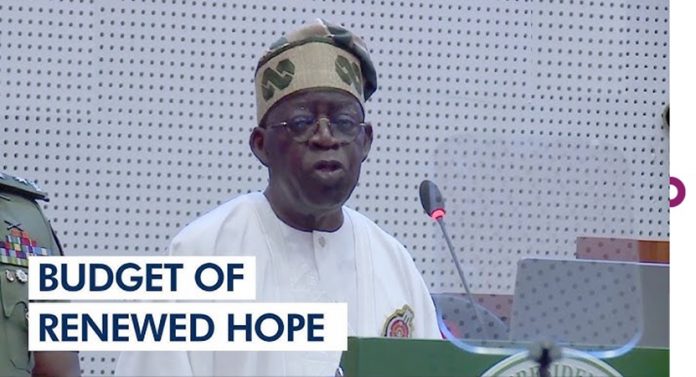
President Bola Ahmed Tinubu, who took office as the 16th President of the Federal Republic of Nigeria on May 29, 2023, started his yearly budget presentation to the combined National Assembly on November 29, 2023. As he declared throughout the campaign and in his election manifesto, President Tinubu called the budget the “Budget of Renewed Hope.”

Our analysis of the budget speech indicates that the President is taking a multifaceted approach to addressing present issues and laying the foundation for future prosperity for Nigeria. Our analyst notes that the strategy’s effectiveness will hinge on its timely execution and constant adjustment to changing market conditions.

“It is, by now, a matter of recorded history that my very first fiscal intervention as President of this great nation was to end the fuel subsidy regime, which had proven to be so harmful to the overall health of our national economy,” President Tinubu said. This statement and others were explored by our analyst using a strategic fit-implication framework and discovered 15 needs that Nigerians need to know.

  1. Fuel Subsidy Removal and Fiscal Interventions

Strategic Need: Addressing the harmful impact of the fuel subsidy regime.

Implication: Demonstrates a commitment to economic reforms for national economic health.

  1. Macroeconomic Stability and Infrastructure Investment

Strategic Need: Cementing macroeconomic stability, reducing the deficit, and increasing capital spending.

Implication: Aims to create a foundation for sustainable economic development.

  1. Global Economic Conditions

Strategic Need: Navigating challenging global economic conditions.

Implication: Emphasizes the importance of adaptability and resilience in economic planning.

  1. Performance of the 2023 Budget

Strategic Need: Meeting obligations despite challenges.

Implication: Highlights the government’s commitment to fiscal responsibility.

  1. 2024 Budget Priorities

Strategic Need: Job-rich economic growth, macroeconomic stability, and poverty reduction.

Implication: Focuses on holistic development and the welfare of the citizens.

  1. Human Capital Development

Strategic Need: Prioritizing human development, especially for children.

Implication: Recognizes the critical role of a skilled workforce in national development.

  1. Education Sector Reforms

Strategic Need: Implementing a sustainable model for funding tertiary education.

Implication: Investing in education for long-term human capital development.

  1. Greener Future and Renewable Energy

Strategic Need: Commitment to a greener future, emphasizing renewable energy.

Implication: Aligns with global environmental goals and positions Nigeria as a regional leader.

  1. Infrastructure Development through PPPs

Strategic Need: Leveraging private capital for big-ticket infrastructure projects.

Implication: Encourages private sector involvement in national development.

  1. Debt Management and Revenue Increase

Strategic Need: Meeting debt obligations, reviewing tax policies, and increasing revenue to GDP ratio.

Implication: Aims for fiscal sustainability and reducing reliance on debt.

  1. Social Investment Programs and Public-Private Partnerships

Strategic Need: Reviewing social investment programs and exploring PPPs for critical infrastructure.

Implication: Seeks inclusive economic growth and private sector collaboration.

  1. Legislative Collaboration

Strategic Need: Collaboration with the National Assembly for effective governance.

Implication: Emphasizes the importance of a united approach for national development.

  1. January-December Fiscal Year

Strategic Need: Returning to a predictable fiscal year cycle.

Implication: Enhances budget planning and execution efficiency.1

  • Focus on Equitable Benefits

Strategic Need: Ensuring projects align with sectoral mandates and benefit all Nigerians.

Implication: Aims for fair and inclusive development.

  1. Overall Impact

Implication: President Tinubu outlines a comprehensive strategy for economic growth, development, and sustainability, emphasizing collaboration, fiscal responsibility, and a vision for a cleaner, greener future.

Pudgy Penguin, Dan Tapiero BTC Prediction, MoonBirds Announces Talons, CF Benchmark Launches Index

0

The internet is going crazy over Pudgy Penguin, the adorable and chubby bird that has amassed over 1 million followers on Instagram. Pudgy Penguin is a king penguin who lives at the San Diego Zoo and loves to pose for the camera. His owner, Zoey, is a zookeeper who started posting photos and videos of him on Instagram in 2022. Since then, Pudgy Penguin has become a sensation, attracting fans from all over the world who adore his cute and funny antics.

Pudgy Penguin’s Instagram account features him doing various activities, such as eating fish, playing with toys, swimming in the pool, and cuddling with Zoey. He also has a signature move, where he tilts his head and makes a squeaky noise that sounds like “pudgy”. His fans love to comment on his posts, calling him “the cutest penguin ever”, “a fluffy ball of joy”, and “a living meme”. Some of his posts have gone viral, reaching millions of views and likes.

Pudgy Penguin is not only popular on Instagram, but also on other social media platforms, such as TikTok, YouTube, and Twitter. He has his own merchandise line, featuring t-shirts, mugs, stickers, and plushies with his image. He has also appeared on several TV shows and magazines, such as The Ellen Show, People, and National Geographic. He has even received fan mail from celebrities, such as Ariana Grande, Dwayne Johnson, and Oprah Winfrey.

Pudgy Penguin’s success is a testament to the power of social media and the love of animals. He has brought joy and laughter to millions of people around the world, especially during these challenging times. He has also raised awareness and funds for penguin conservation and wildlife protection. He is truly a star in his own right, and we can’t wait to see what he does next.

“I think this next bull run into 2025 we’ll see Bitcoin over $100,000.” – Dan Tapiero

In a recent interview, Dan Tapiero, a veteran investment manager and co-founder of 10T Holdings, shared his bullish outlook on Bitcoin for the next few years. He said that he expects Bitcoin to surpass $100,000 by 2025, as the cryptocurrency becomes more widely adopted and integrated into the global financial system.

Tapiero explained that Bitcoin is not only a store of value, but also a network effect asset that benefits from increasing users and innovation. He compared Bitcoin to other network effect assets, such as Facebook, Google, and Amazon, which have grown exponentially over time and created massive value for their shareholders.

He also pointed out that Bitcoin has a unique advantage over other assets, as it is decentralized, censorship-resistant, and scarce. He said that Bitcoin is the only asset that can provide protection against inflation, currency debasement, and geopolitical risks. He added that Bitcoin is also the most liquid and transparent asset in the world, with a global market that operates 24/7.

Tapiero said that he believes that Bitcoin is still in its early stages of adoption, and that there is a huge potential for growth in the coming years. He said that he expects more institutional investors, corporations, and governments to embrace Bitcoin as a strategic asset and a reserve currency. He also said that he anticipates more innovation and development in the Bitcoin ecosystem, such as the Lightning Network, which will enable faster and cheaper transactions.

Tapiero concluded that he is very optimistic about the future of Bitcoin, and that he thinks that this next bull run into 2025 will see Bitcoin over $100,000. He said that he considers Bitcoin to be one of the best investments of his lifetime, and that he encourages everyone to learn more about it and get involved.

Moonbirds announces Talons, a reward system to replace Nesting.

We are excited to announce that we are launching a new reward system for our loyal customers: Talons. Talons are points that you can earn by using our services, such as booking flights, hotels, car rentals, and more. You can then redeem your Talons for discounts, upgrades, freebies, and other perks.

Talons will replace our current reward system, Nesting, which will be phased out by the end of the year. We decided to make this change because we wanted to offer you more flexibility and value for your money. With Talons, you can choose from a wider range of rewards, and you can also transfer your points to other Moonbirds members or donate them to charity.

If you are already a Nesting member, don’t worry. You can easily convert your Nesting points to Talons at a 1:1 ratio. You can also keep using your Nesting card until it expires or request a new Talons card for free. To make the transition smoother, we have created a dedicated website where you can find all the information you need about Talons, including how to sign up, how to earn and redeem points, and how to manage your account.

CF Benchmark launches staking index series for Institutional Clients as Dan Tapiero predicts BTC to $100k

CF Benchmark, the leading provider of cryptocurrency indices and data, has announced the launch of a new series of staking indices for institutional clients. The staking indices aim to capture the returns of the most popular and secure proof-of-stake (PoS) networks, such as Ethereum 2.0, Cardano, Polkadot, Solana, and Cosmos.

Staking is a process by which users can lock up their cryptocurrency holdings in exchange for rewards and the right to participate in the network governance. Staking is seen as a way to generate passive income and support the security and decentralization of PoS networks. However, staking also involves risks, such as volatility, illiquidity, slashing penalties, and technical complexity.

The CF Benchmark staking indices are designed to address these challenges and provide institutional investors with a reliable and transparent way to access the staking market. The indices are based on the following principles:

  • The indices track the total return of staking, including both the price appreciation and the staking rewards of the underlying assets.

  • The indices use a market capitalization-weighted methodology, with a cap of 25% for each constituent to ensure diversification and reduce concentration risk.

  • The indices are rebalanced monthly to reflect the changes in the staking market and the network parameters.

  • The indices are calculated using CF Benchmark’s robust and audited methodology, which complies with the IOSCO Principles for Financial Benchmarks.

The CF Benchmark staking indices are available on the CF Benchmark website and through various data providers. The indices can be used for various purposes, such as benchmarking, research, analysis, product development, and portfolio construction. The indices can also serve as the basis for passive investment products, such as exchange-traded funds (ETFs), that can offer exposure to the staking market in a convenient and regulated way.

CF Benchmark is committed to providing high-quality and innovative indices for the cryptocurrency industry. The launch of the staking indices is another milestone in CF Benchmark’s mission to bridge the gap between traditional finance and digital assets.

“I think this next bull run into 2025 we’ll see Bitcoin over $100,000.” – Dan Tapiero

In a recent interview, Dan Tapiero, a veteran investment manager and co-founder of 10T Holdings, shared his bullish outlook on Bitcoin for the next few years. He said that he expects Bitcoin to surpass $100,000 by 2025, as the cryptocurrency becomes more widely adopted and integrated into the global financial system.

Tapiero explained that Bitcoin is not only a store of value, but also a network effect asset that benefits from increasing users and innovation. He compared Bitcoin to other network effect assets, such as Facebook, Google, and Amazon, which have grown exponentially over time and created massive value for their shareholders.

He also pointed out that Bitcoin has a unique advantage over other assets, as it is decentralized, censorship-resistant, and scarce. He said that Bitcoin is the only asset that can provide protection against inflation, currency debasement, and geopolitical risks. He added that Bitcoin is also the most liquid and transparent asset in the world, with a global market that operates 24/7.

Tapiero said that he believes that Bitcoin is still in its early stages of adoption, and that there is a huge potential for growth in the coming years. He said that he expects more institutional investors, corporations, and governments to embrace Bitcoin as a strategic asset and a reserve currency. He also said that he anticipates more innovation and development in the Bitcoin ecosystem, such as the Lightning Network, which will enable faster and cheaper transactions.

Tapiero concluded that he is very optimistic about the future of Bitcoin, and that he thinks that this next bull run into 2025 will see Bitcoin over $100,000. He said that he considers Bitcoin to be one of the best investments of his lifetime, and that he encourages everyone to learn more about it and get involved.