DD
MM
YYYY

PAGES

DD
MM
YYYY

spot_img

PAGES

Home Blog Page 3910

Speed, Sensitivity, and Resolution: How to Choose a Graphics Tablet for Beginners

0

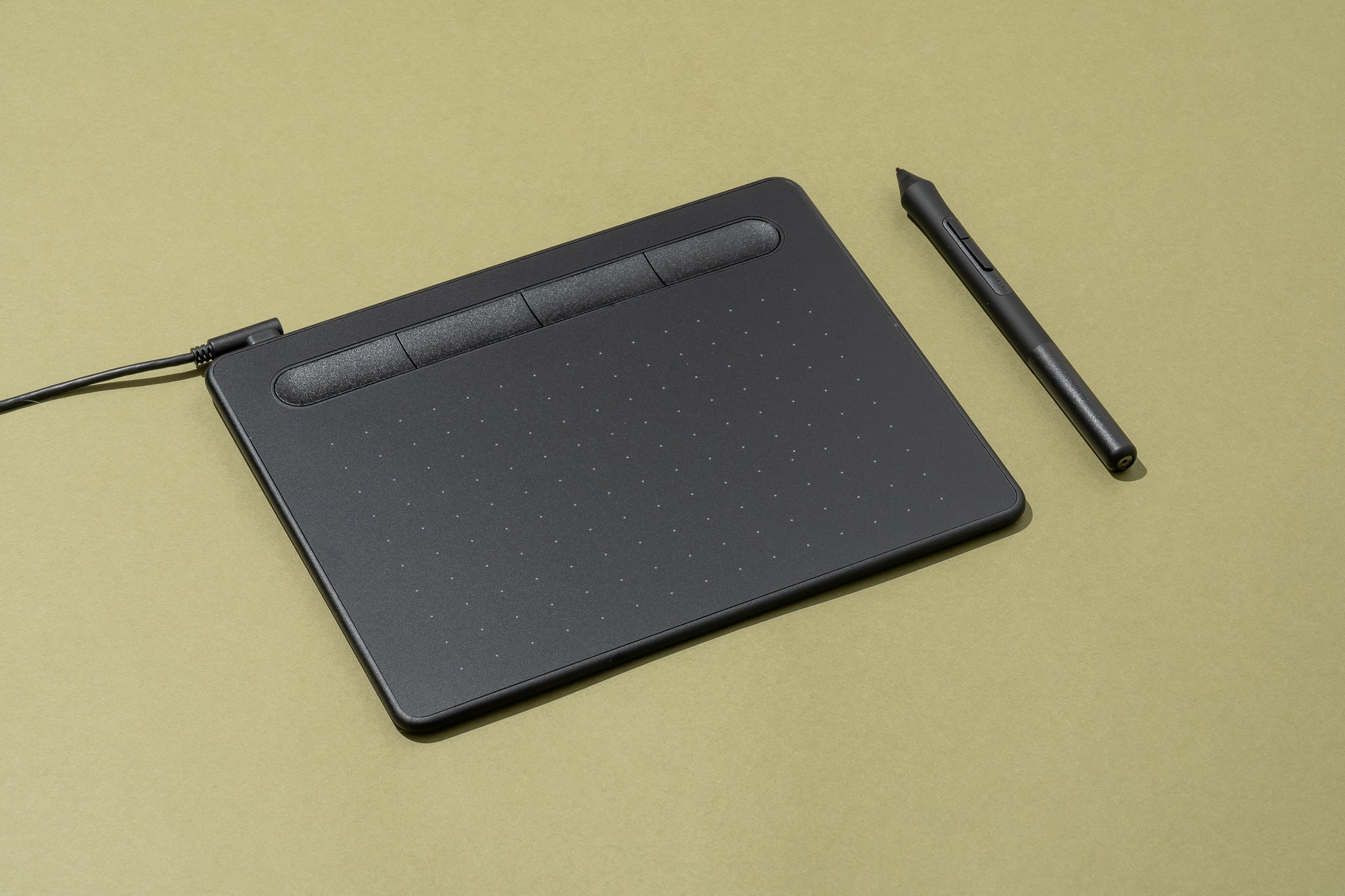
A graphics tablet is a useful tool for a designer, cartoonist, illustrator who creates visuals for Hellspin games, and just a fan of drawing. The choice of such a gadget may seem incredibly difficult to a novice artist because you need to consider many characteristics. Here’s what to consider when choosing a graphics tablet.

Connection Type

Everything is simple here — the connection can be wired and wireless. In the first case, the tablet is connected to the computer via USB cable, in the second case, via Bluetooth.

Device Type

There are two types of graphics tablets: with a screen and without. If the tablet doesn’t have a screen, the device must be connected to the computer to see the drawing process. If you have a screen, you don’t need to connect it.

Each type of tablet has advantages and disadvantages. For a beginner, both can be suitable, it’s just a matter of habit. Consider that in the absence of a screen you will draw on one surface, and the result will be seen on another (computer monitor). If possible, test the gadget before buying, so you can understand which option is more convenient and practical for you.

Workspace Size and Resolution

The size of the working area, as a rule, is smaller than the size of the tablet itself, so when choosing a device, pay attention to this parameter. There are several options — A6, A5, A4, A3, each of which is approximately the same size as the paper format. It’s also important to check the convenience of different formats for you. You shouldnt immediately chase the biggest gadget or limit yourself to a miniature one. A drawing tablet should be comfortable to work with and not restrain your hand movements.

The resolution of the device is measured by LPI (the number of lines per inch). The higher the resolution, the more accurate the drawing will be. A beginner can limit themselves to a lower resolution. If the computer to which the tablet is connected has a low resolution display, LPI 2540 is suitable.

Input Method

It can be pen and touch. The main difference is that a tablet with touch input allows you to zoom with your fingers, but you will still need to use an electronic pen to draw.

Response Speed

The higher the responsiveness of the tablet’s surface, the more accurate and faster the device will respond to commands. If a drawing tablet is bought by a beginner artist, a speed of up to 150 DPS will be enough.  For professional tasks you will need a higher speed (from 200 DPS).

Pen and Its Sensitivity

The final result of drawing largely depends on the convenience and functionality of the pen. Like the tablet itself, it can be wired or wireless. Besides, there are pens with a battery and without a battery — such pens are more convenient for those who don’t always have the opportunity to recharge the device.

The most important characteristic of a pen is its sensitivity. The higher it is, the more accurately you can control the gadget — adjust the color and thickness of lines, draw fine details. If a specialist needs sensitivity from 4096 to 8192 levels, then for a beginner 1024 to 2048 levels will do.

Brand

Wacom One by Wacom 2 Small

A great small A6 tablet that’s a pleasure to work on. Compatible with most drawing and 3D modeling software. With a resolution of 2540 LPI, 2048 levels of sensitivity and a response speed of 133, the Wacom One by Wacom 2 Small can easily handle basic and more advanced tasks.

Huion Kamvas 13

It’s a tablet with a screen — you can draw without connecting the device to a computer. Thanks to its excellent performance, the model is suitable for both beginner and advanced drawing. High resolution of 5080 LPI and sensitivity of 8192 levels will allow even a professional to use this tablet.

The device comes with 10 interchangeable pen nibs. It’s important to always have them on hand to keep the picture quality at an excellent level.

Wacom One 13

Wacom One 13 works with macOS, Linux and Windows. It can also be connected to Android devices (see the official website for a full list of gadgets).

The working area of the gadget is 13.3 inches. The display is matte, with large viewing angles (170 degrees). The picture is sharp, and color reproduction is natural. The pen has a sensitivity of 4096 levels. It’s also sensitive to tilt up to 60 degrees. Working with the pen is easy and convenient. You can draw a line with any slope, pressure, transparency and thickness.

XP-Pen Artist 16 (2nd)

This is a graphics tablet with a diagonal of 16 inches (A4 size), 1920×1080 pixels resolution. The body is thin, lightweight. On the left side there is a panel with express access buttons. The viewing angle of the device is large – 178 degrees. The picture is contrasty, bright, well visible even in bright light. Color rendering is natural – and this is especially important when working with photos.

The device works with Adobe Photoshop, Illustrator, CorelDRAW, and other editors. So you will be able to use your favorite and familiar software for work. Drawing and retouching is easy with a special stylus that has 8192 sensitivity levels.

Xencelabs Pen Tablet Standard S

Xencelabs Pen Tablet Standard S is a compact desktop drawing tablet. The distinctive feature of this model is the presence of two electronic pens with three customizable buttons and an eraser. The pens are comfortable in your hand and will help you create the most detailed drawings. Also, a special glove reduces friction between the surface of the tablet and your hand and helps you draw smoother lines.


The Best Habit Trackers in 2023

0

We have been told about good habits since childhood, but not everyone can put them into practice. Lack of motivation, self-sabotage, and the complexity of the habit ritual (running in the morning, getting up early, playing at IviBet to relax and restore your energy) can hinder you. Habit trackers were invented to avoid laziness and distractions: they make it easier to track progress and allow you to praise yourself by visually seeing the results.

There are about a million trackers on the market, and they range from those that help you drink more water or keep track of your daily spending, to those that help you become more efficient and productive. In this review, let’s take a look at the best habit apps that help you implement the useful and remove the harmful habits. Let’s look at the best tools for your productivity in 2023.

TickTick

It’s a habit tracker combined with a planner. It allows you to mark habits in the past, shows modest statistics for each habit separately, and in the settings, you can set the frequency, notifications, color and icon, as well as add a quote and a goal for more motivation.

Brite

Besides the habit tracker, the app has a to-do planner plus notes and a personal diary. Habit settings are for visual lovers: besides repetitions and notifications, there are colored backings, icons, priority checkboxes, and even a Pomodoro timer (only in the Pro plan). Statistics are inside each habit, and progress can be marked in the past.

Singularity

Singularity is a powerful to-do and task planner with a built-in beautiful habit tracker on your phone with nothing extra. When you create a habit, you only need to specify its name and color. And to mark it completed, you just need to click on the circle in the column with the date. Click once — the habit is counted, and the circle is colored. Click twice — the habit is half completed or skipped, and the circle has turned into a colored circle, but the chain has not been broken. There are general statistics for all habits and separate statistics for each habit, and you can even mark habits in the past.

Tick it

One of the most popular habit trackers for Android owners, which positions itself as a goal achievement app. It keeps statistics on the fulfillment of habits, you can give a habit a day off (then the statistics will not consider it unfulfilled).

When creating a habit, you can immediately specify what kind of habit it is: harmful, regular or one-time. Among the available settings: icon, color, days of the habit, time of day and end date if needed. You can also set a goal: either duration or number of repetitions.

Habit

One of the best habit trackers for iOS — it’s bright, minimalistic, and easy to understand. In the free version, there are 3 habits, which the app itself automatically sets the color. In the settings you can set repetition and reminder. There are detailed statistics and the ability to put the progress of habits in the past.

Loop

A free habit tracker on Android with which you can cultivate as many habits as you need. In the habit settings you can specify its purpose (and even prescribe units of measurement), color, motivational question, frequency of repetition and add a reminder. The statistics are detailed. But the design is a bit outdated.

Productive

It asks you to fill out a questionnaire at the start, and then offers to choose the first habit from a list. To add new habits of your own, you will have to either buy a paid tariff or choose ready-made ones and rename them.

For habits, you can configure duration, repetition (several times a day), reminders by time and place plus color and icon. For the duration, the app has a timer that you can turn on when you start a habit, but this tool seems to be more suitable for tasks than for cultivating habits.

Besides the tracker, there’s a challenge among the app’s users, a magazine with useful articles, and statistics, but you can only view them with the Pro plan.

Everyday

A simple and clear habit tracker in a mobile app: you do it — click on the square, miss it — click on it again and it will turn into a triangle. The chain will not be interrupted, so you can not scold yourself for skipping too much. There are statistics, it looks like a huge field from the sapper game, where every day of success is painted over. The more painted without skips, the brighter the chain.

Move on

This habit app is something between a tracker and a Pomodoro timer for tasks. At the start, it offers to schedule tasks and set them to the intervals you want: how many cycles of working time there will be and how long they will last, what the short and long breaks will be. Convenient if you’re used to working with Pomodoro, but not so convenient if you just need to mark a tiny habit lasting only a minute.

To track a habit, you need to start a timer for a specific task, the habit won’t count until the time runs out. This is handy for focusing on the task at hand. And what’s inconvenient is that the app organizes the tasks from the list by their duration: the first one offers the shortest, the last one — the longest. And not in any other way.

The Rough Edges of the Back End: Beyond the Face Value of Success

0

In computer engineering, the dualist terminologies, ’’front end’’ and ‘’back end’’, are often used to describe the workings of a model. The front end is the face of the model; it is what people experience when exposed to the model. The front end is meant to be attractive. However, the programming of the front end takes place in the back end where several codes are written and crude and unstructured data are refined and harmonized. The back end is usually very dirty, rough and full of thorns. Sometimes it is bloody and gory. No one goes about flaunting their back end — it is nobody’s business. However, when people are enchanted by the front end, it’s usually all thanks to the back end.

The truth of the front end and the back end extends to the complex web of economic and socioeconomic life. As it is above, so it is below. 

As it is within so it is without. Nothing manifests on the surface without its equivalent input to the state of the internal mechanism. Therefore, from the macro to the micro, the principle embodies all actions and reactions, causes and effects, inputs and outputs and so on.

Professor Ndubuisi Ekekwe puts it in proper context in his analysis where he recounts his early job as a tech nerd in a Nigerian bank. Young Ndubuisi Ekekwe and a couple of his techie colleagues would normally be on the night shift, locked in the engine room, writing codes and doing serious programming to ensure that the bank was all set for operation the next day. According to professor Ekekwe, the alertness and efficiency of the technical team in the stark night were very pivotal to the operational success of the bank in the following day and the sacrifices were usually quite worth the generous remunerations and bonuses.

Many times we are carried away by the beauty of the front end, forgetting the processes and the labour that must have gone into the back end. That mama who owns the flourishing restaurant down the corner of your street certainly understands the truth of the back end of her business. She knows, at least by experience, that diligently administering her recipe in the confines of her kitchen is as important as her customer relations and marketing communication. I like the way Tosan Jemide, an award winning cake maestro, puts it in his book ‘’Sugar Icing: A Story of Grit & Glory’’:

The cake-making industry is often associated with the sweet and glamorous. It is an industry built around celebration and merry-making. A cake is a beautiful thing to behold, delicious and delightful to eat. What no one sees, however, is the mess that happens in the kitchen during the baking process. All too often what people see is the finished product of hours of hard work, and this is also true of our lives.

When I first thought of the interplay of the back end and the front end in social relations some time ago, I was waiting for the Uber (Taxi) I had ordered online to pick me up at a petrol station in the heart of a big and popular market in Ibadan. There, before the Uber arrived, I had a picturesque view of the commuters and the confluence of different endeavours in the market. I thought to myself there’s more to this beautiful display than what could be seen immediately.

Essentially, all remarkable beauties and achievements worthy of note do not just happen except there are codes written and programming done at the back end. The codes could be mathematical, biological, social or spiritual. Like the computer software feeds on mathematical codes, human behaviour, personality and inclination can be traced to genetic codes and social or psychological programming. There have also been instances where individuals achieve results by virtue of understanding and deploying spiritual codes. Recall that as it is above so it is below and as it is within so it is without.

University of Ibadan Gets N1Billion Funding to Set Up Global Research Center

0
University of Ibadan, a federal university

The University of Ibadan has received the sum of N1 billion for the funding of the first diaspora research centre in Africa to be situated in the University.

According to a statement jointly signed by the Tertiary Education Trust Fund (TETFund) and the Nigerians in Diaspora Commission (NiDCOM) on Thursday, the endowment facilitated by TETfund will be used to fund Education Centres and facilities for the Nigerians in the diaspora to foster knowledge exchange, fellowship, research, and transnational projects.

The Chairman of NiDCOM, Abike Dabiri, made it known in a statement that her commission had already met with the UI management to discuss the framework and implementation strategies of the project which at completion is expected to shape the landmark of research and development in Africa.

“TETFund followed through with the commitment by earmarking 1 billion naira for the establishment of Diaspora Research Centre in University of Ibadan, one of Nigeria’s most prestigious tertiary institutions.

“The Diaspora Research Centre will be the first of its kind in Africa with immense potential to shape the landscape of research and development in the continent,” Mrs Dabiri said.

According to the Executive Secretary of TETFund, Sonny Echono, the N1 billion allocation for the Diaspora Research Center in UI under the 2023 budgetary allocation followed the recommendation of NIDCOM. He added that an additional sum of Two Hundred and Fifty Million Naira has been earmarked as fund assistance for the Global Research Centre at the University.

“An allocation of 1 Billion Naira was provided in the Fund’s 2023 budgetary allocation under the Special Intervention Initiative of the Fund for the establishment of Diaspora Center for Research and Development.

“The allocation letter was given to the University of Ibadan in May 2023, with a recommendation that the Institution submits implementation plan for the effective take-off of activities.”

Reiterating the relevance of the project to the global research community, Mr Sonny Echono made the following remarks:

“The Centre is proposed to house a rich collection of African Diaspora and Transnational Studies resources, including textbooks, archival documents, audio and video tapes, online resources, microfilms and other related materials.

“It is as well intended to serve as a flagship scientific hub for teaching, research, and other academic activities related to diaspora and transnational studies.

“The proposal indicates that the proposed facility shall be an incubator for hosting experts, practitioners, and policy professionals with interest and experience in research, including hosting fellowship and exchange programmes to produce truly globally impactful diaspora and transnational knowledge.”

Microsoft Exploring CBDC Option, As Bank of England Recruits Advisory Group

0

Microsoft, the tech giant behind the popular Windows operating system and the Azure cloud platform, has announced that it is exploring the possibility of developing a central bank digital currency (CBDC) solution.

Microsoft has partnered with the Digital Currency Institute of the People’s Bank of China, the central bank of China, to conduct research and development on CBDC technology. The collaboration aims to leverage Microsoft’s expertise in cloud computing, artificial intelligence, and blockchain to support the design and implementation of a CBDC platform that is secure, scalable, and interoperable.

The linkup with Aptos follows the May announcement that Microsoft, along with Goldman Sachs and Deloitte, would launch the Canton Network and start testing new features this summer. We noted back then that among the Canton participants is the Digital Dollar Project, the nonprofit that is centered on exploring the development and use of a U.S. CBDC.

Also in May, the Brazilian central bank published a list of participants in its Brazilian CBDC pilot, a roster that includes Microsoft (and Visa too). According to the announcement, the pilot centers on a single use case, specifically delivery of a payment protocol between FIs.

The mention in the August announcement of “asset tokenization” and CBDCs hints at the importance of interoperability within existing financial structures and payment rails. This week has heralded another key move into digital currencies from the private sector: PayPal launched its own stablecoin, PayPal USD to, among other things, fund purchases at checkout and to be a part of the P2P landscape.

None of this is to suggest that Microsoft has similar plans in the works. But back in 2017, Minecraft, owned by Microsoft, debuted its own currency for its developer marketplace (real-world money was converted into Minecraft Coins). The premise of introducing digital currency within an ecosystem holds across pretty much whatever ecosystem might be seeking to add payments into the mix. J.P. Morgan, in another example, has introduced euro-denominated transactions enabled with JPM Coin, used by enterprises to make payments.

Microsoft stated that it is interested in CBDCs as a way to foster financial inclusion, innovation, and efficiency in the global economy. The company also said that it is committed to complying with the regulatory and legal frameworks of each jurisdiction where it operates.

The announcement comes amid the growing interest and experimentation of CBDCs by various central banks around the world. CBDCs are digital versions of fiat currencies that are issued and controlled by central authorities. They are different from cryptocurrencies, which are decentralized and operate on public blockchains.

CBDCs have the potential to offer several benefits, such as reducing transaction costs, enhancing financial access, improving monetary policy transmission, and facilitating cross-border payments. However, they also pose significant challenges, such as ensuring privacy, security, interoperability, and governance.

Microsoft’s involvement in CBDC research and development could signal its ambition to become a key player in the emerging digital currency landscape. The company has already been active in the blockchain space, offering various services and solutions based on its Azure Blockchain Service. Microsoft has also been supportive of cryptocurrencies, accepting Bitcoin as a payment option since 2014.

Bank of England Seeks Academics for Digital Pound Advisory Group

The Bank of England (BoE) has announced that it is looking for academics to join an advisory group on the design and implementation of a digital pound. The central bank said that it wants to explore the potential benefits and challenges of creating a central bank digital currency (CBDC) for the UK.

According to the BoE, the advisory group will consist of experts from various fields, such as economics, computer science, law, sociology, and ethics. The group will provide input on the technical, legal, social, and ethical aspects of developing and issuing a digital pound. The group will also help the BoE to engage with other stakeholders, such as the public, businesses, regulators, and international partners.

The BoE said that it is not yet decided whether to introduce a CBDC in the UK, but that it is committed to understanding the opportunities and risks involved. The BoE added that any CBDC would complement, not replace, cash and existing forms of electronic payment.

The BoE is not the only central bank that is exploring the possibility of launching a CBDC. Several countries, such as China, Sweden, and the Bahamas, have already started testing or implementing their own digital currencies. Other countries, such as Canada, Japan, and the European Union, are also conducting research and experiments on CBDCs.

The BoE said that it welcomes applications from academics who have relevant expertise and experience in CBDC-related topics. The deadline for applications is 31 August 2023. The advisory group is expected to start its work in October 2023 and meet quarterly for two years.