DD
MM
YYYY

PAGES

DD
MM
YYYY

spot_img

PAGES

Home Blog Page 3913

Implications of First Spot Exchange-Traded Fund based on Bitcoin in Europe

0

The European Securities and Markets Authority (ESMA) has recently approved the first spot bitcoin exchange-traded fund (ETF) in Europe, paving the way for more institutional investors to enter the crypto market. The spot bitcoin ETF, which will track the price of bitcoin directly rather than through derivatives or trusts, is expected to launch in early 2024 on the Euronext Paris and Amsterdam exchanges. This means that investors can now buy and sell shares of a fund that tracks the price of bitcoin without having to deal with the complexities and risks of owning and storing the cryptocurrency directly.

The ETF, called Bitcoin ETP, is issued by 21Shares AG, a Swiss-based firm that specializes in crypto financial products. It will be listed on the SIX Swiss Exchange, the largest stock exchange in Switzerland, and will have a management fee of 1.49% per year. The fund will be fully backed by physical bitcoins held in cold storage by a custodian and will be audited by a reputable accounting firm.

The approval of the Bitcoin ETP is a significant development for the crypto space, as it opens up a new avenue for institutional and retail investors to gain exposure to bitcoin. Unlike other crypto products that use derivatives or futures contracts to track the price of bitcoin, the Bitcoin ETP will reflect the actual spot price of bitcoin, which is determined by supply and demand in the market. This means that investors will not have to worry about issues such as rollover costs, contango, or tracking errors that can affect the performance of other crypto products.

This is a significant development for the crypto industry, as it will provide more liquidity, transparency and regulatory oversight for bitcoin trading in Europe. Unlike previous attempts to launch bitcoin ETFs in other jurisdictions, such as the US and Canada, the spot bitcoin ETF will not incur any additional fees or risks associated with futures contracts or third-party custodians. Instead, the ETF will hold physical bitcoins in cold storage, ensuring that investors have full exposure to the underlying asset.

The approval of the spot bitcoin ETF also reflects the growing recognition and acceptance of crypto assets by European regulators and policymakers. In September 2020, the European Commission proposed a comprehensive framework for regulating crypto assets, known as the Markets in Crypto-Assets Regulation (MiCA). The MiCA aims to harmonize the rules and standards for crypto assets across the EU, while ensuring consumer protection, market integrity and financial stability. The MiCA is expected to be adopted by the end of 2023, coinciding with the launch of the spot bitcoin ETF.

The spot bitcoin ETF will likely attract more institutional investors to the crypto market, as it will offer them a convenient and secure way to gain exposure to bitcoin without having to deal with the technical and operational challenges of buying and storing crypto assets directly. Moreover, the spot bitcoin ETF will benefit from the high liquidity and efficiency of the Euronext exchanges, which are among the largest and most reputable in Europe. The spot bitcoin ETF will also have a competitive edge over other crypto products, such as Grayscale’s Bitcoin Trust (GBTC) or CoinShares’ Bitcoin ETP (BTCE), which trade at a premium or discount to the net asset value (NAV) of their underlying assets.

The spot bitcoin ETF could also have a positive impact on the price and adoption of bitcoin, as it will increase the demand and supply of the cryptocurrency in the market. According to some estimates, if a similar spot bitcoin ETF were approved in the US, it could boost the price of bitcoin by 10% to 15% in the short term, and by 40% to 60% in the long term. Furthermore, the spot bitcoin ETF could also increase the awareness and education of crypto assets among retail investors, who may be more familiar and comfortable with investing in ETFs than in crypto platforms or wallets.

The Bitcoin ETP is also expected to boost the liquidity and adoption of bitcoin, as it will make it easier and cheaper for investors to access the cryptocurrency. By buying shares of the ETF, investors can avoid the hassle of setting up a crypto wallet, buying bitcoins from an exchange, and transferring them to a secure storage. They can also benefit from the regulatory oversight and transparency that comes with investing in a regulated fund.

The approval of the Bitcoin ETP in Europe is a sign that regulators are becoming more open and supportive of crypto innovation. It also shows that there is a strong demand and interest for crypto products among investors. The Bitcoin ETP could pave the way for more spot ETFs based on other cryptocurrencies, such as ethereum, litecoin, or polkadot, as well as for more crypto products in other regions, such as North America or Asia.

The Bitcoin ETP is a game-changer for the crypto industry, as it offers a simple and convenient way for investors to access the most popular and valuable cryptocurrency in the world. It is also a testament to the maturity and growth of the crypto space, as it demonstrates that crypto assets can meet the high standards and requirements of regulators and investors alike.


Understanding Layer 1 and 2 Blockchain Infrastructures

0

Blockchain technology has been gaining popularity and adoption in various sectors and industries, thanks to its benefits such as decentralization, security, transparency and immutability. However, one of the major challenges that blockchain faces is scalability, which refers to the ability of a network to handle a large number of transactions without compromising on speed, cost or performance.

Scalability is crucial for blockchain networks to support the growing demand and use cases of cryptocurrencies and decentralized applications (DApps). However, due to the inherent design of blockchain, which requires every transaction to be validated and recorded by multiple nodes in a distributed ledger, scalability becomes a bottleneck that limits the throughput and efficiency of the network. To address this issue, various solutions have been proposed and implemented to improve the scalability of blockchain networks. These solutions can be broadly classified into two categories: Layer1 and Layer2.

Layer1 solutions are those that modify or upgrade the base protocol or infrastructure of a blockchain network. They aim to increase the capacity and performance of the network by changing some parameters or features of the underlying blockchain, such as block size, consensus mechanism, cryptography method or node network. Layer1 solutions are also known as on-chain solutions, as they operate within the blockchain itself.

Some examples of layer1 blockchains are Bitcoin, Ethereum, Cardano, Solana, and Polkadot. Each of these blockchains has its own advantages and disadvantages in terms of performance, functionality, and governance. For instance, Bitcoin is the most secure and widely adopted layer1 blockchain, but it has limited scalability and programmability.

Ethereum is the most popular platform for smart contracts and decentralized applications, but it suffers from high fees and congestion. Cardano is a research-driven project that aims to achieve high scalability, security, and sustainability, but it is still in development. Solana is a high-performance blockchain that can process thousands of transactions per second, but it requires specialized hardware and has a higher risk of centralization. Polkadot is a multi-chain network that enables interoperability and innovation across different blockchains, but it has a complex design and governance.

Layer1 blockchain is the backbone of any blockchain ecosystem, but it is not the only layer. There are also layer2 solutions, which are built on top of layer1 blockchains to enhance their capabilities and overcome their limitations. Layer2 solutions include sidechains, state channels, plasma, rollups, and sharding. These solutions aim to improve the scalability, speed, and efficiency of layer1 blockchains by moving some or all of the computation and storage off-chain, while maintaining the security and decentralization of the main chain.

Layer1 blockchain is an essential topic for anyone who wants to understand how blockchain technology works and what are its potential applications. By learning about the different layer1 blockchains and their trade-offs, you can make informed decisions about which blockchain platform to use or invest in. You can also explore the various layer2 solutions that complement and enhance the layer1 blockchains. In this way, you can gain a comprehensive and nuanced perspective on the current state and future direction of blockchain technology.

Layer2 solutions are those that build on top of or alongside the base protocol or infrastructure of a blockchain network. They aim to improve scalability by moving some or all of the transactions off-chain, meaning that they are processed outside of the blockchain by using third-party services or networks. Layer2 solutions are also known as off-chain solutions, as they operate outside of the blockchain itself.

Some examples of Layer2 solutions are:

Lightning Network: A network of payment channels that allows users to make instant and low-cost transactions without broadcasting them to the blockchain, unless there is a dispute or settlement. The Lightning Network enables peer-to-peer micropayments and cross-chain interoperability for Bitcoin and other cryptocurrencies.

Plasma: A framework that allows users to create child chains that are anchored to the main chain but operate independently with their own rules and validators. Plasma enables scalable and secure DApps that can handle complex computations and transactions off-chain, while relying on the main chain for security and finality.

Polygon: A platform that provides various Layer2 solutions for Ethereum, such as Plasma chains, zkRollups, Optimistic Rollups and Validium. Polygon enables scalable and interoperable DApps that can benefit from Ethereum’s ecosystem and security, while avoiding its congestion and high fees.

The main difference between Layer1 and Layer2 solutions is that Layer1 solutions require changes or consensus from the entire network, while Layer2 solutions do not. Layer1 solutions are more secure and decentralized, but also more complex and rigid. Layer2 solutions are more flexible and scalable, but also more reliant on trust assumptions and external factors.

Both Layer1 and Layer2 solutions have their advantages and disadvantages, and they are not mutually exclusive. In fact, many blockchain networks use a combination of both types of solutions to achieve optimal scalability and performance. For example, Bitcoin uses SegWit as a Layer1 solution and Lightning Network as a Layer2 solution. Ethereum uses Ethereum 2.0 as a Layer1 solution and Polygon as a Layer2 solution.

The choice of which solution to use depends on various factors, such as the use case, the trade-off between speed and security, the user preference and the network condition. Ultimately, both Layer1 and Layer2 solutions aim to enhance the scalability of blockchain networks and enable more innovation and adoption in the blockchain space.

Top Coins to Buy During the Current Market Momentum: Toncoin, Dogecoin, Everlodge

0

Those looking to diversify and manage their risk efficiently will typically discover projects which have high-growth potential. By providing them with massive ROI, they can recoup some of the losses. As a result, many are now eyeing Toncoin (TON), Dogecoin (DOGE), and Everlodge (ELDG).

Summary

  • Everlodge to spike by 4,000%
  • Toncoin will climb above $2 to $2.83 by the end of 2023
  • Dogecoin to surge to $0.098 by the end of the year

Join the Everlodge presale and win a luxury holiday to the Maldives

Toncoin (TON) Gains Momentum

The Toncoin (TON) cryptocurrency has experienced a swing in a green direction recently, with a climb of 19.8% in the last 14 days. Moreover, in the past seven days, it’s been up 11.8%. As of August 16, 2023, the Toncoin crypto trades at $1.44.

During the last week, its low point was at $1.25, with its high point at $1.50. If Toncoin manages to break past the $1.50 barrier, it is primed to reach new heights.

Its market cap is currently at $4,969,670,070, and it has a trading volume of $28,742,433, making it the 16th largest crypto in terms of market cap. According to the Toncoin price prediction, it can surge to $2.83 by the end of the year.

Dogecoin (DOGE) Up On Charts

Another notable altcoin that has been grabbing attention is the Dogecoin (DOGE) meme-coin. It is ranked 8th on the top 100 list and is the largest altcoin that falls into the meme-coin category.

On August 16, 2023, it traded at a value of $0.069044. Moreover, it has a market cap of $9,726,709,393 and a 24-hour trading volume of $610,453,468.

As for its weekly performance, the Dogecoin crypto experienced its low point of value at $0.069514, with its high point at $0.077145. However, according to analysts, the Dogecoin price prediction puts it at a value of $0.098 by the end of the year.

Everlodge (ELDG) Expected to Spike in Value

However, Toncoin and Dogecoin are not the only two altcoins worth getting during this current market momentum and upswing. Everlodge is another altcoin that can experience a massive level of growth, where analysts predict that a 4,000% surge is coming.

Unlike traditional platforms for real-estate investments, Everlodge innovates by making investments accessible for as little as $100. This is because the platform digitizes, then mints properties in the form of NFTs. They are also fractionalized. What this means is that a person no longer has to make an upfront payment of $1,000,000 or even $2,000,000, and instead, can just buy a single fraction worth much less.

This significantly lowers the barrier of entry while also making otherwise illiquid assets extremely liquid and available for anyone from anywhere.

Subsequently, the holders of the ELDG token, the native cryptocurrency behind the platform, can get fixed monthly interest when staking the crypto. During the presale period, it trades at $0.01, and it has been selling out quickly. At Stage 2, its value will also spike by 20%, so investors will need to hurry in order to get it at a discount.

Find out more about the Everlodge (ELDG) Presale

Website: https://www.everlodge.io/

Telegram: https://t.me/everlodge

Going to Libya Over Nigeria, and Indicators of Prosperity of Nations

3

I shared GDP per capita which typically correlates with standard of living even though we know that it is not perfect. You may ask me what is perfect in social science since it is never Physics. That data shows that Nigeria is below the African average at #18, making it clear that Nigeria has work to do.

Many people are not happy, attacking the messenger instead of the message. Yes, I blew the bubble of the “giant of Africa” with the largest fleet of private jets, French suits, and Brazilian hair. 

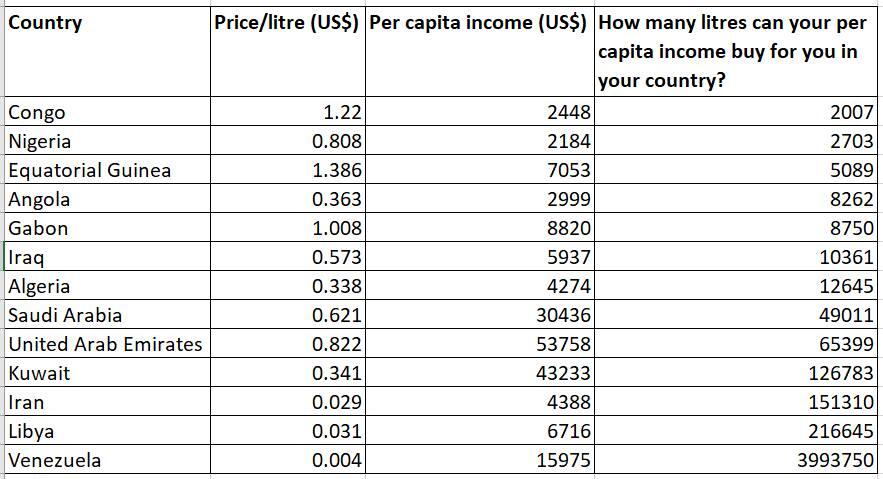
For those who did not like GDP per capita, we have another data set, focusing on oil producing countries and relying on energy cost. Nigeria did not do well there also.

And the one Ndubuisi Ekekwe has developed: immigration arrows, focusing on the directions most average citizens will travel if they’re asked to pick a country to move to. My assumption is that the direction of flow tracks perception of opportunities across economies.  In that dataset, Libya ranks higher than Nigeria as more Nigerians continue to perish on the voyage to Libya than the other way around. In short, when you do all the modeling, it correlates with GDP per capita; Libya’s GDP per capita is more than 2.5x of Nigeria’s at  $6,300 while Nigeria’s is below  $2,400.

Fellow Citizens: we have work to do. Let us stop fighting data. This problem started in 1960, and we have not shown capacity to address the root cause which remains enshrining a merit-based system which will accelerate productivity and development of the nation. Of course, you can have your data where Nigeria is leading Africa; share and we will debate. But get it from me: Nigerians must get to work!

And the big one: I did not say that the current government is the reason we have a low GDP per capita (social media is really mindless with comments people write!). Why would someone write that for a government that is less than 3 months?

Nigeria Underperforms in Africa’s GDP Per Capita Ranking; Nigeria 18th, Seychelles 1st

Africa’s Fintech Startup Ecosystem Raised US$2.7 Billion in the Last 24 Months – Report

0

In a recent report by Disrupt Africa, Africa’s Fintech startup ecosystem saw a flood of US$2.7 billion in investment over the last 24 months, which also grew by almost 20 percent in size.

Africa’s Fintech startup ecosystem continued on a growth trajectory, as Disrupt Africa tracked 26 fintech startup acquisitions between June 2021 and July 2023, compared to seven recorded between 2019 and 2021.

These notable growths are taking place across the continent, with all major markets bar South Africa posting an increase in the number of active ventures.

Egypt and Nigeria are also reportedly growing fast, with the number of Fintech companies based in those countries leaping by 66.7 percent and 50 percent respectively over the last two years.

Fintech startups continued to launch at a steady rate. Almost 40 percent of currently active Fintech ventures were launched between 2019 and 2021.

Notably, the fintech space remains by far the leader within the wider African startup ecosystem when it comes to both funding and exit activity.  Total investment per year has been on a fairly steady upward trajectory since 2016.

In 2023, Disrupt Africa identified fintech startups operating across 25 African countries, the same as in 2021. The number of ventures per country ranges from one, in places such as Algeria, Burkina Faso, and Mali, to 217 in Nigeria, which over the last couple of years has overtaken South Africa to become Africa’s most fintech-populated country.

South Africa has been the most populated market since Disrupt Africa data began but has now fallen to second, with 140 ventures. This accounted for 20.6 percent of Africa’s 678 fintech startups, behind Nigeria’s 32 percent. Kenya falls into third place with 102 companies in operation – 15 percent of the total.

Indeed, 459 (67.7%) of Africa’s fintech are located in either Nigeria, South Africa, or Kenya, a percentage share that barely differs from a 67.9 percent share in 2021 and 65.2 percent in 2019.

It is worth noting that much of the growth of the sector, from both an active startup and an investment perspective, is being driven by Nigeria at present.

Nigeria’s total market share is also on the rise, up to 32 percent from 25 percent in 2021, and 20.6 percent in 2019. The country has assumed a market-leading position when it comes to activity it has long held in the area of fintech investment.

Of the U5$3,635,823,965 in funding secured by African fintech ventures in the last 8.5 years, US$1,511,188,000 (41.6%) went into Nigeria-based companies.

Indeed, the Nigerian fintech space has added more than US$1 billion to its total in the last two years, more than tripling its total figure, and making up more than one-third of the staggering US$2.7 billion or so invested in African fintech since July 2021.

Meanwhile, the share of fintech activity contributed by the “big three” markets of South Africa, Nigeria, and Kenya maintained its 2021 levels, with 459 (57.7%) of the 678 startups tracked by this report hailing from one of those three countries.

This was ever so slightly down on the 67.9 percent share these markets accounted for in 2021, which was up from 65.2 percent in 2019. The 2017 figure was 74.4 percent.

Looking at the “big six” of fintech in Africa, adding Egypt, Ghana, and Uganda to the equation, these countries account for a whopping 86.7 percent of startups, up from 85.4 percent in 2021 and 81.7 percent in 2019.

— Press Release

Monday, August 21, 2023: Africa’s fintech startup ecosystem grew in size by almost 20 per cent, and saw US$2.7 billion in investment flood in, over the last 24 months, according to a new report released today by Disrupt Africa.

Every two years since June 2017, Disrupt Africa has released the Finnovating for Africa publication, which tracks the extraordinary development of the fintech ecosystem across Africa over the last few years.

It includes consideration of the regional spread and growth of fintech ventures, discussion of startup activity in various sub-sectors of the fintech industry, data on fintech startup launches by year, and tracking of funding and acquisitions in the fintech space, as well as a full list of every known African fintech startup.

The fourth edition of the report is released in partnership with AZA Finance, an African fintech company offering secure and efficient financial infrastructure for payments, foreign exchange, and settlement; and Curacel, an insurance infrastructure company that helps insurers and partners in Africa and other emerging markets increase the reach and functionality of insurance through cloud-based tools and APIs.

It reveals that the fintech ecosystem is the most-populated vertical within Africa’s wider tech ecosystem, having mained its steady growth over the last two years. Since the last edition of Finnovating for Africa in 2021, the number of startups operating in the space grew by 17.7 per cent to 678.

This growth is taking place across the continent, with all major markets bar South Africa posting an increase in the number of active ventures. Egypt and Nigeria are growing especially fast, with the number of fintech companies based in those countries leaping by 66.7 per cent and 50 per cent respectively over the course of the last two years,

While leading the way for activity, fintech is also by far and away the most popular vertical for investment within the wider African tech space. Since Disrupt Africa began tracking funding in the African tech startup space in 2015, 540 fintech startups from 25 countries have raised an extraordinary US$3,635,823,965, three times more than any other sector.

Total investment per year has been on a fairly steady upward trajectory since 2016, yet growth has been especially impressive in the last two years. The number of funded ventures has almost doubled since 2021, and more than US$2.7 billion has flooded into the ecosystem in the last 24 months.

African fintech startups are also more likely to be acquired than their peers. Disrupt Africa tracked 26 fintech startup acquisitions between June 2021 and July 2023, compared to just seven between 2019 and 2021, and accounting for over 60 per cent of the 43 such deals reported since 2011.

Download the report for free here.