DD
MM
YYYY

PAGES

DD
MM
YYYY

spot_img

PAGES

Home Blog Page 3914

China’s Proposed Gaming Regulations Erased Over $63bn From The Industry’s Market

0

The gaming industry in China encountered a seismic jolt as the National Press and Publication Administration released the draft of the “Network Game Management Measures” on December 22, soliciting public feedback.

These proposed regulations aimed to overhaul various facets of the gaming industry, spanning game modes, monetization methods, licensing, content guidelines, and strategies to curb addiction.

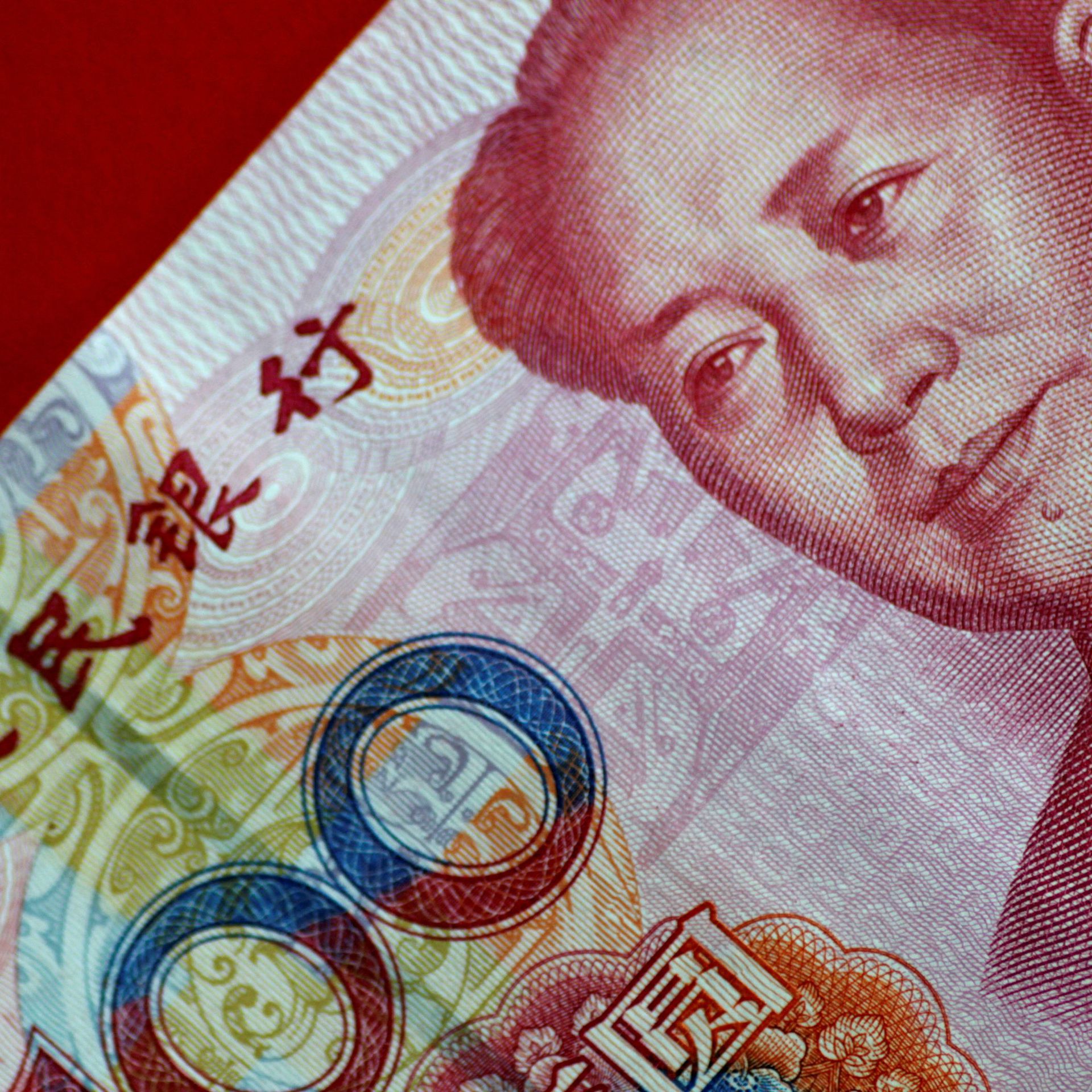
The market response was swift and punishing. During the afternoon session of December 22, the stock market witnessed a tumultuous downturn. Notably, major players like Tencent and NetEase faced a substantial plummet, with Tencent’s shares plunging by 12.35% and NetEase’s by a staggering 24.60%. The combined market value wiped out exceeded 450 billion yuan (approximately USD 63 billion) within a single day.

Zhang Wei, Vice President of Gaming at Tencent, struck a note of cautious optimism amidst the chaos, indicating that the draft regulations wouldn’t fundamentally disrupt the gaming ecosystem. He emphasized that regulatory engagement with industry and societal feedback could potentially foster a more structured and healthy evolution of the gaming domain.

However, the market repercussions were far-reaching. Beyond giants like Tencent and NetEase, smaller companies in the A-share market, including Glacial Network, ZQGame, Baotong Technology, and Sino-i Technology, experienced significant declines. Sell-offs ensued swiftly, with institutions hastening to divest from these struggling stocks.

A recent report from People’s Daily highlighted the robust growth of China’s gaming industry in 2023. The sector achieved record-breaking sales revenue, surpassing 300 billion yuan for the first time, with a user base of 668 million and mobile gaming sales soaring by 17.51% year-on-year.

The potential impact of these regulations looms large over the industry. Daniel Camilo, a gaming consultant, emphasized concerns over the prevalent “pay-to-win” models in many games by Tencent and NetEase, stating that these monetization structures could be directly affected. He pointed out the necessity for restructuring and the potential removal of certain games from stores.

Despite this turbulence, Vigo Zhang from Tencent Games pledged strict adherence to any new regulatory requirements, acknowledging the ongoing focus on fostering reasonable business models and operating patterns. He highlighted the declining expenditure and time spent by minors on Tencent’s games since 2021, aligning with Beijing’s prioritization of safeguarding younger players.

The ramifications of these regulatory overhauls reverberated beyond the gaming sphere, causing fluctuations in Hong Kong’s Hang Seng Index, which saw a significant drop of more than 4% at one point.

One critical alteration proposed in the draft rules involves expediting the approval process for games within a 60-day timeframe. Additionally, game publishers would be mandated to house their data servers within China, a move aimed at controlling and safeguarding user data within the country’s borders.

As the gaming industry braces for potential restructuring and adaptation to comply with these impending regulations, the short-term repercussions have been dire, especially for smaller publishers. The uncertainty looms large, leaving stakeholders in anticipation of how these measures might reshape China’s gaming industry in the long run.

Contrary to Popular Belief, the Gap Between Rich and Poor Continue to Get Smaller

0

Contrary to popular belief, the gap between rich and poor continues to get smaller. This is the main argument of a new book by economist Steven Pinker, who claims that the world is becoming more equal and prosperous than ever before. I will examine some of the evidence and arguments that Pinker presents and evaluate how convincing they are.

Pinker’s main source of data is the World Bank, which tracks various indicators of poverty, inequality, and human development across countries and regions. The World Bank data is based on household surveys, national accounts, and other sources that measure the income and consumption of people around the world.

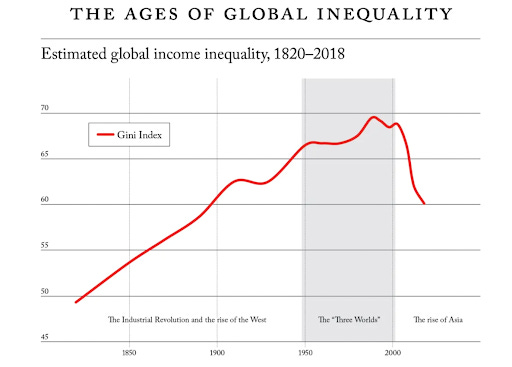
The World Bank uses a standard poverty line of $1.90 per day, which is adjusted for purchasing power parity (PPP) to reflect the different costs of living in different countries. The World Bank also calculates the Gini coefficient, which is a measure of how evenly income is distributed within a country or region. A Gini coefficient of zero means perfect equality, while a Gini coefficient of one means perfect inequality.

According to Pinker, the World Bank data shows that the global poverty rate has fallen from 42% in 1981 to 10% in 2015, meaning that more than a billion people have escaped extreme poverty in the past three decades.

Moreover, Pinker argues that the global income distribution has become more equal, as the share of income going to the richest 1% has declined from 16% in 1980 to 14% in 2016. He also points out that other measures of well-being, such as health, education, democracy, and human rights, have improved significantly for most people around the world.

Pinker’s optimistic view of global progress is not shared by everyone. Some critics have challenged his use and interpretation of the World Bank data, arguing that he ignores important nuances and limitations of the statistics. For example, some scholars have argued that the global poverty line of $1.90 per day is too low and arbitrary, and that using a higher threshold would show a much larger and persistent number of poor people in the world.

Others have pointed out that the global income distribution is still highly skewed and unfair, as the richest 1% still own more than half of the world’s wealth, and that income inequality within countries has increased in many cases.

Furthermore, some critics have questioned Pinker’s causal claims about the drivers of global progress, suggesting that he overstates the role of free markets and liberal democracy, and understates the role of social movements and public policies.

Pinker’s book offers a provocative and controversial perspective on the state of the world today. While he presents some compelling evidence and arguments to support his claim that the gap between rich and poor is getting smaller, he also faces some serious challenges and criticisms from alternative viewpoints. Ultimately, the debate about global inequality and progress is not only about facts and figures, but also about values and visions for the future.

OpenAI, Creator of ChatGPT, Eyes $100 Billion Valuation in Fresh Funding Round

0

OpenAI, the trailblazing force behind ChatGPT and a frontrunner in artificial intelligence innovation, is reportedly in the early stages of discussions to secure a new round of funding at a valuation potentially surpassing $100 billion.

Fortune reported that sources familiar with the matter revealed that talks involving potential investors have commenced, marking a potential milestone that would solidify OpenAI’s position among the world’s most valuable startups.

While the specifics—such as the terms, valuation, and exact timing of this funding round—are yet to be finalized and may undergo changes, the prospect of such a substantial financial boost marks the tremendous growth and potential of the AI powerhouse.

If this funding comes to fruition as anticipated, it would firmly position OpenAI as the second-most valuable startup in the United States, following only Elon Musk’s Space Exploration Technologies Corp., according to data from CBInsights.

OpenAI refrained from providing comments on the ongoing discussions.

The company is concurrently navigating a separate tender offer set to conclude in early January. This offer allows employees to trade their shares at a valuation pegged at $86 billion—a process led by Thrive Capital. Sources close to the matter noted that there is overwhelming investor demand for this opportunity, indicating heightened interest in OpenAI.

The surge in OpenAI’s valuation mirrors the fervor ignited by the release of ChatGPT a year ago. This innovative chatbot, capable of crafting remarkably human-like responses and even poetry, propelled OpenAI into Silicon Valley’s elite echelons. The company’s exponential growth and promise in AI sparked a significant shift in the tech industry, attracting substantial investments, including a $13 billion investment from Microsoft Corp.

However, the competition and investment in artificial intelligence have witnessed significant activity beyond OpenAI. Companies like Amazon.com Inc. and Alphabet Inc. have channeled substantial investments into Anthropic, a notable rival of OpenAI. Also, Salesforce Inc. took the lead in an investment round involving Hugging Face, a company valued at $4.5 billion.

Nvidia Corp., renowned for producing semiconductors that power AI tasks, made noteworthy strides in investment strategy in 2023. The company disclosed its involvement in over two dozen investments throughout the year, demonstrating a commitment to diversify and expand its foothold in the AI industry beyond hardware production.

Simultaneously, OpenAI has explored avenues for funding a new venture in chipmaking, engaging in discussions with Abu Dhabi-based G42. Reports suggest discussions for a substantial funding round—potentially between $8 billion and $10 billion—for this chip venture, dubbed “Tigris.” The primary goal of this venture is to develop semiconductors capable of rivaling those produced by Nvidia, a prominent force in the AI chip market. This move aligns with OpenAI’s ambition to diversify and innovate in various AI-related domains.

OpenAI’s strategic collaborations, including the partnership with G42, announced in October, underscore the company’s global ambitions and pursuit of pioneering advancements in AI technology. Despite recent leadership changes, including the temporary removal and subsequent reinstatement of CEO Sam Altman, OpenAI has reasserted its commitment to refocusing on product development and innovation.

The influx of investments by these tech giants into competing or complementary ventures underlines the intense competition and race for dominance in the evolving AI market. It also reflects the growing importance of AI across various industries, spurring heightened interest and substantial financial backing from major players aiming to solidify their positions in this dynamic and transformative field.

Banks like JP Morgan and Citibank are Investing Billions of Dollars in Blockchain

0
Hong Kong, October 08 2017: JPMorgan Chase & Co. building in Central, Hong Kong . JPMorgan is a Swiss global financial services company, One of big financial company in the world

Blockchain technology is transforming the financial sector, and some of the world’s leading banks are taking notice. According to a recent report by CB Insights, JP Morgan and Citibank are among the top investors in blockchain startups, having participated in 29 and 25 funding rounds respectively since 2014.

These banks are betting on the potential of blockchain to improve efficiency, security, transparency and innovation in various aspects of banking, such as payments, trade finance, capital markets and identity verification. Here are some of the blockchain companies that have received funding from JP Morgan and Citibank, and how they are disrupting the industry.

Chain: Chain is a platform that enables enterprises to build and operate blockchain networks that can power any type of asset, from securities to loyalty points. Chain has partnered with Nasdaq, Visa, Citi and others to create blockchain solutions for different use cases, such as cross-border payments, private equity issuance and digital asset custody.

In 2018, Chain merged with Lightyear, a company that was developing applications on the Stellar network, to form Interstellar, a new entity that aims to deliver global financial access using blockchain.

Digital Asset: Digital Asset is a provider of distributed ledger technology (DLT) solutions for the financial sector. The company’s flagship product is DAML, a smart contract language that can run on multiple platforms, such as Hyperledger Fabric, Corda and Amazon QLDB.

Blockchain and DAG are two different types of distributed ledger technologies that aim to achieve consensus among multiple nodes in a network. Blockchain is the older and more well-known technology, while DAG is a newer and more scalable alternative. In this blog post, we will compare and contrast these two technologies and explain their advantages and disadvantages.

Blockchain is a linear chain of blocks that store transactions or other data. Each block is linked to the previous one by a cryptographic hash, which ensures the integrity and immutability of the data. Blockchain relies on a consensus mechanism, such as proof-of-work or proof-of-stake, to validate new blocks and prevent double-spending or malicious attacks. Blockchain has been used to power cryptocurrencies like Bitcoin and Ethereum, as well as other applications such as smart contracts, digital identity, and supply chain management.

DAG stands for directed acyclic graph, which is a network of nodes that are connected by edges. Unlike blockchain, DAG does not have a single chain of blocks, but rather multiple branches that can merge and diverge. DAG does not require a consensus mechanism to validate transactions, but rather uses a technique called gossip protocol, where each node propagates its own transactions and validates the transactions of others.

DAG claims to offer faster transaction speeds, lower fees, and higher scalability than blockchain. DAG has been used to power cryptocurrencies like IOTA and Nano, as well as other applications such as data streaming, Internet of Things, and artificial intelligence.

Digital Asset has worked with several clients, including ASX, BNP Paribas, Broadridge and the Depository Trust & Clearing Corporation (DTCC), to implement DLT solutions for various domains, such as clearing and settlement, trade finance and derivatives. In 2019, JP Morgan led a $35 million Series C funding round for Digital Asset.

R3: R3 is a consortium of over 300 financial institutions, technology companies and regulators that are developing Corda, an open source blockchain platform designed for business.

Corda enables interoperability among different networks and supports various types of transactions, from simple payments to complex workflows. R3 has collaborated with many partners, such as HSBC, ING, Mastercard and SWIFT, to launch blockchain applications on Corda for various sectors, such as trade finance, insurance, healthcare and supply chain. In 2019, R3 raised $65 million in a Series B funding round that included Citi and JP Morgan.

Ripple: Ripple is a company that offers a global payment network that leverages blockchain technology and its native cryptocurrency, XRP. Ripple’s network consists of two main components: RippleNet, a network of banks and payment providers that use Ripple’s software to process cross-border payments; and On-Demand Liquidity (ODL), a service that uses XRP as a bridge currency to enable instant and low-cost transfers between different fiat currencies.

Ripple has over 300 customers in more than 40 countries, including American Express, MoneyGram, Santander and Standard Chartered. In 2016, Citi participated in a $55 million Series B funding round for Ripple.

Ripple’s network improves security by using cryptography and consensus algorithms to validate transactions and prevent fraud. Ripple’s network also improves data quality by eliminating the need for intermediaries and providing end-to-end visibility of transactions.

Solana has seen a remarkable recovery in its total value locked metric

Solana, the blockchain platform that claims to offer fast, scalable and low-cost solutions for decentralized applications (DApps), has seen a remarkable recovery in its total value locked (TVL) metric.

According to DeFi Llama, a website that tracks the TVL of various DeFi protocols across different chains, Solana’s TVL has surpassed $1 billion for the first time since October, when it suffered a major network outage that lasted for more than 16 hours.

The outage, which was caused by a denial-of-service attack that overwhelmed the network with transactions, resulted in a loss of confidence and trust in Solana’s reliability and security. Many users and developers migrated to other chains, such as Ethereum, Avalanche and Polygon, which offer more stability and interoperability. Solana’s TVL plummeted from over $10 billion in September to less than $500 million in November, according to DeFi Llama.

However, Solana has been working hard to restore its reputation and attract more users and projects to its ecosystem. The network has implemented several upgrades and fixes to improve its performance and resilience, such as increasing the transaction limit per block, adding more validators and enhancing the network monitoring tools.

One of the main drivers of Solana’s growth was the launch of several new projects and partnerships on its ecosystem. For example, Solana hosted the first-ever decentralized metaverse hackathon, where developers created immersive virtual worlds and experiences using Solana’s technology.

Solana also partnered with Audius, a decentralized music streaming platform, to integrate its token and governance system. Moreover, Solana attracted more investors and users with its low fees and fast transactions, especially as other networks suffered from congestion and high costs.

Solana’s green December was a testament to its potential as a leading blockchain platform for the future of decentralized applications. Solana’s team and community are constantly working to improve its technology, security and usability. Solana’s vision is to create a global network that can support billions of users and devices, without compromising on speed, scalability or security.

Solana has also launched a $20 million fund to support DeFi projects building on its platform, in partnership with venture capital firm ROK Capital. Additionally, Solana has benefited from the recent integration with FTX, one of the leading crypto exchanges in the world, which allows users to easily access Solana-based DApps and tokens.

As a result of these efforts, Solana’s TVL has been steadily increasing since December, reaching over $1 billion on December 16th. This marks a significant milestone for Solana, as it shows that the network is regaining its momentum and popularity in the DeFi space.

Some of the most prominent DeFi protocols on Solana include Serum, a decentralized exchange (DEX) co-founded by FTX CEO Sam Bankman-Fried; Raydium, an automated market maker (AMM) and liquidity provider; Saber, a cross-chain stablecoin exchange; and Mango Markets, a decentralized margin trading platform.

Solana’s TVL is still far from its peak level of $10 billion, but it is showing signs of recovery and growth. Solana’s native token, SOL, has also rebounded from its low of $97 in November to over $180 at the time of writing, according to CoinGecko.

Solana’s supporters believe that the network has a lot of potential to become a leading platform for DeFi innovation and adoption, given its high speed, low fees and scalability advantages.

However, Solana also faces fierce competition from other chains that are vying for the same market share and user base. Solana will have to prove that it can maintain its network stability and security, as well as foster a vibrant and diverse ecosystem of DApps and developers, in order to sustain its growth and success in the long term.

World is Becoming More Equal and Prosperous Than Ever Before – Report

0
UN has a goal for NO Poverty

This is the main message of a new report by the World Bank, which shows that global poverty has fallen to its lowest level in history, and that income inequality has also declined in many regions. The report, titled “Poverty and Shared Prosperity 2023: Reversing the Inequality Pandemic”, argues that the COVID-19 crisis, while devastating for many people and countries, also created an opportunity for positive change and transformation.

According to the report, the number of people living in extreme poverty, defined as living on less than $1.90 a day, dropped from 10% of the world’s population in 2015 to 7% in 2020, and is projected to fall further to 5% by 2030. This means that more than 700 million people have escaped extreme poverty in the past five years, and that the world is on track to achieve the Sustainable Development Goal of ending extreme poverty by 2030.

The report also finds that income inequality, measured by the Gini coefficient, has decreased in 40 out of 83 countries for which data are available between 2010 and 2020. The global Gini coefficient fell from 0.52 to 0.49 over the same period, indicating that the income gap between the rich and the poor has narrowed.

The report attributes this trend to several factors, such as social protection programs, progressive taxation, investments in health and education, and technological innovations that have increased access to information and opportunities for many people.

The report acknowledges that there are still significant challenges and risks ahead, such as climate change, conflict, fragility, and violence, as well as persistent inequalities based on gender, race, ethnicity, and geography. However, it also highlights the potential for building a more inclusive and sustainable future for everyone, by leveraging the lessons learned from the pandemic and the recovery efforts.

The report argues that reversing the inequality pandemic requires a comprehensive and coordinated approach that addresses both the immediate and the long-term challenges. In the short term, this means scaling up social protection, ensuring universal access to health care and education, supporting the most vulnerable sectors and workers, and strengthening global cooperation and solidarity.

In the long term, this means investing in human capital, promoting fair taxation and fiscal policies, enhancing social mobility and voice, and fostering green and digital transitions that benefit everyone.

The report also highlights the role of data and innovation in advancing the agenda of poverty reduction and shared prosperity. It showcases examples of how new technologies, methods and partnerships can improve the measurement, monitoring and evaluation of poverty and inequality, as well as the design, delivery and impact of policies and programs. It calls for more investment in data systems and capacities, especially in low- and middle-income countries, to ensure that no one is left behind or invisible in the development process.

Poverty and Shared Prosperity 2023: Reversing the Inequality Pandemic is a timely and urgent call to action for a more just and resilient world. It provides a wealth of insights, evidence and recommendations for policymakers, practitioners, researchers, civil society, media and citizens who are committed to ending poverty and building a more equal society for all.

The report calls for more global cooperation and solidarity, more effective and accountable institutions, more human capital development and innovation, and more respect for human rights and environmental sustainability.

The report concludes that the world is not doomed to a fate of rising poverty and inequality, but rather has the opportunity and the responsibility to create a better world for all. It urges policymakers, civil society, private sector, and individuals to take action and make choices that can shape the future we want.