DD
MM
YYYY

PAGES

DD
MM
YYYY

spot_img

PAGES

Home Blog Page 3915

The NAFDAC Guidelines For The Registration of Bulk/Semi-Processed Food Products For Export in Nigeria

0

Effective from 27/03/2023,the guidelines issued by the National Agency For Food and Drug Administration and Control (NAFDAC) for the registration of bulk/Semi-Processed food products meant for export are for the interest of the public and in particular, manufacturers/exporters of food products.

It is necessary to emphasize that, no food product shall be manufactured, imported, exported, advertised, sold, distributed or used in Nigeria unless it has been registered in accordance with the provisions of NAFDAC Act CAP N1 (LFN) 2004, other related legislations and the accompanying guidelines.

This article will thus be focused on the procedures and requirements for the registration of food products for export in detail. 

What is the procedure for registration application as prescribed by the guidelines?

-A written application for the registration of bulk/semi-processed food product for export should be made on the company’s letter head to the Director-General ,NAFDAC.

-An online application form for the registration of bulk/semi-processed food product for export should be purchased, completed and submitted as well.

-A separate application form shall be submitted for each product.

What are the provisions of the guidelines on product labeling information?

-Labeling should be informative, accurate and in conformance with the Agency’s Food Labeling Regulations and any other relevant Regulations.

What are the steps involved in product registration under the guidelines?

Step I

Documentation

-The application letter for registration of bulk/semi processed food products for export.

-Evidence of Business Incorporation.

-Evidence of payment.

-Contract Manufacturing Agreement (where applicable).

-Evidence of Registration of Brand Name with Trademark Registry in the Ministry of Industry, Trade and Investment (where applicable). This should be done in the name of the owner of the Trademark/Brand name, as the case may be.

 -Product Labels/artworks.

-Comprehensive Certificates of Analysis of the product for export and product specification from country of destination.

Step II

Product Approval Meeting

– Upon satisfactory documentation review, GMP inspection report of the production facility and laboratory analysis report of the product, applicant is issued a NAFDAC Registration Number subject to ratification at approval meeting.

What are the tariff prescriptions under the guidelines?

Tariff prescriptions are subject to  NAFDAC Tariff stipulations on its website. 

What are the cautionary notes provided by the guidelines?

– Failure to comply with these requirements may result in the disqualification of the application or lead to considerable delay in the processing of registration.

-A successful application will be issued a Certificate of Registration with a validity period of two (2) years.

– Registration of a product does not automatically confer Advertising Permit. A separate application and subsequent approval by the Agency shall be required if the product is to be advertised. Simultaneous submission of registration and advertisement applications are allowed.

-NAFDAC reserves the right to revoke, suspend or vary a certificate during its validity period.

-Filing an application or paying an application fee does not confer registration status.

-Failure to respond promptly to queries or enquiries raised by NAFDAC on the application (within 90 working days) will automatically lead to the closure of the Application.

-The timeline for processing approvals for export of bulk/semi-processed food products starting from receipt of application by NAFDAC is twenty-five (25) working days and the breakdown is as follows: 

a). Issuance of request for inspection by NAFDAC – 2 days;

b). Label vetting by NAFDAC – 2 days;

c). Inspection by FSAN – 3 days;

d). Lab analysis – 8 days, Review and issuance of NAFDAC;

e) Registration Number by NAFDAC– 4 days, 

f). Issuance of Export certificate by PID – 6 days.

-Please note that the clock stops once compliances are issued.

All correspondences should be addressed toDirector-General, (NAFDAC).
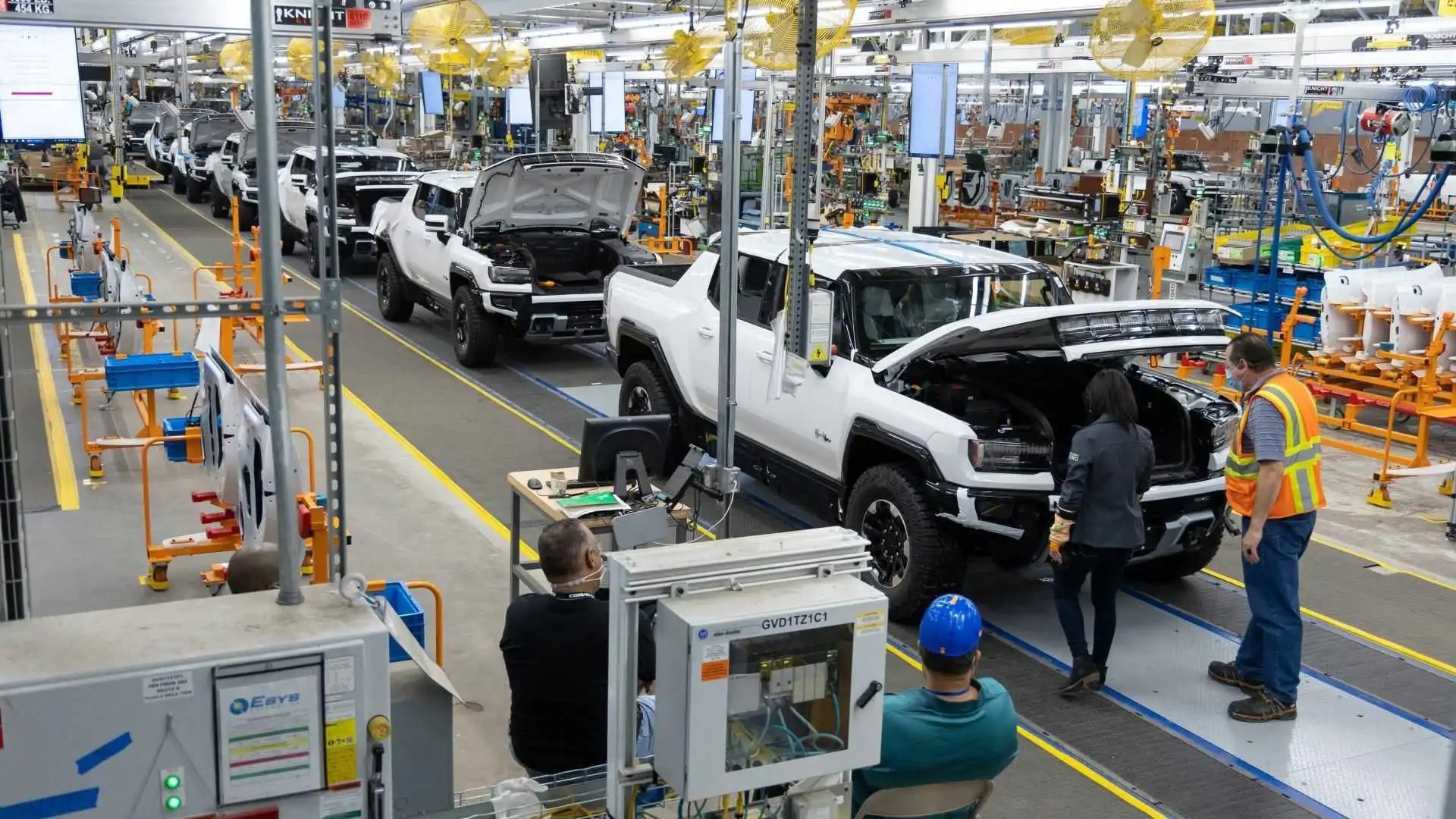
How Nations Rise As America Pumps $15.5B into EV Factories

1

“Today’s announcements show that President Biden understands that building the cars of the future also necessitates helping the communities challenged by the transition away from the internal combustion engine.” —U.S. Secretary of Energy Jennifer M. Granholm, announcing $15.5 billion worth of funding and loans for the conversion of existing auto plants to factories that can churn out electric vehicles.

That is how nations accelerate modern industries. Yes, the birthplace of modern capitalism, the US of A, is not waiting for banks to finance the redesign, rather, it is pumping money to make sure American car companies can compete in the future.

But in my native country, Nigeria, we want to be too capitalist, leaving everything to market forces. That was why they defunded the postal service because it was not making money; in the United States, its postal service has lost money in the last twenty years!

Good People, it is an illusion to think that companies can help themselves. What happens is that nations build platforms, and companies participate on them. But expecting companies to build platforms, you have to return to the eras of Carnegie, Mellon and Rockefeller, but those eras have expired. These days, governments lead on big things in economies.

I am a Keynesian strategist and I like governments to open the wallets and INVEST in productive things, not the acceleration of consumerism. And if we do just that, Nigeria will rise.

Comment on Feed

Comment 1: “The US Postal Service I believe was only profitable for a small duration of time and it wasn’t in the modern era. I believe it was before the automobile was invented. Biden’s plan for transition has a lot of unforeseen and unintended consequences. Here in the US we are going to see the cost of electricity increase. I truly value your insights and ask that you read The Bitcoin Standard. After reading that, I am confident that you will no longer be a Keynesian strategist.”

My Response: I started reading “The Bitcoin Standard ” but stopped when they were talking of “decentralized” option to central banking. It is an illusion to think that a product whose  top 10 miners control more than 80% of the mining capacity is decentralized. For a village kid like me, I will prefer the central banks to be mining the money than those “10” guys.

Simply, bitcoin is not decentralized in production even though there is an illusion of decentralization in consumption. More so, even at that consumption, exchanges unify them and very few control those exchanges. If you believe in BTC, you believe that FTX, Coinbase, Binance etc and those ten miners are better custodians than the US Federal Reserve and central banks. I do not believe that.

In the political economy, bitcoin sneezes when one government speaks. How is that decentralized if it responds to all perturbations like that? I have no problem with BTC or coins, but that does not mean I accept that it is decentralized because it is not. It has no native capacity to mutate if the US government bans all exchanges and banks from doing any BTC. Yes, that decentralization will not save it from crashing!

Comment 1R: It is also estimated that a full energy transition in the USA would cost 10-14 Trillion USD… The problem with government funded initiatives is the allocation of the resources (money and time). It has been proven time and again that we cannot trust ourselves or politicians and that free market capitalism is the best means of finite resource allocation.

My Response: I agree with the free market system. But the free market system works when governments have built the PLATFORMS. No free market could have built the US interstate, the universities, etc which make America great. As a Keynesian, I have empirical data to show that more than 80% of America’s finest universities are in blue cities. More than 80% of the largest cities are blue cities. More than 80% of net-tax sender are blue cities. What makes them better? Governments building platforms where companies thrive. As Alabama cuts costs on universities, California opens the vaults on R&D and in ten years, California extends the gaps on innovation and wealth creation. Free market system is amazing but it requires governments to do the hard things to kick off!

Comment 1RR: I have thought of this a lot and like what Napoleon did. He offered what was a King’s ransom for a way to store food, because an army marches on its stomach. This is how canning was invented. I like the concept but also don’t want it tied to taxation so that politicians can repay those that brought them into office. I think an innovation policy needs to be supported with at most low cost loans.

This also goes back to the comments you made about democracy the other day… There needs to be a foundation. EVERYTHING a solid foundation. I see what El Salvador is doing. I like what Singapore did. I like how Rwanda is progressing. They all built the foundation first.

Comment on 1RRR: Nigeria is a different country from the USA.

It doesn’t matter the amount of funding you pour into the Nigeria Postal Service or any government entity for that matter, the result will remain the same because of corruption.

The intended benefits will hardly get to the intended Beneficiaries.

Unfortunately, no government, whether military or democratic, seems to have any solution to the kind of corruption in government establishment in this part of the world.

Instead of throwing money into leaking government baskets, let’s reduce governments footprint to the barest minimum by entrusting most of the resource allocation assignment to the free market. Since governments in this part of the world are not set up to run any business, anything and everything that can be run like a business should be privatised.

Let us banish all form of subsidies that enrich the few at the expense of the majority. And let the naira remain floating.

Let’s embrace free market economy, at least until such a time that we figure out how to effectively deal with corruption.

Comment 2: But there is a huge market to transform existing gas cars to electric or hybrids. The Joe Biden administration should incentivize existing car companies to build branches to retool gas vehicles, rather than only create new electric cars. Hydrogen powered cars are also better than electric- due to the problem of Li iron mining. Speaking of which – African countries need to produce their own electric or hydrogen cars to make use of their mineral deposits – not just selling the raw material. We certainly have the ingenuity to build better products.

African politicians are largely clueless about building business. Their incentive is always to exploit the tax revenue, they have done relatively little to create industry. The private sector in Africa needs to take more initiative

GTCO (GTBank Parent Firm) Declares Profit Before Tax of N327.4bn for H1 2023

3

Guaranty Trust Holding Company Plc (GTCO) has published its Audited Consolidated and Separate Financial Statements for the period ending on June 30, 2023, to both the Nigerian Exchange Group (NGX) and the London Stock Exchange (LSE).

GTCO is a leading financial services conglomerate that operates within the realms of banking across Nigeria, West Africa, East Africa, and the United Kingdom. Additionally, it has ventured into new enterprises encompassing Payment, Funds Management, and Pension Fund Administration.

In the report, the company disclosed a profit before tax of N327.4 billion, marking a substantial growth of 217.1% compared to the N103.2 billion reported in the corresponding period concluding in June 2022.

The company’s net loan book experienced a notable surge of 22.8%, rising from N1.89 trillion at the end of December 2022 to N2.32 trillion by June 2023. Additionally, deposit liabilities witnessed substantial growth, increasing by 37.0% from N4.61 trillion in December 2022 to N6.32 trillion by June 2023.

The Group Chief Executive Officer of Guaranty Trust Holding Company Plc (GTCO Plc), Mr. Segun Agbaje, said the results came off challenging economic times.

“Our half-year audited results reflect the strong business fundamentals underpinning the GTCO franchise, the quality of our past decisions in future-proofing our balance sheet for challenging times, and the sound practices that guide our day-to-day operations.

“Despite the challenges in the business environment, notably inflationary pressures, and exchange rate fluctuations, we are starting to see the gains in the transformation of our businesses following our transition to a Holding Company structure,” he said.

The balance sheet of GTCO continued to maintain a robust and structured posture, concluding with total assets of N8.5 trillion and shareholders’ funds of N1.2 trillion.

Full Impact Capital Adequacy Ratio (CAR) remained very strong, closing at 24.7%, while asset quality was sustained as IFRS 9 Stage 3 Loans improved to 4.6% in June 2023 from 5.2% in December 2022.

“Improved profitability and solid performance across key metrics reflect efficiencies and justify the investments we continue to make in technology, product development and our people,” Agbaje added.

However, Cost of Risk (COR) closed at 3.7% from 0.6% in December 2022 owing to worsening macros which caused a significant increase in ECL variables.

Respecting that Agbaje said: “We recognize the impact prevailing economic and market conditions have on people and livelihoods and we remain committed to seeking better outcomes for our customers, by ensuring that our products and service offerings support our customers and their businesses through their evolving realities, whilst also taking every opportunity to optimize stakeholder value.”

Since it became a Holding Company in 2021, the group has defied challenges to post one of the best metrics in the Nigerian Financial Services industry in terms of key financial ratios i.e., Pre-Tax Return on Equity (ROAE) of 61.4%, Pre-Tax Return on Assets (ROAA) of 8.8%, Full Impact Capital Adequacy Ratio (CAR) of 24.7% and Cost to Income ratio of 27.7%.

The company’s prominent position in the banking sector, coupled with its dedication to empowering individuals and communities, has won it numerous prestigious awards throughout its history.

Recently, Guaranty Trust Bank was recognized as Nigeria’s Best Bank and Best Bank in CSR at the 2023 Euromoney Awards for Excellence, Best Banking Group in Nigeria by World Finance, and Best Bank in Nigeria by Global Finance. GTCO’s Guaranty Trust Bank is featured in the Top 1000 Banks in the World and Top 100 Banks in Africa rankings by The Banker.

Nigerian Labour Congress Announces A Two-Day Nationwide Strike, Starting Tuesday

0

The Nigeria Labour Congress (NLC) has announced a two-day nationwide warning strike, starting on Tuesday, September 5, 2023. This move is in response to the growing economic challenges in the country, exacerbated by the government’s decision to remove the petrol subsidy.

The union made this declaration on Friday, with the primary objective of demanding an immediate adjustment of economic policies that would improve the quality of life for the general population.

This action follows a previous nationwide strike called by organized labor in June, which was prompted by fuel shortages across the country after President Bola Tinubu’s inaugural speech, in which he announced the removal of the “fuel subsidy.”

That has been followed by a series of nationwide strike threats by organized labor, which it has only carried out once early last month. The strike, which lasted only for a day, was called off following meetings between the labor leaders and the federal government.

Since then, the organized labor made up of the Trade Union Congress (TUC) and the NLC has been on standby to embark on strike. The union said that the federal government has failed to fulfill its part of their deal, which involves providing adequate palliatives for Nigerians, to help them cope with the soaring cost of living spurred by the subsidy removal and other “anti-poor policies” enacted by the government.

In mid-August, the NLC vowed to embark on another strike if the cost of petrol rises to N720 per liter as projected by marketers.

“Let me say this, Nigerian workers will not give any notice if we wake up from our sleep to hear that they have tempered with prices of petroleum products.

“They have started floating ideas of a likely increase in the pump price of petroleum products,” the NLC president, Joe Ajaero, said then.

Another spike in the cost of fuel is expected soon following the rise in international oil prices. Crude oil price rose to $88 this week, its highest since November 2022.

Analysts project that, with the spot rate of N930 and the N775/$1 exchange rate in the Investor & Exporter window, the next stock of petrol landing if the Central Bank Of Nigeria (CBN) is unable to provide marketers with dollar liquidity that will keep the FX rate stable – will cost N674 per liter in Lagos and around N712 in other parts of the country.

Following the removal of fuel subsidy, the Nigerian government has been trapped between the devil and the deep blue sea, making the threats of strikes from organized labor constant. The union is asking, among other things, for an upward review of the minimum wage (from N30,000 to N200,000) to help Nigerians cope with the resulting high cost of living.

With its near-bankruptcy state, the federal government is finding it hard to meet the union’s demands.

The federal government began to disburse N5 billion worth of food to the states last month. But the distribution of food palliatives to Nigeria’s 36 states has fallen short of what is needed.

“If you share that N5bn or even the five trucks of rice or grain, many people may not get one or half cup of rice,” Ajaero said on Channels Television’s Politics Today on Friday.

“If you share the N5bn, many people, probably within the working class or the poor of the poor, may not get N1,500. Now, is that the palliative?”

Many are calling on the government to implement temporary subsidy payments that will see Nigerians purchase petrol at a lower cost – reducing the high cost of living its removal has caused.

Nigeria Had Its Last Stable Economy About A Decade Ago – Wale Edun

0

Wale Edun, the Minister of Finance and Coordinating Minister of the Economy, has said that the last time Nigeria’s economy exhibited a noteworthy period of stability was approximately a decade ago, during the tenure of former President Goodluck Jonathan.

During his inaugural press conference as the Finance Minister in Abuja on Friday, Mr. Edun highlighted that during 2013 and 2014, the foreign exchange (FX) rate remained consistent, as did interest rates, which contributed to economic growth.

He noted that following Jonathan’s presidency, a frail and devaluing exchange rate, coupled with security issues, led to an economy that has not experienced growth and has failed to uplift Nigerians from poverty.

“If we think back to when was the last time when the economy was stable, when it was growing, when inflation was low, when the exchange rate was stable, and when interest rates were affordable; that period was about a decade ago,” he said.

Mr Ebun attributed Nigeria’s economic progress during Jonathan’s administration to the worldwide commodity boom that began around 2010. The minister said “economic growth was about 6 percent around 2013 to 2014” because “oil prices were high and also [output] volumes were high.”

“Nigeria earned and the government earned into its coffers over $80 billion per annum, compared to the figure now of around $25 billion. So you can see the difference.

“And what that points to is that there was a time when the government had enough foreign exchange. It had enough naira revenue to meet its obligations and to provide the funding for growth of the economy.

“It had enough foreign exchange such that when people came in to invest and they needed to import raw materials, import machinery, government could provide the wherewithal.”

Nigeria’s economy took a nosedive in 2015, following the emergence of President Muhammadu Buhari and the downturn in the oil market compounded by covid-19. Though the drop in oil prices during Buhari’s administration was notable, experts have attributed Nigeria’s economic turmoil to his poor policies.

The economic turmoil has pushed the country into near bankruptcy, forcing it into borrowing. Nigeria’s total debt has reportedly risen to N77 trillion in the last eight years.

But Mr. Edun, who had earlier said that Nigeria cannot afford to borrow now given its current debt standing, urged the federal government to allow private funding.

He said the government can fill the gap by accommodating other sources of funding, such as foreign direct investment, as well as domestic investment by Nigerians in all areas.

“And we saw some of that in Lagos. When Mr. President was governor of Lagos, he opened up the power sector to private investment, the road sector to private investment infrastructure, waste management, even cemeteries to private investment, because government did not have the funds,” he said.

“And they were those who were willing and able to provide jobs and grow the economy by making those investments.

“So, that is a pointer to the fundamentals of the president’s strategy, private investment and worldwide, there are huge flows of foreign direct investment, once you give investors the right conditions.

“Specifically, where are we headed, President Bola Ahmed Tinubu has pointed out, in priority areas where he is going to take Nigeria. And his key priorities are to improve the lives of Nigerians by providing food security, by ending poverty,” he said.