DD
MM
YYYY

PAGES

DD
MM
YYYY

spot_img

PAGES

Home Blog Page 3917

Give Primacy to Dialogue and Diplomacy in Resolving Niger Crisis – Peter Obi

0

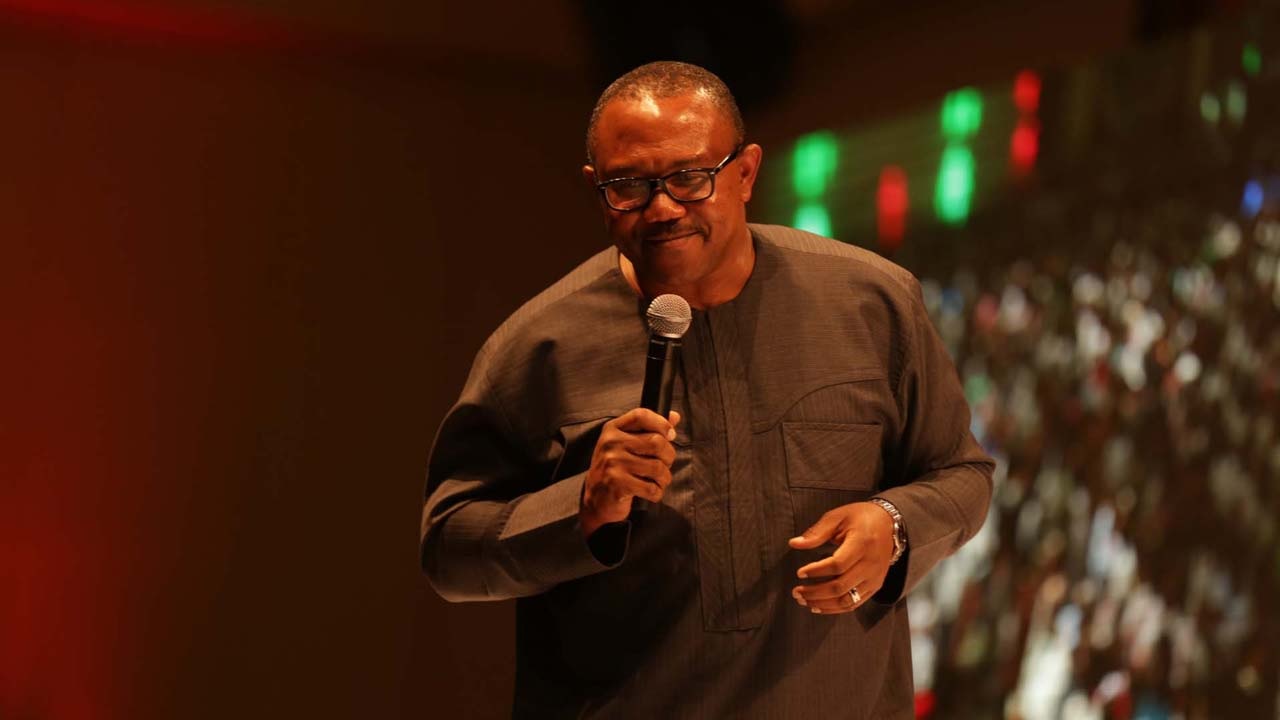
The Labour Party (LP) presidential candidate in Nigeria’s last general elections, Peter Obi, has finally weighed in on the coup crisis in Niger Republic.

The two-term former governor of Anambra State issued a statement on Twitter on Sunday, expressing his thoughts on the matter and proffering solutions. Like many other well-meaning Nigerians who have spoken on the crisis in Niger, Obi called for “a total diplomatic solution.”

He said regardless of “the positions taken by various parties” that have “direct or tangential interests in Niger”, primacy must be given to “dialogue and diplomacy” towards a resolution with minimal disruptive impact on Nigeria and the West African sub-region.

The Economic Community of West African States (ECOWAS), in the wake of the July 26 coup, had issued a seven-day ultimatum to the Niger military junta to restore the deposed president, Mohamed Bazoum to power or face sanctions and possible military response.

Following the expiration of the ultimatum, ECOWAS leaders made a move to activate the military intervention by ordering the deployment of their standby troops amid growing calls for dialogue.

Obi, who described Niger as “a hot-button issue for ECOWAS, as well as various international interlocutors,” noted that the diplomatic resolution must take into consideration the realpolitik of the West African sub-region.

He said it is important that the people of Niger are allowed via their national institutions the opportunity to revert quickly to a representative democratic government.

Read his full statement below:

“Recent developments in the neighboring Niger Republic have become the subject of international attention. For Nigeria, this development is a matter of dire and urgent national interest and security.

“Inevitably, Niger is a hot-button issue for ECOWAS, as well as various international interlocutors. Regardless of the positions taken by various parties that have direct or tangential interests in Niger, primacy must be given to dialogue and diplomacy towards a resolution with minimal disruptive impact on Nigeria and the West African sub-region.

“A total diplomatic resolution must take into consideration the realpolitik of the West African sub-region. I applaud the respective mediatory efforts by Gen. Abdulsalami Abubakar, His Eminence Muhammadu Sa’ad Abubakar, the Sultan of Sokoto, and His Royal Highness Sanusi Lamido Sanusi.

“Whereas ECOWAS authorities have indicated that they remain open to various conflict resolution options, diplomacy must remain the overarching imperative in resolving the present crisis.

“I join the many well-meaning Nigerians who have advocated that any intervention in the crisis, should be pre-eminently through diplomatic dialogue among all strategic interests in the crisis.

“It is therefore important that the people of Niger are allowed via their national institutions, the opportunity to revert quickly to a representative democratic government.

“All national, regional, and international assistance should be extended to the people of Niger to return their country to normalcy.

“While ECOWAS must seek to discourage the spread of military dictatorships in West Africa, the recourse to armed deterrence must be retrained by multilateral diplomatic mechanisms.

“What the situation in Niger urgently calls for is a concerted multilateral coalition of Nigeria, ECOWAS, the AU, and the UN towards a programmed return to a democratic constitutional order. In this process, Nigeria’s leadership role must not be in any doubt.”
Niger Republic Military Junta Opens Way for Dialogue

0

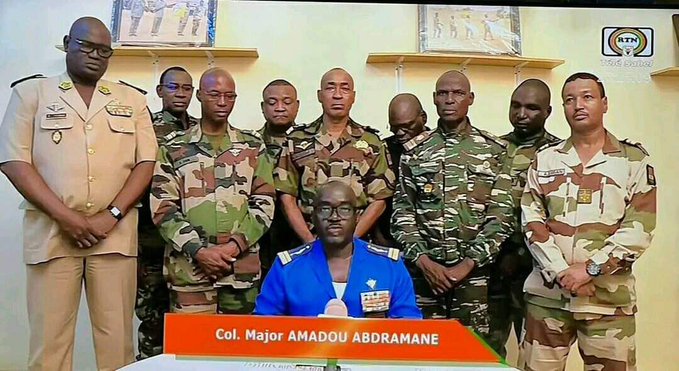
In the latest turn of events in Niger Republic, the military junta, which deposed President Mohamed Bazoum in a July 26 coup, has agreed to embrace dialogue in resolving the resulting crisis in the West African country.

Following a meeting with the Intervention Team of Nigerian Islamic leaders, General Abdourahmane Tchiani, the head of the Niger military junta, has consented to engage in diplomatic discussions with the Economic Community of West African States (ECOWAS).

The Islamic scholars were led by Bala Lau, national chairman of Jamatul Izalatu Bida Waikamatu Sunnah, and met with Tchiani for several hours in Niger’s capital, Niamey.

The new development follows a series of failed attempts by ECOWAS leaders headed by Nigerian President Bola Tinubu to resolve the crisis through diplomacy, prompting the regional group to opt for military intervention.

Ali Mahamane Lamine Zeine, the Prime Minister of Niger Republic, stated that General Tchiani had approved the initiation of discussions with ECOWAS and expressed hope that the diplomatic discussions would take place in the coming days.

As stated in a Sunday release signed by Lau, the coup leader and Islamic scholars engaged in deliberations encompassing various matters, including the request from ECOWAS leaders for the reinstatement of former President Bazoum.

“We have agreed and the leader of our country has given the green light for dialogue. They will now go back and inform the Nigerian President what they have heard from us…. we hope in the coming days, they (ECOWAS) will come here to meet us to discuss how the sanctions imposed against us will be lifted,’’ Zeine said.

Though the ECOWAS had resolved to use military action to restore Bazoum to power, the bloc, which has ordered the deployment of its standby troops, is holding back due to overwhelming antiwar calls. The Nigerian Senate and the majority of ECOWAS Parliament members have rejected the move for military intervention, calling for a diplomatic approach.

Given the situation, Islamic clerics, northern elites, and traditional rulers have moved to initiate discussions with the junta in a bid to open the way for diplomatic discussion.

Lau explained that the religious leaders, acting on behalf of President Bola Tinubu, arrived in Niger to fulfill their request for intervention. He noted that their purpose was to initiate a meaningful conversation, aiming to persuade the junta leader and other military figures involved in the coup to opt for a peaceful resolution of the crisis rather than resorting to conflict.

The delegation reportedly spent several hours with Tchiani in Niger’s capital Niamey, deliberating on all the issues, including the demand by ECOWAS leaders that former President Bazoum be reinstated.

Following the discussion, Tchiani was said to have apologized for shutting the door to dialogue earlier on. Nonetheless, he expressed his disappointment over ECOWAS leaders’ failure to listen to their perspective before issuing an ultimatum for their resignation.

He contended that the coup was undertaken with good intentions, asserting that their actions were aimed at averting an impending threat that could have impacted both Niger Republic and Nigeria.

Furthermore, he extended an apology for not affording the team led by former Head of State General Abdulsalami Abubakar (rtd), which was dispatched by President Tinubu, the requisite attention. He attributed this oversight to their discontent over the ECOWAS ultimatum.

The leader of the junta said their doors are now open to explore diplomacy and peace in resolving the matter.

The Path of Ghanaian Cedi And Lessons for Nigeria’s Naira

4
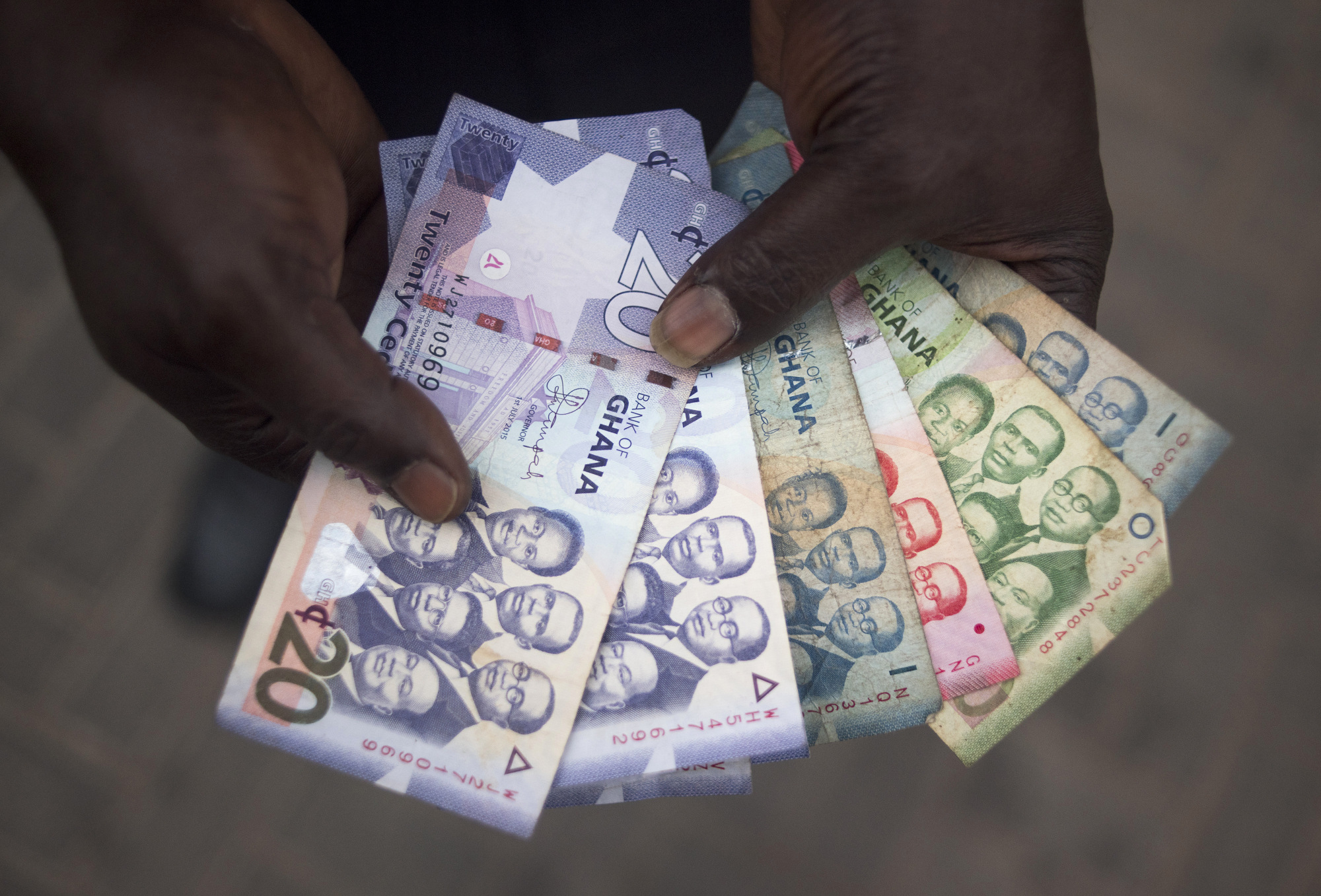
A man holds Ghanian currency in his hands on September 20, 2016 in Accra, Ghana. Ty Wright/Bloomberg News

Poor Ghana: it made 1 Cedi = 1 USD in 2007 hoping that abracadabra magical algebra makes sense in global economics/currency (it was about 1 USD = 10,000 Cedi before the redenomination). But it is not just Ghana. Some Nigerian politicians promised to make 1 Naira = 1 USD. Thankfully, that hopeless policy was abandoned. Yes, since the Tang dynasty invented paper money in 7th century China, some countries have seen the value of money on the number printed on the paper. But the best among nations, think beyond that.

In June 2007, a redenomination of the cedi by the Bank of Ghana, led to the initiation of the new Ghana cedi. The value of the cedi relative to the dollar before the redenomination was in the range of ¢9,300 to ¢10,000. It became ¢0.93 – ¢1 to 1USD after the redenomination.

In the African Union, many have postulated that once Africa has one currency that all our problems will disappear. But look at the CFA Franc area and how it is being rattled. That is also a strong indication that currency union will not save Africa until we begin to win on innovation and productivity. You have no national positioning under a supranational central banking ordinance in a currency union within a heterogeneous market system. Indeed, if Africa goes ahead on a single currency and does nothing on economic output, welfare losses will be huge. 

I have made that point before the African Union Congress – and I remain hopeful that we do not adopt the EU/euro playbook without considering that the EU’s economy is very homogenous, and shocks are relatively more manageable.

Back to Ghana: 1USD = 11 Cedi today. Sure, that old magic achieved something, if not 1 USD  will be about 100,000 Cedi today. So, the magic saved people time from writing long digits. More so, it has reduced greenhouse emissions since cheque books, bank forms, etc may not need to be longer. How do you write $10,000,000 if 1 USD would have been 100,000 Cedi. On that, you commend the genius in Ghana.

People, Nigeria needs to have a national emergency on its currency. Do not tell me that it would stabilize without explaining how. Ghana promised the same… and that illusion continues to scale.

The strength of Nigerian Naira comes from warehouses and factories, and not from the Central Bank of Nigeria (CBN) headquarters. Those warehouses and factories include the old (the traditional firms like Innoson Motors, Dangote Cement) and the modern  ones (like Paystack, Tomato Jos). Until the CBN can use its monetary tools to elevate them, it cannot win the fight for Naira.

As this election season begins, if you want to strengthen the Naira, vote for visionaries who understand the multifaceted global economic system, with defined roles on where Nigeria can play.

Anyone who tells you that he will make N1 = $1, via fiat, is a liar by default; only the factories have the real powers to determine those. So, the question is really: who can help us create better factories, the old and the modern?

People, Naira needs help right now.

Roadmap to the future

I wrote a lead paper for the African Union Congress as a banker and banking/finance doctoral student, and I disputed many of the illusions on the required prior convergence of our currencies before we could intra-trade, agnostic of currencies. Years later, I dropped  this challenge: “build a truly pan-African digital remittance/transfer banking product which is agnostic of location or currency in Africa.”

 In other words, you do not need a single currency to achieve this since technology can hide all the “regulations” and still achieve the same outcome. As Mr. President noted, it is time. Even the US dollars will benefit from it because Africa will grow to buy more from it.

(Update: on video is President of Kenya)

Comment on Feed

Comment 1: Yes, zeros were removed, but if you look at the PP of the Cedi over the period between 2007 and now compared to the Naira, you find that with or without removing even the zeros, the Naira was not and is still not anywhere near where what the Cedi could and can buy from a basket of composites.

The history of the performance of the Cedi and Naira is still there to compare. That’s the difference. It’s not just a simple matter of removing zeros to make the currency look okay.

The fundamentals of the economy at the time Ghana undertook that project, supported that action. And, it’s no gainsaying that Ghana’s economic footings have always been on the better side, no matter the bleaks.

So, let not Nigeria attempt what Ghana did and survived; its economy will crash, because the existing trajectory points to an entirely unique imbalances from many angles. The malaise in the structure of the Nigerian economy, as you know is great.

Inspite of the managers of Ghana’s economy doing a bad job now, you’d agree with me that it’s a wrong choice to cite to make a case for Nigeria wanting or not wanting to do same; mind you, the Cedi still has better buying power than Naira; ask why.

My Response: Please I hope this piece is not creating tension. There was no intention to make people feel bad. But yet, if I have to take you up, your data is not factual. In 2007, US$1 = N130. At that time, $1 = 10,000 Cedi which was forced to 1 Cedi. Today, $1 = 11Cedi which is  a factor of 11. For what you said to be true, Nigeria has to be 130*11 = 1430. The Naira is about there but not yet there since it is about N930/$ today. So, your argument that Cedi could buy more is not supported by data.

Comment 1R: Ndubuisi Ekekwe, not at all, Prof. No tension created and no pun intended, too??. But, for the learning, I sought to point out some facts premised solely on PP of the two currencies underpined by the two countries’ economic dynamics over the period.

And, this was in response to some commentators who had taken your piece on its surface to propose a flawed position not backed by any fact.

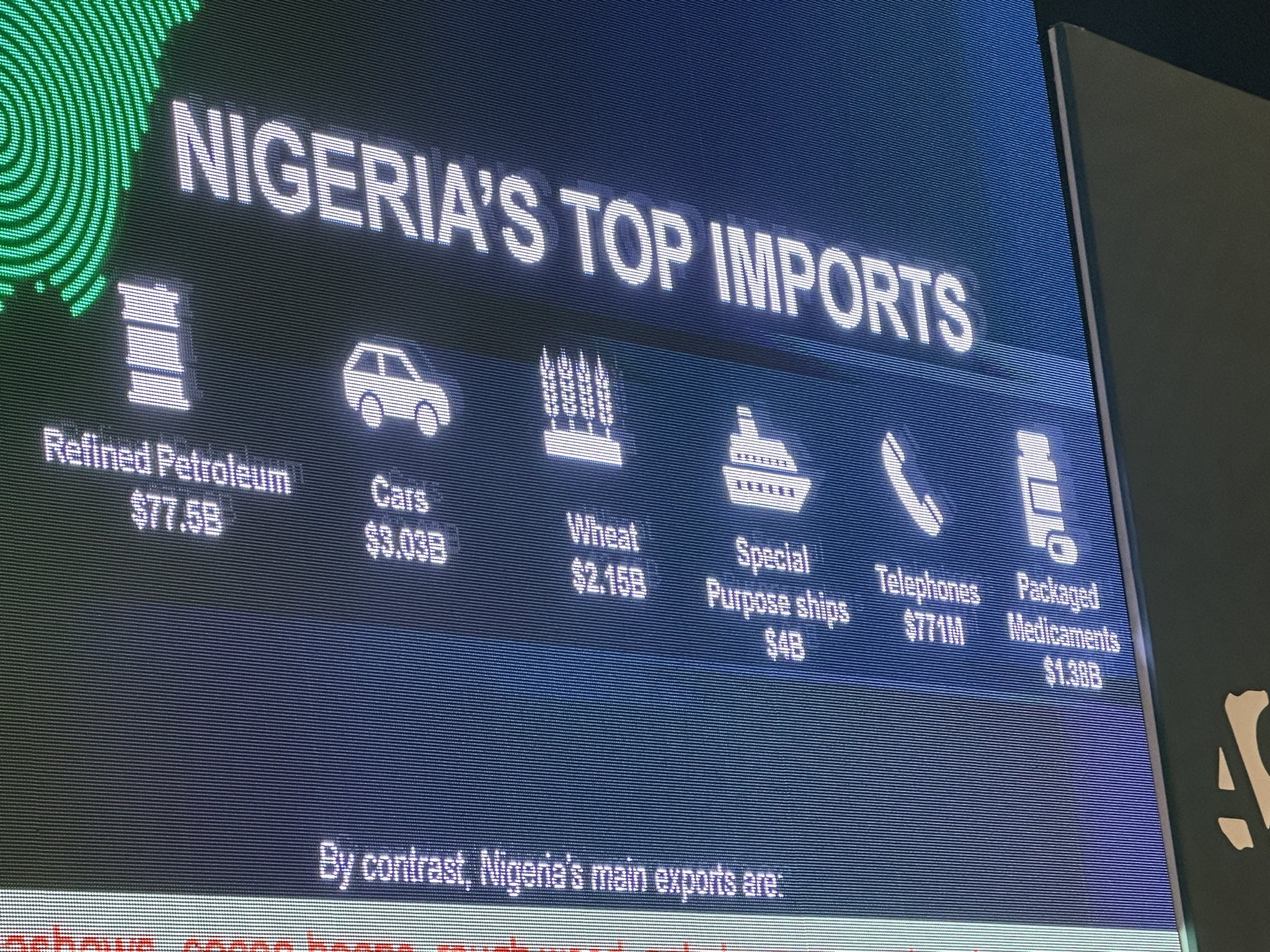
Nigeria’s top imports

The Central Bank of Nigeria (CBN) is “Strong” – People Should Stop The Bankruptcy Rumours

1

I think Nigeria needs to find a solution to the level of misinformation we have online these days. I have been inundated with many questions on if the Central Bank of Nigeria (CBN) is bankrupt or going bankrupt. Please there is nothing like that; your Nigerian treasury bills, bonds, etc are safe, at least from the angle of the CBN.

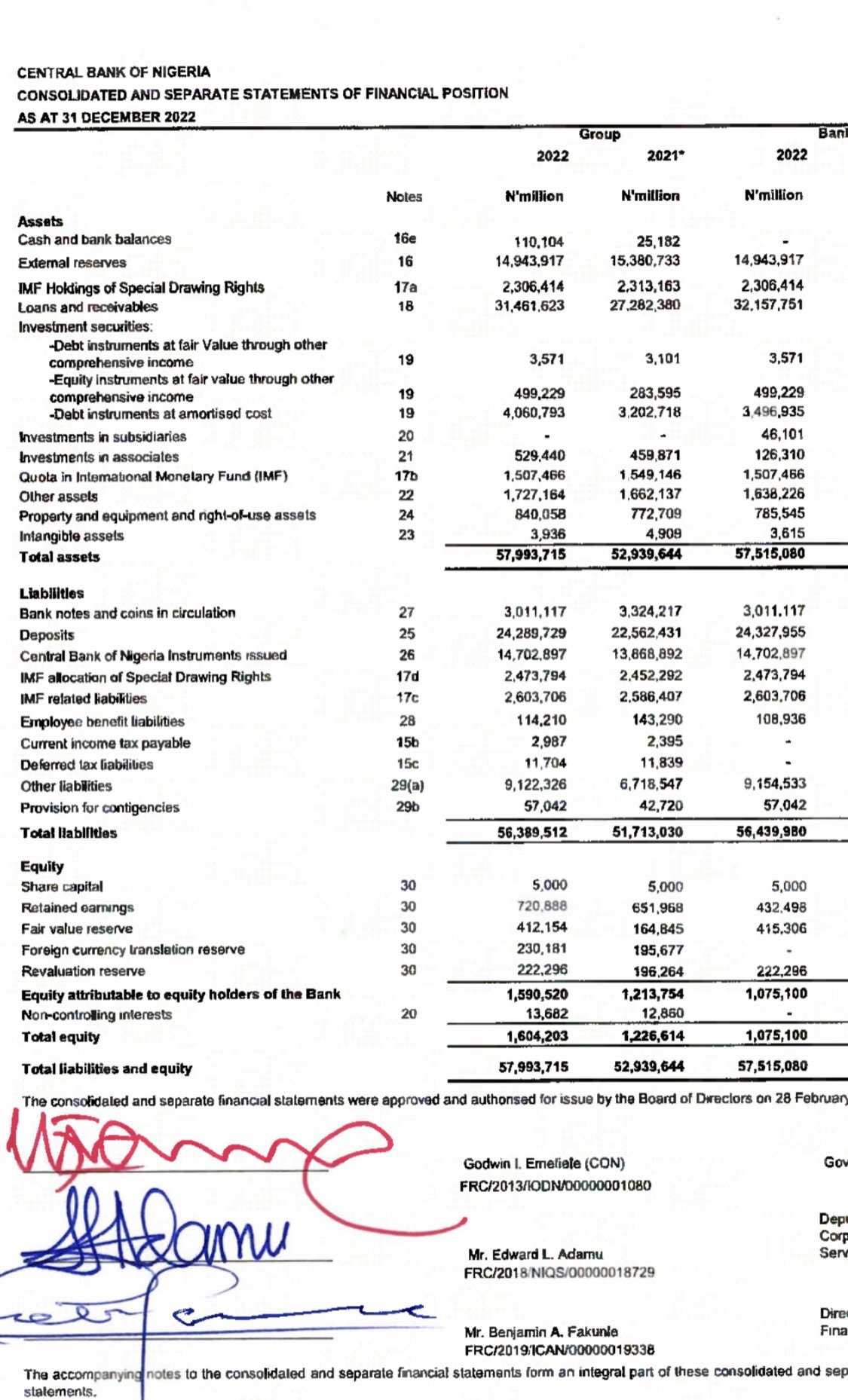
The Total Assets of CBN (Group) stands at ~N57.99 trillion while Total Liabilities are ~N56.34 trillion, giving a decent Equity of ~N1.604 trillion, as at Dec 31 2022. By accounting standard (at least to Intermediate Level of ICAN), this is not a state of bankruptcy. That said, the rate of growth in the Liabilities was not prudent, and Nigeria has to cut that down.

Instead of bankruptcy, the bank actually recorded a profit of N65.63 billion in 2022; in 2021, it was N31.04 billion. Relatively, that is nothing, but that is not a sign towards bankruptcy.

Understand that most people are very unhappy, including myself, not because of any sign of bankruptcy, the issue was borrowing $$billions from US banks, and securing/collateralizing the loans with the national foreign reserves or other asset classes, without informing the Nigerian people and the National Assembly.

That non-disclosure blew many models wide, since the funds you think are there have already been spent, via backdoor. I wrote that I was disappointed that Buhari allowed such to happen under his watch. But that observation was not on the financial position of the bank, rather, the lack of transparency in its management. CBN did what if any Nigerian bank had done and “covered it”, that bank would be in trouble with the apex bank.

Conclusion: The apex bank is “strong” but ought to be stronger.

Preparing for Double Promotions: Lessons from Elisha, Receiver of Double Portion

1

They were fishermen doing their jobs. They were men of waters, earning their incomes, diligently, on the waters of Galilee. On this day, a Mentor was looking for mentees, for a grand mission, He was pursuing. Centuries earlier, something similar happened at a smaller scale: a young man was in the field, tending his oxen, when a mentor called him.

In both cases, the men had qualified themselves before they were discovered, right on their jobs.  Yes, the best time to audition for a job is when there is no job. For the disciples and Elisha,  we could learn lessons on mentoring, coaching and discipleship. The disciples left and followed Christ on a Call to Mission, paying severe personal prices, but with unparalleled ecumenical ecclesiastical blessing. For Elisha, he closed his farming business, left his personal ambitions, and followed Elijah.

And as the training began, Elisha was never far from Elijah, working diligently, and became qualified for a double portion of anointing: ‘Elijah said to Elisha, “Tell me, what can I do for you before I am taken from you?” “Let me inherit a double portion of your spirit,” Elisha replied.’ Elisha had impressed with dedication, excellence and results – and his boss knew he was ready for a double promotion. Centuries later, the disciples qualified by their commitment and grace, received on the day of Pentecost an unbounded promotion, with the Holy Spirit.

Good People, in politics, in business, and indeed everything, the system rewards those who commit absolutely to major calls, when they’re recruited, without looking back. Politicians elevate trusted aides who can wait hours at midnight as their bosses plot political next moves, CEOs handpick trusted subordinates, and Managing Partners send consultants with the mindset of whatever-it-takes to get the job done to major clients.

Check Obama, and those he brought to White House; some had worked with him for years. Check that new bank CEO, those he recruited; most have worked with him for years. Check that new president, the same people. You call it recycling. Yes, but that is the system: the mentors do not pursue the aides and proteges, the latter duo relentlessly push, and most times, they get double portions, if they excel based on the standards the bosses have set. Indeed, for that double promotion in our careers, we must deliver results, during the mentoring and preparation phase. 

Build a reputation of excellence before your supervisors, and be rewarded with a “double promotion”. Happy Sunday.


2 Kings 6:1-7 KJV

And the sons of the prophets said unto Elisha, Behold now, the place where we dwell with thee is too strait for us. Let us go, we pray thee, unto Jordan, and take thence every man a beam, and let us make us a place there, where we may dwell. And he answered, Go ye. And one said, Be content, I pray thee, and go with thy servants. And he answered, I will go. So he went with them. And when they came to Jordan, they cut down wood. But as one was felling a beam, the axe head fell into the water: and he cried, and said, Alas, master! for it was borrowed. And the man of God said, Where fell it? And he shewed him the place. And he cut down a stick, and cast it in thither; and the iron did swim. Therefore said he, Take it up to thee. And he put out his hand, and took it.