DD
MM
YYYY

PAGES

DD
MM
YYYY

spot_img

PAGES

Home Blog Page 3927

Ethereum’s Cancun Deneb Upgrades to Improve Scalability and Security

0

Ethereum is a decentralized platform that enables users to create and run smart contracts, decentralized applications, and other innovations on a global network. Ethereum is constantly evolving and improving, and one of the most anticipated upgrades is the Cancun Deneb upgrade hard fork. This upgrade will introduce several enhancements and features that will make Ethereum more scalable, secure, and user-friendly.

The Cancun Deneb upgrade is the next planned upgrade to the Ethereum blockchain, following the recent activation of the Shanghai upgrade. The Cancun Deneb upgrade consists of two parts: Cancun and Deneb. Cancun represents an additional upgrade to Ethereum’s execution layer, which is responsible for processing transactions and smart contracts. Deneb represents the upgrade to Ethereum’s consensus layer, which is responsible for securing the network and reaching agreement on the state of the blockchain.

The Cancun Deneb upgrade will include several Ethereum Improvement Proposals (EIPs), which are documents that describe new features or changes to the Ethereum protocol. Some of the most notable EIPs that are expected to be included in the Cancun Deneb upgrade are:

EIP-4844: Proto-Danksharding. This EIP introduces a simplified version of sharding, which is a technique that aims to improve the scalability of the Ethereum network by dividing it into smaller partitions called shards. Each shard will operate independently, processing transactions and smart contracts in parallel, thereby increasing the network’s capacity to handle a higher transaction throughput. Proto-Danksharding will also increase data availability for rollups, which are a Layer 2 technology that bundles together transactions and processes them off-chain, reducing congestion and fees on the main chain.

EIP-2537: Precompile for BLS12-381 curve operations. This EIP adds a new precompiled contract that allows smart contracts to perform operations on a specific elliptic curve called BLS12-381. This curve is used for various cryptographic purposes, such as signature aggregation, verifiable random functions, and threshold signatures. By adding this precompile, smart contracts will be able to perform these operations more efficiently and securely, enabling new use cases and applications on Ethereum.

EIP-4788: Beacon state root in EVM. This EIP adds a new opcode that allows smart contracts to access the state root of the Beacon chain, which is the core component of Ethereum 2.0. The Beacon chain is responsible for coordinating the transition from Proof of Work (PoW) to Proof of Stake (PoS), as well as managing the sharding system. By accessing the Beacon state root, smart contracts will be able to verify cross-shard transactions and communicate with other shards, enhancing interoperability and functionality.

The Cancun Deneb upgrade is important because it will bring significant benefits and improvements to the Ethereum network and its users. Some of the main advantages of the Cancun Deneb upgrade are:

Scalability: The Cancun Deneb upgrade will increase the scalability of the Ethereum network by introducing Proto-Danksharding and enhancing data availability for rollups. This will result in reduced congestion and lower fees, making Ethereum more efficient and user-friendly.

Security: The Cancun Deneb upgrade will enhance the security of the Ethereum network by transitioning from PoW to PoS, as well as adding new cryptographic features such as BLS12-381 curve operations. PoS will ensure that malicious actors have more to lose if they attempt to disrupt the network, promoting a higher level of security and stability. BLS12-381 curve operations will enable new forms of cryptography that will improve privacy and verifiability on Ethereum.

Usability: The Cancun Deneb upgrade will improve the usability of the Ethereum network by simplifying the transaction fee mechanism with EIP-1559, as well as enabling new smart contract functionality with EIP-4788. EIP-1559 will make transaction fees more predictable and efficient for users, providing a better user experience. EIP-4788 will allow smart contracts to access the Beacon state root, enabling cross-shard communication and verification.

The exact date for the Cancun Deneb upgrade has not been announced yet, but it is anticipated to go live in the second half of 2023. The upgrade will require a hard fork, which means that all nodes on the network will have to update their software to be compatible with the new protocol rules. The developers are currently working on testing and finalizing the specifications for the upgrade, as well as coordinating with various stakeholders such as miners, validators, exchanges, wallets, and Dapp developers. The upgrade will be preceded by several TestNet deployments, which will allow the developers and the community to test the upgrade and identify any potential issues or bugs.

The upgrade will be mostly backward compatible, which means that most of the existing applications and transactions on Ethereum will continue to work as usual. However, you may want to keep an eye on the official announcements and updates from the Ethereum developers and community, as well as your preferred service providers such as exchanges, wallets, and Dapps. You may also want to monitor the network activity and performance before and after the upgrade, as there may be some fluctuations or disruptions during the transition.

If you are an Ethereum developer, you may want to familiarize yourself with the new features and changes that the Cancun Deneb upgrade will bring to the Ethereum protocol. You may also want to update your code and tools to be compatible with the new protocol rules, as well as test your applications on the testnets before the mainnet launch. You may also want to take advantage of the new opportunities and possibilities that the Cancun Deneb upgrade will enable for your applications and users.

The Cancun Deneb upgrade is a major milestone in the ongoing evolution of the Ethereum network. The upgrade will introduce several enhancements and features that will improve the scalability, security, and usability of the Ethereum network. The upgrade is expected to go live in the second half of 2023, following extensive testing and coordination. The upgrade will bring significant benefits and opportunities for both users and developers on Ethereum, advancing towards a brighter future for the decentralized space.

Tinubu Notifies Nigeria’s National Assembly of Sanctions, Military Action Against Niger

0

President Bola Tinubu has formally informed the National Assembly regarding ECOWAS’ planned military intervention and additional sanctions against the military officials who recently executed a coup in Niger Republic.

This notification was conveyed through an official letter addressed to the Senate, which was presented during a plenary session by the President of the Senate, Godswill Akpabio, on Friday.

The move is coming despite warnings by Nigerians and several countries to Tinubu, not to sanction a military action against Niger.

The letter, which bears the caption, “Political situation in Niger” reads partly:

“Following the unfortunate political situation in Niger Republic culminating in the overthrow of its President, ECOWAS under my leadership condemned the coup in its entirety and resolved to seek the return of the democratically elected govt. in a bid to restore peace, ECOWAS convened a meeting and came out with a communiqué.

“Closure and monitoring of all land borders with Niger Republic and reactivating of the border drilling exercise.

“Cutting off Electricity supply to Niger Republic

“Mobilizing international support for the implementation of the provisions of the ECOWAS communiqué

“Preventing the operation of commercial and special flights into and from Niger Republic.

“Blockade of goods in transit to Niger especially from Lagos and eastern seaports.

“Embarking on sensitization of Nigerians and Nigeriens on the imperative of these actions particularly via social media

“Military buildup and deployment of personnel for military intervention to enforce compliance of the military junta in Niger should they remain recalcitrant.”

On July 26, 2023, a coup d’état unfolded in Niger, leading to the arrest of President Mohamed Bazoum and the establishment of General Abdourahamane Tchiani as the leader of a newly formed military junta.

This has resulted in a diplomatic row with many countries, including Niger neighbors Nigeria. Both the African Union and the Economic Committee of West African States (ECOWAS) have been engaging Niger in talks while exploring military options.

During their recent meeting on Sunday, regional leaders in West Africa imposed sanctions on the individuals behind the coup, and they granted the military junta a one-week ultimatum to relinquish control or potentially face a military intervention.

Niger has severed ties with Nigeria, Togo, France, and the United States in response to the sanctions announced by those countries.

Nigeria has been leading the way as pressure mounts on the coupists to restore the democratic elected president Bazoum. With the majority of Western countries in support of a military action in Niger, Tinubu, who had earlier warned that coup will no longer be tolerated in Africa, appears determined to remove the junta.

However, Nigerians are showing their displeasure over the move, which many see as a way Tinubu, who doubles as the AU Chairman, wants to receive recognition from the West. Tinubu’s election is being contested in the Presidential Election Tribunal (PEPT) due to allegations of rigging, and many world leaders have refused to recognize his presidency based on that.

Nigerians believe that the country already has enough to contend in its fight against terrorists that is far from being won. Starting a fresh conflict with Niger, amid the economic crisis currently rocking the nation, is not a move Nigerians want the president to make.

“The crisis in the Republic of Niger requires diplomatic engagements, and that must mean that the channels for dialogue should be well sustained,” former Vice President Atiku Abubakar said.

“While the world expects Nigeria to take a leading role in this process of peaceful conflict resolution, it must be clear to the military insurrectionists in the Republic of Niger that the world cannot afford to wait for too long before this crisis is resolved reasonably.”

Former Senator Shehu Sani said senators should weigh the implications and consequences of their decisions, especially those senators representing states along the Niger Border.

“The Nigerian Senate should NOT approve any military action against Niger Republic. This country should not be plunged into war and eventually stuck in war in the Sahel. President Tinubu shouldn’t allow himself to be misled by foreign powers. Saudi in Yemen, America in Afghanistan and now Russia in Ukraine should teach us a lesson that war doesn’t end in days, weeks or months,” he said.

Crafting Exceptional Out-of-Office Messages

0

‘Tis the season for well-deserved breaks, family gatherings, and vacations. As professionals, we understand the significance of work-life balance, making it the perfect time to focus on crafting the ideal Out-of-Office (OOO) holiday message. Have you ever considered the impact your OOO message can have on your colleagues and clients? It’s time to unlock the true power of this often-overlooked communication tool and leave a lasting impression. In this article, we’ll delve into the art of crafting an OOO holiday message that not only sets the right expectations but also spreads warmth, fosters goodwill, and leaves a positive imprint on your professional relationships. Get ready to elevate your OOO game and make your absence a seamless experience for everyone involved.

Why a Thoughtful Out-of-Office Message Matters

In the professional world, work-life balance and professional etiquette are essential for maintaining a positive impression. Creating a thoughtful OOO message shows your colleagues, clients, and contacts that you value their time and understand the importance of clear communication. Transparency about your absence, such as dates, alternative connections, or potential response time delays, helps others manage their expectations. This professionalism and commitment to open communication sets the foundation for strong relationships.

A well-crafted OOO message also enhances your brand. It lets you showcase your unique personality and creativity, leaving a lasting impression on those who interact with your message. By incorporating warmth, gratitude, or humor, you can connect with others personally and demonstrate your approachability.

The Power of a Well-Crafted Subject Line

In today’s fast-paced email culture, the subject line holds tremendous power. It serves as the gateway to your OOO message, making it the first impression and setting the tone for your email. A well-crafted subject line does attract attention; it is important that you convey essential information about your absence and emphasize the significance of your message.

When you create your subject line, please consider its role as the primary attention-grabber. An intriguing, concise, and specific subject line can make all the difference in emails. By piquing curiosity or presenting a clear and enticing message, you increase the chances of your email being opened and read promptly.

Crafting a subject line that conveys the importance of your message is equally vital. Highlighting urgency or significance creates a sense of importance and encourages quick attention. However, balance is crucial to avoid sounding exaggerated. Authenticity and sincerity in your subject line build trust and leave a positive impression.

Lastly, could you maintain consistency between your subject line and the content of your email? This coherence builds trust and enhances your professional presence.

Greetings and warm wishes

The holiday season is a special time filled with joy, gratitude, and goodwill. It is an opportunity to bring the spirit of the holidays into your professional communications through your OOO message. Beyond letting others know of your absence, a well-crafted greeting and heartfelt wishes foster connection and leave a lasting impression.

Authenticity and warmth are key when crafting your holiday greeting. You can start by saying thank you for the recipient’s support, collaboration, or partnership throughout the year. This personalized touch shows that you appreciate and acknowledge its value to your professional life.

While maintaining professionalism, the holiday season allows you to show genuine care for your professional relationships. Please be sure to keep an appropriate tone and avoid overstepping boundaries. A warm and friendly manner can still be conveyed within professional communication.

You positively impact professional relationships by infusing your OOO message with holiday cheer. Your recipients will appreciate the thoughtfulness and sincerity behind your wishes, strengthening the bond between you. Spreading joy and goodwill contributes to a positive work environment and fosters camaraderie.

Effectively Informing Others About Your Absence

Please inform your colleagues and clients about your unavailability when you’re out of the office. A clear and concise OOO message ensures everyone understands your absence and can manage their expectations accordingly.

Prioritize clarity when crafting your OOO message. State the dates you will be away to clarify the duration of your absence. This information helps others plan and adjust their expectations.

To create a seamless experience, could you include instructions on handling urgent matters or questions? Could you give me alternative contact information or guidance on whether to wait until you get back? I would like to point out that offering direction addresses important issues promptly, and everything runs smoothly.

Specifying Your Time Off

Ensuring a smooth workflow and preventing delays requires specifying the dates and duration of your absence in your OOO message. By providing this information, you enable your colleagues and clients to plan accordingly.

Clearly state the specific dates of your absence, including the day you leave and return. Eliminate ambiguity and help others determine your availability accurately.

Please mention the duration of your absence, including weekends and holidays, if applicable. This information helps others understand your unavailable time.

You can use a consistent format to indicate the duration of your absence, such as the number of business days or calendar days. Consistency ensures clarity and prevents misinterpretation.

Providing Reliable Points of Contact

I want to ensure work continues smoothly during your absence, and I would appreciate it if you could provide reliable alternative contacts. By offering these contacts, you show your commitment to exceptional customer service and maintain trust in your professional relationships.

Could you identify trustworthy individuals who can serve as reliable points of contact? You’ll be able to select colleagues familiar with your projects, clients, and responsibilities.

Schedule a meeting or call with your alternative contacts before your absence. Discuss pending tasks, ongoing projects, and specific instructions or client preferences. Sharing insights and providing guidance helps them step into their roles confidently.

Maintain open lines of communication with your alternative contacts throughout your absence. Be available for support and clarification. Contributing to their success helps maintain consistency in client interactions and project management.

Setting Response Timeframes

Managing expectations regarding response times is crucial for you when you’re gone. Setting up a clear response timeframe in your OOO message would help your colleagues and clients.

Consider the nature of your work and your organization’s policies when determining response times. Reflect on prior commitments regarding response times.

Highlight urgency or significance in your OOO message to manage expectations effectively. Provide guidance on whom to contact for immediate assistance with critical matters.

For inquiries that may vary in response time, communicate this variability. Prioritize urgent or time-sensitive matters and mention that you will respond soon.

Follow through on your communicated response timeframes. If circumstances change or delays occur, notify the sender promptly. Demonstrating professionalism and accountability strengthens relationships.

Dealing with Emergencies

Setting up protocols for handling urgent matters during your absence is crucial. By communicating your approach to emergencies in your OOO message, you guide your colleagues and clients on how to proceed.

Outline steps for handling emergencies in your OOO message. Provide specific instructions on whom to contact for urgent matters.

Set up an urgency protocol that classifies emergencies and specifies appropriate actions. Communicate this protocol in your OOO message.

Provide alternative contact information for immediate action. Include phone numbers, instant messaging platforms, or other means of communication.

Please review and update your emergency handling protocols regularly to reflect changes. Ensure the information you provide remains accurate and up to date.

Expressing Gratitude

The holiday season is a time for gratitude and reflection. In your OOO message, please take a moment to thank your colleagues and clients for their support and collaboration. Craft heartfelt thank-you messages that leave a lasting impact and foster a culture of appreciation.

Incorporate warmth and holiday cheer into your thank-you message. Express gratitude and wish recipients joy and happiness.

Mention plans or intentions to reciprocate their kindness or support in the future. Demonstrate commitment to maintaining a mutually beneficial relationship.

Striking the Right Balance

I think finding the right tone for your OOO message is crucial. Balance professionalism and approachability to convey warmth without compromising clarity.

Maintain a professional tone throughout your message. Use polite and respectful language.

Infuse your message with a friendly and warm vibe. Convey kindness and approachability.

Proofread your message to ensure it is error-free and accurately conveys your intended tone. Review it critically, considering how the recipient might perceive it.

Sharing a personal note, if appropriate

Adding a personal touch to your OOO message can significantly impact your colleagues and clients. When appropriate, consider sharing a brief personal note that adds authenticity and strengthens your professional relationships.

Could you look at the nature of your relationship with the recipient to determine if a personal note is appropriate?

Keep personal notes brief and relevant to maintain professionalism. Choose a topic or experience appropriate for the workplace.

Communicating Your Return and Availability

Please let your colleagues and clients know about your return and availability. I’d like you to craft a message that eases worries and sets expectations for your return.

If applicable, could you share relevant updates or changes in your OOO message?

When you come back, please prioritize addressing pending questions or requests as soon as possible.

Suggesting Relevant Resources

Provide alternative resources to assist colleagues and clients in finding answers or resolving issues during your absence. Suggest resources that enable self-service support.

Could you identify common questions or issues and compile relevant resources?

Encourage colleagues and clients to explore these resources for self-service support.

Auto-Reply Setup

Configure your email client or out-of-office assistant to set up an auto-reply for your OOO message. Craft a clear and concise message that conveys necessary information.

Set up auto-reply settings, start and end dates, and specify recipients.

Adjusting Notifications and Updates

Manage your social media presence effectively by adjusting notifications and updating your profiles appropriately. Set boundaries and maintain a healthy digital presence during your absence.

Could you review social media notification settings and adjust them to minimize interruptions?

Could you update your social media profiles to indicate your absence and provide alternative contact information?

Maintaining Brand Consistency

Your OOO message reflects your professional identity. I’d like you to maintain brand consistency to leave a strong impression.

I’d appreciate it if you could craft a signature that aligns with your brand identity.

Could you make sure the formatting and styling align with your brand guidelines?

Ensuring Clarity and Professionalism

Please invest time in proofreading and polishing your OOO message. A well-crafted message free of errors portrays professionalism and attention to detail.

Please look over your message for spelling, grammar, and clarity.

You can just read your message aloud to check for awkward phrasing.

Tailoring Your Messages

Considering their needs and expectations, could you tailor your OOO message to each audience?

Identify recipient groups and craft separate messages for each group.

Please take a look over and update your messages based on your feedback.

The perfect OOO holiday message requires personalization, clarity, warmth, and professionalism. Adapt these tips to fit your workplace culture. Showcase your professionalism while adding a personal touch that resonates with your recipients. Make your absence a seamless experience that leaves a lasting impression.

Global Entrepreneurship Trends And How Africa Can Support Founders and Startups

0

With the rise in the number of startups, it always makes for an interesting discussion when one begins to look at entrepreneurship trends in the Ecosystem. What is making some businesses survive and thrive? And what makes others get choked out of the space?

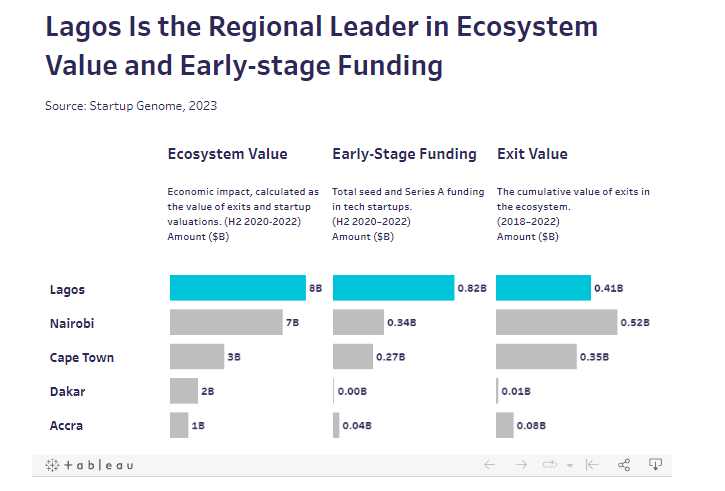
The Global Startup Ecosystem Report compiled by Startup Genome ranks various ecosystems to see their trends and changes year on year. The yearly report shows that the top five ecosystems have remained the same for the last few years, even though a couple of them swapped positions. One interesting data to consider is that while the top five ecosystems accounted for an Ecosystem Value of $3.8 trillion as of 2022, the next 25 (being #6 to #30) were worth $2.3 trillion in Ecosystem Value.

OPay’s $400 million Series C in August 2021 was the region’s biggest deal, while Flutterwave’s $250 million Series D in February 2022 saw its valuation increase to over $3 billion.

India’s ecosystem continued to show significant growth, with Delhi, Mumbai, Bangalore-Karnataka, and Pune collectively generating 25 unicorns between 2019 H2 and the end of 2021. Another remarkable finding is that while Silicon Valley remained the world’s leading ecosystem, its share of early-stage investment by dollar amount has declined in the last decade from 25% to 13%.

The implication of this trend in the early stage funding is that the rest of the world is catching up in terms of tech growth, and this would likely continue, going forward. One region continues to dominate the Global Rankings, with about 47% of the top 30 ecosystems in North America. Then, there’s Asia with 30%.

The big question now is – how can Africa join in the catching up and improve her numbers beyond what we have already?

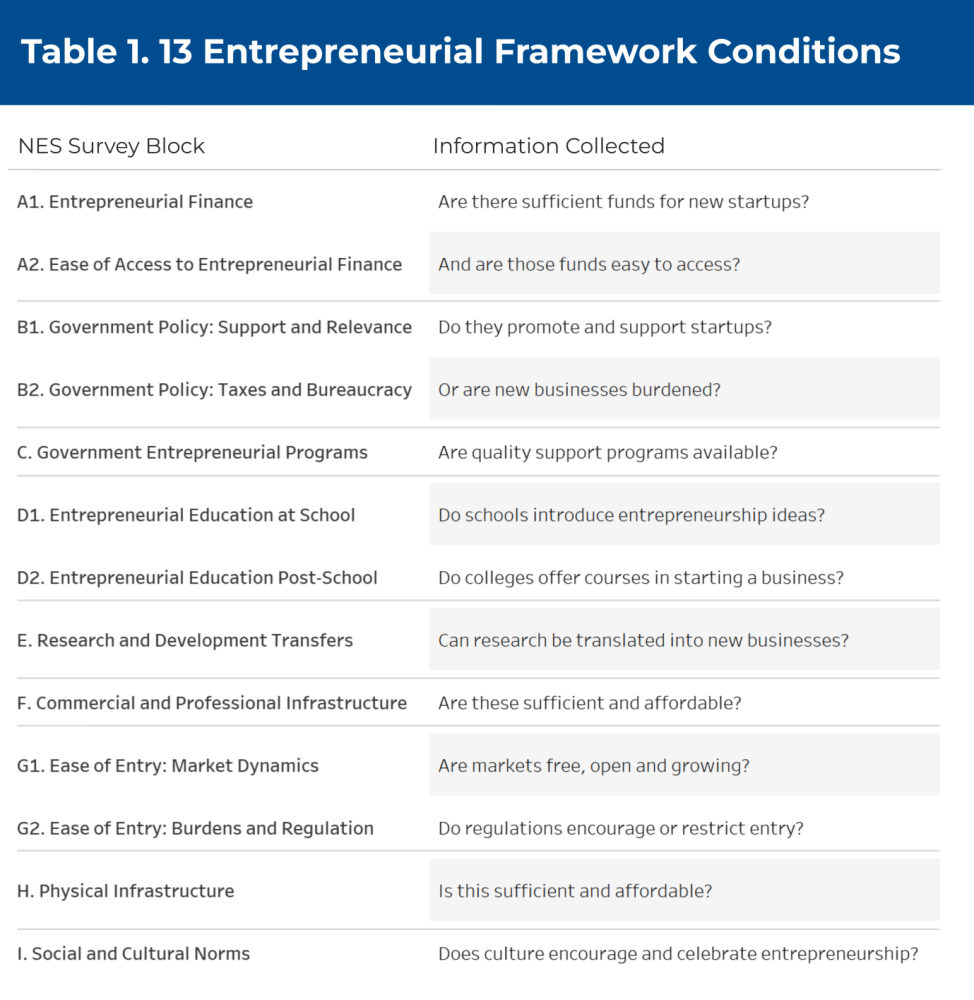
Let’s look at the Global Entrepreneurship Index for some insights. The Global entrepreneurship monitor ranks countries by seeking answers to the questions below.

These questions basically seek to find out how easy it is for a business or startup to start, survive and thrive in a country. The more positive answers a country can provide to these questions, the better the ranking. More Yeses would mean that there are modalities in place to ease the startup journey overall. No wonder high-income economies perform better than middle and low-income economies on the scores.

  • No sub-Saharan ecosystems made it into the top 30 + runners-up ranking, but this doesn’t mean the region is without significant activity. Sub-Saharan Africa was up 227% in early-stage funding amount and up 43.8% in early-stage deal count from 2018 to 2022, highlighting the rapid development of the region’s tech startup scene.
  • Nairobi produced the region’s biggest exit and the second biggest deal also emerged from the Kenyan ecosystem: Payments startup DPO was acquired by Network International in 2021 for $2.9 million and Sun King, which sells, installs, and finances solar home systems, has raised $577 million over nine rounds, with its latest a April 2022 Series D round of $330 million. Nairobi’s Ecosystem’s Value is up an impressive 281% from from July 1, 2019–December 31, 2021 to July 1, 2020–December 31, 2022.
  • Lagos held its place in the 51–60 range of the Emerging Ecosystems ranking. OPay’s $400 million Series C in August 2021 was the region’s biggest deal, while Flutterwave’s $250 million Series D in February 2022 saw its valuation increase to over $3 billion.
  • Cape Town has entered the top 100 Emerging Ecosystems for the first time, in the 91–100 category and aided by a 23% increase in Ecosystem Value, a 26% growth in the count of early-stage deals, and 22 new Life Sciences disciplines.

The United Arab Emirates (UAE), with the highest score and a wide margin, emerged as the best place to start a new business in 2022, followed by the Netherlands, Finland, Saudi Arabia, and Lithuania. Keep in mind, that the UAE took intentional steps to improve in 11 of the 13 framework conditions since 2020.

And this is why I think Africa can step up.

Entrepreneurial funding

The governments of African countries need to start making more funds available, and easily accessible to startup founders.

Government Policy

By reducing the burdens of new businesses through tax reliefs and holidays, and providing them with adequate support and education, Africa could speed up the growth of its startup ecosystems.

Government Entrepreneurial Programs & Education

We need to put in place adequate entrepreneurial training and support programs in Africa. Introducing entrepreneurial education in schools at different levels can also help to start the transformation from a very young age. Entrepreneurship education and support programs will play a huge role in nurturing the next generation of global entrepreneurs.

Research and development transfers

Isn’t it high time we move the research findings from the library shelves in our institutions, and translate them into real-time businesses?

Ease of Entry

How easy is it to start a business? Are there regulations to encourage entry? Or are the regulations restricting entry? Is it possible to make it easier on new businesses, by having markets that are open and growing across the continent?

Infrastructure

Compared to other continents, Africa has to establish more infrastructures to be able to catch up. Importantly too, such infrastructure should be affordable to startup founders and entrepreneurs who need them to further their business. Even infrastructure such as stable power supply and internet penetration would make a major difference for entrepreneurship on the continent.

In conclusion

If Africa does not rise to the challenge, the continent will be playing catchup for a long time coming. A look at India and the United Arab Emirates shows that truly if the government pays the right kind of attention to these issues, the results can become visible within the next decade.

Some may argue that these challenges are in themselves, opportunities for entrepreneurs to jump on. However, there are limits to what entrepreneurs and investors can do, without the right regulatory environment.

Case Study on the Trend

See how the world has changed, using a US case study: “The entrepreneurship bug is going around. New business applications soared to more than 5 million in 2022, notching a 42% increase from pre-pandemic levels. Also encouraging: 1.7 million of those companies are considered “likely employers,” meaning they’re expected to join the more than 30 million small businesses that have created most of the country’s new jobs since 1995. In some ways, launching a business is easier than ever. E-commerce sites can be up and running in hours, and, as one South Carolina entrepreneur told Bloomberg, “99%” of what is taught in MBA programs is now “on YouTube for free.” Sure, but self-employment is not all smooth sailing right now. Loans are difficult to get and expensive as a result of interest-rate increases, consumers are scaling back on spending due to inflation, and a high demand for workers is inflating labor costs.”

For more on the report, go here.

Relevant Provisions of the 2023 CBN Code of Corporate Governance For Banks in Nigeria – Part 2

0

Finance Law :- Relevant Provisions of the CBN Guidelines on Corporate Governance For Commercial/Merchant Non-Interest Payment Service Banks and Finance Holding Companies  – External Auditors & Shareholders

This chapter of the CBN Corporate Governance article series will be focused on the provisions of the CBN Guidelines on external auditors, general meetings and shareholders.

External Auditors

– The appointment and removal of the external auditor shall be the responsibility of the board, subject to the approval of the Central Bank of Nigeria (CBN).

–  The external auditor shall report annually in the financial statements, the extent of the bank’s compliance with the provisions of Nigerian Code of Corporate Governance (NCCG) 2018 and the CBN Guidelines.

– The external auditors shall render annual reports to the Director, Banking Supervision Department (BSD) on the bank’s risk management practices, Internal controls and level of compliance with regulatory directions.

– The report stated in S.18.3 of the guidelines shall in the case of an Non-Interest Bank (NIB) , include an assessment of the process of identification and disposal of NPI(Non-Permissible Income), the treatment of PSIAHs and income smoothing (if any).

– In addition to the requirement this section, the external auditors of an NIB shall review the :-

a). Compliance of the bank with the decisions of the ACE & FRACE.

b). Work of the ISA & ISCO.

– The external auditor shall forward copies of the report together with Its management letter on the bank’s audited financial statements, to the Director, Banking Supervision Department, latest March 31st following the end of every accounting year.

– Banks are required to publish their annual audited financial statements in 2 National daily newspapers and on their websites.

– External auditors of banks shall not provide client services that could amount to conflict of interest, including the following :-

a). Book-keeping or other services related to the accounting records or financial statements of the audit client.

b). Valuation services, Business opinion or contribution-in-kind reports.

c). Actuarial services.

d). Internal audit outsourcing services.

e). Management or human resource functions including broker or dealer services, investment banking services and legal or expert services

f). Board evaluation & appraisal services.

g). IT & system audit.

h). Software sales, consulting and management.

– Where the CBN is satisfied that an external auditor of a bank has engaged in any unethical practice or illegal activity, the CBN shall request the board of the bank to remove the external auditors, or it may impose any other sanction on the bank in line with the provisions of extant laws and regulations.

General Meetings

– The board shall ensure that the venue of a general meeting is convenient and easily accessible to the majority of shareholders.

– The board may consider rotating the venue of general meetings where it promotes better access to the majority of shareholders.

– Banks may hold their general meetings virtually where physical meetings are not feasible.

What are the provisions of the CBN Guidelines regarding shareholders?

Shareholders Engagement

– The board of a bank with institutional investors shall ensure that such investments carry out the responsibilities details in Recommended Practice 22.3 of NCCG 2018.

– The board shall ensure that dealings of publicly listed banks with shareholders’ associations are in strict adherence with the code of conduct for shareholders’ associations issued by the Securities and Exchange Commission (SEC).

– Where a bank is not publicly quoted, its dealings with shareholders shall be transparent and in line with best practices.

Protection of Shareholders’ Rights

– Except where prior CBN approval is granted, no individual, group of individuals, their proxies or corporate entities shall own controlling interest in more than one bank.

– The CBN’s prior approval and no objection shall be sought and obtained before any acquisition of shares of a bank (including through the capital market) that would result in equity holding it 5% and above by any investor.

– Where the CBN has an objection on any acquisition as stated above, notice of the objection shall be communicated to the bank and the bank shall notify such investors within 48 hours.

– Government’s direct and indirect equity holding in a bank shall not be more than 10% which shall be divested to private investors within a maximum period of 5 years from the date of investment

– For existing investments above 5 years, the bank shall within 2 years from the effective date of the guidelines comply with the provisions mentioned above.

Relevant Provisions of The CBN Guidelines on Corporate Governance For Commercial/Merchant Non-Interest Payment Service Banks and Financial Holding Companies –  Business Conduct & Ethics, Related Party Transactions, Conflicts of Interest, Sustainability, and Stakeholder Communication.

This chapter in the CBN Corporate Governance series will be focused on the provisions of the Central Bank of Nigeria Corporate Governance Guidelines on business conduct & ethics, related party transactions, conflicts of interest, sustainability and stakeholder communication.

Business Conduct & Ethics

– Banks shall establish a code of business conduct and disclose in the code, such information &  practices necessary to maintain confidence in the bank’s integrity.

– The code referenced in S. 21.1 shall take into account the legal obligations and reasonable expectations of the bank’s shareholders, as well as the responsibility and accountability of individuals reporting on issues or unethical practices.

– The code so mentioned in this provisions is to be renewed at least once every 3 years.

What are the provisions of the guidelines concerning related party transactions?

– Banks shall establish a policy concerning insider trading and related payment transactions by directors, senior executives and employees as well as publishing the policy or a summary of that policy on their website.

– The policy shall contain appropriate standards and procedures to ensure it is effectively implemented.

– In addition to the requirements above, there shall be an internal review mechanism carried out by the internal audit function of the bank, to assess the compliance and effectiveness of the policy.

– Any director whose facility or that of his related interests remains non-performing in any Financial Institution (FI) for more than 1 year shall cease to be on the board of the bank and shall be blacklisted from sitting on the board of such bank and that of any other FI under the purview of the CBN.

– No director-related loans and/or interest shall be written off without the CBN’s prior approval.

– In the case of a Payment Service Bank (PSB) :-

a). Where a PSB is a related company to an existing infrastructure provider which provides services to other FIs, the PSB shall ensure that its dealings with the infrastructure provider is at arms-length.

b). The following conditions shall guide business conduct between PSBs , their parent companies and other related entities (where applicable) :- 

– A parent company or any other related entity of a PSB, which renders services to the PSB may extend similar services to other entities that so desire on the same terms and conditions.

– A parent company or any other related entity of a PSB is prohibited from giving any preferential treatment to the PSB.

– Preferential treatment by a parent company or any other related entity shall, among others, include :-

a). Precluding its subsidiary’s competitor from using its infrastructure or services.

b). Offering lower quality of service to its subsidiary’s competitors.

c). Offering such infrastructure or services at differential pricing levels.

– Failure of any PSB to abide by these fair competition clauses may lead to revocation of its license.

– All services between the parent company and its PSB shall be guided by SLAs and/or shared services arrangements in line with the CBN Guidelines For Shared Services Arrangements for Banks and Other Financial Institutions (OFIs).

– A PSB shall submit the SLAs mentioned above to the CBN for prior approval before implementation.

What are the provisions of the guidelines on conflicts of interest?

– Banks shall develop and adopt a policy to guide the board and individual directors in conflict of interest situations, which shall cover the following areas :- 

a). Approval & revision date

b). Definition of conflict of interest

c). Purpose of the policy

d). Procedures to follow and situations of conflict of interest.

– The board shall be responsible for managing conflicts of interest of directors and senior management in a bank.

– Any concern raised by a director on the activities of his/her Financial Holding Company (FHC) shall be recorded in the minutes of the board/board committee meetings.

What are the provisions of the guidelines on sustainability?

The guidelines provide that banks shall comply with the provisions of Recommended Practice 26 of the Nigerian Code of Corporate Governance (NCCG) 2018 as well as the requirements of the Nigerian Sustainable Banking Principles.

What are the provisions of the guidelines on stakeholder communication?

– In addition to the traditional means of communication, banks shall have a website and are encouraged to communicate with stakeholders via the website and other official channels.

– The board shall develop stakeholder communication policies and post same on the bank’s website.

– The board shall ensure that stakeholders have the freedom to communicate their concerns on illegal or unethical practices to the board. Where the concerns relate to the activities of the board, such individuals may present a complaint to the CBN.

Relevant Provisions of the 2023 CBN Guidelines on Corporate Governance for Commercial/Merchant Non-Interest Payment Service Banks and Financial Holding Companies –  Disclosures, Returns and Sanctions.

In this article being the final chapter of the Corporate Governance series, the focus will be on the provisions of the CBN Guidelines on Corporate Governance For Commercial/Merchant/ Non-Interest Banks (CMNIBs), Payment Service Banks (PSBs) and Financial Holding Companies regarding :- 

– Disclosures

– Returns

– Sanctions

Disclosures

– Disclosure in the annual report shall include but not limited to, material information on :-

a) Directors, including –

– Remuneration policy for members of the board and executives

– Total remuneration of Non-Executive Directors (NEDs), including fees and allowances

– Total executive compensation, including bonuses paid/payable

– Details and reasons for share buybacks, if any, during the period under review

– Board of Directors performance evaluation

– Shares held by directors and their related parties

– Details of directors, shareholders and their related parties who own 5% and above of the bank’s shares as well as other beneficial owners who in concert with others, control the bank.

b). Corporate Governance Structure

– Appointment and tenure of directors

– Composition of board committees including names of the chairman and members of each committee.

– Total number of board and its committees meetings held in the financial year and attendance by each director.

– A summary of details or training and induction for directors.

– For Non-Interest Banks (NIBs):-

a). Shari’a governance mechanisms

b). A statement on compliance with internal shari’a review mechanism

c). Composition of the ACE and the number of meetings attended by each member

d). ACE certification of compliance with principles of Islamic Finance

c) Risk Management :- which includes-

– All significant risks including risks specific to NIBs

– Risk management practices indicating the board’s responsibility for the entire process of risk management as well as a summary of the lapses to be observed by external auditors, if any

– Information on strategic modification to the core business of the bank

– All regulatory/supervisory contraventions, sanctions and penalties during the year under review and infractions through whistle blowing

– Capital Structure/Adequacy

– Opening and closing of branches/outlets

– Any service contract and other contractual relationships with related parties

– Frauds and forgeries

– Contingency planning framework

– Contingent assets and liabilities (off-balance sheet items))

– The details of parent/holding institutions, subsidiaries, affiliates, Joint Ventures (JVs) and Special Purpose Vehicles (SPVs) where applicable

– Any matter not specifically mentioned in this guidelines, but which may materially affect the financial position or going concern status of the bank

– NIBs in addition to all the above shall make disclosures on :-

a). Returns paid to PSIAHs and amount of income smoothing (if any)

b). Non-Permissible Income if any and its disposal

– To foster good corporate governance, banks are encouraged to make robust disclosures beyond the statutory requirements contained in the Banks and Other Financial Institutions Act (BOFIA) 2020 and other applicable laws and regulations

– Annual reports of NIBs are required to contain certification of the ACE that the operations of the NIB are in line with the principles of Islamic Finance

What are the provisions of the CBN Guidelines concerning returns?

– Banks shall submit to the Director, Banking Supervision Department, CBN, periodic returns as specified in the extant guidelines for licensing and regulation of Financial Holding Companies in Nigeria.

– When required, every bank shall render electronic submission of each of these regulatory returns to a dedicated web portal as may be prescribed by the Financial Reporting Council (FRC). 

What are the provisions of the guidelines on sanctions?

-The failure of a bank to comply with any of the requirements under the guidelines and the Recommended Practices in the Nigerian Code of Corporate Governance (NCCG) 2018, constitutes a regulatory breach and shall attract a penalty as may be prescribed by the CBN.

The rendition of false, misleading and/or incomplete information to the CBN shall attract appropriate sanctions including monetary penalties and administrative sanctions on the individual and the bank.

– A breach of any of the provisions of this Guidelines by a director, manager or officer shall attract appropriate sanctions including monetary penalties and administrative sanctions on the individual responsible for the breach. 

-In addition to the provision of Section 28.3, such director, manager or officer of the bank shall be suspended for six months in the first instance and possible removal from the Board of the bank in the event of continued reoccurrence of the breach.