DD
MM
YYYY

PAGES

DD
MM
YYYY

spot_img

PAGES

Home Blog Page 3932

Crypto Exchange Startup, Due Network, Expands to Nigeria to Enhance International Payments

0

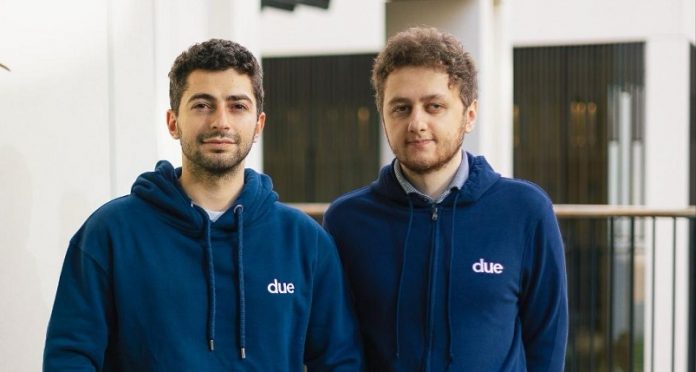
Due Network, a crypto payments startup that provides borderless accounts and cross-border payments through its decentralized non-custodial platform, has expanded its operations to Nigeria to enhance international payments.

The startup announced its launch in Nigeria with a vision to reshape and address the challenges with international payments through stablecoins and blockchain technology.

Due’s decision to enter the Nigerian market aligns with the Network’s mission to democratize access to digital assets and provide a reliable platform for users to navigate the complexities of international payments.

Powered by open and interoperable decentralized ledger protocols, Due will enable its Nigerian customers to use Naira to add/hold digital US Dollars and Euros in their accounts, which can be used to send/receive funds across Sub-Saharan Africa.

Also, the  network provides multi-currency accounts, global transfers/remittances, and merchant acquiring for businesses and individuals.

Speaking on Due’s launch in Nigeria, Co-founder/CEO Robert Sargsian said,

“We want to be a driving force in transforming how the global economy runs. Our vision is a future where money is truly global, permissionless, and inclusive. The global payments ecosystem is riddled with inefficiencies. Receiving funds from overseas, paying international vendors, or even moving intracompany funds across countries is expensive, slow, and hard to access. We are here to challenge that”.

Sargsian added that one of the outstanding features of Due Network is that it offers clients direct control over their assets, being a decentralized non-custodial platform.

This implies that Nigerian customers can maintain complete control and custody over their funds on the Due platform. No intermediaries, not even Due can access the client funds in any way, providing the account holders with direct and unobstructed access without any restrictions or dependencies.

Notably, Due recently announced its $3.3 million Seed round to further develop Due’s technology and expand its fiat currency connectivity to more markets. The network’s waitlist is now live with an initial launch slated for later this month, focused on key corridors connecting Sub-Saharan Africa, the UK, EA, and the US, with expansion into Latin America (e.g. Mexico, Brazil) and Asia-Pacific (e.g. Hong Kong, Singapore) scheduled for Q1 2024.

Established in 2022, Due is a London-based Fintech startup with a vision to reshape international payments through stablecoins and blockchain technology. The company provides multi-currency accounts, global transfers/remittances, and merchant acquiring for businesses and individuals.

With the Due Platform, users can open borderless accounts in a matter of minutes and make/receive payments across 50+ markets using your preferred payment methods.

After onboarding onto Due, users can add money to their account, make and accept payments, send and receive international transfers, and manage all their funds all under one roof at a fraction of the costs of traditional solutions.

By establishing a presence in Nigeria, Due Network aims to contribute to the financial inclusion initiatives within the country, empowering individuals and businesses to overcome traditional banking limitations.

Microsoft Rebrands Bing Chat to Copilot in A Move Towards ChatGPT Rivalry

0

Less than a year after Microsoft’s ambitious foray into the realm of artificial intelligence with Bing Chat, the tech giant has announced a major rebranding effort. The familiar Bing Chat interface integrated into Bing search results, Microsoft Edge, and Windows 11 is being rebranded as Copilot, according to a recent report by TheVerge.

The decision to shift away from the Bing Chat branding comes on the heels of OpenAI’s revelation that a staggering 100 million people are engaging with ChatGPT on a weekly basis. While Microsoft initially positioned its AI efforts as a response to Google’s dominance in search, it appears the company is now setting its sights on the success of ChatGPT.

Colette Stallbaumer, General Manager of Microsoft 365, clarifies the shift, stating, “Bing Chat and Bing Chat Enterprise will now simply become Copilot.”

The move follows Microsoft’s earlier decision to adopt the Copilot name for its chatbot within Windows 11. Microsoft is evidently keen on establishing Copilot as the go-to option for both consumers and businesses in the competitive AI assistant market.

With the rebranding, Copilot is presented as the free version of Microsoft’s AI chatbot, with Copilot for Microsoft 365 (previously Microsoft 365 Copilot) designated as the paid option. The free Copilot service will continue to be accessible in Bing and Windows, now also having its dedicated domain at copilot.microsoft.com, mirroring the structure of ChatGPT.

For user access, business accounts will log into Copilot with an Entra ID, while consumers will require a Microsoft Account. Currently, Microsoft Copilot is officially supported only on Microsoft Edge or Chrome, and on Windows or macOS.

Microsoft initially introduced Bing Chat earlier this year, describing it as an “AI-powered copilot for the web.” Since then, the Copilot branding has been applied to various AI initiatives, with GitHub initially using the name last year.

This rebranding marks a departure from Bing as the main entry point for Microsoft’s AI endeavors. Nevertheless, Microsoft insists that Bing remains an integral part of Copilot.

“Bing remains a prominent brand and technology powering many Copilot experiences while continuing to be a leader in the search industry,” Caitlin Roulston, Director of Communications at Microsoft, said in a statement to The Verge.

The move away from Bing raises questions about the success of Microsoft’s initial push for AI search. Satya Nadella, Microsoft’s CEO, had previously expressed a desire to make Google “dance,” characterizing the search giant as an “800-pound gorilla.”

However, nearly 10 months after the Bing Chat launch, Google still maintains over 91 percent market share, as reported by StatCounter. The evolution of Copilot and its competition with ChatGPT could reshape Microsoft’s position in the AI landscape in the coming months.

Cboe to Launch Margined Bitcoin and Ethereum Futures in the US

0

Cboe, the largest US options exchange, has announced that it will launch margined Bitcoin and Ethereum futures contracts in the first quarter of 2024. This is a significant development for the crypto industry, as it will provide more liquidity, transparency and price discovery for the two leading cryptocurrencies.

Margined futures are contracts that allow traders to speculate on the price movements of an underlying asset, such as Bitcoin or Ethereum, without having to own or deliver the asset. Traders can use leverage, or borrowed funds, to amplify their returns or losses. Margined futures also enable traders to hedge their exposure to the underlying asset, or to take advantage of arbitrage opportunities.

Cboe’s margined Bitcoin and Ethereum futures will be cash-settled, meaning that traders will receive or pay the difference between the contract price and the spot price at expiration in US dollars. The contracts will be based on Cboe’s CF Benchmarks, which are regulated by the UK’s Financial Conduct Authority and use a transparent and robust methodology to calculate the reference prices of Bitcoin and Ethereum.

Cboe’s decision to launch margined Bitcoin and Ethereum futures comes after the success of its Bitcoin mini futures, which were launched in March 2023 and offer a smaller contract size of 0.1 Bitcoin. The mini futures have attracted a diverse range of participants, including retail investors, institutional investors, hedge funds and market makers.

Cboe’s margined Bitcoin and Ethereum futures will compete with other crypto derivatives platforms, such as CME Group, Bakkt, FTX and Deribit, which already offer similar products. However, Cboe believes that its experience in the options market, its regulatory compliance and its innovative technology will give it an edge over its rivals.

Cboe’s CEO Ed Tilly said in a press release: “We are thrilled to expand our crypto derivatives offering with the launch of margined Bitcoin and Ethereum futures. These products will leverage our expertise in the options space and our cutting-edge trading platform to provide a superior trading experience for our customers. We believe that margined Bitcoin and Ethereum futures will further enhance the growth and maturity of the crypto market, and we look forward to working with our partners and regulators to make them a success.”

Impacts of Cboe Margined Bitcoin and Ethereum Futures

Cboe Global Markets, one of the world’s largest exchange holding companies, has recently announced that its crypto unit, Cboe Digital, has received approval from the Commodity Futures Trading Commission (CFTC) to offer margined bitcoin (BTC) and ether (ETH) futures contracts. This is a significant development for the crypto industry, as it will allow traders to access these digital assets with lower capital requirements and more flexibility.

Futures contracts are agreements to buy or sell an underlying asset at a predetermined price and date in the future. They are commonly used by traders to hedge against price fluctuations, speculate on market movements, or gain exposure to new asset classes.

Margined futures contracts are a type of futures contract that allow traders to post less capital when opening a position. Instead of paying the full value of the contract upfront, traders only need to deposit a percentage of the contract value as margin. This margin acts as a collateral that can be used to cover potential losses or gains on the position.

Margin trading has several advantages for traders, such as:

Higher leverage: Margin trading allows traders to amplify their returns by using borrowed funds to open larger positions than their own capital would allow.

Lower costs: Margin trading reduces the upfront costs of trading, as traders only need to pay a fraction of the contract value instead of the full amount. More flexibility: Margin trading enables traders to adjust their positions more easily, as they can add or reduce margin depending on market conditions.

Cboe Digital is the only US-registered exchange that allows for both spot and derivatives trading of digital assets including bitcoin, bitcoin cash, ether, Litecoin and USDC. It also operates a clearinghouse that provides centralized clearing and settlement services for its crypto products.

By offering margined bitcoin and ether futures contracts, Cboe Digital aims to provide several benefits for its clients, such as:

Access to physical settlement: Cboe’s margined crypto futures will be physically settled, meaning that traders will receive or deliver the actual digital assets upon expiration of the contract. This will allow traditional financial firms to access bitcoin or ether futures without intermediaries having to take custody of the assets.

Enhanced liquidity: Cboe’s margined crypto futures will increase the liquidity and depth of the crypto market, as more traders will be able to participate with lower capital requirements and more trading options.

Regulatory compliance: Cboe’s margined crypto futures will comply with the rules and regulations of the CFTC, which oversees the US derivatives market. This will provide traders with more security and transparency in their crypto transactions.

What are the challenges and risks of Cboe’s margined crypto futures?

While Cboe’s margined crypto futures offer many opportunities for traders, they also come with some challenges and risks, such as:

Margin calls: Margin trading involves borrowing funds from the exchange or a broker to open a position. If the market moves against the trader’s position, they may face a margin call, which is a demand to deposit more funds or close the position to avoid further losses. Failing to meet a margin call can result in liquidation of the position and loss of the initial margin.

Volatility: Crypto markets are known for their high volatility, which can lead to large price swings in a short period of time. This can magnify the profits or losses of margin traders, depending on the direction of their positions.

Technical issues: Crypto markets are also prone to technical issues, such as network congestion, hacking attacks, or system failures. These can affect the execution, settlement, or delivery of crypto futures contracts, resulting in delays, errors, or losses for traders.

Cboe’s margined bitcoin and ether futures are a major milestone for the crypto industry, as they will enable more traders to access these digital assets with lower capital requirements and more flexibility. However, they also entail some challenges and risks that traders should be aware of before entering into these contracts. As always, traders should do their own research and due diligence before engaging in any form of crypto trading.

Most African Habitat Norms Emerged from Deep Understanding of Natural Philosophy

1

Sure, great feedback on my piece on African culture and how some of the norms emerged as a way to preserve communities. Of course, the ancient African culture had some unfortunate components, due to lack of knowledge, just as European and American cultures also did. As twins were killed in Africa, European culture enslaved humans and treasured on genocides. So, across human history, many bad things happened. But as knowledge systems deepen, the liberation of the mind marches.

As many noted in the comments, someone has to explain some of the norms so as to help the new generation to understand better. In other words, when they say “do not fish in that stream”, it may not be connected to any belief system or deity. I can give you cases, using streams in Ovim, my village.

In Ovim, while the Tantuta Ugwunta stream has an ordinance of not to fish therein, the Iyinta Obayi banned both fishing and using large buckets to scoop water. Examining the two streams, Tantuta flows from a higher level to a lower one which means there was no need to restrict on the scooping method since if you stir the lower level, it would not affect the source of the freshwater. But when you go to Ide (a bigger water body), all those rules vanish, allowing you to fish and do whatever you want!

The implication? The fishes of smaller streams are protected while the larger ones are not. But in reality, examining the structures of the streams, you can draw one conclusion: the elders do not want you to fish them so as not to mess up a shallow, slow-flowing freshwater for the community. But in the big water bodies like the Ide and Nne-ochia, you can do whatever you want because they flow fast and are big!

(Ask yourself, why are the protected fishes for the gods always in the small streams and not in the big ones?)

fetching water in a village

Check that big tree which everyone is tasked not to harm. Look at the geography and you will notice that it is pivotal in controlling gully erosion. If you destroy that tree, you can wipe out another community because of gully erosion. In Ovim again, the Akpurachi tree in Ugwunta village square protects the community from erosion from Agbo-ngele which is a small valley.

Of course today, there are alternatives to build concrete defenses but when you go deeper, the villagers put some rules on that small valley: you are only allowed to plant trees, harvest oranges, grapes, etc for personal benefits, but NEVER to sell anything from this small valley. In other words, the village did not want any commercialization of anything in that place in order to avoid any risk of chopping down trees and over-harvesting things which could trigger destruction via gully erosion. Till today, you do not take anything home from Agbo-ngele even if you planted the fruit, but you are fine to harvest and enjoy right there.

This goes across communities in Africa. Some trees have medical/ herbal value and you are not to destroy them. Some served as moats during ancient wars and gathering “halls”. As you look deeper, there is one conclusion: Most African Habitat Norms Emerged from Deep Understanding of Natural Philosophy. Yes, they understood physics, geography and our world! Of course, nothing was documented because they failed to invent writing, triggering confusions and distortions.

Artificial Intelligence and Machine Learning in Personal Finance

0

Artificial intelligence (AI) significantly changes how we handle our finances. It is quickly altering the traditional methods of getting financial advice and making investment decisions. Financial advisors no longer have exclusive control over financial knowledge. Now, AI and machine learning technologies provide personalized financial advice and more intelligent investment options.

Adding to the discussion of technology in finance, VPN apps have become increasingly relevant as they are crucial for protecting financial transactions conducted over the Internet. They offer a secure connection, encrypting data and shielding personal information from potential cyber threats. Using authentication tools is also important for protecting financial accounts from unauthorized access.

The Essence of AI and Machine Learning

Artificial intelligence, in the context of personal finance, refers to the capability of machines to perform tasks that typically require human intelligence. Machine learning is a subset of AI, focusing on using data and algorithms to imitate how humans learn, gradually improving its accuracy. Unlike traditional computing, AI doesn’t just follow a set of rules. It learns from vast amounts of data, identifying patterns and making decisions with minimal human intervention.

AI-Powered Personal Financial Management

Personal Financial Management (PFM) tools have become widely used, and artificial intelligence (AI) is adding advanced features. These AI-enhanced tools are capable of examining how you spend your money. They can advise you on budgeting more effectively and even estimate your future financial state.

These tools use AI to understand your spending habits over time. With this information, they can provide personalized advice to help you manage your money better. They can suggest where to cut expenses or how to adjust your budget to meet your financial goals.

An example is how an AI system can alert you to the risk of spending more money than you have in your account. By doing so, it helps you avoid overdrawing your account and the high fees that come with it. This predictive feature of AI-driven PFM tools can be a significant aid in preventing financial missteps.

Machine Learning and Investment Decisions

Machine learning excels in sifting through complex market data to identify investment opportunities. By recognizing subtle patterns and trends, it can predict market movements with significant accuracy. For example, AI-driven investment platforms utilize algorithms like neural networks to forecast stock performance, giving individual investors insights once available only to professionals.

Tailoring Financial Advice with AI

Robo-advisors, automated financial advising systems using artificial intelligence, are changing the way financial advice is given. They collect information about your financial objectives and how much risk you’re willing to take. Then, they offer investment advice that fits your profile. These digital advisors make it easier for you to get personalized investment help without needing a human financial advisor.

According to data from Statista, it’s expected that robo-advisors will have $2.76 trillion in assets under management by 2023. This large amount indicates that more people are beginning to trust these AI-driven systems, often preferring them over the traditional, human-centric advising methods. The convenience and tailored advice robo-advisors provide are significant factors in their growing popularity.

Challenges and Responsibilities

Introducing artificial intelligence into personal finance brings certain difficulties. One of the main issues is data privacy. People are concerned about how their financial information is handled and kept secure. They want to be assured that their sensitive data is not misused or improperly accessed.

Additionally, the laws and regulations that govern financial advice are trying to adapt to the rapid advancement of AI technology. These rules are being updated to guarantee that the financial guidance provided by AI is fair and that the processes behind AI decisions are clear to users and regulators alike.

The Road Ahead for AI in Finance

The trajectory for AI in personal finance points to a future rich with innovation. We’re looking at the advent of technologies that not only automate transactions but also provide foresight into financial health. The job market for financial advisors will undoubtedly evolve as AI takes on more analytical load, freeing professionals to focus on more complex client needs.

Conclusion

The integration of AI into personal finance is not a fleeting phenomenon. It’s a significant shift in how individuals engage with financial institutions and manage their wealth. Embracing AI in personal finance is becoming not just an option but a necessity for those seeking to maximize their financial potential. AI will undoubtedly lead us to a future where financial advice is more accessible, investments more strategic, and personal finance management more intuitive.