DD
MM
YYYY

PAGES

DD
MM
YYYY

spot_img

PAGES

Home Blog Page 3933

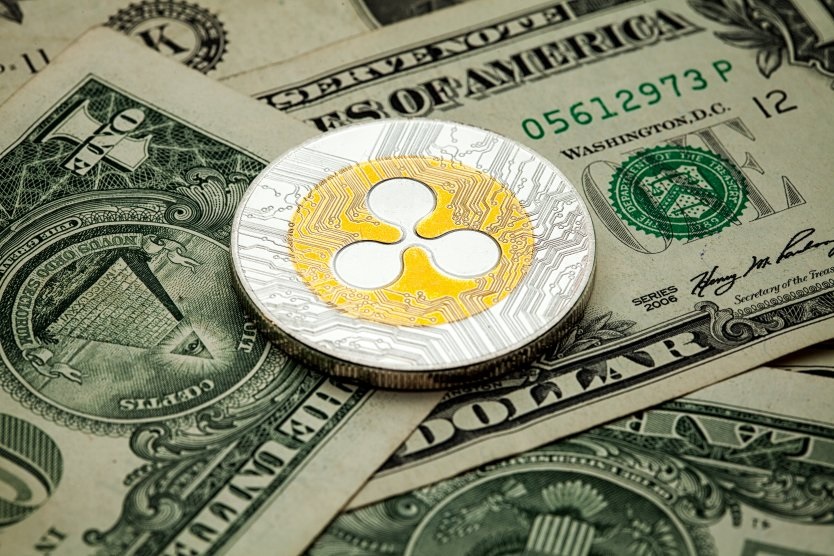
Ripple Says Institutions Could Save $10,000,000,000 by Using Blockchain Technology

0

Blockchain technology is not only a revolutionary innovation that is transforming the way we exchange value, but also a powerful tool that can help institutions reduce costs and improve efficiency. In a recent report, Ripple, the leading provider of enterprise blockchain solutions for cross-border payments, revealed that institutions could save up to $10 billion annually by adopting blockchain technology for their payment operations.

Ripple is a global network that connects financial institutions, payment providers, and digital asset exchanges. It enables fast, secure, and low-cost cross-border payments using blockchain technology. Ripple infrastructure consists of three main components: the XRP Ledger, the Interledger Protocol, and RippleNet.

The XRP Ledger is a decentralized ledger that records transactions and transfers of value in XRP, the native cryptocurrency of the network. The Interledger Protocol is a standard for interoperability between different payment systems and currencies. RippleNet is a network of banks, payment providers, and other financial institutions that use Ripple’s software and services to send and receive payments across the network. RippleNet is used for various purposes, such as remittances, trade finance, corporate payments, and micropayments.

The Interledger Protocol is a standard for interoperability between different payment systems and currencies. It allows any type of value to be exchanged across different ledgers, networks, or platforms, without requiring a central authority or intermediary. The Interledger Protocol uses a network of connectors that route packets of money across different payment channels, applying exchange rates and fees as needed.

The report, titled “The Future of Cross-Border Payments: How Blockchain Technology Can Reduce Costs and Enhance Customer Experience”, analyzed the current challenges and opportunities in the global payment landscape, and how blockchain technology can address them. The report highlighted the following benefits of blockchain technology for cross-border payments:

Faster and cheaper transactions: Blockchain technology enables instant and secure settlement of transactions, eliminating the need for intermediaries and reducing fees and delays. According to the report, blockchain technology can reduce transaction costs by up to 60% and increase transaction speed by up to 6x compared to traditional methods.

Greater transparency and traceability: Blockchain technology provides end-to-end visibility of transactions, allowing both senders and receivers to track the status and details of their payments in real time. This enhances trust and reduces errors and disputes. According to the report, blockchain technology can reduce reconciliation costs by up to 40% and improve customer satisfaction by up to 50%.

Enhanced security and compliance: Blockchain technology uses cryptography and consensus mechanisms to ensure the integrity and validity of transactions, preventing fraud and tampering. Moreover, blockchain technology can facilitate compliance with regulatory requirements and standards, such as anti-money laundering (AML) and know your customer (KYC), by enabling secure data sharing and verification among participants. According to the report, blockchain technology can reduce compliance costs by up to 30% and improve risk management by up to 70%.

The report also showcased some of the successful use cases of blockchain technology for cross-border payments, such as RippleNet, Ripple’s global network of financial institutions that leverages blockchain technology to provide fast, low-cost and reliable payments across borders. RippleNet currently connects over 300 financial institutions in more than 40 countries, enabling them to offer better payment services to their customers.

Ripple’s report concluded that blockchain technology is poised to transform the future of cross-border payments, creating new opportunities for innovation and growth for both institutions and customers. By adopting blockchain technology, institutions can not only save billions of dollars in operational costs, but also enhance their competitive advantage and customer loyalty in the rapidly evolving payment market.


Three Ways To Effectively Manage Cash Flow by Small Businesses

0

On Wednesday July 12, one of the top FMCG in Nigeria – Cadbury Nigeria PLC. – announced that it has temporarily halted the production and sale of its Cadbury Bournvita Biscuit due to complaints about its high price. The product was introduced into the Nigerian market in November 2022, and some 8 months later, has been withdrawn from the market as distributors hint that the high price is hindering sales.

For those who are just hearing the story, here’s the shocking part.

The biscuit in question is available in two consumer pack units containing six and ten cookies, priced at N60 and N100 respectively.

The next question is – if products costing N60 and N100 are described as expensive, what does that tell you about the market?

Cashflow is low. When consumers have less cash, they cut down on their spending.

And when cashflow is low, the first businesses to be affected are the small businesses, as they do not have the economies of scale advantage the medium and large-scale businesses do.

As an entrepreneur, this is the right time to build a cashflow management strategy if you have not done so in the past. Keep in mind that the cashflow management strategy will be a key determinant as to which businesses go under, and which ones stay afloat and profitable.

Here are some tips you may consider to effectively manage your cash flow.

Budgeting & Forecasting

This may be the most over-flogged tip in the history of business, but it is a valid one. Times of low cashflow are the times to work strictly with budgets. Once you have a clear idea of when and how your revenue flows in, you need to budget the outflows in line with it. Make a budget for everything.

When you combine this with forecasting, this is what you get.

  • First estimate or forecast your revenue and expenses for a period of time. Let’s say 3 months.
  • Next, Allocate funds to the core expenses first, and then to others.
  • Next, identify your expendables. What are those things you can do without in the event that you get less revenue than you projected
  • You can even take it further by anticipating ways to cut down on the expenses, or activities that may increase your revenue.

For a small business, Budgeting and Forecasting are essential for operating at peak efficiency.

Negotiating payment terms with Suppliers and partners

Sales may slow down in these times, and if you are looking to improve and optimise cashflow, then you may need to renegotiate payment terms with vendors. Your negotiation will be dependent on what you want to achieve. Are you looking to expand your operations or do you want to free up a little capital for a new product launch?

In this case, You may want to make slight modifications to the payables schedule so that you give your cashflow some breathers. Before you start this renegotiation, take time to go through your existing agreements, and be sure to check for cancellation clauses and penalties. Instead of waiting till you default on payments, be proactive and let them know if you want some days added to the current payment schedule.

Make sure to get a win-win solution and offer something in exchange for better payment terms.

Optimizing working capital.

A core part of your job as an entrepreneur is to manage and even optimise your working capital. If you have a CFO or someone else in charge of your financials, it may reduce your job considerably, but the buck still stops at your desk. The key tip here is to optimise working capital so that you are not forced to go a-borrowing to meet short-term financing needs when you have idle cash stuck in something that may be a long-term need.

Make all efforts to decrease your outstanding accounts receivable, so that you have cash to run the day to day operations. You should also optimise your billing processes so that payments can be seamless. You may also need to reevaluate Slow-moving SKUs, as they are often a source of hidden working capital losses and absorb warehouse space with maintenance costs. The idea is to keep turnover high, and the cash flowing through the entire cycle.

Here’s a bonus tip.

Like other small businesses, you may be reconsidering your pricing in line with the new economic realities like increased cost of operations. If you have to review your price upwards, it could be a great idea to offer a little extra value to the buyer. It may be some aftersales value or presales, but if the buyer feels like they are getting a little something extra, they may be less resistant.

What Forms A Valid Contract In Law

0

On today’s episode of the Learning the law series, we’d be taking a glossary look at another landmark English case. The case of Carlill v Carbolic Smoke Ball Company. 

Carlill v Carbolic Smoke Ball Company is a seminal case in English contract law and remains an important case which shaped English law, especially the law of contract. This case distinguishes a valid offer from puffery in advertising and provides what forms a valid contract in law viz a viz a mere puffery.

In general, the Carlill v Carbolic Smoke Ball Company case held that an advertisement containing certain terms to get a reward constituted a binding unilateral offer that could be accepted by anyone who performed its terms.

Here are the facts of the case; 

In the years 1889-1890, there was an outbreak of flu and everyone was scrambling for a cure inorder not to get infected. The Carbolic Smoke Ball Company, a pharmaceutical company made a medical product which they called the “smoke ball” and claimed it to be the cure for flu and other diseases.

As a way of proving the authenticity of the smoke ball drug, the company advertised that anybody who purchased the drug and used it religiously as prescribed and the person who ends up contracting the flu will be rewarded with £100. The company claimed that they have in fact deposited the sum of £1000 with the bank to this effect as sincerity that they will fulfill the promise.

Mrs Louisa Elizabeth Carlill saw the advertisement, purchased the smoke balls and used it as prescribed for about two months but she ended up contracting the flu. She then sent a letter to the Carbolic Smoke Ball company demanding a £100 reward from them claiming that she had used the drug as judiciously as prescribed for straight two months but she still contracted the flu.

The Carbolic Smoke Ball Company ignored her letters which forced her to institute an action in court for the claim of the £100. In the defense of the company, the company claimed that the advertisement they made claiming to reward users £100 if their product fails is mere puffery which does not validly form a contract hence why Mrs Carlill cannot lay claims to the £100.

The Court held otherwise and unanimously rejected the company’s arguments and held that there was a fully binding contract for £100 between the Carbolic Smoke Ball Company and Mrs Louisa Elizabeth Carlill and since Mrs Carlill have fulfilled her part of the contract, the company must correspondingly fulfill their own part of the contract.

The court in their ratio decidendi submitted that;  the advertisement was not a unilateral invitation to treat to the whole world but an offer restricted to those who acted upon the terms contained in the advertisement; the satisfying conditions for using the smoke ball constitutes acceptance of the offer; the purchasing or merely using the smoke ball constitute good consideration; and the company’s claim that £1000 was deposited at the Alliance Bank showed the serious intention to be legally bound in the contract.

Therefore, this can be in every good conscience said to be a valid contract in law which after one party has fulfilled his or her obligation, the other party to the contract must fulfill his or her own side of the obligation so as not to be held for breach of contract.

Thus, once there is an offer, acceptance and a consideration, a contract is formed, and every party to that contract is bound by the terms of the contract.

Carlill v Carbolic Smoke Ball Company [1892] EWCA Civ 1

Your Messiah Cannot Save Himself

0

I particularly find the kidnap story of Akwa Okuko Tiwara Aki and how the event unfolded scintillating and at the same time hilarious.

Akwa Okuko Tiwara Aki is a celebrity native doctor based in Anambra state, an eastern state of Nigeria. He is a popular figure that decided to take his traditional practice to the mainstream, engaging in all sorts of advertisements and publicity to garner patrons, unlike his colleague that engages in such practice in secrecy. He was said to be successful, having amassed some amount of wealth through his practice.

About two weeks ago, his hotel was evaded and he was kidnapped by unknown gunmen, his armed security officers were shot and killed by the unknown gunmen while he was nabbed and led to an unknown destination.

His ardent followers decided to do damage control and started disseminating the disinformation that Akwa Okuku turned into a lion and scared his abductors away immediately after he was kidnapped, some news also claimed that Akwa Okuku disappeared when he was kidnapped and appeared back in his bedroom. None of that was true. Akwa Okuku was released a few days back after he had paid some undisclosed amount as a ransom for his freedom; in fact he held a press conference to that effect, and that is how we got to know that all the news that has been circulated by his followers about his disappearance or turning into a lion are all false.

The fact that a famous and powerful native doctor that others visit to collect power for protection couldn’t protect himself from being kidnapped is quite interesting, the fact that an acclaimed powerful native doctor has armed security men guarding him who lost their lives in the process of guarding him is as well an interesting point to ponder upon.

The fact that his followers would come up with some fake news claiming that their leader turned into a lion and scared his abductors away as a way of damage control so as to protect the genuineness of their leader was another interesting development.

To be fair to Akwa Okuku, he is not the only spiritual leader that goes around with armed security escorts; even self-acclaimed powerful “men of God” have bunches of armed security escorts, outside being escorted by armed officers, as a two-factor authentication, they also do ride in bulletproof cars; the same pastors that do give their members mantles; holy oils, holy water, handkerchiefs, banners for protection. This is to say that those spiritual tools can only protect the members but are not powerful enough to protect the pastor; the pastor needs armed security men to protect him and his immediate family members.

I wonder how long some religious believers will continue to take and swallow these deceptions from their spiritual leaders. You cannot go to a poor native doctor to seek wealth, he ought to have helped himself if he has the power to give wealth as he claims, or doesn’t he want to be wealthy as well?; it does not make any logical sense. You cannot be going to a pastor who is riding in bulletproof cars with armed security guards for prayers for protection and the list goes on.

Whatever you believe in, just make sure you believe with your sense so you don’t continue to fall prey to some fraudsters parading as religious or spiritual leaders looking for gullible followers to defraud.

Japan Blockchain Association demands Tax cuts for Crypto

0

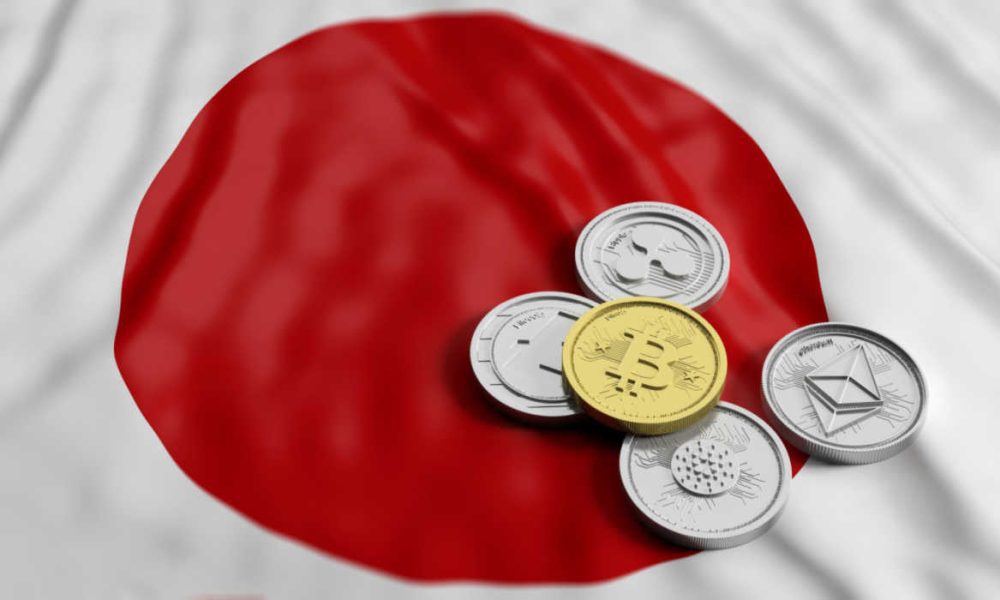
The Japan Blockchain Association (JBA) has issued a statement calling for the government to reduce the tax burden on cryptocurrency transactions and profits. The JBA argues that the current tax system is hindering the development and innovation of the blockchain industry in Japan, and that lower taxes would encourage more people to adopt and use crypto assets.

According to the JBA, the current tax rate for crypto transactions ranges from 15% to 55%, depending on the income bracket of the taxpayer. This means that crypto investors have to pay a higher tax rate than stock or forex traders, who are taxed at a flat rate of 20%. The JBA claims that this is unfair and discourages people from investing in crypto, especially in the long term.

The JBA also points out that the tax reporting process for crypto transactions is complicated and burdensome, as taxpayers have to keep track of every transaction they make, including the price and exchange rate at the time of the transaction. The JBA says that this creates a lot of confusion and errors, and that many taxpayers end up paying more taxes than they should.

The JBA proposes that the government should adopt a simpler and more favorable tax system for crypto transactions, such as:

Applying a flat tax rate of 20% or lower for all crypto transactions, regardless of the income bracket of the taxpayer.

Allowing taxpayers to deduct their losses from their gains, as well as their expenses related to crypto transactions, such as fees and commissions.

Exempting small transactions below a certain threshold from taxation, such as 100,000 yen per year.

Providing clear and consistent guidelines on how to calculate and report taxes for crypto transactions.

The JBA believes that these measures would stimulate the growth and innovation of the blockchain industry in Japan, as well as attract more foreign investors and businesses to the country. The JBA says that Japan has the potential to become a global leader in blockchain technology, but that it needs to create a more conducive environment for crypto adoption and use.

Crypto staking rewards are taxable once received

If you are participating in a crypto staking program, you may be wondering how to report your earnings to the tax authorities. Crypto staking rewards are a form of income that you receive for locking up your coins in a validator node and helping to secure the network. The IRS has not issued any specific guidance on crypto staking rewards, but based on the existing tax principles, they are likely to be treated as ordinary income.

This means that you have to pay taxes on your crypto staking rewards as soon as you receive them, regardless of whether you sell them or not. The taxable amount is the fair market value of the rewards at the time of receipt, which can be determined by using a reputable exchange rate or price index. You should keep track of the date and amount of each reward, as well as the cost basis of the coins you staked.

The tax rate that applies to your crypto staking rewards depends on your marginal tax bracket and how long you hold the rewards before selling them. If you sell them within a year of receiving them, they are subject to short-term capital gains tax, which is the same as your ordinary income tax rate. If you sell them after a year of receiving them, they are subject to long-term capital gains tax, which is usually lower than your ordinary income tax rate.

Crypto staking rewards are a new and evolving area of taxation, and there may be changes or clarifications in the future. It is advisable to consult a tax professional who is familiar with crypto taxation before filing your tax return. You should also keep accurate and detailed records of your crypto staking activities and transactions, as you may need to provide them to the IRS in case of an audit.