DD
MM
YYYY

PAGES

DD
MM
YYYY

spot_img

PAGES

Home Blog Page 3935

Musk Offers to Foot Legal Bills For Employees Being “Unfairly Treated” Over Their Activities on X

0

Elon Musk has extended an offer to financially support the legal expenses of individuals who are users of his social network, X, facing maltreatment or discrimination from their employers due to their activities on the platform.

The move is understood to have come from his pledge to make Twitter a reliable source of information, where people are allowed to express themselves without being censored.

Since Musk acquired Twitter, now X, last October, he has brought in a lot of controversial changes, pitting him against users and advertisers. Among the newly-introduced changes is freedom of expression beyond what was obtainable under former Twitter leadership, when users’ opinions about a series of issues were highly censored.

The world’s richest man reinstated accounts such as former US President Donald Trump, retired kickboxer champion Andrew Tate, and some others who were permanently blocked on Twitter over their tweets.

Musk had been critical of the level of censorship on Twitter, which he attributed to wokeness. The entrepreneur has accused the Left of forcing social media platforms to censor contents that they do not like. Now he is taking further steps (after reviewing policies that enabled the censorship) to protect the platform’s users.

“If you were unfairly treated by your employer due to posting or liking something on this platform, we will fund your legal bill,” Musk said on Sunday, adding that there is “no limit” and urging users found in that situation to “please let us know.” He said that X Corp. will “go after the boards of directors of the companies too.” 

The move is coming against the backdrop of ad revenue decline on the platform, following the mass exodus of advertisers on X due to disagreement with Musk’s changes to content moderation. 

More than 90 percent of X’s revenue came from advertisers but has dropped by more than half since Musk’s $44 billion acquisition of the platform.

Last week, X filed a suit against the Center for Countering Digital Hate (CCDH), a nonprofit group that has criticized the company’s handling of hate speech. 

The legal complaint, lodged on Monday in the federal court of San Francisco, alleges that CCDH intentionally sought to diminish advertiser interest in X, the social network, by releasing critical reports regarding the platform’s handling of offensive content.

The lawsuit specifically asserts that CCDH violated both Twitter’s terms of service and federal laws related to hacking. This was done through data scraping from Twitter’s platform and by enlisting an unnamed individual to inappropriately gather information concerning Twitter, which had been provided to a third-party brand monitoring entity.

The filing further contends that CCDH made an extensive effort to stifle users on Twitter’s platform by drawing attention to the viewpoints they express on social media. 

It is not clear what impact the lawsuit will have on the already dented relationship between advertisers and X, which Musk hired the self-styled “free speech absolutist” former NBCUniversal ad executive Linda Yaccarino as CEO in May to help repair. 

But Musk also has been known for his limited tolerance of criticism. Former personnel from his other ventures, SpaceX and Tesla Inc., have alleged that they were dismissed as a reprisal for expressing critical opinions about him as the CEO of both enterprises.

CCDH’s CEO Imran Ahmed told CNN that Musk opened Twitter up, following his takeover, to hate speech – making the lawsuit “sounds a bit like a conspiracy theory to me.”

“The truth is that he’s [Elon Musk] been casting around for a reason to blame us for his own failings as a CEO,” Ahmed said, “because we all know that when he took over, he put up the bat signal to racists and misogynists, to homophobes, to antisemites, saying ‘Twitter is now a free-speech platform.’ … And now he’s surprised when people are able to quantify that there has been a resulting increase in hate and disinformation.”
Neuralink, Co-founded by Elon Musk, Raises $280 Million in Series D Funding Round

0

Elon Musk’s brain chip company, Neuralink, has raised $280 million in a series D funding round from investors, to further develop its brain implant technology.

The funding round was led by Founders Fund, a San Francisco-based venture capital firm, that invests in companies building revolutionary technologies.

Following the funds raised, Neuralink took to Twitter to announce it, while expressing excitement about the next chapter.

Also, a partner at Founders Fund, Scott Nolan, took to Twitter, to announce via a tweet the company’s investment in Nueralink.

The tweet reads,

“Excited to support Neuralink’s next chapter of helping human patients in need. The team has been working for seven years to make this possible, pulling off technical breakthroughs that feel like science fiction. The chance to work with world-class teams accelerating a positive future is why I’m an investor, and even in that category Neuralink is special”.

Although, Neuralink did not specify what it intends to use the funds for, however, the brain chip firm, aims to help people with paralysis or other neurological conditions regain independence by controlling computers and mobile devices using their brain activity.

Founded by Elon Musk in 2016, Neuralink Corporation is a neurotechnology company, with a goal to develop implantable brain-computer interface (BCI) technologies that could enable direct communication between the human brain and external devices such as computers and other digital systems.

The idea behind Neuralink is to create devices that can effectively merge the human brain with artificial intelligence and other technologies.

The company develops an implant called the N1 that comes in at about the size of a coin. Remotely rechargeable, the implant goes along with electrode-laced threads that go further into the brain. Neuralink also has an R1 robot meant to be programmed to implant the BCI system while avoiding vasculature.

One of the primary motivations behind Neuralink’s research is to address neurological disorders and conditions such as paralysis, Alzheimer’s disease, and various forms of brain injuries.

By establishing a direct link between the brain and external devices, it is theorized that these conditions could be treated or managed more effectively.

The development of such technology, however, comes with significant challenges and ethical considerations. Implanting electrodes into the brain raises concerns about the potential risks of surgery, as well as issues related to privacy, security, and the potential for misuse of the technology.

Neuralink has however been the subject of some controversies around testing of its technology on animals.

In 2022, Neuralink and the University of California, Davis, faced accusations of “egregious violations of the Animal Welfare Act by the Physicians Committee for Responsible Medicine (PCRM).

They cited documents obtained through a public records lawsuit. The allegations claimed that Neuralink caused extreme suffering in monkeys.

In May, U.S. Representatives Adam Schiff and Earl Blumenauer co-authored a letter to the U.S. Department of Agriculture demanding an investigation into the panel responsible for overseeing animal testing at Neuralink, citing a conflict of interest.

“The Institutional Animal Care and Use Committee (IACUC) appears to be composed almost exclusively of company employees with significant financial stakes in the very animal studies they are required to evaluate under the Animal Welfare Act,” the letter read.

Neuralink’s primary goal is to develop advanced brain-computer interface (BCD) technology to enable direct communication between the human brain and external devices.

The company envisions a future where these BCIs can be used to address various neurological disorders, enhance cognitive capabilities and facilitate seamless interaction between humans and technology.

AI in Markets – Tekedia Mini-MBA

0

“Uwa bu ahia” [the world is a marketplace], they say in the Igbo Nation. Today, new species of technology system, called artificial intelligence (AI), is rewiring and rewriting the ordinances in the market.  It extends that Greek postulation by Pythagoras that the world is numbers, by making it possible for us to understand our universe, by making sense of numbers. If the world is numbers, the implication is that the business of humanity is numbers. And any technology which helps you to process, compute and make sense of numbers, will deliver a competitive advantage in the market.

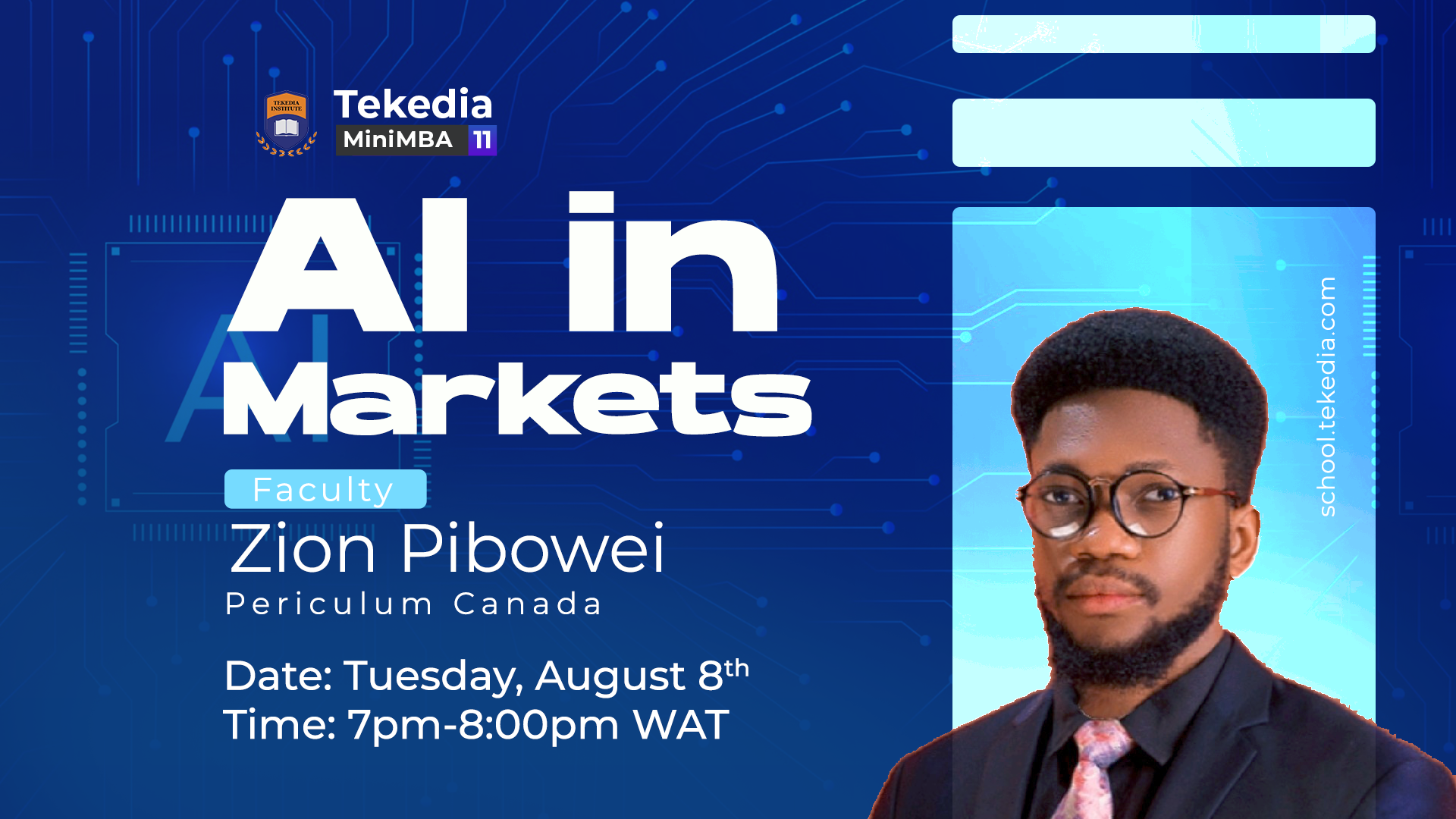
Tomorrow is Oriendu Market day in Ovim (Abia State), and today is Eke. You need to prepare for the market day; join us as we co-learn from one of the finest in this domain. First Class in Physics, Distinction in Applied Mathematics and Statistics, and Head of Data Science in Periculum Canada, Zion Pibowei, a Tekedia AI Faculty, will teach today. He is a brilliant mathematical prodigy and zen-master in the AI business. He will explain the AI and the opportunities for the African markets, including Oriendu (hahahaha). Zoom link in the class board.

Meanwhile, Tekedia Institute AI in Business Masterclass continues to welcome registrations here. Our cases are localized even as we take a global view of things. “Ahia oma!” [have a good market]; you must get the right tools. We’re here to help.

A Look into the Role of Machine Learning in Predictive Modeling of Online Casino Slots

0

In the digital era, technological advancements have revolutionized numerous industries, and the gambling industry is no exception. Specifically, the world of online casino slots has been experiencing a significant transformation thanks to machine learning and its applications in predictive modeling. Understanding this relationship and its implications for the future of online gaming requires a deep dive into the key concepts involved.

Online Casino Slots: From Analog to Digital

Online casino slots have come a long way from their analog predecessors. The present era offers a rich and varied gaming experience for players, with slots and games having themes as diverse as futuristic cyberpunk, the depths of the sea, ancient Egypt, and the glitz of rock and roll. These slots and games often take inspiration from the classic fruit machines of yesteryear, merging nostalgia with contemporary gaming technology to create an unparalleled user experience. For instance, popular online slots such as Sons of Asgard, Age of the Gods, and Gonzo’s Quest, exemplify this blend of tradition and innovation.

The Power of Machine Learning in Online Casino Slots

So, where does machine learning fit into this picture? Machine learning is deemed part of artificial intelligence (AI). It focuses on algorithmic and statistical model development by using computers to perform tasks without providing any specific guidelines. In the context of online casino slots, machine learning is used for predictive modeling.

Predictive modeling in Online Casino Slots

Predictive modeling involves using data and statistical algorithms to predict future outcomes. In online casino slots, it can enhance the gaming experience by making it more personal and efficient. Here’s how:

Personalized Gaming Experiences: Machine learning algorithms analyze the player’s gaming habits and preferences, creating a personalized gaming experience. This could mean suggesting games they might enjoy or adjusting the gaming interface according to their habits.

Efficient Game Design: Machine learning can predict which game designs or themes will be more popular, allowing developers to create games that will resonate with players.

Enhanced Security: Fraud detection is a critical aspect of online gaming, and machine learning can identify abnormal gaming behavior or suspicious transactions, contributing to a safer gaming environment.

Future Implications

With the rapid development of machine learning and artificial intelligence technologies, their role in predictive modeling for online casino slots will only continue to grow. They will help design more engaging, secure, and personalized gaming experiences, all the while aiding developers in understanding players’ behavior and preferences. While there are still many uncharted territories in this fusion of technology and gaming, one thing is clear – the future of online casino slots looks bright, innovative, and driven by data.

In summary, the role of machine learning in online casino slots is transformative. By enabling predictive modeling, it is setting the stage for a new era of digital gambling that is more personalized, secure, and efficient. While the road ahead is filled with potential, it’s also clear that responsible gaming and robust security measures will need to be integral to this journey. The blend of machine learning and online casino slots is just beginning to reveal its exciting potential.

Nigeria’s “ants” must work together!

1

Nigeria: learn from the ants and find ways to work together. Daily, we are focusing on scoring tribal points instead of finding how to work together. How can people advance if they do not even believe they have a shared vision? Just like in business, if you have the Tools and the Processes, but you do not have committed People, you cannot accomplish your business objectives. Left and right, for years now, strategic visions in Nigeria are done from pure tribal angles – and that is diminishing the nation.

We have deviated from the momentous elevation Obasanjo gave the nation when he made everyone believe. He ushered an unbounded spirit of communal vision, and brought people together. Competence, result-oriented and unconstrained energy to redeem a nation, locally and internationally, he ushered – and Nigerians responded. He made everyone believe in a UNITED nation and great things happened through fairness and equitability.

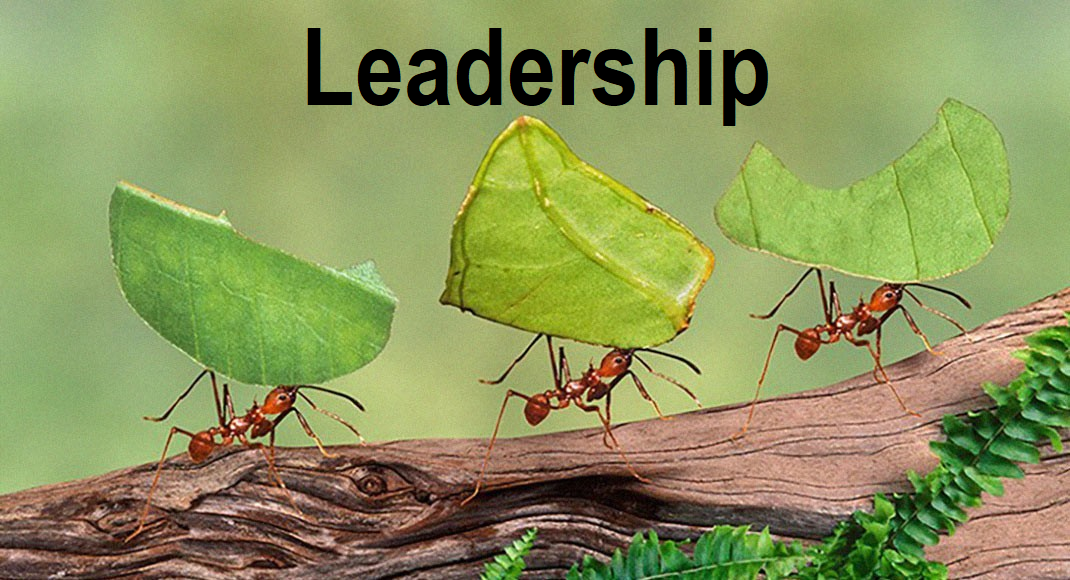
As I wrote on the leadership lessons of ants in Harvard, “The ants were partners and of different sizes: I will bring help and make the task our project, not mine. As much as possible, each team member will get an assignment based on his capability,” someone must unlock the comparative advantages and competitive positioning in Nigeria to advance the commonwealth. The “ants” of Nigeria must work together!

Indeed when the agency responsible to build a federal character, Federal Character Commission, is selling job slots, you know that a nation is broken.

“On the allegations of job racketeering, the FCC Chairman instructed me to liaise with one Mr Shehu who is a personal driver and PA to the Taraba State commissioner. As a desk officer, I am responsible to take whoever is employed to IPPIS for capturing. No one can go there without a letter from the chairman or Human Resource officer of FCC.

“When she came, she wrote a letter to the Accountant General instructing that no letter from FCC should be honoured except she signs the letter. So whenever there was new employment, she signs, gives to me and I take to the Accountant General’s office for capturing.

“Shehu is the one that brought those who paid monies to my account for the job, some paid N1 million others N1.5 million all to my personal account, my Eco bank account. She asked me to give cash to her which I did through POS so there is no evidence of transfer or anything,” he said.