DD
MM
YYYY

PAGES

DD
MM
YYYY

spot_img

PAGES

Home Blog Page 3938

Federal Government Reveals Nigerian Electricity Sector Short of N2 Trillion in Capital

0

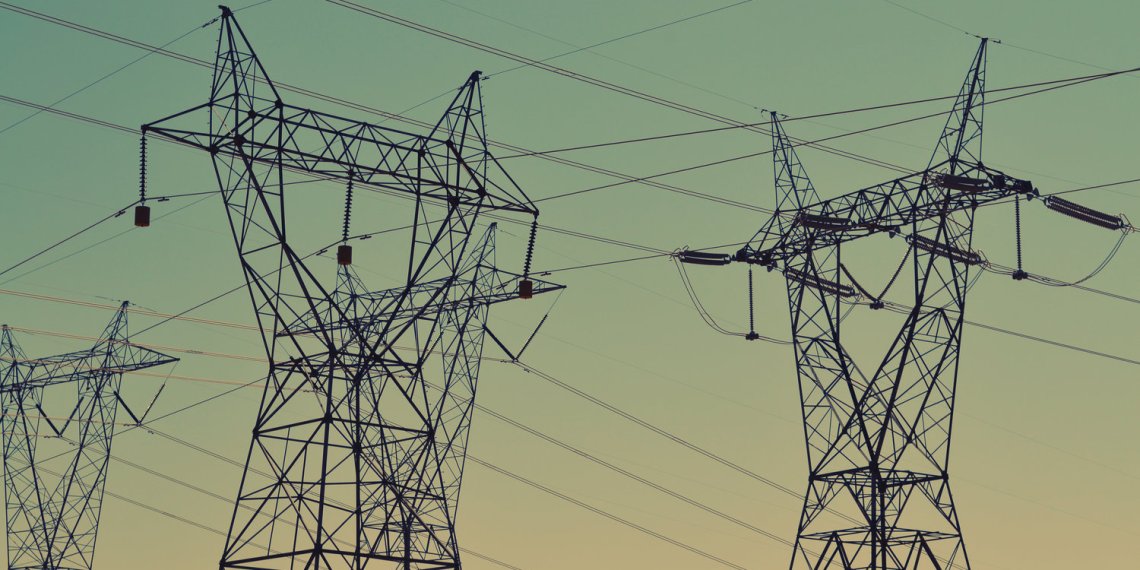
The Nigerian federal government has made a startling disclosure that the country’s electricity companies are grappling with a staggering capital deficit of N2 trillion ($2.5 billion), a substantial barrier hindering the revival of the industry and the provision of a stable power supply across the nation.

Olu Verheijen, an adviser to President Bola Tinubu on energy, disclosed these challenges in an interview with Bloomberg, emphasizing the urgent need for policy adjustments and recapitalization.

Verheijen shed light on the financial predicament of Nigerian electricity firms, citing excessive debt and inadequate capital as primary obstacles to investing in the expansion of household electricity distribution. She advocated for policies facilitating reorganization and the infusion of new capital through strategic partnerships.

“We need to set policies that facilitate reorganization and recapitalization and bring in new partners with new capital,” she said.

The adviser further highlighted the deficiencies in the national grid, pointing to factors such as inadequate pricing, inconsistent revenue collection, and the dilapidated state of the grid, which have collectively resulted in a scenario where a significant portion of Nigeria’s population resorts to generating their own power using noisy generators.

She said there is a stark comparison between the power supply in Lagos, where the grid delivers only 1,000 megawatts to a city of 25 million people, and Shanghai, which provides more than 30,000 megawatts at peak demand with a comparable population. This disparity underlines the critical need for comprehensive reforms in the Nigerian power sector.

One proposed solution put forth by Verheijen is a cost-reflective tariff review, coupled with the much-needed recapitalization. According to her, this dual approach aims to improve the liquidity and sustainability of the power sector.

She cautioned that without implementing tariff adjustments, the weakened Naira, which experienced a 50% drop against the dollar last year, coupled with escalating inflation, could lead to energy subsidies skyrocketing to N1.6 trillion in 2024.

“With the current tight fiscal space, the government’s ability to cover this shortfall is challenged. These issues have exacerbated the financial liquidity challenges in the sector,” she said.

Skepticism surrounds the idea of fresh investments

However, some analysts have expressed skepticism about injecting fresh funds into the power sector without addressing the fundamental shortcomings that have impeded its growth. Despite the federal government’s claim of spending N7 trillion in direct interventions since 2013, even after privatizing the generation and distribution arms of the industry, tangible progress remains elusive.

Nigeria currently possesses a total installed capacity for electricity generation of 13,000 megawatts, yet only 4,000 megawatts effectively reach homes and businesses. This substantial gap emphasizes the urgent need for improvements and investments in the distribution system to efficiently channel the country’s potential power generation to meet the energy needs of its population.

In comparison, South Africa, with a population a third the size of Nigeria’s, boasts a capacity of about 52,000 megawatts, three-quarters of which comes from a state-owned utility running aged plants.

Moreover, the historical data on grid collapses and power outages in Nigeria paint a concerning picture. In 2010, there were 42 instances of total and partial collapses, followed by 19 in 2011, 24 in 2012, and a consistent pattern of system failures in the subsequent years. In 2022 and 2023 alone, the grid collapsed eight and approximately 24 times, respectively.

The economic repercussions of these persistent challenges are significant, with the estimated cost of power outages in Nigeria standing at around $28 billion, equivalent to 2% of the country’s GDP.

Analysts believe that the revelation of a N2 trillion shortfall in Nigeria’s electricity sector, among other impediments, underscores the urgency for strategic reforms, investment, and policy restructuring to address systemic challenges and bridge the gap between potential power generation and actual delivery. Failure to tackle these issues, they say, could perpetuate the nation’s energy crisis, adversely impacting economic growth.
The Amazing SpaceX Global Satellite Phone

0

He is the generation’s finest innovator and markets have rewarded Elon Musk, anointing him the richest man on earth. In 2021, I wrote ‘… SpaceX Starlink would in near future develop a “special phone” which would make it possible for users to connect directly to SpaceX satellites without an “intermediary” or downlink station.’ Here, many challenged the impossibility on form factor, cost, etc.

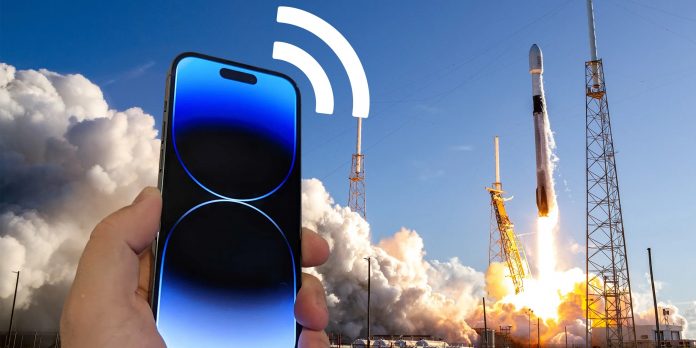
Good People, “e don happen” because Elon Musk happens to the world: “TMobile has announced that SpaceX’s Falcon 9 rocket has launched the first Starlink satellites with direct to cell capabilities…Starlink would begin offering SMS solutions in partnership with TMobile in 2024, with voice, data and IoT services to follow in 2025.” Yes, in the near future, you can get a phone hooked to Starlink sats with no need of any GSM, CDMA, etc signals. What that means is clear: you have a global phone, untethered to the national geographies and roaming cost paralysis.

Now, what needs to happen is something similar to Moore’s law to make the cost come down. Because it is electronics, that is guaranteed! Please check your telco holdings in the stock market. Shine your eyes because the kid from South Africa is hungry for more disruptions.

SpaceX is taking a big step into a new arena: cellphones. Elon Musk’s space-exploration outfit launched a rocket with the first satellites that can bring mobile phone service to more remote areas, T-Mobile announced Wednesday. The Starlink satellites will act like cell towers, but in space; they’ll first enable text messaging, and ultimately voice and data, too. In the U.S., SpaceX has partnered with T-Mobilefor the “Direct to Cell” initiative, and in Canada, with Rogers Communications. It’s also planning to offer the service in Australia, Switzerland, New Zealand, Chile, Peru and Japan.

Starlink is projected to hit about $10 billion in sales this year, with Musk reportedly mulling spinning it off in a separate IPO, perhaps within months, per Bloomberg.

SpaceX Sets New Record and Unveils Starlink Satellite Phone Future

SpaceX Sets New Record and Unveils Starlink Satellite Phone Future

15

Elon Musk’s SpaceX has shattered its own record for annual orbital rocket launches, achieving an astonishing 96 successful missions in 2023, a feat accomplished at an unprecedented pace, averaging a remarkable launch every four days.

Throughout the year, SpaceX executed 91 launches utilizing its Falcon 9 rocket and an additional five missions with the Falcon Heavy, surpassing the company’s earlier annual record of 61 orbital launches in 2022.

This monumental achievement underlines SpaceX’s rapid acceleration in space launch capabilities, evident in the fact that the Falcon 9 was launched more times in 2023 than in the entire first decade following its debut.

In tandem with these milestones, SpaceX reached significant technological feats. Among them, the landing of the 250th orbital rocket booster stands out, showcasing the company’s commitment to reusability in rocket technology.

Additionally, SpaceX achieved a groundbreaking milestone by launching and landing a single rocket 19 times, further pushing the boundaries of reusable rocket systems.

Notably, the company also set a new internal record for the shortest time between orbital launches, at just under three hours, a feat unmatched since NASA’s Gemini 11 mission in 1966.

Of note, SpaceX’s impressive launch count for the year excludes its pair of Starship test flights, which were not intended to carry commercial payloads bound for orbit.

Jon Edwards, SpaceX’s vice president of Falcon launch vehicles, took to social media to highlight Elon Musk’s previous hypothetical goal of 100 launches. Edwards expressed immense pride in SpaceX’s exceptional team, recognizing their monumental achievements and expressing anticipation for the upcoming year.

“Here we are. I’m so incredibly proud to work with the best team on earth, and so excited to see what we achieve next year,” Edwards wrote in his social media post, encapsulating the team’s achievements and setting sights on the future.

Looking ahead, SpaceX officials have unveiled ambitious plans to further expand their performance, aiming for as many as 144 Falcon missions in 2024. This fervent pursuit aligns with the company’s ongoing deployment of satellites for the Starlink system, a pivotal driver contributing to SpaceX’s valuation of $180 billion.

The remarkable advancements made by SpaceX in 2023, marked by unprecedented launch successes and reusability milestones, firmly position the company at the vanguard of space exploration and commercial satellite deployment.

With their sights set on ambitious targets for the upcoming year, SpaceX continues to fortify its standing as a trailblazing force in the aerospace industry, propelling humanity further into the realms of space exploration.

SpaceX is taking a big step into a new arena: cellphones. Elon Musk’s space-exploration outfit launched a rocket with the first satellites that can bring mobile phone service to more remote areas, T-Mobile announced Wednesday. The Starlink satellites will act like cell towers, but in space; they’ll first enable text messaging, and ultimately voice and data, too. In the U.S., SpaceX has partnered with T-Mobilefor the “Direct to Cell” initiative, and in Canada, with Rogers Communications. It’s also planning to offer the service in Australia, Switzerland, New Zealand, Chile, Peru and Japan.

  • Starlink is projected to hit about $10 billion in sales this year, with Musk reportedly mulling spinning it off in a separate IPO, perhaps within months, per Bloomberg.

  • (LinkedIn News)

Nigeria’s Billionaires Became Poorer in 2023 As Economic Own-Goals Destroyed Wealth

0

In Nigeria right now, everyone is a victim. Mike Adenuga lost the budget of some geopolitical zones in Nigeria as his wealth decreased from $6.3 billion in 2023 to $3.1 billion. As that was happening, Rabiu of BUA Cement decreased from  $7.6 billion to $5.7 billion in networt.

Of course, not to be accused of cheating others, Aliko Dangote made sure he lost money: “This saw Aliko Dangote move down to second position after his wealth declined from $13.5 billion in 2023 to $9.5 billion at the start of 2024”. This is a clear equal opportunity loss.

So, Dangote has lost his throne as Africa’s richest man to South Africa’s  Johann Rupert & Family. This poses a huge risk to Nigeria. If Dangote and others’ networts continue to drop, some of the loans they personally guaranteed may be in trouble. So, you are likely going to see some of their major projects punted.

Yet, Dangote, Rabiu, Adenuga, etc will be fine. My concern remains that corn seller who has become homeless because Nigeria happened to her. Good People, good luck to everyone in this age of mindless economic own-goals . May you NOT decline in 2024.

South African Billionaire Johann Rupert Dethrones Aliko Dangote to Emerge as Africa’s Richest Man

South African Billionaire Johann Rupert Dethrones Aliko Dangote to Emerge as Africa’s Richest Man

0

According to a recent list released by Forbes Magazine, South African Business Mogul, John Rupert has dethroned Nigerian Aliko Dangote to emerge as the richest man in Africa.

In the ranking, Johann Rupert & family’s wealth went from $10.7 billion to $10.3 billion to emerge as Africa’s richest man.

This saw Aliko Dangote move down to second position after his wealth declined from $13.5 billion in 2023 to $9.5 billion at the start of 2024.

The decline in Dangote’s wealth was attributed to several factors which include unfriendly economic policies, and naira devaluation, amongst others.

The Forbes Daily billionaires ranking platform, which monitors daily changes in the net worth of high-net-worth individuals globally, highlighting additional shifts in the billionaire rankings.

On the list, South Africa’s Nicky Oppenheimer experienced a marginal decrease, maintaining their third position with a wealth of $8,400,000,000.

While Nassif Sawiris moved up to the fourth position, displacing Rabiu Abdulsamad, whose wealth decreased.

A newcomer to the list, Nathan Kirsh from Eswatini, entered the sixth position with a net worth of $5,800,000,000, and Mike Adenuga, who held a prominent position in 2023, moved down four positions to become the tenth richest man in Africa.

Here is an updated list of Africa’s richest men for 2024

1. Johann Rupert & Family $10.3 billion

2. Aliko Dangote $9.5 billion

3. Nicky Oppenheimer & Family $8.3 billion

4. Nassef Sawiris $7.4 billion

5. Abdulsamad Rabiu $5.9 billion

6. Nathan Kirsh $5.8 billion

7. Issad Rebrab & Family $4.6 billion

8. Mohamed Mansour $3.6 billion

9. Naguib Sawiris $3.3 billion

10. Mike Adenuga $3.1 billion

Profile of Johann Rupert, Africa’s current richest man

Johann Peter Rupert (born 1 June 1950) is a South African billionaire businessman, who is the eldest son of business tycoon Anton Rupert and his wife Huberte. He is the chairman of the Swiss-based luxury goods company Richemont and the South Africa-based company Remgro.

Credited with having spearheaded Richemont’s prominence within the luxury sector since joining in 1984, Rupert holds the majority shareholding of parent company Compagnie Financière Richemont and also administers the activities of the investment company division Remgro.

The South African businessman founded Richemont in 1988 as a spin-off of Rembrandt Group Limited, a company established by his father Anton Rupert in the early ‘40s. In 1993 Rupert split the group’s tobacco and luxury goods activities between two subsidiary companies, with Vendôme Luxury Group overseeing the operations of the group’s watch, leather goods, and apparel interests.

In 1998 Rupert realigned Vendôme into the Richemont group with a buyout of the minority interest shareholders and set it on a steady growth strategy that saw the acquisition of brands such as Azzedine Alaïa, Roger Dubuis and Van Cleef & Arpels. In 2007 Rupert also entered into a 50/50 joint venture with Polo Ralph Lauren to form the Ralph Lauren Watch and Jewelry Company.

Since April 2010, he has been the CEO of Compagnie Financiere Richemont. He alsoowns part of the Saracens English rugby team and Anthonij Rupert Wines, named after his deceased brother.