DD
MM
YYYY

PAGES

DD
MM
YYYY

spot_img

PAGES

Home Blog Page 3943

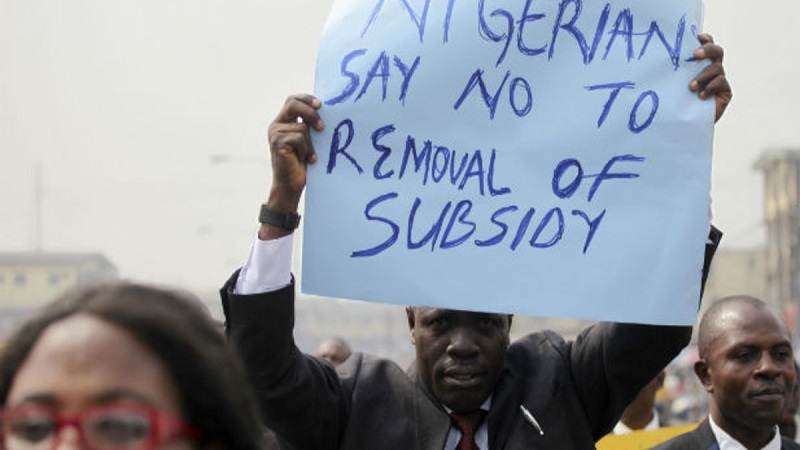
Where is Marx in President Tinubu’s Fuel Subsidy Removal Economic Reforms Speech?

0

As citizens, public affairs analysts, and social commentators continue to scrutinise President Bola Ahmed Tinubu’s nationwide broadcast on his plans to mitigate the effects of the recently removed fuel subsidy, our analyst examines the broadcast using Karl Marx’s political economy approach in this piece.

Class Struggle and Inequality: President Tinubu’s speech highlights the existence of a select group of unelected individuals who hold enormous influence over the country’s political economy. This group, referred to as the “elite of the elite,” is portrayed as having amassed significant wealth and power, creating a form of class struggle where the privileged few benefits at the expense of the majority. This observation resonates with Marx’s critique of capitalism, where he argues that society is divided into two classes – the bourgeoisie (the owners of capital) and the proletariat (the working class).

Capitalist Exploitation: The President’s condemnation of the fuel subsidy and the multiple exchange rate system reflects concerns over the diversion of national wealth towards a small group of individuals. Marx’s political economy focuses on the inherent exploitation within capitalist systems, where profits are extracted from the labor of the working class and concentrated in the hands of the capitalist class. The speech implies that these economic policies serve the interests of a privileged few at the expense of the wider population.

Commodification of Labour: The President’s emphasis on the need to end the fuel subsidy can be interpreted as a recognition of the commodification of labour. Marx argued that under capitalism, labour is treated as a commodity, and its value is reduced to the wages workers receive. In the speech, the President appears to challenge the notion that subsidizing fuel serves as a mechanism to control the cost of labour and maintain profits for a select group of capitalists.

Democratic Governance and Power: President Tinubu’s call for democratic governance and the sovereignty of the people aligns with Marxist critiques of the political superstructure under capitalism. Marx argued that the ruling ideas in society are the ideas of the ruling class, and democracy under capitalism may be distorted or influenced by the dominant economic interests. The President’s concern over the unelected elite influencing the political economy reflects this critique.

Promoting the Welfare of the Masses: While President Tinubu advocates for the removal of the fuel subsidy and the overhaul of the exchange rate system, he also emphasizes his commitment to promoting the welfare of the masses. This aligns with Marxist ideals of socialism, which advocate for a society where the means of production are collectively owned and the benefits are distributed more equitably among the population. The President’s proposed interventions to support small businesses, farmers, and education, as well as his focus on financial inclusion, echo these socialist principles.

Our analyst notes that it is essential to reiterate that this analysis is based on the content of the speech and does not provide a comprehensive understanding of President Tinubu’s overall political ideology or actions. Additionally, Marxist analysis is one among many lenses through which political economy can be examined, and other perspectives may offer different insights into the issues addressed in the speech.

President Tinubu Unveils Post-Fuel Subsidy Removal Economic Reforms, Promises Nigerians Better Future

0

In a televised address to the nation, President Bola Tinubu addressed Nigeria’s pressing economic challenges and unveiled a series of reforms to steer the country towards prosperity.

President Tinubu began his speech by reaffirming his commitment to speak plainly and transparently about the nation’s economic issues. He stressed the necessity of removing the fuel subsidy, which he believed had outlived its usefulness and cost the country trillions of Naira annually.

“The subsidy costs us trillions of Naira yearly. Such a vast sum of money would have been better spent on public transportation, healthcare, schools, housing, and even national security,” President Tinubu said.

He expressed his concern over the disproportionate influence wielded by a select group of unelected individuals in the country’s political economy, emphasizing the need for the people’s sovereignty to drive Nigeria’s democratic system.

The President highlighted that the multiple exchange rate system had become a highway for currency speculation, diverting funds from essential sectors. He emphasized the urgent need to reform this system to ensure fair and equitable distribution of resources.

President Tinubu reassured the nation that these measures were essential to secure a better future for Nigeria. He acknowledged the immediate hardships facing citizens due to increased fuel prices and rising costs of goods.

However, he went on to unveil an array of interventions aimed at mitigating the impact on the most vulnerable and stimulating economic growth.

Among the key measures, the President announced a N75 billion investment to support 75 manufacturing enterprises. These enterprises would receive access to credit at a low-interest rate, fostering sustainable economic growth and job creation.

Additionally, the administration is set to energize micro, small, and medium-sized enterprises and the informal sector with a N125 billion stimulus package. This initiative aims to provide conditional grants to one million nano businesses and fund 100,000 MSMEs and start-ups.

President Tinubu also underscored the government’s commitment to agricultural development, with a plan to cultivate 500,000 hectares of farmland for rice, maize, wheat, and cassava. This ambitious program targets small-holder farmers and private-sector players, fostering growth and food security.

President Tinubu unveiled the Infrastructure Support Fund for States, aimed at revamping healthcare and educational infrastructure and improving rural access roads.

President Tinubu acknowledged the immediate difficulties Nigerians faced but urged them to focus on the broader picture. He expressed confidence that these reforms would lead Nigeria out of the darkness into a brighter, more prosperous future.

The government assured Nigerians that the implementation of the reforms would be closely monitored, and interventions would be made if necessary to address inflation and gasoline prices.

President Tinubu ended his address by reaffirming his dedication to work for the welfare of the people and the progress of the Federal Republic of Nigeria.

Meanwhile, mixed reactions from citizens have been trailing President’s address, with some expressing optimism about the proposed changes and others expressing concerns over the immediate economic impact.

Tinubu Cautions Federal Schools to Stop Arbitrary Increase in Tuition Fees

0

President Bola Tinubu has cautioned federal institutions against implementing arbitrary increases in sundry fees payable as the economic challenges buoyed by fuel subsidy removal take a toll on Nigerians.

This was made known through a statement issued by Dele Alake, the special adviser to the president on communication and strategy, on Monday.

Following the assent of the ‘Student’s Loan Bill’ into law, federal schools have increased their fees by more than 100% – raising concern that higher education will soon become unaffordable to most Nigerians.

The Student Loan Act was designed to give Nigerians access to Students Loan Fund (SLF), which provides interest-free loans for the poor to pursue higher education.

Federal Government Colleges, also referred to as Federal Unity Colleges, increased their fees to N100,000, from N45,000. The University of Lagos (Unilag) and other federal universities also announced an increase in fees.

The president’s move comes amid criticism of the student loan act, which Nigerian students have lamented that it is impossible to access due to the rigorous criteria. Tinubu also approved the removal of all restrictions on the students’ loan to ensure it is easily accessible to students.

The sudden hike in tuition fees amid outcry over the soaring cost of living appears to have prompted the president to intervene.

According to Alake’s statement, the federal government has also ordered the release of over 200,000 Metric Tonnes of grains to families in 36 states and the Federal Capital Territory, Abuja. The move is geared toward mitigating hunger orchestrated by fuel subsidy removal and the floating of Nigeria’s forex market.

Read the statement below:

“In line with his promise to ensure no Nigerian student abandons his or her educational pursuits as a result of lack of money and economic circumstances of their parents, President Tinubu has also approved the removal of all restrictions on the students’ loan to make it available to any student or household that may desire it,” the statement reads.

“Similarly, President Tinubu has directed the authorities in all Federal Institutions of higher learning to avoid an arbitrary increase in sundry fees payable and where possible defer further increase so that parents and students don’t face too many difficulties.

“While it is important to reiterate that President Tinubu has directed the release of over 200,000 Metric Tonnes of grains to families in 36 states and Federal Capital Territory, Abuja, the government is working to ensure that vulnerable students can also benefit from conditional cash transfers and food distribution.

“The federal government salutes the courage, wisdom, and partnership of Nigerian Students as our country navigates this challenging time.

“President Tinubu will continue to prioritize education and the needs of the students, improve the welfare of teaching and non-academic staff, and invest in infrastructure to make our institutions of higher learning more globally competitive.”

The Principles and Perspectives of Self-actualization And Harnessing Universal Mental Energy for Self Mastery

0
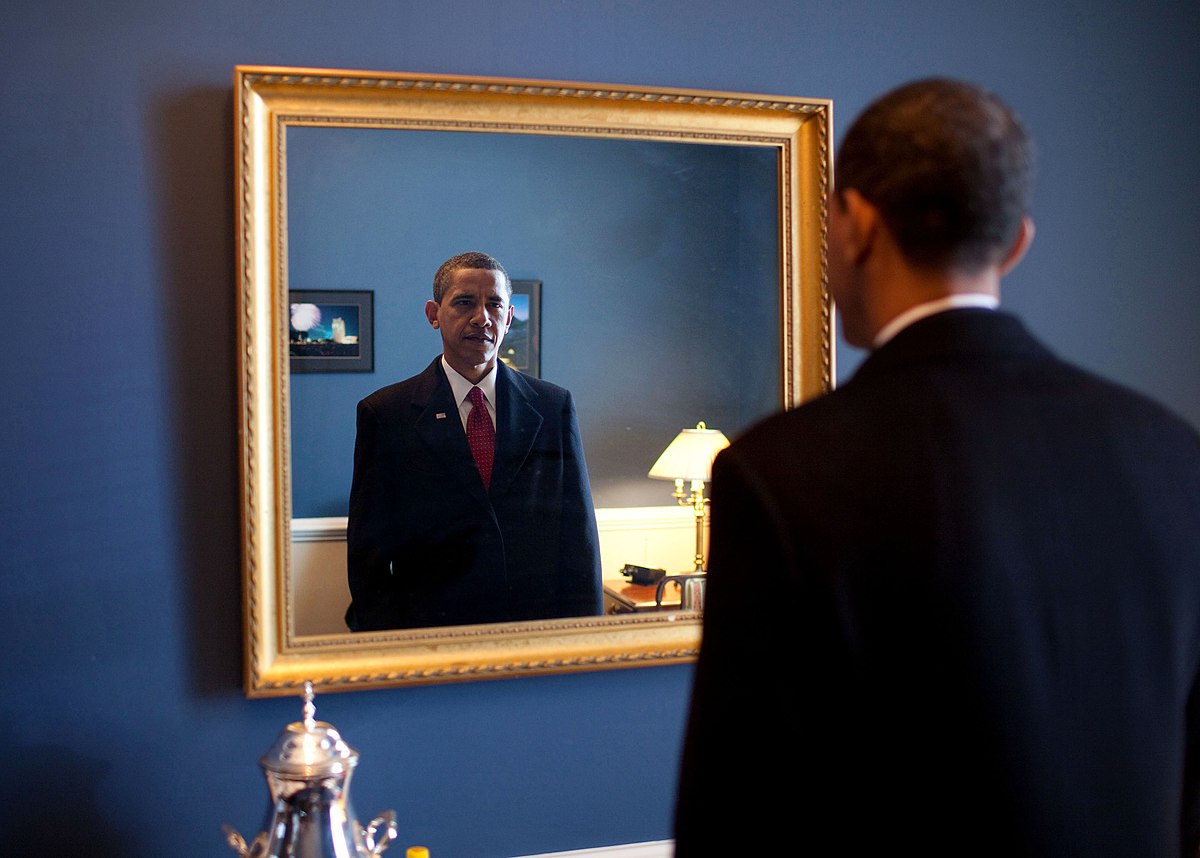
Obama family arrives at US Capitol prior to inauguration swear-in

Everyone desires to be happy and live to one’s utmost capacity. Thus, self-actualization is often seen as the ultimate goal of every individual. According to the American neoclassical psychologist, Abraham Maslow, self actualization is the ultimate humanistic need and is the fulfillment of the burning desire unique to every individual. The ability to live to one’s greatest capacity or attain one’s set goals not only inspires a sense of personal worth and fulfillment in the individual, it also helps one to build social proof and relevance in social relations.

Essentially, self-actualization is the fact of using your skills and abilities to get as much as you possibly could out of life. However, it has been observed that only very few people understand self-actualization as a principle, and how it can be observed in real-life situations compared to the large number of persons who wish to be self-actualizers.

Thus, this piece considers self-actualization from different perspectives so that readers can, hopefully, draw new insights that can help them to navigate barriers in their continuing scramble for self-actualization.

Principles of Self-actualization: The 3Ds

The principles and/or preconditions of self actualization include; Discovery, Development and Deployment of the self. These elements, also called the 3Ds of self actualization, indicate the journey begins with an inquiry into the self and then transition to the exertion of the self for positive outcomes. The elements are further discussed as follows:

Discover: The discovery of the self is the foundation of self-actualization. You need to discover your being, purpose and pattern. For example, asking questions such as what is your motivation, what is your disposition and what sort of orientation you have can help you to identify your strengths and weaknesses. Also, drawing a connection between these will help you transition into the second stage which is development.

Develop: Discovering your talents and knowing your strengths and weaknesses is not enough, you need to develop relevant skills based on the awareness of your talents and weaknesses to enable you to solve practical problems in your specific area of influence. For example, if you see yourself as a public speaker, you need to learn the art and technique of public speaking, and you need to constantly update yourself in your field as the world is evolving.

Deploy: The knowledge and skills acquired is being engaged in productive things. In other words, deployment is the process of actively engaging yourself for personal or social benefits. The essence of your talents and skills is to solve problems. Therefore, self-deployment is what positions you to be a problem solver and ultimately attain self-actualization.

The 3D process is iterative; as one journeys from discovery through deployment, one may need to revert to the previous stages to refine methods and ensure effective outcome. For example, during deployment, one may realize that one needs to develop new skills, update existing knowledge or conduct a fresh SWOT analysis. The iteration of the 3D is also subsumed in the trial and error theory which is discussed next.

The Trial and Error Theory

Propounded by American Psychologist, Edward Thorndike in 1913, the trial and error theory is predicated on the assumption that success and self-actualization is consequent to multiple trials and failures. In other words, one must have tried several different things and possibly failed at them before one reaches a point that one experiences self-actualization and fulfillment. The theory also hinges on the notion that failure is an integral part of success, and success is attained through engagement in random activities, especially in a novel field.

Trial and error begins with setting the goal, identifying the hindrances or challenges, taking chances at overcoming the challenges, eliminating failed methods or responses and adopting successful methods. The trial and error theory also stress on the importance of preparedness, active engagement and the law of cause and effect.

Maslow Hierarchy of Needs

Abraham Maslow propounded the hierarchy of needs in the early 1940s as a humanist worldview to people’s motivation. The theory is based on the assumption that humans have complex needs, and they tend to be happy and more productive when these needs are met. The theory is further explained as follows:

  • Human needs are in stages or ranked in ascending order and self actualization is the pinnacle of these needs. The needs are categorized into five namely; physiological, safety, love, esteem, and self-actualization needs.
  • The need for self actualization invariably arises when the lower needs are completely or partially met, though there may be instances where an individual may seek self actualization before consciously considering the other lower needs.
  • Self-actualizers tend to be more intrinsically motivated than extrinsically motivated. In other words, people attain self-actualization when their goal is considered as integral to their sense of being rather than just another achievement to add to one’s profile.
  • Self actualization is subjective; it can only be determined, measured and appraised by the individual, and we cannot but accept the individual proclamation of their self-actualization.
    Since individuals are moved by different desires at different levels of their existence, it follows logically that self-actualization differs according to individuals, contexts, and time.

From the 3D lens to the trial and error theory and to Maslow’s hierarchy of needs, self-actualization is seen as an inherent need of the individual. The quest for self-actualization involves application of certain techniques and satisfaction of certain conditions.

How You Can Harness the Universal Mental Energy for Self Mastery

As a man thinketh, so is he!

The forgoing aphorism by James Allen encapsulates the overarching impact of our mental status and thought process on our personal lives, relationships and destiny. Thoughts are said to be the nucleus of actions. Whether motivated by reason, pleasure or flight-or-fight, individuals generally act based on thoughts.

The essence of the mental is well advanced across many disciplines. In health and medicine for instance, the individual’s mental state is considered very important because wellness in other parts of the body depends on it. In philosophy, the mental is thought of as the source of life and all the vital energies that continually put life into shape. The idea of the mental as the basis of all creations constitutes the principle of mentalism, a perspective that is well entrenched in hermetic philosophy.

What is the principle of mentalism?

In Hermetic philosophy, the All is represented as the unfathomable universal creative energy. The principle of mentalism is an aspect of the philosophy that embodies the truth that the all is mind and the universe is mental. In another definition, the all is the substantial reality underlying all outward manifestations or appearance of things and it is a spirit that is undefined and unknowable.

The All can only be thought of or considered as a universal infinite living mind. The universe is simply a mental creation of the All, subject to the laws of created things, and the universe as a whole and its parts or units has its existence in the mind of the All, in which mind we live, move and have our being. This substantial reality that underlines all things takes off in the mind through the process of involution, and manifests physically through cultivation of energy which often involves pain.

The principle also explains the true nature of energy, power and matter and why and how all these are subordinate to the mastery of the mind. All matters and/or physical creation of man are essentially part of the mental process of the universe and are conceived through thought.

One of the old Hermetic masters wrote long ago; ‘’he who grasps the truth of the mental nature of the universe is well advanced on the path to mastery. Without this master key, mastery is impossible, and the student knocks in vain at the many doors of the temple.’’

How to master the mind and mental

Positive thinking

The mind generally works to sense opportunities and dangers in our environment. The Amygdala, a part of the mental process that senses danger and triggers the flight-or-fight condition, was first developed in man, and has been rooted in his mental nature through thousands of years of evolution.

The capacity for conscious positive thinking developed much later and tends to be slow. This probably accounts for why negative thoughts come almost unconsciously and why many individuals cannot help but have them. However, since thoughts can only be replaced rather than dispelled outright, it is recommended that one practice conscious positive thinking to counterbalance the negative thoughts.

Self affirmation

Self affirmation involves using the power of words and the law of attraction to one’s advantage. It is the process of continuously holding a positive thought in the conscious mind until it is adopted and entrenched in the subconscious mind which is the seat of vital energies that bring all thoughts to manifestation.

Creative imagination

Creative imagination is training and engaging the mind to inwardly and independently develop solutions to problems rather than depend on existing knowledge. Creative imagination is the process of mentally activating part of the infinite intelligence, or the All, embedded in us.

Practice

potential remains only in the mental until they are transmuted into their physical equivalent through practice or active engagement and learning. One only becomes through practicing or doing, not thinking.

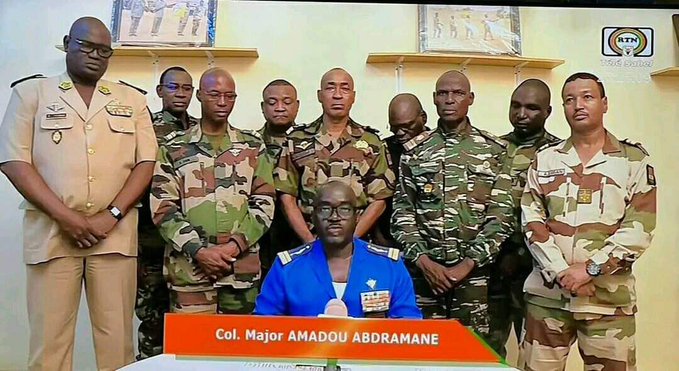
ECOWAS, France MUST Not Intervene Militarily in Niger Republic Against Coup Plotters

1

Most modern citizens of the world do not support coups. And most global citizens do not support what happened in the Niger Republic, even though it seems some of its citizens do. Whether you call it democracy or military-cracy, people want good governance. And when they do not have that, most do not care about the type of attire (agbada, khaki, suit, etc) the person wears to work as a president.

Where am I going? I am not in support of the ECOWAS going after the coup plotters militarily. Also, I am not in support of France going into Niger to rescue the deposed president militarily. 

First, ECOWAS can win the battle against the coup plotters but it cannot win the war on providing the good governance the Nigerien people want (most ECOWAS countries cannot even help themselves economically), and if that does not come, nothing will change. Rather, pockets of crises will emerge, post-ECOWAS intervention.  I have been to Sierra Leone  many times, as part of the United Nations Lesson Learned programme, where we dealt with young people who due to wars never entered any school up to their 17th birthdays. Any ECOWAS military intervention will become a tribal war in Niger because one tribe will say the deposed government invited foreigners. No one wants that.

Secondly, from the experience in Libya, it is evident that France cannot deliver anything positive after NATO took down Ghaddafi, and allowed Libya into a miry clay. So, no France in Niger on this matter.

What do we do? Dialogue. ECOWAS should deploy carrots here. Tell the men that ECOWAS does not want coups and a timetable must be put in place for return to civilian rule, and if they do, ECOWAS and partners will inject $1 billion into healthcare, education and basic food (via regional guarantees to investors into Niger).

That deal will work because that was the fundamental reason why the coup plotters came. Moreso ECOWAS should harmonize its security playbook for all member nations, and make the region safer.. The coup plotters had complained of insecurity, but we can all agree that insecurity is not isolated to Niger alone  in the ECOWAS region.

ECOWAS may not have money to invest. But it can give regional sovereign guarantees which can be backed by AfDB and World Bank on this matter.

I wrote investments via guarantee. You are not sharing any money! You are simply guaranteeing investors’ risks

Comment on Feed

Comment 1: Ndubuisi Ekekwe, the putschists, did not seize power in Niger because the people wanted ‘Good Governance’ (research on the root cause); they did the coup for the following reasons:

  • Bazoum is from a minority group (Shuwa-Arabs are just 5% of the Niger).
  • Tchiani was to be retired; so he played a fast one on Bazoum
  • This was the first civilian transition in Niger since 1960. The military is used to being in power

There has been no recorded protest against Bazoum by Nigeriens since he resumed; therefore, the popular rationale of ‘Bad Governance’ is a non-starter. This is just a military pretence.

What will make the junta case worse is that Tinubu has been at the receiving end of military abuse (his exile between 1993 and 1998), and he hates military incursion so much.

I predict pressure on the junta and a possible military operation to put sense in those guys. Allowing Tchiani to plan for election is an admittance that they are right in their action.

I support economic and diplomatic pressure to remove the khaki boys and possible military operations if they refuse the voice of reasoning. Ghana and Nigeria are at risk if we continue to accept the military lame excuses to seize power.

My Response: “- Bazoum is from a minority group (Shuwa-Arabs are just 5% of the Niger).” – you just explained why military solution will not work. Do it and it becomes a tribal war. Niger is a shield to Nigeria from Libya. Once it begins a war, it means from Libya to Niger and to Nigeria are at war. Magically, ECOWAS is done. So, while my postulation may not be perfect, it is the only way NOT to extend the Libya cold war into West Africa.

Comment 2: This is a more plausible approach to the situation in Niger today. The display of arrogance and threats towards the military takeover, signposts the archaic option ECOWAS has always adopted in tackling regional crises. Good governance is at the heart of the crisis and, the regional body must bring palliative to the table in order alleviate the suffering of the civilians. ECOWAS needs to rewrite their rules of engagement in the region.

Comment 3: Prof, that “timetable” could turn to another 8 years of brutal rule by the junta.
The simple solution will be to show these coup plotters and the rogue politicians the hard ways – take them out with force, lock them up and throw the keys in ocean.
A word should be enough for the wise…

Comment 3R: There is no place in this world (may not be 100% right) where peace is restored through the use of military force (the hard way) as you stated. Peace is restored through dialogue and that is the surest way.

ECOWAS needs a new playbook in handling such situations. What ever decision taken will either tame or mar the current tension surrounding this matter.

My Response: Which Army in ECOWAS will do that? This one that cannot even catch escaped prisoners? You can take off the coup plotters but you have no chance to restore peace because if Niger falls, Libya has a direct link to Nigeria. Niger has been protecting Nigeria from the mess in Libya.

Comment 4: It’s sad when a prevalent ugly reality makes other far worse realities start to seem attractive. This is the case across Africa.

It will be a disaster of epic proportions not just for the people of Niger, but globally, if ECOWAS and/or the West adopt a military approach to this recent junta in Niger. The consequences would be far-reaching, especially for an already weakened Nigerian state – itself battling a crisis of acute poverty, near instability and legitimacy. For the longest, this country has served as a buffer of some sort for Nigeria against the mess made by Obama-led NATO across the Sahel (Nigeria is affected regardless but it could have been worse).

A secondary effect, which one expects the EU to fully grasp will be the migrant crisis that’s sure to erupt along their corridors. This will be particularly interesting considering the evergrowing anti-immigrant sentiments across many parts of Europe.

This could easily be a very consequential moment for the continent’s history, and it calls for political dexterity, especially on the part of West African leadership. ECOWAS and Nigeria in particular, cannot allow itself become a pawn in the West’s needless proxy wars.

Wisdom is profitable to direct.

Comment 5: Just as you pointed out using force won’t solve the problem of Military intervention in government. Diplomacy should be used especially by ECOWAS to mediate in this situation.

Jaw jaw approach is strongly advised , deploying forces to Niger will have colossal effects especially as concerned loss of lives and properties.

Secondly , the AU, ECOWAS and other international organisations should look into what causes military incursions with a view to solving the root causes to avert future occurrences .