DD
MM
YYYY

PAGES

DD
MM
YYYY

spot_img

PAGES

Home Blog Page 3951

Meta Plans to Add More Retention Driving Hooks on Threads to Entice Users Back on The App

0

Tech giant company, Meta, is looking at adding more retention-driving hooks to its newly launched app Threads, to entice users to return to the app, amid a decline in usage.

Despite the groundbreaking launch of Threads, which recorded 100 million users signing up in less than five days, the app has struggled to maintain daily active users after a burst of sign-ups.

Sensor Tower data revealed a 20% drop in daily active users and a 50% decline in time spent on the app one-week post-launch. Current reports disclose that over half of users have abandoned the platform.

The company’s CEO Mark Zuckerberg, during an internal town hall meeting, while addressing the decline in usage of Threads, said that retention of users on the text-based app was better than executives had expected, though it was not perfect.

Obviously, if you have more than 100 million people sign up, ideally it would be awesome if all of them or even half of them stuck around. We’re not there yet,” he said.

Zuckerberg further stated that he considered the drop-off normal, and expected retention to grow as the company adds more features to the app, including a desktop version and search functionality.

Among the proposed retention hooks are improved friend-finding capabilities, enhanced features like photo and video sharing, and tighter integration with other Meta apps like Facebook and Instagram.

While Meta is committed to addressing the declining usage of Threads, the success of the retention hooks however remains uncertain. Its major rival platform Twitter is also introducing new features to the app, aimed at retaining users.

Experts have stated that users decline on the Threads app, shows that it will still be an uphill climb for the platform to carve out space in most users’ social network routines.

While there was an initial intense interest during the launch of the app with users checking out the platform, not every one of them has returned to the app, as the hype seems to be fading away.

This change in user behavior emphasizes the difficulties new platforms face in retaining interest once the initial curiosity subsides. Threads face a challenging journey to become an integral part of users’ social media habits.

The backing of Meta and the strategic integration with Instagram gave Threads much higher sign-ups compared to other newly launched apps, however, it will need a much more compelling value proposition to retain users.

Meanwhile, Threads is still in its early days and should not be written off prematurely, as it has a lot to offer users after Mark Zuckerberg during the launch promised that Threads would be a digital town square filled with positivity and connection.

Despite the decline in user engagement on the app, it could still pose a significant threat to its main rival Twitter, as the app continues to improve and add relevant features.

Albeit, it will not be an easy feat, as a Tekedia publication stated that text-based microblogging has already been won by Twitter, noting that this playbook is a first-scaler advantage and winner-take-all. This is to say that, when it comes to micro-blogging, Twitter is the absolute category King.

Why Is Everyone Talking About Pomerdoge (POMD) As Dogecoin (DOGE) And Litecoin (LTC) Continue to See Holders Moving Over

0

Pomerdoge, a rising star in the memecoin scene, is making significant waves among crypto enthusiasts. As this Play-to-Earn memecoin currently offers discounted tokens during the presale phase, it’s seeing a noteworthy influx of holders from Dogecoin (DOGE) and Litecoin (LTC) communities. But what’s causing this shift? Let’s investigate further.

Click Here To Find Out More About The Pomerdoge (POMD) Presale

Pomerdoge (POMD)

Pomerdoge is a promising new entry in the Play-to-Earn (P2E) cryptocurrency landscape, offering a platform where players can interact, compete, and earn. This concept has been built with the objective to create a vibrant economic system where participants can earn while having fun.

The POMD token, an ERC20 utility token, lies at the core of the Pomerdoge ecosystem. It will facilitate transactions and empower the native rewards system within the platform. Notably, early adopters participating in the presale can earn a share of the game’s revenue by holding onto POMD tokens.

POMD is also a meme token that seeks to take on the likes of Pepe (PEPE), Shiba Inu (SHIB), and Dogecoin (DOGE). Early speculators believe that POMD captures the essence of a meme token and has the potential to outperform its predecessors, which have all seen tremendous gains since its launch.

The first stage of the Pomerdoge presale is currently ongoing, with tokens available at a bargain price of just $0.007 each. As the presale moves forward, the price is set to increase periodically. This early entry point could provide an excellent opportunity for investors ahead of the token’s listing on exchanges and the subsequent price discovery process.

Dogecoin (DOGE)

Dogecoin (DOGE), an internet meme-turned-digital currency, has built a reputation as the quintessential “people’s coin”. It has gained popularity due to its affordability and accessible nature, making it an attractive choice for new and casual investors.

Tesla and SpaceX CEO Elon Musk played a crucial role in Dogecoin (DOGE)’s remarkable climb to $0.74 in 2021. Musk would regularly tweet about Dogecoin (DOGE) to his 140+ million followers, and the coin enjoyed a surge in price each time.

Dogecoin (DOGE)’s allure is deeply rooted in its meme status, its celebrity patronage, and its speculative nature. It relies on FOMO (Fear of Missing Out) to sustain its price, which is why Dogecoin (DOGE) currently trades at 90% down from an all-time high.

Dogecoin (DOGE)’s struggle to breach the $0.070 barrier is noticeable, signaling the weakening in buying support as Dogecoin (DOGE) holders move over to the newer and more attractive Pomerdoge.

Litecoin (LTC)

One of the earliest cryptocurrencies, Litecoin (LTC), emerged in 2011 and has established a name for itself as a “lite” version of Bitcoin (BTC). Litecoin (LTC) has had a strong presence in the crypto space, with its value twice surpassing the $400 mark, in 2017 and again in 2021.

Recently, Litecoin (LTC) made waves in Q2 2023 as its prices leaped from $69 to a noteworthy $114 within a fortnight. This surge in Litecoin (LTC)’s price can be traced back to the upcoming halving event, which traditionally triggers increased demand and subsequently propels prices upward.

However, despite its impressive Q2 2023 trajectory, Litecoin (LTC) has experienced a wave of selling pressure, causing it to dip below the $100 support and resistance zone. This event left Litecoin (LTC) traders scratching their heads as it deviated from previous trends.

It appears that Litecoin (LTC)’s market impact may not be as impactful globally as it was in past years. As the Litecoin (LTC) halving event approaches, now less than a month away, analysts suggest that the bullish narrative surrounding this event has fizzled out and that the Pomerdoge presale has taken the spotlight.


Find out more about the Pomerdoge (POMD) Presale Today

Website: https://pomerdoge.com/

Telegram Community: https://t.me/pomerdoge

I Expect New Changes in Nigeria’s Fuel Subsidy and FX Policies within 6 Months

1

Nigeria will either pause the full floating of its currency or return back to fuel subsidy within 6 months. Nigeria’s weakest currency stability point remains that it has to continue importing petrol since it does not have any working refinery. That creates a vicious circle since those importing fuel will mark up prices, to cushion for the next round of import, working to stay ahead of currency deterioration, in a system with no official benchmark. 

In other words, if you bring it in at N760/$, you will likely expect that when you finish selling, you may need N770/$ to get back to parity, and if that unpredictability remains, stabilizing Naira becomes challenging.

So, to solve that problem: the government will have to freeze the floating of the currency, at least partially, or will have to bring back fuel subsidies, or do both. Expect your pick within the next 6 months.

Investors, plan accordingly because we’re going to have more shifts for a new equilibrium point. The stable state is not close because the demand for US dollars remains well higher than the supply in the nation. That lack of parity will drive new policy changes in the nation since we’re import dependent on many things.

I do not like when the government shares money to citizens in Nigeria because it is all an illusion. Why? My village in Ovim, Abia State, has NEVER received any of these funds. And we’re happy that NEMA does not have us in its database. 

In short, during Covid palliative sharing, it is on record that Ovim rejected what the state government shared, noting that its sons and daughters from around the world provided well enough. 

If we have that mindset, Nigeria can just focus on using the “sharing” money to fix and boost our refining capacity.

The Refining Capacity

Note that on full production capacity of Dangote Refinery which has 650,000 barrels per day capacity and NNPC which has a total refining capacity of 445,000 barrels in four refineries, Nigeria should be fine. Post subsidy removal, Nigeria consumes about 45 million liters per day, from more than 60 million liters; that is about 281,000 barrels per day. Indeed, all the core pieces Nigeria needs to strengthen its currency are there if only the national refineries are working. Of course, we expect the Dangote Refinery to begin production soon.

Technically, if those refineries work and Dangote Refinery begins, Nigeria’s balance of payment could improve – and Nigerian Naira will strengthen.

Importantly, if I may add, we must have decency and honour to stop the madness of commissioning projects which are not ready, from bridges to plants, to hospitals, at local, state and federal levels. When we do those things, we distort any sense of reasoning. That deception must end and our press men and women must do their jobs, pointing out those things.

The Power of Ethnic Attire at Global Events

0

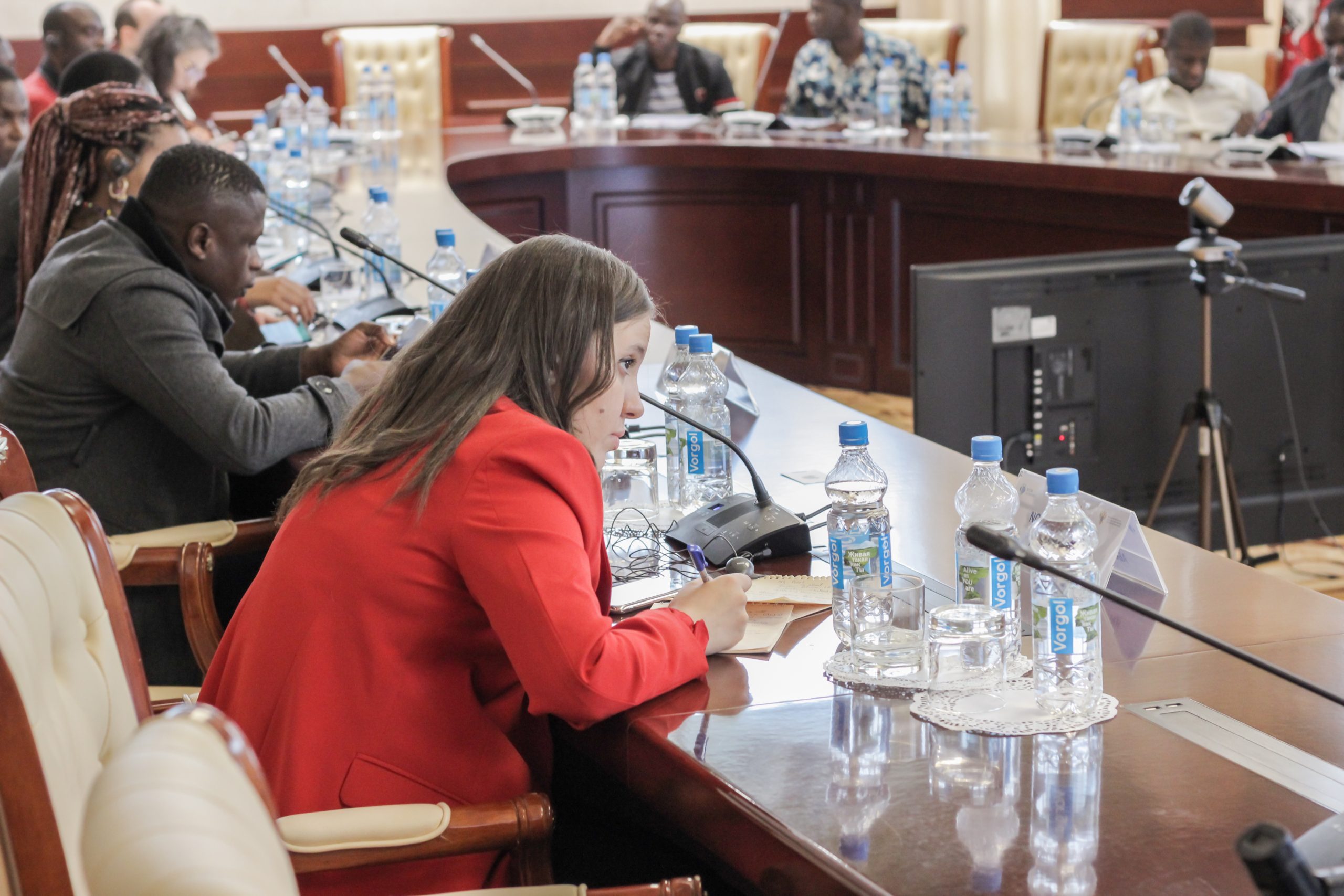
In today’s interconnected world, where cultures and nations converge, preserving and promoting one’s cultural identity has become a paramount endeavour. In line with his interest in promoting African culture, values, and norms, our analyst was one of the participants at the Russian-African Media Forum held, between July 24 and 26, 2023, at the Academic Council Hall of Patrice Lumumba Peoples’ Friendship University.

On the side of the event, our analyst observed some Africans who wore African attire and sought their audience for interactions. Therefore, this piece explores the significance of traditional ethnic attire and its role in representing African culture at global events.

Our attire speaks volumes about who we are, where we come from, and what we stand for. It serves as a symbolic bridge connecting our past, present, and future. Just as Mustafa Adeitan and Kingsley Kesseh, both are postgraduate students at the National Research University Higher School of Economic, proudly wore their Yoruba cultural outfits. “We embrace a powerful medium to communicate our cultural heritage to a global audience. Traditional ethnic attire, like the Buba and Agbada, carries immense historical and cultural value.

(L) Kingsley Kesseh (R)Mustapha Adeitan

These clothing styles are not merely garments but representations of our collective identity, passed down through generations. When worn at international events, they evoke a sense of pride and belonging, breaking barriers of language and showcasing the beauty of our diversity.”

Events like the Russian-African Media Forum offer a unique opportunity to promote cultural awareness and understanding. By donning their traditional outfits, Mustafa and Kingsley demonstrated their commitment to sharing the unique aspects of Yoruba culture. Through these sartorial choices, they invited dialogue and engagement, encouraging others to learn about their traditions, customs, and values.

Preserving and promoting cultural identity is a shared responsibility, one that transcends borders and unites humanity. Mustafa Adeitan and Kingsley Kesseh demonstrated the power of traditional ethnic attire as a means to project their Yoruba heritage and showcase the richness of African culture at the Russian-African Media Forum.

Connecting with the Place of Africa in the Changing World

Africa occupies a unique and evolving position in the changing world, and cultural preservation plays a vital role in shaping its narrative and future. As globalization continues to impact societies across the globe, the preservation of African cultures becomes increasingly crucial to maintaining cultural diversity and promoting a balanced global discourse.

Identity in the Face of Globalization: Africa’s diverse cultures and traditions face the risk of being homogenized in the face of rapid globalization. Wearing traditional ethnic attire at international events signifies a conscious effort to resist cultural assimilation and celebrate the uniqueness of African identities. By asserting their cultural pride, individuals like Mustafa and Kingsley contribute to the preservation of African heritage on the global stage.

Redefining Africa’s Image: Africa has often been portrayed in a one-dimensional manner in the global media, focusing on challenges and stereotypes. By showcasing their cultural heritage at international events, Africans can redefine Africa’s image, highlighting its vibrancy, rich history, and cultural contributions to the world.

Soft Power and Global Influence: Embracing and promoting cultural preservation through events like the Russian-African Media Forum enhances Africa’s soft power and global influence. Cultural exchange fosters greater understanding and appreciation between nations, paving the way for stronger diplomatic ties, economic partnerships, and collaborative efforts on global challenges.

Negotiations Ongoing on Stablecoin Tethering and Bank Licensing Enforcement (STABLE) Act within US House

0

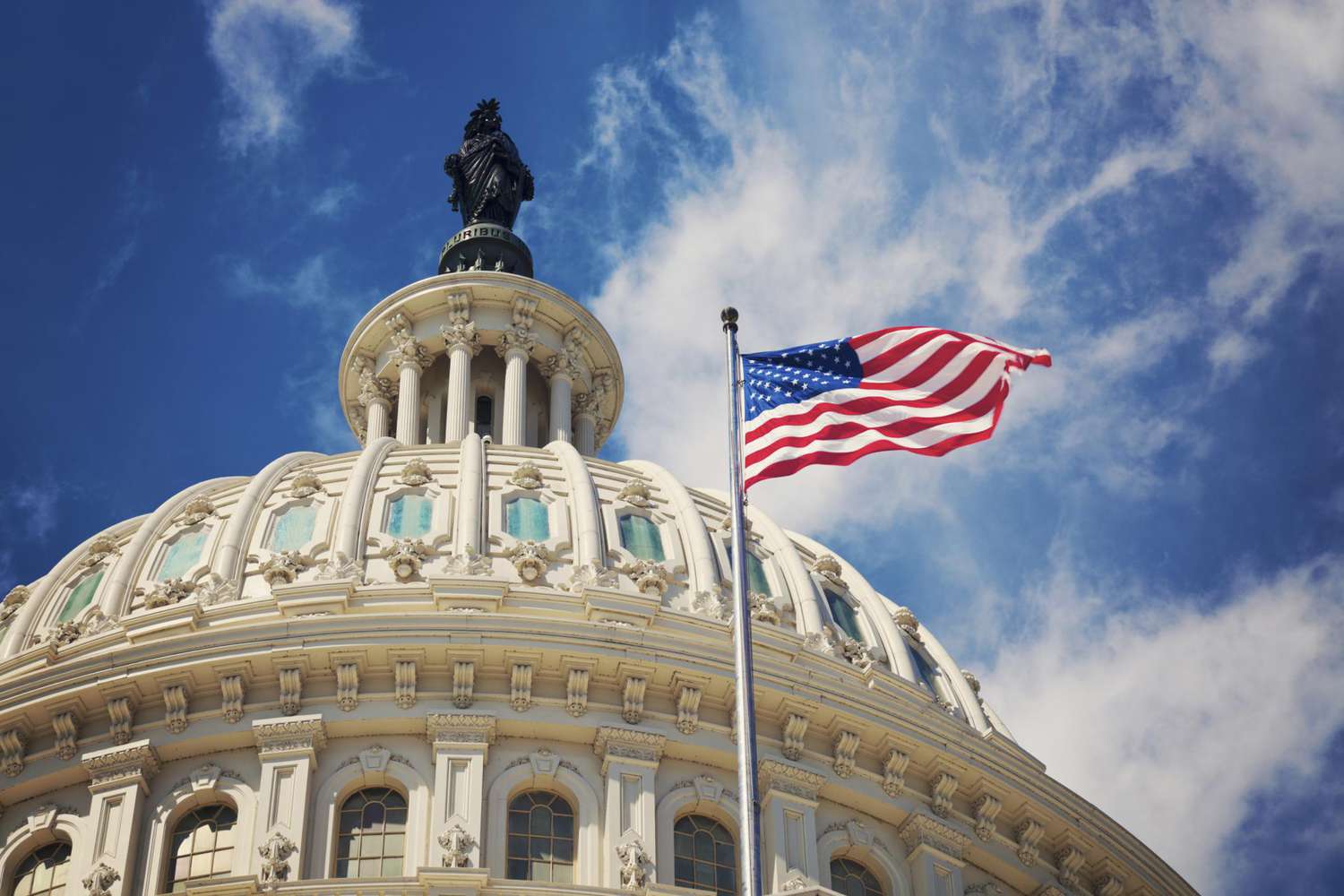
The US House of Representatives has failed to reach a consensus on the proposed legislation to regulate stablecoins, a type of digital asset that is backed by real-world assets or stablecoins. The bill, known as the Stablecoin Tethering and Bank Licensing Enforcement (STABLE) Act, was introduced by Rep. Rashida Tlaib (D-MI) in December 2020 and aimed to protect consumers from the risks posed by stablecoins, such as volatility, fraud, and money laundering.

The bill would require stablecoin issuers to obtain a banking charter, comply with the same regulations as banks, and maintain reserves at the Federal Reserve. The bill would also give the Federal Reserve the authority to audit stablecoin issuers and impose penalties for non-compliance. The bill’s supporters argue that stablecoins pose a threat to the stability of the financial system and the sovereignty of the US dollar, and that they need to be regulated to prevent another financial crisis.

However, the bill has faced strong opposition from the stablecoin industry, as well as some lawmakers from both parties who believe that the bill is too restrictive and would stifle innovation and competition in the crypto space. They argue that stablecoins are not equivalent to bank deposits, and that they provide a faster, cheaper, and more inclusive alternative to traditional payment systems. They also claim that the bill would violate the constitutional rights of stablecoin users and issuers, and that it would create a monopoly for the Federal Reserve.

The bipartisan negotiations on the bill have been ongoing for months, but they have reached an impasse in July 2023. The main points of contention are the definition of stablecoins, the scope of regulation, and the role of the Federal Reserve. The negotiators have failed to find a compromise that would satisfy both sides and have decided to end the talks without reaching an agreement.

The breakdown of the negotiations means that the bill is unlikely to pass in its current form, and that stablecoins will remain largely unregulated in the US for the foreseeable future. This could have significant implications for the stablecoin market, which has grown rapidly in recent years and now has a total market capitalization of over $200 billion. Some experts predict that stablecoins will continue to flourish in the absence of regulation, while others warn that they will face increased scrutiny and legal challenges from regulators and lawmakers.

In a similar twist, the US House Agriculture Committee has approved a bill that would create a regulatory framework for the crypto market. The bill, called the Digital Asset Market Structure and Investor Protection Act, aims to protect investors, promote innovation, and provide clarity for digital asset issuers and intermediaries.

The bill would define digital assets as securities, commodities, or digital asset securities, depending on their characteristics and use cases. It would also establish a federal digital asset regulator within the Securities and Exchange Commission (SEC) to oversee the crypto market and coordinate with other agencies.

The bill would also require digital asset issuers and intermediaries to register with the SEC and comply with reporting, disclosure, and anti-money laundering rules. Additionally, the bill would create a digital asset investor protection fund to compensate investors in case of fraud or theft.

The bill’s sponsor, Representative Don Beyer, said that the crypto market is growing rapidly and needs a clear and consistent regulatory framework. He said that his bill would provide certainty for innovators, protect consumers, and ensure the US remains a global leader in the crypto space.

The bill has received support from several industry groups, such as the Blockchain Association, the Chamber of Digital Commerce, and Coin Center. They praised the bill for recognizing the diversity of digital assets and creating a balanced approach to regulation.

However, the bill has also faced some criticism from some crypto advocates, who argued that the bill would stifle innovation and impose unnecessary burdens on the crypto industry. They said that the bill would give too much power to the SEC and create confusion for state regulators. The bill will now move to the full House for consideration. If passed, it will then need to be approved by the Senate and signed by the President before becoming law.