DD
MM
YYYY

PAGES

DD
MM
YYYY

spot_img

PAGES

Home Blog Page 3951

On Cute Abiola, The Illegality of Using Police Uniforms for Skit Making

0

The Nigerian police force public relation unit of the force headquarters released a publication some days back which was signed by the force public relations officer, ACP Olumuyiwa Adejobi, stating that the force is coming after a famous skit maker Mr Abdulgafar Abiola, aka cute Abiola, and will prosecute him for always wearing the Nigerian Police Force uniforms in some of his skits, and painting the Nigerian police in a bad light.

Many people have raised concern as to the reason the police force headquarters would want to go after a skit maker for shooting his skits dubbing a police attire. Some said that it is all entertainment and that the police have no jurisdiction or power to arrest and prosecute a person merely because that person dubbed a police attire to shoot a video. 

Now let’s push emotions and sentiments aside and see what the law says about this act of using police uniforms or any other law enforcement agency uniform for skits or for whatever reasons.

Section 251 of the Criminal Code Act which was captioned, Bringing contempt on the uniform, states thus; 

Any person who, not being a person serving in any of the armed or police forces of Nigeria, wears the uniform of any of these forces, or any dress having the appearance or bearing any of the regimental or other distinctive marks of any such uniform, in such manner or in such circumstances as to be likely to bring contempt on that uniform, or employs any other person so to wear such uniform or dress, is guilty of a simple offense, and is liable to imprisonment for three months or to a fine of forty naira.

Subsequently, the Penal Code in its Section 133 provides as follows;

Whoever not belonging to a certain class of public officer wears any dress or carries a token resembling a dress or token used by that class of public officer with the intention that it may be believed that he belongs to that class of public officer, shall be punished with imprisonment for a term which may extend to six months or with fine which may extend to forty naira or with both.

Both the criminal code applicable in the South and the penal code applicable in the North criminalizes the use of police uniforms or any other force agency uniform for skit-making, content creation or for whatever reasons. The punishment for this offense as provided by law is a 3-6 months imprisonment term or a fine of 40 naira or both. 

The offense committed when a person who is not in any law enforcement agency in Nigeria wears a force uniform for whatever reason is contempt of the uniform and impersonation of an officer. To   that extent, anybody who wants to shoot a movie, skit or whatever reason that would warrant that person to dub on a police uniform or any other force uniform but obtain express consent from the law enforcement agency or risk getting prosecuted for the offense of bringing contempt to the force uniform and impersonation of an officer of the law. 

Details of the CBN Regulatory Framework for USSD Operations in Nigeria

0

Details of the Central Bank of Nigeria (CBN) Regulatory Framework for Unstructured Supplementary Service Data(USSD) in Nigeria

Mobile telephone communications have undoubtedly become a dependable way of enhancing financial inclusion through the introduction of mobile payments, mobile banking, and e-commerce as well as a range of other remote digital financial transactions aided by mobile telephony.

Mobile-based financial service providers have options of adopting varying technologies for enabling access and transmitting data including Short Messaging Services (SMS), USSD, Interactive Voice Response(IVR), Wireless Application Protocol (WHP)& SIM Took Kit (STK).

The USSD technology which is the focus of this article is a protocol used by the GSM network to communicate with a service provider’s platform. It is a session based, real time messaging communication technology which is accessed through a string which starts normally with an asterisk (*) & ends with a hash (#). USSD technology is considered cost effective, more user-friendly, faster in concluding transactions and handset agnostic.

This article will be looking at the provisions of the regulatory framework put in place by the Central Bank of Nigeria (CBN) governing the operations of USSD-based financial service operations.

What are the objectives of the CBN USSD framework?

The main objective of this framework is to establish the rules and risk mitigation considerations when implementing USSD for financial services offerings in Nigeria.

Who are the recognized participants or eligible providers of USSD-based financial services in Nigeria?

– Banks :- Banks provide USSD strings and menu-driven apps to facilitate banking services to other customers.

– Payment Service Providers (PSPs) :- These are switch service, applications vending service, and Value Added Service (VAS) providers who provide products and services using the USSD protocol.

-Mobile Money Operators (MMOs):- Able to reach the unbanked in rural areas where there are no financial touch points through USSD services.

– Mobile Network Operators (MNOs) :- MNOs and Aggregators utilize USSD to interact with and provide services to their customers.

– Customers :- Initiate transactions through a USSD string.

What are the eligibility criteria for a unique short code?

– MMOs are eligible for the issuance of short codes from the NCC after meeting the necessary requirements of the NCC for the issuance of same.

– For those other than MMOs, a letter of comfort from the CBN would be required before being considered for the issuance of the short codes by the NCC. 

What are the provisions of the guidelines on USSD vulnerabilities and their mitigation?

– USSD based financial transactions require end-to-end encryption to protect the integrity of the financial information. To this end, all providers of USSD based financial services shall :-

a) Put in place, a proper message authentication mechanism to validate that requests/responses are generated through authenticated users.

b). Use secure USSD communication channels with w strong encryption mechanism.

c). Not use the USSD service to relay details of other electronic banking channels (in the case of banks) to their customers, to prevent compromise of other electronic banking channels through the USSD channel.

d). Implement masked PIN entry.

e). Ensure encryption at USSD gateway by implementing the Hardware Security Module (HMS). Each financial institution shall be securely loaded through an auditable process.

f). Implement end-to-end encryption by ensuring that at least radio encryption between users’ phones and based stations, using service VPN layered with SSL or TSL to ensure secure transmission of USSD signals.

What are the provisions of the framework on USSD service-related dispute resolution?

-The framework provides that Financial Institutions (FIs) shall be responsible for setting up dispute resolution mechanisms to facilitate the resolution of customers’ complaints.

– FIs shall treat and resolve any customer-related issue within 48 hours. Non- compliance shall be subject to penalties as may be prescribed by the CBN, from time to time.

What are the provisions of the USSD framework on remedial measures?

The CBN shall impose appropriate sanctions for any contravention on any FI that fails to comply with their framework.

Economic Intelligence Unit (EIU) Predicts Nigeria’s Return to Controlled FX Market

0

As the Nigerian forex market continues to fluctuate, with the naira, the nation’s currency, falling deeply against the dollar, the Economic Intelligence Unit (EIU) has predicted that the government will return to its previous system – where the central bank had control pegs around the naira to curb its performance.

In its latest report about the naira, the EIU said the Central Bank of Nigeria (CBN) lacks the experience to handle a flexible exchange rate system, indicating that without control, the naira will continue on its free fall in the exchange market.

The EIU said it expects the naira to slide beyond N800/$1 in July, given the country’s rapid rate of inflation.

“The CBN lacks experience in conducting monetary policy under a float, and the need to control rapidly increasing inflation will become more acute over time.

“Our forecast is finely balanced, but we expect a return to heavier exchange-rate management from the second half of 2023 as the naira slides beyond N800:US$1 from N770:US$1 in early July,” the research and analytical firm said.

The deregulation of the FX market came as part of President Bola Tinubu’s reforms, which has also seen the removal of fuel subsidies.

Before the deregulation, the CBN operated a system of controlled FX market, with the naira rate against the dollar officially pegged at around N464/$1 at Investor and Exporter (I&E) window. Although the controlled FX market system came with multiple exchange rates, the official rate of the naira was determined by the central bank.

However, the naira’s woeful performance in the FX market has been attributed to insufficient liquidity of foreign currencies – owing largely to the drop in oil revenue and FX generation from non-oil exports.

Even after the floating of the FX market, exchange rates are yet to reach convergence. The naira traded around N768.60/$1 at the I&E window and N870/$1 at the parallel market as of Friday.

The CBN acting governor, Fola Shonubi, admitted in a post-MPC meeting on Tuesday, “the reality that there is pent-up demand which current supply may not be sufficient for.”

The EIU said the shortage of foreign currency in the country is affecting the fulfillment of demands for foreign exchange through Form A and M. This scarcity, along with opportunistic behavior by speculators, could lead the CBN to increase its market interventions. Notably, approximately 98 percent of their foreign reserves are in cash, further highlighting the need for proactive measures to address the situation.

But the firm noted that Nigeria’s foreign reserves are still relatively liquid, which means they can pay for imports for at least another six to eight months. This has been doubted by many, given the country’s inability to fulfill its reparatory financial obligations.

Nigeria’s foreign reserves stood at $33.946 billion as of July, according to the CBN. But Africa’s largest economy has failed to repatriate more than $500 million in trapped funds belonging to members of the International Air Transport Association (IATA), raising suspicion that the foreign reserves may not be as much as the central bank claims.

Investors are concerned that Nigeria is struggling to pay off debts that it should be able to pay easily given the said volume of its foreign reserves.

According to the EIU’s projections, the naira is anticipated to experience a slower devaluation than initially predicted in the medium to long term due to the instability of the exchange rate and its impact on people’s lives. They estimate that the average exchange rate will be around “N815 to US$1 in 2024” and will further decline to “N1,018 to US$1 by the end of 2027”.

Terragon Group Announces The Raise of $9 Million in Series B Round to Expand Its Product Offering

0

Africa’s leading data and marketing technology company enabling intelligent B2C messaging on mobile, Terragon Group, has announced the raise of $9 million in a series B round, to expand its product offering mobile B2C messaging, backed by deep consumer insights from big data.

The round was led by Orange Ventures, with participation from TLcom Capital, LoftyInc, Sango Capital, VestedWorld, and Western Technology Investment (WTI).

Terragon disclosed that the funds raised would allow it to strengthen cloud-native capabilities on its platform, as well as develop and accelerate localized ML and AI to provide the foundations for increased enterprise communication.

The startup is already operating in Ghana and Kenya and has ambitions to expand its presence across the entire African continent.

Speaking on the funds invested in the company, Terragon’s lead investor in the Series B round, Gregorie de Padirac at Orange Ventures said,

Terragon is poised to ride a wave that will intersect software, traditional telcos, enterprise, and digital native businesses. The size of the opportunity was very convincing to us, and their existing ambition and investment in Africa-focused software products were compelling, as well as the vision of how African mobile users will evolve in coming years, fit right into the strategy of Orange Ventures.

“They are Africa’s pioneer specializing in cloud-native data software, which serves as the fundamental building blocks for enterprise Al across the continent. With protected intellectual property, an inventive business model, and a strong presence in multiple markets, they are well-positioned to establish a strong leadership across the continent.”

Founded in 2009 by Elo Umeh and Ayodeji Balogun, Terragon is Africa’s leading data and marketing technology (MarTech) company, that uses data to help brands intelligently reach and engage with consumers on mobile.

Terragon specializes in converting telco channels into mobile advertising inventory and providing valuable insights on Africa’s growing consumer markets to its clients, primarily telecommunication and financial services firms.

The company offers data-driven multichannel marketing solutions that help businesses execute highly targeted campaigns by aggregating, enriching, and activating consumer data for personalized experiences.

Terragon’s tools empower corporate clients to access behavioral and demographic information and connect with various touchpoints, including online payment and sales systems. Its current clients include some top firms which include, MTN, Unilever, Microsoft, Access, Fidelity, and FCMB.

The company’s products drive mobile-first marketing strategies through robust consumer intelligence powered by telcos and other data providers to deliver an expansive view of the African consumers, and a wide array of channels to connect with them.

Among its key offerings is “Adrenaline,” a telco-data monetization solution that enables telcos to diversify revenue streams and marketers to target niche audiences that are not accessible through traditional marketing channels.

Terragon’s unique proposition thrives in Africa due to the continent’s mobile-first nature. Unlike Europe, where email addresses traditionally serve as unique identifiers for digital services, Africa relies on mobile phone numbers as the primary identification method, particularly in regions with a significant lack of email usage.

This mobile-centric environment has enabled Terragon to collect valuable data from online sources, including Datadog and Databricks, and tap into various telco channels, effectively positioning the company ahead of Europe in mobile advertising solutions. In 2021, Terragon became the first African company to make it to the list of verified customer data platform (CDP) companies.

The company’s future plans include developing locally tailored machine learning (ML) and artificial intelligence solutions to enhance enterprise communication. The focus will also expand to mobile B2C messaging, supported by comprehensive consumer insights derived from big data.

How Safaricom’s M-Pesa Has Transformed The Kenyan Economy

0

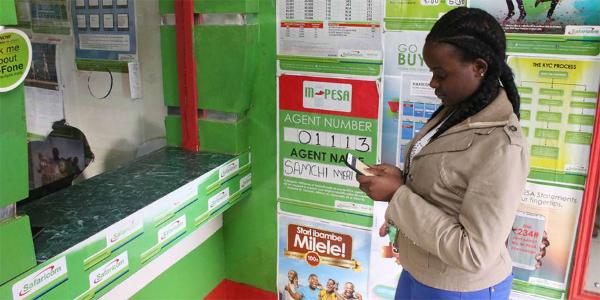
M-Pesa, Africa’s largest fintech platform owned by Kenya’s largest telecommunications provider, Safaricom, has so far been remarkable for its pivotal role in the transformation of the Kenyan economy.

M-Pesa (M for Mobile, Pesa for Money in Swahili), launched in 2007, was designed to enable remittances to be sent home and has enjoyed widespread adoption.

With over 18.2 million subscribers in a country of more than 55 million people, its popularity remains undisputed. Today, 96% of households outside Nairobi, Kenya’s capital, have at least one M-Pesa account.

Before the launch of M-Pesa, a large population of people in Kenya, especially those in rural areas, did not have access to formal banking services. The launch of the fintech platform has now provided a simple and convenient way for people to access financial services which significantly increased financial inclusion in the country. Millions of previously unbanked individuals are now able to participate in the formal financial system.

Notably, M-Pesa operates a laudable ecosystem that has become a model for mobile money services not just in Africa, but across the globe.

The M-Pesa Ecosystem

The M-Pesa ecosystem is a comprehensive network of interconnected stakeholders, services, and infrastructure that revolves around the mobile money platform.

The ecosystem operates in a hierarchical structure from a higher level (bank) to a lower tier level of agents and sub-agents. Most clients interact with the M-Pesa system at the sub-agent level, i.e. where they carry out cash deposits or withdrawals.

M-Pesa’s ecosystem encompasses the following key elements;

1. Mobile Money Users: At the core of the M-Pesa ecosystem are the mobile money users, who are individuals using the service to send, receive, and store money through their mobile phones. These users can be both individuals and businesses.

2. Mobile Network Operators: M-Pesa is typically offered and operated by mobile network operators (MNOs) like Safaricom. These companies provide the underlying mobile telecommunication infrastructure necessary for the functioning of the service.

3. Agents and Distributors: M-Pesa relies heavily on a network of agents and distributors. Agents are brick-and-mortar businesses or individuals who are authorized to facilitate cash-in (deposit) and cash-out (withdrawal) transactions for users. They act as physical points of presence where users can convert cash to electronic money and vice versa. Distributors, on the other hand, are responsible for the supply of e-money to agents.

4. Banks and Financial Institutions: M-Pesa significantly partners with traditional banks and financial institutions to provide more extensive financial services to users. This collaboration allows users to link their M-Pesa accounts to bank accounts, access credit, and conduct more complex financial transactions.

5. Merchants and Businesses: Many businesses and merchants, especially small and informal enterprises, accept M-Pesa as a payment method for goods and services. This integration helps promote cashless transactions and financial inclusion for both buyers and sellers,

6. Paybill and Lipa Na M-Pesa Services: M-Pesa offers Paybill services that allow businesses and organizations to receive payments from customers through M-Pesa. Additionally, Lipa Na M-Pesa enables users to pay for goods and services directly from their M-Pesa accounts.

7. International Remittances: M-Pesa has expanded beyond national borders, enabling international remittances. This feature allows users in certain countries to send money to M-Pesa users in other countries, promoting cross-border financial transactions.

8. Mobile Applications and APIs: Safaricom and other M-Pesa operators often provide mobile applications and APIs (Application Programming Interfaces) that enable third-party developers to build innovative solutions on top of the M-Pesa platform.

The M-Pesa ecosystem has had a significant impact on financial inclusion, economic development, and the digitization of financial services in many regions in Kenya, particularly in Africa.

Let’s Look at The Several Ways M-Pesa Has Impacted The Kenyan Economy

1.) Money Transfer and Remittances:

M-Pesa has revolutionized the way people in Kenya send and receive money. It offers a faster, safer, and more convenient alternative to traditional methods of money transfer. Kenyans in urban areas can now easily send money to their families in rural areas, and the service has also facilitated international remittances.

2.) Small-Scale Business Growth:

M-Pesa has continued to have a positive impact on small-scale businesses and entrepreneurship in Kenya, in terms of sales, savings, profitability, and customer base. With easier access to financial services, small business owners can manage their finances, make and receive payments, and access credit more efficiently. This, in turn, has helped stimulate economic activity at the grassroots level.

3.) Employment Opportunities:

The growth of M-Pesa in Kenya has created jobs for numerous Kenyans, which is a significant addition to the Kenyan economy. The Fintech company has created employment opportunities in various sectors, which include, customer service, mobile money agents, and mobile banking services. This contributed to job creation and income generation.

4.) Impact on GDP:

An analysis by the World Bank found that since M-Pesa launched in 2007, it has contributed 2 percent to Kenya’s GDP. M-Pesa is currently responsible for a quarter of Kenya’s GDP. Its impact on Kenya’s GDP has been significant, as it contributed to increased economic activity, improved efficiency in financial transactions, and increased consumer spending.

Conclusion

With M-Pesa in Kenya, the people in the country can now look to a brighter future and an improved economy through easy access to financial services and increased job opportunities.

Overall, M-Pesa’s growth in Africa has been remarkable, which has seen it play a pivotal role in shaping the mobile money landscape on the continent. Its impact on financial inclusion, economic development, and digital financial services has been recognized globally, making it a significant case study for other regions exploring similar mobile money initiatives.