DD
MM
YYYY

PAGES

DD
MM
YYYY

spot_img

PAGES

Home Blog Page 3955

Tekedia Institute Unveils “AI in Business Masterclass” [video]

0

Good People, we are unveiling a new program in Tekedia Institute. It is called “AI in Business Masterclass” and it is going to be super-awesome. Many have already registered – and I am inviting you to come and co-learn with us. We bring a 360-degree to this topic: software, hardware, business, and Africa-nativity applicable case studies.

Yes, we will explain how this will improve your business mission in Lagos, Nairobi, Accra, etc even as we discuss how that next career level will come. Go here and register.

Tekedia Institute >> winner of Velocity Mhagic Grand Prize for innovation in entrepreneurial business education.

Nigeria Trails South Africa And Kenya in The Development of Key B2B Payment Processes Across Africa – Report

0

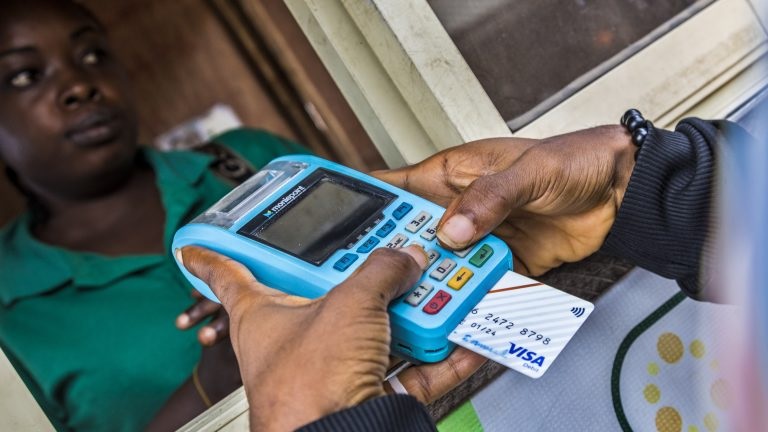
A new report from Duplo, a business platform that handles payments within Nigeria, has revealed that Nigeria trails South Africa and Kenya in the development of key B2B payment processes across Africa, including the adoption of electronic bank transfers, speed of processing invoices, and payment automation.

In the report, South Africa leads the way in electronic bank transfers with 49.1 percent of its population choosing it as a preferred option for payment, followed by Nigeria 48.5 percent, Ghana 34 percent, and Kenya 31.9 percent.

In terms of payment automation, Kenya leads the way with 83.4 percent of Kenyans disclosing that their payment system was either semi-automated or fully automated, compared to Nigeria’s 79.9 percent, South Africa’s 71.69 percent, and Ghana’s 67.23 percent.

When it came to speed of processing invoices, South Africa took the lead with 39.93 percent stating that it typically takes a day or less to process invoices, compared with Nigeria’s 39.74 percent.

Security ranked as the most critical feature for respondents when choosing a B2B platform, with 35.89 percent selecting it as the feature they valued most. Across the African countries, Kenya led with 39.9 percent, Ghana with 36 percent, South Africa with 35.6 percent, and Nigeria with 32.2 percent.

Speaking on the growth of B2B payments in Africa, CEO and Co-Founder of Duplo Yele Oyekola said,

“Despite various challenges, the future of B2B payments in Africa is set for dynamic growth and innovation, signaling a new era of opportunities and expansion for the continent’s business ecosystem. The opportunity to automate accounts payable and receivable and transform other aspects of the B2B payments process offers great potential to reduce payment delays, enhance cash flow and drive growth for businesses across the continent.

The increased adoption of digital solutions also implies a shift in workplace dynamics and positions finance professionals to add more value to their organizations. We are looking forward to playing a major role in the realization of these opportunities and the delivery of technology solutions to support growth for businesses in Africa”.

The B2B payments in Africa have continued to experience significant growth and transformation. Africa’s B2B payments landscape is currently evolving due to several factors that have contributed to the growth, such as Digital Transformation, Fintech Innovation, Financial Inclusion, etc.

Africa now accounts for 70% of the world’s $1 trillion mobile money market, with M-Pesa, the mobile phone-based money transfer service and widely used payment platform in Africa, boasting 51 million customers across seven African countries.

Mobile money remains one of the fastest-growing payment segments in emerging markets but there are others too. In Nigeria, B2B payments are experiencing significant growth and transformation, largely driven by the country’s vibrant Fintech industry and increasing adoption of digital payment solutions.

According to a McKinsey report (2020), Nigeria is one of the top countries as far as electronic payments are concerned. The Nigerian business-to-business (B2B) payments industry is rapidly changing and on the verge of a major transformation as emerging technologies and payment methods are challenging the status quo in this vital part of the market.

Digital payments make up the large majority of payment volumes in Nigeria and are expected to reach 7.7 billion per year by 2025. Several factors are contributing to B2B payments growth in Nigeria include the Central Bank’s Cashless Policy, deepening smartphone and internet penetration, and a new wave of financial technology startups.

Despite all the challenges facing the Nigerian market, some factors are helping to stimulate B2B payments in Nigeria. These include the growing strength of internet connections and penetration, increasingly powerful mobile devices, the rising number of e-commerce platforms, as well as the heightened adoption of online shopping.

The United States Blockchain Regulatory Certainty Act (BRCA) Passed by Financial Committee

0

The Blockchain Regulatory Certainty Act, a bill that aims to provide clarity and legal protection for blockchain service providers, has passed in the House Financial Services Committee with bipartisan support. The bill, introduced by Rep. Tom Emmer (R-MN), would exempt blockchain developers and intermediaries from certain state money transmitter laws and licensing requirements, as long as they do not have custody of consumer funds.

The bill is part of a broader effort by lawmakers and industry stakeholders to foster innovation and growth in the blockchain sector, while addressing the regulatory challenges and uncertainties that have hampered its development. According to Rep. Emmer, the bill would “create an environment for innovation to flourish” and “ensure that entrepreneurs don’t have to worry about outdated laws or regulations that don’t fit this new technology.”

The bill has received endorsements from several prominent blockchain organizations, such as the Chamber of Digital Commerce, the Blockchain Association, and Coin Center. These groups have praised the bill for recognizing the distinction between custodial and non-custodial blockchain services, and for providing a clear and consistent framework for the industry.

The bill now moves to the full House of Representatives for consideration, where it faces an uncertain fate. While the bill has garnered bipartisan support in the committee, it may face opposition from some lawmakers who are concerned about the potential risks and abuses of blockchain technology, such as money laundering, terrorism financing, and consumer protection. The bill may also need to be reconciled with other competing or complementary bills that address different aspects of blockchain regulation, such as the Token Taxonomy Act, the Blockchain Innovation Act, and the Eliminate Barriers to Innovation Act.

The Blockchain Regulatory Certainty Act is a significant step forward for the blockchain industry in the US, as it seeks to provide a more favorable and predictable legal environment for innovation and adoption. However, it is not a silver bullet that will solve all the regulatory issues that plague the sector. The industry still needs to work with regulators and policymakers at both the federal and state levels to ensure that blockchain technology is used in a responsible and beneficial manner for all stakeholders.

The blockchain industry is growing rapidly, with new applications and use cases emerging every day. However, the regulatory landscape for blockchain-based businesses is still unclear and inconsistent across different jurisdictions. This creates uncertainty and risk for entrepreneurs, investors, and consumers who want to participate in this innovative sector.

To address this challenge, a bipartisan group of lawmakers in the U.S. Congress has introduced the Blockchain Regulatory Certainty Act (BRCA), a bill that aims to provide clarity and protection for blockchain service providers who do not take custody of digital assets. The BRCA would create a safe harbor for these non-custodial entities, exempting them from certain state licensing and registration requirements that are designed for traditional financial intermediaries.

The BRCA defines a blockchain service provider as “any person or entity that provides or facilitates the provision of a service using distributed ledger technology, including a smart contract or decentralized application”. The bill also specifies that a blockchain service provider does not include “a person or entity that has control over digital assets on behalf of another person or entity”.

The BRCA recognizes that non-custodial blockchain service providers do not pose the same risks as custodial ones, such as theft, fraud, or money laundering. Therefore, they should not be subject to the same regulatory burdens that apply to banks, money transmitters, or broker-dealers. The BRCA would allow these entities to operate across state lines without having to obtain multiple licenses or comply with conflicting rules.

The BRCA would also promote innovation and competition in the blockchain industry, by creating a level playing field for different types of service providers. It would encourage the development of decentralized solutions that empower users to control their own digital assets, rather than relying on third-party intermediaries. Moreover, it would foster collaboration and coordination among federal and state regulators, as well as industry stakeholders, to establish clear and consistent standards for the blockchain sector.

The BRCA is an important step forward for the blockchain industry in the U.S., as it would provide legal certainty and regulatory relief for many entrepreneurs and innovators who are building the future of finance, commerce, and society on distributed ledger technology. The bill has received support from various industry associations and advocacy groups, such as the Chamber of Digital Commerce, the Blockchain Association, and Coin Center. However, it still faces a long and uncertain legislative process before it can become law.

Italian Central Bank begins the Development of Ecosystem for Decentralized Finance

0

The Italian Central Bank (BCI) has announced that it has launched a pilot project for the development of an ecosystem for decentralized finance (DeFi), based on blockchain technology. The aim is to explore the potential and challenges of this innovation, which promises to make the financial system more efficient, transparent and inclusive.

DeFi is a set of applications and protocols that allow you to create and exchange financial services without centralized intermediaries, such as banks, stock exchanges or payment companies. Thanks to blockchain, which ensures the security, immunizability and traceability of transactions, users can access products such as loans, insurance, derivatives, currency exchanges and digital assets.

The BCI said it wanted to test the opportunities offered by DeFi to improve the efficiency and resilience of the Italian financial system, in line with the objectives of the national digital strategy. In particular, the pilot project will focus on three areas: the creation of a platform for the management and monitoring of financial risks; the development of a solution for tokenization and transfer of real assets; and the implementation of a scheme for verifying the digital identity of market participants.

The pilot project will involve several public and private institutions, including the Ministry of Economy and Finance, the Revenue Agency, Consob, Ivass, ABI, ANIA, Assonime and various operators in the financial and technological sector. The BCI has specified that the project does not provide for the issuance or use of a central bank digital currency (CBDC) but will be based on tokens representing real or legal assets.

The BCI underlined the importance of promoting the development of DeFi in Italy, in a context of growing international interest in this innovation. The Bank also highlighted the risks and challenges that DeFi poses in terms of regulation, supervision, security, financial stability and consumer protection. For this reason, the BCI has stated that it intends to work with other national and European authorities to define an adequate and harmonized regulatory framework for DeFi.

The Bank of Italy recently announced that it has launched an innovative project to explore the potential of a central bank digital currency (CBDC). The initiative, called Progetto Leonida, is a collaboration involving 18 Italian commercial banks and the Italian Banking Association (ABI), the organization that represents the Italian banking sector.

The Bank of Italy, founded in 1893, is the institution that governs the nation’s financial stability, monetary policy, and overall financial system. By venturing into the digital field with a potential CBDC, the Bank of Italy demonstrates its dedication to embracing technological advances and adjusting its policies accordingly.

The Leonida Project, the product at the heart of this enterprise, will be based on a shared register for interbank payments. This system is designed to simplify payment processes between participating banks, potentially leading to greater efficiency and reduced transaction times in the financial landscape.

The Leonida Project, however, is not the first digital asset pilot to involve the ABI. The association previously launched the Spunta project three years ago, a scheme involving more than 100 banks and a shared register for reconciliations of interbank payments.

Despite this, the recent launch of the Leonida Project represents a significant milestone in CBDC exploration in Italy. Moreover, this company is not exclusive to Italy. There are several CBDC pilots currently underway across Europe, with recent ones involving the Bank of England and the Bank for International Settlements. These initiatives illustrate the growing interest in digital currencies among the continent’s financial institutions.

A representative of the Bank of Italy said: “With the launch of Project Leonida, we dive into the digital future, aiming to explore how blockchain can promote financial stability and protect consumers.” Last week, the Bank of England (BoE) and the Bank for International Settlements (BIS) successfully completed a collaborative project on CBDCs.

A military group has declared ‘end to the regime’ in Niger

0

In Niger Republic,  a military group has declared ‘end to the regime’, citing ‘deteriorating security situation and bad governance’. Of course, what again do they say when they move from barracks to presidential mansions in Africa? But this one is worrisome when you see what happened in Mali and Guinea recently.

 Men in military fatigues claimed to have taken power in Niger after President Mohamed Bazoum was reportedly seized by members of the presidential guard on Wednesday, sparking international condemnation and renewed uncertainty in a volatile part of Africa beset by coups and militant extremism.

In a video communique, a man identified as Colonel-Major Amadou Abdramane and flanked by several apparent soldiers, announced, “We have decided to put an end to the regime that you know,” citing a deteriorating security situation in the country and “poor economic and social governance.”

National institutions have been suspended and the country’s land borders are temporarily closed, he also said, appearing to read from a text on the table before him.

Foreign Minister Hassoumi Massoudou called the soldiers’ actions “an attempted coup d’etat” but said “the totality of the army was not behind the coup.”

He called on “mutinous officers to return to their ranks” in an interview with French television station France 24, adding that mediation efforts are under way, including those by the president of Nigeria who is “dialoguing with the military.”

The challenge here is that Africa has diminished because everyone (except a few countries in southern Africa) is fighting bandits, rascals, terrorists, etc to the extent that no one has spare anything to lead.

There are coups everywhere in West Africa, from mindless election rigging to AK47-ing, making things harder.  With the US very busy in Ukraine and the United Nations voting “present” these days on critical global issues, this is a moment for the African Union to come together. If these men see coups as another sector, many bad things will happen.