DD
MM
YYYY

PAGES

DD
MM
YYYY

spot_img

PAGES

Home Blog Page 396

Ozak AI’s 8,333% ROI Potential from $0.012 to $1—Breaking Down the 83x Returns Early Investors Could Achieve

0

By 2025, Ozak AI will already be a big player in the crypto and AI blockchain market and will be able to provide some of the highest percentage returns to those who buy in early, with a token price that began at a low rate of $0.01 and is currently trading at $0.012. This offers staggering possible returns, forecasting a $1 in terms of tokens that will yield an 8333 percent ROI, or more simply stated, an 83 times back on investments made. It is possible to see the technology, alliances, and tokenomics of Ozak AI as a convincing investment story due to the fundamentals behind such an impressive figure.

Presale Breakdown and ROI

The Ozak AI presale process started with a humble token price of $0.01. Having already sold more than 929 million tokens during the initial price setting of $0.01 and $0.012 currently, the project intends to go through multiple phases, as tokens will be offered at $0.014 and higher before the actual launch of the project at $1.00. Those who invest for $0.012 early may gain an 8,233 percent payoff should the $1 target be hit, and this will be computed as (1-0.012)/0.012×100. Practically, the initial phase investment of 250 dollars would grow to over 20,000 dollars, and the current stage investment of 250 dollars to over 2,000 dollars at the time of launch would reflect growth at the start and potential growth in the long run.

Basic Capabilities that Drive Growth

Ozak AI has a distinct selling point, which is its high-level AI blockchain utility. The major features are:

  • AI-based predictive signals in financial markets are more accurate at predicting market movements than traditional market predictions.
  • Live connectivity to the Pyth Network, which provides live feeds of financial information across more than 100 blockchains, improves the accuracy of decisions made.
  • The one-click AI upgrades through the SINT platform, and users can easily upgrade the voice and other AI features.
  • Bridges to cross-chain transfers of token interactions between different blockchain ecosystems, which make them interoperable and liquid.

Strategic Partnerships Creation of Value

The collaboration of Ozak AI provides the company with a much more substantial base in the market and utilization.

  • Pyth Network co-operation offers real-time financial data feeds of various blockchains, accelerating forecasting capability and market responsiveness of Ozak AI.
  • The Dex3 partnership will help to improve the trading experience with better liquidity solutions and automated trading processes, making it easier to access Ozak AI tokens and trade efficiently.
  • Ozak AI Rewards Hub (Available) is the entry point into the staking and rewarding system, which will establish a sense of community-building and enable users to earn and contribute to the governance.

Position in the ecosystem and in the market

The timely sellout of Ozak AI presales indicates high community demand and investor trust, and its status as not an overly speculative token but a platform with practical uses surrounded by robust blockchain and AI technologies supports its potential to better compete with more established projects such as Ethereum. The Ozak AI tokenomics is an incentive to hold long-term and be governed and staked in real-time to assist in long-term ecosystem growth and stability.

Conclusion

Having a base price of $0.012 and a target launch price of $1, Ozak AI projects an amazing 8333% ROI, or 83x launch capital, to early investors. Backed by its advanced AI capabilities, data integrations based on real-time blockchain, and a powerful collaboration with Pyth Network and Dex3, the project has a solid value offering to intelligent investors who are ready to get substantial returns along with a reasonable level of utility and prospects of growth. Ozak AI Rewards Hub provides an active and rewarding community perspective, and it makes it a full-fledged investment in the AI blockchain niche by 2025 and beyond.


For more information about Ozak AI, visit the links below:


Website: https://ozak.ai/

Twitter/X: https://x.com/OzakAGI

Telegram: https://t.me/OzakAGI
Ares Management Acquires 49% Stake in U.S. Renewable Energy firm EDP Renováveis (EDPR) for $2.9bn

0

Ares Management Corporation said on Monday that a fund managed by its Infrastructure Opportunities unit has acquired a 49 percent stake in a diversified U.S. renewable energy platform firm EDP Renováveis (EDPR), valuing the business at about $2.9 billion.

The transaction marks one of the most significant U.S. clean energy deals this year, underscoring how institutional investors are deepening commitments to the energy transition as power demand rises sharply across data-intensive industries.

According to Ares, the deal brings the total capacity owned by its Infrastructure Opportunities funds to about 5.7 gigawatts, spread across 11 states and five U.S. power markets, as of September 2024. The acquisition expands Ares’ existing footprint across the country, reinforcing its strategy of investing in long-term contracted assets capable of generating stable cash flows while meeting the accelerating need for renewable generation.

The platform acquired from EDPR consists of ten operational assets totaling approximately 1,632 megawatts (MW) of installed capacity. These include about 1,030 MW of solar, 402 MW of wind, and 200 MW of battery storage projects distributed across four key U.S. power markets. All the assets have signed long-term power purchase agreements (PPAs) with an average remaining contract duration of 18 years—ensuring predictable revenue streams and strong counterparty security for Ares’ investors.

The deal comes amid a broader wave of capital inflows into clean energy and grid infrastructure. Ares said the transaction will not only strengthen its domestic presence but also broaden its exposure to fast-growing clean energy segments, particularly as the U.S. energy landscape undergoes rapid transformation driven by digitalization, artificial intelligence, and electrification trends.

The investment manager has been doubling down on renewable and infrastructure assets in recent years, betting that the global pivot toward net-zero emissions will sustain long-term growth opportunities. Demand for renewable energy in the U.S. has surged as large technology firms, including Amazon, Microsoft, and Google, sign record-breaking renewable energy contracts to power their data centers and AI operations. Analysts estimate that data center electricity consumption in the U.S. could more than double by 2030, creating significant new demand for clean power sources.

EDP Renováveis, based in Spain and majority-owned by Portuguese utility EDP, is one of the world’s largest renewable energy developers, with operations across Europe, North America, South America, and the Asia-Pacific region. The company has increasingly relied on asset rotation deals—selling minority stakes in operational portfolios—to recycle capital into new developments and accelerate its global expansion. Its collaboration with Ares reflects that strategy, providing fresh liquidity to finance upcoming projects in emerging markets and offshore wind.

EDPR’s North American arm, which manages a significant portion of its global installed capacity, has been particularly active in expanding across the U.S. Midwest, Texas, and the Southeast, regions where grid modernization and renewable integration are now policy priorities. The assets covered by the Ares deal are all connected to these high-demand zones, which have been drawing attention from institutional investors seeking exposure to the U.S. Inflation Reduction Act’s tax incentives for renewable and storage projects.

For Ares Management, headquartered in Los Angeles, the deal marks another major step in its transition from traditional infrastructure investment to sustainable energy portfolios. The company’s Infrastructure Opportunities funds have been among the most active in acquiring renewable assets, with holdings now spanning wind, solar, storage, and transmission systems.

The firm said the partnership with EDPR complements its growing strategy of investing in energy transition assets that provide both environmental and economic returns. Analysts say that Ares’ continued expansion in renewables positions it as a leading private capital player in a sector that has become central to both U.S. industrial policy and the global shift toward clean energy.

Industry observers also note that the timing of the deal reflects a convergence of factors driving investor appetite—volatile fossil fuel prices, tightening emissions regulations, and unprecedented power consumption from AI computing. With long-term PPAs and a geographically diversified portfolio, Ares’ investment is seen as a hedge against both market volatility and regulatory shifts.

As the AI revolution accelerates, so too does the race to secure reliable, carbon-free electricity. Ares’ latest acquisition signals that private equity and infrastructure funds are now competing as aggressively as utilities and energy majors for ownership stakes in the renewable assets that will power the next decade of digital and industrial growth.

Bitcoin Made Millionaires at $1. Ethereum at $1. Now Traders Are Targeting Avalon X at $0.005—But With $1B Real Estate Foundation

0

Bitcoin made millionaires. Ethereum as well. However, the crypto market is known to evolve very rapidly. New projects launch and gather headlines all the time. Currently, traders are eyeing Avalon X (AVLX) at $0.005 in Stage 1 of its presale, but this time the bet is anchored to real-world property.

The Avalon X team is set to go live on their official X channel this Friday, October 10th, for an interactive AMA session.

Below is a take on why seasoned crypto investors are shifting to the Avalon X presale and how tokenized property crypto can be the next goldmine in 2026.

How Did Bitcoin Create Early Millionaires?

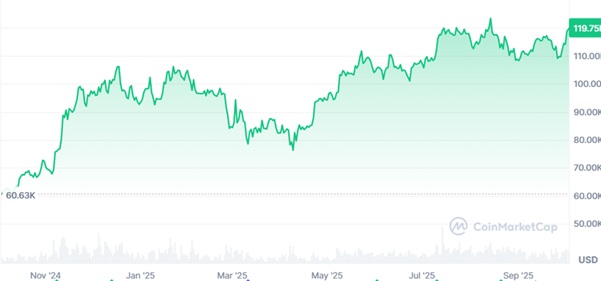
Bitcoin’s rise from pennies to six-figure levels changed global wealth expectations completely. The Bitcoin Price rally rewarded long-term holders and institutional adopters who treated BTC as scarce digital gold. Currently, priced at just over $122k, BTC is one of the most important digital assets in the world.

That kind of ascent requires massive capital flows. Luckily for Bitcoin investors, ETF demand, exchange accumulation, and macro narrative alignment all went their way. This made Bitcoin Price USD a story of scale, not speed. Short-term traders learned that once you cross mega-market-cap thresholds, percentage moves compress and require huge external flows to repeat.

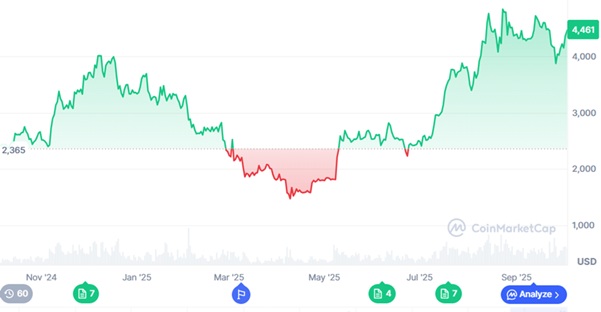
How Did Ethereum Price Rise to $4500 in 2025?

Ethereum had a different approach. It grew with the demand and adoption of cryptocurrencies and blockchain-based products. Ethereum price responded to DeFi, NFTs, and Layer-2 expansion. Moreover, staking demand and on-chain fees further helped boost its valuation.

But like BTC, turning ETH into a 100x from the current Ethereum price USD levels needs massive adoption. ETH is a core holding for infrastructure exposure, not the easiest route to quick 100x returns.

Is Avalon X Among The 100x Crypto Coins 2025?

Avalon X is basically a real estate-backed cryptocurrency that uses the AVLX coin’s utility to redeem certain special benefits tied to Grupo Avalon’s nearly $1B pipeline of Dominican Republic developments.

Importantly, AVLX is not a deed token. It rather creates a practical demand engine that memecoins lack and that protocols like Ethereum take years to build.

Avalon X’s whitepaper informs about a 2 billion cap, staged presale pricing, and smart distribution of the tokens. For example, the staged presale will allow the early buyers to get maximum benefits, as currently the altcoin is available for $0.005 in its first stage. The project’s official website shows just five days left before the launch of the next stage and the price adjustment marking Stage 2 of the presale. In conjunction with this milestone, the Avalon X team will hold a live AMA session on Friday, October 10th. Community members are encouraged to submit their questions in advance via the Google Form for a chance to have them addressed live during the event.

This means that the Avalon X token holders can enjoy gains even before the altcoin is listed on exchanges. Moreover, the price gains are not dependent on market pressure or other external factors as well.

Moreover, to spread the word about the project, Avalon X is running a high-visibility $1M crypto giveaway and a crypto townhouse giveaway to increase growth powered by referrals and social media chatter. The fully deeded townhouse is located in the gated Eco Avalon development.

What makes Avalon X one of the best altcoins to invest in 2025 is its focus on maintaining a clean and secure platform. To verify the same for their investors, CertiK has audited the project.

Should Investors Consider the Best RWA tokens 2025 like Avalon X?

The RWA market is set to grow massively in the next couple of years. As more and more assets get tokenized in the days to come, early movers like Avalon X (AVLX) will benefit the most from it.

Lastly, the Avalon X giveaways and the 10% bonus on deposits make it the perfect investment to consider right now.


Join the Community

Website: https://avalonx.io

CoinMarketCap: https://coinmarketcap.com/currencies/avalon-x/

Telegram: https://t.me/avlxofficial

X: https://x.com/AvalonXOfficial

Standard Chartered Warns Stablecoins Could Drain $1tn from Emerging Market Banks

0

A fresh warning from Standard Chartered Bank has spotlighted what may become one of the most consequential shifts in modern finance: the mass migration of savings from fragile emerging market banks into U.S. dollar-backed stablecoins—a movement accelerated by President Donald Trump’s sweeping pro-crypto agenda.

In a detailed report released Monday, the London-based bank—one of the most prominent lenders in Africa, Asia, and the Middle East—projected that as much as $1 trillion could leave emerging market banks over the next three years, drawn toward digital assets perceived as safer and more stable.

The report describes stablecoins—digital currencies pegged to the U.S. dollar—as “dollar-based bank accounts without borders,” providing a refuge for savers in countries prone to chronic inflation, currency crashes, and banking crises. Nearly 99 percent of all stablecoins are tied to the U.S. dollar, effectively giving users access to a virtual dollar account outside the traditional banking system.

The Trump Factor and the Rise of Digital Dollars

The resurgence of stablecoin use coincides with a radical shift in U.S. policy under President Trump, whose administration has openly embraced cryptocurrencies and blockchain innovation as part of its economic strategy. Trump’s government recently pushed through a series of measures designed to make the United States a global leader in digital assets—including the approval of multiple stablecoin frameworks and new licensing rules for crypto companies.

While the new laws bar regulated U.S. stablecoin issuers from offering interest-bearing accounts, a move meant to prevent a run on traditional banks, Standard Chartered analysts say the prohibition is unlikely to slow global adoption.

“Return of capital matters more than return on capital,” the report stated, noting that individuals in unstable economies would continue to prefer digital dollars over local bank deposits, especially in nations where past crises have wiped out savings overnight.

Massive Outflows Looming

The bank estimates that by 2028, total stablecoin savings across developing economies could reach $1.22 trillion, up from $173 billion today. Although that amount represents just about 2 percent of total bank deposits across 16 vulnerable nations, the analysts warned that the shift could erode the liquidity base of several financial systems already struggling to maintain stability.

Countries identified as high-risk include Egypt, Pakistan, Bangladesh, Sri Lanka, Morocco, and Kenya, where local currencies have suffered repeated devaluations in recent years. But the list also extends to larger economies such as Turkey, India, China, Brazil, and South Africa, where twin deficits and exposure to global capital markets make them susceptible to sudden deposit flight during crises.

“Many of them, with the key exception of China, have twin deficits that leave them relatively vulnerable to global risk aversion and sudden sharp currency depreciation,” the report said.

Stablecoins such as Tether’s USDT and Circle’s USDC have quietly become parallel banking instruments, giving users in emerging markets digital access to the dollar without relying on domestic institutions. For many, this is a lifeline against hyperinflation, capital controls, and banking instability.

Tether CEO Paolo Ardoino said last year that the company’s fastest-growing user base was in developing economies, where its USDT coin is viewed as a safe, dollar-like asset. Analysts at Standard Chartered say that the rise of these coins represents a new form of dollarization—one that occurs digitally, bypassing central banks and conventional monetary systems.

The trend has drawn concern from regulators across Africa, Asia, and Latin America. Central banks fear that a large-scale migration into digital dollars could weaken their control over money supply, amplify capital flight, and destabilize local financial systems in times of stress.

Some governments have responded by accelerating plans for Central Bank Digital Currencies (CBDCs), hoping to offer a state-backed digital alternative that could compete with private stablecoins. But economists caution that even CBDCs might inadvertently draw deposits away from commercial banks, given their implicit government guarantees.

A Redefined Global Financial Order

As implications, Standard Chartered indicates that stablecoins are no longer a niche crypto product—they are reshaping global capital flows. The report argues that emerging markets could face liquidity squeezes, reduced lending capacity, and weakened currency stability if policymakers fail to adapt quickly.

Meanwhile, the trend also consolidates U.S. monetary dominance. As Trump’s crypto-friendly framework legitimizes dollar-backed stablecoins, these digital tokens could become the next frontier of American financial power, extending the reach of the dollar deep into the digital economies of the Global South.

In essence, what began as a crypto experiment has now evolved into a structural shift in global finance—one where digital dollars, powered by blockchain and U.S. policy, quietly drain capital from the very banking systems that once anchored emerging economies.

Crypto ETFs Smash Records, Attract Nearly $6bn in Global Inflows

0

The global cryptocurrency market surged to new heights last week, with exchange-traded funds (ETFs) tracking digital assets attracting record inflows of $5.95 billion, signaling a renewed wave of investor confidence in crypto markets.

The boom, which propelled bitcoin to an all-time high of $126,223, underscores the shifting dynamics in global finance as traditional investors increasingly embrace digital currencies as part of their portfolios.

The data, released by CoinShares in its weekly report for the week ending October 4, showed that investment in digital asset products had never been higher — even during the bull runs of 2021 or 2023. The surge came amid growing concerns about the weakening U.S. dollar, trade uncertainty, and geopolitical instability, all of which are prompting investors to seek alternative stores of value.

U.S. Leads the Charge as Institutional Interest Surges

The United States led global inflows with $5 billion, a record single-week figure, followed by Switzerland with $563 million and Germany with $312 million. Both European countries also set new national records for crypto ETF inflows. Analysts attribute this to the rapid expansion of regulated crypto investment products in both jurisdictions, which have offered investors exposure to digital assets without directly holding them.

Bitcoin remained the primary magnet for investor funds, attracting $3.55 billion of the total inflows, while ether followed with $1.48 billion. Solana and XRP also recorded significant gains, drawing $706.5 million and $219.4 million, respectively.

“This level of investment highlights the growing recognition of digital assets as an alternative in times of uncertainty,” said James Butterfill, head of research at CoinShares.

He added that the record-breaking week demonstrates how institutional demand is now the dominant force driving crypto markets, rather than retail speculation.

Bitcoin’s Dual Ascent with Gold

Bitcoin’s rally has coincided with a record climb in gold prices, as investors hedge against inflation and global economic headwinds. The rare simultaneous rise of both assets has reignited debate about whether bitcoin should now be considered a legitimate “digital gold” — a hedge against currency debasement and market volatility.

The underlying driver, analysts say, is the weakening U.S. dollar, which has fallen sharply since mid-year due to mounting trade tensions and concerns over the Federal Reserve’s policy outlook. As global investors seek safety, both gold and bitcoin have become preferred refuges, suggesting a growing acceptance of digital assets as mainstream financial instruments.

Policy Tailwinds and the Trump Factor

Under President Donald Trump’s administration, the tone toward digital assets has notably softened. His policies have emphasized innovation in blockchain technology and digital finance, signaling a departure from earlier regulatory skepticism. Trump has also hinted at the need for the U.S. to remain a global leader in crypto development — an acknowledgment that has resonated across Wall Street.

This more supportive environment has encouraged both institutional and retail investors to enter the market. Major asset managers, including BlackRock, Fidelity, and VanEck, have expanded their crypto-linked offerings, contributing to the surge in ETF volumes. Analysts note that these moves are helping integrate digital assets into traditional financial markets, reinforcing liquidity and stability in the sector.

Toward Monetary Integration: Bitcoin and Central Banks

A report by Deutsche Bank earlier this year predicted that bitcoin could appear on the balance sheets of most central banks by 2030, sitting alongside gold as part of official reserves. While the idea remains controversial, the ongoing institutionalization of digital assets makes such a prospect increasingly plausible.

In the same vein, a growing number of sovereign wealth funds — particularly in the Middle East and Asia — have begun exploring bitcoin-linked products as part of diversification strategies. The Monetary Authority of Singapore and the Abu Dhabi Investment Authority (ADIA) have both reportedly held exploratory discussions about expanding exposure to digital infrastructure.

Global Shift Toward Crypto Integration

Across major economies, the shift is already underway. In Europe, regulators have accelerated the rollout of the Markets in Crypto-Assets (MiCA) framework, which introduces uniform standards for digital asset trading across the bloc. Meanwhile, in Asia, countries like Japan and South Korea have implemented new rules allowing pension funds and investment trusts to allocate limited portions of their assets to bitcoin ETFs.

In the United States, analysts say the approval of spot bitcoin ETFs earlier this year marked the turning point. The inflows seen last week now confirm that those products have transformed bitcoin from a niche investment to a core component of institutional strategy.

“The inflows we’re witnessing are not speculative; they’re structural,” said Butterfill, emphasizing that the pattern reflects a long-term reallocation of capital rather than short-term trading activity.

The surge in crypto ETF investment mirrors a larger transformation in the global financial system. With traditional markets facing headwinds from inflation, trade restrictions, and slowing growth, digital assets have become a new frontier for capital preservation and wealth generation.

However, analysts warn that market volatility, unclear regulations in some jurisdictions, and potential monetary tightening could temper the pace of inflows. Yet the prevailing consensus among global financial institutions is that the role of digital assets — especially bitcoin — is no longer peripheral.