DD
MM
YYYY

PAGES

DD
MM
YYYY

spot_img

PAGES

Home Blog Page 3964

The Principle of Proportionality in Criminal Justice

0

In dispensing criminal justice under criminal jurisprudence, there is what is called the principle of proportionality. According to this legal principle of proportionality, justice and fairness require that the offender be entitled only to the punishment of the crime committed which is based on the severity of the crime and the situation of the victim, the situation of the offender, the circumstances of the crime, etc. This is to say that there must be coordination and balance between crime and punishment in order to ensure justice.

Proportionality as a legal principle maintains that the punishment for a crime should be proportionate to the seriousness of the offense. In other words, the punishment should fit the crime and not be excessively harsh or lenient. There must be a balance as to the crime/punishment. 

In dispensing of criminal justice, a tripartite justice is to be achieved; Justice for the state, Justice for the victim and surprisingly, Justice for the offender too. So this legal principle of proportionality advocates for justice for both the victim and the offender. If you over punish the offender, you have done the offender injustice and if you under punish the offender, you have done the state and the victim a great deal of injustice.

The core words here under this principle are fit or balance; the punishment must “fit” the crime and/ or there must be a “balance” between crime and the punishment.

In order to achieve this proportionality, crimes or offenses have been grouped into two; capital crimes/offenses which attract capital punishments and misdemeanors which attract lesser punishments. For instance, the death sentence meted on a murderer has been deemed to be proportionate to the capital offence of murder committed by the offender; the same goes with the life sentence or long imprisonment term meted on a convicted rapist is said to be proportional to the offence of rape committed by the offender but death sentence cannot be meted on an offender whose offence is just stealing because the sentence of murder will not proportionate to the offence of stealing and the offender can appeal such sentence and ask for a lesser punishment which is equivalent to the offence he committed. 

The basic reason criminal justice seeks to strike this balance of proportionality in dispensing justice is because when punishment is less than the crime committed by the offender the purpose of justice will not have been achieved because if a capital offender is punished by a mere slap on the wrist there won’t be deterrence, other prospective offenders may be motivated to commit such offense knowing that the reward outweighs the risk same goes if the punishment of the crime is higher than the crime committed, there won’t be justice as well. 

Apple Announces Decision to End Its Credit Card Partnership With Goldman Sachs

0

Tech giant Apple has announced its decision to discontinue its credit card partnership with Investment banking company, Goldman Sachs.

The tech giant recently sent a proposal to the Wall Street bank to exit the contract in the next 12 to 15 months. This exit would cover their entire consumer partnership, including the savings account rolled out this year.

Speaking on the end of its partnership with Goldman Sachs, Apple said,

“Apple and Goldman Sachs are focused on providing an incredible experience for our customers to help them lead healthier financial lives. The award-winning Apple Card has seen a great reception from consumers, and we will continue to innovate and deliver the best tools and services for them.”

Recall that Goldman Sachs and Apple entered into a partnership in 2019, to provide consumer lending, which included the Apple Card.

The two companies further announced a savings account with high yields, exclusively for Apple card users. Additionally, they also offered a “Buy Now Pay Later” (BNPL) service in the US to Apple users, which enables users to divide purchases into four payments over six weeks without any interest or fees.

However, the end of this partnership comes as Goldman Sachs has been pulling back from its move into consumer lending, which has proven more costly than it anticipated.

In June this year, the investment bank shared its financial results for Q2 2023 will saw it post significant losses.

In the June quarter alone, the bank saw a net loss of $667 million ($872 million pre-tax loss). While the division saw an increase in revenue, the provision for credit losses was very high, quickly eating away all of the $659 million in quarterly revenue and more.

Goldman Sachs’ “Platform Solutions” businesses, including the Apple Card, has resulted in a loss of $3 billion till 2022. Most of the $1 billion loss in 2021 came from the Apple Card, and another $2 billion in 2022 losses are believed to come from the Apple Card and GreenSky mostly.

According to a Wall Street report, Goldman Sachs was overwhelmed by the size of the consumer credit partnership and discussed handing off the program to American Express and other suitors as it struggled to scale the required customer service and back-end resources. 

The New York-based company has said it pushed too quickly into the effort, contributing to missteps. Goldman Sachs has held talks with American Express Co. to take over the Apple credit card and other services, but the company was reluctant in taking over the deal, expressing concerns about loss rates.

For Apple, the partnership with Goldman was part of a broader push into financial offerings. The company is looking to generate more revenue from services as sales of its hardware products slow.

Apple and Goldman will have to work out the terms of an exit which could take over a year. It also marks the latest big step by the investment bank to get out of the consumer banking experiment.

It is also worth noting that Goldman Sachs is also expected to discontinue its credit card partnership with General Motors. Recall that Goldman purchased the card business from GM in 2020 for around $2.5 billion, outbidding Barclays as the two companies.

Last month, the bank announced that it surpassed estimates for third-quarter profit but disclosed that its ill-fated foray into consumer banking continued to weigh on its overall revenue.

For Apple, the tech giant has disclosed that it remains committed to its Apple Card credit card and savings account and doesn’t plan to discontinue the products whether or not Goldman Sachs is involved as it is open to new partnerships.

Cristiano Ronaldo Sued for Promoting Binance

0

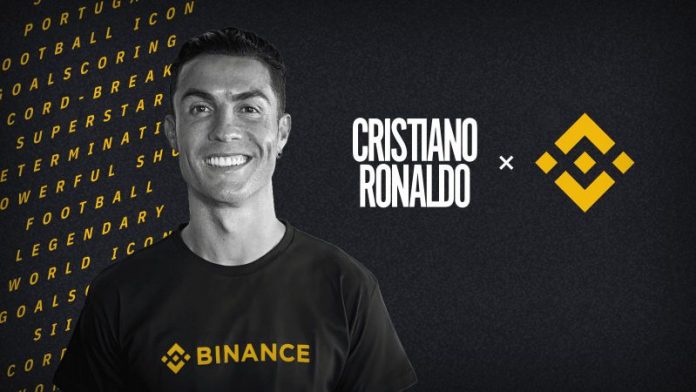
Cristiano Ronaldo, the world-famous soccer star, is facing a lawsuit for allegedly promoting Binance, the controversial cryptocurrency exchange platform. According to the plaintiffs, Ronaldo’s endorsement of Binance on his social media accounts violated the securities laws of several countries and misled millions of his fans into investing in risky and unregulated digital assets.

The lawsuit, filed in a US federal court, claims that Ronaldo received millions of dollars from Binance in exchange for his promotion, which included posting photos and videos of himself wearing a Binance-branded shirt and hat, and using the hashtag #Binance on Twitter and Instagram. The plaintiffs allege that Ronaldo’s promotion of Binance was part of a larger scheme to inflate the value of Binance’s own cryptocurrency, BNB, and to evade regulatory scrutiny.

The plaintiffs are seeking unspecified damages and an injunction to prevent Ronaldo from further promoting Binance or any other cryptocurrency platform. They also accuse Ronaldo of breaching his fiduciary duty to his fans, who trust him as a role model and a source of reliable information. The plaintiffs argue that Ronaldo’s promotion of Binance exposed his fans to significant financial losses and risks, as well as potential legal liabilities.

So, can someone who has suffered losses or damages as a result of using Binance sue Ronaldo for endorsing it? The answer is not straightforward, as it depends on several factors, such as the jurisdiction, the nature of the claim, the evidence, and the defenses available. However, in general, there are some possible legal grounds that a plaintiff could rely on to bring a suit against Ronaldo, such as:

False or misleading advertising: This is when an advertiser makes false or deceptive statements about a product or service that could influence consumers’ decisions. A plaintiff could argue that Ronaldo’s promotion of Binance was false or misleading, as he did not disclose the risks or limitations of using the platform, or he exaggerated its benefits or features.

For example, if Ronaldo claimed that Binance was safe, secure, and regulated, but in fact it was not, he could be liable for misleading consumers. To succeed in this claim, a plaintiff would have to prove that Ronaldo’s statements were false or deceptive, that they were material to consumers’ decisions, that they relied on them, and that they suffered harm as a result.

Negligence: This is when someone fails to exercise reasonable care or skill in performing a duty or task that could affect others. A plaintiff could argue that Ronaldo was negligent in promoting Binance, as he did not do enough research or due diligence before endorsing it, or he did not warn consumers about the potential risks or drawbacks of using the platform.

For example, if Ronaldo did not know or care about Binance’s legal status or compliance issues in different countries, but he encouraged consumers to use it anyway, he could be liable for negligence. To succeed in this claim, a plaintiff would have to prove that Ronaldo owed them a duty of care, that he breached that duty by acting unreasonably or carelessly, that they suffered harm as a result, and that there was a causal link between his breach and their harm.

Fraud: This is when someone intentionally deceives or misrepresents something to induce another person to act to their detriment. A plaintiff could argue that Ronaldo committed fraud in promoting Binance, as he knowingly made false or dishonest statements about the platform to persuade consumers to use it.

For example, if Ronaldo was paid by Binance to endorse it, but he did not disclose this fact to consumers, or he lied about his own experience or satisfaction with the platform, he could be liable for fraud. To succeed in this claim, a plaintiff would have to prove that Ronaldo made a false or fraudulent statement with the intent to deceive them, that they relied on his statement, and that they suffered harm as a result.

Of course, these are not the only possible legal grounds that a plaintiff could use to sue Ronaldo for promoting Binance. There may be other theories or causes of action depending on the specific facts and circumstances of each case. Moreover, Ronaldo may have some defenses or arguments to counter these claims, such as:

Disclaimer: This is when an advertiser includes a statement or notice that limits or qualifies their liability or responsibility for their statements or actions. Ronaldo may argue that he included a disclaimer in his promotion of Binance, such as “do your own research”, “trade at your own risk”, or “not financial advice”, which would absolve him from any liability or obligation to consumers.

However, this defense may not be effective if the disclaimer was not clear, conspicuous, or prominent enough to catch consumers’ attention and inform them of the nature and scope of the limitation.

Consent: This is when an advertiser obtains permission or agreement from consumers before engaging in certain activities or transactions with them. Ronaldo may argue that he obtained consent from consumers before promoting Binance to them, such as by asking them to click on a link, sign up for an account, or accept terms and conditions.

This would imply that consumers were aware of and agreed to the risks and consequences of using Binance. However, this defense may not be valid if the consent was not freely given, informed, or voluntary, or if it was obtained through coercion, duress, or undue influence.

No harm: This is when an advertiser denies or disputes that their statements or actions caused any harm or damage to consumers. Ronaldo may argue that he did not cause any harm to consumers by promoting Binance, as they did not suffer any actual or measurable losses or injuries as a result of using the platform.

For example, he may claim that consumers did not lose any money, data, or reputation by trading on Binance, or that they were compensated or refunded by the platform for any issues or errors. However, this defense may not be sufficient if consumers can prove that they did incur some form of harm, such as financial, emotional, or reputational harm, that was directly or indirectly caused by Ronaldo’s promotion of Binance.

It is possible that a plaintiff could win a suit against Ronaldo for promoting Binance, but it is not easy or certain. It would depend on the legal basis, the evidence, and the defenses involved in each case. Therefore, it is advisable that consumers exercise caution and discretion when following or acting on any endorsements or recommendations from celebrities or influencers, especially when it comes to complex and risky products or services like cryptocurrencies or exchanges.

Ronaldo has not yet responded to the lawsuit or the allegations. His representatives did not immediately respond to requests for comment. Binance, which is based in the Cayman Islands and has no official headquarters, has also not commented on the matter. Binance is facing multiple investigations and regulatory actions from various countries, including the US, UK, Germany, Japan, and Singapore, over its compliance with anti-money laundering and consumer protection laws.

LemFi Halts Operations in Ghana, Citing Regulatory Impediments

0

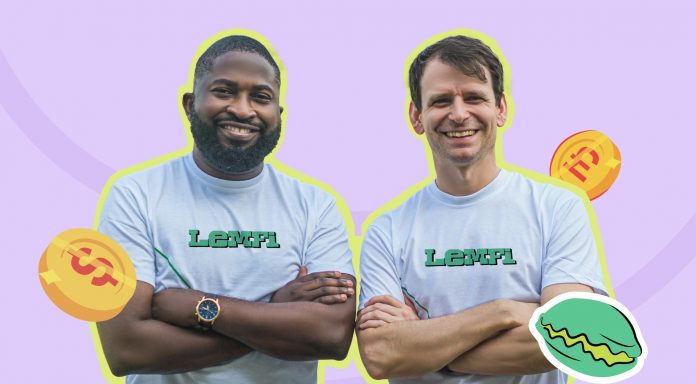
Pan-African fintech startup that enables users to send and receive money from over 12+ countries in Africa, LemfFi, has suspended its operations in Ghana, citing regulatory issues.

Announcing the company’s decision to suspend operations in Ghana, it wrote on X,

“We regret to inform you that we are suspending all services to Ghana. As a result, you will be unable to send money to banks and mobile money in Ghana. We recognize that this change will bring about some inconvenience, and we sincerely apologize. We are appreciative of your business and your support. If anything changes in the future, you will be the first to know.”

LemFi’s suspension of its services in Ghana is coming after the Central Bank of Ghana on November 16, 2023, released the list of eight remittance providers that are operating in the country’s foreign exchange market without regulatory approval.

LemFi was among the startups on the list, with several others which include; Wise, TransferGO, Xoom, Sendvalu, Boss Revolution, Aza Finance and Supersonicz.

The Central Bank’s notice referred to Ghana’s Foreign Exchange Act, 2006 (Act 723), which strictly prohibits foreign exchange dealings without the required licensing. Operating without a license, as outlined in Section 29.1 of the Act could lead to fines or imprisonment.

The bank claimed that LemFi and other international money transfer companies are not licensed or authorized to operate as electronic money issuers or payment service providers in Ghana.

The suspension means that customers cannot use LemFi and other international money transfer companies to send or receive money to Ghana.

The Secretary of Ghana’s Central Bank, Samdra Thompson therefore ordered all financial institutions in the country to desist from operating with the aforementioned published companies.

In her words,

“Approved IMTOs are hereby reminded to terminate their foreign exchange flows through their partner institutions only and to adhere strictly to all guidelines in respect of their operations”.

Meanwhile, in May this year, following LemFi’s rebrand, Ghana news agency in a report, stated that the company has contributed immensely to the growth of the country’s fintech sector.

The suspension of LemFi’s operations in Ghana due to regulatory impediments will no doubt pose several potential impacts on users in the country, as some of them who rely on LemFi for financial services may experience a sudden disruption in their access to the platform.

LemFi, formerly Lemonade Finance, was founded in 2020, with a vision to empower immigrants seeking to achieve more. The company delivers its services through an app that enables users to send money to more than 12 countries across Africa.

Bola Tinubu Reassures Nigerians on His Trillion-dollar Economic Plan

0

President Bola Tinubu has expressed confidence in his administration’s “Renewed Hope Agenda,” envisioning Nigeria’s ascent to a trillion-dollar economy within the coming decade.

This is coming against the backdrop of skepticism trailing his economic initiatives since he was sworn in on May 29. Nigeria’s economy has taken a massive downturn, with inflation rising to 27.33% amid soaring cost of living.

However, Tinubu said to achieve his economic goals, he would leverage the nation’s abundant population and resources. He highlighted the imperative of tapping into Nigeria’s economic prowess.

According to a statement by presidential media aide Stanley Nkwocha, the President underscored that the trillion-dollar milestone could be achieved by leveraging Nigeria’s vast resources, with a primary focus on unlocking the nation’s complete economic potential.

This declaration was made during the opening session of the 2023 National Engineering Conference, Exhibition, and Annual General Meeting of the Nigerian Society of Engineers (NSE) in Abuja.

Represented by Vice President Kashim Shettima at the event, President Tinubu emphasized that Nigeria, armed with its rich population and resources, holds the potential to evolve into a trillion-dollar economy within the next ten years.

He reiterated the administration’s commitment to job creation, providing access to capital for businesses of all scales, promoting inclusivity, upholding the rule of law, and combating hunger, poverty, and corruption as pivotal elements of the Renewed Hope Agenda.

“The Renewed Hope Agenda of my administration is defined by our commitment to unleashing our country’s full economic potential, by focusing on job creation, access to capital for small and large businesses, inclusiveness, the rule of law, and the fight against hunger, poverty, and corruption,” Tinubu said.

While acknowledging the challenges faced by many Nigerians presently, Tinubu expressed confidence that the hardships were temporary, with lasting benefits on the horizon. He delineated the administration’s strides in transforming the economy and fostering opportunities for citizens.

Addressing concerns raised by stakeholders in the manufacturing sector, Tinubu highlighted ongoing efforts to address challenges such as access to low-cost capital, multiple taxation, infrastructure deficiencies, foreign exchange hurdles, and export barriers. He assured stakeholders of the administration’s proactive measures in tackling these issues decisively and with unprecedented boldness.

“I have had engagements with stakeholders across Nigeria’s manufacturing sector. I am very much aware of the problems and challenges that are uppermost in your minds: access to low-cost capital, multiple taxation, infrastructure issues, foreign exchange, and export obstacles, among others.

“I am happy to let you know that we are tackling, with unprecedented boldness and decisiveness, each and every one of these issues,” he said.

Touching upon taxation, President Tinubu outlined the government’s dual objective of increasing tax revenues while simultaneously lessening the burden on individuals and businesses. He articulated plans to streamline taxes, enhance efficiency, and plug loopholes to ensure a less burdensome tax regime for businesses and employers.

“It may sound like a contradiction, but it is not: by streamlining the number of taxes, introducing greater efficiency, and blocking the loopholes through which leakages occur, we can and will deliver less burdensome tax regimes to businesses and employers of labor,” he said.

Furthermore, Tinubu shed light on the government’s efforts in reforming the foreign exchange system, aiming to abolish unwieldy and exploitative rate regimes. The goal is to establish transparent price discovery mechanisms, fostering an attractive environment for substantial inflows into a well-managed official market.

“The government’s focus in foreign exchange has been to abolish an unwieldy and much-abused rate regime, setting the foundation for transparent price discovery and all the other elements required to attract substantial inflows into a properly run official market,” the President added.

The $1 trillion economic vision was announced last month during the opening address at the 29th edition of the Nigeria Economic Summit held in Abuja. The economic growth plan aims to elevate Nigeria’s economy to $1 trillion by 2026 and further expand it to $3 trillion by the end of the decade in 2030.