DD
MM
YYYY

PAGES

DD
MM
YYYY

spot_img

PAGES

Home Blog Page 3969

President Tinubu Presents N27.5 Trillion “Budget of Renewed Hope” for 2024 Fiscal Year

0

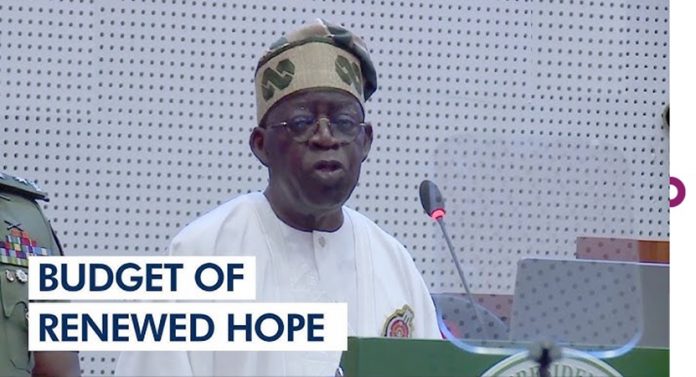
President Bola Tinubu has presented the 2024 appropriation bill to the National Assembly, referring to it as the “Budget of Renewed Hope.”

The budget, which was approved by the Federal Executive Council earlier in the week, amounts to N27.5 trillion.

In his address to the National Assembly, President Tinubu outlined key elements of the budget proposal, focusing on priorities and projections for the fiscal year. The following are some highlights from his speech:

Revenue Generation and Deficit: The federal government aims to generate N18.32 trillion in revenue to fund the budget. The projected budget deficit is N9.18 trillion.

Economic Growth Projection: President Tinubu projected an impressive economic growth of 3.76% for the 2024 fiscal year.

Expenditure Breakdown: Recurrent expenditure – N9.92 trillion
Capital expenditure – N8.7 trillion.

Security Architecture Overhaul: Plans for a comprehensive overhaul of the internal security architecture to strengthen law enforcement capabilities and enhance the protection of lives, property, and investments.

Human Capital Development: Emphasis on human capital development, particularly for school children.

Green Economy and Energy Transition: Commitment to a greener future, with a focus on public-private partnerships for big-ticket infrastructure projects in energy and transportation.

Allocation of resources to support innovative and environmentally conscious initiatives. Promotion of renewable energy sources to position Nigeria as a regional leader in the global movement toward clean and sustainable energy.

Oil Price and Exchange Rate Assumptions: Conservative oil price benchmark of $77.96 per barrel. Daily oil production is estimated at 1.78 million barrels per day. The naira to U.S. Dollar exchange rate is set at N750.

Debt Service and Financing: Debt service is projected to be 45% of the expected total revenue. The projected budget deficit of 3.88% of GDP is lower than the deficit recorded in 2023.

New borrowings of N7.83 trillion, privatization proceeds of N298.49 billion, and a drawdown on multilateral and bilateral loans of N1.05 trillion to finance the deficit.

President Tinubu emphasized the government’s commitment to meeting debt obligations and highlighted efforts to reduce the budget deficit compared to the previous year. The budget proposal is expected to reflect priorities in economic growth, security, human capital development, and environmental sustainability.

Read his budget statement below:

“We expect the economy to grow by a minimum of 3.76 percent, above the forecasted world average. Inflation is expected to moderate to 21.4 percent in 2024. In preparing the 2024 Budget, our primary objective has been to sustain our robust foundation for sustainable economic development. A critical focus of this budget and the medium-term expenditure framework is Nigeria’s commitment to a greener future.

“Emphasizing public-private partnerships, we have strategically made provisions to leverage private capital for big-ticket infrastructure projects in energy, transportation, and other sectors. This marks a critical step towards diversifying our energy mix, enhancing efficiency, and fostering the development of renewable energy sources. By allocating resources to support innovative and environmentally conscious initiatives, we aim to position Nigeria as a regional leader in the global movement towards clean and sustainable energy.

“As we approach the COP28 climate summit, a pivotal moment for global climate action, I have directed relevant government agencies to diligently work towards securing substantial funding commitments that will bolster Nigeria’s energy transition. We must seize this opportunity to attract international partnerships and investments that align with our national goals. I call upon our representatives to engage proactively to showcase the strides we have made in the quest to create an enabling environment for sustainable energy projects.

“Together, we will strive for Nigeria to emerge from COP28 with tangible commitments, reinforcing our dedication to a future where energy is not only a catalyst for development but also a driver of environmental stewardship, the President said.”

He added, “Accordingly, an aggregate expenditure of 27.5 trillion nairas is proposed for the Federal Government in 2024, of which the non-debt recurrent expenditure is 9.92 trillion nairas while debt service is projected to be 8.25 trillion nairas and capital expenditure is 8.7 trillion nairas. Nigeria remains committed to meeting its debt obligations. Projected debt service is 45% of the expected total revenue.

“The budget deficit is projected at 9.18 trillion naira in 2024 or 3.88 percent of GDP. This is lower than the 13.78 trillion naira deficit recorded in 2023, which represented 6.11 percent of GDP. The deficit will be financed by new borrowings totaling 7.83 trillion naira, 298.49 billion naira from privatization proceeds, and 1.05 trillion naira drawn down on multilateral and bilateral loans secured for specific development projects.”

Best Crypto for 2024: GameStop Memes’ $4M Presale Journey vs. Chainlink and Solana

0

The pursuit of the best crypto investment opportunities in the landscape of cryptocurrency has become a paramount consideration for investors. In this quest, GameStop Memes (GSM) has risen as a game changer, marking a milestone with a $4 million presale gain. This article dives into a comparison of GameStop Memes with crypto giants Chainlink (LINK) and Solana (SOL), dissecting their distinct features. For crypto enthusiasts and investors in search of superior market options, this exploration seeks to illuminate the potential inherent in GameStop Memes’ presales.

Coinbase Embraces Chainlink Crypto

Chainlink stands tall as a reliable bridge, connecting investors with promising opportunities. As the crypto market updates, the allure of Chainlink lies in its seamless integration of smart contracts with real-world data. Coinbase International Exchange, a segment catering to clients outside the US, under Coinbase Global Inc., is set to expand its trading portfolio by adding four new digital assets- Chainlink one among them. This milestone reflects Coinbase’s potential to elevate its portfolio and its international clientele. However, the question arises: Could GameStop Memes’ presale be the investment gem that outshines the rest?

Will Solana Recover from its Bearish Trend?

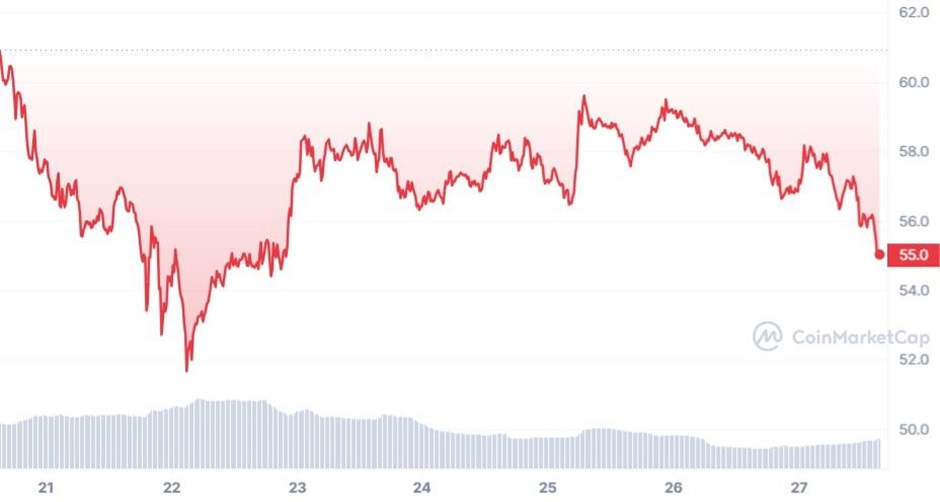
Prominent cryptocurrencies experienced significant price surges this month, setting new yearly highs and indicating robust bullish momentum. In contrast, despite reaching a new peak, Solana’s price has consistently faced a bearish trend, fueling speculation of a substantial price correction before the year concludes. The SOL price lingered within a tight range of $38.77 to $42.25 for over a week. Subsequently, bullish momentum propelled it beyond this range. Meanwhile, in the crypto landscape, GameStop Memes’ $4M presale introduces an exciting dimension, inviting investors to weigh the allure of GSM against the evolving trends in Solana’s price and speed.

GameStop Memes: The Presale Crypto Gem

As the crypto market updates and enthusiasts seek the best crypto for investment, GameStop Memes emerges as a presale crypto gem, attracting attention with its resounding $4M presale gain. GameStop Memes emerges as a torchbearer of financial unity and humor. Stemming from the GameStop saga, this token signifies resistance, unity, and empowerment. Going beyond the meme coin category, GameStop Memes embraces a community-driven approach, letting the collective voice shape its trajectory.

The distinctive quality of GameStop Memes lies in its tribute to a historic event, resonating with a community-driven ethos. Amid the quest for 100x crypto gains, GameStop Memes becomes a guiding light, blending historical reverence, community engagement, security, and forward-thinking strategies.

The Final Take

GameStop Memes’ presale journey unveils a promising trail against the backdrop of Chainlink and Solana. GameStop Memes invites investors to be part of a revolution that transcends traditional boundaries, offering both financial potential and a thrilling ride into the future of crypto investments. The time’s ripe, invest in GSM while it’s still in presale.


GameStop Memes:

Website: https://GameStopmemes.com/  

Twitter: https://twitter.com/GameStopopMemes

Telegram: https://t.me/GameStopopMemes

SHIB Scam Alert: Shiba Inu’s TREAT Project Sparks Debate – Is It Time For Dogecoin & Slayboy Token To Hit 100x ROI & Shine?

0

The Shiba Inu (SHIB) community eagerly anticipates the release of at least five upcoming SHIB projects. One project, in particular, has generated significant excitement within the broader crypto community even before its official launch – the TREAT token. However, the SHIB team recently issued warnings regarding this undisclosed token.

Amid this turmoil, a formidable newcomer in the meme coin landscape, Slayboy Token (SLAY), has emerged. This article explores the warnings regarding the SHIB scam and how Slayboy Token is poised to disrupt the status quo in the decentralized finance (DeFi) space, potentially outshining even established coins like Dogecoin (DOGE).

Shiba Inu Team Alerts Of SHIB Scam

The marketing strategist for Shiba Inu has issued a stern warning to the SHIB Army, Shiba Inu’s beloved community, emphasizing that the TREAT token, one of its yet-to-be-unveiled initiatives, is still in the development stage and has not been officially launched. Any coin bearing the TREAT ticker on the market is considered a copycat token. This SHIB scam alert was prompted by reports of fraudsters falsely claiming that TREAT was already available for trading.

The TREAT token, once introduced, is poised to be a unique reward asset within the Shiba Inu ecosystem, incentivizing active engagement and contributing to the liquidity of the SHI stablecoin. Given the concerns and uncertainty surrounding the TREAT token, crypto investors may consider revisiting established meme coins like Dogecoin for a sense of stability or exploring newer alternatives like the emerging Slayboy Token to diversify their holdings and mitigate potential risks.

Newcomer Challenges The Crypto Canines

The news regarding the SHIB scam might prompt investors to reassess the potential of meme coins. Slayboy Token, Shiba Inu, and Dogecoin are three distinct cryptocurrencies with unique strategies, use cases, and market performances. Shiba Inu distinguishes itself by offering community-led initiatives, such as a non-fungible token (NFT) market and support for Shiba Inu dog rescue. The coin’s price surge led to widespread adoption and merchant acceptance.

On the other hand, the creators of Dogecoin envisioned it as a tipping system on social media platforms like Reddit and Twitter, promoting the sharing of quality content. This token gained attention due to endorsements from figures like Elon Musk, boosting the DOGE price. It primarily served as a means of community engagement rather than having extensive utility.

The newcomer Slayboy Token challenges these crypto canines, focusing on the intersection of adult entertainment and cryptocurrency in the DeFi space. This coin is poised to become the best presale of 2023 as it aims to create a community-driven ecosystem by combining social media, content creators, and decentralized technology. SLAY plans to allocate 10% of all tokens for community incentives and charitable causes.

Slayboy Token’s Social Revolution

What sets Slayboy Token apart from other cryptocurrencies is its commitment to entertainment and community engagement, creating a distinct user experience. The platform offers a safe and private space for individuals to explore their desires while ensuring the highest standards of privacy and confidentiality. With SLAY, users enjoy exclusive perks tied to token ownership, such as early access to content.

Slayboy Token also plans to allocate its revenues to meaningful causes that resonate with the community, such as sex-positive education and events. This approach will entice users to join a world that fulfills their desires and allows them to contribute to a like-minded community where everyone benefits. Slayboy Token is here to begin a social revolution that reshapes the dynamics of content creation and financial inclusion within the adult entertainment industry.

The Future of Memetic Cryptocurrencies

The recent SHIB scam alert from the Shiba Inu team has highlighted the need for due diligence in the crypto market. This cautionary tale prompts investors to reevaluate their options by assessing the potential and approaches of other meme coins. Dogecoin utilizes the influence of prominent figures like Elon Musk to boost the DOGE price. Meanwhile, Slayboy Token, a contender for the best presale of 2023, leverages its ambitious vision of combining adult entertainment and cryptocurrency to revolutionize the DeFi space. With SLAY, the future of memetic cryptocurrencies stays bright.

Enter The Slayboy Manor:


Website: https://slayboy.space/

Telegram: https://t.me/SlayboyToken

Twitter: https://twitter.com/SlayboyToken

Data is Stubborn When it Faces Conventional Wisdom

0

Data is a stubborn thing when it faces conventional wisdom. It often challenges our assumptions, biases and beliefs, and forces us to rethink our views and opinions. Data can also be a powerful tool for innovation, discovery and problem-solving, if we are willing to listen to what it tells us and act accordingly.

I will share some examples of how data has challenged conventional wisdom in various fields and domains, and how it has led to new insights, breakthroughs and opportunities. I will also discuss some of the barriers and pitfalls that prevent us from embracing data-driven decision making, and how we can overcome them.

One of the most famous examples of data challenging conventional wisdom is the story of Ignaz Semmelweis, a Hungarian physician who worked in a maternity clinic in Vienna in the 1840s. He noticed that the mortality rate of women who gave birth in the clinic was much higher than those who gave birth at home or in other hospitals.

He also observed that the doctors who delivered the babies often came from performing autopsies on corpses, without washing their hands or instruments. He hypothesized that the doctors were transferring some kind of “cadaverous particles” to the women, causing them to die from infections.

Semmelweis decided to test his hypothesis by requiring the doctors to wash their hands with a chlorine solution before attending to the women. He found that the mortality rate dropped dramatically, from 18% to 2%. He published his findings and tried to convince his colleagues to adopt his practice, but he was met with resistance and ridicule.

His idea contradicted the prevailing medical theory of the time, which attributed diseases to imbalances in the four bodily humors. Semmelweis was eventually dismissed from his position and died in an asylum, before his discovery was widely accepted and recognized as a major contribution to medicine.

Semmelweis’s story illustrates how data can challenge conventional wisdom, but also how difficult it can be to change people’s minds and behaviors based on data. Some of the reasons why people resist data are:

Confirmation bias: We tend to seek out and interpret information that confirms our existing beliefs and ignore or dismiss information that contradicts them. Status quo bias: We tend to prefer things to remain the same, and avoid changes that might disrupt our routines, habits or comfort zones.

Authority bias: We tend to trust and follow the opinions of experts, leaders or authorities, even if they are wrong or outdated. Groupthink: We tend to conform to the views and norms of our peers, colleagues or social groups, even if they are irrational or harmful. Fear of failure: We tend to avoid taking risks or trying new things that might lead to failure or criticism.

The first step is to challenge conventional wisdom. This involves questioning traditional investment advice and assumptions to see if they hold up under scrutiny. EBI seeks to find evidence that supports or disproves these assumptions to help investors make more informed decisions.

The second step is to ask meaningful questions. This involves identifying the key issues that investors face and asking questions that will help them make better decisions. For example, what is the best way to capture market returns? How much risk should an investor take on? What is the most efficient way to diversify a portfolio?

The third step is to apply the evidence. This involves analyzing the data and research to determine the best course of action. EBI uses a systematic, analytical, and scientific approach to evaluate investment options and make informed decisions.

The final step is to monitor for effectiveness. This involves tracking the performance of the portfolio over time and adjusting as needed. EBI recognizes that markets are dynamic and that investment strategies must evolve over time to remain effective.

These biases can prevent us from seeing the truth, learning from data, and making better decisions. They can also hinder innovation, creativity and progress. How can we overcome them? Here are some suggestions:

Be curious: Seek out new information and perspectives that challenge your assumptions and expand your knowledge.

Be humble: Admit when you are wrong or don’t know something and be open to feedback and correction. Be critical: Question everything, including your own beliefs and opinions, and look for evidence and logic to support them. Be experimental: Test your ideas and hypotheses with data and learn from your successes and failures. Be collaborative: Share your data and insights with others and seek their input and opinions.

Data is a stubborn thing when it faces conventional wisdom. But it can also be a catalyst for change, improvement and growth. If we are willing to embrace data-driven decision making, we can unlock its potential and benefit from its power.

Telcos make more Yields from poor areas with Data plans than rich areas in Accra

This is a surprising fact that many people may not be aware of. How can it be that the poor areas of Accra, where most people struggle to afford basic necessities, are more profitable for the telecommunication companies than the rich areas, where people have more disposable income and access to better infrastructure?

The answer lies in the data plans that the telcos offer to their customers. In the poor areas, most people rely on mobile phones as their primary means of communication and information. They use data bundles that are cheap and expire quickly, such as daily or weekly plans. These plans have high per-megabyte rates and low data caps, which means that the customers end up paying more for less data.

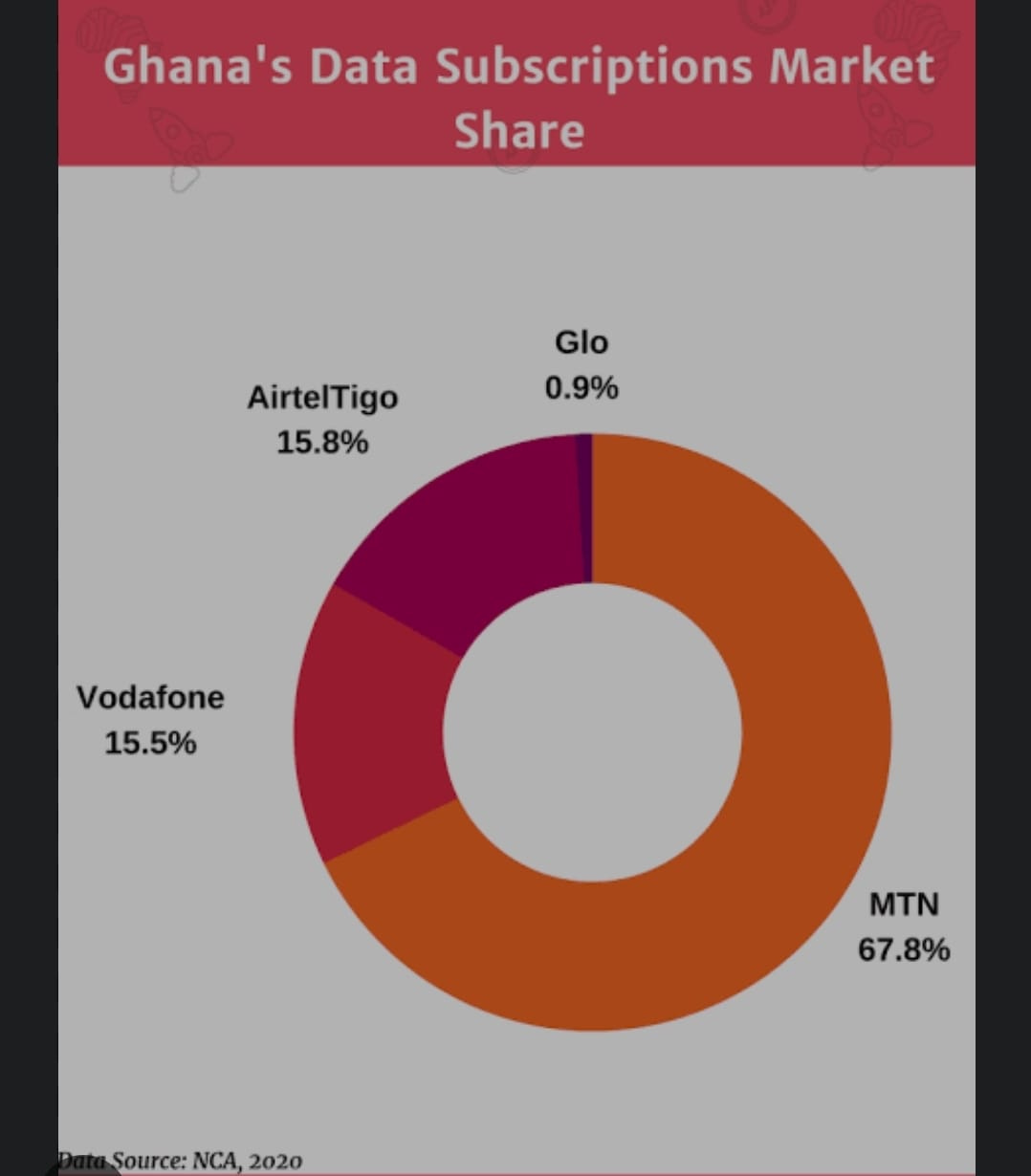
All Ghana’s networks have millions of dollars in assets and subscribers under their belt, but MTN Ghana takes the cake when it comes to the richest. As of 2020, they banked approximately 21 million subscribers, which translates to a whopping 53% market share in terms of telecom companies in Ghana.

In contrast, in the rich areas, most people have access to other forms of communication and information, such as landlines, broadband internet, cable TV, etc. They use data bundles that are more expensive and last longer, such as monthly or yearly plans. These plans have lower per-megabyte rates and higher data caps, which means that the customers end up paying less for more data.

The telcos exploit this difference in demand and supply by charging different prices for different areas. They charge more for the poor areas, where there is high demand and low supply of data, and less for the rich areas, where there is low demand and high supply of data. This way, they maximize their profits by extracting more money from the poor customers than from the rich ones.

Policy makers pushing for digitalization.

For years now, policy makers have been pushing for economic progress through digitalization. Successive governments have initiated a number of projects aimed at connecting more people to the Internet. In 2004, Ghana finalized and legally adopted its ICT Policy for Accelerated Development (ICT4AD), which outlined its vision for the information age. However – and this is the flip side of the coin – digital improvements are predominantly benefiting high earners in urban areas or companies based along the fiber optic infrastructure.

Even in the capital, Accra, coverage is still fragmented, and, especially for start-ups, far too expensive, as William Will Senyo, co-founder and CEO of Impact Hub Accra explains: “There is high speed Internet, but it costs an arm and a leg. It costs you $15 to $100,000 dollars a year to have somewhere between 50 and 100 mbps stable high-speed fiber Internet. So how many companies can afford that? Very few.”

Even for people with a regular income, access to the Internet – and with it the opportunities for digital participation – is associated with high costs. That’s despite Ghana’s leadership among its neighbors. The price for 1GB of mobile data volume is just over 2 percent of an average monthly income. In an international comparison by the Alliance for Affordable Internet (A4AI), Ghana ranks 20th out of 60 countries surveyed. The A4AI Affordability Drivers Index summarizes several factors relevant to access.

Regina Honu, CEO of Soronko Academy, which runs the Tech Needs Girls mentorship program where they teach primarily women and girls to code and work with technology, also remarks that digital participation in Ghana remains difficult because “the cost is prohibitive.” She hopes that “government initiatives that use the internet to train more people in different places and get more organizations to come in” will drive down the cost.

The government is aware of the problem of cost. Ghana was the second nation to endorse the “1 for 2” Internet affordability target. In 2017, Communications Minister Ursula Owusu-Ekuful announced Ghana’s intention to start working toward “1 for 2,” meaning, 1GB of mobile broadband for 2 percent or less of an average monthly income.

This is a clear example of how the telcos are taking advantage of the digital divide in Accra. They are not providing equal and affordable access to data for all their customers, but rather discriminating based on their location and income level. This is unfair and unethical, and it needs to change.

Technology Evolves, so do Preferences and Behaviors of Consumers

0

As technology evolves, so do the preferences and behaviors of consumers. However, we often fail to anticipate how people will react to new products or services, and what factors will influence their adoption. In this blog post, I will explore some of the reasons why consumers can be irrational, from our perspective, and how we can better understand and serve them.

One of the main challenges of predicting consumer behavior is that it is not always based on logic or rationality. Consumers are influenced by emotions, biases, social norms, habits, and other psychological factors that may not align with our expectations or assumptions. For example, consumers may value convenience over quality, novelty over functionality, or status over utility. They may also be swayed by marketing strategies, peer pressure, or word-of-mouth recommendations.

Some examples of irrational consumer behavior include:

Paying more for a product or service that has a lower quality or performance than a cheaper alternative. Buying a product or service that they do not need or use, just because it is trendy or popular. Switching from a product or service that they are satisfied with, to a new one that has no clear advantage or benefit. Rejecting a product or service that has a superior quality or performance, because it is unfamiliar or different. Sticking to a product or service that they are dissatisfied with, because they are loyal or resistant to change.

Consumer behavior is influenced by social and cultural factors that are not always observable or measurable. Consumers are influenced by the opinions, values, beliefs, and norms of their family, friends, peers, and society. These factors can affect how consumers perceive and evaluate products and services, as well as how they communicate and interact with others. Marketers need to understand the social and cultural context of their customers and how it affects their behavior.

Consumer behavior is complex and multidimensional. Consumers do not always act in a linear or logical way. They may have multiple goals, motivations, attitudes, and intentions that guide their behavior. They may also have different levels of involvement, awareness, knowledge, and loyalty towards a product or service. Marketers need to segment and target their customers based on these different dimensions and tailor their marketing mix accordingly.

Consumer behavior is influenced by situational factors that are beyond the control of marketers. Consumers may behave differently depending on the time, place, mood, or occasion. For example, consumers may buy more during holidays, sales, or special events. They may also buy differently depending on the weather, location, or availability of a product or service. Marketers need to anticipate and respond to these situational factors and adjust their marketing strategies accordingly.

These examples show that consumers are not always rational actors who make optimal decisions based on objective criteria. They are human beings who have complex motivations, emotions, and preferences that may not be obvious or consistent. Therefore, we cannot rely on our own logic or intuition to predict what they will want or do.

How can we overcome this challenge and better understand consumer behavior? Here are some suggestions:

Conduct market research and user testing to gather data and feedback from actual or potential consumers. This will help us identify their needs, wants, preferences, pain points, and expectations. Analyze the data and feedback using behavioral economics and psychology principles. This will help us uncover the underlying factors that influence consumer behavior, such as heuristics, biases, emotions, social norms, etc.

Design products and services that cater to the needs and wants of consumers, while also addressing their pain points and expectations. This will help us create value propositions that appeal to both the rational and irrational aspects of consumer behavior. Communicate the value propositions using effective marketing strategies that resonate with the emotions and motivations of consumers. This will help us persuade and influence them to adopt our products and services.

We sometimes underestimate what technology people will adopt and how irrational “to us” a consumer can be. However, by applying these suggestions, we can improve our ability to anticipate and satisfy consumer behavior and create products and services that are successful in the market.