DD
MM
YYYY

PAGES

DD
MM
YYYY

spot_img

PAGES

Home Blog Page 3973

Thorchain Launches Streaming Swap Features

0

Thorchain, a decentralized cross-chain liquidity protocol, has announced a new feature called Streaming Swap, which allows users to swap assets across different blockchains without waiting for confirmation times. According to Thorchain, this is the first time such a feature has been implemented in the crypto space, and it could revolutionize the way people trade and exchange cryptocurrencies.

Streaming Swap works by allowing users to lock up their assets in a smart contract and specify the swap rate, duration, and frequency of the swap. For example, a user can lock up 10 ETH and swap it to BTC at a rate of 0.1 ETH per BTC every week for 10 weeks. The user will receive 0.1 BTC every week until the swap is completed or canceled.

The benefits of Streaming Swap are manifold. First, it reduces the risk of price volatility and slippage by averaging out the swap price over time. Second, it eliminates the need for users to monitor the market and execute swaps manually. Third, it creates new opportunities for arbitrage and liquidity provision by allowing users to stream their assets to different pools and chains.

Thorchain claims that Streaming Swap is the first of its kind in the crypto space and that it will open up new possibilities for decentralized finance. The feature is currently live on the Thorchain testnet and will be deployed to the mainnet soon. Users can try out Streaming Swap using the ThorSwap interface or the Asgardex desktop app.

Streaming Swap works by using Thorchain’s native RUNE token as a bridge between different blockchains. Users can deposit any supported asset into Thorchain’s liquidity pools and receive RUNE tokens in return. Then, they can use these RUNE tokens to swap for any other supported asset on any other blockchain, without having to wait for the confirmation of the first swap. The second swap is executed instantly, and the user receives the desired asset in their wallet.

Thorchain claims that Streaming Swap has several advantages over traditional swaps. First, it reduces the latency and risk of swapping assets across different blockchains, as users do not have to wait for multiple confirmations or deal with network congestion. Second, it increases the liquidity and efficiency of Thorchain’s pools, as users can access any asset on any chain with a single swap. Third, it enables new use cases and opportunities for traders and arbitrageurs, as they can take advantage of price differences and market movements across different chains.

Thorchain says that Streaming Swap is currently live on its Chaosnet, a public testnet that simulates real-world conditions and incentives. Users can try out the feature using various assets such as Bitcoin, Ethereum, Binance Coin, Litecoin, Bitcoin Cash, and more. Thorchain plans to launch Streaming Swap on its mainnet in the near future, after ensuring its security and stability.

Thorchain is one of the leading projects in the cross-chain space, aiming to create a decentralized and trustless network that connects all blockchains and enables seamless value transfer. Thorchain leverages a novel consensus mechanism called Threshold Signature Scheme (TSS), which allows nodes to sign transactions without revealing their private keys or compromising security. Thorchain also uses a unique economic model that rewards liquidity providers with fees and incentives, while penalizing malicious actors with slashing and bonding mechanisms.

Streaming Swap is a major milestone for Thorchain and the crypto space as a whole, as it demonstrates the potential of cross-chain technology and innovation. Thorchain invites users to test out Streaming Swap on its Chaosnet and provide feedback and suggestions for improvement.


The Digital Mapping Alliance And Why Nothing Will Change

0

In the Igbo Nation, there is this proverb elders drop when some young men ask many questions and cause problems in the village square: when the piglet begins to grow and wonders why the mouth of the mother is so big, just give it time, because over time, its mouth will also become big. Yes, they want to remind you that most things are the same, and that what differs is your understanding, and once you get into certain phases, the convergence will happen.

So, as Microsoft, Meta and Amazon band together to take up Apple and Google on maps, do not think anything has changed: “Google and Apple’s duopoly in the online map market is about to be challenged by a coalition made up of Meta, Microsoft, and Amazon Web Services. The trio is teaming up to create alternative map data and services that developers can access freely.”

CNBC reported that the group was formed along with TomTom, and will be releasing data that will help companies to develop their own map, curtailing dependency on Google and Apple. The duo has dominated the market for long, charging mobile app developers for access to their mapping services.

App makers pay per thousand Google Maps lookups using their application programming interface (API), while Apple provides free access to Apple Maps for native app developers but charges web app developers fees for access.

According to the report, other major tech companies are collaborating to create an alternative option. The Overture Maps Foundation, established in the previous year, has compiled an extensive database of 59 million “points of interest,” including restaurants, landmarks, streets, and regional borders.

Simply, once they become successful on this, they will also behave like Apple and Google, since it is still capitalism. That explains why  Meta’s Threads is already implementing many “anti-people” policies of Twitter (yes, X) like blocking people (yes bots) from scraping data. Of course, I want Ovim roads to be well mapped and I hope this alliance delivers on it.

Comment on Feed

Comment: Won’t it have been easier to add Nokia to this alliance? They are already good in Maps. Anyway just thinking out loud.

My Response: Nokia has to move to the US or Africa because it is going to be hard to build such digital maps with the tough European privacy laws. That is partly the reason you do not read of great EU digital companies

Amazon, Microsoft, Meta Team Up with Overture Maps to Challenge Apple and Google’s Duopoly

0

Google and Apple’s duopoly in the online map market is about to be challenged by a coalition made up of Meta, Microsoft, and Amazon Web Services. The trio is teaming up to create alternative map data and services that developers can access freely.

CNBC reported that the group was formed along with TomTom, and will be releasing data that will help companies to develop their own map, curtailing dependency on Google and Apple. The duo has dominated the market for long, charging mobile app developers for access to their mapping services.

App makers pay per thousand Google Maps lookups using their application programming interface (API), while Apple provides free access to Apple Maps for native app developers but charges web app developers fees for access.

According to the report, other major tech companies are collaborating to create an alternative option. The Overture Maps Foundation, established in the previous year, has compiled an extensive database of 59 million “points of interest,” including restaurants, landmarks, streets, and regional borders.

The data has been meticulously cleaned and formatted, making it available for free as the foundational layer for a new map application.

Both Meta and Microsoft have contributed to this effort by collecting and donating the data to the Overture Maps Foundation, as disclosed by Marc Prioleau, the executive director of OMF. He explained in an interview with CNBC that gathering and licensing data on places can be challenging, and building map data requires significant time and a skilled workforce to ensure its accuracy and completeness.

“We have some companies that, if they wanted to invest to build the map data, they could,” Prioleau said. Rather than spending that kind of money, he said, companies were asking, “Can we just get collaboration around the open base map?”

Overture’s primary objective is to create a foundational maps data source that other companies can utilize to construct and manage their own maps, per the report.

Many companies find Google and Apple’s maps unsuitable because they do not grant access to the underlying data. Instead, these companies offer their maps as a service, often charging each time the underlying map data is accessed through an API.

Prioleau said it “works for a lot of people, but not for others,”

Overture’s focus lies solely on providing the foundational map data, giving companies the freedom to develop their own software on top of it, CNBC reported. This approach is said to be crucial because digital maps play a significant role in almost all mobile applications, and cutting-edge technologies like augmented reality and self-driving cars rely heavily on high-quality mapping software.

By utilizing Overture’s data, companies can seamlessly integrate their proprietary information, such as precise pickup locations for a delivery app, to tailor their offerings accordingly.

While Overture is not the first organization to pursue the creation of freely or affordably accessible map data, OpenStreetMap, founded in 2004, relies on crowdsourced data to create its maps. Notably, Meta also uses data from OpenStreetMap in its maps.

To set itself apart, Overture emphasizes a more rigorous vetting and curation process for its data compared to OpenStreetMap. This approach ensures that Overture’s data maintains a higher standard of accuracy and reliability.

Maintaining up-to-date map data presents a significant challenge, as businesses close and road networks undergo changes over time. To address this issue, the Overture Maps Foundation aims to leverage contributions from its members to provide real-time information, enabling regular and accurate updates rather than relying on a one-time data dump.

Marc Prioleau envisions integrating artificial intelligence technology and other automated techniques to facilitate this continuous updating process.

He said that the task of building and updating maps is an ongoing endeavor, which is why member companies are willing to share their data, as cleaning up data does not offer them a significant strategic advantage.

By collaborating and pooling their resources, these companies can collectively enhance the quality and accuracy of map data without compromising their individual competitive positions.

Tekedia Institute Unveils “AI in Business Masterclass” [video]

0

Good People, we are unveiling a new program in Tekedia Institute. It is called “AI in Business Masterclass” and it is going to be super-awesome. Many have already registered – and I am inviting you to come and co-learn with us. We bring a 360-degree to this topic: software, hardware, business, and Africa-nativity applicable case studies.

Yes, we will explain how this will improve your business mission in Lagos, Nairobi, Accra, etc even as we discuss how that next career level will come. Go here and register.

Tekedia Institute >> winner of Velocity Mhagic Grand Prize for innovation in entrepreneurial business education.

Nigeria Trails South Africa And Kenya in The Development of Key B2B Payment Processes Across Africa – Report

0

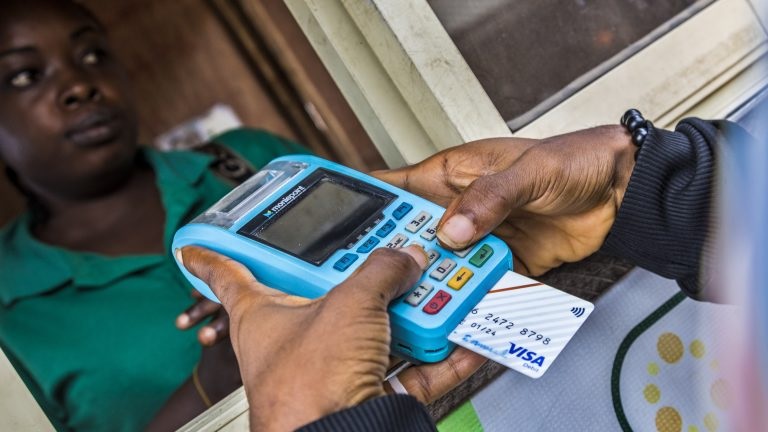
A new report from Duplo, a business platform that handles payments within Nigeria, has revealed that Nigeria trails South Africa and Kenya in the development of key B2B payment processes across Africa, including the adoption of electronic bank transfers, speed of processing invoices, and payment automation.

In the report, South Africa leads the way in electronic bank transfers with 49.1 percent of its population choosing it as a preferred option for payment, followed by Nigeria 48.5 percent, Ghana 34 percent, and Kenya 31.9 percent.

In terms of payment automation, Kenya leads the way with 83.4 percent of Kenyans disclosing that their payment system was either semi-automated or fully automated, compared to Nigeria’s 79.9 percent, South Africa’s 71.69 percent, and Ghana’s 67.23 percent.

When it came to speed of processing invoices, South Africa took the lead with 39.93 percent stating that it typically takes a day or less to process invoices, compared with Nigeria’s 39.74 percent.

Security ranked as the most critical feature for respondents when choosing a B2B platform, with 35.89 percent selecting it as the feature they valued most. Across the African countries, Kenya led with 39.9 percent, Ghana with 36 percent, South Africa with 35.6 percent, and Nigeria with 32.2 percent.

Speaking on the growth of B2B payments in Africa, CEO and Co-Founder of Duplo Yele Oyekola said,

“Despite various challenges, the future of B2B payments in Africa is set for dynamic growth and innovation, signaling a new era of opportunities and expansion for the continent’s business ecosystem. The opportunity to automate accounts payable and receivable and transform other aspects of the B2B payments process offers great potential to reduce payment delays, enhance cash flow and drive growth for businesses across the continent.

The increased adoption of digital solutions also implies a shift in workplace dynamics and positions finance professionals to add more value to their organizations. We are looking forward to playing a major role in the realization of these opportunities and the delivery of technology solutions to support growth for businesses in Africa”.

The B2B payments in Africa have continued to experience significant growth and transformation. Africa’s B2B payments landscape is currently evolving due to several factors that have contributed to the growth, such as Digital Transformation, Fintech Innovation, Financial Inclusion, etc.

Africa now accounts for 70% of the world’s $1 trillion mobile money market, with M-Pesa, the mobile phone-based money transfer service and widely used payment platform in Africa, boasting 51 million customers across seven African countries.

Mobile money remains one of the fastest-growing payment segments in emerging markets but there are others too. In Nigeria, B2B payments are experiencing significant growth and transformation, largely driven by the country’s vibrant Fintech industry and increasing adoption of digital payment solutions.

According to a McKinsey report (2020), Nigeria is one of the top countries as far as electronic payments are concerned. The Nigerian business-to-business (B2B) payments industry is rapidly changing and on the verge of a major transformation as emerging technologies and payment methods are challenging the status quo in this vital part of the market.

Digital payments make up the large majority of payment volumes in Nigeria and are expected to reach 7.7 billion per year by 2025. Several factors are contributing to B2B payments growth in Nigeria include the Central Bank’s Cashless Policy, deepening smartphone and internet penetration, and a new wave of financial technology startups.

Despite all the challenges facing the Nigerian market, some factors are helping to stimulate B2B payments in Nigeria. These include the growing strength of internet connections and penetration, increasingly powerful mobile devices, the rising number of e-commerce platforms, as well as the heightened adoption of online shopping.