DD
MM
YYYY

PAGES

DD
MM
YYYY

spot_img

PAGES

Home Blog Page 3977

Remembering The Stellar Airdrop As Arbitrum Airdrop And Big Eyes Infinity Offers Innovative Ways To Earn Tokens

0

In the lucrative crypto market, there are many ways to earn tokens, one of the best ways? Airdrops. Recently the crypto market has seen Arbitrum airdrop (ARB) and Stellar airdrop (XLM). They provided a way of earning free tokens by implementing some eligibility criteria.

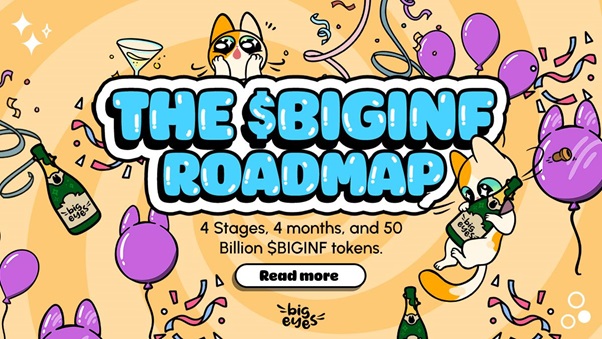
Big Eyes Infinity (BIGINF) an upcoming crypto presale opportunity is also planning to follow an airdrop strategy ensuring speedy and equal distribution among community members. The presale will last for 4 months giving investors an opportunity to gain 6x returns once the token launches.

Start By Understanding Airdrop

Startups utilize the airdrop marketing technique to provide tokens to current crypto traders for free or in return for minimal effort. It is a method by which an individual can get free tokens from a crypto project. There are several ways to receive these tokens, and many times an airdrop is associated with free cryptocurrencies; sometimes an individual may have to put in time and effort or deal with transaction fees.

For many years now, airdrops have been practised in cryptocurrency. There are different types of crypto airdrops such as; standard airdrops, bounty airdrops and holder airdrops. To maximise tokens on upcoming airdrops, individuals can follow some strategies such as joining airdrop communities, following social media accounts and participating in referral programs.
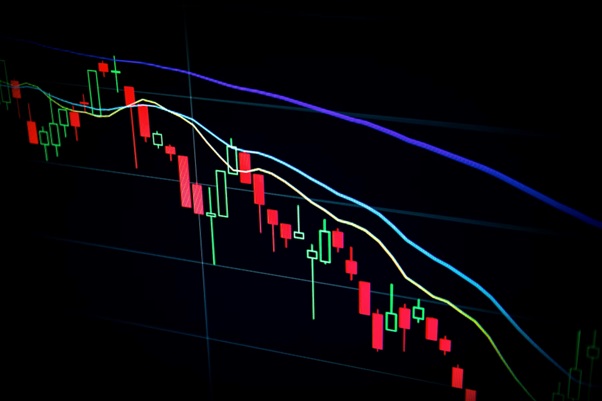
Arbitrum Airdrop Storms The Crypto Arena

On top of the Ethereum blockchain, Arbitrum is a layer 2 blockchain scaling solution. It was developed by Offchain Labs in August 2021 with the intention of accelerating transaction speeds, decreasing on-chain transaction costs, and fostering scalability.

Arbitrum Airdrop started on April 25 issuing its governance token ARB the crypto project picks eligible wallets of the blockchain’s active community members and sends them a certain quantity of the new tokens for free or in exchange for doing an activity, such as retweeting a tweet made by the company. The platform’s plan included an airdrop as part of which eligible DAO projects would get 1.13% of the platform’s total 10 billion token supply. The main objectives of an airdrop were to decentralise token holders, boost token awareness, and enhance circulation.

<< Click Here To Buy Into Big Eyes Infinity >>

Stellar Crypto’s Record Of The Largest Airdrop

The Stellar Development Foundation did the largest airdrop in cryptocurrency history in 2018. The airdrop consisted of $125 million worth of Stellar Lumens (XLM) distributed to users of the popular Blockchain Wallet. Every new user who registered for a Blockchain wallet received $25 worth of XLM as part of the airdrop distribution’s first round. Both new and present Blockchain wallets got the remaining XLM tokens from the airdrop.

When Stellar first started, 100 billion lumens were produced. The Stellar Development Foundation was then responsible for managing the distribution of 95 billion of these lumens. Even while the Stellar airdrop on Blockchain is significant, it is still only a small portion of the distribution.

Big Eyes Infinity Jumps To Airdrop

Similar to Stellar and Arbitrum airdrop, Big Eyes Infinity (BIGINF) is a cutting-edge presale opportunity offered by Big Eyes Coin. The Big Eyes community will reach new heights of riches and fame due to Big Eyes Infinity. The main goal of Big Eyes Infinity is to increase profits by increasing transparency.

To maximise benefits for the community, just like Arbitrum airdrop BIGINF tokens will be airdropped to holders at the end of the presale and will launch simultaneously on a DEX. Holders will get access to the 819Casino and P2E games on the Big Eyes platform.

There are 50 billion tokens in total for Big Eyes Infinity. It’s important to note that the whole token distribution will occur through an airdrop, guaranteeing quick and fair distribution among community members. Tokenomics is organised as follows: 35 billion tokens, or 70%, will be reserved for the presale stage; 12.5 billion tokens, or 25%, for the DEX launch stage; and 2.5 billion tokens, or 5%, for marketing purposes. This process will be carried out in four parts and will result in an incredible 6x gain overall.

Additionally, the pricing for the Presale will start at $0.00006 and end at $0.00036 at the time of launch. 

The use of airdrops to promote the acceptance and growth of cryptocurrencies has grown in popularity. Last April, there was an Arbitrum airdrop in which wallets that met certain criteria received ARB. Similar to this, Stellar successfully conducted a $125 million airdrop to encourage the adoption of Stellar Lumens.

When its four-month profitable presale is over, Big Eyes Infinity plans to distribute its token by an airdrop, taking inspiration from the successful stellar and Arbitrum airdrops.

Big Eyes Infinity (BIGINF)

Presale: https://buy1.bigeyes.space/

Website: https://bigeyes.space/

Telegram: Contact@BIGEYESOFFICIAL

Twitter: https://twitter.com/BigEyesCoin
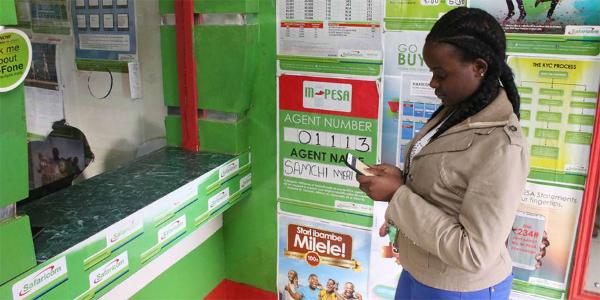
Safaricom’s M-Pesa Increases Customers Daily Transaction Cap to $3,480

0

Safaricom mobile phone-based money transfer payments and micro-financing service, M-Pesa, has increased customers’ daily transaction cap from $1,000 to $3,480 (KES 500,000).

This increase is coming, following the approval of the Central Bank of Kenya (CBK), and will be effective from August 15, 2023.

While the per-transaction limit of KSh. 150,000 remains unchanged, customers now have the flexibility to carry out multiple transactions within the new daily limit.

Safaricom CEO Peter Ndegwa speaking on M-Pesa’s transaction increase, said the adjustment is expected to particularly benefit small and medium-sized enterprises (SMEs) in Kenya, providing them with enhanced convenience as they engage in cashless transactions.

In his words,

“We appreciate the role that the Central Bank of Kenya has played by constantly providing guidance on innovations and protections that we have put in place to strengthen M-PESA’s adherence  to KYC, anti-money laundering and other financial regulations and safeguards. The increased account limits will provide customers and especially small businesses with increased convenience as the share of cashless transactions continues to rise,”

Safaricom disclosed that the adjustment is intended to cater to businesses with higher transaction values, particularly small and medium enterprises. It is backed by the fact that over 606,000 businesses received payments through Lipa Na M-PESA, with a total of KES 1.625 trillion ($11.3 billion) transacted in the past financial year.

Lipa na M-Pesa, a platform that enables merchants to collect payments from customers using a till number, has seen increased popularity. Lipa Na M-PESA accounts for about 40% of Safaricom’s service revenue and is the telco’s most profitable M-PESA-related product.

Safaricom launched Lipa na M-Pesa service in 2013 and has been innovating the product, allowing business owners to access real-time statements, export statements and track their business performance.

It is however worth noting that this is not the first time M-Pesa is increasing its transaction limits. M-PESA transaction limits were previously increased in March 2020 when the Central Bank of Kenya approved doubling of transaction limits to KSh. 150,000 and daily and account limits to KSh. 300,000.

These changes aim to support the growing trend of cashless transactions and provide greater flexibility for businesses with larger transaction volumes.

Safaricom’s M-Pesa service has solidified itself as the Kenyan telco’s most profitable service and now contributes nearly half of the company’s total gross earnings.

The fintech platform has shown no signs of slowing down as other mobile money platforms from operators and local fintechs try to catch up to its success.

Over the years the telco has also expanded the number of services offered by M-Pesa and has evolved beyond just person-to-person money transfers. It now offers savings and loan products, bill payments, cross border money transfers as well as e-commerce and merchant payments.

In Kenya, there are now over 3.2 million businesses accepting payments on M-Pesa. Safaricom believes that M-Pesa service has significantly expanded access to formal financial services for Kenyans and substantially contributed to financial inclusion across the African markets where it is available.

Nigeria’s Inflation Rose to 24.08% in July, Highest in More Than A Decade

0

The consumer price index (CPI), which measures the rate of change in prices of goods and services, rose to 24.08 percent in July 2023; the highest Nigeria has had in more than a decade.

The latest figure, which marks the seventh consecutive increase in the nation’s inflation rates this year, jumped from 22.79% recorded in June, according to the CPI report published by the National Bureau of Statistics (NBS) on Tuesday.

According to the NBS report, the headline inflation rate rose to 24.08 percent in July 2023, relative to that of the previous (June 2023) rate which was 22.79 percent.

“Looking at the movement, the July 2023 headline inflation rate showed an increase of 1.29 percent points when compared to June 2023 headline inflation rate,” NBS said.

“On a year-on-year basis, the headline inflation rate was 4.44 percent points higher compared to the rate recorded in July 2022, which was 19.64 percent.

“This shows that the headline inflation rate (year-on-year basis) increased in July 2023 when compared to the same month in the preceding year (i.e., July 2022).”

Nigeria’s inflation rate had previously touched the 24 percent mark in September 2005, registering at 24.3 percent during that period.

On a month-on-month basis, NBS said the headline inflation rate in July 2023 was 2.89 percent — 0.76 percent higher than the rate recorded in June (2.13 percent).

This means that in July 2023, on average, the general price level was 0.76 percent higher relative to June 2023.

“The percentage change in the average CPI for the twelve-month period ending July 2023, over the average of the CPI for the previous twelve-month period, was 21.92 percent; showing a 5.17 percent increase compared to 16.75 percent recorded in July 2022,” the data body said.

Food inflation jumped to 26.98 percent

The report also said the food inflation rate in July 2023 hit 26.98 percent on a year-on-year basis. This was 4.97 percent points higher relative to the rate recorded in the same month last year.

The rise in the food index, NBS said, was caused by increases in prices of oil and fat, bread and cereals, fish, potatoes, yam and other tubers, fruits, meat, vegetable, milk, cheese, and eggs.

“On a month-on-month basis, the food inflation rate in July 2023 was 3.45 percent, this was 1.06 percent higher compared to the rate recorded in June 2023 (2.40 percent). The rise in food inflation on a month-on-month basis was caused by increases in prices of bread and cereals, potatoes, yam and other tubers, fish, oil, and fat,” the report reads.

“The average annual rate of food inflation for the twelve-month ending July 2023 over the previous twelve-month average was 24.46 percent, which was a 5.71 percent points increase from the average annual rate of change recorded in July 2022 (18.75 percent).”

Food inflation was higher in Lagos, Ondo, and Bayelsa in July

According to NBS, CPI is weighted by consumption expenditure patterns that differ across states and locations.

This means the weight assigned to a particular food or non-food item may differ from state to state making interstate comparisons of consumption baskets inadvisable and potentially misleading.

However, the report shows that Lagos, Ondo, and Kogi residents paid more for food in the period under review.

“In July 2023, food inflation on a year-on-year basis was highest in Kogi (34.53 percent), Lagos (32.52 percent), and Bayelsa (31.31 perecnt), while Jigawa (20.90 perecnt), Sokoto (21.63 percent), and Kebbi (22.45 percent), recorded the slowest rise in food inflation on a year-on-year basis,” NBS said.

The statistics agency said on a month-on-month basis, July 2023 food inflation was highest in Kogi (6.73 percent), Akwa Ibom (5.64 percent), and Bayelsa (4.59 percent), while Taraba (-0.21 percent), Jigawa (0.28 percent), and Yobe (0.90 percent), recorded the slowest rise in inflation.

Google’s N1.2bn Grant Initiative to Nigeria Lauded by Vice President Shettima

0

Nigeria’s Vice President, Kashim Shettima, has commended Google’s N1.2 billion grant initiative, which supports President Bola Tinubu’s administration in its endeavor to create one million jobs.

The Vice President expressed his appreciation on Tuesday during a meeting with executives from Google, a prominent global technology company, at the Presidential Villa. A statement released by Olusola Abiola, Director of Information at the Vice President’s Office, said.

According to the Vice President, the decision to provide a grant of N1.2 billion to bolster the Tinubu administration’s digital jobs project is praiseworthy and sets a valuable example for other companies to follow.

“Let’s think outside the box and create more job opportunities. We need to walk the talk. It is easy to pontificate but very difficult to bring all of the ideas to fruition. I want to assure you, this administration is ready to partner with you.

“Nigeria is ready for business. The President that we have now wants to leave a legacy that Nigerians will be proud of many years after,” the VP said.

Google’s grant came at a time when the youth unemployment rate in Nigeria has risen to 53 percent, underlining the need for the government to create youth empowerment programmes, especially in the area of digital skills.

Nigeria has a teeming population with a vibrant median age of 17.2, one of the youngest in the world. Shettima said there is a unique opportunity to harness the potential of our huge youth population to create millions of jobs in the digital sector.

“We have more English-speaking people than many countries in Africa and beyond. We missed the agricultural age, we missed the industrial age and we are now in the knowledge-driven post-industrial age. We have the potential and a unique opportunity to fill the anticipated global talent deficit.

“Access Bank is doing a lot in terms of digital skills, training 1000 youths in digital skills to create employment opportunities. We are working with Wema Bank, the Bank of Industry and other partners on this project. We are willing to partner with Google, we will work closely with you for the good of our nation,” he said.

The Google delegation comprises Ms. Oluwatamilore Oni, Programme Manager for Google Africa; Mr. Adewolu Adene, Manager of Government Affairs and Public Policy; and Mr. Taiwo Kola-Ogunlade, Manager of Communications and Public Affairs for Google West Africa.

Mr. Olumide Balogun, Director of Google West Africa, expressed the company’s enthusiasm for the Tinubu administration’s ambitious goal of generating one million digital jobs. Google is dedicating more than N1.2 billion in grants to back this initiative.

Balogun elaborated that the company’s program will furnish digital skills to over 20,000 young individuals and women, thereby enhancing their lives and livelihoods. Additionally, the program will facilitate the growth of numerous startups, ultimately leading to the creation of thousands of jobs within the sector.

The Google initiative is made possible by a grant from Google’s philanthropic division, in collaboration with “Mind the Gap,” alongside partnerships with Data Science Nigeria and the Creative Industry Initiative for Africa. This endeavor is in line with President Bola Tinubu’s administration’s commitment to bolstering the involvement of young Nigerians in the digital economy, with a goal of establishing one million digital jobs.

Google Africa’s Director of Government Relations and Public Policy, Mr. Charles Murito, said the company remains committed to investing in digital infrastructure across Africa, noting that digital transformation in the continent can be the driver of the targeted technology jobs.

“Google cannot achieve its vision and objectives if it doesn’t cover Nigeria effectively,” he said, acknowledging the potential in Africa.

Besides Planned Reversal on Fuel Subsidies, Expect a Reversal on Naira Float

0

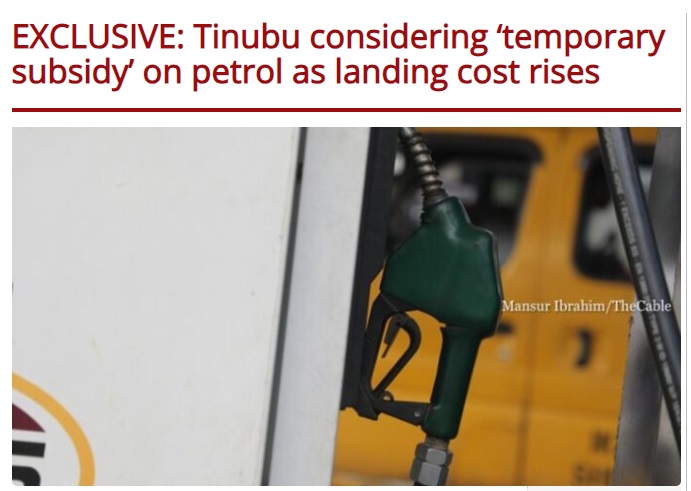
TheCable reports that the Nigerian government is considering bringing back fuel subsidies, temporarily, as the paralysis caused by high energy costs continues to put the nation into a miry clay. In the last five days, I have made that point many times here. Yes, Nigeria must forget the liturgical purity of campaign promises or manifestos and face governing realities.

Also, the nation must also ignore big banks like Morgan Stanley which just put out a report which has no basis on the current state of Nigeria. That report will work in America but has no chance in Nigeria! We must understand that, unlike the United States, the Nigerian government has limited tools to stimulate consumer demand since consumer lending is largely non-existent.

American multinational investment bank and financial services company, Morgan Stanley, has lauded Nigeria’s president, Bola Tinubu’s reforms to reposition Nigeria’s economy, urging for more sound policies.

In the company’s recent advisory report titled “Tales from the Emerging World Nigeria’s New Dawn?”, it hailed the Tinubu-led administration, for several strategic reforms implemented, to recover the dwindling Nigeria economy.

The report began by stating how the previous administration of President Muhammadu Buhari led Nigeria to suffer eight years of stagnation, despite his claims to tackle corruption.

And if that is the case, the correlation between interest rate and consumer behaviour is weak in the short term. Also, a high cost of fuel will have a devastating impact on production, and that will push inflation high, and in a non-credit economy, welfare losses become rampant since people have limited means to borrow, to compensate for the high costs of items.

In the next few weeks, I expect a reversal on the Naira float because that policy cannot work, based on the fundamental principles of economics. Nigeria still has many core tools, and the government must be bold to use them to bring Naira back to a better position. And this should be a lesson: we must be nuanced on policy formulation, and plan better.

Nigerian Government is Reportedly Considering Providing Temporary Fuel Subsidy