DD
MM
YYYY

PAGES

DD
MM
YYYY

spot_img

PAGES

Home Blog Page 398

Start in the cloud, head for profits—PioneerHash is hot globally!

0

With the booming blockchain and digital economy, computing power has become a crucial bridge to the future. Now, a new opportunity is emerging: PioneerHash, with its leading cloud computing technology, transparent revenue model, and global deployment strategy, is rapidly creating a new revolution in the digital mining industry.

What is PioneerHash?

PioneerHash is an innovative platform dedicated to providing efficient, secure, and flexible cloud computing services. Users don’t need to purchase expensive mining machines or shoulder the operational costs of maintenance. Simply use the platform to participate in blockchain mining and enjoy daily returns.

PioneerHash’s strength lies not only in its robust technical support but also in its lightweight “cloud-based revenue” philosophy. Whether you’re a blockchain novice or a seasoned miner, you can find an investment solution that suits you.

Behind the global rush lies three core values:

  1. Efficient Hash Deployment, Faster Revenue

PioneerHash is deployed in multiple high-quality data centers around the world, leveraging green energy and advanced hardware to ensure extremely stable computing power and fast network connections. Users can activate their own cloud computing power with just a few clicks and enjoy almost instant profit feedback.

  1. Flexible Plans with Low Entry Points and High Returns

From short-term trial plans to long-term, stable income plans, PioneerHash offers a variety of options to meet different users’ risk appetites and return goals. With an entry point of just $100, it truly ensures “everyone can mine, everywhere can earn profits.”

  1. Transparent Revenue Mechanism with On-Chain Data Tracking

All earnings are tracked on-chain, and PioneerHash has earned user trust through its open and transparent approach. The platform’s daily electricity costs, mining pool allocation ratios, and other data are publicly available to users, providing greater peace of mind and control over their investments.

How can I quickly get started with Pioneer Hash?

Contract Type Contract Price Contract duration Daily income Total revenue
Experience Contract $100 2 $3 $100 + $6
Primary Hash Rate? $500 5 $6.00 $500 + $35
Primary Hash Rate? $1,000 10 $13.40 $1500+ $134
Primary Hash Rate? $3,000 20 $42.90 $3000+$858
Intermediate Hash Rate? $5,000 30 $78.50 $5000+ $2355
Intermediate Hash Rate? $8,200 40 $136.12 $8000+ $5444.8
Advanced Hash Rate? $100,000 40 $2,180.00 $100000+ $87200


(Click here to visit the official website for more details on high-yield contracts.)

  • Wait for daily profits to be automatically deposited into your account. Withdrawals and reinvestment support available at any time.

Why join now?

With the Bitcoin halving approaching and the blockchain ecosystem continuing to expand, high-quality computing resources are becoming increasingly scarce, driving both cloud computing prices and profit potential higher. PioneerHash is currently in a hot period. Early adopters can enjoy limited-time discounts and exclusive rebate programs, as well as opportunities to participate in the platform’s ecosystem governance and future token incentives.

Summary

The future is here, and computing power is king. Choosing PioneerHash is more than just choosing a mining platform; it’s seizing a strategic opportunity to unlock digital wealth.

Start from the cloud, head for profits—join PioneerHash now and share in the dividends of the global digital economy! Visit the Pioneer Hash official website now to start your journey to wealth.

Official Website: https://pioneerhash.com

Contact: info@pioneerhash.com
New Crypto Presale 2025: Mono Protocol Launch Nets $1.7M in First 24 Hours

0

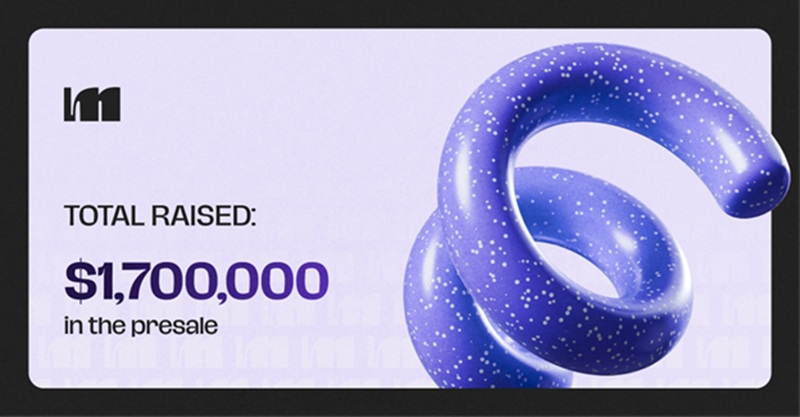
Mono Protocol’s crypto presale has officially launched, recording a strong start with $1.7 Million raised in its first 24 hours.

The token presale connects directly to features designed to address blockchain fragmentation, unreliable settlement, and high gas costs. By linking token utility to infrastructure, Mono Protocol positions itself as more than a fundraising event – it aims to support long-term adoption of decentralized applications.

Tackling Fragmentation in Web3

A major driver of early adoption is the project’s focus on unifying fragmented blockchain balances. Today, users manage multiple wallets and assets across networks, while developers struggle with redundant infrastructure.

Mono Protocol addresses this issue with unified accounts that merge balances across chains. Users interact with a single spendable balance, while developers gain tools for faster and simpler application deployment. The presale coin supports this model, giving participants a direct stake in easier cross-chain access.

Reliable Settlement With Execution Bonds

Decentralized finance transactions often face risks of failure or long settlement times. Mono Protocol introduces execution bonds, where solvers lock tokens to guarantee instant transaction processing under its Resource Locks model.

For users, this reduces failed transfers and builds trust in Web3. For developers, it provides a consistent and reliable environment to operate decentralized applications. This mechanism strengthens the value proposition of the new crypto presale, aligning token use with dependable execution.

Balancing Fairness and Incentives

Another feature of the protocol is its balance between user protection and developer incentives. Developers can set fees that create sustainable revenue streams, while users benefit from MEV-protected routing. This ensures transactions are not exposed to frontrunning, maintaining fairness across interactions.

This design encourages developers to maintain long-term applications while giving users greater confidence in their transactions. By embedding fairness into its architecture, the presale cryptocurrency positions itself among projects aiming to make decentralized networks more accessible.

Why Investors Are Paying Attention

The strong start of Mono Protocol’s presale shows demand for cryptocurrency presales with practical use cases. With $1.7 Million raised in its first 24 hours, the project has captured investor interest early.

Features such as unified balances, execution bonds, universal gas, and MEV protection demonstrate how the token presale supports Web3 growth. For investors, this connection between token use and infrastructure makes Mono Protocol stand out in the crowded presale market.

As 2025 unfolds, market participants will be watching this presale closely to see how it advances its roadmap and adoption goals.


Learn More about Mono Protocol

Website: https://www.monoprotocol.com/

X: https://x.com/mono_protocol

Telegram: https://t.me/monoprotocol_official

LinkedIn: https://www.linkedin.com/company/monoprotocol/

The Hidden Threat of Infections in Nursing Homes: What Families Should Know

0

Nursing homes are meant to provide care, comfort, and dignity for older adults. Families place their trust in these facilities, believing loved ones will be safe. Yet one of the most dangerous risks inside nursing homes is not always visible. Infections, often preventable, remain a leading cause of illness and death in long-term care facilities.

For families, this reality can be shocking. A small cut, a cough, or a simple flu can escalate quickly in elderly residents whose immune systems are weaker. In environments where dozens of people live closely together, infections spread fast. Behind the statistics are stories of pain, loss, and frustration, and questions about whether more could have been done to prevent them.

Why Infections Spread in Nursing Homes

Infections in nursing homes happen for many reasons. Residents often have chronic health problems that make them more vulnerable. Limited mobility can lead to bedsores or urinary tract infections. Shared dining areas, bathrooms, and medical equipment make germs easier to pass from one person to another.

Staffing shortages add to the risk. When caregivers are stretched too thin, hygiene routines may be rushed. Handwashing, changing bedding, or cleaning equipment can be skipped or delayed. Facilities that cut corners in training or sanitation create even greater dangers.

Common infections include pneumonia, urinary tract infections, skin infections, and gastrointestinal illnesses. In some cases, outbreaks of antibiotic-resistant bacteria have caused severe harm. Each of these conditions, if untreated or unnoticed, can be deadly.

Warning Signs Families Should Watch For

Families visiting loved ones need to be alert. Infections are not always obvious at first. Some signs to pay attention to include:

  • Sudden fever or chills.
  • Changes in mental state, such as confusion or unusual sleepiness.
  • Redness, swelling, or sores on the skin.
  • Persistent cough or shortness of breath.
  • Unexplained pain or discomfort.

These symptoms should never be brushed off as simply “part of aging.” Quick medical attention can save lives. Families should also observe the overall environment. Is the facility clean? Are staff members using gloves and washing their hands? Are residents’ rooms tidy and hygienic? The answers to these questions reveal a lot about how seriously a nursing home takes infection control.

The Human and Emotional Cost

Beyond the statistics, infections take a heavy toll on residents and families. Older adults may face long hospital stays, painful treatments, or permanent declines in health. Families often feel guilt or anger, wondering if they missed early warning signs or if the facility failed to act responsibly.

The emotional strain can linger even after recovery. Fear of recurring infections makes families anxious, and residents may feel less secure in the place that is supposed to be their safe home.

Why Prevention Matters

Preventing infections is not complicated, but it requires commitment. Regular hand hygiene, proper wound care, clean facilities, and careful monitoring of residents are basic steps. Vaccinations and infection-control training for staff further reduce risks.

Facilities that invest in these measures show respect for residents and peace of mind for families. On the other hand, neglect in this area is not just careless; it can be life-threatening.

The Role of Legal Advocacy

Families often struggle to hold nursing homes accountable when preventable infections cause serious harm. This is where legal advocacy becomes important. Attorneys investigate whether a facility failed in its duty of care. For example, ignoring clear symptoms, failing to maintain hygiene standards, or covering up outbreaks.

In California, many families have turned to Los Angeles nursing home infection attorneys to pursue justice. Their work does more than secure compensation. It pushes facilities to improve infection control policies, hire more staff, and train caregivers properly. Legal action often shines a light on problems that might otherwise remain hidden, creating pressure for systemic change.

How Families Can Protect Their Loved Ones

Families are not powerless. By taking an active role, they can help reduce risks and ensure better care. Practical steps include:

  • Visiting regularly and asking questions about hygiene practices.
  • Checking staff compliance with handwashing and protective gear.
  • Reviewing care plans and requesting medical updates often.
  • Raising concerns immediately with supervisors or administrators.
  • Seeking outside medical evaluations if symptoms are dismissed.

If serious harm occurs, consulting with experienced advocates, such as Los Angeles nursing home infection attorneys, can help families understand their rights and options.

Turning Awareness Into Action

Infections in nursing homes are not just medical problems. They are community issues that reveal how we treat some of the most vulnerable members of society. Families, caregivers, and facilities all play a role in reducing risks, but accountability must remain central.

Businesses that run nursing homes have a responsibility to prioritize safety, not just profit. Families have the right to expect clean, secure environments for their loved ones. And society benefits when elder care is handled with respect and responsibility.

Moving Forward Together

The threat of infections in nursing homes cannot be ignored. For families, awareness is the first step. For nursing homes, prevention must be a daily commitment. And for communities, holding facilities accountable is part of protecting the dignity of older generations.

Catastrophic infections are preventable. With stronger oversight, better training, and open communication, nursing homes can become places where health and dignity are preserved. Families should never feel helpless, and residents should never suffer because basic safety measures were neglected.

Creating safer nursing homes is not only about protecting individuals. It is about building trust in the systems that care for our elders. By turning awareness into meaningful action, we ensure that the people who once cared for us are given the care they truly deserve.

NBCUniversal and YouTube Secure Carriage Deal, Revive NBC Sports Network as Carriage Battles Reshape TV Market

0
A picture shows a You Tube logo on December 4, 2012 during LeWeb Paris 2012 in Saint-Denis near Paris. Le Web is Europe's largest tech conference, bringing together the entrepreneurs, leaders and influencers who shape the future of the internet. AFP PHOTO ERIC PIERMONT (Photo credit should read ERIC PIERMONT/AFP/Getty Images)

NBCUniversal and YouTube averted a blackout Thursday afternoon by reaching a new multi-year carriage deal that preserves NBCUniversal’s full slate of broadcast and cable networks on YouTube TV.

The agreement followed a brief extension after the original contract expired — a last-minute negotiation tactic that echoed their previous renewal in 2021.

The terms remain undisclosed, but both companies stressed that the agreement extends beyond traditional carriage fees. In addition to long-term access for channels like NBC, Telemundo, Bravo, CNBC, Golf Channel, E!, Oxygen True Crime, MSNBC, USA, Syfy, and Universo, the deal includes expanded digital rights: short-form highlights and shows on YouTube, Universal Pictures films on Google TV and YouTube, and Peacock’s upcoming availability through YouTube Primetime Channels.

The most striking development is the return of NBC Sports Network (NBCSN), four years after its shutdown. Relaunching later this fall, NBCSN will carry NBCUniversal’s extensive sports programming, complementing flagship events that remain on NBC’s broadcast network.

Matt Schnaars, NBCUniversal’s president of content distribution, framed the deal as both a defensive and forward-looking move.

“We’ve secured long-term access to our full portfolio of broadcast and cable networks on YouTube TV, and we’re advancing our Peacock strategy with an upcoming launch on YouTube Primetime Channels and ongoing presence on Google TV,” he said.

For NBCUniversal, reviving NBCSN reverses part of a 2022 strategy that shifted sports rights to Peacock and USA Network to cut costs. Analysts say the decision reflects slowing growth at Peacock, where sports have been central to subscriber acquisition. NBC aims to extract steady carriage fees from distributors, while still driving some viewers to Peacock for exclusive rights by restoring NBCSN to channel bundles like YouTube TV.

Greg Abel, Berkshire Hathaway vice chairman who is slated to succeed Warren Buffett as CEO, praised NBCUniversal’s balancing act in its sports business model, noting it could stabilize revenues across multiple platforms.

This deal underscores a broader trend in the television industry: the uneasy coexistence of streaming ambitions with the financial safety of legacy carriage. Other companies are also impacted by this recalibration.

Disney’s bruising dispute with Charter Communications in 2023 exposed how reliant even the biggest entertainment companies remain on distribution fees, despite the billions poured into direct-to-consumer platforms like Disney+. That standoff ended with Disney agreeing to give Charter’s pay-TV customers free access to Disney+ and ESPN+, a compromise that blended old and new business models much like NBCUniversal’s deal with YouTube.

Similarly, Paramount has leaned on YouTube TV and Hulu Live to maintain exposure for CBS and its cable channels, even as Paramount+ struggles to reach profitability. Carriage negotiations have shifted from simple pricing disputes into battlegrounds over the streaming future, where tech distributors like Google wield increasing leverage.

YouTube TV has grown to more than 8 million subscribers, which means that retaining NBCUniversal was non-negotiable. Losing access to live sports from NBCSN, Golf Channel, and Telemundo — alongside news networks like MSNBC and CNBC — could have triggered a wave of cancellations. Google ensures its platform remains the most comprehensive streaming bundle on the market by securing this deal, competing with Hulu Live, Sling, and Fubo.

Deal highlights:

  • Channels: Multi-year carriage of NBC, Telemundo, Bravo, CNBC, Golf Channel, E!, Oxygen True Crime, MSNBC, USA, Syfy, Universo.
  • NBCSN relaunch: Returning in fall 2025 as a key part of YouTube TV’s sports offering.
  • Peacock integration: Available soon through YouTube Primetime Channels, expanding its reach.
  • Digital rights: Short-form clips and highlights on YouTube; Universal films on Google TV, YouTube TV, and YouTube.
  • Library content: NBCUniversal Global TV Distribution titles on YouTube Premium (SVOD) and YouTube Free Primetime Content (AVOD).
  • Android extension: Peacock to remain available across Google Play and Google TV under a new multi-year extension.

Ultimately, NBCUniversal’s move shows the growing recognition among media giants that the streaming revolution is not enough on its own. While Peacock remains central to NBCU’s future, resuscitating NBCSN and locking in YouTube TV demonstrates that traditional carriage still delivers the stability Wall Street demands.

As the industry recalibrates, the NBCUniversal-YouTube agreement becomes another case study in how legacy media companies are hedging their bets — building out direct-to-consumer offerings while continuing to rely on distributors to keep the cash flowing.

Musk Urges Netflix Boycott Over Transgender Show, But Analysts See Limited Impact on Streaming Giant

0

Elon Musk waded deeper into America’s culture wars this week, urging his 195 million followers on X to cancel their Netflix subscriptions over what he described as a “transgender woke agenda.”

His comments have fueled a wave of online backlash, but analysts say the controversy is unlikely to inflict lasting damage on the streaming company’s bottom line.

On Wednesday, Musk reposted an image criticizing Netflix for allegedly promoting transgender content, adding the caption: “Cancel Netflix for the health of your kids.” The uproar centers on Dead End: Paranormal Park, a now-canceled animated show that featured a transgender character. The series ran for two seasons before being scrapped in 2023, but it has since become a target for conservative activists.

Musk’s intervention was prompted by posts circulating among right-wing accounts, including one accusing the show’s creator, Hamish Steele, of mocking the death of conservative activist Charlie Kirk. Steele responded on rival social platform Bluesky, quipping, “It’s probably going to be a very odd day.” He also reshared support from TV writer Jack Bernhardt, who described Dead End as “a brilliant show about kind, wonderful characters.”

While Musk has increasingly used his platform to champion conservative causes, analysts argue his call for a boycott will likely have minimal business consequences for Netflix.

The streaming company, which stopped disclosing subscriber numbers earlier this year, last reported 301.63 million global subscribers in the fourth quarter of 2024. With a market capitalization of around $490 billion and shares up more than 60% over the past year, Netflix remains one of Wall Street’s most resilient media companies.

This week, Netflix stock is down about 4% — but analysts attribute the dip more to broader market movement than to Musk’s criticism.

“Is that going to move the needle necessarily? … You’re going to see people sign up on the back of that to counter it,” CNBC contributor Guy Adami said Wednesday on Fast Money. “I don’t think this is a reason to sell the stock.”

Wedbush Securities analyst Alicia Reese echoed that view, noting Musk’s comments came too late in the third quarter to sway reported subscriber metrics. Any marginal fallout, she added, is likely to be offset by Netflix’s growing advertising business.

“Their numbers should come out just fine,” Reese said. “I think that shares haven’t been hit too hard.”

Tim Seymour of Seymour Asset Management said the controversy may briefly rattle trading but argued that Netflix stock is too expensive and too entrenched to be derailed by “internet backlash.”

“We’ve had these moments in time where, whether it was an ad campaign that went wrong or whether it was some sense that a company was aligned in a particular political channel… I don’t think that that’s going to be the reason to sell Netflix here,” he said.

The backlash has drawn comparisons to the boycott of Anheuser-Busch InBev in 2023, after Bud Light featured transgender influencer Dylan Mulvaney in an ad campaign. That boycott led to steep sales declines and billions in lost market value for the brewer. But CNBC contributor Karen Finerman argued Musk’s campaign will be far less damaging.

“I feel like this will be very fleeting,” she said.

Musk’s attack on Netflix fits into a broader pattern of high-profile CEOs inserting themselves into divisive social debates — a move that can rattle brands but often proves temporary in its effect. The latest skirmish may prove little more than a passing storm for Netflix, which has weathered controversies ranging from Cuties in 2020 to Dave Chappelle’s comedy specials.