DD
MM
YYYY

PAGES

DD
MM
YYYY

spot_img

PAGES

Home Blog Page 3983

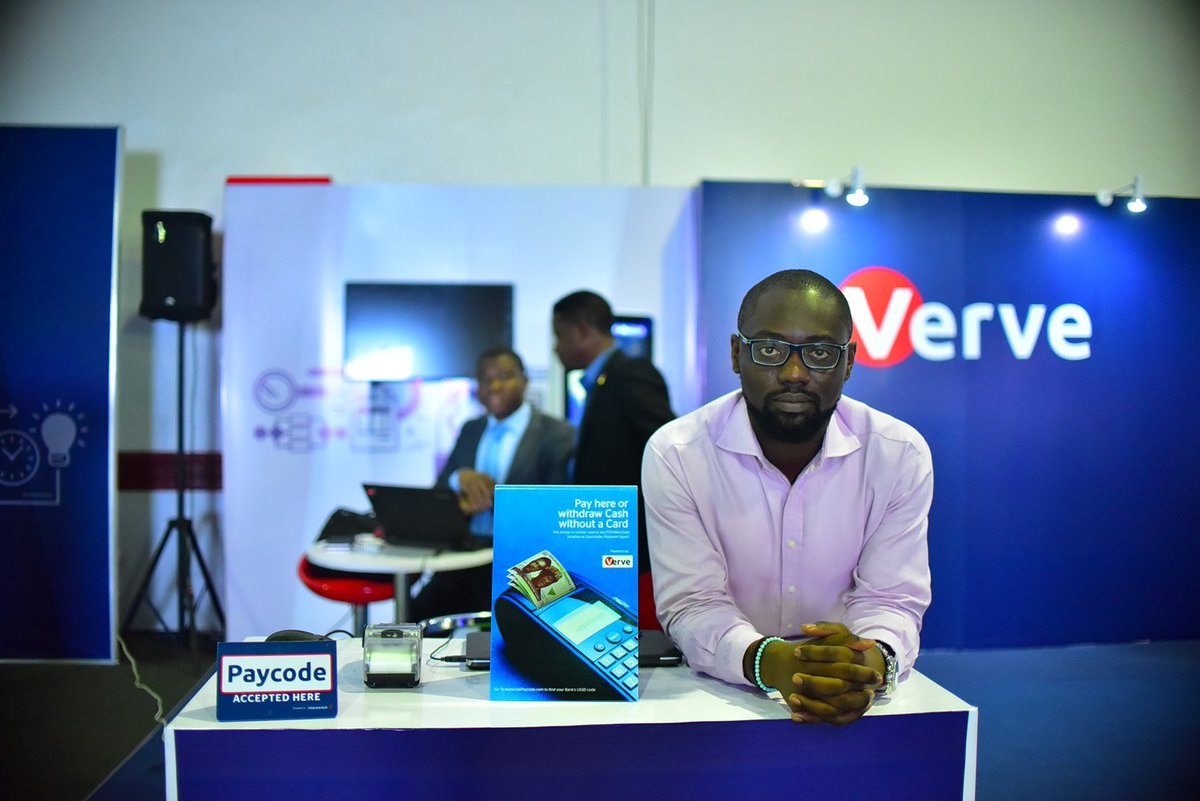
Google Partners with Verve to Allow Nigerians Pay With Naira on Play Store

0

In an announcement on Wednesday, Google revealed that Nigerians can now make payments on its Play Store using their local currency, the naira.

This development comes as a result of a partnership with Verve, the largest domestic card scheme in Africa, aiming to enhance the accessibility and ease of digital transactions on the Google Play Store for Nigerian users.

Effective immediately, Nigerians can utilize their Verve cards to make purchases on the Google Play Store, bolstering the digital ecosystem in the country. This is particularly advantageous during a time when local banks are facing challenges in meeting forex demands for international payments, as the new option provides relief to Nigerians who frequently buy apps from the Google Store.

Under this collaboration, Google will process Verve transactions exclusively within Nigeria. These transactions will be conducted in Nigerian Naira (NG) and will be treated as local transactions by the country’s banking institutions.

“We are thrilled to collaborate with Verve, expanding Google Play access for more Nigerians. The introduction of local payments with Verve cards is a significant milestone, enabling more Nigerians to participate in the app economy and access the apps they need,” Anthea Crawford, Head of Retail and Payment Partnerships at Google Play, said.

Based on this collaboration, any Nigerian with an Android device and a Verve card now has a streamlined method for making purchases on the Google Play Store.

Vincent Ogbunude, the Managing Director of Verve International, said that the integration with Google Play marks a major step forward in Verve’s vision to promote financial inclusion.

“We are excited to bring digital content and services closer to Verve cardholders, hence bridging the digital divide. As a foremost payment card scheme in Nigeria, Verve’s expanding acceptance promotes inclusion by extending the reach of digital services to a larger segment of the Nigerian population. Maximizing this exciting possibility, users can now add their Verve Cards to their Google Play Account and pay in Naira, without stress,” he said.

Additionally, he noted that the new partnership streamlines the payment process for Google Play Store apps and services, making it much more convenient, and plays a significant role in fostering a more inclusive digital landscape for Nigerians.

Nigerians have struggled to keep up with international transactions due to the country’s forex crisis that has forced banks to suspend international POS services. This follows monetary policies by the central bank aimed at tightening FX-based services, before the recent deregulation of the FX market.

Allowing naira debit cards means that Nigerian consumers on Google Play Store do not have to worry about future policies aimed at regulating the outflow of foreign currencies.

Binance Seeks Dismissal of U.S. Commodity Futures Trading Commission (CFTC) Complaint

0

Binance, the world’s largest cryptocurrency exchange by trading volume, has announced that it will seek redress of the complaint filed by the U.S. Commodity Futures Trading Commission (CFTC) against it. The CFTC alleged that Binance illegally offered and sold derivatives linked to digital assets to U.S. customers without registering with the agency.

In a blog post published on July 24, Binance said that it “strongly denies” the allegations and that it intends to “vigorously defend” itself in court. Binance claimed that it has always operated in compliance with the law and that it has taken proactive steps to protect its users and the integrity of the market.

The CFTC in March sued Binance, the world’s biggest crypto exchange, and Zhao for operating what the regulator alleged was an “illegal” exchange and a “sham” compliance program. In its complaint, the CFTC said that from at least July 2019 to the present, Binance “offered and executed commodity derivatives transactions on behalf of U.S. persons” in violation of U.S. laws.

Binance and Zhao were also sued by the U.S. Securities and Exchange Commission (SEC) in June for allegedly operating a “web of deception,” listing 13 charges against Binance, Zhao and the operator of its purportedly independent U.S. exchange. Binance is also under investigation by the Justice Department for suspected money laundering and sanctions violations.

Since the lawsuit, Binance has seen $1.6 billion of overall withdrawals and $852 million in the last 24 hours, Nansen said, in a step up from the average of $385 million per day over the last two weeks. Martin Lee, research analyst at Nansen, said that the outflows were higher than usual, but still not as high as Dec. 13, when investors pulled $3 billion from Binance as they grew nervous about the status of Binance’s reserves.

Binance said that it has never solicited or accepted U.S. customers to trade derivatives on its platform, and that it has implemented robust measures to prevent such access, including geo-fencing, IP blocking, and KYC verification. Binance also said that it has cooperated with the CFTC in the past and that it remains open to dialogue and resolution.

Binance is due to submit its response to the CFTC complaint on July 27 and plans to seek dismissal, according to a court filing on Monday. The CFTC in March sued Binance, the world’s biggest crypto exchange, and Zhao for operating what the regulator alleged was an “illegal” exchange and a “sham” compliance program.

Binance added that it is committed to providing a safe and reliable service to its global user base, and that it will continue to innovate and grow the crypto industry. Binance thanked its users, partners, and supporters for their trust and support, and assured them that it will always act in their best interests. Binance concluded by saying that it is confident that it will prevail in this matter and that it looks forward to clearing its name and reputation.

Ankr Launches Ultrasound Infrastructure, Plans to Launch Node Partner Program

0

Ankr, a leading provider of decentralized cloud computing and blockchain infrastructure, has announced the launch of its ultrasound infrastructure, a new service that enables users to access high-quality data feeds from various blockchains and smart contracts.

Ultrasound infrastructure is a term coined by Ankr to describe its innovative approach to delivering reliable and secure data feeds for decentralized applications (dApps). Unlike traditional oracles, which rely on centralized sources or trusted intermediaries, ultrasound infrastructure leverages the power of zero-knowledge proofs (ZKPs) and verifiable computation to ensure that the data is accurate, tamper-proof and privacy-preserving.

ZKPs are cryptographic techniques that allow one party to prove to another that a statement is true without revealing any information beyond the validity of the statement. Verifiable computation is a related technique that allows one party to verify that a computation was performed correctly by another party without having to redo the computation or inspect the inputs and outputs. By combining these two techniques, Ankr can provide data feeds that are both transparent and confidential, as well as scalable and efficient.

Ankr’s ultrasound infrastructure supports various types of data feeds, such as price feeds, random number generators, identity verification, gaming outcomes, sports results and more. Users can access these data feeds through Ankr’s user-friendly dashboard or through its API. Ankr also offers custom data feeds for specific use cases or dApps.

Ankr’s ultrasound infrastructure is compatible with multiple blockchains and smart contract platforms, such as Ethereum, Binance Smart Chain, Polygon, Solana, Avalanche and more. Ankr plans to expand its support to other blockchains in the future, as well as to integrate with other oracle solutions, such as Chainlink and Band Protocol.

Ankr’s ultrasound infrastructure is a game-changer for the blockchain and dApp ecosystem, as it provides a new level of trust and security for data-driven applications. By using Ankr’s ultrasound infrastructure, users can benefit from faster, cheaper and more accurate data feeds, as well as enhanced privacy and scalability. Ankr’s ultrasound infrastructure is also a boon for developers, who can easily integrate with Ankr’s API and leverage its rich set of features and tools.

Ankr Plans to Launch Node Partner Program

Ankr leverages idle computing resources from data centers, edge devices, and individual users to create a distributed network of nodes that can run various blockchain and cloud-native applications.

One of the key features of Ankr is its node hosting service, which allows anyone to deploy and run nodes for various blockchain protocols with just a few clicks. Ankr supports over 40 blockchain protocols, including Ethereum, Binance Smart Chain, Polkadot, Solana, Avalanche, and more. Users can choose from different node types, such as full nodes, validator nodes, API nodes, and archive nodes, depending on their needs and preferences.

Ankr also offers a range of benefits for node operators, such as low-cost hosting, high uptime and reliability, easy maintenance and updates, and enhanced security and privacy. Ankr nodes are hosted on trusted cloud providers such as Amazon Web Services, Google Cloud Platform, and Microsoft Azure, as well as on Ankr’s own distributed network of edge devices. Ankr nodes are also integrated with popular tools and platforms such as Covalent, Chainlink, The Graph, and more.

To further incentivize node operators and grow its network of nodes, Ankr plans to launch a node partner program in the near future. The node partner program will reward node operators for hosting nodes on Ankr with various perks and benefits, such as:

Exclusive access to new features and services; Priority support and feedback; Discounts and coupons for node hosting fees; Referral bonuses for inviting new users to Ankr; Airdrops and giveaways of ANKR tokens and other cryptocurrencies; Participation in governance and decision-making processes; Recognition and exposure on Ankr’s website and social media channels.

The node partner program will be open to all node operators who meet certain criteria, such as:

Hosting nodes for at least one month.

Maintaining a high level of performance and availability.

Providing constructive feedback and suggestions.

Promoting Ankr’s vision and values.

Nigerian Association of Resident Doctors (NARD) Declares Indefinite Strike Over Unmet Demands

0

The Nigerian Association of Resident Doctors has declared an indefinite strike effective on Wednesday, July 26, 2023 due to failure of the Government to meet its demands.

The NARD President, Dr Emeka Orji, who disclosed this on Tuesday, said the decision was reached by members during the NERD’s July National Executive Council meeting which was held in Lagos on Friday.

Orji said the strike was as a result of the failure of the Government to meet the association’s demands which were enumerated as follows:

  • the implementation of the one-for-one replacement policy for healthcare workers
  • the Medical and Dental Council of Nigeria to discontinue the downgrading of the membership certificate issued by the West African Postgraduate Medical and Surgical Colleges
  • the immediate payment of all salary arrears
  • the implementation of the Consolidated Medical Salary Structure
  • Implementation of new hazard allowance
  • Implementation of the Medical Residency Training Fund and
  • the domestication of the Medical Residency Training Act, among others.

According to Orji, the organization has been on a back-and-forth with the government over the same issue since the beginning of the year, hence, the unanimous decision of the strike, which he said was the last resort of the organization.

His words: “Our members are saying that we have been on this since January on the same issues, and they are not going to continue to wait.

“The very important part of our demands is one-for-one replacement, and doctors are still leaving and the ones remaining are being overworked.

“Last week, a doctor died in Bayelsa State. Doctors are dying from being overworked, and we have been on this for a very long time.

“When we met on Friday, everybody was calling for a strike, and I just had to plead with them because the Secretary to the Government, George Akume, intervened, but up till today, we cannot reach them again, and nobody wants to hear about any intervention by the government again.”

The Association had earlier embarked on a warning strike which was suspended on May 21 after a meeting with the government. The association again met with the government on June 2 to review the progress made with the agreement to decide on what would be their next move.

Recall also that, in a meeting with the leadership of NERD on Monday, the Speaker of the House of Representatives, Hon. Tajudeen Abbass requested a timeframe of two weeks for him to meet with President Bola Tinubu and discuss the Association’s Demand.

Young African Media Practitioners Unite to Enhance Reporting on Sustainable Development Goals

0

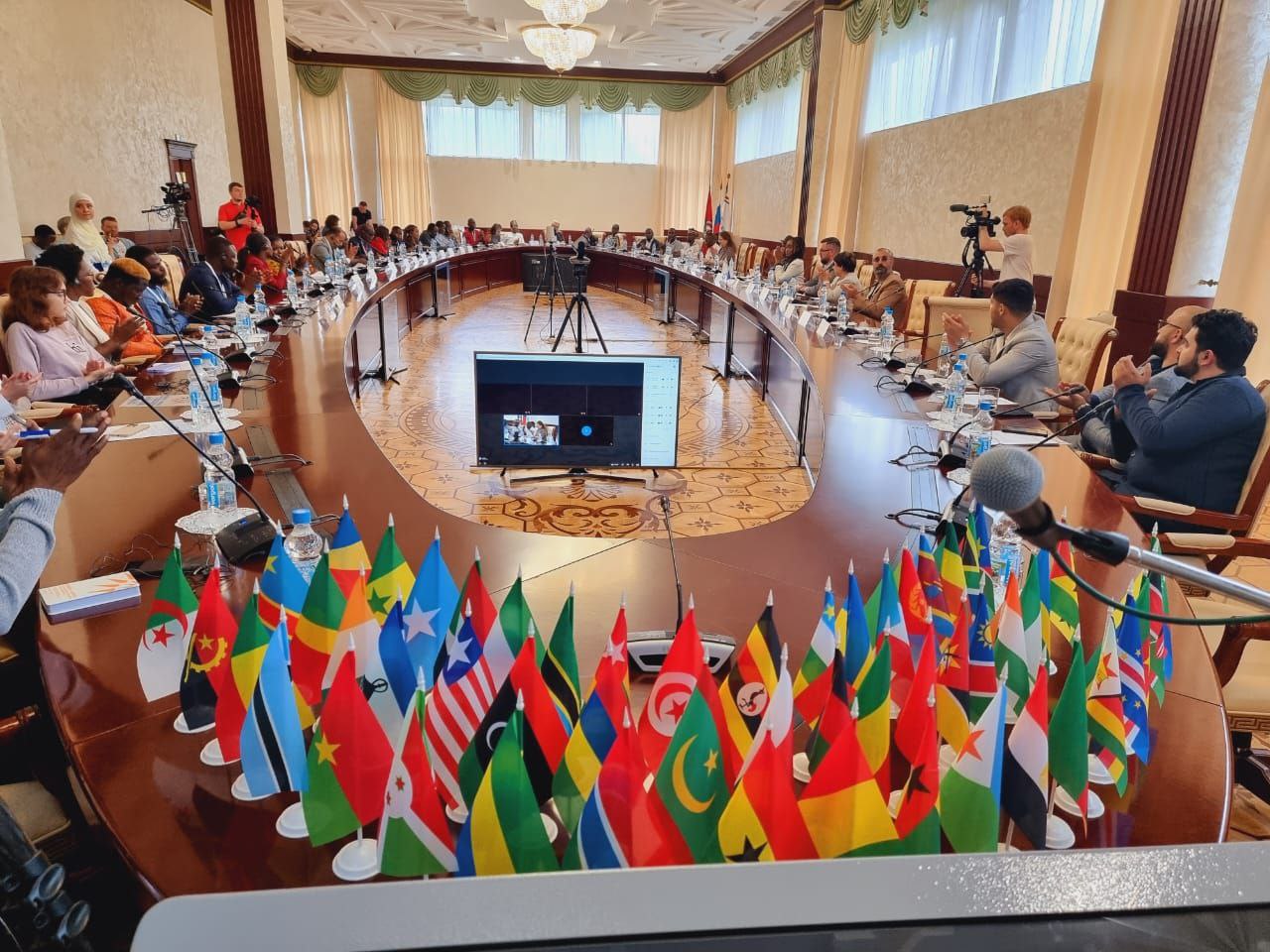
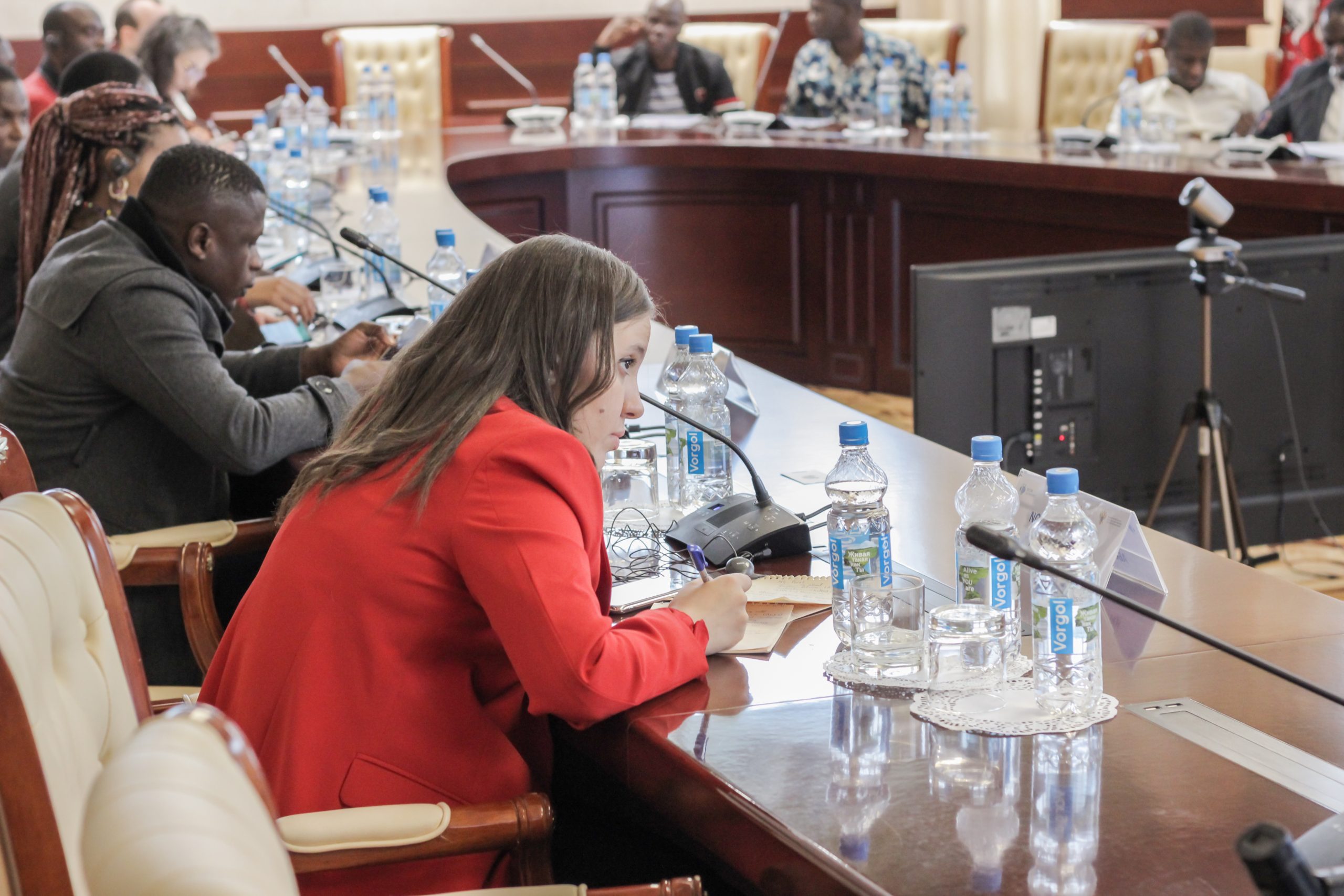
In a groundbreaking gathering of young media professionals from 10 African countries, strategies for reporting on the Sustainable Development Goals (SDGs) through mass media were explored and identified. The event, part of the 2023 Russia-Africa Young Media Practitioners’ Forum, was hosted by RUDN University named after Patrice Lumumba, and brought to light the crucial role media plays in promoting development goals, as well as the challenges faced in accurately and comprehensively reporting on SDGs in the region.
During the insightful meeting, participants highlighted numerous obstacles hindering the accurate and widespread reporting of SDGs in African media. Among the challenges discussed were the proliferation of false information, a lack of professionalism, perpetuation of stereotypes, difficulties in covering disasters due to inadequate infrastructure, and the detachment of Africa from Russia, resulting from information dissemination primarily from Western agencies.

A cross-section of participants

To address these challenges, the young media practitioners put forth a series of actionable steps to enhance SDGs reporting across African media outlets. Some of the key recommendations included prioritizing environmental education to raise awareness about sustainability issues, collaborating with experts for accurate reporting, upholding journalistic principles of accuracy and impartiality, ensuring diverse reporting topics to give appropriate attention to SDGs, and establishing media outlets dedicated to covering specific SDGs themes.

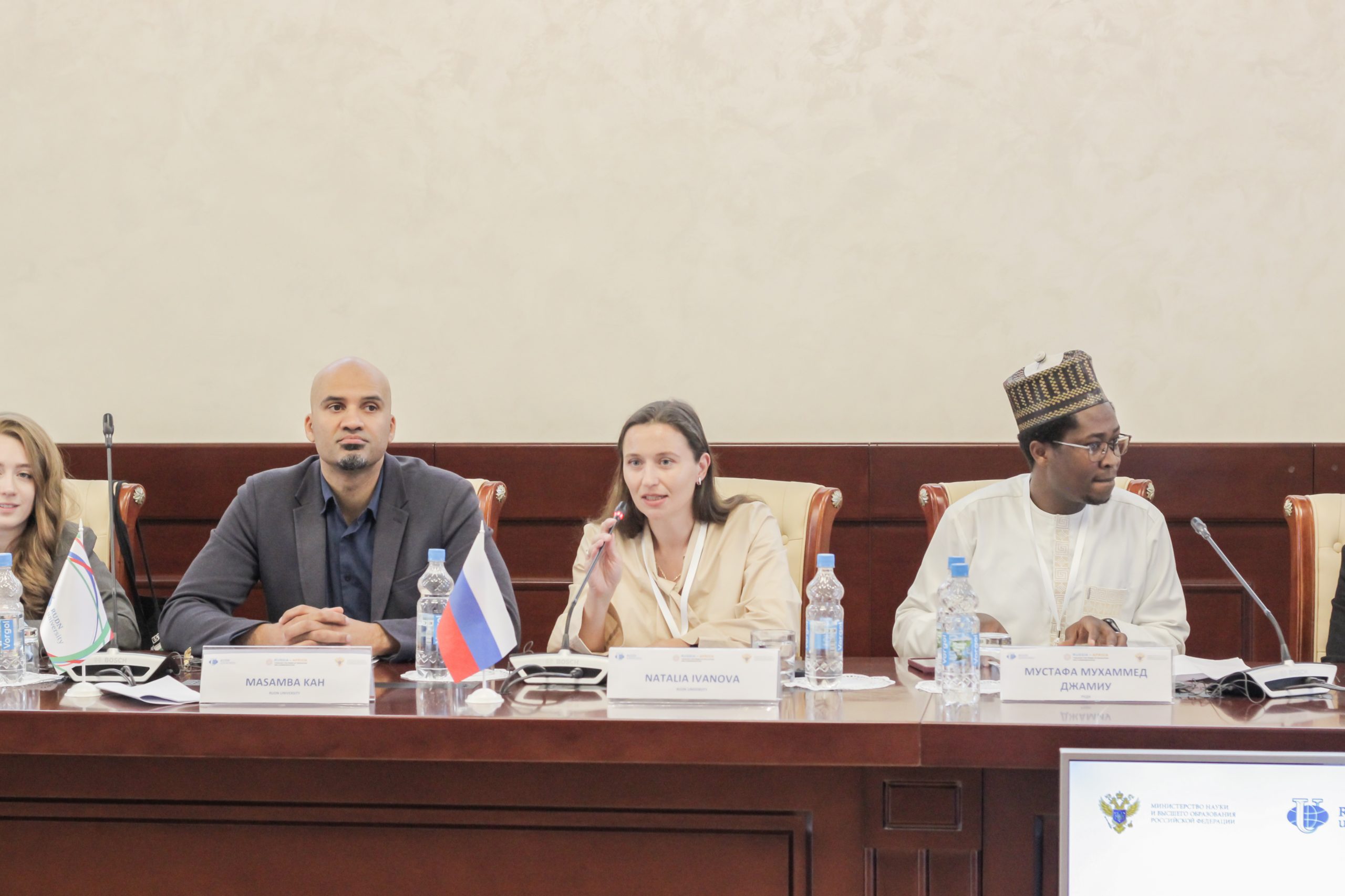
Some representatives of Department of Mass Communication, RUDN University named after Patrice Lumumba.
Participants also emphasized the need for forging strong partnerships with Russian educational institutions and media agencies to facilitate knowledge exchange and capacity building. They also stressed the importance of addressing the audience in their native languages to enhance accessibility and engagement.

The gathering acknowledged the positive advancements in African media literacy and education, praising the increasing number of literate individuals and recognizing journalism’s power in disseminating critical information that can positively impact society. Participants also highlighted the significance of personal training and the use of modern hardware, such as cameras, to improve the quality and reach of SDGs reporting.

A strong call to action was made at the conclusion of the gathering, urging media organizations, governments, educational institutions, and civil society to collaborate in realizing the proposed workable solutions for SDGs reportage. By harnessing the potential of the media, Africa can better communicate its development needs, progress, and aspirations to the world.

The event underscored the importance of media practitioners in driving positive change and fostering sustainable development in the region. With concerted efforts and collaboration, young African media professionals are set to transform the narrative and play a pivotal role in shaping a brighter and more informed future for the continent and its people.