DD
MM
YYYY

PAGES

DD
MM
YYYY

spot_img

PAGES

Home Blog Page 3987

Riding The Bull: Optimism Token, VeChain, And Signuptoken.com In The Crypto Race

0

Fortunes are made and lost overnight in the crypto world, but such is life. It is crucial for you to be aware of market situations and to act fast! If you’re looking for a new investment for your crypto portfolio, three tokens stand out as potential stars in the upcoming bull run, so grab them fast: Optimism Token (OP), VeChain (VET), and Signuptoken.com (SIGN). As crypto investors eagerly anticipate a profitable future, these tokens promise exciting opportunities with positive projections. In this comparative article, we’ll dive into the details of each token, examining their potential, uniqueness, and growth prospects. So, tighten your seatbelts, trample on the FUD (Fear, Uncertainty, Doubt), and let’s ride this bull together!

Optimism Token: Rescuing Us From Costly And Slow Transactions

Optimism Token emerges as a beacon of hope, poised to save us from the shackles of costly and sluggish transactions. With its superhero-like capabilities, the token’s true superpower lies in its revolutionary layer-2 scaling solution. By addressing the challenges faced by traditional blockchain networks, Optimism Token significantly reduces fees and enhances transaction speed, making it an ideal choice for crypto investors.

According to optimistic projections, Optimism Token could reach $1.70 by the end of 2023. However, the excitement doesn’t end there; in 2030, its value could skyrocket to an impressive $22.31, given its average trajectory. As the crypto world evolves and mainstream adoption grows, Optimism Token has the potential to become a major player in the market.

VeChain: Bridging The Gap Between Businesses & Blockchain

VeChain positions itself as the leading blockchain platform for enterprise adoption, bridging the gap between traditional businesses and the world of decentralized technologies. Its unique focus on supply chain management, anti-counterfeiting, and authenticity verification has attracted partnerships with numerous global enterprises, making it a sought-after token within the crypto community.

Though VeChain’s current value hovers around $0.021, it possesses the potential to achieve a more realistic value of $0.30 by 2030. As more businesses integrate VeChain’s technology into their operations, demand for the token may surge, leading to a substantial increase in its value.

SignUp Token: Jaw-Dropping 72x ROI Takes Center Stage

SignUp Token’s crypto presale has attracted significant attention due to its impressive potential for returns. Starting at an affordable $0.01 during its presale, it offers early investors an opportunity for a 72x ROI when it launches. This has made SignUp Token a hot topic among investors seeking high returns in an investment-friendly atmosphere.

The unique aspect of SignUp Token lies in its growth strategy. By encouraging users to refer friends and family, SignUp Token creates a genuine community that strengthens its foundation. The early notification about the token launch on Uniswap coupled with the audit’s approval add to the appeal, offering investors a sense of security and trust.

Investing in SignUp Token can be a smart move for those looking to capitalize on a potential crypto gem. The presale is ongoing, and by referring more individuals, investors can enjoy perks like early notifications and increased ROI. The absence of multiple stages in the project simplifies the process, allowing investors to focus on building a solid community.

Ride With The Bulls To Success

The race to success is both thrilling and unpredictable. Optimism Token, VeChain, and SignUp Token are three contenders that show promise and potential for the upcoming bull run. However, you don’t want to miss SignUp Token’s crypto presale if you want high ROI and a genuine community.

The bull run awaits, and with the right choices, you might just ride it to success. Visit SignUp Token’s official website and social media channels to explore the presale’s potential without missing out on this promising opportunity!

Signuptoken.com:

Website: https://www.signuptoken.com

Twitter: https://twitter.com/_SignUpToken_

Telegram: https://t.me/SignUpToken

D3 Labs and Indonesian Blockchain Association Collaborate on Digital Rupiah

0

D3 Labs, a leading blockchain technology company, has announced a strategic partnership with the Indonesian Blockchain Association (IBA), a non-profit organization that promotes the adoption and innovation of blockchain in Indonesia. The partnership aims to accelerate the development of a digital rupiah, a sovereign digital currency that will enhance the efficiency and inclusiveness of the Indonesian financial system.

The digital rupiah project is aligned with the vision of Bank Indonesia, the central bank of Indonesia, which has been exploring the feasibility and potential benefits of issuing a central bank digital currency (CBDC). A CBDC is a digital form of fiat money that is issued and regulated by the central bank. It can offer advantages such as lower transaction costs, faster settlement, greater financial inclusion, and improved monetary policy effectiveness.

D3 Labs and IBA will leverage their respective expertise and networks to support the design, implementation, and testing of the digital rupiah. D3 Labs will provide its blockchain platform and solutions, which are based on advanced cryptography, distributed ledger technology, and smart contracts. IBA will facilitate the collaboration and coordination with relevant stakeholders, such as regulators, financial institutions, industry associations, and academia.

The partnership will also involve conducting research and education activities to raise awareness and understanding of the digital rupiah among the public and private sectors. The partners will organize workshops, seminars, webinars, and publications to disseminate knowledge and best practices on CBDCs and blockchain technology.

Indonesia is one of the countries that has recognized the potential of blockchain and cryptocurrency as a new technology and a trading commodity. However, the legal status of cryptocurrency in Indonesia is not without challenges and uncertainties. According to the constitution of Indonesia, the only legal currency in the country is the Rupiah, and all transactions within the country must be conducted in Rupiah, except for some exceptions such as international transactions, government spending, and bank deposits. Therefore, cryptocurrency cannot be used as a form of payment in Indonesia, and banks are prohibited from facilitating such transactions.

However, cryptocurrency can be traded as a commodity on futures exchanges, as long as it meets certain criteria and regulations. The Ministry of Trade legalized cryptocurrency trading in September 2018, and the Futures Exchange Supervisory Board (Bappebti) issued a comprehensive regulatory framework for crypto assets in 2019. Bappebti also compiled a list of 229 crypto assets that can be legally traded on futures exchanges in Indonesia.

D3 Labs and IBA believe that the digital rupiah will be a game-changer for the Indonesian economy, as it will enable more efficient, secure, transparent, and inclusive financial transactions. The partners are committed to working together to make the digital rupiah a reality and to contribute to the digital transformation of Indonesia. A CBDC is a digital form of fiat money that is issued and regulated by the central bank. It can offer advantages such as:

Lower transaction costs: A CBDC can reduce the intermediaries and fees involved in transferring money, especially across borders.

Faster settlement: A CBDC can enable instant and final settlement of payments, without relying on third-party clearing houses or payment processors.

Greater financial inclusion: A CBDC can reach the unbanked and underbanked population, who may not have access to traditional financial services or digital payment platforms.

Improved monetary policy effectiveness: A CBDC can enhance the transmission and implementation of monetary policy, as it can provide more accurate and timely data on money supply and demand.

D3 Labs will provide its blockchain platform and solutions, which are based on advanced cryptography, distributed ledger technology, and smart contracts. IBA will facilitate the collaboration and coordination with relevant stakeholders, such as regulators, financial institutions, industry associations, and academia.

D3 Labs and IBA believe that the digital rupiah will be a game-changer for the Indonesian economy, as it will enable more efficient, secure, transparent, and inclusive financial transactions. The partners are committed to working together to make the digital rupiah a reality and to contribute to the digital transformation of Indonesia.

The Jobs-To-Be-Done Theory: How Companies Can Uncover the Hidden Motivations of Customers and Achieve Innovation Success

0

The theory of Jobs-to-be-done, JTBD, was developed by Tony Ulwick in 1990 and was popularized a decade later by Clayton M. Christensen. In his 2003 book, ‘’The innovator’s solution’’ Christensen presented the JTBD theory as a model for entrepreneurs and developers to develop and ascertain a checklist of innovation success before launching their products or services to the market. The theory is based on the premise that customers have initiative, are motivated by different factors in different contexts, and could choose to decline or buy whatever a company is trying to sell to them.

However, when people prefer the offering of a brand to those of its dozens of competitors, it mostly implies that the preferred brand has a superior business model, not necessarily a superior product or service, which inspires a deep sense of connection of the customers to it.

The theory also showcases there is a thin line between a product and its user’s behaviour. Rather than purchase goods or services for their own sake, people mostly spend their money on goods and services in order to satisfy a need under specific circumstances. In other words, people mostly unconsciously acquire goods and services as a means to an end. Therefore, innovation must be driven by an awareness of the gaps that needs to be filled by the users.

Irrespective of the size of budget and the pool of skills that goes into the innovation process, success is invariably determined by the extent to which the developer or innovator understands the job that people feel needs to be done, and the extent to which a solution (product or service) developed out of this understanding meet users’ expectation.

The process of inquiry into the job that needs to be done must be traced down to specific context, such as understanding the what, who, where, or when. Critically analyzing an offering in terms of its functional, social and emotional relevance to the user constitute the very heart of the JTBD theory. The developer also works with relevant data, such as, the user’s age-category, family status, and financial status which offer insights that can be used to predict user behavior.

Furthermore, interrogating the JTBD of a business enables companies to better understand their competitive landscape and gain insight about previously unnoticed competitors, as well as understand the main drivers behind the why in the customer’s mindset, be it social or emotional.

Studies have shown that most innovation efforts which fall short of expectations in the market are merely driven by their functional uses while their social and emotional uses are often downplayed. It is believed that the social and the emotional components of a product are what invariably inform user preferences and subsequent adoption of the product when people are presented with many alternatives.

How understanding the JTBD drives innovation success and triggers higher customer interest in specific offerings of companies are shown in the following cases:

Case1: Beat Headphones and Making of High-school Cool kids

The maker of Beat headphones was able to capture a substantial market share in the United States despite being considered to offer products of lesser quality compared to brands such as Bose or JBL. However, it transpired that Beat Electronics recorded success in that product line due to its ability to appeal to the high-status craving of most teenagers. Also, due to the brand’s association with American rapper, Jay-Z, users of Beat headphones are seen as “the cool kids” in high school.

Case2: Snapchat, a go-to place for teenagers craving unrestrictive fun

The success initially recorded by social media app, Snapchat, has been attributed to the brands ability to address the social and the emotional component of its offering. Snapchat reportedly reached 190 million daily active users in 2019 despite fierce competition. The customer base of Snapchat users is much younger than that of other social media. The differentiated feature of the social media app is that messages do not stay long the recipient phones. Thus, at the time it launched, Snapchat was able to address the needs of teenagers who have long avoided parental scrutiny.

Resources:
The Innovation Revolution in Agriculture: A Road Map to Value Creation. Hugo Campo Editors

Paypal Announces Launch of US Dollar Stablecoin PYUSD, Issued by Paxos

0

Paypal, a global online payment platform, has announced that it will launch its own US dollar-backed stablecoin a digital currency that is pegged to a fiat currency or a basket of assets, PYUSD in partnership with Paxos Trust Company, a regulated and licensed issuer of digital assets. This move has significant implications for the future of the crypto industry, as well as the broader financial system.

Stablecoins are designed to reduce the volatility and risk associated with cryptocurrencies, which often fluctuate wildly in value. They also offer faster and cheaper transactions than traditional payment methods, as well as greater transparency and security. By issuing its own stablecoin, PayPal could leverage its existing network of millions of users and merchants and offer them a new way to store and transfer value online.

However, PayPal’s stablecoin also poses some challenges and risks. For one thing, it could face regulatory hurdles and scrutiny from governments and central banks, who may see it as a threat to their monetary sovereignty and control. For another, it could face competition from other stablecoins, such as Facebook’s Diem (formerly Libra), or from central bank digital currencies (CBDCs), which are being developed by several countries around the world.

According to a press release, PYUSD will be available for Paypal users to buy, sell, hold and transfer within the Paypal app, as well as to use it for payments across its network of 32 million merchants worldwide. The stablecoin will also be integrated with Venmo, PayPal’s mobile payment service, in the near future.

Paypal said that PYUSD will offer its customers a convenient and secure way to access the benefits of blockchain technology and cryptocurrencies, without the volatility and complexity associated with other digital assets. PYUSD will be fully backed by US dollars held in reserve by Paxos and will be redeemable at any time at a 1:1 ratio.

Paxos, which already provides Paypal with custody and trading services for its existing crypto offerings, will issue and manage PYUSD on its own blockchain platform, Paxos Chain. Paxos Chain is a permissioned, proof-of-authority network that leverages the Ethereum Virtual Machine (EVM) and is compatible with the Ethereum ecosystem. Paxos said that PYUSD will be compliant with the highest regulatory standards and will undergo regular audits and attestations.

Another benefit of PYUSD is its interoperability with other digital assets and platforms. As a stablecoin issued on Paxos Chain, PYUSD can be easily transferred to other Ethereum-based tokens or applications, such as decentralized exchanges, lending platforms or gaming platforms. Users can also swap PYUSD for other cryptocurrencies or fiat currencies on Paypal or Paxos platforms or redeem it for US dollars at any time.

Dan Schulman, president and CEO of Paypal, said: “We are excited to introduce PYUSD, a new way for our customers to access the potential of digital currencies and blockchain technology. PYUSD will enable millions of people to participate in the digital economy with confidence and ease. By partnering with Paxos, a leader in the digital asset space, we are able to offer a stablecoin that meets the highest standards of trust, transparency and regulatory oversight.”

Charles Cascarilla, CEO and co-founder of Paxos, said: “We are proud to collaborate with Paypal on the launch of PYUSD, a groundbreaking stablecoin that will bring more innovation and inclusion to the global financial system. Paxos is committed to creating a more open and accessible digital economy for everyone. By issuing and managing PYUSD on our platform, we are providing a secure and scalable infrastructure for this new form of money.”

Full List of Screened and Confirmed Ministerial Nominees by the Nigerian Senate

0

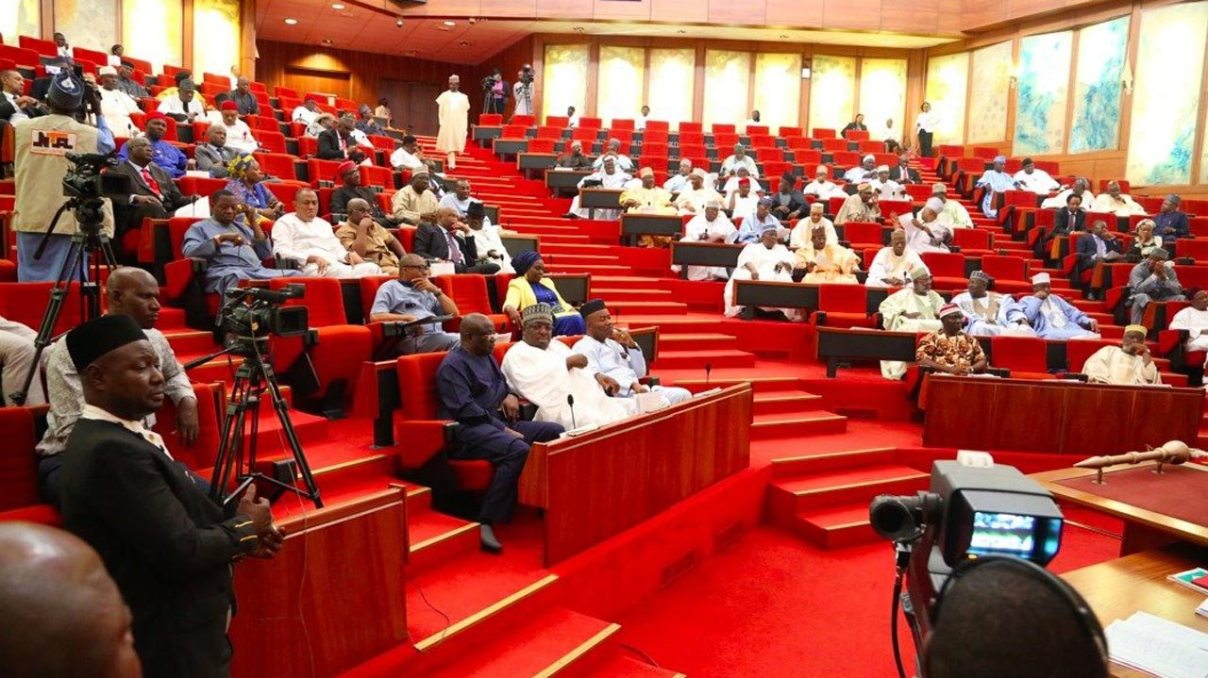
The Nigerian senate has screened and confirmed 45 out the 48 ministerial candidates sent to them by president Bola Tinubu.

The three remaining candidates are former governor of Kaduna State, Nasir El-Rufai, Stella Okotete from Delta State and Senator Abubakar Danladi from Taraba State. The confirmation of the trio was reportedly halted based on letters from the Department of State Services (DSS) and the Office of the National Security Adviser, Nuhu Ribadu, urging the lawmakers not to confirm them.

El-Rufai’s confirmation is under serious question over his role in the mass killings in Kaduna State, during his time as a governor. Following his nomination, a group of protesters under the aegis of Secure Nation Group (SNG) staged a protest on the premises of the National Assembly in Abuja, asking the lawmakers not to confirm El-Rufai as minister.

The SNG said the Tinubu-led government should investigate and prosecute El-Rufai, who has been accused of religious and tribal bigotry, over alleged genocidal attacks on predominantly Shia Muslim communities in Kaduna State.

Also, some top Nigerian lawyers from Juryman Associate Chambers are Aare Oladotun Hassan, Esq, Principal Partner/Secretary, Nigerian Bar Association (NBA) Epe Branch/ Executive Director, Lawyers For Justice Reform, and Barr. Myso Nejo had written the 10th Senate, demanding the immediate disqualification of Okotete, who is a former Executive Director of the Nigerian Export-Import Bank (NEXIM).

The petitioners are requesting the Senate to properly investigate Mrs. Okotete over alleged massive corruption allegations against her – round-tripping and recycling of different loans and use of various front-companies as proxies to defraud NEXIM Bank of billions of Naira and Dollars.

Similarly, Danladi was reportedly barred in 2019 from contesting or holding political offices for 10 years over forgery. He was barred in 2019 from

contesting or holding political offices over alleged certificate forgery and age falsification. The ban, which was subsequently, upheld by the Court of Appeal and the Supreme Court, follows confirmation that he presented a forged document to the Independent National Electoral Commission (INEC).

Those screened and confirmed are:

  • 1. Abubakar Kyari Borno State
  • 2. Abubakar Momoh

Edo State

  • 3. Nyesom Wike

Rivers State

  • 4. Prof. Joseph Utsev

Benue State

  • 5. John Eno

Cross River State

  • 6. Bello Mohammed

Sokoto State

  • 7. Mohammed Badaru Abubakar

Jigawa State

  • 8. Yusuf Maitama Tuggar

Bauchi State

  • 9. Uju Ken Ohaneye

Anambra State

  • 10. Olubunmi Tunji Ojo

Ondo State

  • 11. Nkeiruka Onyejeocha

Abia State

  • 12. Betta Edu

Cross River State

  • 13. Imaan Suleiman

Nasarawa State

  • 14. David Umahi

Ebonyi State

  • 15. Adebayo Olawale Edun

Ogun State

  • 16. Ahmed Musa Dangiwa

Katsina State

  • 17. Uche Nnaji

Enugu State

  • 18. Dele Alake

Ekiti State

  • 19. Waheed Adebayo Adelabu

Oyo State

  • 20. Muhammad Idris

Niger State

  • 21. Prof. Ali Pate

Bauchi State

  • 22. Dr Doris Uzoka

Imo State

  • 23. Lateef Fagbemi (SAN)

Kwara State

  • 24. Ekperikpe Ekpo

Akwa Ibom State

  • 25. Hannatu Musawa

Katsina State

  • 26. Ibrahim Geidam

Yobe State

  • 27. Aliyu Sabi Abdullahi

Niger State

  • 28. Heineken Lokpobiri

Bayelsa State

  • 29. Alkali Ahmed Sa’eed

Gombe State

  • 30. Dr. Yusuf Tanko Sununu

Kebbi State

  • 31. Atiku Bagudu

Kebbi State

  • 32. Bello Matawalle

Zamfara State

  • 33. Adegboyega Oyetola

Osun State

  • 34. Simon Bako Lalong

Plateau State

  • 35. Abdullahi Tijjani Gwarzo

Kano State

  • 36. Bosun Tijjani

Ogun State

  • 37. Dr. Mariya Mahmoud

Kano State

  • 38. Dr Isiyaka Salako

Ogun State

  • 39. Dr Tunji Alausa

Lagos State

  • 40. Lola Ade John

Lagos State

  • 41. Prof. Tahir Mamman

Adamawa State

  • 42. Zephaniah Jissalo

F.C.T

  • 43. Uba Maigari Ahmadu

Taraba State

  • 44. Shuaibu Abubakar Audu

Kogi State

  • 45. Festus Keyamo (SAN)

Delta State