DD
MM
YYYY

PAGES

DD
MM
YYYY

spot_img

PAGES

Home Blog Page 3990

Ride-Hailing Platform inDrive Launches Venture And M&A Arm to Invest up to $100M in Startups

0
Fund, money cash dollar

inDrive, an international internet aggregator of passenger, freight, and intercity transportation services, has launched a new venture and merger and acquisition division named New Ventures, to invest up to $100 million in startups within emerging markets over the next few years.

The new venture arm comes four months after inDrive in July this year, announced its official launch in South Florida, the company’s first U.S. market. inDrive disclosed that it chose South Florida as it is a market eagerly seeking better transportation alternatives.

According to inDrive, the newly launched investment is focused on several aspects. This includes, Challenging Injustice: A mission-driven approach to improving lives Local to Global: Investing in startups with potential for global expansion, Post-Seed/Pre-Series A: Backing companies with proven product-market fit, Rapid Organic Growth: Focusing on startups with flourishing economics and cash flow.

Announcing the new venture, the company wrote on X,

“We’re excited to share a great initiative in our journey towards a more just and innovative future! Today, we proudly unveil our latest initiative – New Ventures, an M&A arm set to invest in trailblazing startups that champion the cause of challenging injustice.

“Investment Focus:

• Challenging Injustice: A mission-driven approach to improving lives.

• Local to Global: Investing in startups with potential for global expansion.

• Post-Seed/Pre-Series A: Backing companies with proven product-market fit.

Rapid Organic Growth: Focusing on startups with flourishing economics and cash flow.

“Our mission is to not just invest but to foster a community of impactful startups. With the backing of New Ventures, companies gain more than just financial support – they tap into a global customer base, access cutting-edge technology, and leverage our go-to-market expertise”.

InDrive will be investing vertically and horizontally in the ride-hail industry, with an eye toward either acquiring or using the services of those companies.

The company’s New Ventures unit is dedicated to helping investee and acquired companies scale quickly across its platform. These companies are set to gain a competitive edge by tapping into inDrive’s global multi-million customer base across 45+ markets, and access to the company’s go-to-market know-how and technology.

The New Ventures unit will largely provide capital to post-seed/Series A-stage companies that can demonstrate substantial year-over-year growth exceeding 2-3x. inDrive says its New Ventures unit will help its portfolio and acquired companies scale quickly across its main ride-hailing platform.

inDrive, which originated in Russia, was recognized as the world’s fastest ride-hailing app in 2022. The app achieved rapid growth in 2022, with an 88% year-on-year increase in gross revenue. The company’s country count reached 47, up from 37 in 2021, as it expanded its team by 1,000 in 2022 to reach 2,700 employees located across 17 offices worldwide.

About inDrive

inDrive is a global mobility and urban services platform headquartered in Mountain View, California. With over 150 million downloads, the inDrive app is the second most downloaded mobility application in the world. In addition to ride-hailing, inDrive provides an expanding list of urban services, including intercity transportation, cargo and freight delivery, task assistance, delivery, and employment search.

inDrive operates in more than 700 cities across 47 countries, where it supports local communities via its peer-to-peer payment model and its community empowerment programs, which help advance education, sports, arts and sciences, gender equality, and other vital initiatives.

Disney is The Most Talked About Stock on Social Media, New Research Reveals

0

Disney is the most talked about stock on social media, new research has revealed. But what does this mean for investors and fans alike. We will explore the reasons behind Disney’s popularity, the challenges it faces, and the opportunities it offers.

Why is Disney so popular on social media?

Disney is a global entertainment giant, with a portfolio of iconic brands, franchises, and platforms. From Marvel to Star Wars, from Pixar to Disney+, Disney has something for everyone. And social media users are taking notice.

According to a recent study by Stocktwits, Disney was the most mentioned stock on its platform in October 2023, beating out other tech giants like Apple, Tesla, and Amazon. The study also found that Disney had the highest positive sentiment among the top 10 stocks, with 82% of users expressing bullish views.

Why is Disney so popular on social media? There are several factors that contribute to its appeal. First, Disney has a loyal and passionate fan base, who love to share their opinions and experiences with their favorite characters and stories. Second, Disney has a strong content pipeline, with new releases and announcements generating buzz and excitement.

Third, Disney has a diversified business model, with multiple revenue streams from its parks, merchandise, streaming, and media segments. Fourth, Disney has a visionary leadership team, led by CEO Bob Chapek, who is committed to innovation and growth.

However, Disney is not without its challenges. The company faces fierce competition from other entertainment players, such as Netflix, WarnerMedia, and Universal. The company also faces regulatory and legal hurdles in some markets, such as China and Europe. The company also faces the uncertainty of the pandemic and its impact on consumer behavior and demand. The company also faces the risk of losing its creative edge and relevance in a fast-changing industry.

Despite these challenges, Disney also offers many opportunities for investors and fans. The company has a proven track record of delivering value and growth over the long term. The company has a loyal and growing customer base, with high retention and engagement rates. The company has a competitive advantage in its intellectual property and brand recognition. The company has a clear strategy and vision for the future, with investments in technology, content, and experiences.

The findings come from a new study by online trading provider City Index, which analyzed every company in the S&P 500 based on how much content on their stocks and shares had been created and viewed on TikTok and Instagram.

The study revealed that there have been 80 million views of videos with the hashtag of #disneystock, #disneystocks, or #disneyshares, the highest amount out of all the 500 companies that were included in the in-depth analysis. Those views have come from 6,151 videos – also the largest amount in the study – as creators discuss the company’s financial performance, and whether it is a good time to invest in the stock.

In total there are 44,177 hashtags related to Disney stocks and shares, and the company’s share price has been around $85 in recent weeks. It is down more than $100 from its all-time high above $200 in March 2021, which came after California health officials confirmed theme parks would be allowed to reopen as COVID restrictions eased.

Disney is the most talked about stock on social media for good reasons. It is a leader in the entertainment industry, with a unique and diverse portfolio of assets. It is a company that inspires and delights millions of people around the world. It is a company that offers attractive returns and growth potential for investors. It is a company that deserves your attention.

Commenting on the figures, a spokesperson for City Index said: “This data paints a fascinating picture of which companies’ financial performance attracts the most interest, excitement and discussion on social media. The companies at the top of the list are some of the biggest brands in the world, which highlights how the general public are most comfortable approaching the complex world of the stock market through the businesses and brands with which they are most familiar.

“The strong appetite for advice and guidance on trading is demonstrated by the fact that videos on the top ten companies in the list have more than 117 million views in total. As trading continues to become more accessible to people who aren’t working in the finance industry and following the rise of so called ‘meme stocks’ over the past two years, it will be interesting to see how the discussion of the best trading and investment opportunities continues to develop on social media.”

Everton Found Guilty of FFP charge as Premier League Make 10 Points Deduction

0

Everton have been hit with a 10 points deduction by the Premier League after being found guilty of breaching the Financial Fair Play (FFP) rules. The decision was announced on Monday, following an investigation into the club’s finances over the past three seasons.

The Premier League said in a statement that Everton had “exceeded the maximum permitted losses” of £105 million over the 2018/19, 2019/20 and 2020/21 campaigns, and had “failed to comply with the break-even requirement” of the FFP regulations. The statement also said that Everton had “cooperated fully” with the investigation and had “accepted the sanction”.

The points deduction means that Everton, who were ninth in the table before the announcement, have dropped to 14th, just four points above the relegation zone. The club have 12 games left to play this season and will face a tough battle to avoid the drop.

Everton’s owner, Farhad Moshiri, has invested heavily in the club since taking over in 2016, but has not seen much return on his spending. The club have not qualified for Europe since 2017 and have gone through six managers in five years. The latest appointment, Rafa Benitez, has struggled to win over the fans and has faced criticism for his style of play and results.

The club have also been planning to move to a new stadium at Bramley-Moore Dock, which is expected to cost around £500 million. The project has been seen as a key part of Everton’s ambition to compete with the top clubs in England and Europe, but it is unclear how the FFP breach and the points deduction will affect it.

Financial Fair Play (FFP) rules are a set of regulations introduced by UEFA in 2009 to prevent European football clubs from spending more than they earn and to ensure their long-term financial sustainability. The main objectives of FFP are to:

Encourage clubs to operate on the basis of their own revenues.

Promote responsible spending and investment in youth development and infrastructure.

Protect the integrity and competitiveness of European club competitions.

Enhance the transparency and credibility of club finances.

FFP applies to all clubs participating in UEFA club competitions, such as the Champions League and the Europa League. Clubs are required to submit their financial statements and other relevant information to UEFA every year for assessment. UEFA monitors the clubs’ compliance with two main criteria:

The break-even requirement, which means that clubs cannot have a cumulative deficit of more than €30 million over a three-year period, unless it is covered by equity contributions from the owners or related parties. The overdue payables requirement, which means that clubs must pay their debts to other clubs, employees, social security authorities and tax authorities on time.

If a club fails to meet either of these criteria, it may face sanctions from UEFA, ranging from a warning or a fine to a transfer ban or exclusion from UEFA competitions. UEFA has an independent body called the Club Financial Control Body (CFCB) that is responsible for enforcing FFP and imposing sanctions.

Since its implementation, FFP has had a significant impact on the financial landscape of European football. According to UEFA, FFP has helped reduce the aggregate losses of European clubs from €1.7 billion in 2011 to €316 million in 2018, and increase the number of profitable clubs from 38% to 76% over the same period. FFP has also contributed to a more balanced distribution of revenues among clubs and a more competitive environment in European club competitions.

However, FFP has also faced some criticism and challenges from various stakeholders. Some of the main issues raised by critics are:

FFP may Favour the established elite clubs that already have high revenues and limit the opportunities for new entrants or smaller clubs to challenge them. FFP may restrict the freedom and ambition of club owners who are willing to invest their own money into their clubs.

FFP may not reflect the different economic realities and legal frameworks of different countries and regions. FFP may be vulnerable to loopholes, manipulation and legal disputes.

In response to these issues, UEFA has stated that it is open to dialogue and feedback from all stakeholders and that it is constantly reviewing and adapting FFP to ensure its effectiveness and fairness. UEFA has also emphasized that FFP is not a static system but a dynamic process that aims to improve the overall health and development of European football.

Everton have not yet issued a formal response to the Premier League’s decision but are expected to do so in due course. The club have the option to appeal the sanction, but it is unlikely that they will succeed in overturning it or reducing it. The Premier League has been strict in enforcing the FFP rules, which are designed to ensure that clubs do not spend beyond their means and maintain a level playing field.

Root Cause of Venezuela’s Economic Crisis is the Mismanagement of its Oil Wealth

0
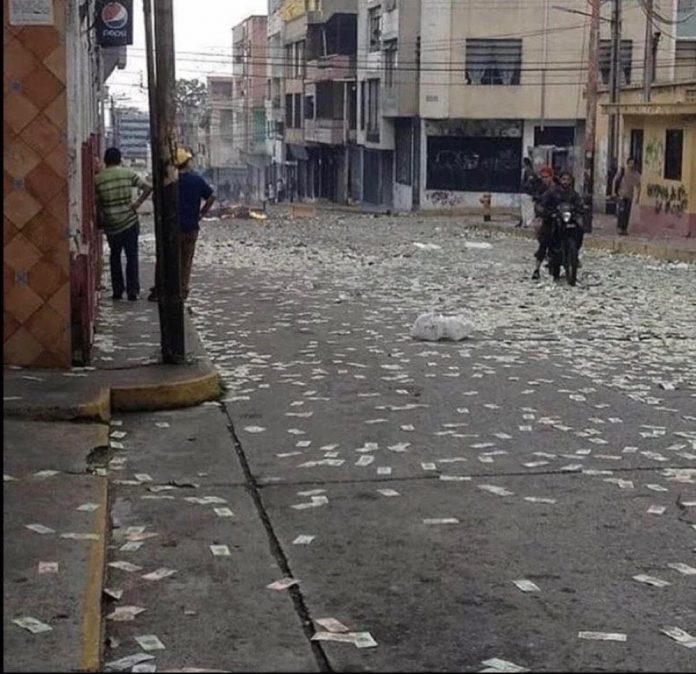
Fiat in Venezuela is so worthless people leave it on the streets.

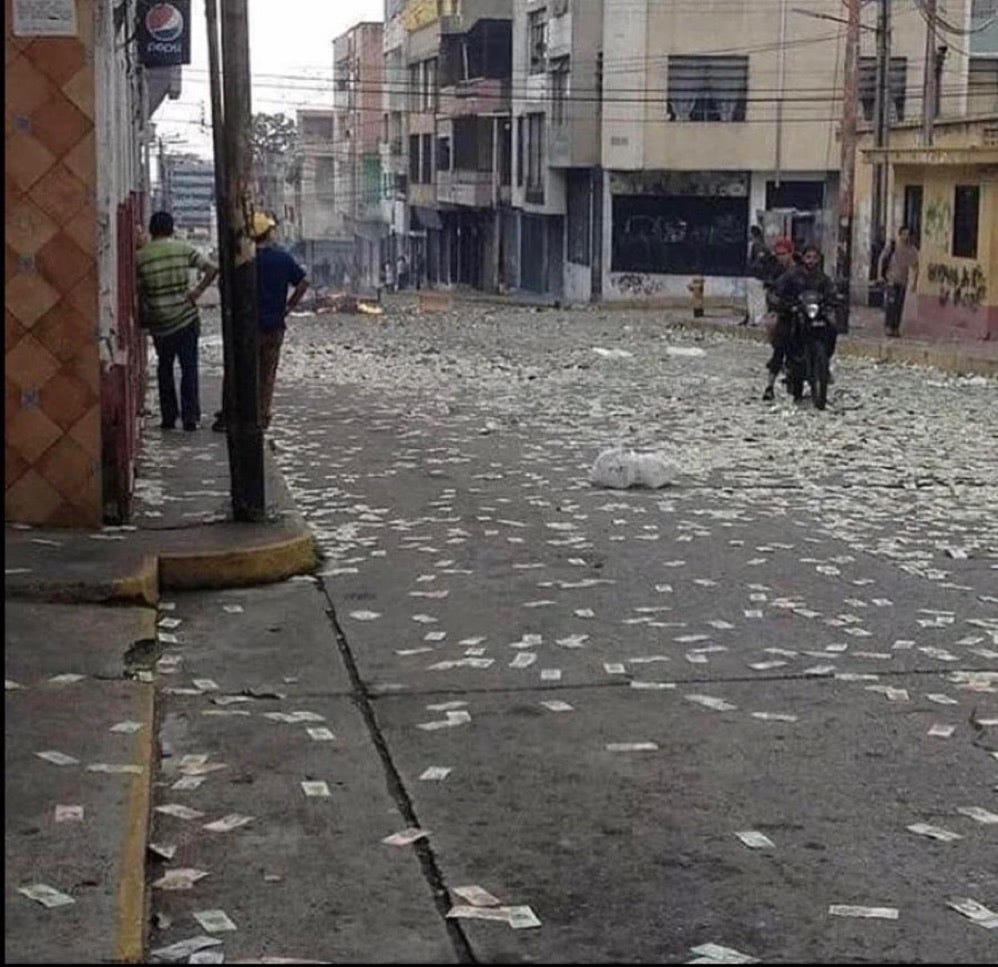
Venezuela is a country that has been suffering from hyperinflation, political turmoil, and social unrest for years. The national currency, the bolivar, has lost so much value that it is practically worthless. In fact, many Venezuelans have resorted to leaving piles of bolivars on the streets, as they are more valuable as paper than as money.

How did this happen? How did a once prosperous nation end up with a currency that is worth less than the paper it is printed on? And what are the implications for the rest of the world?

The root cause of Venezuela’s economic crisis is the mismanagement of its oil wealth. Venezuela has the largest proven oil reserves in the world, but instead of using them to diversify its economy and invest in productive sectors, the government relied on oil revenues to fund its populist policies and social programs. This created a dependency on oil exports, which made the economy vulnerable to fluctuations in oil prices.

When oil prices were high, Venezuela enjoyed a period of prosperity and social spending. But when oil prices plummeted in 2014, the government faced a severe fiscal deficit and a shortage of foreign currency. Unable to pay its debts and import essential goods, the government resorted to printing more money to cover its expenses. This led to an exponential increase in the money supply, which in turn fueled inflation.

This dependence on oil has made Venezuela vulnerable to external shocks, such as fluctuations in oil prices and global demand. When oil prices were high, Venezuela enjoyed a period of economic growth and social stability. However, when oil prices collapsed in 2014, Venezuela faced a sharp decline in its revenues and a fiscal deficit.

The Venezuelan government failed to adjust its spending to the new reality and resorted to printing money to cover its expenses. This resulted in hyperinflation, which eroded the purchasing power of the Venezuelan bolivar and made basic goods and services unaffordable for most Venezuelans.

Fiat in Venezuela is so worthless people leave it on the streets.

The Venezuelan government also failed to maintain its oil industry, which suffered from underinvestment, mismanagement and corruption. The state-owned oil company, PDVSA, became a tool for political patronage and social control, rather than a productive enterprise. As a result, Venezuela’s oil production declined from 3.2 million barrels per day in 2008 to 1.3 million barrels per day in 2020.

The consequences of Venezuela’s economic crisis are devastating for the Venezuelan people and the region.

The economic crisis has had a devastating impact on the living conditions of the Venezuelan people. According to the United Nations, more than 7 million Venezuelans are in need of humanitarian assistance, and more than 5 million have fled the country due to violence, insecurity and lack of opportunities.

The economic crisis has also affected the health and education sectors, which have deteriorated due to lack of funding, equipment and personnel. The Venezuelan health system is unable to cope with the COVID-19 pandemic, which has claimed more than 5,000 lives in the country. The Venezuelan education system is unable to provide quality education to millions of children and youth, who face school closures, dropout rates and learning losses.

The economic crisis has also had negative repercussions for the region, as it has increased the pressure on neighboring countries that host Venezuelan refugees and migrants. These countries face challenges in providing adequate health care, education, housing and employment opportunities for the Venezuelan population. The economic crisis has also increased the risk of regional instability and conflict, as it has exacerbated political and social tensions within Venezuela and between Venezuela and other countries.

Inflation eroded the purchasing power of the bolivar, making it harder for Venezuelans to afford basic goods and services. As the bolivar lost value, people started to look for alternative forms of money, such as foreign currencies or cryptocurrencies. The demand for these alternatives drove up their prices, creating a vicious cycle of devaluation and inflation.

The government tried to control the situation by imposing price controls, exchange controls, and other restrictions. But these measures only worsened the problem, as they created distortions in the market, encouraged corruption and smuggling, and discouraged production and investment. The result was a collapse of the formal economy and a rise of the informal economy.

Today, Venezuela is facing a humanitarian crisis, with millions of people suffering from hunger, disease, and violence. Many have fled the country in search of a better life elsewhere. Those who remain have to cope with a dysfunctional monetary system that has lost all credibility and trust.

The case of Venezuela is a cautionary tale for the rest of the world. It shows how fiat money, which is money that is not backed by anything tangible or scarce, can lose its value and utility when it is abused by governments. It also shows how fiat money can create a false sense of wealth and prosperity that can quickly vanish when reality sets in.

Fiat money is not inherently bad or good. It is a tool that can be used for good or evil purposes. It can facilitate trade, exchange, and cooperation among people. But it can also enable corruption, waste, and oppression by governments. The key is to use fiat money responsibly and prudently, and to maintain its stability and integrity.

Fiat money is not eternal or immutable. It is subject to change and evolution. It can be replaced or supplemented by other forms of money that offer better features or benefits. For example, cryptocurrencies are emerging as a new form of money that are decentralized, transparent, and programmable. They offer advantages such as lower transaction costs, faster settlement times, and greater financial inclusion.

However, cryptocurrencies are not without challenges or risks. They are still in their infancy and face technical, regulatory, and social hurdles. They are also volatile and speculative, which can deter mainstream adoption. Moreover, they are not immune to manipulation or attack by malicious actors or governments.

Therefore, it is important to be aware of the strengths and weaknesses of different forms of money, and to choose wisely according to one’s needs and preferences. Money is not just a medium of exchange or a store of value. It is also a reflection of our values and beliefs. It is a social contract that binds us together or drives us apart.

GSK and Sanofi Exits Affecting Quality Medicine and Healthcare Delivery in Nigeria

0

Nigeria, the most populous country in Africa, has been a lucrative market for many multinational companies, especially in the pharmaceutical and consumer healthcare sectors. However, in recent years, some of these companies have decided to exit the country or scale down their operations, citing various challenges and difficulties. Two of the most prominent examples are GlaxoSmithKline (GSK) and Sanofi, two British and French giants that have been operating in Nigeria for over five decades.

The recent announcement by GSK and Sanofi that they are pulled out of Nigeria has sparked a lot of concern and criticism from various stakeholders in the health sector. The two pharmaceutical giants have cited economic challenges and regulatory uncertainties as the main reasons for their decision to exit the country.

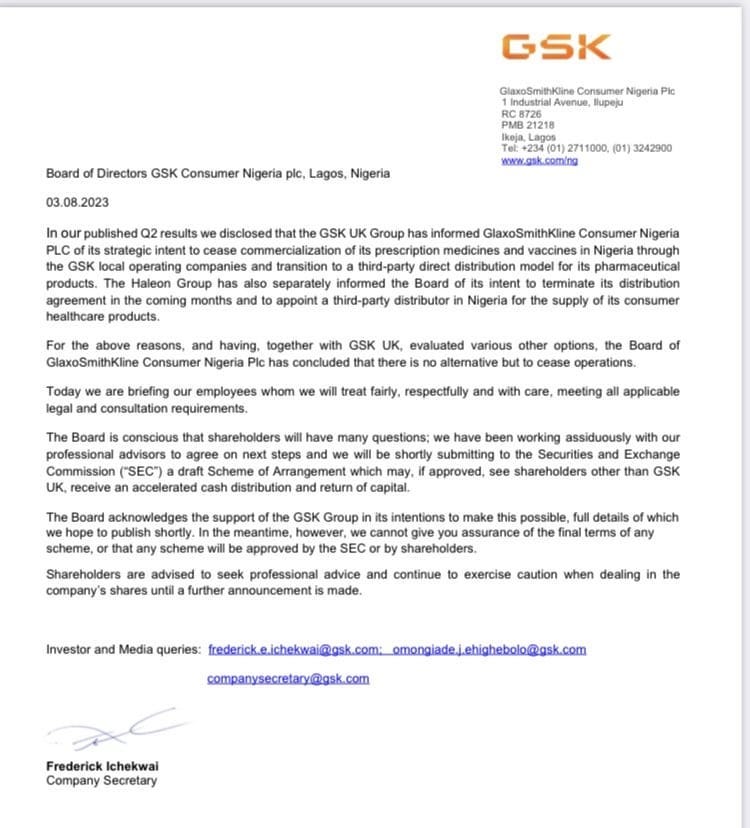
GSK announced its plan to cease operations in Nigeria in August 2023, ending its 51-year presence in the country since it opened its first office in Lagos in 1972. The company said it would adopt a distributor-led model to supply the country with its products and return capital to its local shareholders. GSK is known for its popular brands such as Panadol, Sensodyne, Voltaren and Augmentin.

Sanofi, on the other hand, has not officially confirmed its exit from Nigeria, but according to some reports, the company is plotting to do so as its local operation struggles to maintain its margins and profitability. Sanofi has been in Nigeria since 1969, and offers a range of products such as Flagyl, Lantus, Plavix and Allegra.

So, what are the reasons behind these decisions? Why are these companies leaving Nigeria after investing so much time and money in the country? Here are some of the possible factors that may have influenced their choices:

Foreign exchange crunch: One of the major challenges facing businesses in Nigeria is the scarcity and volatility of foreign exchange (FX). The country relies heavily on oil exports for its FX earnings, but the decline in oil prices and production since 2014 has reduced its FX inflows and reserves.

This has led to frequent devaluation of the naira, the local currency, and difficulty in accessing FX from official sources. Many businesses have to resort to the parallel market or other alternative sources to obtain FX at higher rates, which increases their costs and reduces their margins.

GSK Nigeria said in its 2023 H1 report that FX availability affected its ability to settle foreign currency-denominated trade payables with product suppliers, making it difficult to maintain consistent supply to the market. Sanofi also faced similar challenges, as it had to import most of its raw materials and finished products from abroad.

High cost of doing business: Another factor that may have discouraged GSK and Sanofi from continuing their operations in Nigeria is the high cost of doing business in the country. According to the World Bank’s Ease of Doing Business report for 2023, Nigeria ranked 131st out of 190 countries, indicating a low level of competitiveness and efficiency. Some of the factors that contribute to the high cost of doing business include poor infrastructure, unreliable power supply, bureaucratic red tape, multiple taxation, corruption, insecurity and social unrest.

These factors increase the operational expenses (OPEX) and capital expenditures (CAPEX) of businesses and reduce their returns on investment (ROI). For instance, GSK Nigeria reported a loss before tax of N1.6 billion in 2023 H1, compared to a profit before tax of N1.2 billion in 2022 H1.

Low demand and competition: A third factor that may have influenced GSK and Sanofi’s exit from Nigeria is the low demand and high competition for their products in the country. The demand for pharmaceutical and consumer healthcare products depends largely on the income level and purchasing power of consumers, which have been adversely affected by the economic recession and inflation that hit Nigeria in recent years.

Many consumers have switched to cheaper alternatives or generic products from local manufacturers or importers, reducing the market share and revenue of GSK and Sanofi. Moreover, the companies faced stiff competition from other multinational players such as Pfizer, Novartis, Roche and Johnson & Johnson, as well as regional players such as Aspen Pharmacare and Cipla.

However, this move will have serious implications for the availability and affordability of essential medicines and vaccines, as well as the quality and sustainability of health services in Nigeria.

Nigeria is one of the largest markets for pharmaceutical products in Africa, with a population of over 200 million people and a high burden of infectious and non-communicable diseases. According to the World Health Organization (WHO), Nigeria accounts for about 25% of the total health expenditure in the African region, but only 4% of the total pharmaceutical production.

This means that Nigeria relies heavily on imports to meet its domestic demand for medicines and vaccines, which exposes the country to supply chain disruptions, price fluctuations and counterfeit products.

GSK and Sanofi are among the leading suppliers of vaccines and medicines for diseases such as malaria, tuberculosis, HIV/AIDS, polio, meningitis, pneumonia, typhoid and diabetes in Nigeria. They also provide technical support and capacity building for local manufacturers, distributors, health workers and regulators.

Their exit will create a huge gap in the market that will be hard to fill by other players, especially in the short term. This will affect the access and affordability of life-saving drugs and vaccines for millions of Nigerians, especially the poor and vulnerable who depend on public health facilities and subsidized programs.

Moreover, their exit will undermine the efforts to improve the quality and delivery of health services in Nigeria. GSK and Sanofi have been involved in several initiatives to strengthen the health system, such as improving cold chain management, enhancing pharmacovigilance, promoting rational use of medicines, supporting research and development, and fostering public-private partnerships.

Their withdrawal will reduce the availability of resources, expertise and innovation that are needed to address the complex health challenges facing Nigeria. Therefore, it is imperative that the Nigerian government and other stakeholders take urgent steps to mitigate the negative impact of GSK and Sanofi’s exit on the health sector.

Some of the possible actions include, engaging with GSK and Sanofi to explore alternative options for their continued presence and operation in Nigeria, such as joint ventures, licensing agreements or contract manufacturing.

Providing incentives and support for local pharmaceutical manufacturers to increase their production capacity, quality standards and market share. Strengthening the regulatory framework and enforcement mechanisms to ensure the safety, efficacy and quality of medicines and vaccines in Nigeria. Enhancing the procurement and distribution systems to ensure adequate supply and equitable access to essential medicines and vaccines across the country.

Increasing public investment and mobilizing domestic resources for health financing to reduce dependence on external sources. Building strategic alliances and partnerships with other countries, regional bodies, multilateral agencies and civil society organizations to leverage their support and expertise for health development in Nigeria.

GSK and Sanofi’s exit from Nigeria is a reflection of the challenging business environment that many multinational companies face in the country. While Nigeria offers a huge potential market for pharmaceutical and consumer healthcare products, it also poses significant risks and uncertainties that require careful assessment and management. The companies’ decision to adopt a distributor-led model may be a way of reducing their exposure and liability while maintaining their presence and relevance in the country.

According to Nairametrics, prices of some drugs have gone up by 1,000% in Nigeria, “Following the recent announcement of GlaxoSmithKline’s (GSK) departure from the Nigerian pharmaceutical market, there has been a notable surge in the prices of GSK medications, with increases reported to be as high as 1000%. The significant rise in the cost of these medicines has sparked widespread concern among Nigerians, many of whom have expressed their frustrations on social media platforms.”