DD
MM
YYYY

PAGES

DD
MM
YYYY

spot_img

PAGES

Home Blog Page 4

Top Features to Consider in a Used Audi Purchase

0

Dreaming of driving a high end German car without having to break the bank? One of the best things you can do as a car buyer is invest in a used Audi. The vehicles retain their value, the performance is class leading, and the tech is often more up to date than in brand new models from other manufacturers.

But…

Used Audis are not all created equal. You should be aware of which features you should prioritise in your car search in order to end up with a good deal, not a money pit.

If you’re planning to buy a used Audi, here are the top things you should look out for.

In this guide you’ll learn:

  • Why You Should Consider a Used Audi
  • Quattro All-Wheel Drive
  • Safety Features
  • Interior Quality and Technology
  • Engines and Reliability

Audi’s Reputation in the Used Car Market

The used car market is bigger than ever.

Figures show nearly 80% of all cars sold in the UK are second hand. Buyers are shifting their habits in terms of what vehicles they want to own. And if you’re in the market for used Audi cars for sale, knowledge of which features are must-haves and which you can live without is critical.

A used car sale from a reputable Audi dealership in Kent gives you the chance to purchase a quality pre-owned vehicle with full checks of history and available warranty protection. More than you might realise, it turns out.

But why Audi, in particular?

Audis have a reputation for luxury and engineering quality. They don’t depreciate as much as other vehicles and often the tech in a 3-year old Audi is still way ahead of a new model from another manufacturer. A car that still feels modern years after purchase is exactly what Audi buyers demand.

Quattro All-Wheel Drive

The one thing that everyone associates with Audi is Quattro.

This isn’t a gimmick. Audi were pioneers of permanent all-wheel drive on passenger cars, and they launched the Quattro system in 1980. Since then, they’ve sold over 10 million Quattro-equipped models.

But what is so special about Quattro?

The AWD system Audi uses splits power across all four wheels. As soon as road conditions dictate a need for more traction, Quattro automatically diverts torque to the wheels that can use it. This can be in the millisecond without the driver even noticing.

For drivers in the UK, this has a huge impact. We’ve all driven on wet roads or in icy conditions. Simply put, having a car that performs in those conditions with confidence is a game changer.

Things to consider Quattro equipped Audi in your search if:

  • You’ll be regularly driving on motorways
  • You live in an area with harsh winters
  • You drive performance as well as for practicality
  • You want confidence on any road surface

The end result? Quattro models typically have better resale value and for a very good reason.

Safety Features

Audis are fitted to the brim with safety technology.

Statistics show that 77% of drivers say safety is a top priority when it comes to choosing a car. This means inspecting the safety features on a used Audi is key before you part with any money.

Features you should look for on a used Audi include:

Pre-sense systems that prepare the car for an imminent collision. Automatic emergency braking systems that can stop faster than a human could react. Blindspot monitoring for the areas your mirrors can’t show.

Lane departure warnings for keeping inattentive drivers out of trouble. Adaptive cruise control to maintain safe following distances in slow traffic. Parking sensors and cameras make parallel parking a breeze.

Here’s the thing though…

These features may have been expensive or even just optional extras on a brand new model, but a used Audi might have it already fitted at no extra cost. A 2019 used Audi could have more safety tech than a current model from a mainstream brand.

Interior Quality and Technology

Step inside an Audi and the difference is noticeable.

The interior build quality is high. Materials are nicer to the touch. Buttons and switches click reassuringly. The layout of everything is logical and within easy reach. It’s this level of attention to detail that Audi interiors set themselves apart from.

The Virtual Cockpit deserves a special mention.

The instrument cluster has gone fully digital, with a customisable display for navigation, media, and vehicle status information. It’s a huge selling point for Audi and one which changes the driving experience entirely.

Infotainment is handled by the MMI system, which controls climate, entertainment and smartphone connectivity. Apple CarPlay and Android Auto as standard means no matter your smartphone you’ll work seamlessly. Wireless charging is another perk so no more cable clutter from phone charging either.

Audio systems are often a surprise in Audis as well.

Bang & Olufsen sound packages offer concert-level audio quality. Standard speakers even on the base model are better than premium options in the more mainstream models. If you care about the music while you drive, this matters.

Interior checks on a used Audi should include:

  • Signs of wear on leather surfaces – seats, steering wheel etc
  • Dashboard and centre console plastics
  • Responsiveness of electronic screens – dead pixels?
  • Functionality of all switches and controls

Engines and Reliability

There are various powertrains available in Audi that suit different types of driver.

Petrol TFSI engines provide great performance with decent economy to go with it. Diesel TDI engines offer a lot of torque for long distance drivers and better miles per gallon figures. Hybrids are available too if you are making the transition to electric power.

It’s worth considering the maintenance costs involved.

On average, an Audi has a 0.8 repair shop visit per year for unscheduled repairs. Maintenance costs are around £800 per year on average but will depend on the model. These figures are around the industry average and put Audi in the premium bracket, but not beyond it.

Certain years and models are more reliable than others. A4, A6, and Q5 variants from recent model years seem to consistently get very positive reports from owners and analysts.

Before buying, ensure you can verify:

  • Full service history from authorised dealers
  • Timing belt/chain records where applicable
  • Any outstanding recalls addressed
  • Oil consumption is within normal

In Conclusion

A used Audi is one of the best things you can buy if you know what to look for.

Quattro all-wheel drive will give you confidence in the car in all road conditions. Safety features protect occupants with tech that is on par with, or even superior to, many current models. The interior quality and tech provides an ownership experience that makes it feel premium.

Pay particular attention to these features when buying:

  • Quattro (all-wheel drive)
  • Safety (pre-sense, emergency braking etc)
  • Interior (wear, electronics etc)
  • Service history (interval checks, records)
  • Engine type (to suit driving)

Used Audis are available for a wide variety of buyer needs. From the smaller A3 to the larger Q7 SUV, there is something for every Audi buyer.

Do your research. Inspect the car you plan to buy. Purchase from a reputable source.

If you do these three things, a used Audi will provide years of high-quality motoring for a fraction of the cost of a brand new car. It’s exactly what every smart car buyer is looking for.

WBD Board Rejects Paramount Takeover Attempt, Decrying Offer as ‘Illusory’

0

In a dramatic escalation of the battle for one of Hollywood’s most storied legacies, the board of directors for Warner Bros. Discovery (WBD) has formally and unanimously rejected a $108 billion hostile takeover bid from Paramount Skydance, led by CEO David Ellison.

In a blistering 1,400-word letter addressed to shareholders on Wednesday, December 17, 2025, the board did not mince words, labeling the offer as “illusory” and “inadequate.” The rejection centers on a profound lack of trust in Paramount’s financing claims, with the board accusing the company of consistently misleading investors about the true level of financial support provided by the billionaire Ellison family.

The board’s defiance marks a critical defense of its existing agreement to sell its core studio and streaming assets to Netflix for $27.75 per share. Despite Paramount’s higher nominal offer of $30 per share, WBD’s leadership argued that the Netflix merger provides a “superior, more certain value” that avoids the high-risk debt and opaque financing structures inherent in the Ellison-led proposal.

The ‘Backstop’ Controversy: Why the Bid Faltered

At the heart of the board’s rejection is the claim that Paramount and David Ellison misrepresented a “full backstop” from the Ellison family. In corporate finance, a backstop is a critical safety net—a guarantee that if secondary funding falls through, a primary investor will step in to cover the costs and ensure the deal closes. While Paramount marketed its bid as being fully secured by the wealth of Oracle co-founder Larry Ellison, WBD’s board countered that such a guarantee “does not, and never has,” existed in a binding form.

The investigation into Paramount’s filings revealed that the supposed backstop was actually tied to the Lawrence J. Ellison Revocable Trust. The board flagged this as a major red flag, noting that the trust is an “opaque” entity whose assets and liabilities are not public and, crucially, can be withdrawn by the owners at any time. WBD pointed out that the trust would only cover roughly 32% of the required equity and had capped its total liability at $2.8 billion, leaving shareholders exposed to a massive financing gap if other backers—including various Middle Eastern sovereign wealth funds—were to pull out.

The WBD board’s preference for the Netflix merger is rooted in financial stability and strategic clarity. The Netflix deal, valued at $82.7 billion, is a surgical acquisition of Warner Bros.’ film and TV studios, the HBO library, and the Max streaming service. Under this agreement, shareholders receive $23.25 in cash and $4.50 in Netflix stock. This offer is backed by Netflix’s massive $400 billion+ market capitalization and an investment-grade balance sheet, requiring no additional equity financing to complete.

In contrast, the board characterized the Paramount Skydance bid as a high-leverage gamble. If the $108 billion deal were to close, the resulting entity would be burdened with a gross leverage ratio of 6.8x debt-to-EBITDA, a level the board described as “raising substantial risks” for the company’s future.

Furthermore, while Paramount’s bid includes WBD’s struggling linear cable networks (like CNN and Discovery), the board argued that the Netflix path—which requires a prior separation of those assets into a new company called Discovery Global—is a more sound strategic move that allows shareholders to participate in the future upside of both a pure-play content giant and a specialized networks business.

The rejection also touched upon the “significant risks” associated with Paramount’s diverse roster of backers. The board highlighted the potential for regulatory gridlock, noting that Paramount’s reliance on funding from sovereign wealth funds in Saudi Arabia, Qatar, and the UAE could trigger intense scrutiny from the Committee on Foreign Investment in the U.S. (CFIUS). This concern was echoed by some members of Congress who have raised alarms about foreign entities gaining influence over a major American media conglomerate.

The political landscape has added further volatility to the deal. Although David Ellison’s father, Larry Ellison, has been a prominent supporter of the Trump administration, the President has recently voiced frustration with Paramount-owned CBS News, complicating David Ellison’s claims that his bid would face an “easier road” with regulators. Additionally, the recent exit of Jared Kushner’s Affinity Partners from the Paramount bidding group has only added to the perception of a shifting and unstable coalition behind the hostile offer.

Despite the board’s firm “no,” the final decision may still rest with the investors. Because Paramount has launched a hostile tender offer, it is appealing directly to shareholders to bypass the board’s recommendation. WBD stockholders now face a deadline of January 8, 2026, to decide whether to tender their shares to Paramount or stay the course with the Netflix merger.

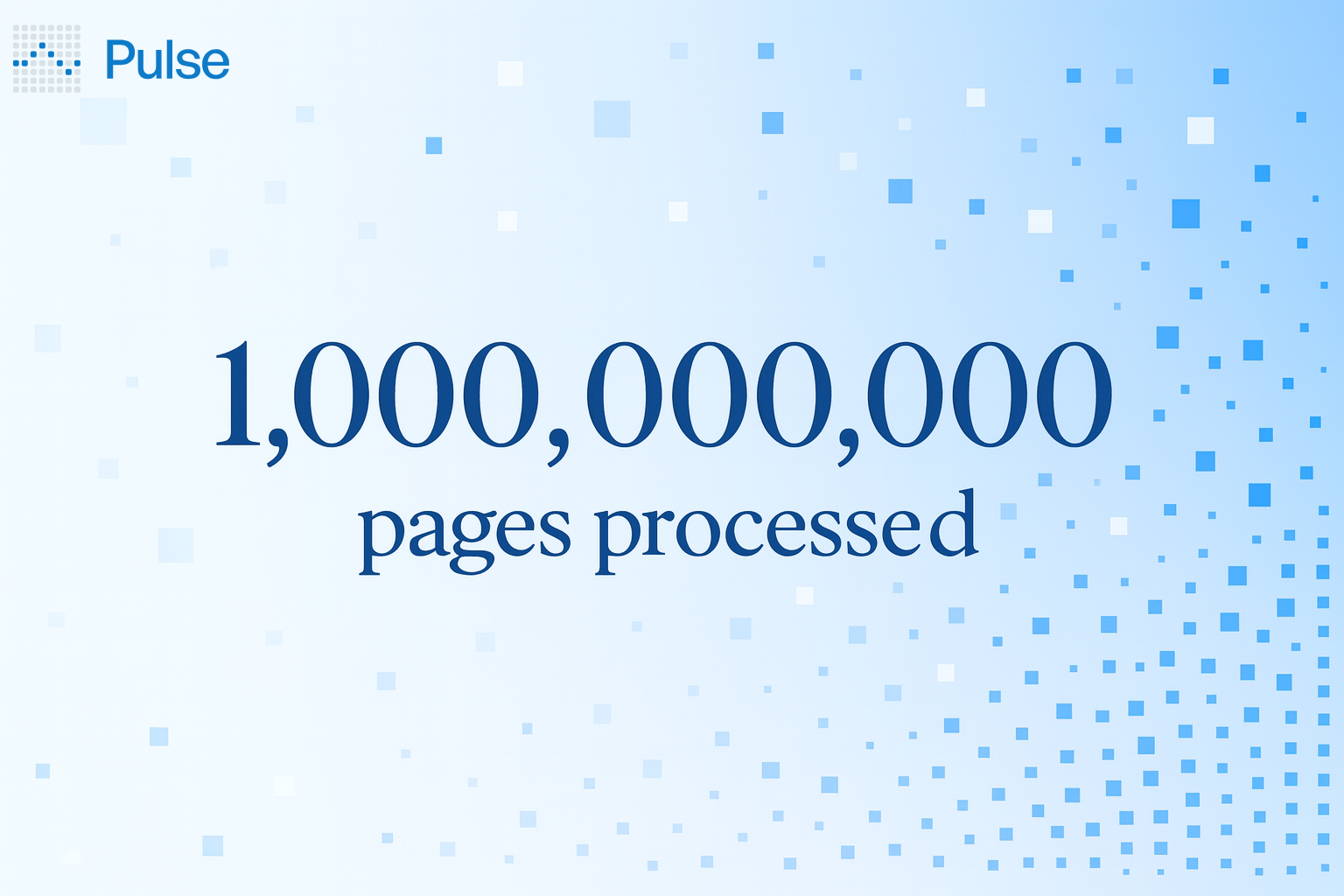
Tekedia Capital Congratulates Pulse for Processing 1 Billion Pages

0

Today, a Tekedia Capital portfolio company, and one of the fastest-growing startups in its category, has crossed a major milestone: one billion pages processed by its technology.

But the real achievement is not merely hitting one billion pages in a matter of months. It is who those pages were processed for. Pulse is powering workflows for global banks, Fortune 100 companies, private equity firms, and AI-native teams. These are organizations where accuracy, scale, and reliability are non-negotiable.

By every meaningful standard, Pulse is emerging as the world’s finest document infrastructure company: “Pulse uses OCR, layout, and vision models to produce high-quality outputs from complex documents for enterprise and AI-native teams.”

To mark this milestone, Pulse is offering a special celebration: 20,000 pages free for everyone. Go here .

Radiant Nuclear Secures $300m for Its 1MW Reactor at $1.8bn Valuation

0

The nuclear energy sector is experiencing a financial surge reminiscent of the early days of the AI boom, with Radiant Nuclear becoming the latest beneficiary of a high-stakes investment wave.

Just one day after Last Energy announced a $100 million raise, Radiant disclosed a massive $300 million Series D funding round, valuing the startup at more than $1.8 billion. Led by Draper Associates and Boost VC, and supported by heavyweights like Chevron Technology Ventures and Founders Fund, the deal underscores a frantic rush to secure future energy supplies for a power-hungry world.

This influx of capital is part of a broader pattern of “eye-popping” fundraises. In the last three months alone, the sector has seen X-energy raise $700 million and Aalo Atomics secure $100 million. For Radiant, this round follows a $165 million Series C just six months ago, signaling that investors are no longer satisfied with slow-moving research; they are now funding the transition to industrial-scale mass manufacturing.

The AI Power Crisis: Why Data Centers are Going Nuclear

The primary catalyst for this “frothy” market is the relentless expansion of Artificial Intelligence. Data centers and developers are facing a looming electricity shortfall, leading them to look beyond the grid for dedicated, “behind-the-meter” power sources.7 Radiant has already capitalized on this trend, signing a landmark deal with global data center leader Equinix to supply 20 of its microreactors.

While many nuclear startups are aiming for large-scale utility plants, Radiant is focusing on the microreactor—a compact, modular unit that can be deployed quickly and autonomously. This strategy appeals directly to data center operators who need reliable baseload power to feed dense GPU clusters without the decade-long wait times associated with traditional nuclear facilities.

Kaleidos: A Portable Powerhouse Designed for the Modern Edge

Radiant’s flagship technology is the Kaleidos, a high-temperature gas-cooled microreactor designed to produce 1 MW of electricity and up to 1.9 MW of thermal power. Unlike traditional reactors that rely on vast quantities of water for cooling, Kaleidos is helium-cooled and uses fans for air-to-air heat exchange. This “waterless” design allows it to operate in remote desert environments, disaster zones, or military outposts where traditional cooling is impossible.

The safety of the Kaleidos rests on its use of TRISO (Tri-structural Isotropic) fuel. These are tiny poppy-seed-sized kernels of uranium enriched with carbon and ceramic-coated layers. These layers act as a containment vessel for each individual grain of fuel, making it virtually meltdown-proof. The fuel can withstand temperatures that would melt traditional reactor cores, ensuring that if cooling is lost, the reactor naturally sheds heat without releasing radiation.

A critical differentiator for Radiant is its move toward mass production. The company is breaking ground on its R-50 factory in Oak Ridge, Tennessee, aiming to eventually produce up to 50 reactors per year. The core philosophy is that fission will only become cost-competitive with diesel if reactors are built on assembly lines rather than as “first-of-a-kind” artisanal construction projects.

The Kaleidos unit is designed to fit entirely within a standard 8×20-foot shipping container, allowing it to be delivered via semi-truck or aircraft and activated overnight. Radiant’s business model reflects this flexibility: customers can purchase the units outright or enter into Power Purchase Agreements (PPAs). At the end of a reactor’s 20-year lifespan, Radiant simply hauls the unit away, removing the burden of nuclear waste management from the site owner.

The 2026 Criticality Sprint and the Bubble Risk

Radiant is currently in a high-speed regulatory sprint. The company is one of 11 selected for the U.S. Department of Energy’s Reactor Pilot Program, which is racing toward a goal set by the Trump administration: to have at least three advanced reactors achieve criticality—a self-sustaining nuclear reaction—by July 4, 2026.

Testing for Radiant’s demonstration unit is scheduled to begin in the Summer of 2026 at the Idaho National Laboratory’s DOME (Demonstration of Microreactor Experiments) facility. This will be the first time a new commercial reactor design has been tested in the facility in over 50 years.

However, the rapid influx of cash raises the specter of a market bubble. If these startups fail to meet their 2026 milestones or if the transition from “hand-built” demonstration units to “factory-mass-produced” units stumbles, a significant winnowing of the field is likely. The coming two years will determine whether this is the dawn of a nuclear golden age or a speculative fever that outpaced the technical reality of building hard infrastructure.

Ex Bitcoin Miner Hut 8 Signs $7bn AI Data Center Lease, Highlighting Scramble for AI Power and Data Center Capacity

0

Hut 8’s move to lease and develop a large-scale data center in Louisiana is more than a single corporate expansion. It is another marker of how the artificial intelligence boom is reshaping the digital infrastructure industry and accelerating the decline of cryptocurrency mining as a core business model.

The company announced on Wednesday that it had signed a deal valued at approximately $7 billion to lease a data center site at the River Bend campus in Louisiana, where it plans to develop a 245-megawatt facility under a 15-year agreement. Investors welcomed the announcement. Hut 8’s shares jumped 21% in premarket trading, extending a rally that has already lifted the stock by around 80% this year as markets reassess the company’s future away from bitcoin mining.

Construction of the first phase of the data center is expected to be completed by early 2027, a timeline that reflects the growing complexity and long lead times associated with building power-intensive AI infrastructure. Once operational, the site is expected to host high-density computing workloads designed to support large-scale artificial intelligence models, a segment where demand is rapidly outpacing available capacity.

Hut 8’s shift mirrors a broader industry realignment. Companies that once focused almost entirely on cryptocurrency mining are increasingly repurposing their assets to serve AI developers. Access to high-voltage power, advanced cooling systems, and suitable industrial real estate, once optimized for mining digital tokens, has become critical infrastructure for training and running AI models.

Firms such as CoreWeave and Applied Digital have made similar pivots as competition for Nvidia graphics processing units and other specialized hardware intensifies.

The Louisiana deal also stands out for the partners involved. The project includes collaborations with AI model developer Anthropic and infrastructure provider Fluidstack. Alphabet-owned Google is providing a financial backstop for the 15-year lease term, a signal of how aggressively major cloud and technology companies are moving to secure long-term capacity for AI workloads. For cloud providers, locking in power and physical space has become as strategic as developing the models themselves.

The agreement fits into a much larger expansion plan. Hut 8 said the collaboration with Anthropic could ultimately scale to as much as 2.3 gigawatts of capacity, far exceeding the initial 245-megawatt phase in Louisiana. Last month, Anthropic announced a $50 billion investment plan to build data centers alongside Fluidstack, underscoring the scale of capital now being committed to AI infrastructure globally.

Hut 8 has been laying the groundwork for this transition over the past year. Once viewed as a pure-play bitcoin miner, the company now describes itself as an energy infrastructure platform. It said last month that it controls a total power pipeline of 8.65 gigawatts, spanning projects at various stages, from early site diligence to 1.53 gigawatts of late-stage developments already under active construction planning.

The pivot reflects changing economics in both crypto and AI. Cryptocurrency mining has become increasingly volatile, with margins squeezed by energy costs and regulatory uncertainty. At the same time, demand for AI computing has surged as companies race to deploy large language models and other machine learning systems, pushing up the value of reliable power and purpose-built data centers.

Hut 8 is betting that AI infrastructure will offer more predictable revenues and stronger growth prospects than its former core business by tying up long-term power capacity with blue-chip partners and financial backing from a major technology firm. More broadly, the deal illustrates how the AI boom is not only transforming software and models but also redrawing the map of who controls the physical foundations of the digital economy.