DD
MM
YYYY

PAGES

DD
MM
YYYY

spot_img

PAGES

Home Blog Page 4

What Are the Fastest Payout Crypto Casinos in 2025?

0

Waiting days for your casino winnings feels like torture, right? That’s exactly why crypto casinos have changed the game. Traditional online casinos can tie up your money for 3-7 days while banks shuffle paperwork. Crypto casinos flip that script completely.

Think about it this way. When you win at a crypto casino, your payout hits the blockchain directly. No bank sitting in the middle charging fees and dragging their feet. Most crypto casinos now process withdrawals in minutes, not days. Some literally send your winnings in under 10 minutes.

This guide breaks down the five fastest payout crypto casinos operating in 2025. We looked at actual withdrawal times, cryptocurrency options, game libraries, and real player experiences. Every casino here supports multiple digital currencies and has proven it can deliver your money fast; whether you’re withdrawing $100 or $10,000, speed matters.

How to Select the Fastest Payout Crypto Casinos

We spent October and November 2025 testing these platforms. Our team pulled data from casino websites, verified blockchain transactions, and studied player reviews on Trustpilot and AskGamblers.

Here’s what we measured:

  • Withdrawal Speed: We tracked actual processing times from withdrawal request to blockchain confirmation. Only casinos completing payouts within 24 hours made our list.
  • Cryptocurrency Support: We counted how many digital currencies each casino accepts (Bitcoin, Ethereum, Tether, Litecoin, and others).
  • Licensing & Security: Each casino must hold valid gambling licenses from recognized authorities like Curacao or Panama.
  • Game Selection: We evaluated the game library size and confirmed that providers have good reputations.
  • Player Reviews: We read hundreds of verified user experiences focusing on withdrawal reliability and customer support quality.

List of the Fastest Payout Crypto Casinos

Based on our research, these five crypto casinos offer the fastest and most reliable withdrawal processing in 2025:

  1. JB Casino
  2. BiggerZ
  3. BC.Game
  4. Super Slots
  5. Mirax Casino

Fastest Payout Crypto Casinos

1.   JB Casino

  • Established: 2024
  • License: Curacao Gaming Authority (License: OGL/2024/1519/0809)
  • Withdrawal Speed: Instant to 10 minutes (5-10 minutes typical, up to 6 hours for large amounts)
  • Cryptocurrencies Supported: 80+ including BTC, ETH, LTC, USDT, USDC, BCH, DOGE, TRX, BNB, XRP, SOL
  • Games: 6,000+ games from 25+ providers

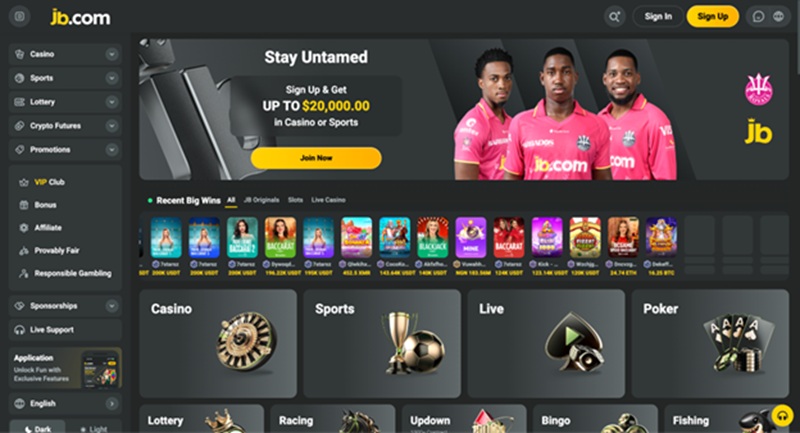
Company Overview: JB Casino opened its doors in 2024 as a cryptocurrency-exclusive platform. The site holds a Curaçao Gaming Authority license (OGL/2024/1519/0809), which meets regulatory standards for player safety.

This casino deals only in cryptocurrency, accepting over 80 different digital currencies. The game collection spans 6,000+ titles from 25+ software providers like Microgaming, Yggdrasil, and NetEnt. They focus heavily on provably fair games using blockchain tech, so players can check game results independently. Deposits appear instantly once the blockchain confirms them. Withdrawals typically clear in 5-10 minutes for normal amounts. Bigger withdrawal requests might need up to 6 hours for extra security checks. The casino charges 0.1% on withdrawals, but VIP members sometimes get this fee covered.
Best For: Players who want the newest crypto casino with lightning-fast withdrawals and tons of cryptocurrency choices.

Standout Feature: Accepts 80+ cryptocurrencies, giving you more payment options than almost any other casino.

2.   BiggerZ

  • Established: November 2024
  • License: Anjouan Gaming (License: ALSI-2023602493-1)
  • Withdrawal Speed: Instant (typically processed immediately, up to 24 hours maximum)
  • Cryptocurrencies Supported: 12 including BTC, ETH, USDT, LTC, BNB, DOGE, SOL, BCH, ADA, XRP, TRON, USDC
  • Games: 6,000+ games from 50+ providers

Company Overview: BiggerZ hit the market in November 2024 as a crypto-only casino run by CDK PLAY INC. SRL (registration number: 3-102-819705). The platform operates under an Anjouan Gaming license (ALSI-2023602493-1) from the Autonomous Island of Anjouan, Union of Comoros.

The game library includes 6,000+ titles from more than 50 software companies like Pragmatic Play, Evolution, Big Time Gaming, Red Tiger, NetEnt, Yggdrasil, Play’n GO, Hacksaw, NoLimit City, and BGaming. You’ll find 4,146+ slots, live dealer action, table games, crash games, and sports betting. BiggerZ processes crypto withdrawals instantly for standard amounts. They start simple KYC checks after you hit 2,500 USDT in total wins. The 6-tier VIP program gives increasing rewards, zero-commission withdrawals at higher levels, and personal VIP host help. Customer support runs 24/7 through live chat and email.

Best For: Crypto-only players wanting instant withdrawals who value a solid VIP rewards system.

Standout Feature: Instant cryptocurrency withdrawals with zero waiting time for verified accounts under set limits.

3.   BC.Game

  • Established: 2017
  • License: Curacao eGaming
  • Withdrawal Speed: 5-10 minutes typical (up to 10 minutes for blockchain confirmation)
  • Cryptocurrencies Supported: 150+, including BTC, ETH, LTC, USDT, DOGE, and 145+ additional options
  • Games: 8,000-10,000+ games from 70+ providers

Company Overview: BC.Game has been running since 2017, making it one of the oldest crypto casinos still operating. The site holds a Curacao eGaming license and has built a strong name among crypto gambling fans. BlockDance B.V. operates the platform and has even partnered with Leicester City FC, showing real market standing.

The casino stocks 8,000-10,000+ games from over 70 software companies, including NetEnt, Pragmatic Play, Microgaming, Evolution Gaming, Big Time Gaming, and Hacksaw Gaming. BC.Game created original games like Crash, Dice, and Plinko. Evolution Gaming powers the live dealer tables with professional dealers and HD video streams. BC.Game accepts over 150 different cryptocurrencies, beating every other casino on this list. Most withdrawals finish in 5-10 minutes, depending on how fast the blockchain network confirms transactions. The casino doesn’t charge withdrawal fees for crypto. A complete VIP program rewards players starting from their very first bet.

Best For: Experienced crypto users who want the biggest cryptocurrency selection and longest-standing reputation.

Standout Feature: 150+ supported cryptocurrencies, offering more crypto payment choices than any other online casino.

4.   Super Slots

  • Established: 2020
  • License: Panama Gaming Commission
  • Withdrawal Speed: Same-day (within 24-48 hours for crypto, typically processed within the same business day)
  • Cryptocurrencies Supported: 16-18, including BTC, ETH, LTC, BCH, XRP, Stellar, USD Coin, Cardano, Dogecoin, Tether
  • Games: 1,000+ games from providers including Betsoft, Rival, Microgaming, Real Time Gaming

Company Overview: Super Slots launched in 2020 as a US-friendly casino backed by Termas Del Arapey Management S.A., a company with over 20 years in the gambling business. The site runs under a Panama Gaming Commission license and shares ownership with BetOnline and Wild Casino.

The game collection includes 1,000+ casino games from respected providers like Betsoft, Rival Gaming, Microgaming, and Real Time Gaming. You’ll see video slots, table games (blackjack, roulette, baccarat), video poker, live dealers, and specialty games. The casino posts a 98.02% average payout rate across all games. Super Slots handles crypto withdrawals in 24-48 hours, with most clearing the same business day. The casino wants identity verification before your first withdrawal. Crypto transactions cost nothing, but some other payment methods have fees. The VIP loyalty program includes level-up bonuses, zero-commission crypto withdrawals at higher ranks, and priority support.

Best For: US players looking for same-day crypto withdrawals with traditional casino games and an experienced operator.

Standout Feature: Same-day cryptocurrency withdrawal processing built for US players with round-the-clock customer support.

5.   Mirax Casino

  • Established: 2022
  • License: Curacao eGaming
  • Withdrawal Speed: Instant to 1 hour (typically under 60 minutes for crypto)
  • Cryptocurrencies Supported: 10, including BTC, ETH, USDT, LTC, DOGE, TRX, XRP, ADA, BCH, BNB
  • Games: 7,000-9,000+ games from 50+ providers

Company Overview: Mirax Casino started in 2022 as a modern crypto-focused site owned by Hollycorn N.V., a Curacao company running over 20 online casinos. The platform holds a Curacao eGaming license and has built a strong record fast, earning an “Excellent” rating on Trustpilot.

The game library holds 7,000-9,000+ titles from more than 50 software providers, including Evolution Gaming, NetEnt, Pragmatic Play, Microgaming, Playtech, Betsoft, BGaming, Yggdrasil, and QuickSpin. Games include slots, table games (70+ blackjack types, 63 roulette versions, 44 poker choices), live dealers, and provably fair games. Mirax handles crypto withdrawals within 1 hour for most transactions, with many finishing instantly. The casino uses 128-bit SSL encryption and offers two-factor authentication for better security. A 10-level VIP program gives growing rewards, including zero-commission withdrawals, special bonuses, and personal VIP hosts. Monthly withdrawal caps sit at $15,000.

Best For: Players wanting a modern casino look with space-age design, fast withdrawals, and a huge game selection.

Standout Feature: 10-level VIP program with growing rewards and withdrawal perks, matched with steady 1-hour payout times.

Factors to Consider When Choosing a Fast Payout Crypto Casino

Withdrawal Speed vs. Verification Requirements

Most crypto casinos handle withdrawals in under 24 hours, but ID checks can slow down your first payout. Some sites demand KYC (identity verification) before processing anything. Others let you withdraw smaller amounts without paperwork. Think about whether you want instant access or prefer tighter security steps.

Cryptocurrency Options and Network Fees

Each cryptocurrency moves at different speeds and costs different amounts in network fees. Bitcoin might need 30-60 minutes for confirmations. Networks like Tron or Litecoin run faster and cheaper. Make sure the casino accepts your preferred crypto and check who pays the blockchain network fees.

Withdrawal Limits and Fees

Look at maximum daily, weekly, and monthly withdrawal amounts. Some casinos cap how much or how often you can withdraw. Check for withdrawal fees too. Many crypto casinos don’t charge anything, but some take flat fees or percentages. VIP members usually get higher limits and no fees.

Game Selection and Software Providers

Fast payouts don’t matter much if the games are garbage. Check the casino’s game library size and which software companies provide the games. Top providers like Evolution, Pragmatic Play, and NetEnt mean fair games and quality experiences.

Licensing and Security Standards

Make sure the casino holds a real gambling license from known authorities like Curacao or Panama. Look for SSL encryption, two-factor authentication choices, and provably fair technology. Read player reviews on independent sites to judge reliability and trustworthiness.

Final Thoughts

Each casino in this guide holds a valid gambling license and has a fast payout history. All five process cryptocurrency withdrawals faster than traditional casinos, from instant to same-day. JB Casino supports 80+ cryptocurrencies with 5–10 minute withdrawals. BiggerZ offers instant processing. BC.Game accepts 150+ cryptocurrencies. Super Slots serves US players with same-day payouts. Mirax Casino combines fast processing with a 10-tier VIP program.

Pick one of the fastest payout crypto casinos mentioned in this guide based on withdrawal speed, game selection, supported cryptocurrencies, and security. Start with small deposits to test withdrawal times. Always check licensing and recent player reviews to confirm payout reliability. Fast payout speed needs support from security, game quality, and customer support.

 

Kalshi Integrates BNB Chain to Support Deposits and Withdrawals

0

Kalshi, a CFTC-regulated prediction market platform, has integrated BNB Smart Chain (BSC) to support deposits and withdrawals using BNB and certain stablecoins. For U.S. domestic accounts: Direct deposits and withdrawals of native BNB and USDT on BSC.

For international accounts: Deposits and withdrawals of BNB, USDT, and USDC on BSC, often facilitated through connected exchanges like Binance, Coinbase.

This integration allows users holding assets on BSC to participate in Kalshi’s prediction markets on events like politics, sports, crypto prices, etc. without needing complex bridging or conversions, leveraging BSC’s low fees and high speed.

The announcement came directly from Kalshi’s official blog and X account, and was highlighted by Binance founder CZ with “Keep building.” It’s part of Kalshi’s broader push into multi-chain support, following integrations with chains like Solana, Base, and TRON.

This move enhances liquidity for Kalshi users in the BNB ecosystem and positions BSC as a key rail for regulated prediction trading. Kalshi’s addition of BSC support for deposits and withdrawals marks a significant step in bridging regulated prediction markets with major crypto ecosystems.

Users holding assets on BSC—one of the largest blockchains by user base, TVL ~$6.5B, and stablecoin volume—can now seamlessly fund Kalshi accounts without bridging, conversions, or high fees from chains like Ethereum.

U.S. accounts: Direct native BNB and USDT (BSC) deposits/withdrawals. International accounts: BNB, USDT, and USDC via connected exchanges (e.g., Binance, Coinbase).

This reduces friction, potentially attracting millions of BSC-native users from DeFi, gaming, or Binance ecosystem to Kalshi’s CFTC-regulated markets on politics, sports, crypto prices, and more. Part of Kalshi’s “omni-chain” strategy already supporting Solana, Base, TRON, positioning it as the most crypto-friendly regulated prediction platform.

Increases real-world demand for BNB as a funding rail for high-volume trading on Kalshi, especially with prediction markets exploding. Analysts note BNB as the “biggest beneficiary,” with potential exponential demand growth amid Kalshi’s U.S. dominance and global expansion.

Endorsed by Binance founder Changpeng Zhao CZ “Keep building”, highlighting ecosystem synergy. In a potential 2026 bull market, this adds narrative fuel for BNB alongside its role in DeFi, gaming, and now regulated betting.

This legitimizes prediction markets by connecting on-chain liquidity to a CFTC-regulated venue, allowing crypto holders to participate in real-world event trading compliantly. Lowers barriers for crypto users to enter regulated finance, while exposing traditional traders to blockchain rails.

Reinforces BSC’s position in high-throughput applications for low fees, speed versus competitors like Polygon used by rival Polymarket. Intensifies rivalry with Polymarket that is on-chain, crypto-focused; earlier BSC support and emerging BNB Chain natives like Probable, backed by PancakeSwap.

Kalshi’s edge: Full U.S. regulation and legality in all 50 states, deeper liquidity from institutional backers like Susquehanna, and sports/media partnerships. Could drive overall sector growth, with prediction markets seen as a top narrative major 2025 fundraises for Kalshi/Polymarket.

Limited assets for U.S. users reflects compliance caution. Competition from unregulated/on-chain alternatives may split liquidity. No direct “partnership” with Binance beyond chain integration, but ties via exchanges strengthen indirect links.

This move strengthens Kalshi’s lead in regulated prediction markets while providing a major utility boost to BNB/BSC—win-win for adoption in a maturing crypto-regulatory landscape. Expect increased volumes and cross-ecosystem flows in the coming months.

JPMorgan Exploring Crypto Trading for Institutional Clients

0

According to a Bloomberg report published on December 22, 2025, JPMorgan Chase is actively exploring the possibility of offering cryptocurrency trading services to its institutional clients.

This includes potential spot trading; direct buying/selling of cryptocurrencies like Bitcoin and derivatives products. The initiative is in early stages, driven by growing client demand from hedge funds, pension managers, and other large investors seeking regulated, bank-grade access to crypto markets.

It would expand JPMorgan’s existing blockchain activities via its Kinexys platform, formerly Onyx, but mark a deeper entry into direct crypto trading—something the bank has historically avoided despite CEO Jamie Dimon’s longstanding criticism of Bitcoin.

No final commitment has been made; plans depend on sufficient demand, internal risk assessments, and regulatory feasibility.
JPMorgan declined to comment on the report.

This aligns with broader Wall Street trends: competitors like Goldman Sachs already operate crypto derivatives desks, Morgan Stanley plans to launch trading on ETrade in 2026, and Standard Chartered offers spot Bitcoin/Ether trading for institutions.

Recent U.S. regulatory shifts like OCC guidance allowing banks to intermediate crypto and the GENIUS Act for stablecoins have created a more favorable environment for such moves.While not yet operational, this signals accelerating institutional adoption of digital assets through traditional banks.

JPMorgan’s potential entry into offering spot and derivatives cryptocurrency trading to institutional clients like hedge funds, pension managers represents a major step in bridging traditional finance and digital assets. While still in early evaluation stages—with no firm commitment—this move, could have wide-ranging effects.

JPMorgan, the largest U.S. bank by assets managing over $4 trillion, entering direct crypto trading would signal strong mainstream validation for cryptocurrencies like Bitcoin and Ethereum. It addresses growing client demand for regulated, bank-grade access, as many institutions avoid retail platforms due to compliance, custody, and execution risks.

This aligns with broader Wall Street trends: Goldman Sachs already offers crypto derivatives, Morgan Stanley plans ETrade crypto trading in 2026, and Standard Chartered provides spot BTC/ETH trading. JPMorgan’s involvement could encourage more banks to follow, normalizing crypto as an asset class.

Increased institutional inflows could boost liquidity, reduce volatility from retail-driven swings, and stabilize long-term price trajectories for major assets like BTC and ETH. Potential for upward pressure: Similar moves have historically driven rallies and higher trading volumes.

Derivatives offerings could enable sophisticated hedging and speculation, deepening markets but also introducing new risks like amplified leverage. Dimon has long criticized Bitcoin calling it “fraud” or “worthless” in past years, yet the bank has expanded blockchain efforts.

This highlights a pragmatic business response to client demand and regulatory shifts, separate from personal views—common in finance where banks serve market needs despite executive opinions.

Driven by favorable U.S. changes: OCC guidance allowing banks to intermediate crypto, the GENIUS Act for stablecoins, and a pro-crypto stance under President Trump aiming to make the U.S. the “crypto capital”. Heightens competition among banks and platforms, potentially lowering fees and improving services.

Globally, it could pressure other regions to clarify rules, fostering cross-border institutional flows. Furthers the convergence of TradFi and crypto: Builds on JPMorgan’s existing activities vis BTC/ETH as loan collateral, tokenized funds on Ethereum/Solana.

Long-term could reshape payments, settlements, and asset management, with blockchain enabling faster, cheaper institutional transactions. Volatility exposure for banks, potential regulatory scrutiny if markets crash, or conflicts with ongoing “debanking” concerns in crypto circles.

If launched, this could mark a pivotal moment for crypto maturation in 2026+, attracting billions in new capital and reducing perceived risks. However, outcomes depend on demand, risk assessments, and regulatory feasibility—no timeline has been announced. This underscores crypto’s evolution from fringe to core financial infrastructure.

ETHZILLA’s $74.5M Sale Triggers Fear on Institutions Selling Pressure

0

ETHZilla, a Peter Thiel-backed firm, has indeed sold approximately $74.5 million worth of Ethereum specifically 24,291 ETH to redeem outstanding senior secured convertible notes and pay off debt.

This move marks a strategic pivot away from its digital asset treasury (DAT) model, which involved holding cryptocurrencies like ETH, toward a focus on real-world asset (RWA) tokenization and related income-generating initiatives.

The announcement comes amid broader market pressures, including a recent 30% drop in Ethereum’s price and dwindling net asset value (NAV) for ETHZilla, which has faced backlash from stakeholders.

This isn’t the first such sale—ETHZilla previously liquidated $40 million in ETH back in October 2025 to fund a stock buyback program, signaling a gradual shift of crypto profits into traditional equities and RWAs.

The liquidation has contributed to near-term weakness in ETH’s price and a plunge in ETHZilla’s shares, highlighting risks in crypto lending and liquidity for overleveraged entities in 2025.

The firm appears to be positioning itself for a prolonged “crypto winter” by emphasizing RWAs, which could involve tokenizing real estate, commodities, or other tangible assets for blockchain-based investment.

ETHZilla’s sale of 24,291 ETH averaging ~$3,068 per token to redeem senior secured convertible notes and its explicit shift from a digital asset treasury (DAT) model to real-world asset (RWA) tokenization carries several key implications across financial, market, and strategic dimensions.

The proceeds primarily fund debt redemption, reducing leverage and interest burdens in a declining ETH price environment down 30% in recent months. This strengthens the balance sheet, with remaining holdings at ~69,800 ETH $207M at ~$2,970 current price.

By discontinuing the mNAV dashboard which tracked market cap vs. ETH holdings, the company signals a move away from crypto-speculative metrics toward traditional ones: revenue, cash flow, and earnings from RWA operations like tokenizing auto loans, manufactured homes, real estate, aerospace equipment.

Success hinges on executing RWA deals e.g., partnerships like Zippy Inc.. If revenue materializes, it could restore investor confidence after stock declines ~7-8% post-announcement, down >90% from peaks. Failure risks further dilution or sales. Community reactions are mixed: some see it as pragmatic “balance sheet hygiene,” others criticize rapid pivots biotech ? DAT ? RWA in months.

The ~$74.5M sale adds to broader outflows e.g., ~107K ETH from treasuries/ETFs in recent weeks, totaling ~$670M. However, ETH’s deep liquidity absorbs this easily—price held around $2,960-$3,000 post-sale, with no major crash attributed directly.

Sentiment Impact — Highlights vulnerabilities in ETH-focused treasuries during “crypto winter.” Unlike Bitcoin treasuries, smaller ETH DAT firms face tighter constraints from price drops and debt. This could signal caution for similar entities, potentially leading to more sales.

The sale was mechanical, not bearish on ETH. RWA tokenization often builds on Ethereum or compatible chains, potentially increasing network utility/demand. Analysts note ETH fundamentals remain strong: low exchange balances, >30M staked ETH, institutional adoption like JPMorgan using ETH collateral.

ETH treasuries struggled more than Bitcoin ones due to ETH’s higher volatility and less mature corporate adoption. This pivot underscores that pure holding strategies are risky in downturns, pushing firms toward yield-generating or operational models.

Rise of RWAs 

Positions ETHZilla in a growing sector— RWA market ~$25B+, much on Ethereum. Institutional interest in tokenizing tangible assets for liquidity/fractional ownership could drive blockchain adoption, benefiting Ethereum if it remains a primary chain.

May encourage distressed DAT firms to pivot or liquidate. Contrasts with accumulators like BitMine continuing ETH buys. Highlights maturation: from speculation to utility/revenue focus.

This is a defensive move for ETHZilla amid market pressures, with potential upside if RWA execution delivers. For ETH, it’s a minor headwind in a broader outflow context but doesn’t alter long-term fundamentals. The pivot reflects evolving corporate crypto strategies: less “HODL,” more real-world integration.

Tariff-hit German Exports to the US Decline Sharply, Analysis Finds

0

German economy has witnessed a sharp decline in the German exports to the United States in 2025, largely attributed to U.S. tariffs imposed under President Donald Trump’s administration.

A December 2025 study by the German Economic Institute (IW), commissioned by the German Foreign Office and reported widely including by Reuters and Xinhua, found that overall German exports to the U.S. fell by approximately 7.8% year-on-year in the first nine months of 2025.

This reversed years of steady growth averaging nearly 5% annually from 2016–2024. Automotive— motor vehicles and parts: down ~14%, hardest hit, accounting for nearly half of the global export decline in this sector for Germany.

Mechanical engineering/machinery: down 9.5% impacted by 50% U.S. tariffs on steel and aluminum inputs. Chemicals: down 9.5% partly due to tariffs, but also domestic factors like high energy prices.

These three sectors alone contributed over two-thirds of the total decline. Monthly exports to the U.S. showed volatility, with front-loading boosts early in the year like +8.5% MoM in February ahead of tariffs, followed by sharp drops, five consecutive monthly declines from April to August, hitting a low of €10.9 billion in August—a 4-year low.

By October 2025, exports to the U.S. were €11.3 billion down 7.8% MoM from September and 8.3% YoY. The tariffs stemmed from Trump’s “America First” policy, starting with higher rates, like 25% on vehicles initially, 50% on steel/aluminum, later moderated to a 15% baseline on most EU goods via an August 2025 EU-U.S. agreement.

Despite this partial relief, the elevated duties raised costs, reduced competitiveness, and prompted some price increases or production shifts by German firms like Volkswagen, BMW, and Mercedes-Benz.

Economists note this represents a “new normal” for transatlantic trade, with limited prospects for quick recovery unless tariffs are rolled back—unlikely in the near term. Germany has partially offset losses by increasing exports to markets like China, but the U.S. remains a critical partner despite the downturn.

The sharp decline in German exports to the United States—down 7.8% year-on-year in the first nine months of 2025—has significant ripple effects across Germany’s export-dependent economy, exacerbating existing challenges like high energy costs and weak global demand.

Germany, already contracting in 2023 -0.3% and 2024 -0.2%, faced forecasts revised to zero growth or slight contraction in 2025 directly due to U.S. tariffs. The government and leading institutes like ifo and Bundesbank cited tariffs as the primary drag, potentially marking a historic third consecutive year without growth.

Analysts estimated tariffs shaved 0.1–0.3 percentage points off GDP, with risks of a “slight recession” if duties persisted. The hardest-hit sectors—autos (14% drop), machinery (9.5%), and chemicals (~9.5%)—accounted for over two-thirds of the total export decline.

These industries employ millions and drive innovation; reduced U.S. demand led to margin compression, potential layoffs, and scaled-back investments. German automakers  absorbed higher costs or passed them on, eroding competitiveness.

Germany partially offset U.S. losses by boosting exports to markets like China +5.4% in some months and non-EU countries overall. However, simultaneous weak demand from China compounded pressures on the export model.

Experts from the German Economic Institute (IW) described Q3 2025 export levels as a likely long-term baseline, assuming no major tariff rollback. The August 2025 EU-U.S. deal moderated duties to 15% on most goods with higher rates on steel/aluminum at 50%, but this still represented the most restrictive transatlantic regime in decades.

Tariffs highlighted vulnerabilities in Germany’s export-led growth, prompting calls for diversification to India, South America, reduced intra-EU barriers, and a shift toward services. Some forecasts suggested medium-term reallocation from industry to less tariff-sensitive sectors.

The policy contributed to broader protectionism concerns, disrupting supply chains and raising bureaucratic hurdles like the origin rules risking 200% punitive duties. While Germany suffered disproportionately as the U.S.’s largest EU trading partner, retaliatory risks loomed if negotiations failed.

While not catastrophic, the tariffs reinforced Germany’s economic fragility in 2025, delaying recovery and underscoring the need for adaptability in a more fragmented global trade environment. Limited prospects for quick U.S. relief suggest ongoing challenges into 2026.