
DD
MM
YYYY

PAGES

DD
MM
YYYY

spot_img

PAGES

Home Blog Page 4

Rosneft Chief Says China, Not OPEC, Is Now Stabilizing Global Oil Markets

0

Igor Sechin, chief executive of Russia’s largest oil producer Rosneft and one of President Vladimir Putin’s most influential energy allies, said China has taken on a greater role in stabilizing global oil markets by sharply reducing its crude imports this year, arguing that Beijing’s influence is increasingly rivaling that of OPEC.

Speaking Thursday at a Russian-Chinese business forum in Vladivostok, Sechin said China had reduced its oil imports by 5.5 million barrels per day this year, a decline he said had helped absorb excess supply and stabilize prices without Beijing being part of any formal producers’ cartel.

“This year, China has effectively taken the lead from OPEC and, without being a member of any cartel, has managed to stabilize the global oil market by cutting its oil imports by 5.5 million barrels per day,” Sechin said.

The comments reflect Sechin’s long-standing skepticism toward OPEC-led production management and his broader argument that the balance of power in global energy markets is shifting toward major consumers with large strategic reserves and growing control over demand.

China is the world’s largest oil importer, making changes in its purchasing patterns highly consequential for producers from Russia and the Middle East to Africa and the Americas. A sustained reduction in Chinese buying can weaken global demand for seaborne crude, increase competition among exporters and put downward pressure on prices.

Sechin said China’s growing strategic petroleum reserves could further increase Beijing’s influence over the international energy market.

“I believe that further growth in China’s reserves will strengthen China’s role in the energy market, against a backdrop of OPEC’s waning influence and a reduction in the number of its members,” he said.

His argument points to an important change in the traditional structure of the oil market. OPEC and its wider OPEC+ alliance have historically exercised their greatest influence through the supply side, adjusting production to manage prices and prevent severe market imbalances. China, by contrast, can exert influence through the demand side because of the enormous volume of crude required by its refineries and the scale of its strategic inventories.

The development has caught Russia’s attention.

China has become a critical destination for Russian crude following Moscow’s invasion of Ukraine and the subsequent Western sanctions that sharply reduced Russia’s access to European energy markets. Russian producers have consequently become more dependent on Asian buyers, particularly China and India, to sustain export volumes.

The situation has given changes in Chinese purchasing behavior an outsized impact on Russian oil companies. If Chinese refiners reduce imports for an extended period, Russian producers could face greater pressure to discount their crude or redirect cargoes to other markets.

Sechin’s comments also carry a commercial dimension for Rosneft, whose business depends heavily on maintaining access to major Asian markets as Western sanctions continue to constrain Russia’s traditional energy trade.

At the same time, China’s lower imports do not necessarily mean that global oil consumption has fallen by the same amount. Import volumes can fluctuate because of domestic production, refinery maintenance, changes in commercial inventories and the use of crude already held in storage.

China has spent years building strategic and commercial petroleum inventories, giving its refiners greater flexibility over when they purchase crude from international markets. When inventories are high, refiners can reduce imports without necessarily reducing refinery activity immediately. That makes China’s stockpiling strategy an increasingly important variable for oil traders and producers.

Sechin’s assessment also comes as OPEC’s influence faces questions of its own. The producer group and its allies remain capable of affecting global supply through coordinated production policies, but maintaining discipline across a large alliance becomes more difficult when individual members have competing fiscal needs and incentives to maximize output.

The United Arab Emirates announced earlier this year that it would withdraw from OPEC, adding to concerns about the cohesion and future influence of the producer group. The broader issue is whether oil-market power is gradually moving away from a model dominated by producers toward one in which major consumers and their inventories play a greater role.

China’s importance in that transition is difficult to ignore. Its massive refining sector, expanding strategic reserves, and position as the world’s largest crude importer give Beijing several ways to influence the market without formally coordinating production with oil-exporting countries.

For Russia, however, energy experts believe that China’s growing influence presents both an opportunity and a vulnerability. Beijing provides a crucial market for Russian crude and has helped Moscow maintain oil export flows despite Western restrictions. But greater dependence on a single major buyer also leaves Russian producers more exposed to Chinese purchasing decisions and negotiating power.

Sechin’s remarks consequently amount to more than a criticism of OPEC. They reflect the multipolar nature of the global oil market, where the strategic decisions of major consumers can be almost as consequential as coordinated production cuts by exporters.

Analysts have noted that if China’s lower import demand persists and its petroleum reserves continue to expand, Beijing could acquire greater leverage over global crude flows, potentially forcing producers to compete more aggressively for access to the Chinese market. That would represent a significant shift in the traditional balance of the oil industry: OPEC may still control a substantial share of global supply, but China’s purchasing decisions have the power to determine how much crude producers can sell and at what price.
South Korea’s Tokenization Push Could Redefine 24/7 Capital Markets

0

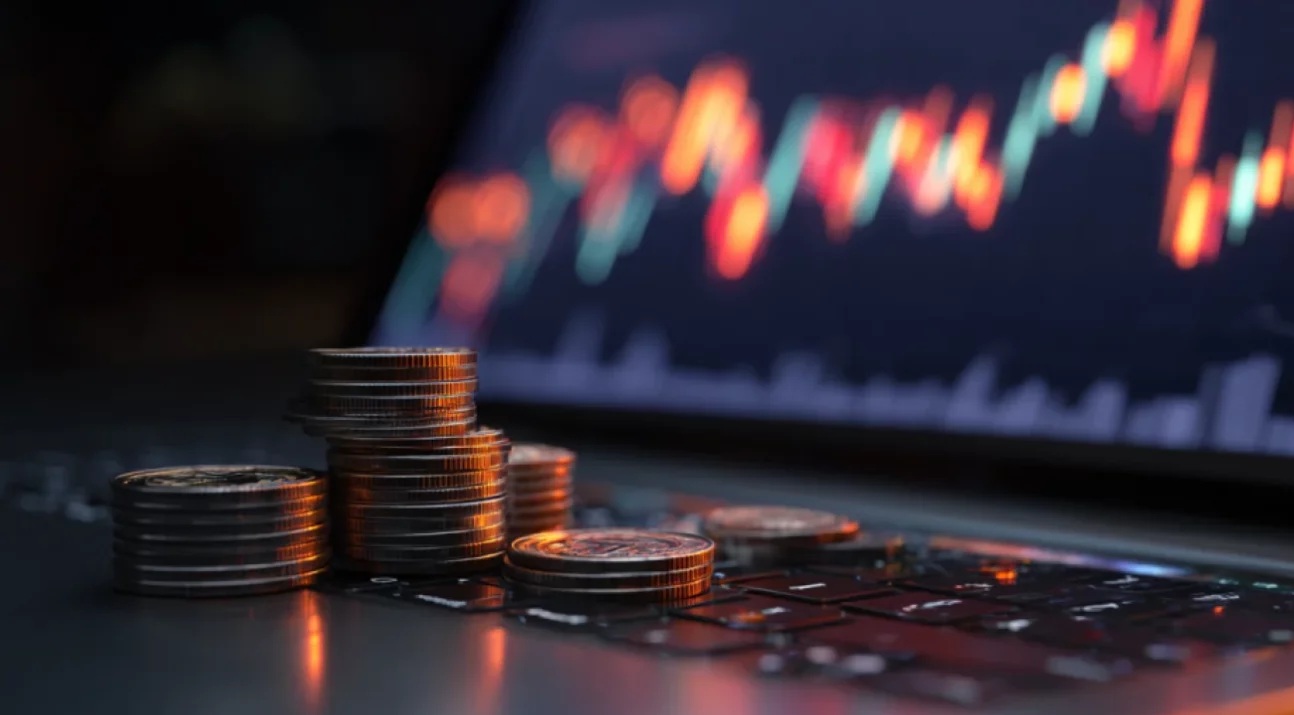
South Korea is preparing for a major transformation of its financial markets, unveiling a three-stage roadmap to bring stocks, bonds, funds and other conventional securities onto blockchain-based infrastructure.

The initiative marks one of the clearest attempts by a major Asian economy to merge traditional capital markets with the always-on architecture of digital assets.

At the center of the plan is the recognition of security tokens as a legitimate digital form of securities. Amendments to South Korea’s securities laws are scheduled to take effect on February 4, 2027.

Creating the legal foundation for blockchain-based issuance and circulation. Rather than restricting tokenization to fractional investments, regulators intend to eventually extend it across the broader securities market.

The first stage will begin in February 2027. Initially, privately pooled money-market funds and corporate bonds reserved for institutional investors will be eligible for tokenization.

Unlisted stocks will also enter the system through trust structures, allowing investors to receive tokenized beneficiary securities while the underlying shares remain held within the traditional securities infrastructure.

Publicly offered fractional investment securities will also be included. The second stage represents a much larger ambition: expanding tokenization to publicly offered securities.

This could eventually allow conventional stocks, bonds and funds to be represented and transferred through distributed-ledger infrastructure. The objective is not simply to create digital versions of existing products.

But to modernize the entire securities lifecycle, including issuance, trading, clearing, settlement and the exercise of investor rights. The third stage could be the most consequential for the relationship between traditional finance and cryptocurrency.

South Korea plans to develop an on-chain settlement infrastructure connected to stablecoins. If implemented successfully, securities could potentially be traded and settled using blockchain-native payment instruments.

Reducing the separation between asset markets and digital payment networks. However, this stage remains dependent on technological developments and South Korea’s evolving stablecoin legislation.

The prospect of 24/7 trading is particularly significant. Traditional stock markets operate within defined hours, creating gaps between global investors and limiting the speed at which capital can move. Blockchain networks, by contrast, can operate continuously.

Tokenized securities could therefore make financial markets more accessible across time zones and potentially provide investors with greater flexibility.

South Korea has already demonstrated an appetite for extending financial-market access.

In July, the country began 24-hour onshore spot trading of the dollar-won currency pair, signaling a broader effort to modernize its financial infrastructure and improve the international usability of its currency.

Importantly, regulators are not proposing a completely separate licensing system for tokenized securities. Existing financial investment firms will generally be able to handle tokenized securities within the scope of their existing licenses.

This could accelerate adoption by allowing established brokerages and financial institutions to participate without having to build an entirely new regulatory structure. MSouth Korea’s strategy also reflects a global shift.

Tokenized funds, bonds and other real-world assets are already gaining traction internationally, with projects such as BlackRock’s BUIDL demonstrating how traditional assets can operate on blockchain rails.

South Korea is betting that tokenization can turn its capital markets into a more programmable, accessible and continuous financial system. The transition will not happen overnight, and regulatory, technological and liquidity challenges remain.

Yet by establishing a legal framework and phased infrastructure, Seoul is positioning itself at the forefront of the emerging tokenized economy—where the boundary between traditional finance and blockchain could increasingly disappear.

Trump Threatens to Cut Trade With Deficit Countries Unless Fed Cuts Rates

0

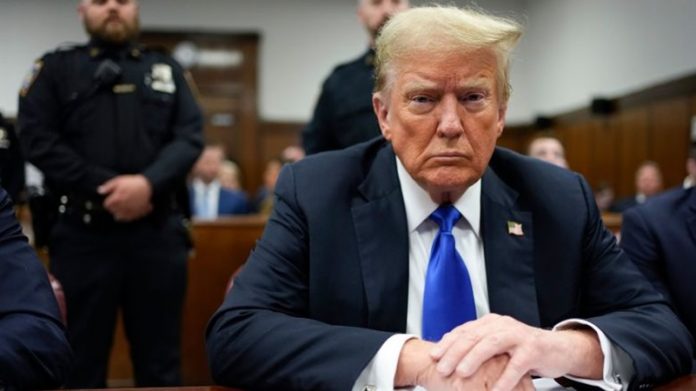
President Donald Trump on Friday escalated his pressure on the Federal Reserve, demanding lower interest rates and threatening to cut off trade with countries that maintain trade surpluses with the United States.

Trump issued the sweeping ultimatum on Truth Social after a stronger-than-expected August employment report, arguing that the strength of the U.S. economy should allow the Federal Reserve to lower borrowing costs rather than maintain elevated interest rates.

“LOWER THE RATE OR I’LL STOP TRADING WITH COUNTRIES WITH WHICH WE HAVE A DEFICIT,” Trump wrote, adding that such a move would be “BETTER THAN TARIFFS!”

He also urged Fed Chair Kevin Warsh to “get smart” and called on the central bank’s policymakers to act in what he described as the national interest.

“EMPLOYERS ADDED 162,000 JOB IN AUGUST. Lower the interest rates because the U.S.A. is a much stronger credit than it was just a short time ago!” Trump wrote.

Trump argued that a stronger United States should translate into lower borrowing costs and said the country should have the lowest interest rate in the world.

Taken literally, the threat would represent a dramatic escalation in U.S. trade policy. The United States runs goods trade deficits with dozens of countries, including many of its largest trading partners. Cutting off trade with those economies would therefore go substantially beyond the targeted tariffs and trade restrictions that have characterized Trump’s economic policy.

The threat also places monetary policy directly at the center of Trump’s broader trade and economic strategy.

Trump has repeatedly argued that high U.S. interest rates make American businesses and consumers less competitive, while also complaining that persistent trade deficits leave the United States at an economic disadvantage. His latest intervention comes only two months before the midterm elections, when inflation and the cost of living are expected to remain major issues for voters.

The intervention has created a difficult policy environment for the Federal Reserve.

The August jobs report showed employers adding 162,000 positions, according to Trump’s post, substantially exceeding expectations. Stronger employment can give the Fed less reason to cut rates because a resilient labor market can support household spending and economic activity, potentially making it more difficult to bring inflation sustainably back to the central bank’s 2% target.

Warsh has recently signaled that the policy debate could move in the opposite direction from Trump’s demands.

A week before Trump’s latest statement, Warsh said the Fed remained committed to bringing inflation back to its 2% objective and emphasized that short-term interest rates remain the central bank’s primary tool for fulfilling its dual mandate of maximum employment and price stability.

“Short-term interest rates are the predominant tool to achieve the dual mandate,” Warsh said.

This suggested that further tightening could remain an option if inflation fails to decline sufficiently, a position that is fundamentally different from Trump’s demand for substantially lower borrowing costs.

The disagreement illustrates the tension between the president’s preference for cheaper credit and the Fed’s institutional responsibility to make monetary policy based on economic conditions.

Lower interest rates can reduce mortgage, corporate borrowing, and consumer-credit costs and can support investment and asset prices. But cutting rates while inflation remains persistent can also stimulate demand and make it harder for the central bank to return inflation to target.

Vice President JD Vance added to the administration’s pressure campaign Thursday, saying that lower rates would be the “proper and responsible” response to recent inflation data.

National Economic Council Director Kevin Hassett took a more restrained position Friday when asked about monetary policy on CNBC.

“The Fed will do what it wants to do. We respect their independence, but I think the argument for holding steady would be pretty strong,” Hassett said.

That comment highlights a divide within the administration’s messaging. Trump is demanding aggressive easing, while one of his senior economic advisers is publicly acknowledging a case for keeping rates unchanged.

The president’s latest comments also raise questions about the relationship between trade policy and monetary policy. Trump has frequently portrayed America’s trade deficits as evidence that foreign governments and trading partners have gained an unfair advantage over the United States. His latest proposal would effectively use access to the U.S. market as leverage to pressure deficit-running countries while simultaneously using trade policy as an argument for lower U.S. interest rates.

But the two issues are driven by different economic forces.

Trade balances reflect a complex combination of domestic savings, investment, fiscal policy, exchange rates, consumption patterns, and international capital flows. They cannot simply be eliminated by changing interest rates or imposing restrictions on imports.

Similarly, the Fed does not set interest rates to correct bilateral trade deficits. Its mandate is centered on employment and inflation, meaning a decision to cut or raise rates must be justified by the broader U.S. economic outlook.

The threat could therefore complicate relations with major U.S. trading partners if foreign governments interpret it as a warning that continued trade with America could become conditional on reducing their surpluses. It also adds uncertainty for companies whose supply chains depend on cross-border trade. A policy aimed at countries with trade surpluses could potentially affect manufacturing, agriculture, technology, energy, and consumer goods, depending on how broadly the administration implements the threat.

For financial markets, the more immediate issue is the growing political pressure on the Federal Reserve.

The Fed’s independence is a critical part of the credibility of U.S. monetary policy. Investors generally expect interest-rate decisions to respond to inflation, employment, and financial conditions rather than presidential demands. Repeated political pressure can therefore create uncertainty about how future monetary policy will be determined.

Trump’s intervention is particularly notable because pressure on the central bank had appeared to ease following Warsh’s appointment. His latest comments suggest that the dispute over borrowing costs is returning to the forefront of the administration’s economic agenda.

The president’s argument is that a strong U.S. economy should be able to borrow more cheaply, and lower rates would improve America’s competitive position. The Fed’s challenge, on the other hand, is more complicated. If economic growth and employment remain resilient while inflation is still above target, aggressive rate cuts could risk reigniting price pressures.

That leaves policymakers facing a politically charged question in the months ahead: whether economic strength provides the justification for cheaper money that Trump claims, or whether that same strength means the Fed must remain cautious about cutting rates.

Trump’s threat to restrict trade with deficit-running countries raises the stakes further. If implemented, it would transform a dispute over interest rates into a much broader confrontation involving monetary policy, trade, and the institutional independence of the U.S. central bank.

Moonshot AI Files Confidentially, Targets $3bn Hong Kong IPO

0

Beijing-based artificial intelligence startup Moonshot AI has confidentially filed for a Hong Kong initial public offering that could raise about $3 billion, three people familiar with the plans told Reuters.

The filing has set up one of the most closely watched Chinese AI listings as investors increasingly turn to the sector for exposure to China’s rapidly developing technology industry.

Moonshot, the developer of the Kimi large language model, is targeting proceeds of around $3 billion in the offering, one of the sources said.

The timing of the potential listing is subject to regulatory approvals, while the amount raised and other financial details could change depending on market conditions, the sources said.

A successful listing would give investors a major new avenue for gaining exposure to China’s generative-AI industry and could provide a valuation benchmark for a group of rapidly expanding domestic AI companies.

Moonshot has been valued at about $50 billion in an ongoing fundraising round, according to two separate sources. That valuation puts the company below some of its major Chinese AI rivals, including DeepSeek, which sources have valued at roughly $74 billion, and Z.AI, formerly known as Zhipu, whose Hong Kong-listed shares give it a market capitalization of about $66 billion.

The potential IPO also comes as Hong Kong’s equity market experiences a resurgence in technology listings. Companies raised $41.2 billion through Hong Kong IPOs as of mid-August, a 142% increase from the same period a year earlier, according to LSEG data, with Chinese technology companies accounting for most of the proceeds.

Moonshot’s latest model, Kimi K3, released in July, has received positive reviews and generated strong demand, according to sources. The company says K3 contains 2.8 trillion parameters, making it the world’s largest open-weight model. The scale of the model has also placed substantial pressure on Moonshot’s computing infrastructure as demand has increased.

The company is now in discussions with Microsoft, Amazon and Google over potential revenue-sharing arrangements that would allow the U.S. cloud companies to host Kimi, according to sources.

A deal with any of the three would be notable because it could become the first major revenue-sharing agreement between a Chinese AI company and a leading U.S. cloud provider.

Such an arrangement would give Moonshot access to substantially greater computing infrastructure and potentially allow its model to reach a much larger international customer base. For the U.S. cloud companies, hosting a leading Chinese AI model could provide a new source of cloud revenue while giving them exposure to demand for AI computing outside the domestic U.S. market.

U.S. Scrutiny Creates Additional Risk

Moonshot has faced growing scrutiny from U.S. officials over allegations that it used restricted Nvidia chips and extracted capabilities from Anthropic’s AI models through a process known as distillation.

U.S. Treasury Secretary Scott Bessent has said he could consider adding Moonshot to a U.S. trade blacklist, potentially increasing the company’s difficulties in obtaining advanced computing technology and accessing international suppliers.

Moonshot has denied that Kimi K3’s performance was achieved through distillation.

The allegations add a significant risk factor for prospective investors. Moonshot’s ability to expand its models depends on access to computing infrastructure, while U.S. restrictions could limit the availability of advanced Nvidia chips or complicate partnerships with American technology companies.

At the same time, potential agreements with Microsoft, Amazon or Google would demonstrate that U.S. cloud infrastructure remains commercially important to Chinese AI developers despite the broader technology rivalry between Washington and Beijing.

IPO Requires Restructuring of Moonshot’s Ownership

Moonshot has also had to make changes to its corporate structure ahead of the IPO.

Two people familiar with the matter said the company had to unwind its offshore incorporation arrangement, known as a red-chip structure, and establish an onshore China domicile to obtain regulatory approval for the Hong Kong listing.

The restructuring reflects the increasing scrutiny Chinese regulators apply to the ownership and overseas structures of strategically important technology companies.

Moonshot was founded in 2023 by Yang Zhilin, an AI researcher who pursued doctoral studies at Carnegie Mellon University in Pittsburgh. Despite its relatively short history, the company has attracted some of China’s largest technology investors.

Its backers include Alibaba, Tencent, IDG Capital and HSG, formerly known as Sequoia Capital China.

The company raised more than $2 billion in May from investors including Meituan, China Mobile and Chinese private-equity firm CPE, according to a fundraising document reviewed by Reuters. That financing brought Moonshot’s total capital raised to more than $5.5 billion.

For the planned IPO, Moonshot is working with Goldman Sachs, CICC and Deutsche Bank.

Chinese AI enters public markets

Moonshot’s planned offering follows a wave of Chinese AI companies tapping Hong Kong’s capital markets. Z.AI and MiniMax have already listed in Hong Kong this year, providing investors with publicly traded proxies for China’s rapidly expanding AI industry.

The listings come as global investors increasingly view AI as a major long-term investment theme, while Chinese companies seek to demonstrate that they can develop competitive models despite restrictions on access to the most advanced U.S. chips.

Moonshot’s potential $3 billion offering would be particularly significant because it would test how much investors are willing to pay for a private Chinese AI company with substantial computing requirements, rapid model development and exposure to geopolitical technology restrictions.

The proposed listing also offers a measure of how China’s AI sector is evolving from a venture-capital-driven industry into one capable of accessing public equity markets.

But Moonshot’s valuation and IPO performance will depend on more than the popularity of Kimi. Investors will need to assess whether the company can turn strong model adoption into sustainable revenue, secure sufficient computing capacity and navigate increasingly restrictive U.S.-China technology controls.

If Moonshot succeeds in raising close to its targeted $3 billion, analysts say the deal could reinforce Hong Kong’s role as a financing hub for China’s technology champions and encourage other AI companies to follow. If demand proves weaker, however, it could expose the gap between the enormous private-market valuations assigned to China’s AI startups and what public-market investors are actually willing to pay.

With more than $5.5 billion already raised privately and a reported $50 billion valuation, Moonshot is entering the public markets with both considerable financial backing and high expectations. Its IPO could therefore become an important test not only for the company, but for the next stage of China’s AI investment cycle.

Chinese Rare Earth Suppliers Shun U.S. Buyers as Beijing Tightens Grip on Critical Minerals

0

Chinese rare earth suppliers are refusing to ship materials to U.S. customers for fear of retaliation from Beijing, highlighting the growing vulnerability of American supply chains to China’s control over critical minerals ahead of President Xi Jinping’s planned visit to Washington later this month.

Three people familiar with the trade told Reuters that some Chinese suppliers have declined to fulfil U.S.-bound orders, with several becoming more cautious about transactions that could expose them to scrutiny from Chinese authorities.

The development adds another layer to an already strained rare earth supply chain. The United States has repeatedly pressed Beijing to honor commitments reached in Busan and Beijing over the past year to facilitate the issuance of export licenses, but U.S. companies continue to face delays in obtaining supplies of strategically important minerals.

The issue has become part of Washington’s preparations for Xi’s September 24 visit, according to a source familiar with the planning.

A handful of Chinese rare earth suppliers began refusing some shipments to U.S. companies after Beijing imposed sanctions in early August on the U.S.-based Responsible Business Alliance, or RBA, a major supply-chain monitoring organization.

The suppliers were concerned that complying with the due-diligence requirements of the Responsible Minerals Initiative, a mineral-supply-chain auditing programme associated with the RBA, could expose them to punishment from Beijing, one source with direct knowledge of the matter said.

Other Chinese companies had already stopped shipping certain materials to the United States in recent months to avoid becoming caught between Chinese export controls and U.S. restrictions. One source cited four cases in which Chinese companies declined to send material because they feared the products could ultimately be resold to customers or end users subject to U.S. restrictions.

The significance of the development lies in the way China’s rare earth policy is affecting private commercial decisions. Beijing does not need to block every shipment directly if suppliers, manufacturers and exporters become sufficiently concerned about the consequences of dealing with American customers. That can make the export-control system more powerful while also making supply chains less predictable.

A U.S. official, speaking on condition of anonymity, said the Trump administration continues to press Chinese officials to address what Washington regards as China’s failure to comply with the Busan agreement, along with other bilateral issues.

China’s Ministry of Foreign Affairs has said Beijing remains committed to maintaining global critical-mineral supply chains.

But the dispute is taking place against a backdrop of intensifying U.S.-China competition over technology, manufacturing and national security. Critical minerals have become an important part of that rivalry because rare earths and related materials are essential to products ranging from electric motors and electronics to advanced weapons, aircraft engines and high-performance magnets.

The vulnerability is acute because China dominates the global rare earth supply chain, including processing and magnet production. Reuters reported last month that China accounts for about 90% of global production of rare earth products, including magnets, leaving the United States and other industrial economies heavily dependent on Chinese processing capacity.

Supplies Remain Tight Despite Partial Recovery

China’s restrictions on rare earth exports introduced in April 2025 triggered concerns over shortages in the United States and other major industrial economies.

Exports of some rare earths and permanent magnets have since recovered, but access to several strategically important materials remains constrained. Prices for materials including yttrium, tungsten and other critical inputs used in defense, aerospace and semiconductor manufacturing remain elevated.

Yttrium illustrates the problem.

Chinese exports of yttrium oxide to the United States reached 29 metric tons in July, the second-highest monthly volume since Beijing introduced its export controls. The increase provided some relief to U.S. aerospace companies because yttrium is used in specialty alloys and high-temperature-resistant coatings for aircraft engines.

But the rebound has not restored normal supply. U.S. exports of yttrium remain roughly half their 2024 levels, according to Chinese customs data cited by Reuters, even as China continues shipping the material to other markets.

Some U.S. companies have waited more than six months for export licenses, according to two sources familiar with the situation.

“China has been very effective in using rare earth export controls to impose restraint on the Commerce Department’s Bureau of Industry and Security,” said Reva Goujon, a geopolitical strategist at Rhodium Group.

“Supply chain chokepoints will come into focus, but I would expect Beijing to loosen up critical raw material controls a bit around the summit to deflate U.S. allegations that Beijing is not upholding the Busan truce,” she added.

The recent increase in U.S.-bound yttrium shipments could support that possibility. Several U.S. companies have also recently received multiple licenses after lengthy waits, according to sources, raising expectations that Beijing could approve more shipments around the Xi-Trump meeting.

But even if approvals increase, the episode has exposed a structural weakness in the U.S. supply chain: Washington can negotiate for licenses, but it has limited control over the commercial decisions of Chinese companies that actually produce and export the material.

Japan Faces An Even Sharper Squeeze

The restrictions are not limited to the United States.

Chinese suppliers have been even more reluctant to ship critical minerals to Japanese customers, according to two sources familiar with the trade.

Chinese customs data show that China exported no terbium to Japan between January and August this year, compared with 20 tons during the same period last year. Gallium shipments fell 65%, while yttrium exports plunged 98%.

Terbium and gallium are used in small quantities in high-performance rare earth magnets and other advanced industrial applications.

Japanese companies have previously complained about delays in obtaining permits and lengthy customs inspections for critical minerals.

The squeeze demonstrates how Beijing can apply pressure selectively. Export controls do not necessarily have to affect every commodity or every country equally. Licenses can be accelerated for one market, delayed for another, and effectively withheld from a third, giving China considerable leverage over companies whose production depends on specific minerals.

Against that backdrop, there is growing uncertainty for manufacturers even when physical inventories have not yet reached critical levels. Companies must account not only for the availability of material but also for the possibility that future licenses could be delayed or that suppliers could refuse orders altogether.

A Broader Test for U.S. Supply-Chain Resilience

The dispute is increasingly forcing Washington to confront a difficult reality: building alternative mines is not enough to eliminate dependence on China.

The United States and its allies are investing in new mining, processing, and magnet-making capacity, while companies such as Lynas are expanding operations outside China. Lynas, the largest rare earth producer outside China, has been exploring additional supply deals and supporting the development of a U.S. rare earth magnet supply chain.

But creating a fully independent supply chain takes years because rare earth production involves mining, separation, refining, alloy production and magnet manufacturing. China has built dominance across much of that chain, meaning alternative suppliers must compete not only on access to ore but also on processing expertise, scale and cost.

The geopolitical stakes are consequently rising.

The latest supplier refusals show that China’s leverage extends beyond formal export bans. Beijing’s policies can influence how Chinese companies assess the risks of doing business with foreign customers, particularly when transactions involve supply-chain audits, sensitive end users or industries subject to U.S. national-security restrictions.

That could make the rare earth dispute more difficult to resolve than a conventional tariff disagreement.

The United States wants reliable access to materials essential to its aerospace, defense, energy and technology industries. China wants to preserve control over a strategically valuable part of its industrial base while resisting what it views as U.S. restrictions on Chinese companies and technology.

The result is a supply chain in which commercial transactions are shaped by geopolitical calculations.

However, it is not clear whether Beijing will ease licensing restrictions before or during Xi’s Washington visit as a gesture toward stabilizing the broader trade relationship. It is also not clear whether U.S. manufacturers can reduce their exposure sufficiently to make future Chinese export controls less disruptive.