DD
MM
YYYY

PAGES

DD
MM
YYYY

spot_img

PAGES

Home Blog Page 4

Gold and Silver Crash in Historic Rout as Policy Signals, Overcrowded Trades and Liquidity Strains Collide

0

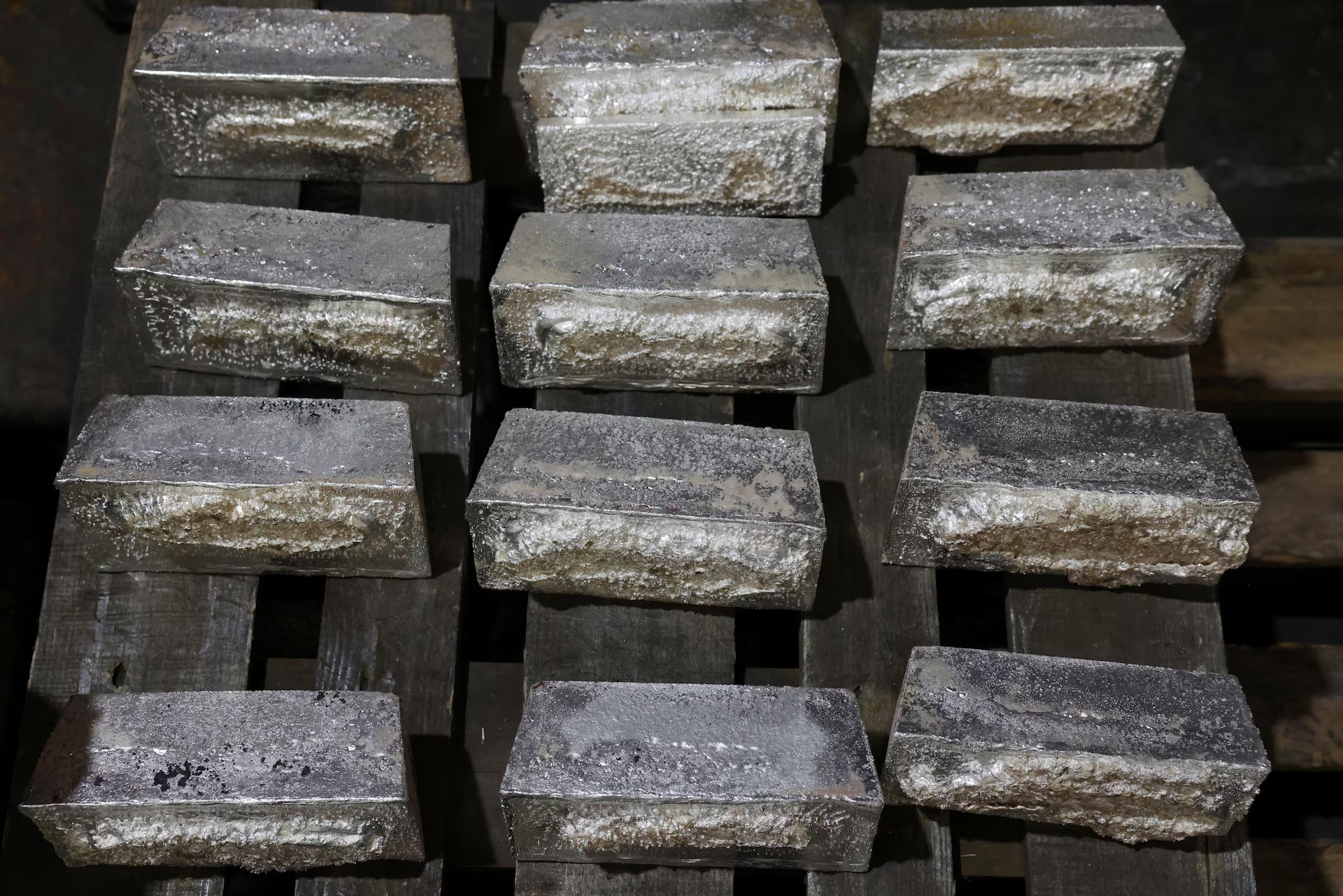
The precious metals market suffered one of its most violent reversals on record on Friday, as gold and silver prices collapsed in a dramatic unwind of trades that had defined much of this year’s global macro landscape.

What unfolded was not merely a technical correction but a sharp reassessment of monetary policy risk, investor positioning, and the fragility of liquidity in markets that had been driven into near-parabolic territory.

Gold futures fell as much as 11% intraday, sliding below $4,900 per troy ounce and erasing a substantial portion of their year-to-date gains in a single session. In the spot market, gold recorded its largest daily percentage decline since the early 1980s, a period associated with the aftermath of Paul Volcker’s aggressive interest-rate campaign. Silver’s decline was even more extreme. Futures plunged more than 25%, the largest one-day fall on record, after prices had surged to an extraordinary $120 per ounce just a day earlier.

The selloff coincided with a broader risk-off move across global markets. U.S. equities fell sharply, the dollar stabilized after weeks of weakness, and volatility spiked as investors digested President Donald Trump’s decision to nominate Kevin Warsh as the next chair of the Federal Reserve. While Warsh is expected to support interest-rate cuts later this year, his reputation as a policy hawk and a defender of central bank credibility altered a narrative that had become deeply embedded in markets.

For months, gold and silver had been beneficiaries of a powerful convergence of themes. Persistent U.S. fiscal deficits, concerns about political influence over monetary policy, aggressive central bank gold buying, and a weakening dollar all reinforced the idea that precious metals offered protection against inflation, currency debasement, and systemic risk. The Federal Reserve’s decision earlier this week to keep rates unchanged, coupled with comments from outgoing Chair Jerome Powell that did little to arrest the dollar’s slide, helped push gold above $5,500 and silver to levels unseen in modern trading history.

That surge, however, left markets increasingly one-sided. Positioning data and anecdotal evidence suggested that hedge funds, commodity trading advisors, and retail investors were heavily concentrated in long precious metals trades. In that context, even a modest shift in expectations had the potential to trigger a disorderly exit.

The nomination of Warsh acted as that catalyst. Strategists noted that while the pick does not immediately change policy, it eased fears that the Fed would permanently abandon its inflation-fighting mandate under political pressure. The perception that central bank independence would remain intact weakened one of the core psychological drivers of the metals rally: the belief that real rates would stay deeply negative for an extended period.

Mike McGlone, senior commodity strategist at Bloomberg, said the scale and speed of the rally had made a sharp pullback almost inevitable. He argued that history shows periods of explosive price appreciation in metals often precede enduring peaks, particularly for silver, which tends to exaggerate both upside momentum and downside reversals. In his assessment, the market had reached a point where bullish fundamentals were no longer sufficient to justify the pace of gains.

Liquidity dynamics compounded the move. Ole Hansen, head of commodity strategy at Saxo Bank, had warned earlier this week that volatility itself had become a risk factor. As price swings widened, bid-ask spreads thinned, and market depth deteriorated, creating conditions where selling pressure could cascade rapidly. On Friday, that feedback loop was on full display, with stop-loss orders, margin calls, and forced liquidations amplifying losses.

The reversal also exposed tensions between short-term market psychology and longer-term fundamentals. Just days earlier, Goldman Sachs had reiterated a bullish outlook for gold, setting a year-end price target of $5,400 and pointing to increased participation from private-sector investors as a key upside risk.

Central bank demand, particularly from emerging markets seeking to diversify away from the dollar, remains structurally strong. From that perspective, Friday’s collapse does not negate the broader strategic case for gold, but it does challenge the assumption that prices can rise in a straight line.

Silver’s fall was particularly striking because its rally had been fueled by both monetary and industrial narratives. In addition to serving as a hedge against currency weakness, silver has benefited from expectations of rising demand tied to electrification, solar power, and advanced manufacturing. That dual role makes the metal especially sensitive to shifts in macro sentiment. When confidence falters, silver often behaves less like a store of value and more like a high-beta risk asset, a pattern that reasserted itself forcefully during the selloff.

Robin Brooks of the Brookings Institution had noted earlier in the week that the rally in gold was a clear signal of entrenched conviction in the “dollar-down trade.” Friday’s reversal suggests that conviction was vulnerable once markets began to question whether policy outcomes would be as one-sided as investors had assumed. Even a partial stabilization in the dollar was enough to trigger a rapid reassessment of risk.

By the end of the session, silver was trading near $83 per ounce, still elevated by historical standards but dramatically lower than its recent peak. Despite the collapse, the metal remains modestly higher for the year, following an extraordinary run in 2025. JPMorgan analysts had cautioned earlier this month that prices had already overshot forecasted averages, while acknowledging that markets exhibiting near-parabolic momentum are notoriously difficult to time.

Analysts believe the broader lesson from the rout is less about any single policy decision and more about the dangers of crowded trades in an environment of heightened uncertainty. Gold and silver had become emblematic of a global macro bet on falling real rates, sustained dollar weakness, and diminishing confidence in fiat currencies. Once that narrative was even slightly challenged, the unwind was swift and unforgiving.

Pentagon–Anthropic Standoff Exposes Fault Lines Over Military AI, Surveillance and Silicon Valley’s Limits

0

A quiet but consequential dispute between the Pentagon and artificial intelligence startup Anthropic is emerging as an early stress test of how far Silicon Valley is willing to go in accommodating U.S. military and intelligence demands as AI systems become more powerful — and more politically sensitive.

According to people familiar with the matter who spoke to Reuters, the U.S. Department of Defense is at odds with Anthropic over safeguards the company wants to preserve in its AI models, particularly restrictions that would prevent the technology from being used to autonomously target weapons or conduct domestic surveillance. The disagreement has stalled negotiations under a contract worth up to $200 million and has placed the two sides at a standstill after months of talks.

At its core, the clash reflects a deeper tension between commercial AI developers seeking to enforce ethical boundaries and a Pentagon increasingly determined to integrate cutting-edge AI into warfare, intelligence analysis, and operational planning with minimal external constraints.

Pentagon officials argue that as long as deployments comply with U.S. law, the military should be free to use commercial AI tools regardless of the usage policies set by private companies. That position is grounded in a January 9 Pentagon memo on AI strategy, which asserts broad authority to deploy advanced technologies to maintain U.S. military superiority.

Anthropic, however, has pushed back. Company representatives have raised concerns that its models could be used to surveil Americans or assist in weapons targeting without sufficient human oversight, according to sources familiar with the discussions. Those objections go beyond abstract ethical debates. They cut directly into how AI might be operationalized in real-world military and domestic-security contexts, especially as autonomous systems move closer to deployment readiness.

The Pentagon’s frustration is compounded by a practical reality that it cannot easily bypass Anthropic. The company’s models are trained with built-in safeguards designed to avoid harmful outcomes, and Anthropic engineers would likely need to modify or fine-tune those systems for military use. Without the company’s cooperation, Pentagon ambitions to fully integrate Anthropic’s technology could stall.

Anthropic, for its part, has sought to strike a careful balance. In a statement, the company said its AI is “extensively used for national security missions by the U.S. government” and that it remains in “productive discussions” with the department, which the Trump administration has controversially renamed the Department of War.

The dispute comes at a particularly sensitive moment for the San Francisco-based startup. Anthropic is preparing for an eventual public offering and has invested heavily in courting national security contracts, seeing them as both lucrative and strategically important. The company has also positioned itself as a thought leader in AI governance, seeking influence over how governments define acceptable use of powerful models.

That ambition now risks colliding with political reality. The Trump administration has signaled a more aggressive posture on national security technology, emphasizing speed, dominance, and flexibility over restraint. In that environment, corporate efforts to impose limits on military use can be framed as obstruction rather than responsibility.

Anthropic’s stance is shaped by its leadership. CEO Dario Amodei has been explicit about where he believes lines should be drawn. Writing on his personal blog this week, Amodei argued that AI should support national defense “in all ways except those which would make us more like our autocratic adversaries.” The remark encapsulates the company’s fear that unchecked AI deployment could erode democratic norms, even when pursued in the name of security.

Those concerns have been sharpened by recent domestic events. Amodei was among Anthropic’s co-founders who publicly condemned the fatal shootings of U.S. citizens protesting immigration enforcement actions in Minneapolis, calling the deaths a “horror.” That episode has amplified anxiety within parts of Silicon Valley about government use of AI tools in contexts that could enable or legitimize violence against civilians.

The Pentagon’s dispute with Anthropic is also notable for what it signals about the broader AI landscape. Anthropic is one of several major developers awarded Pentagon contracts last year, alongside Google, Elon Musk’s xAI, and OpenAI. Yet not all AI companies approach military engagement the same way. Some are more willing to defer to government judgment, while others, like Anthropic, are attempting to hard-code ethical limits into their technology.

Currently, it is not clear if that approach is sustainable. But as AI systems become more central to defense planning, intelligence analysis, and battlefield decision-making, the leverage is expected to increasingly shift toward the government, which controls contracts, classification access, and long-term deployment opportunities.

Still, the current standoff suggests the outcome is not predetermined. The Pentagon’s need for state-of-the-art AI gives companies like Anthropic bargaining power, at least for now. The disagreement also highlights an unresolved question that will shape U.S. military AI policy for years: who ultimately decides how autonomous systems are used — elected governments, military planners, or the private companies that build the technology?

Some believe the answer could determine not only the future of Anthropic’s Pentagon business, but also its credibility as a company that claims it can pursue scale, profit, and national security relevance without abandoning its ethical red lines.

El Salvador Buys Gold Amid Market Dip, Holds Steady on Bitcoin

0

El Salvador is making a bold counter-cyclical move, stepping into the gold market during a price dip while maintaining its unwavering stance on Bitcoin.

The Latin American country is reported to have purchased 9,298 troy ounces of Gold worth $50 million during a sharp price drop after the asset hit a record high near $5,600 per ounce.

Between September 2025 and January 2026, El Salvador has acquired a total of 23,297 troy ounces of gold. This is the second operation of this type carried out by the country’s Central Bank since 1990, with reserves rising to 67,403 ounces, valued at about $360 million.

El Salvador’s recent purchase of Gold signals a diversified reserve approach as global economic uncertainty continues to reshape how nations think about store-of-value assets. It also aligns with international trends in which central banks hold 20% of reserves in gold for stability, as peer-reviewed IMF data show gold’s role in hedging inflation and currency risks relative to fiat alternatives.

The Latin American country has pursued one of the world’s most unconventional sovereign reserve strategies since adopting Bitcoin as legal tender in 2021. The government currently holds roughly 7,547 BTC (valued at approximately $635 million at current levels), making it one of the largest nation-state Bitcoin holders.

Adding physical gold provides classic diversification and inflation-hedge characteristics that central banks worldwide have relied on for decades. Gold’s role as a non-correlated store of value becomes especially attractive during periods of fiat currency volatility, geopolitical tension, or uncertainty around digital-asset regulation.

By contrast, Bitcoin offers scarcity (21 million cap), portability, divisibility, and, in El Salvador’s view, asymmetric upside potential as global adoption grows. Holding both asset positions positions the country to benefit from strength in either traditional safe-haven or next-generation digital-reserve narratives.

Gold has reportedly outperformed Bitcoin over the past five years for the first time. As of January 30, 2026, Bitcoin sat at $84,500 after dropping over 30% from its $125,000 peak, while Gold held steady near $5,200 per ounce. From 2021 levels, Bitcoin was at $34,300, and Gold traded at $1,850, the latter has delivered 181% return compared to BTC’s 146%, underscoring Gold as a safe haven amid global liquidity and risks.

The rally accelerated as the US dollar slid toward four-year lows, pushing investors out of fiat currencies and into hard assets. When confidence in the paper fades, gold tends to become the default parking spot.

Amid Gold’s surging price and Bitcoin decline, American investor and Gold advocate Peter Schiff has predicted a U.S dollar collapse and crisis worse than 2008, with central banks dumping dollars for Gold, explaining the rush into precious metals.  Gold hit a record $5,400 on January 27, 2026, up over 100% since late 2024, driven by Trump’s tariff threats, geopolitical risks, and low U.S. interest rates weakening the dollar.

Central banks bought 297 tons of gold through November 2025, led by emerging markets like Poland, with 2026 forecasts indicating sustained demand for diversification amid global uncertainty.

Schiff further notes that those who currently own Bitcoin would have been better off buying Gold.

He wrote on X,

“Bitcoin is now worth just 15.5 ounces of gold, down 57% from its 2021 high and just 10% above its 2017 high. Despite all the hype and support from Wall Street and the Trump administration, most people who now own Bitcoin would have been better off buying gold or silver instead.”

Looking ahead

While El Salvador’s $50 million Gold purchase is modest compared to the balance sheets of major central banks, the symbolic and strategic value for a small nation is significant. The country continues to experiment with a hybrid hard-asset reserve model that few other countries are replicating at the sovereign level.

Whether this dual-track approach (gold for stability, Bitcoin for growth) proves prescient remains an open question. However, as global confidence in fiat currencies continues to face pressure, El Salvador’s willingness to buy both gold and Bitcoin during market dips positions it as a unique case study in sovereign-level financial experimentation.

Trump Sues IRS and Treasury for $10bn Over Tax Return Leak, Escalating Long-Running Battle With Federal Agencies and Media

0

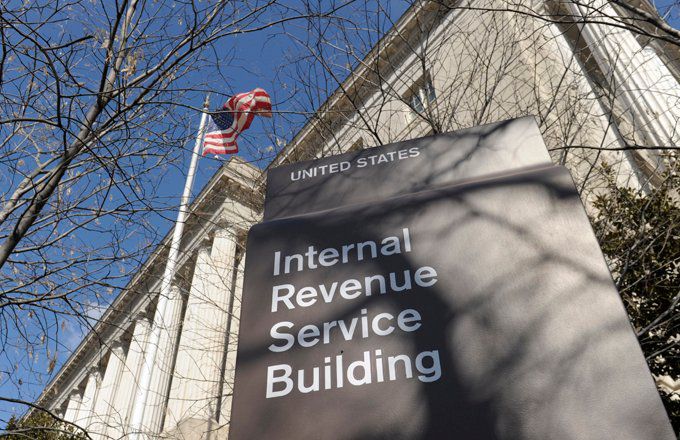
U.S. President Donald Trump on Thursday filed a $10 billion lawsuit against the Internal Revenue Service and the Treasury Department, accusing the agencies of failing to safeguard his confidential tax records, which were leaked to the media in 2019 and 2020.

The complaint, filed in federal court in Miami, names the IRS and Treasury as defendants and alleges that the agencies failed to take what it described as “mandatory precautions” to prevent the disclosure of highly sensitive tax information by a former IRS contractor, Charles Littlejohn. Trump filed the suit alongside his adult sons, Donald Trump Jr. and Eric Trump, as well as the Trump Organization.

According to the filing, Littlejohn unlawfully accessed and leaked the tax returns to media outlets, including the New York Times and ProPublica, publications the plaintiffs characterized as “leftist media outlets.”

The lawsuit claims the disclosures caused “significant and irreparable harm” to their reputations and financial interests, arguing that the damage went beyond embarrassment and extended into their business operations and public standing. The plaintiffs said they may seek punitive damages, contending that the leaks were either willful or the result of gross negligence by government agencies tasked with protecting taxpayer data.

The case places Trump in a rare legal posture of suing agencies within the Executive Branch, which he now leads following his return to the White House after winning a second term in 2024. While the IRS operates under the Treasury Department, neither agency immediately responded to requests for comment after business hours. Treasury Secretary Scott Bessent, who is also serving as acting IRS commissioner, is not named as a defendant.

The lawsuit revisits one of the most consequential tax data breaches in modern U.S. history. Prosecutors charged Littlejohn in September 2023 with leaking the tax records of Trump and thousands of other wealthy Americans, saying he acted out of a political motive. Court records show that Littlejohn pleaded guilty the following month to disclosing income tax return information without authorization. In January 2024, he was sentenced to five years in prison.

Trump’s complaint details the scope of the media coverage stemming from the leaks, stating that the New York Times published at least eight articles based on the disclosures, while ProPublica published more than 50. The plaintiffs argue that the reporting portrayed them in a false light, unfairly tarnished their business reputations, and negatively affected Trump’s public image at a critical political moment. The filing contends that the cumulative impact of the coverage amounted to lasting reputational and financial damage.

The lawsuit also fits into a broader pattern of aggressive legal action by Trump against media organizations and institutions since his return to office. In recent months, he has filed several high-profile lawsuits seeking multibillion-dollar damages over news coverage he says was defamatory or politically motivated. These include a $15 billion suit against the New York Times and book publisher Penguin Random House over reporting and a book Trump says was designed to undermine his 2024 election prospects. He is also seeking $10 billion from the Wall Street Journal over an article referencing a birthday greeting linked to disgraced financier Jeffrey Epstein, and another $10 billion from the BBC over its editing of a speech delivered before the January 6, 2021, storming of the U.S. Capitol.

All of these cases, including the latest lawsuit against the IRS and Treasury, were filed or assisted by Alejandro Brito, a Florida-based attorney who has emerged as a central figure in Trump’s legal strategy.

Beyond the specific claims over the tax leaks, the lawsuit points to a larger tension between Trump and federal institutions that predated his second term and has continued into his current presidency. By targeting the IRS and Treasury, Trump is not only seeking damages for past disclosures but also signaling a broader challenge to how federal agencies handle sensitive information, particularly when it involves high-profile political figures.

The case is likely to draw close scrutiny, given its implications for government accountability, taxpayer privacy, and the legal boundaries of suing federal agencies from within the Executive Branch itself.

What Makes ZKP Different? A Deep Look at the Presale Auction, Proof Pods, and Data Layer

0

Zero Knowledge Proof, known as ZKP, is being developed as a full blockchain ecosystem rather than a simple digital coin. Its structure combines a fair presale auction, physical hardware involvement, and a privacy-driven data marketplace within one connected system. Instead of depending only on price speculation, ZKP links coin distribution, real computation, and data use in a clear and organized way.

By applying zero-knowledge cryptography to confirm work without revealing private details, the network supports secure AI processing and protected data sharing from the start. This practical focus on usable blockchain infrastructure is why ZKP is increasingly described as the next big crypto by observers following privacy-first and utility-focused projects.

How the ZKP Presale Auction Works

The presale auction serves as the main method for distributing $ZKP coins during the early launch stage. It follows a fair access design that removes private deals, insider advantages, and hidden token allocations. Every participant takes part under the same conditions.

Key features of the ZKP presale auction include:

  • Daily auction windows: A fresh 24-hour window opens each day at 3:00 AM UTC. Every day operates independently.
  • Proportional distribution: The amount of $ZKP received is based on the share of funds contributed relative to the total collected that day. Example: contributing 10% of the daily total results in receiving 10% of that day’s $ZKP supply.
  • Daily supply and burn: Up to 190 million $ZKP coins are released each day. Any coins not bought within that period are permanently burned, lowering overall supply.
  • Referral incentives: Participants earn a 20% bonus from referred contributions, while new users joining through referrals receive a 10% bonus.

This setup promotes early involvement while keeping the process open and easy to understand. Because pricing responds to daily demand and unused coins are burned, interest often increases as the presale auction moves forward. This transparent structure is one reason ZKP is often mentioned when discussing the next big crypto in the privacy-centered blockchain sector.

Proof Pods and How the Network Operates

In addition to the presale auction, ZKP introduces Proof Pods, which are physical hardware units that help operate and secure the network. These devices act as validators and computation providers for zero-knowledge proofs and AI-related tasks. Proof Pods form the foundation of the ZKP ecosystem:

  • Purpose: They produce cryptographic proofs for data checks and AI computation, supporting both Proof of Intelligence and Proof of Space.
  • Plug-and-play design: After connecting to Wi-Fi, the device begins working automatically without manual setup.
  • Earning mechanism: Users earn $ZKP coins as rewards for verified compute and storage contributions.
  • Upgrade system:
    • Pods begin at Level 1
    • They can be upgraded up to Level 300
    • Each upgrade costs $100 and raises earning potential through software improvements
  • Physical ownership: Unlike cloud-based staking or locked tokens, Proof Pods are owned directly and ship globally, usually within five days.

This approach connects real computation and storage to network security, helping ZKP move beyond systems based only on speculation. The combination of hardware involvement and cryptographic proof strengthens confidence among those assessing the next big crypto with real infrastructure already in place.

Getting Started With ZKP Participation

All activity within the ZKP ecosystem takes place through a single dashboard available at buy.zkp.com, making the process straightforward and user friendly. There are two primary ways for users to get involved.

Purchase $ZKP Through the Presale Auction

  • Connect a Web3 wallet such as MetaMask, Coinbase Wallet, or Trust Wallet.
  • Choose the option labeled “Buy ZKP” and contribute using one of the 24 supported payment methods, including ETH, BNB, USDT, BTC, SOL, and DOGE.
  • Once the 24-hour presale auction period ends, the assigned $ZKP coins are automatically added to the user dashboard.

Purchase Proof Pods

  • Select the “Buy Proof Pod” option from the same dashboard.
  • Provide shipping information and complete the order at the base cost of $249.
  • After delivery, enter the activation code displayed on the Pod’s screen to connect it to the account and start earning rewards.

This dual access approach allows users to participate through digital contributions or physical hardware, appealing to a broad audience interested in the next big crypto with real-world functionality.

Inside the ZKP Data Marketplace

The Data Marketplace serves as a key utility layer within the ZKP ecosystem. It is built to support the sharing of sensitive data without exposing the underlying information. Core features of the marketplace include:

  • Privacy-protected exchange: Zero-knowledge proofs confirm data quality and accuracy without revealing the data itself.
  • AI-driven structure: Developers gain access to verified datasets for training privacy-first artificial intelligence models.
  • Data ownership: Data providers keep full control of their datasets while earning value from their use.
  • $ZKP utility:
    • Used to buy access to datasets
    • Rewards data providers
    • Pays for decentralized computing through Proof Pods
  • On-chain tracking: Every transaction and compute task is recorded on-chain, creating a clear and transparent audit history.

By linking privacy, artificial intelligence, and decentralized computing, the marketplace generates real demand for the $ZKP coin. This focus on practical use strengthens the case for ZKP as the next big crypto within the growing AI and data-driven economy.

Final Overview

ZKP combines several elements that are often separate in blockchain projects. The crypto presale auction offers a clear and fair way to join early, Proof Pods connect real hardware to network security and reward generation, and the Data Marketplace drives ongoing demand for the $ZKP coin through active use.

Each component supports the others, creating an ecosystem designed for long-term function rather than short-term hype. As decentralized AI, secure data exchange, and privacy-focused computation become more important, ZKP stands out as a network built to meet these demands at scale, reinforcing its standing as the next big crypto in privacy-centered blockchain infrastructure.

Explore Zero Knowledge Proof:

Website: https://zkp.com/

Buy: https://buy.zkp.com

Telegram: https://t.me/ZKPofficial

X: https://x.com/ZKPofficial