DD
MM
YYYY

PAGES

DD
MM
YYYY

spot_img

PAGES

Home Blog Page 4

Paystack Restores Zap Access, Integrates Peer-to-Peer App into Checkout After Regulatory Setback

0

Paystack, the Nigerian financial technology company providing online and offline payment solutions across Africa, has restored access to its peer-to-peer payment app, Zap, following a regulatory setback.

The Central Bank of Nigeria (CBN) had fined Paystack N250 million over Zap’s initial operations, alleging that the app functioned as a deposit-taking wallet beyond the scope of Paystack’s regulatory licence.

According to the CBN, Zap, which launched in March 2025, operated in a manner reserved for institutions holding microfinance or full banking licences.

Following regulatory adjustments, Zap has now returned in a more defined role and is available as a payment option on Paystack Checkout. This integration allows millions of customers shopping on Paystack-powered websites and apps to pay using Zap as a fast, simple, and secure option.

For Paystack merchants, Zap appears automatically on checkout pages once “Pay with Bank Transfer” is enabled, with no additional setup required. This gives customers another familiar and reliable way to complete payments using a transfer flow they already trust for daily transactions.

Zap users can now pay for goods and services online including food, transportation, fashion, and professional services directly from the app. Payments can be completed using a Zap balance or Apple Pay, with instant confirmation reflected on the merchant’s checkout once approval is granted in the app.

Zap was originally introduced in March 2025, as a mobile app designed for instant and secure bank transfers, built on the same infrastructure that powers Paystack’s large-scale transaction processing. The product was created to remove friction from money movement, enabling users to complete transfers quickly without delays or pending states.

Paystack’s CEO and co-founder, Sola Akinkade, explained that Zap was developed to address the frustration many Nigerians face with slow bank transfers. According to him, the goal was to ensure users can start and complete transfers in under 30 seconds, which is why the app is focused exclusively on bank transfers.

Following its recent rollout on Paystack checkout relaunch, Zap has been updated with several new features aimed at improving speed, reliability, and user experience. Users can now repeat previous transfers with a single tap, making it easier to send money without saving beneficiaries.

The app also introduces automatic bank suggestions, instantly identifying the correct bank once an account number is entered, reducing errors and time spent searching through bank lists.

Additional updates include a balance visibility toggle for enhanced privacy, real-time service alerts that notify users of bank network downtimes before initiating transfers, and Tier 3 account upgrades. With Tier 3, users can access higher limits of up to ?5 million in daily transfers and maintain balances of up to ?100 million.

According to Paystack, these improvements are part of ongoing efforts to make Zap more stable, predictable, and useful for everyday payments.

The rollout of Zap on Paystack Checkout places the company in more direct competition with established consumer fintech players in Nigeria, including PalmPay, Kuda, OPay, and Moniepoint. However, Akinkade maintains that Zap’s focus is not on competing head-to-head with other fintechs but on delivering a superior transfer experience.

He noted that Zap is designed for people who send money frequently and are constantly on the move, such as Nigerians travelling across Africa, adding that the product is built for users who value speed, reliability, and seamless experiences.

Notably, Zap operates on the same secure infrastructure that powers Paystack Checkout, Terminal, and Transfers systems already trusted by thousands of large businesses across Africa. While Zap is relatively new to consumers, Paystack says it is built on technology that has already been tested at scale.

Looking ahead, Paystack envisions a future where payments across Africa are truly frictionless, supported by infrastructure designed for ambitious individuals and businesses. With Zap, the fintech company says it is building a modern bank transfer experience tailored for everyday spending and cross-border mobility.


The “Everything Exchange”: Coinbase’s Making Massive Pivot Into Mainstream Global Finance

0

Coinbase is executing its most ambitious strategic pivot to date, moving far beyond its origins as a digital asset exchange to become a comprehensive “Everything App” for global finance.

In a major “System Update” announced on December 17, 2025, the company unveiled a robust slate of products designed to challenge traditional brokerages like Robinhood and Charles Schwab. CEO Brian Armstrong’s vision is to replace the fragmented legacy financial system with a unified, always-on platform where stocks, ETFs, prediction markets, and crypto coexist on a single on-chain rail.

The cornerstone of this expansion is the immediate rollout of commission-free stock and ETF trading for U.S. users. In a significant departure from the constraints of traditional finance, Coinbase is enabling 24/5 trading, allowing investors to react instantly to overnight earnings or global macro events.

Users can fund these trades using either traditional USD or the USDC stablecoin, effectively bridging the gap between the speed of crypto and the stability of equities. This integration simplifies portfolio management by housing diverse asset classes under one account, with plans to add thousands of additional stocks in the coming months.

Early next year, Coinbase intends to further blur these lines by introducing stock perpetuals, allowing international traders to bet on equity price movements with up to 50x leverage. This move signals Coinbase’s intent to capture the sophisticated derivatives market that has historically been the domain of major investment banks and offshore crypto platforms.

A pivotal element of the new ecosystem is the launch of Prediction Markets, integrated directly into the Coinbase app through a strategic partnership with Kalshi. As the only CFTC-regulated event contract exchange in the U.S., Kalshi provides the necessary legal rails for Coinbase users to trade on the outcomes of everything from Federal Reserve interest rate decisions to the Oscars and major sporting events.

Brian Armstrong argues that the value of these markets extends beyond mere speculation; they serve as a high-fidelity sentiment gauge. While a small fraction of users trade these as an asset class, Armstrong posits that the vast majority use them as a “truth engine” to understand collective expectations on global events—positioning prediction markets as a direct competitor to traditional news media.

“If you look at things like economic indicators … or elections, people are using prediction markets to try to figure out what is going to happen next month,” Armstrong told CNBC. “Maybe1% of people use it as an asset class to trade, and 99% of people are using it as a way to figure out what’s going to happen — almost like a competitor to traditional media or maybe even entertainment.”

By incorporating these into the “Everything Exchange,” Coinbase is betting that “always-on engagement” will keep users within the app even when crypto markets are stagnant.

Tokenization and the ‘Agentic’ Economy

Coinbase is not just expanding its retail offerings; it is fundamentally rebuilding the underlying infrastructure for institutional finance through Coinbase Tokenize. This institutional-grade stack is designed to bring Real-World Assets (RWAs), such as private credit, treasuries, and eventually real estate, onto the Base blockchain. The long-term goal is to transition the current T+2 settlement system (where it takes two days for a stock trade to clear) to a T+0, near-instant settlement model that operates 24/7 globally.

Simultaneously, the company is laying the groundwork for the future of automated commerce with the x402 protocol. This new open internet standard allows for stablecoin payments to be attached directly to HTTP web requests.

This is a critical development for the burgeoning AI agent economy, enabling autonomous software programs to pay for API access, content, or services without human intervention. In its first 30 days of testing, the protocol has already processed an annualized volume of $200 million, indicating significant early adoption by developers.

Global Business Expansion and the Singapore Launch

To support this broader ecosystem, Coinbase Business has officially made its international debut in Singapore, in collaboration with Standard Chartered. This platform serves as a “crypto operating account” for startups and small businesses, offering instant USDC settlements, global payroll in stablecoins, and automated accounting integrations with platforms like QuickBooks and Xero. By choosing Singapore—a global hub for digital innovation—as its first international business market, Coinbase is positioning itself as the primary liquidity provider for the next generation of digitally native companies.

The throughline of all these initiatives is retention and diversification. By becoming a one-stop shop for all financial needs—from an AI-powered robo-advisor to institutional tokenization tools—Coinbase aims to decouple its revenue from the volatile “feast-or-famine” cycles of crypto trading.

Top Features to Consider in a Used Audi Purchase

0

Dreaming of driving a high end German car without having to break the bank? One of the best things you can do as a car buyer is invest in a used Audi. The vehicles retain their value, the performance is class leading, and the tech is often more up to date than in brand new models from other manufacturers.

But…

Used Audis are not all created equal. You should be aware of which features you should prioritise in your car search in order to end up with a good deal, not a money pit.

If you’re planning to buy a used Audi, here are the top things you should look out for.

In this guide you’ll learn:

  • Why You Should Consider a Used Audi
  • Quattro All-Wheel Drive
  • Safety Features
  • Interior Quality and Technology
  • Engines and Reliability

Audi’s Reputation in the Used Car Market

The used car market is bigger than ever.

Figures show nearly 80% of all cars sold in the UK are second hand. Buyers are shifting their habits in terms of what vehicles they want to own. And if you’re in the market for used Audi cars for sale, knowledge of which features are must-haves and which you can live without is critical.

A used car sale from a reputable Audi dealership in Kent gives you the chance to purchase a quality pre-owned vehicle with full checks of history and available warranty protection. More than you might realise, it turns out.

But why Audi, in particular?

Audis have a reputation for luxury and engineering quality. They don’t depreciate as much as other vehicles and often the tech in a 3-year old Audi is still way ahead of a new model from another manufacturer. A car that still feels modern years after purchase is exactly what Audi buyers demand.

Quattro All-Wheel Drive

The one thing that everyone associates with Audi is Quattro.

This isn’t a gimmick. Audi were pioneers of permanent all-wheel drive on passenger cars, and they launched the Quattro system in 1980. Since then, they’ve sold over 10 million Quattro-equipped models.

But what is so special about Quattro?

The AWD system Audi uses splits power across all four wheels. As soon as road conditions dictate a need for more traction, Quattro automatically diverts torque to the wheels that can use it. This can be in the millisecond without the driver even noticing.

For drivers in the UK, this has a huge impact. We’ve all driven on wet roads or in icy conditions. Simply put, having a car that performs in those conditions with confidence is a game changer.

Things to consider Quattro equipped Audi in your search if:

  • You’ll be regularly driving on motorways
  • You live in an area with harsh winters
  • You drive performance as well as for practicality
  • You want confidence on any road surface

The end result? Quattro models typically have better resale value and for a very good reason.

Safety Features

Audis are fitted to the brim with safety technology.

Statistics show that 77% of drivers say safety is a top priority when it comes to choosing a car. This means inspecting the safety features on a used Audi is key before you part with any money.

Features you should look for on a used Audi include:

Pre-sense systems that prepare the car for an imminent collision. Automatic emergency braking systems that can stop faster than a human could react. Blindspot monitoring for the areas your mirrors can’t show.

Lane departure warnings for keeping inattentive drivers out of trouble. Adaptive cruise control to maintain safe following distances in slow traffic. Parking sensors and cameras make parallel parking a breeze.

Here’s the thing though…

These features may have been expensive or even just optional extras on a brand new model, but a used Audi might have it already fitted at no extra cost. A 2019 used Audi could have more safety tech than a current model from a mainstream brand.

Interior Quality and Technology

Step inside an Audi and the difference is noticeable.

The interior build quality is high. Materials are nicer to the touch. Buttons and switches click reassuringly. The layout of everything is logical and within easy reach. It’s this level of attention to detail that Audi interiors set themselves apart from.

The Virtual Cockpit deserves a special mention.

The instrument cluster has gone fully digital, with a customisable display for navigation, media, and vehicle status information. It’s a huge selling point for Audi and one which changes the driving experience entirely.

Infotainment is handled by the MMI system, which controls climate, entertainment and smartphone connectivity. Apple CarPlay and Android Auto as standard means no matter your smartphone you’ll work seamlessly. Wireless charging is another perk so no more cable clutter from phone charging either.

Audio systems are often a surprise in Audis as well.

Bang & Olufsen sound packages offer concert-level audio quality. Standard speakers even on the base model are better than premium options in the more mainstream models. If you care about the music while you drive, this matters.

Interior checks on a used Audi should include:

  • Signs of wear on leather surfaces – seats, steering wheel etc
  • Dashboard and centre console plastics
  • Responsiveness of electronic screens – dead pixels?
  • Functionality of all switches and controls

Engines and Reliability

There are various powertrains available in Audi that suit different types of driver.

Petrol TFSI engines provide great performance with decent economy to go with it. Diesel TDI engines offer a lot of torque for long distance drivers and better miles per gallon figures. Hybrids are available too if you are making the transition to electric power.

It’s worth considering the maintenance costs involved.

On average, an Audi has a 0.8 repair shop visit per year for unscheduled repairs. Maintenance costs are around £800 per year on average but will depend on the model. These figures are around the industry average and put Audi in the premium bracket, but not beyond it.

Certain years and models are more reliable than others. A4, A6, and Q5 variants from recent model years seem to consistently get very positive reports from owners and analysts.

Before buying, ensure you can verify:

  • Full service history from authorised dealers
  • Timing belt/chain records where applicable
  • Any outstanding recalls addressed
  • Oil consumption is within normal

In Conclusion

A used Audi is one of the best things you can buy if you know what to look for.

Quattro all-wheel drive will give you confidence in the car in all road conditions. Safety features protect occupants with tech that is on par with, or even superior to, many current models. The interior quality and tech provides an ownership experience that makes it feel premium.

Pay particular attention to these features when buying:

  • Quattro (all-wheel drive)
  • Safety (pre-sense, emergency braking etc)
  • Interior (wear, electronics etc)
  • Service history (interval checks, records)
  • Engine type (to suit driving)

Used Audis are available for a wide variety of buyer needs. From the smaller A3 to the larger Q7 SUV, there is something for every Audi buyer.

Do your research. Inspect the car you plan to buy. Purchase from a reputable source.

If you do these three things, a used Audi will provide years of high-quality motoring for a fraction of the cost of a brand new car. It’s exactly what every smart car buyer is looking for.

WBD Board Rejects Paramount Takeover Attempt, Decrying Offer as ‘Illusory’

0

In a dramatic escalation of the battle for one of Hollywood’s most storied legacies, the board of directors for Warner Bros. Discovery (WBD) has formally and unanimously rejected a $108 billion hostile takeover bid from Paramount Skydance, led by CEO David Ellison.

In a blistering 1,400-word letter addressed to shareholders on Wednesday, December 17, 2025, the board did not mince words, labeling the offer as “illusory” and “inadequate.” The rejection centers on a profound lack of trust in Paramount’s financing claims, with the board accusing the company of consistently misleading investors about the true level of financial support provided by the billionaire Ellison family.

The board’s defiance marks a critical defense of its existing agreement to sell its core studio and streaming assets to Netflix for $27.75 per share. Despite Paramount’s higher nominal offer of $30 per share, WBD’s leadership argued that the Netflix merger provides a “superior, more certain value” that avoids the high-risk debt and opaque financing structures inherent in the Ellison-led proposal.

The ‘Backstop’ Controversy: Why the Bid Faltered

At the heart of the board’s rejection is the claim that Paramount and David Ellison misrepresented a “full backstop” from the Ellison family. In corporate finance, a backstop is a critical safety net—a guarantee that if secondary funding falls through, a primary investor will step in to cover the costs and ensure the deal closes. While Paramount marketed its bid as being fully secured by the wealth of Oracle co-founder Larry Ellison, WBD’s board countered that such a guarantee “does not, and never has,” existed in a binding form.

The investigation into Paramount’s filings revealed that the supposed backstop was actually tied to the Lawrence J. Ellison Revocable Trust. The board flagged this as a major red flag, noting that the trust is an “opaque” entity whose assets and liabilities are not public and, crucially, can be withdrawn by the owners at any time. WBD pointed out that the trust would only cover roughly 32% of the required equity and had capped its total liability at $2.8 billion, leaving shareholders exposed to a massive financing gap if other backers—including various Middle Eastern sovereign wealth funds—were to pull out.

The WBD board’s preference for the Netflix merger is rooted in financial stability and strategic clarity. The Netflix deal, valued at $82.7 billion, is a surgical acquisition of Warner Bros.’ film and TV studios, the HBO library, and the Max streaming service. Under this agreement, shareholders receive $23.25 in cash and $4.50 in Netflix stock. This offer is backed by Netflix’s massive $400 billion+ market capitalization and an investment-grade balance sheet, requiring no additional equity financing to complete.

In contrast, the board characterized the Paramount Skydance bid as a high-leverage gamble. If the $108 billion deal were to close, the resulting entity would be burdened with a gross leverage ratio of 6.8x debt-to-EBITDA, a level the board described as “raising substantial risks” for the company’s future.

Furthermore, while Paramount’s bid includes WBD’s struggling linear cable networks (like CNN and Discovery), the board argued that the Netflix path—which requires a prior separation of those assets into a new company called Discovery Global—is a more sound strategic move that allows shareholders to participate in the future upside of both a pure-play content giant and a specialized networks business.

The rejection also touched upon the “significant risks” associated with Paramount’s diverse roster of backers. The board highlighted the potential for regulatory gridlock, noting that Paramount’s reliance on funding from sovereign wealth funds in Saudi Arabia, Qatar, and the UAE could trigger intense scrutiny from the Committee on Foreign Investment in the U.S. (CFIUS). This concern was echoed by some members of Congress who have raised alarms about foreign entities gaining influence over a major American media conglomerate.

The political landscape has added further volatility to the deal. Although David Ellison’s father, Larry Ellison, has been a prominent supporter of the Trump administration, the President has recently voiced frustration with Paramount-owned CBS News, complicating David Ellison’s claims that his bid would face an “easier road” with regulators. Additionally, the recent exit of Jared Kushner’s Affinity Partners from the Paramount bidding group has only added to the perception of a shifting and unstable coalition behind the hostile offer.

Despite the board’s firm “no,” the final decision may still rest with the investors. Because Paramount has launched a hostile tender offer, it is appealing directly to shareholders to bypass the board’s recommendation. WBD stockholders now face a deadline of January 8, 2026, to decide whether to tender their shares to Paramount or stay the course with the Netflix merger.

Tekedia Capital Congratulates Pulse for Processing 1 Billion Pages

0

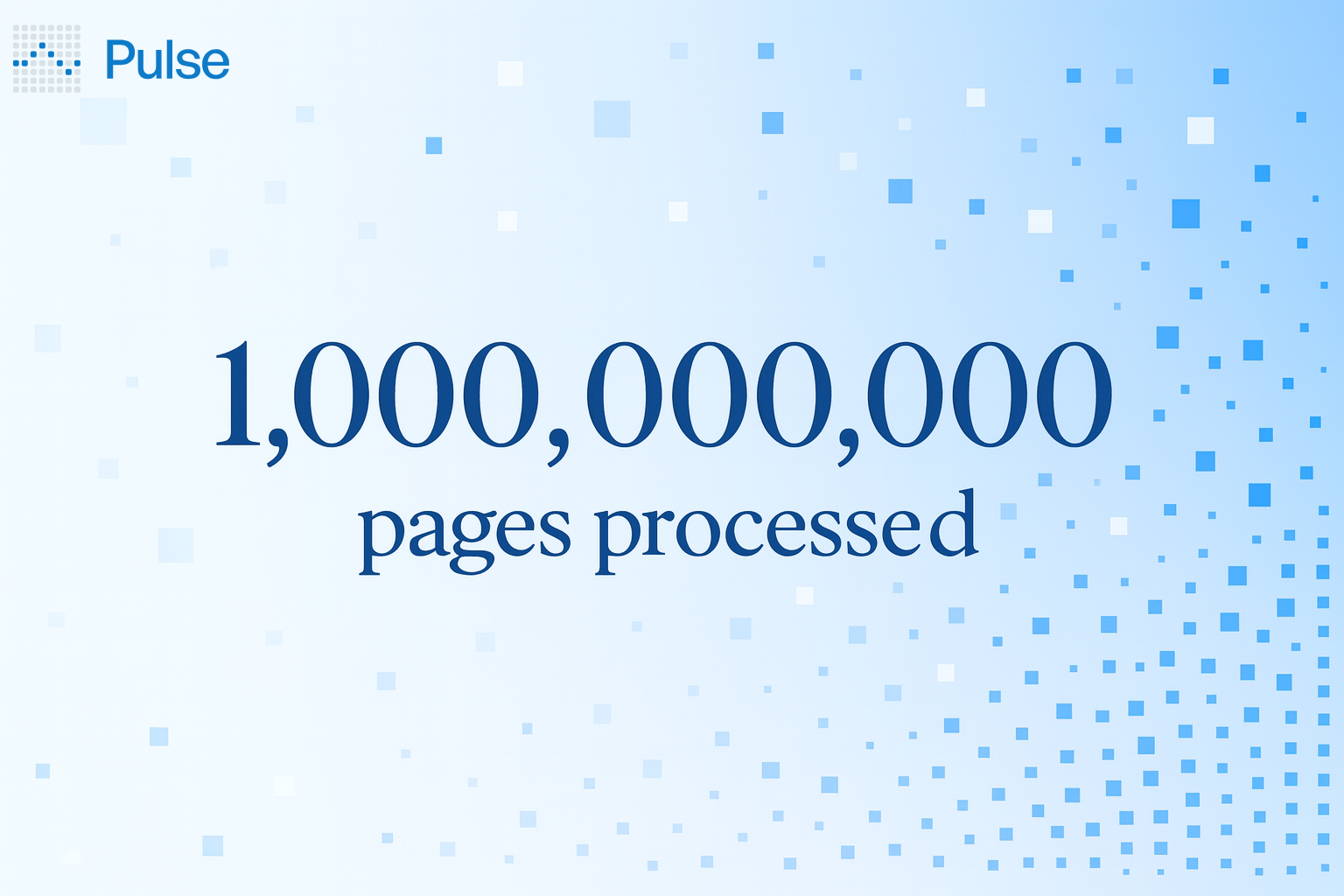
Today, a Tekedia Capital portfolio company, and one of the fastest-growing startups in its category, has crossed a major milestone: one billion pages processed by its technology.

But the real achievement is not merely hitting one billion pages in a matter of months. It is who those pages were processed for. Pulse is powering workflows for global banks, Fortune 100 companies, private equity firms, and AI-native teams. These are organizations where accuracy, scale, and reliability are non-negotiable.

By every meaningful standard, Pulse is emerging as the world’s finest document infrastructure company: “Pulse uses OCR, layout, and vision models to produce high-quality outputs from complex documents for enterprise and AI-native teams.”

To mark this milestone, Pulse is offering a special celebration: 20,000 pages free for everyone. Go here .