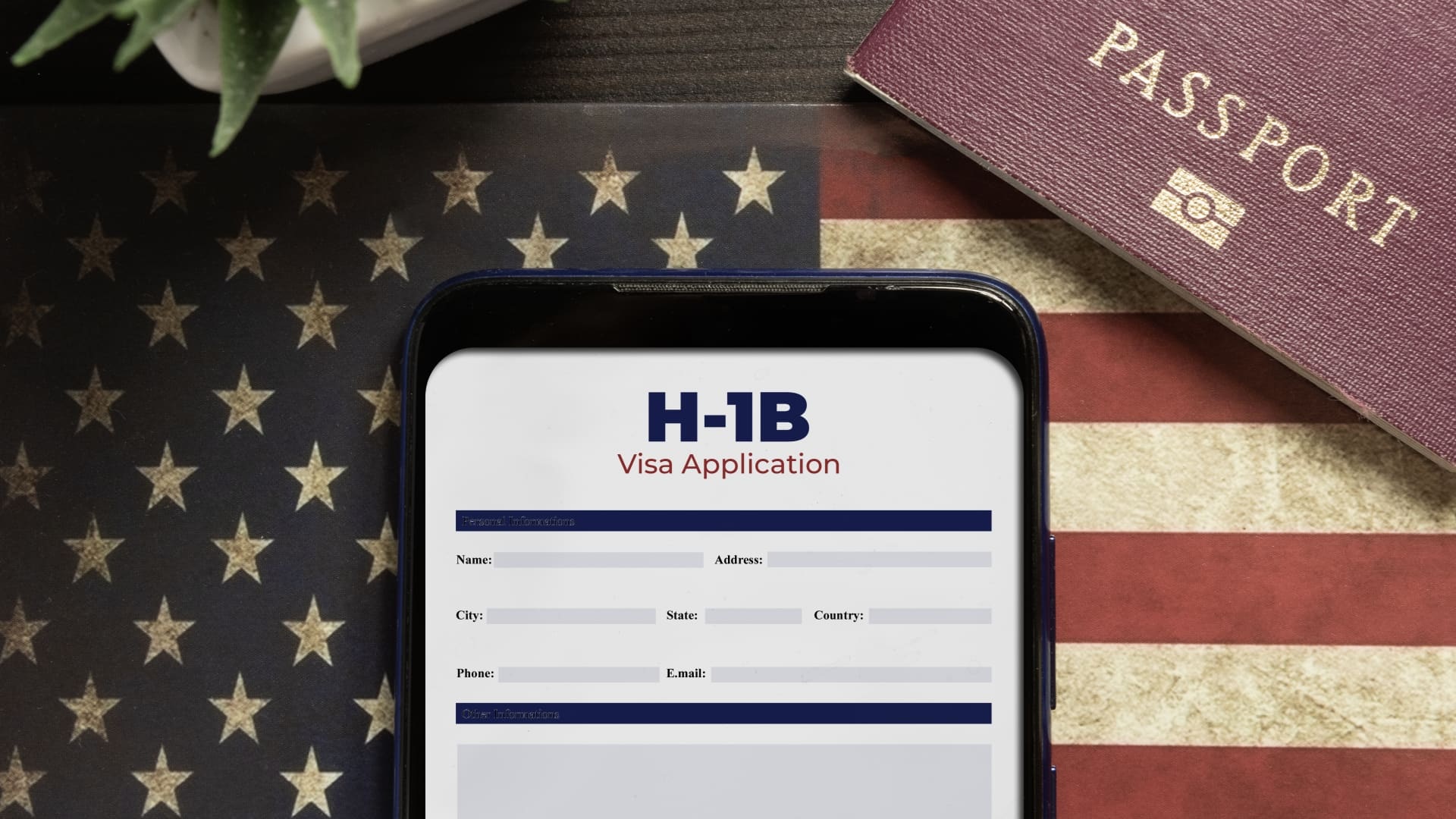
The Trump administration has proposed making a controversial H-1B visa fee of $103,265 permanent, a move that would dramatically increase the cost of hiring highly skilled foreign workers and could reshape how U.S. technology companies, universities and research institutions recruit talent from abroad.
The proposal, published Monday in the Federal Register, would replace the $100,000 fee President Donald Trump temporarily imposed on certain H-1B applications last year. It is now subject to a 30-day public comment period before the Department of Homeland Security can decide whether to issue a final rule.
The proposed charge would represent an extraordinary increase from the traditional cost of an H-1B application, which has generally ranged from about $2,000 to $5,000 depending on the employer and circumstances of the application.
The H-1B programme allows U.S. employers to hire foreign workers in specialty occupations, including technology, engineering, education, medicine and research. The programme provides 65,000 visas annually, with an additional 20,000 available to foreign workers holding advanced degrees from U.S. institutions. Visas are generally approved for three years and can be extended to six.
For employers that depend heavily on international recruitment, the proposed fee could fundamentally alter the economics of hiring foreign workers. Last year, some companies, including Walmart, paused hiring due to the decision.
A six-figure government charge would be particularly significant for startups, universities and research organizations that cannot absorb the cost as easily as large technology companies. It could also encourage companies to shift some hiring and development work outside the United States rather than incur the expense of bringing foreign employees into the country.
The administration’s proposal comes as the H-1B programme is already under considerable pressure.
Trump imposed a $100,000 fee last year, but federal courts subsequently blocked the administration from collecting it. A federal judge ruled in June that the fee was illegal, while an appeals court in Boston is reviewing that decision. A separate court is considering a challenge brought by a major business group after a Washington, D.C., judge rejected the case.
The new proposal could give the administration another mechanism for pursuing the same policy while potentially triggering a new round of litigation.
The legal dispute goes to the heart of the administration’s authority over the H-1B system.
The U.S. Chamber of Commerce, Democratic-led states, unions and employer groups have challenged the fee, arguing that the president’s authority to restrict the entry of foreign nationals does not allow the administration to override the statute establishing the H-1B programme.
The challengers also point out that the Department of Homeland Security cannot impose what amounts to a revenue-generating fee without explicit congressional authorization. The administration disputes that interpretation. It has argued that the charge is not a conventional tax and that the courts have limited authority to second-guess the president’s immigration powers.
The scale of the proposed increase is already having an effect on employer behavior.
According to administration court filings, U.S. Citizenship and Immigration Services had received only 85 payments of the $100,000 fee from 70 employers as of February 15. The relatively small number suggests that the previous fee has already discouraged some employers from pursuing H-1B hires.
H-1B demand has also fallen sharply under the administration’s broader immigration restrictions. Employers registered for about 344,000 H-1B visas last year, more than 25% below the number registered in 2024 and less than half the roughly 794,000 registrations recorded in 2023, according to USCIS data.
That decline is notable because the programme has historically been one of the main channels through which U.S. technology companies and other employers recruit specialized workers from overseas.
Trump and supporters of tighter immigration controls believe that the programme has been abused by companies seeking cheaper foreign labor and, in some cases, replacing American workers.
Business groups and many employers counter that the H-1B system addresses shortages in specialized occupations where U.S. companies cannot find enough qualified workers domestically. They also note that the ability to recruit internationally is essential for maintaining the United States’ position in technology, scientific research and other high-skilled industries.
The proposed fee therefore goes beyond an immigration policy dispute, with experts warning that it could become a competitiveness issue for the U.S. economy.
The technology sector is exposed because many companies depend on engineers, software developers, researchers and other specialized workers whose skills are in high demand globally. A significantly higher cost of bringing such employees into the United States could encourage companies to recruit talent in Canada, Europe, India and other technology centers instead.
It could also change the calculus for multinational companies deciding where to establish research and development operations.
The administration has simultaneously moved to make the H-1B system more selective. It has ordered enhanced vetting of applicants and proposed a selection system that would give greater weight to highly skilled and highly paid workers.
Earlier, DHS also proposed separate fees of up to $4,500 for certain applications involving H-1B workers seeking to extend their stay or transfer to the United States from overseas.
Together, the measures point toward a significantly more restrictive and expensive H-1B system, with the administration seeking to reduce what it views as low-value use of the programme while favoring highly compensated workers.
If the $103,265 fee survives the legal challenges and becomes permanent, hiring an H-1B worker would carry a government cost that in some cases could exceed the employee’s annual salary at smaller companies and research institutions. That would make the H-1B visa not simply an immigration pathway, but a major financial consideration in corporate hiring decisions.