DD
MM
YYYY

PAGES

DD
MM
YYYY

spot_img

PAGES

Home Blog Page 4

SpaceX’s Record IPO Turned Into a Cautionary Tale for Investors

0

SpaceX’s journey from celebrating one of the most anticipated initial public offerings (IPOs) in recent history to being labeled a potential top signal within just two weeks highlights the volatile psychology that often drives financial markets.

The rapid shift in investor sentiment demonstrates how enthusiasm can quickly give way to caution, particularly when a company with an extraordinary valuation captures widespread public attention. While SpaceX remains one of the world’s most innovative aerospace companies.

The market’s reaction reflects broader concerns about speculative investing and the timing of major public listings.

SpaceX has stood at the forefront of the commercial space industry. Founded by Elon Musk in 2002, the company transformed space exploration through reusable rockets, cost-efficient launches, and ambitious projects such as Starlink, a satellite-based internet network.

Its consistent technological achievements made SpaceX one of the most valuable privately held companies globally, with investors eagerly anticipating the day it would become publicly traded. When the long-awaited IPO finally arrived, investor demand was unprecedented.

Institutional investors, retail traders, and technology enthusiasts rushed to gain exposure to a company many viewed as defining the future of aerospace, satellite communications, and even interplanetary travel. The offering quickly became one of the largest and most talked-about IPOs on record, pushing SpaceX’s valuation to historic highs.

The excitement was short-lived. Within just 14 days, financial commentators and market analysts began referring to the IPO as a potential top signal—a term used when a highly anticipated public offering coincides with a broader market peak.

Historically, similar events have occurred during periods of excessive optimism, where investor enthusiasm reaches unsustainable levels before markets experience significant corrections.

Several factors contributed to this dramatic shift in sentiment. First, the IPO’s enormous valuation raised questions about whether future growth expectations had already been fully priced into the stock. Even a company with exceptional technological leadership must eventually justify its valuation through sustained revenue growth and profitability.

Investors began questioning whether expectations had become too optimistic. Second, broader macroeconomic conditions added pressure. Rising interest rates, persistent inflation concerns, and increased market volatility caused investors to reduce exposure to high-growth companies.

Growth stocks, particularly those trading at premium valuations, often experience larger price swings during uncertain economic environments. Market psychology also played an important role. Major IPOs frequently generate significant media attention, attracting investors motivated by fear of missing out rather than careful fundamental analysis.

Once initial buying momentum fades, profit-taking often accelerates, creating downward pressure on share prices. This pattern has appeared repeatedly throughout financial history across technology, internet, and electric vehicle sectors.

Despite the recent decline in market enthusiasm, SpaceX’s long-term business fundamentals remain largely unchanged.

The company continues to dominate commercial launch services, expand the Starlink satellite network, secure government contracts, and pursue ambitious missions aimed at lunar and Martian exploration. These projects represent substantial long-term opportunities that extend well beyond short-term fluctuations in share prices.

The episode also serves as a reminder that exceptional companies do not always translate into exceptional investments at every price. Valuation remains a critical component of successful investing. Even businesses with strong competitive advantages can experience periods of underperformance if investor expectations become excessively optimistic.

SpaceX’s transformation from record-breaking IPO to potential top signal within just two weeks illustrates the difference between corporate excellence and market sentiment. While headlines may emphasize short-term volatility, long-term investors often focus on execution, innovation, and financial performance rather than temporary swings in investor psychology.

Whether this episode marks a broader market turning point or merely a brief correction, it reinforces an enduring lesson: markets often move faster than business fundamentals, but over time, sustainable value is ultimately determined by a company’s ability to deliver on its promises.

Italy Set to Join U.S.-Led AI Initiative, Pax Silica, Despite Diplomatic Rift With Trump

0

Italy is set to join the United States-led Pax Silica initiative on artificial intelligence supply chains following a diplomatic dispute between Prime Minister Giorgia Meloni and U.S. President Donald Trump, which temporarily delayed the country’s participation.

Italy’s Special Envoy for Innovation, Ambassador Armando Varricchio, said Foreign Minister Antonio Tajani and U.S. Secretary of State Marco Rubio will sign a memorandum of understanding “at the first available opportunity,” formally bringing Italy into the initiative.

“This provides a political basis that demonstrates the willingness to resume from where we had temporarily left off,” Varricchio told Corriere della Sera.

This means that both governments are seeking to draw a line under recent diplomatic tensions and reaffirm their commitment to long-term cooperation on emerging technologies.

The agreement had originally been scheduled for signing during a meeting in Miami earlier this week. However, Tajani cancelled the trip after relations between Meloni and Trump deteriorated following public disagreements over Italy’s position on the Iran conflict.

Trump had criticized Italy over what he described as insufficient support for the U.S. military campaign against Iran, triggering a rare public disagreement between the two leaders. While the episode briefly interrupted Italy’s participation in Pax Silica, it did not derail broader strategic cooperation between the two countries. The decision to move ahead with the agreement suggests both sides view artificial intelligence and technology security as priorities that transcend short-term political disagreements.

Pax Silica is a U.S. State Department initiative designed to build trusted AI supply chains among allied nations. Rather than focusing solely on artificial intelligence software, the framework covers the entire ecosystem needed to develop and deploy advanced AI systems, including semiconductor manufacturing, cloud computing infrastructure, critical minerals, secure energy supplies, advanced manufacturing, AI models, and research collaboration.

The initiative is a spinoff of Washington’s broader strategy of reducing dependence on concentrated global supply chains for technologies considered strategically important while strengthening cooperation with trusted partners. Momentum behind the alliance has accelerated in recent days. The European Commission formally joined the initiative on Thursday, while the Netherlands signed on earlier in the week.

During Thursday’s Washington summit, Varricchio participated as an observer and signed a joint declaration on AI opportunities alongside representatives from Britain, Germany, Japan, India, South Korea, and several other partner countries.

Although Italy has yet to complete the formal memorandum, its participation in the summit demonstrates that Rome is already aligning itself with the initiative’s broader objectives.

The expansion of Pax Silica comes as governments increasingly view artificial intelligence infrastructure through the lens of national security.

Modern AI development depends on access to high-performance chips, reliable electricity, advanced manufacturing capacity, rare earth elements, and critical minerals used in semiconductor production. Recent export restrictions imposed by both the United States and China have exposed vulnerabilities in global technology supply chains and accelerated efforts among Western allies to diversify sourcing and coordinate industrial policy.

The initiative is also expected to encourage greater collaboration on AI standards, investment, research, and supply-chain resilience, reducing dependence on countries viewed as strategic competitors.

This membership offers an opportunity to deepen Italy’s role in Europe’s rapidly expanding AI ecosystem while attracting investment into advanced manufacturing, digital infrastructure, and semiconductor-related industries. The country has been seeking to strengthen its technology sector as part of a wider strategy to improve industrial competitiveness and support innovation-driven economic growth.

The country’s participation is also expected to strengthen a coalition that already includes many of America’s closest security and economic partners. Bringing additional European countries into the framework enhances the U.S. effort to establish trusted supply chains for technologies that are expected to underpin future economic growth and military capabilities.

Artificial intelligence has become one of the defining areas of global strategic competition, with governments investing hundreds of billions of dollars in data centers, semiconductor manufacturing, cloud infrastructure, and AI research. Control over these ecosystems is increasingly viewed as critical to economic resilience and geopolitical influence.

Saudi Aramco Restarts Ras Tanura,  Major Gulf Crude Exports Terminal, Following U.S.-Iran Ceasefire Deal  

0

Saudi Aramco has resumed crude loadings at its Ras Tanura terminal in the Gulf on Friday, marking a symbolic and practical return to normal operations after nearly four months of disruption caused by the Iran war, according to shipping data.

The restart comes as the world’s largest oil exporter joins a broader regional rush to move cargoes, driven by cautious optimism that the U.S.-Iran ceasefire framework will hold and allow the Strait of Hormuz to fully reopen.

Two Very Large Crude Carriers (VLCCs) operated by Saudi’s shipping arm Bahri were actively loading at the terminal, with another waiting nearby. Each VLCC can carry up to 2 million barrels, signaling a significant step toward restoring pre-war export levels.

Ras Tanura, the world’s biggest oil port, once exported more than 5 million barrels per day (bpd) before the conflict. It also hosts a 550,000 bpd refinery that was shut as a precaution during the war. The terminal’s reactivation is critical not just for Saudi Arabia but for global oil markets, as the kingdom had diverted much of its output to the Red Sea port of Yanbu after Iranian forces effectively blockaded the strait.

Aramco last loaded a cargo from Ras Tanura for China on March 8. In the intervening months, Saudi crude exports slumped to around 4 million bpd from more than 7 million bpd in February, contributing to one of the most severe supply disruptions in recent history.

The resumption occurs against a backdrop of persistent uncertainty. A ship operated by Taiwan’s Evergreen Marine was struck by an unknown object in the Strait of Hormuz on Thursday, prompting the British navy’s UKMTO to pause escort operations. Two U.S. officials attributed the incident to Iranian forces, while Iran’s Persian Gulf Strait Authority warned that vessels straying from approved routes would not be guaranteed safe passage.

Despite these tensions, oil flows through the strait have begun to recover, reaching their highest levels since the conflict erupted. Middle Eastern producers have been ramping up output and exports in anticipation of normalized shipping lanes. Iraq’s SOMO and Qatar issued new crude tenders this week, following similar moves by Kuwait and the UAE. Iran, too, is accelerating exports after Washington temporarily eased sanctions.

This surge in supply is already weighing on prices. Brent crude fell more than $1 a barrel on Friday, slipping below $76 for the first time since early March. Physical market differentials have normalized toward pre-war levels, reflecting improved availability.

Rystad Energy’s MENA research director Aditya Saraswat noted the rapid pace of recovery.

“Two million barrels a day came back online in three weeks, and the recovery is spread across the region,” Saraswat said.

The consultancy estimates shut-in production across the Gulf has dropped to 9.6 million bpd in mid-June from 11.7 million bpd just three weeks earlier, forecasting a full regional supply recovery by the end of the year.

For Saudi Arabia, the restart is both a commercial necessity and a geopolitical signal. As the de facto leader of OPEC+, Riyadh has a vested interest in stabilizing markets after months of elevated prices that risked damaging global demand. At the same time, the kingdom is positioning itself to regain market share lost during the blockade, particularly in Asia, its largest customer base.

Aramco is expected to cut its official selling prices for August sharply next week as competition among producers intensifies. This price discipline will be crucial in preventing a supply glut from derailing the fragile ceasefire.

The broader oil market is transitioning from a period of acute shortage fears to one of potential oversupply concerns. While the ceasefire roadmap provides a 60-day window for negotiations, any breakdown could quickly reverse recent gains. Investors remain wary, with prices still elevated compared to pre-war levels but well off their peaks.

The reopening also comes with significant implications for global energy security. Economists have noted that a sustained return to normal flows through the Strait of Hormuz, which handled a fifth of the world’s oil and LNG before the conflict, would ease inflationary pressures on energy-importing economies and provide breathing room for central banks navigating sticky inflation.

The resumption at Ras Tanura underscores how quickly energy markets can pivot when diplomatic progress occurs, but it also highlights the vulnerability of global supply chains to regional conflicts. While Saudi Arabia’s ability to redirect exports to Yanbu during the blockade demonstrated operational resilience, the preference for Gulf terminals like Ras Tanura remains clear due to lower costs and logistics efficiency.

China’s Tech IPO Surge Accelerates as Beijing Doubles Down on Domestic Innovation Amid U.S. Rivalry

0

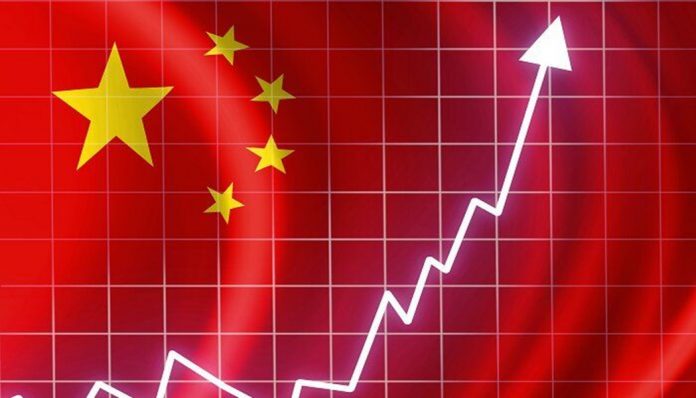
China’s onshore technology listings are on track for their strongest year since 2023, driven by a deliberate push from Beijing to nurture homegrown chipmakers, artificial intelligence companies, and other strategic tech firms as the country seeks greater self-reliance in its intensifying rivalry with the United States.

Technology companies have already raised $3.1 billion through stock market listings in China this year as of June 18 — more than five times the amount raised in the same period last year, according to LSEG data. Nearly 50 companies, spanning robotics startups to semiconductor players, have filed for initial public offerings in Shanghai and Shenzhen, with combined fundraising plans totaling at least 126.1 billion yuan ($18.7 billion), based on Reuters calculations from regulatory filings.

One of the most anticipated debuts is memory-chip maker ChangXin Memory Technologies, which is planning a 29.5 billion yuan Shanghai IPO — the largest this year and a deal that would help push total tech listing proceeds to a three-year high. The momentum marks a sharp reversal from the listing drought that gripped China’s domestic markets in 2024, when many firms instead rushed to Hong Kong to tap offshore capital.

The revival is no accident. On June 17, Chinese regulators signaled strong support for listings of startups in “future industries” such as quantum technology, nuclear fusion, and brain-computer interfaces. The Shanghai Stock Exchange has also introduced new rules to streamline public share sales by large-language-model companies on its STAR Market, part of a broader effort to champion domestic AI development.

“The acceleration of technology IPOs has provided long-awaited exit opportunities for private equity and venture capital funds that have backed these companies,” said Li He, co-head of law firm Davis Polk’s Asia (ex-Japan) practice.

Annual proceeds from tech listings in China fell to $2.7 billion in 2024 from $15.7 billion in 2023, before rebounding to $3.6 billion last year. In comparison, Chinese tech companies raised $6.6 billion in Hong Kong in 2025. The shift back onshore reflects both improved domestic market conditions and Beijing’s strategic preference for keeping critical technology firms under closer national oversight.

Policy Support Meets Strong Investor Appetite

The China Securities Regulatory Commission (CSRC) has gone further, saying it would support qualified Hong Kong-listed companies seeking secondary listings on the mainland. This could open the door for firms like Zhipu AI, which raised HK$4.35 billion ($555.2 million) in Hong Kong in January and is now targeting a 15-billion-yuan STAR Market listing. Baidu’s chip unit Kunlunxin, awaiting approval for a $2 billion Hong Kong float, is also planning a smaller domestic listing, according to a person familiar with the matter cited by Reuters.

Kenny Ng, a strategist at China Everbright Securities International, said such moves could significantly improve liquidity and broaden investor access.

“If companies from other regions listed in Hong Kong can be included in the future, it can provide investors with more diversified choices and bring better liquidity to the market.” Ng said.

Ho-Yin Lee, Asia-Pacific co-head of technology and communications at Citigroup, highlighted the appeal of mainland listings for Hong Kong-traded firms.

“They would get access to a deep pool of capital, funding to grow businesses and great domestic branding,” Lee said.

Recent debuts have shown robust demand. SJ Semiconductor has surged more than eightfold from its IPO price, while Semight Instruments has jumped nearly 28-fold, demonstrating strong investor appetite for quality tech names.

“The pickup in Chinese tech issuance is part of a broader global AI wave, with China and the U.S. the two markets that set the tone,” said James Wang, head of Asia ex-Japan equity capital markets at Goldman Sachs.

The surge in domestic listings aligns with Beijing’s long-term goal of reducing dependence on foreign technology amid escalating rivalry with Washington. Export controls on advanced chips and AI tools have accelerated China’s push for self-sufficiency, making domestic capital markets a vital channel for funding innovation in semiconductors, AI, robotics, and other strategic sectors.

For private equity and venture capital investors who poured money into Chinese tech over the past decade, the reopening of onshore IPO windows offers much-needed exit liquidity after years of limited options. This could encourage fresh capital deployment into emerging technologies that align with national priorities.

However, challenges remain. Geopolitical tensions continue to cast a shadow, with analysts noting that success will now depend on sustained investor confidence, regulatory predictability, and the ability of these companies to deliver commercial breakthroughs. The focus on “future industries” suggests Beijing is prioritizing sectors with both economic and strategic importance, potentially creating a more resilient domestic tech ecosystem over time.

The Grand Playbook of Business

0

Process efficiency is important, but a winning business model is even more critical. A company can become exceptionally efficient at doing the wrong thing. Ultimately, success depends on operating in a position where you can create and capture value. Largely, since the internet is unconstrained and largely unbounded, businesses must continually rethink and redesign their operating models.

Consider this example. In 2000, assembling the world’s top movie producers to create short-form videos for a digital platform would have seemed like a brilliant idea, something akin to Quibi. But by 2021, the rules had changed. In the internet age, owning demand and mastering discovery became more strategic than owning supply. Consequently, a model built around professionally produced content struggled.

A different model emerged. Build a platform where millions of people can create and upload videos, and let algorithms discover, rank, and distribute the best content to billions of users within seconds. That is the essence of TikTok’s success.

The lesson is clear: the most catalytic thing a leader can do today is to build and maintain a responsive business model. Markets, technologies, and consumer behaviors are changing too quickly for static strategies.

If you miss the business model, everything else eventually falls apart. The internet has fundamentally altered the mechanics of competition, and in this new era, adaptability is not optional, it is the foundation of enduring success.

Join me today to co-learn on the Grand Playbook of Business at Tekedia Mini-MBA

Sat, June 27 | 7pm-8.30pm WAT | The Grand Playbook of Business and Four Plays in Markets – Ndubuisi Ekekwe | Zoom link