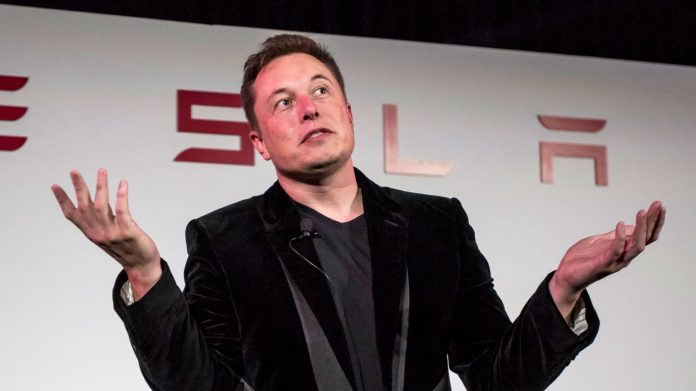
A California administrative law judge has issued a landmark ruling against Tesla, finding that the electric vehicle giant engaged in deceptive marketing practices regarding its Autopilot and Full Self-Driving (FSD) features.
The decision, handed down by Judge Juliet Cox, marks a critical turning point in a long-standing legal battle initiated by the California Department of Motor Vehicles (DMV) in 2022. The court found that Tesla’s branding and descriptions created a “false impression” that its vehicles were capable of fully autonomous operation when, in reality, they remain Level 2 driver-assistance systems requiring constant human supervision.
The Penalty: A ‘Stayed’ 30-Day License Suspension
The judge endorsed the DMV’s request for a 30-day suspension of Tesla’s sales and manufacturing licenses in California as a penalty for misleading consumers. However, in a move to balance regulatory enforcement with economic stability, the DMV has stayed the order, granting Tesla a 60-day window (with some sources citing up to 90 days for certain appeals) to bring its marketing into compliance.
Under the terms of the ruling, Tesla must either rebrand its software—specifically the “Autopilot” and “Full Self-Driving” names—or demonstrate that its vehicles have achieved the technical level of autonomy the names imply. While the manufacturing license suspension at the Fremont factory has been indefinitely stayed to prevent massive disruption to the regional economy, the threat to Tesla’s dealer license remains active. If Tesla fails to remove the allegedly deceptive language or rename the features within the compliance window, the 30-day sales halt will be enforced.
Tesla has responded with public defiance, asserting on social media that “sales in California will continue uninterrupted.” The company’s primary defense rests on the claim that the order is a “consumer protection” overreach, noting that the DMV failed to produce a single customer who testified to being personally deceived or harmed by the branding. Tesla’s legal team argued that the terms are protected commercial speech and that the company provides sufficient disclaimers informing drivers they must remain attentive.
Judge Cox rejected this argument, stating that the DMV’s authority to regulate advertising is preventative and does not require evidence of a specific victim. The ruling emphasized that names like “Full Self-Driving” are “unambiguously false” in a legal and technical context because they imply the driver’s undivided attention is not required. The judge noted that without the threat of suspension, there was no reason to believe Tesla would voluntarily alter its misleading representations.
Economic Stakes and the California Market
A suspension of sales in California would be a devastating blow to Tesla’s domestic operations. California represents roughly one-third of Tesla’s total U.S. sales, with nearly 135,500 vehicles registered in the state during the first nine months of 2025 alone. Furthermore, the Fremont factory is not merely a regional hub; it is the sole production site for the Model S and Model X, and it remains responsible for all Model 3 sedans destined for the North American market.
The timing of this ruling is particularly sensitive as Tesla faces a “widening gap” between its marketing hype and actual deployment. While the company has recently added the qualifier “(Supervised)” to its FSD suite to appease regulators, the court found this insufficient to rectify the broader perception created by the “Autopilot” name.
This California ruling adds to a growing mountain of legal pressure on Tesla. The company remains under investigation by the Department of Justice (DOJ), the Securities and Exchange Commission (SEC), and the California Attorney General over similar allegations of misleading autonomy claims. These federal probes are examining whether Tesla’s marketing constituted wire or securities fraud.
Paradoxically, as California tightens the reins on consumer vehicle marketing, Tesla is pushing forward with its unsupervised Robotaxi trials in Austin, Texas. On December 15, 2025, Tesla officially removed human safety monitors from its small test fleet in Austin, allowing cars to operate entirely empty. However, CEO Elon Musk has clarified that these Robotaxis utilize a fundamentally different version of driving software than the FSD system sold to everyday consumers, further highlighting the distinction between Tesla’s future autonomous goals and its current commercial products.